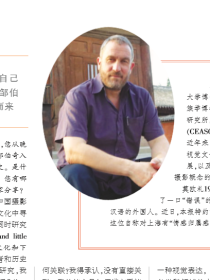
Patrick Overeem is an Associate Professor at the Faculty of Social Sciences and Humanities (Vrije Universiteit Amsterdam), specializing in Political Science and Public Administration. He holds a PhD from Leiden University (2010) and advanced degrees in Public Administration and Political Science from the same institution. His research focuses on democratic theory, value pluralism, statesmanship, and EU governance. He is affiliated with the Multi-layered Governance (MLG) research group and serves on editorial boards, including the American Review of Public Administration . Overeem's work emphasizes ethical leadership, compromise in politics, and the interplay between democracy and pluralism. Key contributions include his 2012 book on the politics-administration dichotomy and his neo-Aristotelian analyses of political virtue. He has led projects like the EU-funded RECONNECT initiative (2018–2022), exploring democratic reconciliation in Europe. He advises Dutch parliamentary integrity committees and contributes to public debates on ethics and governance through media engagements. His research bridges classical political theory with contemporary challenges, addressing topics like postliberalism, moral dilemmas in governance, and constitutional frameworks. Overeem teaches courses on political theory, democratic systems, and the history of political thought, fostering critical engagement with ethical and institutional dimensions of power.
Bernard (Ben) Arps is Professor of Indonesian and Javanese Language and Culture at Leiden University's Institute for Area Studies within the Faculty of Humanities. His research focuses on the interface of humanities and humanistic social sciences, particularly examining how language, performance, texts, and media contribute to 'worldmaking' - the processes through which people and institutions shape realities for themselves and others. Geographically centered on Southeast Asia with a core focus on Indonesia and the Malay world, Arps specializes in Java and its diasporas. His scholarly interests include religious encounters (particularly between Islam and local vernacular traditions), philological theory as applied to performance and new media, narrativity in song and audio media, and the theoretical foundations of area studies. Arps has conducted extensive fieldwork in Indonesia since 1979, totaling over four years, primarily in Central and Eastern Java regions including Surakarta, Yogyakarta, Banyuwangi, and Cilacap. His current book projects explore the Quest narrative pattern across religious traditions (focusing on Dewa Ruci), the sociopolitical formation of languages through media and performance (using Osing in Banyuwangi as a case study), and the Asian Muslim epic of Amir Hamza. Arps teaches primarily in Leiden's BA programme in South and Southeast Asian Studies, BA in International Studies, and MA programme in Asian Studies. Former chair of the Department of Languages and Cultures of Southeast Asia and Oceania (1995, 1999/2000, 2003-2006, 2008) Previously taught at School of Oriental and African Studies, University of London (1988-1993) Held visiting positions at NIAS (2001/02), ANU (2005), University of Michigan (2006/07), NUS/ARI (2011/12), UNS (2017), and IIAS (2018/19) Arps has supervised doctoral, Master's, and Bachelor's dissertations across Indonesian, Malay, Singapore, Cambodian, and Thai studies, with particular expertise in Javanese, Sundanese, Betawi, Balinese, Sasak, Mentawai, and Minangkabau cultures and languages. His work spans religion, performance, media, literature, sociolinguistics, lexicography, and education.
Dr. Julia Costa López is an Assistant Professor (tenured) in History and Theory of International Relations at the Department of International Relations and International Organisation, Faculty of Arts, University of Groningen. Her work bridges international relations, history, and political thought, focusing on how historical frameworks shape modern disciplinary concepts. PhD from University of Oxford Lecturer at St Hilda's College Fulbright scholar at University of Denver's Josef Korbel School Graduate studies at University of Cambridge Research spans medieval political authority, sovereignty emergence, racialized medievalisms in extremism, and translation politics in global scholarship. Key projects include Routledge Handbook of Historical International Relations (2021) and the Oxford Handbook of History and International Relations (2023). Publications address Eurocentrism, conspiratorial ideology, and ritual's role in authority production. Scientific contributions appear in Cambridge Review of International Affairs , International Organization , and European Journal of International Law . Awards include the Fulbright scholarship. Recent work explores terraqueous relations and premodern world conceptualizations, challenging simplistic land-sea dichotomies in IR.
Prof. Dr. Asghar Seyed-Gohrab is a leading scholar in Persian and Iranian Studies at Utrecht University’s Department of Philosophy and Religious Studies. His academic career spans over two decades, including roles as Chairman of Persian Studies at Leiden University and Principal Investigator of the ERC-funded 'Beyond Sharia' project examining Sufism’s role in Islamic intellectual history. He holds a PhD from Leiden University and has authored over 50 monographs and edited volumes on Persian poetry, Sufism, and Iranian cultural history. Education: B.A. in English (Vrije Universiteit), M.A. in Persian Studies (Leiden University), PhD (Leiden University) Research Focus: Medieval Persian poetry’s modern political and cultural relevance, Sufi movements, and the interplay between mysticism and state power in Iran. Grants: ERC Advanced Grant (2021), NWO VIDI/VENI (2009-2014), KNAW Fellow (2023). His research highlights how classical Persian poetry shapes modern Iranian identity, including its use in the 1979 Revolution and Iran-Iraq War. He has supervised 43+ students and edited journals like Iranian Studies and Persica .
Prof. Ronald Meester is a Full Professor of Mathematics at the Faculty of Science, Vrije Universiteit Amsterdam. He specializes in mathematical statistics, probability theory, and their applications in legal and environmental contexts. His current positions include director of Meester Advies (Leiden) and expert for Landelijke Deskundigheidsmakelaar Politie (Apeldoorn). He has supervised 14 PhD theses and contributes to interdisciplinary research bridging statistics with law, epidemiology, and environmental policy. Research focuses on Bayesian reasoning, likelihood ratio analysis, and statistical methodologies for legal evidence evaluation. Recent work addresses nitrogen deposition policy critiques and epidemiological study design limitations. His ancillary activities include authorship (since 2003) and teaching roles at SSR Utrecht. Media engagements include commentaries on scientific integrity and environmental policy. Teaching includes the course 'Mathematical Modelling of Stochastic Systems' (2024-2025 academic year). Active in international collaborations and has produced 111 research outputs spanning articles, books, and encyclopedia entries. His work contributes to UN SDGs related to sustainable development through environmental statistical analysis.
Bart Wallet is Professor of Jewish Studies specializing in Early Modern and Modern Jewish History at the University of Amsterdam's Faculty of Humanities, where he is affiliated with the Department of Semitic Languages and Cultures. His academic work focuses on the intricate relationship between Jewish communities and Dutch society throughout history, with particular emphasis on the connections between the Dutch Royal House and Jewish communities. Wallet's research interests span Dutch Jewish history from the early modern period to the contemporary era, with special attention to Yiddish studies, religious history, cultural integration, and the development of Jewish identity in the Netherlands. His scholarly output reveals a consistent focus on how Jewish communities navigated their position as a religious minority within Dutch society, particularly examining the complex dynamics between Jewish citizens and the Dutch state and monarchy. His work often explores the tension between religious tradition and modernization, and how Jewish communities maintained their identity while integrating into broader Dutch society. Analysis of his recent publications shows a strong thematic concentration on Orange-Jewish relations throughout Dutch history, Jewish military service, religious education, and the material culture of Jewish communities. His scholarship demonstrates a methodological approach that combines cultural history with religious studies, often revealing how seemingly mundane aspects of daily life reflect broader societal patterns of integration and identity formation. The geographic focus remains predominantly on the Netherlands, though with comparative perspectives on Jewish communities in other European contexts. Professor Wallet has been active in public scholarship through media appearances, radio programs, and contributions to encyclopedias. His work has appeared in both academic journals and public-facing media outlets, demonstrating his commitment to making Jewish history accessible to broader audiences. He has contributed to numerous radio programs on Jewish history for Dutch Jewish radio stations and has written for newspapers including the Reformatorisch Dagblad. His academic contributions include extensive work on Dutch-Jewish relations, particularly focusing on the relationship between Jewish communities and the Dutch Royal House throughout history. He has also produced significant scholarship on Jewish integration in Dutch society, religious education, and the development of Jewish identity in the Netherlands from the early modern period to the present day. His work often examines how Jewish communities maintained religious traditions while adapting to changing social and political contexts.
Tal Simons is Professor of Organization Theory in the Department of Organisation and Personnel Management at Rotterdam School of Management (RSM), Erasmus University Rotterdam, and has been an ERIM Fellow since 2019. His research examines organizational responses to societal pressures through institutional and behavioral lenses. Simons' work centers on institutional theory applications in regulatory resistance, ideological dynamics, and organizational authenticity. He investigates how firms navigate social movements, media scrutiny, and moral legitimacy challenges across diverse sectors including tobacco, wine, and contemporary dance. His methodology blends historical analysis with qualitative case studies to uncover patterns in community cohesion, aesthetic innovation, and cross-cultural collaboration. Publication trends reveal an evolution from foundational studies on kibbutzim and Israeli wine industry transformation (1997-2010) toward contemporary analyses of CSR-media relationships, regulatory compliance, and authenticity construction (2015-2024). Recent work emphasizes ideological imperatives in news coverage and moral legitimacy frameworks, while maintaining consistent theoretical grounding in institutional logics and organizational ecology. Professional recognition includes: ERIM Fellow (2019–present) As an active doctoral supervisor, Simons mentors nine PhD candidates across organization theory and behavior domains. His advisees explore cross-cultural collaborations, multi-stakeholder organizing, sustainability-focused community enterprises, and societal change mechanisms. Supervision spans 2015 to present with roles as promotor and committee member, reflecting sustained commitment to developing organizational scholarship through next-generation researchers.
O.J. (Oliver) Moore is a Professor and Chair of Chinese Language & Culture at the University of Groningen's Faculty of Arts. His expertise spans Art History of China, early/modern Chinese history, archaeology, and material culture. He holds a PhD from Cambridge University and has held roles at Leiden University, the British Museum, and Kyoto University. His research integrates historical, technical, and aesthetic aspects of Chinese art and culture, with a focus on photography, printing systems, and classical texts. Education: Studied Chinese at London University (SOAS) and Fudan University (Shanghai), PhD at Cambridge on Tang Dynasty civil service recruitment rituals. Teaching includes modern Chinese language, East Asian art/media, and thesis writing. He supervises PhD projects on Chinese art collecting in the Netherlands and collaborates internationally on courses like 'Chinese Gardens in Europe.' Key publications: Photography in China: Science, Commerce and Communication (2022), translations of Tang-era texts, and studies on Tang art and archaeology. Research emphasizes demystifying Chinese culture through translation and cross-disciplinary approaches. Past roles include Curator at the Netherlands Museum of Ethnology and Visiting Professor at Kyoto University.
Remco Breuker is a Professor of Korean Studies at Leiden University’s Humanities Institute for Area Studies (LIAS), specializing in medieval Korean and Northeast Asian history, North Korean affairs, and contemporary issues. His research bridges historical analysis with modern geopolitical challenges, particularly focusing on marginalized voices and historical narratives. He leads ERC-sponsored and LeidenAsiaCentre-funded projects on Manchurian histories and North Korean forced labor in the EU. Breuker holds a PhD from Leiden University and has held post-doctoral and visiting researcher roles at institutions like the Australian National University. Education: MA in Japanese Studies (Leiden University, 1997) MA in Korean Studies (Leiden University, 1997) MA in Korean History (Seoul National University, 2001) PhD in Korean History (Leiden University, 2006) Research Interests: Breuker’s work examines medieval Korea’s Koryŏ dynasty, Northeast Asian historiography, and modern North Korean political dynamics. He translates modern Korean literature into Dutch, emphasizing marginalized perspectives and cultural hybridity. Recent projects include analyzing North Korean forced labor networks and reinterpreting ancient Manchurian histories’ contemporary relevance. Awards: 2010 KNAW Heineken Young Scientist Award Academy of Korean Studies Translation Grants (2010, 2008) NWO VENI Research Grant (2008) Advisees & Grants: Supervises PhD candidates researching Korean-Vietnam War linkages, Japanese-Korean relations, and North Korean forced labor. Secured grants exceeding €600,000 for translation projects and interdisciplinary research. Leads LIAS initiatives and serves on Leiden’s Slavery Studies Association. Labs/Teams: Coordinates the History as Social Practice project and the Slavery Studies Leiden network, fostering collaborative research on historical narratives and modern exploitation systems.
Prof. Jessica Roitman is a Full Professor at Vrije Universiteit Amsterdam, holding dual appointments in the Faculty of Social Sciences and Humanities (Religious History and Heritage) and the Amsterdam Sustainability Institute. She specializes in Jewish Studies, focusing on social and cultural history of Jews from the early modern period through the 19th century, with expertise in Caribbean, Atlantic, and colonial histories. She co-leads the 'Traces of the Transcendent' research programme at CLUE+ and serves as editor-in-chief for the Journal of Early American History . Her roles include supervising BA, MA, and PhD theses and teaching courses on antisemitism, Amsterdam Jewish Culture, and religious heritage. Education: PhD in History, Leiden University (2009) MA in Latin American Studies, Vanderbilt University (1996) BA in Religion, Maryville College (1993) Her research explores intersections of minorities, ethnicity, and religion in colonial contexts. She actively engages in public discourse through media contributions addressing contemporary issues like academic activism and university policies. She serves on the board of Stichting Het Menasseh Ben Israel Instituut, furthering Jewish socio-cultural research.
Thijs Weststeijn is a Professor of Art History at Utrecht University's Department of History and Art History (Humanities). He specializes in early modern European art, particularly Dutch Golden Age art and global cultural exchanges. His research focuses on cross-cultural interactions between Europe, China, and Asia, with notable projects like the 'Histories of Global Netherlandish Art, 1550-1750.' Weststeijn holds a PhD from Amsterdam University Press (2008) and has held fellowships at institutions like the Getty Research Institute and the Max Planck Institute. He is a founding editor of History of Humanities and contributed to exhibitions such as Barbaren en Wijsgeren . His recent media engagements include discussions on climate change impacts on cultural heritage (2023) and re-evaluations of Rembrandt's global influences. Key publications include Art and Antiquity in the Netherlands and Britain (2015) and Foreign Devils and Philosophers (2020).
Prof. Keimpe Algra is a distinguished academic at Utrecht University, holding the position of Professor of the History of Philosophy within the Department of Philosophy and Religious Studies, Faculty of Humanities. He specializes in ancient philosophy, particularly Hellenistic thought, ancient physics, and Stoic theology. Algra earned his Ph.D. from Utrecht University in 1988 and has held significant roles, including Dean of the Faculty of Humanities (since 2014) and Vice Dean for Research (2007–2013). His research focuses on reconstructing Stoic cosmology, Epicurean theories, and the interplay between ancient philosophy and science. Education & Career Algra studied philosophy and classics at Utrecht University, completing his Ph.D. cum laude. He has held professorships at Utrecht, Amsterdam, and Yale. His administrative roles include leadership in academic governance, notably chairing committees for research integrity and quality indicators for the humanities under the Royal Netherlands Academy of Arts and Sciences (KNAW). Research Interests His work explores ancient physics, Stoic theology, and philosophical texts like Aristotle’s Physics . Key areas include the reception of Aristotle in Hellenistic philosophy, the role of cosmology in Stoic ethics, and the philosophical debates surrounding place and space in antiquity. Publications & Awards Algra authored Concepts of Space in Greek Thought (1995) and co-edited The Cambridge History of Hellenistic Philosophy (1999). He has received accolades such as the Dutch Royal Academy Professorship (2000–2003) and membership in KNAW (2004). His articles address topics ranging from Plutarch’s theology to the Stoic concept of demons. Grants & Leadership He secured grants from NWO and the ESF for projects on Stoic cosmology and ancient physics. As a leader, he chairs KNAW’s Humanities Council and contributed to revising the Dutch Code of Conduct for Research Integrity.
Peter Bisschop is a Professor of Sanskrit and Ancient Cultures of South Asia at Leiden University’s Institute for Area Studies. His research focuses on the historical development of Hindu religious traditions, particularly Śaivism, through philological analysis of Sanskrit texts and material culture. He leads major projects like the ERC-funded PURANA and Asia Beyond Boundaries . His supervision includes PhD candidates working on South Asian religious and cultural topics. Education: MA Philosophy and Indology (Groningen, 1998), PhD (Groningen, 2004), postdoctoral fellowships at Oxford and Edinburgh. Awards include an ERC Advanced Grant (2022) and leadership in multiple research initiatives. Research emphasizes Purāṇa literature, Skandapurāṇa editions, and the intersection of mythology with religious agency. He edits Indo-Iranian Journal and contributes to critical editions of Sanskrit texts.
Karen Barad is Distinguished Professor of History of Consciousness at the University of California, Santa Cruz, with joint appointments in Philosophy and Feminist Studies. She holds a Ph.D. in theoretical particle physics from SUNY Stony Brook and previously held a tenured position in a physics department before transitioning to interdisciplinary work. At UCSC, she is affiliated with the Humanities Division and serves as faculty in the History of Consciousness Department and Philosophy Department. Barad earned her Ph.D. in Physics from SUNY Stony Brook, building a foundation in theoretical particle physics before moving toward more interdisciplinary work. Her unique trajectory from physics to philosophy and feminist studies has shaped her distinctive approach to questions of matter, meaning, and ethics. Barad's research spans multiple disciplines including science studies, multispecies studies, physics, nuclear studies, continental philosophy, epistemology, ontology, ethics, politics, and philosophy of physics. Her theoretical framework of "agential realism" has significantly influenced feminist theory, science studies, and philosophy. She approaches questions of matter, meaning, and ethics through the lens of quantum physics, developing concepts like intra-action, diffraction, and entanglement as philosophical tools. Her work challenges traditional boundaries between subject/object, nature/culture, and human/non-human. Her publications over the last two decades reveal a consistent engagement with the intersections of science, philosophy, and ethics, particularly focusing on how material-discursive practices shape reality. Barad's work increasingly addresses ecological concerns, nuclear legacies, and questions of justice, demonstrating how scientific concepts can inform ethical and political thought. Her writing moves fluidly between theoretical physics, feminist theory, and philosophical inquiry, creating new pathways for understanding the entanglement of matter and meaning. honorary doctorate from Gothenburg University Fulbright fellowship Kresge College Teaching Award Barad has received significant recognition for her scholarship and her research has been generously supported by major funding organizations including the National Science Foundation, the Ford Foundation, the Hughes Foundation, the Irvine Foundation, the Mellon Foundation, and the National Endowment for the Humanities. As Co-Director of the Science & Justice Graduate Training Program at UCSC, Barad has mentored numerous graduate students and shaped interdisciplinary research connecting scientific inquiry with questions of social justice. Her collaborative work with scholars like Jenny Reardon has helped establish science & justice as a vital field of inquiry. Barad's approach to mentoring emphasizes the ethical responsibilities inherent in scientific and philosophical practices. Through her leadership in the Science & Justice Research Center, which she helped found, Barad has fostered innovative collaborations across disciplines, creating spaces where scientists, humanists, and social scientists can work together on pressing contemporary issues. Her work continues to influence multiple fields, with ongoing projects exploring nuclear colonialism, ecological ethics, and the material consequences of scientific practices.
Kate Pukhovaia is an Assistant Professor in Ottoman Studies at Utrecht University's Department of Philosophy and Religious Studies within the Faculty of Humanities. She specializes in the early modern socio-political history of the Muslim Middle East, with particular focus on the Arab world during the 14th-18th centuries. Her academic expertise spans multiple domains: Political History of the Middle East History of Political Thought Social History of the Ottoman Empire Islamic Studies with focus on Shiism Arabic Manuscript Studies Dr. Pukhovaia's research examines comparative pre-modern state institutions and political elites in the Middle East, with particular attention to the history of Arabia in its regional context. Her current research project, "Early Modern State Development in Yemen," funded by the Horizon-2020 Marie Sklodowska-Curie Actions program, investigates state and political elite development in Yemen during the 13th-17th centuries, with special focus on the role of Ottoman rule (1538-1635) in transforming regional political and social structures. Her scholarly output demonstrates a strong focus on Yemeni history, particularly Zaydi governance structures, tribal kinship systems, and early modern state formation. She has organized significant academic events including the "Biographies of Rulers in the Premodern Islamicate World" workshop and the "Zaydi Governance in Yemen between Legal Theory and Political Practice" conference in 2024. Among her notable achievements is the Horizon 2020 Marie Skłodowska-Curie Actions Fellowship awarded in 2021, which supports her research on Yemeni state development. Dr. Pukhovaia is actively involved in academic service, hosting the Leiden Yemeni Studies Lecture series and co-organizing international workshops. She previously held a fellowship at the Polonsky Academy for Advanced Study in the Humanities and Social Sciences at the Van Leer Jerusalem Institute (2021-2022). Her educational background includes a PhD in Near Eastern Studies from Princeton University and BA/MA degrees from the Institute of Asian and African Studies at Lomonosov Moscow State University.