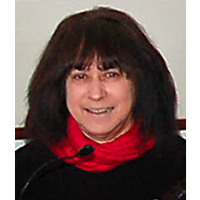
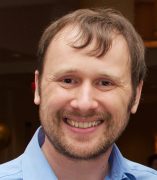
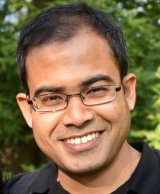
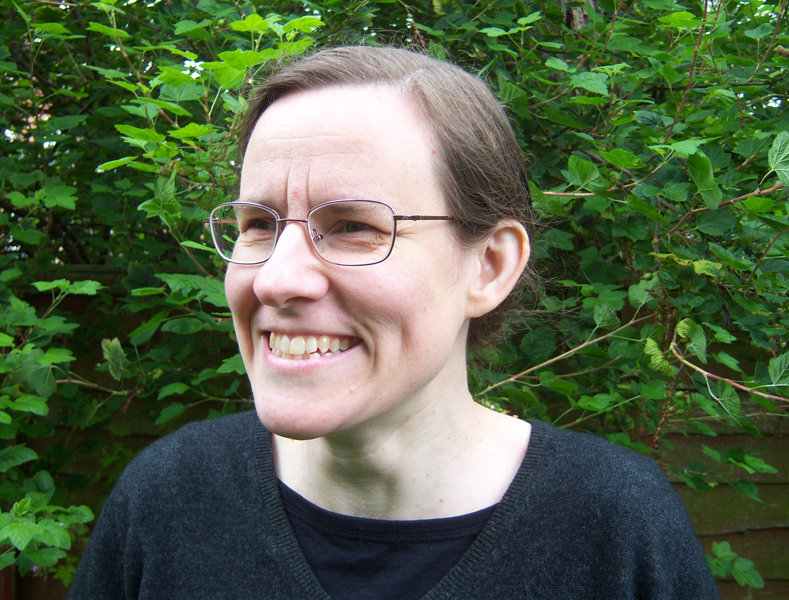
Dr Bo Yao is a Senior Lecturer at Lancaster University's Department of Psychology, Fylde College. His research focuses on the cognitive neuroscience of language and inner speech, exploring neural mechanisms underlying inner speech's role in cognition and mental health. He employs methods like EEG, fMRI, eye tracking, and computational modeling. Yao supervises 4 postgraduate students and leads the Language, Inner Speech, and Neuroscience (LISN) Lab. Research Interests: Inner speech's neural basis, auditory verbal hallucinations, embodied cognition, and psycholinguistics. Recent work examines rhythmic foundations of thought and emotional processing in language. His 2025 publications highlight innovations in parafoveal preview benefits and predictive coding frameworks. Publications span cognitive neuroscience, psycholinguistics, and neuroimaging, with a focus on reading comprehension, speech processing, and emotional word analysis. His work bridges phenomenological experience with neural mechanisms, using meta-analyses and experimental paradigms. Advising and Labs: Supervises students in language cognition and inner speech research. The LISN Lab develops interdisciplinary approaches to understand language and consciousness.
Dr. Yi-ching Josephine Su is an Associate Professor at the Graduate Institute of Linguistics, National Tsing Hua University, Taiwan. Her research focuses on cognitive science, language acquisition (first and second), psycholinguistics, neurolinguistics, developmental language disorders, and sentence processing. She leads the Acquisition/Psycholinguistics Lab, employing experimental methods like eye-tracking and ERP to study language processing in normal adults, children, and clinical populations. Education: Ph.D. in Linguistics, University of Maryland (2001) M.A. in Cognitive Science, Johns Hopkins University M.A. in Linguistics, National Tsing Hua University B.A. in Foreign Languages and Literature, National Taiwan University Research Interests: Dr. Su explores syntactic/semantic aspects of language acquisition and processing, including anaphora resolution, scope ambiguities, and cross-linguistic comparisons. Her work emphasizes child-adult parallels in comprehension mechanisms and the interplay between syntax, semantics, and pragmatics. Grants & Projects: 2021–2023: Online processing of reflexives in L2 English/Mandarin 2018–2021: Cross-linguistic L2 acquisition of pronoun resolution Longitudinal studies on child language development and cochlear implant outcomes Lab Activities: The lab collaborates with interdisciplinary teams to investigate neural correlates of language processing. Training includes experimental design, statistical analysis, and theoretical linguistics, preparing students for advanced research in acquisition and psycholinguistics.
Maria Teresa Guasti is a Professor of Linguistics and Psycholinguistics at the University of Milano-Bicocca. She has held academic positions since 1988, including Assistant Professor (2000-2005) and Researcher roles at institutions like the University of Siena and San Raffaele Hospital. Her research bridges theoretical linguistics, child language acquisition, and cognitive disorders like dyslexia and developmental language impairment (DLD). PhD in Linguistics, University of Geneva Guasti’s work focuses on syntax, semantics, and pragmatics in typical and atypical language development, with a special emphasis on bilingual acquisition, DLD, and dyslexia. She has contributed to understanding timing anticipation deficits in dyslexia and has expanded her research into musical cognition and motor control (handwriting). Recently, she collaborated with human-computer interaction scientists to develop language-based interactive technologies. Her publications span 160 works, including 80 peer-reviewed articles and 6 books, with over 7,000 citations and an H-index of 42. Key grants include the ERC Synergy (2019) and Multimind (2017-2022, €516,122). 2019 ERC Synergy Grant for Leibniz’s Dream (€10.2M) 2012-2018 Associate Investigator at ARC Centre of Excellence in Cognition and its Disorders 2005-2009 Italian Representative in European COST A33 Action Guasti has trained 14 PhD students, supervised 12 postdocs, and mentored 100+ master’s students. She has served as Associate Editor for Language Acquisition and Frontiers in Psychology , and on editorial boards including Journal of Child Language . She has delivered keynotes at international conferences and taught at summer schools.
Cyrille GRANGET is a Professor in the Department of Language Sciences at Toulouse Jean Jaurès University (UT2J), where he also serves as Director of the NeuroPsychoLinguistics Laboratory (LNPL, UR4156). He is actively involved in academic governance, holding elected positions in the Departmental Council of Language Sciences, the CLESCO Doctoral School Council, and the Qualified Scientific College (CSQ). He is also the Educational Coordinator for International Relations and outgoing mobility in Language Sciences. His research lies at the intersection of linguistics, cognition, and education, with a strong focus on second and third language acquisition. Key interests include: Linguistic and cognitive representation of events in L2 Inflectional verbal morphology in L2 French Effects of orthography and metrical structure on pronunciation Role of context, prior languages, and literacy in language learning Sociolinguistic variation and critical appropriation of dominant varieties Language acquisition among migrant populations His recent publications reflect a multidisciplinary approach combining psycholinguistic experiments (eye-tracking), computational modeling, and sociolinguistic fieldwork. He frequently collaborates across languages including French, German, Japanese, Spanish, Arabic, and Portuguese, often in educational or migratory contexts. His work is published in journals such as Languages , Education Sciences , and Revue Romane , and presented at major conferences like EuroSLA and CMLF. Scientific contributions and service include: Member of the editorial board of Langage, Interaction, Acquisition (LIA) Member of the office of the Thematic Network Recherche en Acquisition des Langues Secondes (RéAL2) Participant in the Toulouse Political Ecology Workshop (Atecopol) Supervision of multiple research projects and students in linguistics and language education He is deeply committed to inclusive language education, particularly for newly arrived migrant adolescents, and integrates theoretical linguistics with practical pedagogical applications. His leadership in LNPL and involvement in national research networks underscore his significant role in advancing psycholinguistic and sociolinguistic research in France.
Univ.-Prof. Dr. Alexandra Lenz is a Professor of German Linguistics at the University of Vienna's Department of German Studies. Her research focuses on Austrian German dialects, lexical variation, and sociolinguistic dynamics, particularly through digital methods and corpus-based approaches. Key Research Areas: Austrian German dialects, lexical variation, sociolinguistic perception, and digital humanities. Projects: Leading contributions to the Special Research Programme 'German in Austria (DiÖ): Variation–Contact–Perception' and LexAT21 lexicon atlas. Methodology: Specializes in corpus linguistics, syntactic variation analysis, and experimental elicitation techniques. Recent Trends: Articles from 2025–2020 explore lexical responses to crises (e.g., pandemic language), grammaticalization pathways, and dialect syntax through comparative and interdisciplinary frameworks.
Yunchuan Chen is an Assistant Professor of the Practice in both the Department of Asian and Middle Eastern Studies and the Department of Linguistics at Duke University. He is also a Faculty Network Member of the Duke Institute for Brain Sciences. His research focuses on experimental approaches to grammars, second language acquisition, and heritage languages, particularly examining languages such as Japanese, Chinese, Korean, Tibetan, Thai, and Nuosu Yi. He advocates for meaning-based approaches to language teaching and learning. Chen holds a Ph.D. (2019) and M.A. (2012) in Linguistics from the University of Hawaii, Manoa. His work has been recognized with awards including the 2025 SEATJ Teacher of the Year Award and the 2021 Hamako Ito Chaplin Memorial Award for Excellence in Japanese Teaching. His research trends emphasize experimental methods to analyze syntactic structures (e.g., quantifier scope, relative clauses) across languages, with a focus on heritage language speakers and L2 learners. Recent studies explore cross-linguistic influence and bilingual processing, reflecting his dual interest in theoretical linguistics and applied language education. Awards: 2025 SEATJ Teacher of the Year Award 2021 Hamako Ito Chaplin Memorial Award Chen teaches advanced language courses (e.g., Japanese, Korean, Chinese) and specializes in second language pedagogy. His courses include East Asian Languages as Second Languages and Japanese Language & Society , reflecting his commitment to both academic research and practical language instruction.
Pauline Jacobson is a Professor of Linguistics at Brown University, where she has served since 1975. Her research focuses on formal semantics, particularly the syntax-semantics interface, advocating for direct compositionality and variable-free semantics. She has held visiting positions at Ohio State, Harvard, and other institutions, and has contributed to summer institutes in linguistics worldwide. She earned her BA in Anthropology (1968) and PhD in Linguistics (1977) from UC Berkeley. Her work emphasizes eliminating intermediate levels like 'Logical Form' and explores phenomena such as negation, ellipsis, and binding within a variable-free framework. Prof. Jacobson has served as editor-in-chief of Linguistics and Philosophy , chaired panels for NSF and Fulbright, and participates in editorial boards. Her research trends reflect a sustained engagement with syntactic and semantic compositionality, challenging traditional assumptions about linguistic structure. Her advising and grants include teaching both undergraduate and graduate courses on syntax, semantics, and pragmatics. She is affiliated with Brown’s Department of Linguistics and has contributed to interdisciplinary initiatives in formal linguistics and cognitive science.
Utako Minai is an Associate Professor of Linguistics at the University of Kansas, where she directs the Developmental Psycholinguistics Lab. She holds a PhD in Linguistics from the University of Maryland and completed postdoctoral research at RIKEN Center for Brain Science. Her research examines first language acquisition mechanisms, focusing on how children develop semantic knowledge and utilize it in real-time language processing. Experimental approaches include eye-tracking and cognitive tasks across English, Japanese, Mandarin and Turkish language contexts. Current NSF-funded projects investigate predictive processing in Mandarin relative clauses. Teaching includes First Language Acquisition courses and Japanese linguistics at undergraduate/graduate levels.
Dr. Serkan Şener is an Assistant Professor at Yeditepe University's Department of Turkish Language and Literature, Faculty of Arts and Sciences. He holds academic roles in multiple programs including the Cognitive Science Master's Program and Comparative Literature Master's Program. His career spans research and teaching positions at Ankara University and the University of Connecticut, where he completed his PhD in Linguistics (2001-2010). Education: PhD in Linguistics, University of Connecticut (2001-2010) MSc in Linguistics, Ankara University (1995-1999) BSc in Linguistics, Ankara University (1991-1995) Research Interests: Focuses on syntax, psycholinguistics, neurolinguistics, and Turkish language structures. His work explores topics like word order variation, code-switching, and syntactic processing in aphasia. He combines formal linguistic theory with experimental methods, including ERP analysis and cognitive psychology approaches. Advising & Grants: Supervised over 10 theses (2017–2024), covering topics from syntactic processing to metaphor comprehension. Lead researcher in TÜBİTAK-funded project (2019) analyzing relative clause processing using EEG and time-frequency analysis. Administration: Served as Bologna Coordinator (2011), Program Coordinator (2014), and Erasmus Coordinator (2016) at Yeditepe University. Currently holds Quality Council membership (2018).
Professor Doris Tophinke is affiliated with the University of Paderborn, where she serves in the Faculty of Cultural Studies within the Institute of German Studies and Comparative Literature, specifically in the Department of German and General Linguistics. She maintains her office in room H3.134 at Warburger Str. 100, 33098 Paderborn and serves as the project leader for the Paderborn location of the Dialect Atlas of Central West Germany (DMW). Professor Tophinke's research spans multiple interconnected areas within linguistics, with a primary focus on literacy and writing practices across historical and contemporary contexts. Her work uniquely bridges contemporary graffiti studies with medieval linguistic research, examining how written forms carry grammatical significance. She investigates 'small forms' of writing like graffiti through the lens of multimodal grammar and cognitive linguistics, while simultaneously documenting language change through her extensive work on Low German dialects and the Dialect Atlas of Central West Germany. Her research demonstrates how seemingly marginal linguistic phenomena provide profound insights into grammatical structures and language evolution. The patterns in her recent publications reveal consistent engagement with informal language in everyday contexts - from street graffiti to digital communication. Her scholarly output shows increasing interdisciplinary collaboration, particularly with computational linguists on projects analyzing grammatical change. Her work on political graffiti and linguistic expressions demonstrates how language functions as political commentary and social identity marker in public spaces. Since 2008: Member of the editorial board of Praxis Deutsch (Friedrich Verlag) Since 2008: Member of the editorial board of Zeitschrift für Germanistische Linguistik (de Gruyter) December 2011-February 2016: Member of the DFG Subject Committee 'Sprachwissenschaften' October 2011-September 2015: Service in DAAD selection committees Since March 2019: Member of the review board of 'Niederdeutsches Wort' journal Since June 2019: Member of the advisory board for Low German language at the Ministry of Home Affairs of North Rhine-Westphalia September 2011-May 2019: Deputy Ombudsperson for Good Scientific Practice at University of Paderborn June 2019-March 2022: Ombudsperson for Good Scientific Practice at University of Paderborn Professor Tophinke actively supervises doctoral students through the DMW project and related research initiatives, providing opportunities for students to work with research data in their theses. She teaches courses including 'Zeichensetzung und (komplexe) Sätze' (Punctuation and Complex Sentences), 'Wörter: Semantik und Funktionen im Wandel' (Words: Semantics and Functional Change), and 'Der Wortschatz der Mode' (Vocabulary of Fashion), integrating her research interests across German teacher training programs and Linguistics degree programs. She leads the Paderborn team for the Dialect Atlas of Central West Germany (DMW), which involves systematic fieldwork collecting dialect data throughout North Rhine-Westphalia and neighboring states. The project team includes scientific associates, research assistants, and student collaborators who conduct interviews in participants' homes across the survey region, documenting linguistic variations with particular attention to Low German where it is still spoken. The team also works on the Informationssystem Graffiti in Deutschland (INGRID) project, which catalogs and analyzes graffiti as a linguistic phenomenon.
Alexandra N. Lenz is a Professor of German Linguistics at the University of Vienna and a Full Member of the Austrian Academy of Sciences. She serves as Director of the Austrian Centre for Digital Humanities and Cultural Heritage (ACDH-CH) and Spokesperson for the Collaborative Research Center 'German in Austria: Variation – Contact – Perception' (FWF F060). Her work spans dialectology, variationist linguistics, syntax, sociolinguistics, and digital humanities. Ph.D. in German Linguistics (University of Marburg, 2002) DFG Fellowship (1998–2001) Rosalind Franklin Fellowships (2005–2009) Her research focuses on Austrian German dialects, lexical variation, syntactic change, language contact, and the interplay between standard and non-standard varieties. She leads the LexAT21 project, analyzing 21st-century lexical variation in Austria, and explores diaglossic repertoires through corpus-based and experimental methods. Recent publications examine lexical dynamics in Austrian media during the pandemic, relativizer variation in Austria, and the evolution of possessive constructions. She has organized major conferences like ICLaVE12 and 'AI meets Humanities & Social Sciences' in 2025. Full Member, Austrian Academy of Sciences (2019) Elected Corresponding Member, Austrian Academy of Sciences (2013) Vidi-Grant (NWO, 2009) [unaccepted] Hugo-Moser-Prize (2009) Lenz mentors through networks like 'Sprachwissenschaftliche Dissertationsprojekte der Wiener Germanistik & Friends' and contributes to editorial boards of journals such as Zeitschrift für Dialektologie und Linguistik . Her leadership roles include chairing the ÖAW Research Department 'Linguistics' and co-founding initiatives like the 'Bairisch Across Borders' network. She directs labs and teams at ACDH-CH, focusing on digital humanities infrastructure and language variation corpora. Her work bridges traditional dialectology with computational methods, emphasizing Austria's unique linguistic landscape.
Shane Ebert, PhD, is a Senior Lecturer in the Department of Hispanic and Italian Studies at the University of Illinois at Chicago (UIC). His research focuses on cross-linguistic properties of morphosyntax in bilingual speakers, particularly early and simultaneous bilinguals, with a focus on wh-questions, heritage language acquisition, and experimental code-switching methodologies. Education : - PhD in Hispanic Linguistics, University of Illinois at Chicago - BA from Beloit College Research Interests : Ebert investigates syntactic phenomena such as the That-trace Effect, code-switching constraints, and the morphosyntax of bilingual speakers. His work bridges formal syntax with empirical methodologies, exploring how bilingualism impacts grammatical processing. Key areas include: - Cross-linguistic syntactic interfaces - Age-of-acquisition effects in bilinguals - Methodological rigor in code-switching research Publications : Ebert's recent work addresses syntactic islands in Mexican Spanish, modality effects in experimental studies, and the role of monolingual stimuli in code-switching analysis. His research emphasizes the importance of empirical validity in studying bilingual linguistic competence. Awards & Grants : No awards or grants explicitly listed in the provided materials. Advising & Labs : No advising roles or lab affiliations detailed in the text.
Debopam Das is a University Lecturer in the Department of English Language and Literature at Åbo Akademi University, Finland, and holds a Docent position in English Discourse Analysis at the University of Turku. Previously, he was a postdoctoral researcher at Humboldt-Universität zu Berlin (2018-2023) and University of Potsdam (2016-2018). Education: PhD in Linguistics, Simon Fraser University (2009-2014) Master's in Linguistics, University of Calcutta (2004-2007) Bachelor of Arts in English, University of Calcutta (2000-2004) Research Focus: Specializes in discourse analysis, corpus linguistics, and lexicography. Primary interests include: Discourse relations signaling and continuity Corpus development/annotation for discourse studies Cross-linguistic analysis of relative clauses in L2 learners Lexicon development for discourse connectives Collaborations & Resources: Leads the ICLE-RC project on learner English with Dr. Izabela Czerniak. Developed key linguistic resources including: RST Signaling Corpus DiMLex-Eng/Bangla lexicons RST Continuity Corpus
Nathan Schneider is an Associate Professor jointly appointed in the Departments of Linguistics and Computer Science at Georgetown University, where he teaches and leads interdisciplinary research at the intersection of computational linguistics and natural language processing. He earned a B.A. in Computer Science and Linguistics from UC Berkeley (2004–2008) and a Ph.D. in Language Technologies from Carnegie Mellon University (2008–2014) under advisor Noah Smith. After post-doctoral research at the University of Edinburgh ILCC with Mark Steedman (2014–2016), he joined Georgetown as Assistant Professor (2016–2022) and was promoted to Associate Professor in 2022. His research centers on the linguistic foundations of NLP, focusing on computational, corpus-based approaches to meaning construction. Key themes include: Linguistic Structure: Design, annotation, parsing, and evaluation of syntactic and semantic frameworks such as UD, CCG, AMR, UCCA, and FrameNet. Adposition Semantics: Cross-linguistic description and computational modeling of prepositions and postpositions via the SNACS framework. Metalanguage: Analysis of explicit language about language in linguistics, education, and law, and leveraging such data for NLP. Uncertainty, Rarity, and Noise: Modeling sparse and noisy linguistic phenomena to improve robustness and interpretability. Across more than 100 peer-reviewed publications since 2015, Schneider’s work exhibits a steady trajectory from foundational annotation schemes (e.g., SNACS, CGELBank, UCCA) to neural-era evaluations using transformer models and large language models, with increasing attention to legal and cross-lingual applications. His 2025 corpus of papers demonstrates a focus on legal language processing, child language acquisition corpora, multilingual supervision, and probing LLMs. Scientific Awards & Honors NSF CAREER Award (publicized Dec 2022) Recognition of undergraduate mentee for research achievement (Aug 2023) Invited keynotes and distinguished talks at NASSLLI, MWE Workshop, Georgetown Law SOLID Symposium, UT Austin, Charles University, Allen Institute for AI, Mila-Quebec AI Institute, University of Toronto, Saarland University, Dagstuhl Seminar, and many others. Advising, Teaching & Service Schneider advises Ph.D. and master’s students in both Linguistics and Computer Science and leads the NERT lab. He has served as Program Co-Chair for LAW-MWE-CxG@COLING 2018, Area Chair for COLING 2018, Program Co-Chair for LAW@EACL 2017, and Tutorial Co-Chair for EMNLP 2017, and regularly teaches graduate courses such as LING/COSC-672 Advanced Semantic Representation. Labs & Teams He heads the NERT (Nathan’s Empirical Research Team) lab at Georgetown, an interdisciplinary group developing corpora, models, and tools for multilingual and cross-domain NLP, with current projects on legal text, child language, and adposition semantics.
Probert Philomen is a University Lecturer in Classical Philology and Linguistics at the University of Oxford and a Fellow of Wolfson College, Oxford. He holds a D.Phil. in Comparative Philology from Oxford (supervised by Anna Morpurgo Davies) and has held significant fellowships, including the AHRC Leadership Fellowship (2015–2017) and a British Academy Mid-Career Fellowship (2012). His research focuses on linguistic theory, prosody, Indo-European historical linguistics, and ancient Greek and Latin grammarians. Education: 1997–1999: D.Phil. in Comparative Philology, St John’s College, Oxford 1991–1997: B.A. and M.Phil. in General Linguistics and Comparative Philology at Exeter College, Oxford Research Interests: Linguistic theory with emphasis on prosody Indo-European historical and comparative linguistics Diachronic syntax and ancient grammatical traditions Analysis of Greek, Latin, and Anatolian languages and literatures Recent Work Trends: Recent articles explore ancient Greek syntax (e.g., relative clauses), inscriptional evidence, and theoretical approaches to prosody and accentuation. Collaborative work includes studies on Roman colloquial language and Mycenaean case systems. Awards: Conington Prize (2002) for an Oxford dissertation Teaching Award from the Oxford Learning Institute (2006) Labs/Teams: Active in the Linguistics and Philology department at Oxford, contributing to interdisciplinary research on ancient languages and their historical contexts.