Mr. Richardo Khonasty is a Senior Research Engineer at the School of Mechanical and Mechatronic Engineering, part of the Faculty of Engineering and Information Technology at the University of Technology Sydney (UTS). He has held appointments at UTS since 2019, including roles at the Centre for Autonomous Systems and Robotics Institute. He also serves as a Tutor since 2016. PhD in Robotics (2020), UTS B.Eng. in Mechanical and Mechatronic Engineering (2014), UTS Khonasty's research focuses on robotics and human-robot collaboration, with applications in surgical robotics (total hip replacement), industrial automation (abrasive blasting), and green wall inspection systems. His work emphasizes kinematic accuracy, adaptive control schemes, and cost-effective robotic solutions. His recent publications explore robotic-assisted burring for orthopedic surgery, damping strategies for singularity management, and exoskeleton design frameworks. Khonasty is currently involved in funded research related to hydraulic tooling safety under the BTP - Stage 2 - IntelliForce Tooling grant.
Deborah Richards is a Professor in the School of Computing at Macquarie University, affiliated with the Ethics and Agency Research Centre, Performance and Expertise Research Centre, and Frontier AI Research Centre. She holds roles as Industry and External Relations Director for the School and Director of the Virtual Reality Lab. Her research focuses on Intelligent Virtual Agents, Virtual Reality applications in education and health, knowledge acquisition, and cybersecurity ethics. She has authored over 425 publications and led 19 research projects, including studies on AI in healthcare and ethical AI design. Education: PhD (Artificial Intelligence, Macquarie University), MAppSc (Information Studies), BBus (Computing and MIS), and a Postgraduate Certificate in Higher Education (Leadership and Management). She advises on PhD and MRes students in Intelligent Virtual Agents research. Research interests include virtual agents for health behavior change, AI ethics, and educational technology. Notable projects include the eADVICE web-based management system for urinary incontinence and the development of embodied conversational agents for wellbeing support. Awards include the ABC Science Media Fellowship (2005) and Vice-Chancellor’s Citations for Outstanding Contributions to Student Learning (2017). Grants and collaborations span health informatics, cybersecurity, and AI ethics. She co-leads initiatives like the Respectful Maternity Care study and the Virtual Reality Lab’s immersive learning environments. Future work emphasizes ethical AI integration in education and healthcare.
Professor Victor Fung is a leading academic in neurology and motor control at the Sydney Medical School , University of Sydney. He serves as Director of the Movement Disorders Unit at Westmead Hospital and holds prominent roles in the International Parkinson and Movement Disorder Society (President) and the Asia Pacific Affairs Committee of the Australian and New Zealand Association of Neurologists. His research focuses on Parkinson's disease , dystonia , tremor , and movement disorder genetics , with over 250 peer-reviewed publications and an h-index of 61. His work spans Clinical trials for Parkinson's treatments (e.g., foslevodopa/foscarbidopa infusion, incobotulinumtoxinA) Genetic studies on dystonia and Parkinsonism Neurophysiological assessments of tremor and balance Development of screening tools for dystonia and Parkinson's complications Key article trends highlight genetic diversity in dystonia, neuroinflammatory mechanisms in tremor, and behavioral neurology in Parkinson's disease. He contributes to editorial boards of npj Parkinson's Disease , Journal of Clinical Movement Disorders , and Faculty Opinions . While no explicit student lists are provided, his collaborations span global institutions. His clinical work at Westmead Hospital addresses device-assisted therapies and complex movement disorders.
Associate Professor Madeline Taylor is an Australian Research Council (ARC) Early Career Industry Fellow at Macquarie Law School and Co-Lead of the Energy, Communities, and Market Regulation Stream at the Transforming Energy Markets Research Centre. She specializes in socio-legal aspects of energy transition, focusing on regulatory frameworks, energy justice, and land-use conflicts between energy developers and communities. Her work bridges property law, commercial law, and comparative law to address challenges in renewable energy integration and resource governance. Affiliations: Honorary Associate at Sydney Environment Institute, Member of Sydney Institute of Agriculture Industry Partners: NSW Department of Primary Industries and Spark Renewables (FAARM Project) Research Interests: Energy law and policy, agricultural-legal synergies, renewable energy siting, and just transition principles. She co-edits the Oil, Gas and Energy Law Journal and contributes to the LexisNexis Energy and Resources Law in Australia . Recent Articles Highlight Key Themes: Offshore wind governance, agrivoltaics regulatory systems, hydrogen licensing, and energy justice frameworks. These works emphasize interdisciplinary approaches to balancing economic, environmental, and social dimensions of energy transitions. Awards: 2023 Lawyers Weekly Women in Law Academic/Researcher of the Year, 2024 AFR Higher Education Awards Finalist, Clean Energy Council Transformational Leadership Scholarship Teaching and Engagement: Embeds climate justice in commercial law education; advises governments and NGOs on energy policy. Active in RE-Alliance Management Committee and IUCN Climate Change Law initiatives.
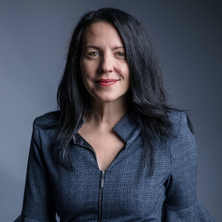
Dr Nga Wun (Doris) Li is a Senior Lecturer at the University of Technology Sydney (UTS) within the Faculty of Design, Architecture and Building, Department of Fashion and Textiles. She leads research in seamless knitting technology, smart textiles, and sustainable fashion innovation. PhD in Fashion & Textile Design (HK PolyU, 2021) BA (Hons) in Fashion & Textiles (HK PolyU, 2012) Certifications in Wholegarment Machine (Shima Seiki, Japan) and Higher Education Pedagogy (UTS) Her research focuses on functional garments, knitting technology, and bio-informed textile design. Key projects include smart socks for DVT prevention , one-size sports bras , and buoyant swimwear for children . She combines knitting with machine learning and 3D printing for material innovation. Recent publications highlight her work on compression textiles (2025), wearable glucose sensors (2025), and knitted metasurfaces for acoustic comfort (2024). She has secured AU$52,000+ in grants across 5 funded projects. Fashion Design Award (Jeanswest, China) Outstanding Presentation & Research Paper Awards (2024) Dr Li supervises PhD and MPhil students in smart textiles and sustainable design while coordinating machine knitting courses. She collaborates with AiDLab (Hong Kong) and Powerhouse Museum (Australia).
Associate Professor Nicole Hartley serves as MBA Director at UQ Business School and Future of Health Research Hub Lead at The University of Queensland. With 19 years of academic experience across institutions in Sydney and Queensland, she holds appointments across multiple faculties including Business, Economics and Law; Health, Medicine and Behavioural Sciences; and Engineering, Architecture and Information Technology. Her academic affiliations span the Centre for the Business and Economics of Health, Centre for Enterprise AI, and Queensland Digital Health Centre. Dr. Hartley is an internationally recognized research academic specializing in services marketing and digital technology. Her research interests encompass service technology, virtualized services, customer preference and adoption, new media, service innovation, and corporate digital responsibility. She particularly focuses on customer perceptions in response to technological disruption in service delivery, with special emphasis on healthcare services. Her work bridges business, technology, and healthcare domains, examining how digital transformation affects consumer behavior and service experiences. Her extensive publication record demonstrates consistent research output across multiple disciplines, with recent work concentrating on telehealth implementation, corporate digital responsibility, consumer trust in digital environments, and healthcare service innovation. The interdisciplinary nature of her research connects marketing theory with practical healthcare applications, particularly in the context of digital transformation and service delivery. Dr. Hartley has successfully supervised numerous PhD candidates to completion and currently mentors several doctoral students working on topics ranging from sustainable consumption to healthcare innovation and digital service experiences. Her research has been supported by significant funding from Queensland Health, NHMRC, and other organizations, focusing on telehealth, digital service transformation, and healthcare innovation. As Director of MBA and Executive Education at UQ Business School, Dr. Hartley combines her academic expertise with practical industry experience, having previously worked as Marketing Manager/Director in tourism, education, and communication industries in Australia and the UK. She is an award-winning educator with expertise in marketing strategy, digital media, consumer behavior, and experiential industry-based projects.
Mark Billinghurst is a Professor and Director of the Australian Research Centre for Interactive and Virtual Environments at UniSA STEM, University of South Australia. His work focuses on Augmented Reality (AR), Virtual Reality (VR), and empathic computing, emphasizing remote collaboration, human-computer interaction, and inclusive design. He has authored influential books like Computer-Supported Collaboration: Theory and Practice (2024) and pioneered systems such as Empathy Glasses and gaze-tracking interfaces for collaborative tasks. Education & Affiliations: Mark Billinghurst is affiliated with the Empathic Computing Laboratory and has collaborated globally with institutions like Keio University, Nokia, and the University of Canterbury. His research spans AR applications in manufacturing, healthcare, and social interaction, with a focus on improving accessibility and user experience. Research Interests: Dr. Billinghurst’s research explores AR/VR for remote guidance, wearable technologies, and emotional interfaces. He investigates how gaze cues, multimodal feedback, and AI can enhance collaboration and empathy in virtual environments. His work bridges technical innovation with human-centric design, addressing challenges in industrial assembly, mental health, and workplace transformation. Publications & Impact: His 2016 study on gaze tracking in remote collaboration (cited over 100 times) and 2024 book on AR collaboration highlight his contributions. Recent projects include Vibe360 (group emotion analysis) and CAEVr (biofeedback-driven empathy systems). He actively contributes to conferences like IEEE VR and CHI, shaping the future of immersive technologies. Labs & Future Work: His lab develops tools like the SAR system for aircraft drilling and empathic agents (EMiRAs). Future directions include AI-driven emotional interfaces, inclusive metaverse design, and VR solutions for cognitive rehabilitation.
Andy Ball is a Distinguished Professor in the School of Science at RMIT University, specializing in environmental microbiology and biotechnology. He leads the ARC Training Centre for the Transformation of Australia’s Biosolids Resource and has held key roles at institutions including the University of Essex and Flinders University. His research focuses on bioremediation, organic waste treatment, and environmental pollution solutions, with over 300 peer-reviewed publications and significant industry collaboration. Andy's academic career spans 30 years, with roles such as Director of the Centre for Environment and Society at Essex and Director of Flinders Bioremediation. He has attracted >$22M in research grants, particularly in applied environmental microbiology. His awards include the Royal Society of Victoria Medal (2021) and RMIT Research Excellence Award (2018). Research interests emphasize sustainable remediation of contaminated environments, leveraging microbial ecology and biotechnology. His teaching spans environmental science and biotechnology programs at RMIT. Andy advises on projects addressing bioremediation, bioenergy, and pathogen survival, with active collaborations with industries like Shell and Melbourne Water.
Dr. Barbara Barbosa Neves is a sociologist of technology and ageing at the University of Sydney’s Sydney Centre for Healthy Societies, holding a prestigious Sydney Horizon Fellowship in AI Social Science. She specializes in loneliness, social isolation, and digital inequalities in later life, with over $6 million in competitive funding from global bodies. Her research bridges sociology and computer science, focusing on inclusive technology design for older adults. Education: PhD in Sociology. Formerly an Associate Director at the Technologies for Aging Gracefully Lab, University of Toronto, Canada. Visiting positions at Oxford, Oslo, Louvain, and Toronto. Research Interests: Sociology of Technology , Aging Anxieties , Healthcare AI , and Ageism . Her work examines how AI, VR, and robotics can benefit older adults while addressing ethical and social challenges. Key themes include combating age-based digital divides and designing technologies that align with care ethics. Grants & Projects: Lead Investigator for the $1M+ evaluation of Australia’s Aged Care Volunteer Visitors Scheme, ARC Discovery Project on loneliness and technology, and MRFF-funded dementia studies. Collaborates with multidisciplinary teams, including computer scientists and policy experts. Awards: 28+ international awards, including Mather Awards (US), George Story Distinguished Lecturer, and Fellowships from the Royal Society of Arts (FRSA) and Higher Education Academy (FHEA). Public Engagement: Over 200 media contributions, including ABC op-eds and SBS documentaries. Her research informs policy and public discourse on aging, technology, and social equity.
Professor Philip Birch is a distinguished academic in Criminology at the University of Technology Sydney (UTS), Faculty of Design & Society, School of International Studies & Education. With over 15 years of academic experience across British, American, and Australian university systems, he has established himself as a leading expert in policing, community safety, and criminal justice. His extensive practical background in criminology, including roles as a Specialist Crime Team Manager, Community Safety Research Manager, and Through Care Worker in UK correctional facilities, informs his applied research approach. Professor Birch's educational background includes a BSocSci. (Hons) in Social Policy (Crime & Justice) from the University of Manchester, multiple postgraduate qualifications from the Open University (including an MSc. in Social & Criminological Research Methods), a Post Graduate Certificate in Higher Education Practice from the University of Huddersfield, and a PhD in Criminology from the University of New South Wales. He also holds a Fellowship with the Higher Education Academy. His research centers on six key areas: Police & Policing; Community Safety & Crime Prevention; Prisons, Probation & Parole Policy & Practice; Assessment, Treatment & Management of Offenders; Gender & sexuality inclusive Domestic and Family Violence; and Sex Work, Sex Workers and Procurement. His work emphasizes the practical application of criminological research to real-world justice issues, with strong industry engagement across law enforcement and correctional services. Recent publications reveal a clear trend toward police mental health, aging in policing, hate crime identification, trauma-informed policing approaches, and digital community safety initiatives. His research employs diverse methodologies including qualitative case studies, Delphi methods, rapid evidence assessments, and comparative analyses across multiple jurisdictions. Teaching award (2019) from Australian College of Educators for outstanding contribution to education Literati Award (2019) for published work Fellowship of the Higher Education Academy Professor Birch has supervised numerous Honours, Masters by Coursework, Masters by Research and PhD students in Criminology, Criminal Justice and Policing, with several completions to date. He has secured over $1.3 million in research funding, including an ARC Linkage grant, and has acted as an external assessor for domestic and international funding bodies. His research projects address critical issues in criminology and policing, often with direct policy implications. He established the Crime & Security Science (CaSS) Research Group at UTS in 2022, a cross-faculty initiative connecting academia with industry to advance evidence-based criminology, criminal justice, policing, and community safety research. This group serves as a hub for collaborative projects addressing contemporary security challenges through translational research.
Marita Dale is a Senior Lecturer in the Discipline of Physiotherapy at the University of Sydney and an Early Career Researcher affiliated with the Charles Perkins Centre. She specializes in cardiorespiratory physiotherapy, focusing on exercise interventions for chronic respiratory and cardiac diseases, particularly asbestos-related and dust-related conditions. Her work emphasizes improving accessibility to pulmonary rehabilitation services and leveraging mHealth technologies for patient care. Education: PhD in Physiotherapy (2016, University of Sydney). Her research interests include optimizing pulmonary rehabilitation through mobile health platforms, such as the m-PR™ app, and investigating pediatric burn injury rehabilitation, including orthosis use and scar prevention. She also explores multimorbidity management and simulation-based learning in healthcare education. Recent studies have highlighted her contributions to COPD care protocols, telehealth implementation during the pandemic, and qualitative analyses of patient experiences. Major awards: Sydney School of Health Sciences Teaching Citation (2022), Ashurst Prize for Outstanding Oral Presentation (2015), Helga Pettitt FHS Postgraduate Study Award (2010). Marita supervises Honours, Masters, and PhD students, including Mitchell Taylor on airway clearance in bronchiectasis. Her teaching spans undergraduate and postgraduate programs in cardiopulmonary and musculoskeletal physiotherapy. She collaborates on projects like the Lung Support Service, a nationwide text message program for chronic respiratory patients during the pandemic, and contributed to the commercialization of the Perx-R app for pulmonary rehab. Labs/teams: Active member of the Charles Perkins Centre, focusing on interdisciplinary chronic disease research and healthcare innovation.
Dr. Farhad Aslani is an Associate Professor in the Department of Civil, Environmental and Mining Engineering at the University of Western Australia (UWA), serving as Director of the Materials and Structures Innovation Group. He leads the $250M Australian Composites Manufacturing CRC and co-leads UWA's Engineering Materials Research Cluster. His research focuses on innovative construction materials, including self-sensing concrete, 3D-printed composites, and fire-resistant materials. He has secured over $20M in CRC funding and holds leadership roles in national/international conferences. Key awards include the 2024 Concrete Institute WA Rising Star Award and multiple citation milestones. His work aligns with sustainable development goals, emphasizing eco-friendly materials and infrastructure resilience. Education: PhD in Structural Engineering, University of Technology Sydney (2014) Certificates in Leadership, Research Commercialization, Public Policy, and Project Management from Curtin University, Queensland University of Technology, RMIT, and UTS. Research Interests: Smart materials, sustainable concrete technologies, additive manufacturing, blast/fire resistance, and composites for infrastructure. His lab develops self-sensing concretes, lightweight engineered composites, and electromagnetic shielding materials. Grants & Projects: $4.3M ACM CRC project on composite repairs ARC grants for nanocomposite coatings and fire facilities Main Roads WA funding for timber bridge strengthening Expertise: Structural design, composite materials, and industrial collaborations (e.g., Woodside, Holcim). He advises on major projects like the Morley Ellenbrook Rail Line and Forrestfield Airport Link. Awards: 2024 Concrete Institute WA Rising Star Highly Cited Scholar (ScholarGPS, 2024) Most Cited Paper Awards (2018–2020)
Dr. Abby Haynes is a Research Fellow at the Sydney School of Public Health, University of Sydney, affiliated with the Institute for Musculoskeletal Health and Faculty of Medicine and Health. Her work focuses on physical activity for healthy ageing and people with disability, employing qualitative research, systems thinking, and realist evaluation. Key research themes include: Healthy Ageing Disability and Physical Activity Implementation Science Knowledge Mobilisation Her recent publications analyze: Inclusive sports programs for children with disability Fall prevention in acute hospitals Telehealth physiotherapy for aged care Realist evaluations of yoga and dance interventions Systems thinking in public health policy These emphasize public health, gerontology, and health equity approaches. Grants include MRFF-funded projects on traumatic brain injury rehabilitation (2024), fall prevention (2023), and aged care mobility (2022).
Professor Sabine Dittmann is a leading expert in coastal ecosystem ecology and marine sciences at Flinders University, Australia. As a Professor of Marine Biology in the College of Science and Engineering, her work bridges research and environmental management, focusing on hypersaline estuaries, blue carbon restoration, and invasive species control. She holds a Habilitation in Ecology from the University of Bremen (2001), PhD from the University of Göttingen (1987), and MSc from the same institution (1984). Her research interests include coastal ecosystem health, mangrove and saltmarsh restoration, and decision support frameworks for marine conservation. She has advised government agencies on marine parks, Commonwealth Marine Reserves, and the Coorong ecosystem. Key roles include national president of the Australian Marine Sciences Association (2012–2014), current president of the Royal Society of South Australia, and member of the Australian Antarctic Science Council since 2019. Her recent work emphasizes the global challenges of hypersaline wetland restoration, invasive species impact, and blue carbon methodologies. Over 112 publications span estuarine dynamics, benthic macrofauna, and policy-relevant ecosystem assessments. Projects like the Coorong benthic surveys highlight her commitment to translating science into conservation action.
Professor Luke Prendergast is the Deputy Dean of the School of Computing, Engineering & Mathematical Sciences (SCEMS) at La Trobe University (LTU) and holds a Professorship in the Department of Mathematics and Statistics. He previously served as Head of Department (2014–2020) and led LTU's Statistics Consulting Platform. His research focuses on robust statistics, meta-analysis, dimension reduction, and applied statistics, leading the DRAMA research group. Collaborations span fields like endocrinology, disability studies, and respiratory health. He actively contributes to research grants, including projects on Prader-Willi syndrome and exercise for disability populations. Professor Prendergast's recent work emphasizes statistical software development (e.g., the rquest package) and applications in biostatistics, such as metabolomics analysis and health intervention fidelity. His articles address topics like quantile-based hypothesis testing, geospatial accessibility for disability care, and motivational interviewing efficacy. Professional roles include NHMRC grant review panels, editorial boards for Nutrients and Respirology , and leadership in the Statistical Society of Australia (SSA Vic). His teaching includes courses in meta-analysis, linear models, and data-based critical thinking. Grants funded projects on exercise programs for cerebral palsy populations and community-university partnerships for disability inclusion. Luke's work bridges statistical theory with real-world health challenges, emphasizing robust methodologies and interdisciplinary collaboration.