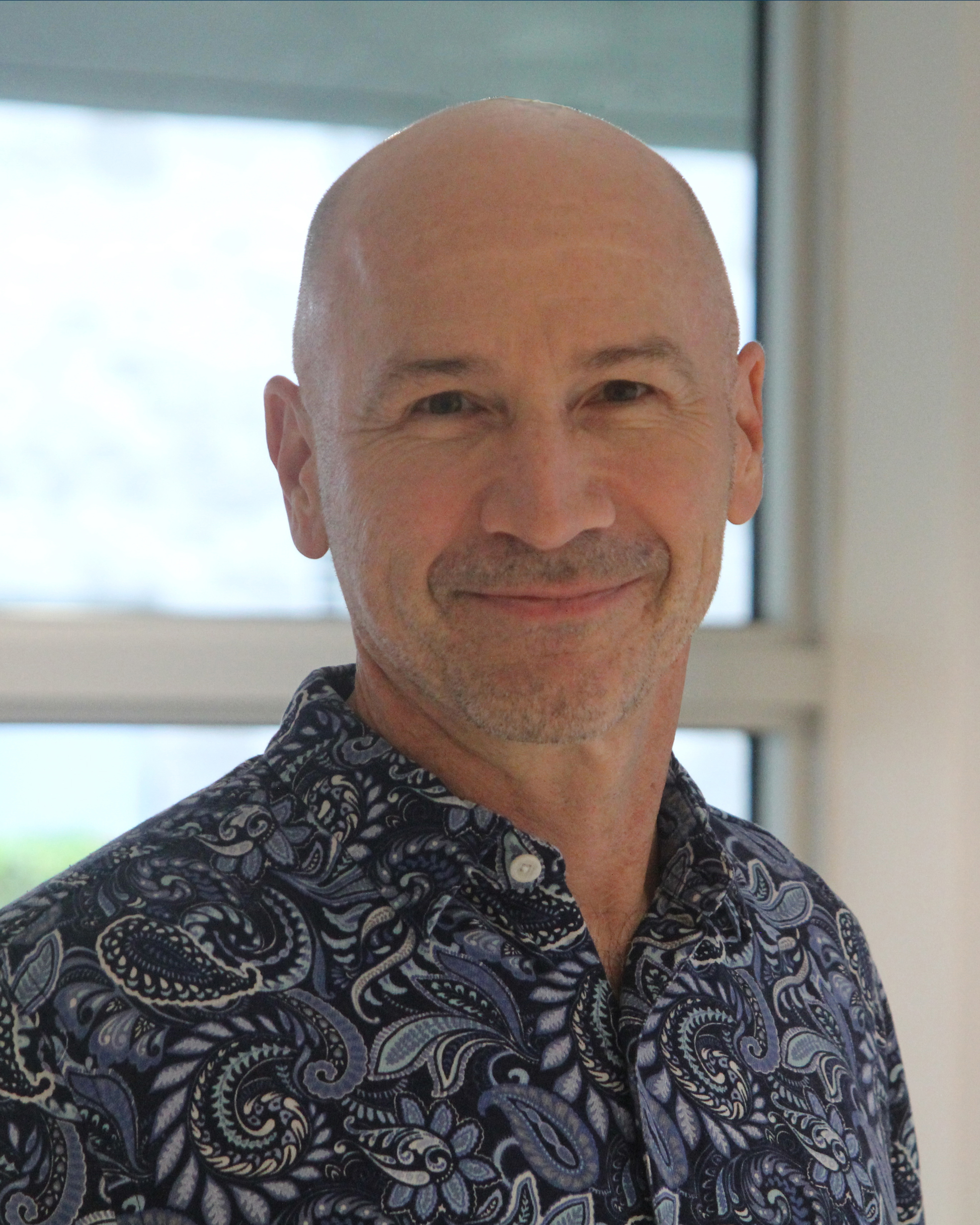
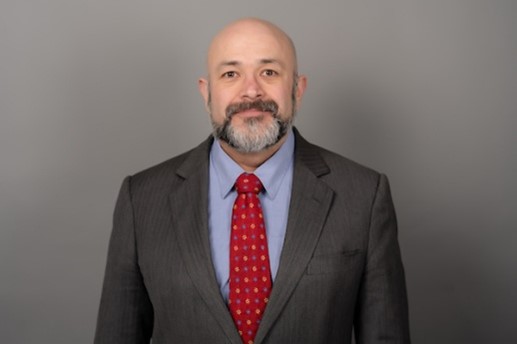
Martin Zettersten is Assistant Professor of Cognitive Science at UCSD, directing the Language and Infant Learning (LIL) Lab. His research investigates language acquisition mechanisms including statistical learning, cross-situational word learning, and infant information-seeking behaviors. Zettersten employs eye-tracking, behavioral experiments, and large-scale collaborations to study developmental trajectories. He earned his PhD at University of Wisconsin-Madison and completed postdoctoral training at Princeton University. Research focuses on: Active information-seeking in language learning Developmental changes in word recognition Category learning through verbal labels Big-team science approaches Zettersten co-leads the Peekbank project, an open repository of developmental eye-tracking data. His work examines how linguistic labels facilitate conceptual development across childhood.
Andreas Stokke is an Associate Professor at the Department of Philosophy, Uppsala University. His work focuses on philosophy of language, semantics, and pragmatics, with significant contributions to the study of fictional discourse and linguistic meaning. He is currently engaged in the research project Exploring the Shadowlands: Towards an Understanding of the Interaction between Fiction and Non-Fiction , funded by the Swedish Research Council (2022–2024). His research spans topics including semantic/pragmatic infelicity, quotative constructions, spatial indexicals, and the epistemological implications of fiction. Stokke's publications include over 30 peer-reviewed articles in journals such as Synthese , The Philosophical Quarterly , and Philosophical Studies . He has also edited volumes like The Language of Fiction (Oxford University Press, 2021) and authored Lying: Language, Knowledge, Ethics, and Politics (Oxford University Press, 2018). His work frequently addresses intersections between language use, epistemology, and ethical considerations. Research Interests: Philosophy of Language, Semantics, Pragmatics, Philosophy of Fiction, Epistemology, and Linguistics. Recent Projects: Investigating fictional discourse’s impact on non-fictional contexts and the semantics of spatial terms. Academic Engagement: Editor for Philosophers' Imprint and frequent contributor to interdisciplinary discussions on lying and deception.
Katharine Graf Estes is an Associate Professor in the Department of Psychology at the University of California, Davis, and a faculty member in the Center for Mind and Brain. Her research focuses on mechanisms of early learning in infants, particularly how they detect statistical regularities to acquire language. She explores phonological patterns, word segmentation, and bilingualism, emphasizing the role of auditory and visual statistical learning in foundational cognitive development. Education : Ph.D. in Psychology, University of Wisconsin B.A. in Psychology, Indiana University Research Interests : Dr. Estes investigates how infants leverage statistical learning to process language sounds, integrate cross-linguistic information, and navigate contextual variations in caregiver interactions. Her work emphasizes bilingualism, caregiver influence, and the neural underpinnings of early language acquisition. Recent studies explore the impact of bilingual environments on word segmentation and the role of sleep in consolidating linguistic knowledge. Awards & Recognition : 2021 College of Letters & Science Award for Distinguished Teaching 2015 Social Sciences Dean’s Innovation Award 2013 Young Alumni Award, Indiana University Lab & Collaborations : As director of the Language Learning Lab, she leads interdisciplinary studies on infant-parent interactions, statistical learning mechanisms, and bilingual language development. The lab recruits monolingual, bilingual, and multilingual families to examine how environmental factors shape early cognitive and linguistic trajectories.
Dr. George Pontikas serves as a Lecturer at the University of Reading within the School of Psychology and Clinical Language Sciences. His academic responsibilities include module convenorship for PL3RES and PLMLAP, supervision of undergraduate and postgraduate dissertation projects, and leadership in assessment for Speech and Language Therapy (SLT) programmes. His educational qualifications comprise: BA in English Language and Linguistics (Aristotle University Thessaloniki) MA in Theoretical and Applied Linguistics (Aristotle University Thessaloniki) PhD in Psycholinguistics (University of Reading) Specializing in psycholinguistics, Dr. Pontikas investigates real-time sentence processing across diverse populations including children, monolinguals, bilinguals, and individuals with dyslexia. His research employs eye-tracking methodologies to examine comprehension of complex syntactic structures, with particular focus on garden-path sentences and filler-gap dependencies. This work provides critical insights into how linguistic knowledge interfaces with cognitive mechanisms during online language processing under varying developmental and linguistic conditions. Analysis of his publication trajectory reveals consistent methodological sophistication in studying bilingual children's sentence processing, with recent work (2023-2025) increasingly incorporating advanced quantitative techniques. His research bridges theoretical psycholinguistics with clinical applications, particularly in differentiating language impairment from typical bilingual development. His scholarly recognition includes: Nomination for the Teaching Excellence Award (School of Psychology & Clinical Language Sciences) As an academic supervisor, Dr. Pontikas mentors students across undergraduate and postgraduate levels in dissertation research. He actively contributes to multiple research initiatives including the Centre for Literacy and Multilingualism (CeLM), Language Sciences Research group, SLT research group, and Pedagogical Research and Education Scholarship group, fostering interdisciplinary collaboration in language science education and clinical practice.
Alan Kersten serves as Professor and Chair of the Department of Psychology within the Charles E. Schmidt College of Science at Florida Atlantic University. His leadership extends to directing the FAU Event Memory Lab, where he investigates cognitive processes underlying event representation and memory. His academic journey began with a BS from the University of Wisconsin-Madison (1989), followed by MS (1993) and PhD (1995) degrees from the Georgia Institute of Technology. Kersten's research centers on mental representations of motion events, distinguishing between intrinsic motions (internal to objects/people) and extrinsic motions (environmental context). This framework manifests across diverse cognitive tasks including verb learning, eyewitness memory, and motion classification. His work reveals intrinsic motions are tightly bound to object identity, while extrinsic motions operate independently—fundamental insights for understanding cognitive architecture. Analysis of his publication history shows consistent focus on event memory mechanisms, with recent work (2021-2025) expanding into emotional modulation of memory, developmental comparisons, and executive function interactions. His articles predominantly appear in high-impact journals like Journal of Experimental Psychology: General and Memory & Cognition , reflecting methodological rigor in experimental cognitive psychology. His scholarly recognition includes: 1999 APA Division of Experimental Psychology New Investigator Award 2014 FAU Distinguished Teacher of the Year 2020 FAU Researcher of the Year (Associate Professor Level) As Consulting Editor for Memory & Cognition (2016-present) and ad-hoc reviewer for NSF/ESRC grants, Kersten actively shapes the field. His Event Memory Lab trains graduate students in advanced methodologies examining how aging, emotion, and executive function constrain event processing—work with implications for eyewitness testimony reliability and cognitive aging interventions.
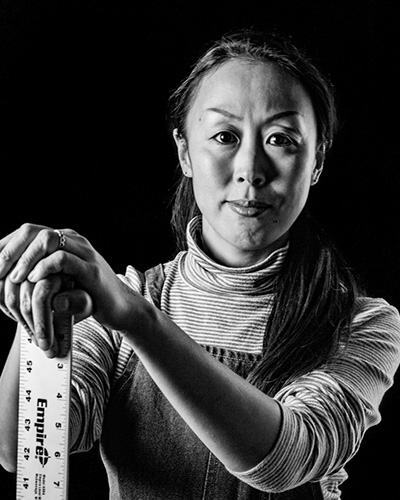
Hiromi Stringer is a Senior Lecturer of interdisciplinary drawing and painting in the Department of Art and Art History at the University of Texas at San Antonio, part of the College of Liberal and Fine Arts. She received her BS from Tottori University in Japan in 1999 and completed her MFA in Art from UTSA in 2018. Her educational background includes: BS from Tottori University, Japan (1999) Post-baccalaureate work in fine art MFA in Art from University of Texas at San Antonio (2018) Stringer's research explores the intersections of cultural identity, language, and visual representation through multiple ongoing projects. Her work "Unspoiled Territories" investigates the power of imagination in filling conceptual "black boxes," while her "Umeyama Time Teleportation Museum" uses fictional narratives to examine contemporary culture from an outsider's perspective. She is particularly interested in how language shapes understanding and how cultural-linguistic communication gaps create space for the "possibility of language" phenomenon, which informs much of her artistic practice. Her recent work often incorporates book pages from etiquette guides layered beneath gesso to visually represent communication barriers. Stringer's creative output demonstrates a consistent exploration of cross-cultural perspectives, particularly Japanese-American experiences, and how mundane contemporary objects reflect broader societal values. Her work with dog imagery examines how human desires and sentiments are projected onto canine companions, viewing dog breeds as reflections of human history and culture over the past 150-200 years. Her artistic approach combines conceptual depth with technical skill across multiple media including drawing, painting, printmaking, and installation art. Her notable awards include: 2019-2020 Dedalus Foundation Master of Fine Arts Fellowship 2019-2020 Blue Star Contemporary Berlin Residency Program/Künstlerhaus Bethanien International Studio Program, Berlin, Germany 2021 Summer Arts Faculty Residency at Ox-Bow School of Art & Artists' Residency, MI 2022 Dedalus Foundation Funds for Past Fellows and Awardees Grand prize for Eyes Got It! 2014 2024 Vermont Studio Center residency, Johnson, VT Stringer's work has been exhibited in various gallery spaces, with her pieces included in public, corporate, and private collections in both Japan and the United States. As a non-native English speaker who moved to the US in her 30s, she brings a unique perspective to her exploration of cultural and linguistic communication gaps, transforming personal experiences of miscommunication into conceptual art that challenges viewers to consider alternative interpretations and the limits of knowledge.
Matthew W. Crocker is a Professor of Psycholinguistics at the Department of Language Science and Technology, Saarland University . As Principal Investigator for SFB projects A1 and C3, and Deputy Speaker of SFB 1102, he leads interdisciplinary research on language comprehension mechanisms. His work integrates computational modeling with neuroimaging and eye-tracking to explore how linguistic and non-linguistic context interact. Education: BSc (1986) and MSc (1988) in Computer Science, University of New Brunswick and British Columbia; PhD in Philosophy (1992) from University of Edinburgh's School of Informatics Academic Roles: ESRC Research Fellow (1994-1998); Chair in Psycholinguistics since 2000 at Saarland University Research Interests focus on: Computational Psycholinguistics applying neural networks to language processing Information Theory in linguistic encoding Embodied Cognition through situated comprehension studies ERP Correlates (N400/P600) of integration and retrieval Scientific Contributions : Co-founder of AMLaP conference (1995) Editorial leadership in Frontiers in Language Sciences , Cognition , and Glossa Psycholinguistics 2012 SIGdial Best Paper Award for hearer gaze tracking research Teaching includes courses on Information Theory and Computational Psycholinguistics , with recent 2023 block courses streamed via Zoom and Microsoft Teams. His technical development extends to tools like the GSEARCH Corpus Query System for syntactic structure analysis.
Elisabeth Noël-Hureaux is a Lecturer at the University of Paris 13, affiliated with the Faculty of Health, Medicine and Human Biology and the Faculty of Arts, Languages and Human Sciences. Since 2007, she has taught Bachelor’s, Master’s, and paramedical courses, often addressing large cohorts (up to 600 students). Her research explores health preservation through sociological lenses, focusing on self-care learning, experiential knowledge in chronic illness, and professionalization in healthcare. Research Themes include: Self-care learning in health contexts Collective learning and institutional practices Experiential knowledge in chronic disease management Professionalization of nursing and allied health professions Intimate/political intersections in healthcare Qualitative research methodologies Selected Publications (2019) highlight her work on institutional complexity, experiential knowledge construction, and autobiographical research in healthcare settings. All employ qualitative methods within sociological and health science frameworks.
György Gergely is a Professor and Principal Investigator at Central European University (CEU), with affiliations at University College London and the Anna Freud Centre in London. He holds advanced degrees including a D.Sc. from the Hungarian Academy of Sciences, a Dr. Habil. in Cognitive Neuroscience, and a Ph.D. in Experimental Psycholinguistics from Columbia University. His research focuses on social and cognitive development in infancy, cultural learning mechanisms, theory of mind, and developmental psychopathology. Qualifications include a B.Sc. from the London School of Economics (1978), M.Phil. from University College London (1980), and clinical training in child psychology (1977). He is an Honorary Member of the Hungarian Psychoanalytic Association (2009). His work bridges cognitive science, developmental psychology, and clinical theory, emphasizing communication-driven learning and the role of mentalization in self-development. Key labs include the Baby Lab and Cognitive Development Center at CEU. Notable contributions address infant pragmatic reasoning, cultural transmission, and the neurocognitive foundations of social cognition. Awards: Honorary Membership in Hungarian Psychoanalytic Association (2009) Research Themes: Cultural learning, infant communication, theory of mind, developmental psychopathology Labs/Teams: Baby Lab, Cognitive Development Center
Cynthia L Fisher is a Professor in the Department of Psychology at the University of Illinois. She serves as Associate Head of the Psychology Department and holds a joint appointment in Linguistics. Her research focuses on children’s language acquisition, particularly how they learn verb meanings, syntactic structures, and phonological patterns from speech addressed to infants and young children. She received her Ph.D. from the University of Pennsylvania. Her work bridges developmental psychology, linguistics, and computational modeling to understand the cognitive mechanisms underlying early language development. Key research themes include syntactic bootstrapping, phonotactic learning, and the interaction between syntax and semantics. Her lab investigates how infants and toddlers use structural cues in language to build mental representations of events and words. Recent studies explore the generalization of phonotactic rules, the role of prosody in sentence comprehension, and the application of AI models (e.g., BabyBERTa) to child-directed language. Her publications span experimental studies with young children and computational models, addressing topics like verb learning, syntactic priming, and physical reasoning in artificial intelligence. Collaborations with researchers like Rochel Baillargeon and Greg Marcus highlight interdisciplinary approaches to cognitive development. No awards are explicitly mentioned, but her extensive body of work reflects sustained contributions to developmental linguistics. Advising and grants are not detailed in the provided text, though her lab’s activities imply active mentorship of students. Her research is centered in the Department of Psychology at Urbana-Champaign, with a focus on understanding foundational aspects of how children acquire language through auditory and contextual cues.
Dr. Pia Sommerauer is an Assistant Professor at the Faculty of Social Sciences and Humanities at Vrije Universiteit Amsterdam, affiliated with the Network Institute . Her research focuses on computational linguistics, semantic representation, and natural language processing. She contributes to projects such as the 'Dutch Framenet' corpus and studies biased language use in natural language systems. Her work integrates modern linguistic theories with computational methods, addressing challenges like event framing, word embedding analysis, and narrative reconstruction. She teaches courses including Programming in Python for Text Analysis and Advanced NLP . Leading Project: 'Uncovering Biased Language Use: Implicit Communication of Stereotypes' Co-developed the ARN framework for analogical reasoning on narratives Organized the 2024 LREC-COLING workshop on Reference, Framing, and Perspective Her research explores semantic shifts in language models, interpretability of NLP systems, and conceptual knowledge representation. She collaborates internationally on projects like semantic vector analysis and historical text annotation.
Dirkjan van der Linde is an Assistant Professor at the Academy of Fine Art, Oslo National Academy of the Arts. As practicing artist working in sculpture, installation, and sound art, his work explores architectural space activation through material interventions and auditory practices. 1996-1998: Statens Kunstakademi (Oslo, Norway) 1979-1984: Academie voor Beeldende Kunsten St.Joost (Breda, Netherlands) His artistic research focuses on: Architectural space and installation dynamics Sound's role in spatial experience Studio and public space interactions Temporal and procedural artistic systems Educational art practices Collective trauma representation His personal website documents decades of practice including sound installations, spatial interventions, and sculptural works. Collaborative projects like Holding Balance (2014) and Proximity and Distance (2013) demonstrate ongoing engagement with space-body relationships. Teaching practices emphasize: Dialogic knowledge exchange Practice-based learning Critical engagement with materials Studio as research laboratory Curiosity-driven methodology Collective artistic environment
Dr. Matthew Green is a Lecturer in the Department of Psychology at Bournemouth University, with a focus on integrating computational linguistics and psycholinguistics through empirical studies. His work bridges cognitive science, eye-tracking technology, and agent-based modeling to analyze human cognitive strategies in areas such as sentence processing and visual foraging behavior. Education Cognitive Science, University of Exeter Masters in Psychological Research Methods, University of Exeter PhD in Psycholinguistics, University of Exeter Green's research primarily investigates parser load during sentence processing using well-specified models like surprisal and entropy reduction, testing these against human processing difficulty via eye-tracking. Additionally, he develops methodologies to evaluate hypotheses about foraging behavior through eye-tracking and agent-based modeling, aiming to uncover cognitive strategies in both linguistic and visual search tasks. His publication trends span psycholinguistics, natural language processing, vagueness in referential communication, and computational modeling of human cognition. His work often employs eye-tracking as a key empirical tool, with subfields encompassing syntactic ambiguity resolution, lexical semantics, and audience-adaptive information presentation.
David Miguel Gray is an Assistant Professor of Philosophy at the University of Memphis and an Affiliate Faculty Member of the Institute for Intelligent Systems. He joined the department in 2017. Gray holds a PhD and MA from Harvard University and a BA from Columbia University. His research focuses on the philosophy of race and racism, AI ethics, cognitive science, and language, with specific attention to racial ontology, slurs, and ameliorative philosophy. He also explores philosophy of mind, psychopathology, and film. Educations: PhD and MA in Philosophy, Harvard University BA in Philosophy, Columbia University Research Interests: Gray’s work bridges analytic philosophy with critical social theory. He investigates how racial categories are socially constructed, the ethical implications of AI systems, and the cognitive underpinnings of racial discourse. His recent projects include analyzing the derogatory force of slurs, conceptualizing race as a socio-historical artifact, and applying linguistic disobedience to challenge oppressive terminology. He also explores the intersection of mental disorder and self-ascription in schizophrenia through a three-factor cognitive model. Public Engagement: Gray contributes to public philosophy via articles like "Critical Race Theory: What it is and What it isn’t" (The Conversation) and video series on racial ontology for WiPhi. He actively participates in interdisciplinary discussions on AI ethics, including panels at the Global Harwell Forum and the Institute for Intelligent Systems. Labs/Teams: Affiliated with the Institute for Intelligent Systems at the University of Memphis, focusing on AI ethics and cognitive systems.
Rev. Dr. Hab. Robert Kublikowski is an Assistant Professor at the Department of Methodology of the Sciences within the Faculty of Philosophy at the John Paul II Catholic University of Lublin (Poland). He holds a Ph.D. in philosophy (2007) and habilitation (2020) focusing on semantic inferentialism and definition theory. His research interests include analytic philosophy of language, epistemology, and informal logic. Education: 2007: Ph.D. in Philosophy, KUL (dissertation: Real Definition and Its Functions ) 2020: Habilitation in Humanities (dissertation: Semantic Inferentialism by Robert B. Brandom ) 1995-1999: M.A. in Logical Semiotics, KUL 1988-1994: Theological/Philosophical studies at the Pontifical Faculty of Theology in Warsaw Research Focus: Kublikowski specializes in semantic theories (Putnam/Brandom), argumentation structures, and epistemological dynamics. He explores normativity in truth assessment and the role of inference in meaning formation. His work bridges analytic philosophy with Catholic theological traditions. Key Achievements: KUL Rector’s Award (2003) Ministry of Science grant (2005-2007): Anti-Definitionism vs. Definitionism Visiting researcher at University of Notre Dame (2002) and University of London (2001) Academic Contributions: Supervised over 20 student internships since 2008. Active member of the Polish Semiotic Society. Authored/co-authored 15+ peer-reviewed articles analyzing Brandom’s inferentialism, Putnam’s semantics, and persuasive definition ethics. Co-edited volumes on argumentation theory and cognitive science.