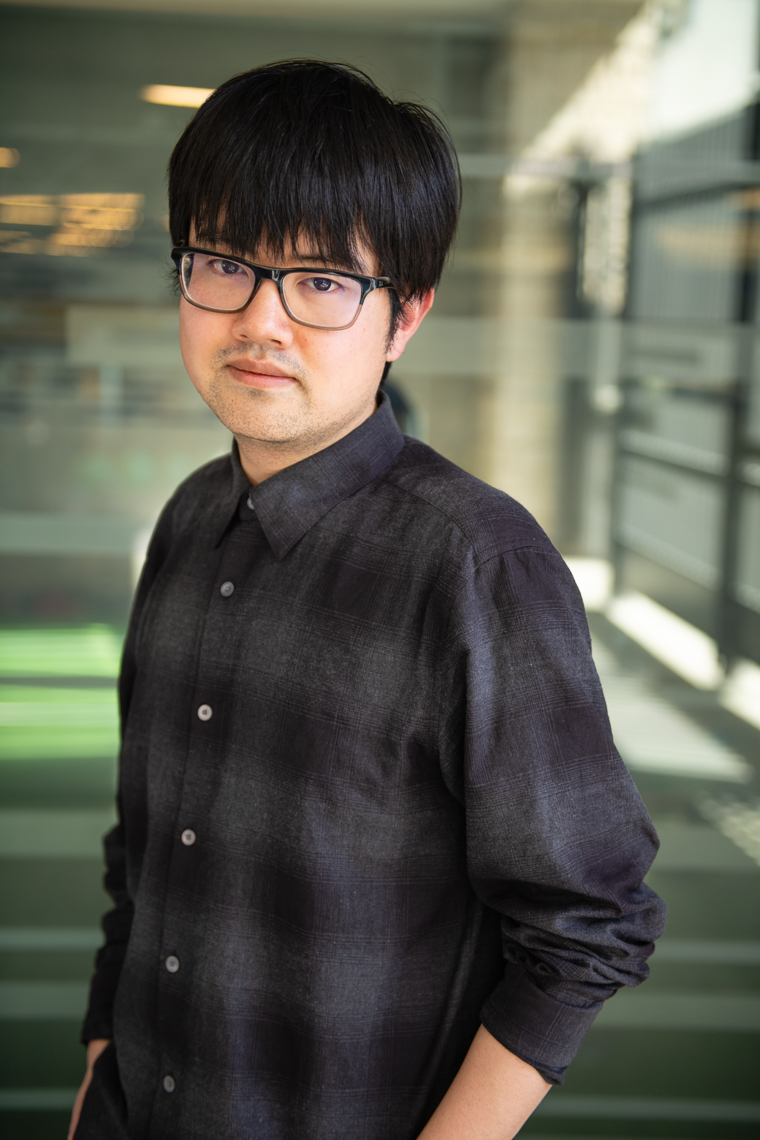
Chen Lian is an Assistant Professor in the Department of Economics at UC Berkeley. Holding a PhD from MIT, their research bridges macroeconomics, behavioral economics, and finance, with a focus on bounded rationality, monetary theory, and macro-finance interactions. Education: PhD in Economics, MIT Chen’s work explores how incomplete information and behavioral biases shape macroeconomic outcomes. Key themes include inflation effects on households, fiscal-monetary policy interactions, and financial stress dynamics. They employ heterogeneous-agent models and analyze how micro-level shocks propagate through the economy. Their publications and working papers address topics like credit cycles, demand shock propagation, and the psychological underpinnings of economic decisions. Papers such as Low Interest Rates and Risk Taking (2019) and Confidence and the Propagation of Demand Shocks (2022) highlight their interdisciplinary approach.
Anna Grigolon is an Assistant Professor at the University of Twente , Netherlands, affiliated with the Transport Engineering and Management Research Group . Her research focuses on sustainable urban mobility , user-centric transport solutions , and travel behavior analysis using tools like discrete choice modeling , spatial analysis , and social psychology theories . Research Interests : Sustainable Urban Mobility Accessibility Modeling Travel Behavior Discrete Choice and Latent Class Modeling Spatial Analysis and GIS Shared Micromobility and Mobility Hubs Equity in Transport Planning Article Trends : Anna’s recent work (2025–2024) emphasizes mobility justice , 15-minute city transitions, and equity in transport access , particularly for marginalized communities like São Paulo favelas. She integrates digital tools (e.g., serious games, kiosks) and space-time metrics to evaluate mobility solutions. Projects : She currently leads the SmartHubs project and contributes to DREAMS and R-map , focusing on smart, equitable mobility systems in Europe and Saudi Arabia.
Botond Kőszegi is a Professor of Economics at the Faculty of Economics and Business, University of Bonn. His primary contact information includes the university email bkoeszeg@uni-bonn.de and phone number +49 228 73-60399. His research profile is prominently featured on the University of Bonn's economics department website. Kőszegi's research spans multiple areas within behavioral economics, with particular focus on how psychological factors influence market outcomes. His work examines consumer behavior in competitive markets, particularly when consumers exhibit systematic biases or misunderstandings. He has made significant contributions to understanding reference-dependent preferences, self-control problems, and how market structures interact with consumer naivete. His theoretical frameworks have important implications for consumer protection policies, especially in financial markets where consumers face complex decisions with limited attention. His publication record demonstrates consistent high-impact contributions to top economics journals including the Quarterly Journal of Economics, American Economic Review, Review of Economic Studies, and Econometrica. His recent work (2021-2025) shows increasing focus on digital markets, ecosystem competition, and the welfare implications of online steering practices. The progression of his research indicates a deepening exploration of how behavioral factors shape market outcomes across various contexts, from traditional consumer markets to emerging digital platforms. Kőszegi frequently collaborates with Paul Heidhues, with whom he has co-authored numerous influential papers. His collaborative network also includes researchers such as Matthew Rabin, Takeshi Murooka, and Philipp Strack. His work has been featured in major media outlets including the Financial Times and Zeit Online, indicating real-world policy relevance. His research program has evolved from foundational work on reference-dependent preferences to increasingly complex applications in digital markets and consumer protection. This trajectory reflects both theoretical depth and practical relevance, addressing pressing questions about how to design markets and regulations that account for realistic consumer behavior.
Mikael Johansson is a Professor at Kungliga Tekniska Högskolan (KTH), specializing in Control Technology . He teaches and coordinates courses such as Distributed Optimization (FEL3311) and various advanced-level degree projects in computer science, electrical engineering, and systems engineering. His research spans Control Systems , Machine Learning , and Optimization , with a focus on asynchronous algorithms, federated learning, and applications in energy systems and construction. His work includes 15 recent publications on topics like neural networks, distributed optimization, and battery technology. Notable areas of contribution are in asynchronous learning, federated learning with privacy constraints, and quasi-Newton methods for optimization. His research bridges theoretical advancements with practical applications in urban design, healthcare, and autonomous systems.
Pablo Aragón is a Research Scientist at the Wikimedia Foundation and an Adjunct Professor at Universitat Pompeu Fabra. His work bridges computational social science, civic technology, and technopolitics, with a focus on Wikipedia's governance, digital democracy tools, and participatory systems. He co-founded the Democratic Innovation Lab in Barcelona and the DatAnalysis15M research network. Key research interests include analyzing knowledge integrity in Wikipedia, configuring digital participatory budgeting systems, and studying platform effects in civic technologies. He has led projects like DECODE (decentralized citizen engagement) and contributed to platforms like Decidim, which empower participatory democracy in cities like Barcelona. Recent conference engagements include KDD 2024 (data mining), ICWSM 2024 (social media analysis), and Wikimedia CEE Meeting 2024. His work emphasizes cross-cultural collaboration, with studies published in ACM Transactions on Computer-Human Interaction and peer-reviewed conferences like CIKM and ACM SIGKDD. Professional affiliations include the Decidim association, Amnistía Internacional España, and the open knowledge advocacy group Civio. His research often intersects with open science, free culture movements, and gender equity in urban mobility.
J.C. Bradbury is a Professor of Economics at Kennesaw State University , affiliated with the Department of Economics, Finance, & Quantitative Analysis. He maintains active research profiles on Google Scholar and SSRN , with a personal website at jcbradbury.com . Education : Ph.D. and M.A. in Economics from George Mason University; B.A. in Economics and Philosophy from Wofford College. His research focuses on Sports Economics , Stadium Subsidies , and Local Economic Development . Key contributions include analyzing the economic impacts of sports stadiums, film tax incentives, and labor dynamics in professional sports leagues. His work frequently appears in journals like Economic Inquiry , Journal of Sports Economics , and Public Finance Review . Recent publications examine fiscal impacts of stadium projects, attendance determinants in MLS, and policy critiques of government film industry support. He has served as a consulting expert on Economic Development , Athlete Valuation , and Sports Labor Issues , with references available upon request. He maintains active social media presence at Bluesky (9.2K posts) and Twitter, frequently commenting on sports policy, economic development, and local governance issues. His consulting work spans performance analysis, athlete valuation, and public policy evaluation.
James H. Anderson is the Kenan Distinguished Professor and Department Chair in the Department of Computer Science at the University of North Carolina at Chapel Hill, where he has been a faculty member since 1993. A leading researcher in real-time systems and distributed computing, he previously served at the University of Maryland (1990-1993). His educational background includes: B.S. in Computer Science from Michigan State University (1982) M.S. in Computer Science from Purdue University (1983) Ph.D. in Computer Sciences from the University of Texas at Austin (1990) Anderson's research focuses on real-time systems, distributed and concurrent algorithms, multicore computing, and operating systems. His work addresses fundamental challenges in scheduling, resource management, and reliability in time-critical environments, with recent emphasis on GPU acceleration for AI workloads and heterogeneous platforms. He investigates novel approaches to budget enforcement, processing graph scheduling, and timing predictability in complex systems. Analysis of his recent publications reveals a strong trend toward applying real-time scheduling principles to GPU and heterogeneous computing architectures. Key research thrusts include enabling predictable AI acceleration, managing timing uncertainties in autonomous systems, and developing composable resource partitioning techniques for safety-critical applications. His distinguished honors include: U.S. Army Research Office Young Investigator Award (1995) Alfred P. Sloan Research Fellowship (1996) Seven Computer Science Student Association Teaching Awards (1995-2019) Fellowships from IEEE (2012), ACM (2013), AAAS (2020), and AAIA (2022) IEEE TCRTS Outstanding Technical Achievement and Leadership Award (2018) Anderson actively mentors through the TOPICS Club, a reading group for undergraduate students that he co-leads with Cynthia Sturton and Danielle Szafir. His professional leadership includes chairing IEEE TCRTS (2016-2017) and ACM SIGBED (2019-2021), plus service as program/general chair for major conferences including RTSS, PODC, ECRTS, and RTAS. He directs ongoing research initiatives in real-time systems through collaborative projects and the TOPICS Club, which provides undergraduates with hands-on research experience in cutting-edge computer science topics.
Helen Levenson is an Associate Professor and Collection Development Librarian at Oakland University. She holds roles in library administration, academic service, and professional collaboration. Her work focuses on collection development strategies, shared print preservation, and resource optimization in academic libraries. Levenson has contributed to initiatives like the Michigan Shared Print Initiative (MI-SPI) and the Partnership for Shared Book Collections, emphasizing data-driven approaches to library management. Education: Juris Doctorate (J.D.) from Wayne State University, Master of Arts in Library Science (A.M.L.S.) and Bachelor of Arts (B.A. Philosophy) from the University of Michigan. Research interests include collaborative collection development, preservation of print materials, and the role of streaming video in academic libraries. Her work bridges legal expertise with information science, addressing challenges in library resource sustainability and policy adaptation. Publications highlight her focus on topics like bibliographic accuracy in shared print programs, optimal monograph copy models, and cost-saving collaborative weeding strategies. Her book reviews and presentations further demonstrate engagement with legal and information science topics. Awards include Oakland University's Founder's Day Faculty Recognition (2020). Service contributions span university committees (e.g., Academic Conduct Committee), library governance roles (e.g., Chair of Merit/Travel Committee), and leadership in statewide initiatives like the Michigan Shared Print Initiative. Levenson actively participates in professional organizations such as the American Association of Law Libraries and the Special Libraries Association, emphasizing interdisciplinary collaboration in library science.
Dr. Minglun Gong is a Professor and Director of the School of Computer Science at the University of Guelph (since 2019). Previously, he served as Professor and Head of the Department of Computer Science at Memorial University of Newfoundland. He holds a Ph.D. from the University of Alberta (2003), M.Sc. from Tsinghua University (1997), and B.Engr. from Harbin Engineering University (1994). His research focuses on visual computing, including computer graphics, computer vision, visualization, image processing, and pattern recognition. He has authored over 150 referred papers and holds patents in the field. He is an Associate Editor for Pattern Recognition and IEEE Signal Processing Letters , and has received awards such as the Izaak Walton Killam Memorial Award and multiple best paper awards. Dr. Gong has advised numerous students, including Ph.D./M.Sc. candidates and visiting scholars. His lab's recent work includes UAV path planning for urban reconstruction, image stylization techniques, and 3D human pose estimation. He actively participates in academic service, including editorial roles, conference program committees, and administrative roles at multiple institutions. His teaching spans courses in image processing, computational photography, and technical communication. He is also involved in administrative committees, such as Graduate Studies and Promotion at Memorial University. Key research contributions include advancements in transparent object modeling, underwater 3D reconstruction, and image-to-image translation. His work emphasizes practical applications in fields like medical imaging, autonomous systems, and environmental modeling.
Qiping Xu serves as an Assistant Professor in the Finance Department at the University of Illinois' Gies College of Business, where they conduct influential research at the intersection of corporate finance, environmental policy, and tax regulation. Their scholarly work examines how financial constraints, tax policies, and judicial systems impact corporate decision-making and environmental outcomes. Dr. Xu's research portfolio demonstrates significant expertise in several interconnected domains: Corporate environmental policies and sustainability practices with focus on CEO hometown preferences Asset market responses to industrial pollution and greenwashing phenomena Personal tax effects on firm hiring patterns and skill requirements Tax policy impacts on corporate investment behavior Financial consequences of judicial inexperience in bankruptcy proceedings Recent publications in Management Science, Journal of Finance, and Review of Financial Studies showcase rigorous empirical approaches using large datasets (including 27 million job postings) to investigate these complex relationships. Their research has gained substantial traction with citations across academic, policy, and media platforms, including references in policy documents, news coverage, and significant Mendeley readership. Dr. Xu's scholarly contributions have been recognized through citations in policy sources, media coverage by news outlets, mentions on social media platforms, and presentations in academic videos. Their work demonstrates consistent impact across both academic and practical domains, particularly in environmental finance and tax policy applications.
Dr. Sami Mikhail is a Reader in Earth Sciences at the University of St Andrews, School of Earth and Environmental Sciences. His research focuses on understanding the interplay between planetary interiors and surface composition, particularly how volcanic degassing influences long-term habitability. He holds roles such as Treasurer of the Volcanic and Magmatic Studies Group and Board Member of the St Andrews Centre for Exoplanet Science. He completed his PhD at University College London (2011) and has held positions including Postdoctoral Researcher at the Carnegie Institution of Washington (2011–2013). His expertise spans geochemistry, petrology, and planetary science, contributing to UN Sustainable Development Goals related to climate action and sustainable cities. Key research interests include the deep carbon and nitrogen cycles, mantle metasomatism, diamond formation, and planetary habitability. His work has been recognized with awards such as the Distinguished Lecturer from the Mineralogical Society (2020) and the Murchison Fund (2017). Dr. Mikhail supervises PhD students (e.g., Fawn Holland, Frederik Märker) and has led major grants like the NERC-funded project on Earth’s nitrogen flux. His lab focuses on experimental and theoretical approaches to trace volatile elements in Earth’s history.
Dr. Mohammed Elamassie is an Assistant Professor at Özyeğin University's Graduate School of Science and Engineering, Department of Electrical and Electronics Engineering. He co-directs the Centre of Excellence in Optical Wireless Communication Technologies (OKATEM) and holds senior memberships in IEEE and Optica. PhD in Electrical and Electronics Engineering (Özyeğin University, 2020) MSc in Electrical and Electronics Engineering (Islamic University of Gaza, 2011) BSc in Electrical and Electronics Engineering (Islamic University of Gaza, 2006) Dr. Elamassie's research focuses on optical wireless communication systems, with specific expertise in underwater visible light communication (UVLC), vehicular visible light communication (V2V), airborne free space optical (FSO) networks, and turbulence mitigation techniques. His work addresses atmospheric channel modeling, diversity techniques, and MIMO communication challenges across multiple mediums. Analysis of his 15 most recent publications reveals critical trends in UVLC turbulence modeling, FSO UAV optimization, RIS-aided systems, and vehicular communication reliability. These works demonstrate his leadership in developing practical solutions for channel degradation and mobility-induced challenges. Best Paper Award, IEEE Black Sea Conference (2019) IEEE Turkey PhD Thesis Award (2020) Senior Member, IEEE Senior Member, Optica Optica Traveling Lecturer/Speaker Dr. Elamassie serves as Review Editor for Frontiers in Communications and Networks, covering 'Non-Conventional Communications' and 'Wireless Communications' sections. He contributes to OKATEM's research on optical wireless technologies, focusing on practical implementations across underwater, vehicular, and airborne domains.
Eric A. Greenleaf is a Professor of Marketing at New York University's Leonard N. Stern School of Business, where he has been a faculty member since 1988. He teaches undergraduate and MBA courses in Introduction to Marketing, Market Research, New Product Development, and Pricing Strategies, as well as doctoral seminars on Pricing Theory and Response and Context Effects in Surveys. Education: Ph.D. in Marketing, Columbia University, 1986 M.B.A., Columbia University, 1981 B.S. in Town Planning and Design, University of New Hampshire, 1977 (Summa Cum Laude) Professor Greenleaf's research centers on consumer behavior in pricing, auctions, and marketing research. His work explores how consumers react to prices, the economics of auctions (particularly in art markets), the application of neuroscience in marketing, aesthetic responses to products, and methodological issues in survey research. He has published in leading journals such as Journal of Consumer Research , Marketing Science , Management Science , and Public Opinion Quarterly . The analysis of his recent publications reveals a consistent focus on behavioral aspects of pricing and auctions, with increasing integration of neuroscience and psychological mechanisms. His work spans experimental design, field studies, and theoretical modeling, often bridging marketing with economics and psychology. Key themes include partitioned pricing, bidding behavior, regret and rejoicing in auctions, and context effects in consumer judgment. Scientific Awards and Honors: Winner, Marketing Science Institute Behavioral Pricing Competition Grant (2004) Winner, MSI Pricing Strategy Competition Research Grant (1994) Nominated for Paul E. Green Award, Journal of Marketing Research (1998) Beta Gamma Sigma Honor Society Phi Beta Kappa Honor Society Summa Cum Laude, University of New Hampshire Professor Greenleaf has received significant research funding, including a large NIH grant (2009) with colleagues in Psychology and Marketing to study public service ads using neuroscience methods. He has advised on school enrollment forecasting in Manhattan. He has held visiting positions at Columbia University, Wharton, and the Haas School of Business. He has not advised any named students in the provided texts, but his long tenure suggests mentorship of numerous doctoral candidates. He is actively engaged in research and teaching, with no indication of retirement or part-time status.
Professor Gary T. Mitchum serves as Associate Dean for Research and Professor in the College of Marine Science at the University of South Florida (USF), where he has been since 1996. Previously, he held a faculty position at the University of Hawaii’s Department of Oceanography and directed its Sea Level Center. His research focuses on sea level rise, ocean physics, satellite and in-situ data analysis, El Niño phenomena, and fisheries applications. He holds a Ph.D. and B.S. from Florida State University (1984 and 1980). Key projects include multi-model sea level forecasts for the U.S. coast (NOAA-funded) and climate data records of sea level change (NASA-funded). He has led or co-led four major research projects between 2013–2022. His awards include the 1992 AGU Editor’s Citation and a National Merit Scholarship. Research interests span satellite altimetry, ocean eddies, and climate impacts. He teaches courses like Geophysical Fluid Dynamics and Physical Oceanography. His work addresses coastal vulnerability, global sea level acceleration, and ocean dynamics. Active in advisory roles, he contributes to the USF Office of Corporate Partnerships and the College’s Tenure Committee.
Lisa Rosenblum is a Lecturer at the School of Information, San José State University, where she teaches courses in information professions and library science. She brings extensive leadership experience from major public library systems across the United States, including as former Executive Director of the King County Library System and Chief Librarian at Brooklyn Public Library. Executive Director, King County Library System (2018–2023) Chief Librarian, Brooklyn Public Library (2015–2017) Director of Library and Community Services, Sunnyvale, CA (2009–2015) Lecturer, SJSU School of Information (2008–2014, and currently affiliated) Adjunct Faculty, Pratt Institute (2016–2017) Her research and teaching interests focus on public libraries, library administration and management, facilities planning, and literacy promotion. She emphasizes strategic leadership and innovative service delivery in public information institutions. The recent publications in her portfolio reflect a strong trend in practical library management, strategic planning, and organizational development. Her work often addresses real-world challenges such as budget constraints, service efficiency, leadership transitions, and the integration of library services within broader community frameworks. Topics include performance metrics, reference service models, and the philosophical underpinnings of merged library collections. Distinguished Alumni, College of Arts and Sciences, San José State University (2009) Mover and Shaker, Library Journal (2009) Fellow, Urban Libraries Council Executive Leadership Institute Participant, Stanford Institute on 21st Century Librarianship Lisa Rosenblum has advised and mentored numerous library professionals through her teaching and leadership roles. She has served on advisory boards for the University of Washington Information School, Metropolitan New York Library Council, and Pratt Institute School of Information. While specific grant details are not listed, her leadership roles involved overseeing large-scale public library budgets and initiatives. Her professional service demonstrates a deep commitment to advancing the field through education, policy, and organizational innovation. She has contributed significantly to the development of future library leaders through her teaching in MLIS programs at SJSU, Pratt, and the University of Washington. Her courses, such as INFO 204 – Information Professions Education, are designed to prepare students for leadership and administrative roles in information institutions.