Professor Stefan Bleeck is a Professor of Hearing Science and Technology at the University of Southampton, leading the Hearing and Balance Centre and directing the Institute of Sound and Vibration Research (ISVR). His research focuses on the intersection of hearing science, audiology, and signal processing, with specialties in bio-inspired auditory modeling, speech intelligibility in noise, cochlear implants, and auditory evoked potentials. He holds a PhD in computational neuroscience and has held roles including Head of the Hearing and Balance Centre. Awards include Vice-Chancellor's Teaching Awards (2009) and Google Research Awards (2012). Education: Diploma in Physics (University of Darmstadt, 1995), PhD in Computational Neuroscience (University of Darmstadt, 2000). Research spans experimental, computational, and clinical approaches to improve hearing aids and cochlear implants. Active projects include developing speech enhancement algorithms, antiphasic speech tests for hidden hearing loss, and neural-space speech processing. Supervises multiple PhD students in engineering and computer science. Publications highlight advancements in speech enhancement, bio-inspired models, and cross-linguistic hearing tests. Collaborates with institutions like Google and the European Union on projects funded by EPSRC, Cancer Research UK, and others. His work aims to enhance speech understanding for hearing-impaired individuals through innovative signal processing and auditory modeling.
Alexey Evgenievich Osadchiy is a Professor at the National Research University Higher School of Economics (HSE University), where he serves as Director of the Center for Bioelectric Interfaces at the Institute of Cognitive Neuroscience. He has been working at HSE since 2013 with 21 years of scientific and teaching experience. His academic appointments include Professor at the Faculty of Computer Science in the Department of Data Analysis and Artificial Intelligence. 2023 - Doctor of Science: National Research University Higher School of Economics 2003 - PhD: University of Southern California, specialty "Physical and Mathematical Sciences" and "Neurobiology" 1997 - Specialty: Bauman Moscow State Technical University, major in Autonomous Information and Control Systems Professor Osadchiy's research focuses on digital signal processing, magnetoencephalography (MEG), electroencephalography, inverse problems, synchronization, non-invasive detection, and brain mapping. His work bridges neuroscience, computer science, and medical applications, with particular emphasis on brain-computer interfaces, neurofeedback systems, and precision medicine applications for neurological disorders. He has pioneered methods for real-time brain activity monitoring and developed novel approaches for functional connectivity estimation in neural networks. His recent publications demonstrate a strong trend toward developing hardware-enabled low-latency systems for brain-state dependent stimulation, improving MEG technology with optically pumped magnetometers, and advancing speech mapping techniques for neurosurgical applications. His work increasingly integrates AI and deep learning approaches with traditional neuroimaging techniques to create more precise and accessible brain measurement and modulation systems. Scientific Awards and Recognition HSE University "Recognition - 10 Years of Successful Work" Medal (July 2025) Letter of Gratitude from the Higher School of Economics (September 2021) Letter of Gratitude from the Faculty of Computer Science at HSE (August 2018) Allowance for defending a doctoral dissertation (2023–2026) Bonuses for publications in international peer-reviewed journals (2015–2029) Professor Osadchiy has successfully advised numerous graduate students and doctoral candidates, with eight dissertation research projects currently under his supervision. His research has been supported by significant grants including a Russian Ministry of Education and Science contract for "System for registration and decoding of human brain bioelectric activity" (2014-2017), RFBR grants for "New non-invasive experimental-mathematical paradigm for preoperative magnetoencephalographic mapping of speech cortex" (14-02-00917, 16-04-01863), and projects on "Endogenous enhancement of brain-computer interface efficiency." As Director of the Center for Bioelectric Interfaces at the Institute of Cognitive Neuroscience, Professor Osadchiy leads a multidisciplinary team working on cutting-edge neurotechnology. His center collaborates with the Federal Brain and Neural Technology Centre at the Federal Medical and Biological Agency, where they established the Laboratory of Medical Neural Interfaces and Artificial Intelligence for Clinical Applications. The center is actively involved in developing brain-computer interfaces for rehabilitation, particularly for stroke patients and those with locomotor function disorders, and has created Russia's first neurointerface for controlling exoskeletons using imagined lower limb movements.
Farshad Moradi is a Professor at the Department of Electrical and Computer Engineering at Aarhus University, specializing in neuromorphic engineering, spintronics, and biomedical device design. His work focuses on integrating advanced materials and circuits for applications in neural interfaces, energy-efficient computing, and wireless biomedical systems. Research Interests include: Spintronic-based neuromorphic computing architectures Ultra-low power analog/mixed-signal integrated circuits Ultrasonically powered implantable medical devices Neural signal processing and seizure detection systems Wireless energy transfer and structural health monitoring Key Projects (2016-2026): SPICE: Spintronic-Photonic Integrated Circuit Platform PHOTON-NeuroCom: Photonic-assisted Neuromorphic Computing Neuro-Sense: Flexible bioinspired neuroprostheses CorroSense: Self-powered corrosion monitoring HERMES: Hybrid Enhanced Regenerative Medicine Systems Recent innovations include: Ultrasonically powered optogenetic implants Low-power neural amplifiers for deep-brain interfaces Spin-torque nano-oscillator-based neuromorphic hardware Energy harvesting systems for structural monitoring
Jagath Samarabandu is a Professor in the Department of Electrical and Computer Engineering at Western University. He holds a Ph.D. and M.S. in Electrical Engineering from SUNY Buffalo, and a B.Sc. in Electronics and Telecommunication Engineering from the University of Moratuwa, Sri Lanka. His academic career spans since joining Western University in 2000, with prior post-doctoral experience at SUNY Buffalo and industry work at Life Imaging Systems Inc. Education: Ph.D. Electrical Engineering, SUNY Buffalo M.S. Electrical Engineering, SUNY Buffalo B.Sc (Eng) Electronics and Telecommunication, University of Moratuwa His research focuses on Artificial Intelligence, Machine Learning, Image Analysis, and Cyber Security , with applications in biomedical imaging, network intrusion detection, and civil infrastructure monitoring. He has supervised numerous graduate students working on topics ranging from chromosome analysis to smart grid security. Recent publications highlight his work in medical AI applications (auditory processing disorder diagnosis), industrial time-series analysis (using contrastive predictive coding), and network security frameworks (INSecS system development). He has contributed to 3D ultrasound segmentation, prostate motion compensation algorithms, and synthetic aperture radar systems. Key projects include NSERC-funded intelligent home monitoring systems for elderly care and low-cost synthetic aperture radar development for search-and-rescue applications.
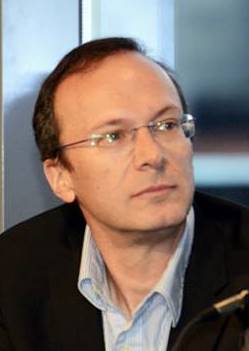
Craig Gotsman is a Professor and Dean at the Ying Wu College of Computing, New Jersey Institute of Technology. He previously held roles at Cornell Tech, Technion, ETH Zurich, and MIT. His research focuses on computational geometry, computer graphics, and 3D animation. Ph.D. in Computer Science, Hebrew University of Jerusalem (1991) His work spans geometric modeling, mesh processing, and applications in animation and visualization. Recent research trends include gaze correction in video conferencing, mesh parameterization, and spectral compression techniques. Notable awards include Fellowships in the US National Academy of Inventors and the Academy of Europe, multiple best paper awards, and the Technion's Hewlett Packard Chair in Computer Engineering. Gotsman has mentored over 50 postgraduate students and holds ten US patents. He co-founded three companies: Virtue 3D Inc. (acquired by NVIDIA), Estimotion Inc. (now ITIS Israel Ltd.), and CatchEye.
Shawki M. Areibi is a Professor and Area Head of Engineering Systems and Computing in the School of Engineering at the University of Guelph. His research focuses on VLSI Physical Design Automation, Reconfigurable Computing Systems, and Hardware/Software Co-design for Embedded Systems. He leads efforts in developing advanced algorithms for CAD tools, FPGA design, and machine learning applications. His work addresses challenges in VLSI layout optimization, parallel processing, and embedded systems design. Affiliations: AI Affiliated Faculty, Area Heads, Computer Engineering, Engineering Systems and Computing Research. Research Interests: VLSI Circuit Layout, Reconfigurable Computing, Machine Learning, and FPGA-based Accelerators. His research integrates meta-heuristics like Genetic Algorithms and Tabu Search to solve complex optimization problems. He has contributed to hardware acceleration frameworks for machine learning algorithms and embedded systems, with applications in domains like signal processing and data mining. His recent work includes congestion-estimation models for modern FPGAs and analytic placement tools for ultra-scale architectures. Publications span VLSI design, reconfigurable computing, and machine learning, emphasizing algorithmic innovation and hardware-software co-design. His students have explored topics ranging from FPGA placement to domain adaptation in remote sensing. Grants and Advising: Advises graduate and undergraduate students on projects involving FPGA acceleration, machine learning, and embedded systems. His labs focus on developing next-generation CAD tools and hardware accelerators.
Matthew Johnston is an Associate Professor in the School of Electrical Engineering and Computer Science at Oregon State University. His research focuses on integrating sensors with CMOS circuits, stretchable electronics, and bio-energy harvesting. He holds a B.S. from Caltech and a Ph.D. from Columbia University. Prior to academia, he co-founded Helixis, a biotech instrumentation startup, and worked in venture capital. His awards include the 2020 SRC Young Faculty Award and 2021 Teaching Excellence Award. Education : B.S., Electrical Engineering, California Institute of Technology, 2005 M.S., Electrical Engineering, Columbia University, 2006 Ph.D., Electrical Engineering, Columbia University, 2012 Research Interests : Johnston explores lab-on-CMOS platforms, stretchable sensor systems, and energy harvesting for low-power applications. His work bridges electronics engineering with biomedical and environmental fields, emphasizing practical applications through interdisciplinary collaboration. Awards : 2020 Semiconductor Research Corporation Young Faculty Award 2021 Oregon State University Teaching Excellence Award 2021 Provost Fellowship Advising & Grants : Johnston’s research is supported by grants from industry and federal agencies. His lab, the SIM Lab, develops innovative electronic systems for healthcare and environmental monitoring. Labs & Teams : He leads the SIM Lab , focusing on interdisciplinary projects in integrated circuits and biomedical applications.
Alan Fern is a Professor of Computer Science and Robotics in the School of Electrical Engineering and Computer Science at Oregon State University. He leads research in artificial intelligence, focusing on reinforcement learning, planning, and robotics applications like humanoid robotics and agricultural AI. His work includes co-directing the Dynamic Robotics Lab and leading the AgAID National AI Institute for agricultural solutions. Fern holds a Ph.D. from Purdue University and has contributed to over 100 publications. His recognitions include the NSF CAREER Award and multiple best paper awards. Education: B.S., Electrical Engineering, University of Maine (1997) M.S. & Ph.D., Computer Engineering, Purdue University (2000 & 2004) Research Interests: His research spans machine learning, planning, and robotics. Key areas include: AI for humanoid robotics (e.g., bipedal locomotion on Cassie) Reinforcement learning algorithms and applications Agricultural AI for specialty crops Explainable AI and anomaly detection Awards: 2017 College of Engineering Research Collaboration Award 2013 AAAI Outstanding Paper Award 2006 NSF CAREER Award Advising & Labs: Supervised over 50 students. Key collaborations include the Dynamic Robotics Lab (with Jonathan Hurst) and AgAID. His teams address challenges like robot navigation, policy learning, and AI ethics. Labs/Teams: Dynamic Robotics Lab, AgAID National AI Institute, and contributions to computational sustainability initiatives.
Ming Li is a Professor of Electrical and Computer Engineering at Duke Kunshan University's Division of Natural and Applied Science, and a Principal Research Scientist at the Digital Innovation Research Center. He holds an adjunct position as a Professor at Wuhan University's School of Computer Science. His research focuses on audio/speech processing, multimodal behavior signal analysis, and applications in autism spectrum disorder diagnosis. Li has over 200 publications and serves on editorial boards of journals like IEEE Transactions on Audio, Speech and Language Processing. Education: Ph.D. in Electrical Engineering from the University of Southern California (2013). Awards include the IBM Faculty Award (2016), ISCA 5-Year Best Paper Award (2018), and Youth Achievement Award (2020). He leads initiatives in anti-spoofing countermeasures, voice conversion, and speech synthesis. Recent Courses: Random Signals and Noise Speech Recognition Data Science Key Research Contributions: Development of datasets like KunquDB, TMCSpeech, and systems for speaker verification, deepfake detection, and autism diagnosis tools. His work bridges signal processing with clinical applications, leveraging AI for social interaction improvement in neurodiverse populations.
Dr. Milan Simic is a Senior Lecturer in the School of Engineering at RMIT University, serving as Program Manager for the Master of Engineering (Management) degree. He holds editorial roles for the Knowledge Engineering Systems and Intelligent Decision Technologies journals and is Associate Director of the Australia–India Research Centre for Automation Software Engineering. With a PhD in Electronic Engineering from the University of Niš and a Graduate Diploma in Education from RMIT, Dr. Simic has extensive industry and academic experience in Australia and internationally. His research focuses on mechatronics, autonomous systems, biomedical engineering, robotics, intelligent transportation systems, and green energy. Notable projects include AI-driven railway system strategies, gait analysis for biomedical applications, and smart traffic control systems. He actively supervises PhD and master’s students in areas like autonomous vehicles and energy recovery systems. Dr. Simic’s work bridges engineering innovation with societal impact, emphasizing sustainable transportation solutions and smart city technologies. His contributions span journal editing, international collaborations, and curriculum development in engineering management.
Dr. Liang Cui is an Associate Professor at the University of Surrey , affiliated with the School of Sustainability, Civil and Environmental Engineering and Institute for Sustainability . With a PhD from University College Dublin (2006) and BE (1st honor) from Tsinghua University (2002) , his career spans geotechnical research and education since joining Surrey in 2009. Key roles: Undergraduate Programme Leader (2020-2022, 2023-on), MSc Programme Leader for Advanced Geotechnical/Civil/Structural Engineering (2022-2023) Professional memberships: Chartered Engineer (CEng), Member of Institution of Civil Engineers (MICE), Fellow of Higher Education Academy (FHEA) His primary research focuses on numerical modeling (DEM/FEM) for geotechnical applications including offshore wind foundations , geothermal energy systems , methane hydrate exploitation , and extra-terrestrial soil mechanics . Secondary interests involve material characterization of polymeric foams , porous media , and biological tissues . Recent 15 publications (2023-2025) demonstrate expertise in soil-structure interaction for renewable energy infrastructure, thermal feedback in groundwater heat pumps, and hypothesis-driven DEM simulations for lunar/martian environments. Collaborative projects span institutions including Tsinghua University , University of Bristol , and Indian Institute of Technology Bhubaneswar . Scientific Awards: Sustainability Fellow (University of Surrey, 2023) Chartered Engineer (CEng) and MICE FHEA for educational contributions Dr. Cui supervises 7 postgraduate researchers and contributes to teaching modules in soil mechanics and energy geotechnics. His work addresses challenges in hybrid marine energy systems , needleless drug delivery , and seismic resilience of critical infrastructure.
Prof. Akash Kumar is a Professor at the Chair of Embedded Systems at Ruhr University Bochum, Germany. He previously held professorships at TU Dresden (2015–2024) and the National University of Singapore (NUS; 2011–2015). His research focuses on design automation of embedded systems, reliability optimization, and approximate computing, with a strong emphasis on FPGA and emerging technologies. He leads projects such as Lean-MICS (DFG-funded) and SecuREFET-II, addressing cross-layer reliability and secure circuits. Education: PhD in Multimedia Multiprocessor Systems from Eindhoven University of Technology (TUe) and NUS (2005–2009), Master of Technological Design (Embedded Systems) from NUS (2003–2004), and B.Eng (Computer Engineering) from NUS (1999–2002, First Class Honours). Research interests span embedded systems, reconfigurable architectures, and hardware-software co-design. His work includes optimizing energy efficiency, fault tolerance, and cross-layer approximation techniques. Recent publications highlight advancements in FPGA-based accelerators, machine learning optimizations, and mixed-criticality systems. Active in grants and leadership, Kumar is Principal Investigator on multiple DFG and industry-funded projects, emphasizing collaborative research in distributed computing and approximate architectures. His contributions bridge theory and practice, with applications in edge AI, IoT, and cybersecurity.
Dr. Jang Ah Kim is a Lecturer at the Hamlyn Centre, Department of Mechanical Engineering, Imperial College London. She leads the Micro-Nano Innovation Lab and focuses on developing micro/nanostructured biomedical sensors and robotic strategies for diagnostics and minimally invasive therapies. Her work integrates light-matter interaction principles to innovate in areas like localized drug delivery and cellular surgery. Education: BSc (2011) and PhD (2017) in Mechanical Engineering/Nano Engineering from Sungkyunkwan University, South Korea. Prior roles include Research Associate positions at Imperial College London's Department of Computing and Department of Materials, where she specialized in fiber-optic biosensors and SERS-based diagnostics. Research Interests: Biomedical sensing, nanophotonics, medical robotics, diagnostics (biosensors), and nanomaterial applications. Key projects include plasmonic sensors for infection screening, bacterial swarming manipulation, and advanced fabrication techniques like two-photon polymerization. Lab Affiliations: Hamlyn Centre, Institute of Global Health Innovation. Her work bridges engineering and medicine to address unmet clinical needs in precision diagnostics and surgical robotics.
John Clark is a Professor of Computer and Information Security at the University of Sheffield since 2017 and Director of the Siemens Digital MINE. Previously, he held roles as Professor of Critical Systems at the University of York (1992–2017) and worked at Logica in security R&D. He studied Mathematics and Applied Statistics at the University of Oxford. His research focuses on cybersecurity, software engineering, and AI applications, particularly in threat modeling, intrusion detection, quantum cryptanalysis, and secure autonomous systems. Clark leads the Security of Advanced Systems research group and has secured grants totaling over £36 million. Notable projects include the EPSRC-funded DAASE (2012–2019) and the Active Building Centre (2018–2022). His work on phishing detection (e.g., analyzing user behavior) and malware analysis has been widely recognized. He has been awarded the Royal Society Wolfson Merit Award (2013), GEECO medals (2005, 2013), and multiple best-paper prizes. Clark’s research spans theoretical and applied domains, including evolutionary computation for cryptanalysis, robotic system security, and smart grid protection. His labs explore areas like digital twin authentication and privacy-aware energy theft detection. He has supervised numerous grants and maintains active collaborations with industry and academia.
Roger Michaelides is an Assistant Professor of Earth, Environmental, and Planetary Sciences and Environmental Studies at Washington University in St. Louis. He leads the Radar Interferometry and Geospatial Science Laboratory (Radar Lab), focusing on radar remote sensing, geospatial techniques, and Arctic permafrost dynamics. His work integrates InSAR, radar altimetry, and multi-sensor fusion to study environmental processes like wildfire-permafrost interactions, coastal erosion, and climate change impacts. Michaelides earned a PhD in Geophysics from Stanford University (2020) and held postdoctoral positions at the Colorado School of Mines (2020–2022). He joined Washington University in 2022. His research emphasizes developing novel remote sensing methods for cryospheric and terrestrial systems, including NASA-funded studies tracking permafrost thaw and wildfire effects in the Arctic. Recent awards include a NASA Early Career Investigator Program Fellowship (ECIP-ES), supporting his $300,000 project on Arctic permafrost monitoring. He actively mentors graduate and undergraduate students, offering funded PhD opportunities in InSAR applications and climate science. His lab collaborates with agencies like NASA and the Indian Space Research Organization, leveraging satellite data from missions like NISAR. Key interests include radar signal processing, environmental modeling, and interdisciplinary approaches to Earth observation. Michaelides’ work bridges geophysics, ecology, and climate science, with applications to global environmental challenges such as permafrost degradation and wildfire prediction.