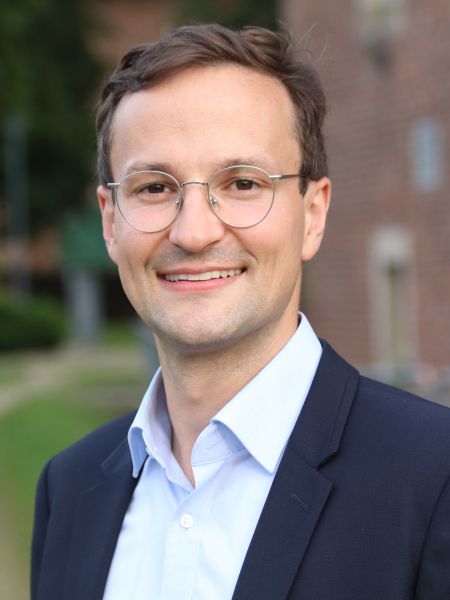
Dr. Christoph Schran is an Assistant Professor in the Department of Physics at the University of Cambridge, affiliated with the School of Physical Sciences. He leads the TCM Group at the Cavendish Laboratory, focusing on computational methods to study complex aqueous systems and materials chemistry. His research explores: Development of machine learning potentials for accurate simulations Behavior of water at interfaces and in nanoconfinement Ion dissolution and proton transfer mechanisms CO2 interactions with aqueous solutions Quantum simulations of molecular systems Recent publications highlight trends in computational chemistry, quantum mechanics, and nanotechnology, particularly emphasizing environmental applications like carbon capture and interfacial phenomena. His group includes researchers such as Lars Schaaf, Xavier Advincula, and Samuel Brookes.
Simon Billinge is a Professor of Materials Science and Applied Physics and Applied Mathematics at Columbia University and a Scientist at Brookhaven National Laboratory. He holds a Ph.D. from the University of Pennsylvania (1992) and a B.A. from Oxford University. Previously, he served as a postdoc at Los Alamos National Laboratory and held faculty positions at Michigan State University, advancing to Full Professor by 2003. His research focuses on nanoscale structure-property relationships using advanced X-ray and neutron diffraction techniques, particularly the atomic pair distribution function (PDF) method. He has published over 200 papers and is a Fellow of the American Physical Society and Neutron Scattering Society of America. Education: Ph.D., Materials Science and Engineering, University of Pennsylvania (1992) B.A., Oxford University Research Interests: His work spans materials for energy, catalysis, environmental remediation, and pharmaceuticals. He develops PDF methods to study disordered crystals and nanomaterials, integrating machine learning for data analysis. Recent trends include AI-driven structure solutions, operando studies of catalytic materials, and materials genome initiatives. Awards: Carnegie Corporation honor (2011) for immigrant contributions 2010 J.D. Hanawalt Award Michigan State University Distinguished Faculty Award Thomas H. Osgood Teaching Award Grants and Advising: He chairs major facility reviews and federally funded programs. His team at the Billinge Group (https://thebillingegroup.com/) develops tools like MLstructureMining and ClusterFinder for structural analysis. Collaborations include Brookhaven National Lab and global initiatives like the JUAMI African Materials Institute.
Mahsa Asadi is a Postdoctoral Researcher in the Department of Computer Science, focusing on theoretical and applied aspects of machine learning. Her research emphasizes online learning, collaborative algorithms, and reinforcement learning, with contributions to regret minimization, state-action equivalence in RL, and distributed multitask learning. She explores intersections between statistical theory and algorithmic design, with applications in autonomous systems and multi-agent coordination. Her work spans foundational topics like concentration inequalities and upper confidence bounds, alongside practical implementations such as the CYRUS 2D simulation team and Miss PacMan AI controller. Notable contributions include model-based reinforcement learning frameworks that exploit structural equivalence properties, and collaborative mean estimation algorithms. Research Themes: Online Learning, Reinforcement Learning, Distributed Systems, Statistical Learning Theory Key Contributions: Human-in-the-loop systems, state-action abstraction techniques, regret-optimal algorithms No formal academic awards or grants are listed in the provided information. Her advising and collaborative work focus on advancing algorithmic foundations with practical implementations in robotics and game AI contexts.
Mirko Schoenitz is an Associate Research Professor in the Department of Chemical & Materials Engineering at New Jersey Institute of Technology (NJIT). His research focuses on the synthesis, characterization, and combustion of reactive materials, with particular emphasis on energetic nanocomposites, metal-based fuels, and advanced powder processing techniques. Education: Ph.D. (2001), M.A. (1997) from Princeton University; and a degree from RWTH Aachen (1995). Research Interests : Development of novel reactive materials for propulsion and energy applications, including boron-based composites, aluminum powders with enhanced reactivity, and metal-fluoride oxidizers. He explores ignition mechanisms, combustion dynamics, and surface interactions in high-energy materials. Key methodologies include mechanical milling, arrested reactive milling, and electrostatic discharge experiments. Recent Article Trends : Recent work emphasizes material synthesis via emulsion-assisted milling, surface reactions of organophosphorus compounds, and combustion optimization in solid fuel ramjets. Studies also investigate the role of particle morphology in reactivity and the use of additives like gallium to enhance ignition. Awards : No scientific awards explicitly mentioned in the provided text. Advising & Labs : No student advisees listed. Active in NJIT's materials science infrastructure, likely affiliated with labs focused on energetic materials characterization and combustion testing.
Sohail Murad is a Professor of Chemical Engineering and Interim Chair of the Department of Chemical and Biological Engineering at Illinois Institute of Technology (Illinois Tech) in the Armour College of Engineering. He holds additional affiliations with the Digital Medical Engineering and Technology (IDMET) Research and Education Center. His research focuses on classical and statistical thermodynamics, with applications in membrane-based separations, energy storage, and drug delivery. Key projects include investigating ion transport in zeolite membranes for redox flow batteries and chiral compound separation. Education: B.S. in Chemical Engineering from the University of Engineering, Lahore, Pakistan; M.S. from the University of Florida; Ph.D. from Cornell University. Research Interests: Molecular modeling of transport phenomena in membranes, water desalination, advanced batteries, gas separations, and drug delivery mechanisms. Recent work includes studies on thermal rectification in liquids and nanoparticle interactions with lipid membranes. Awards: Ernest W. Thiele Award (2023), Coleman Foundation Fellow (2009), Fellow of AIChE, and Guest Professor at Nanjing University of Technology. Publications span molecular dynamics studies of membrane permeation, thermal transport, and chiral recognition, with notable contributions to AIChE Journal , Langmuir , and Molecular Physics . His work emphasizes computational tools for optimizing industrial processes and advancing materials science.
Hao Wu is a Professor at the Department of Chemical and Biochemical Engineering at the Technical University of Denmark (DTU) and a member of the CHEC Research Centre. His expertise spans chemical engineering, environmental technology, and renewable energy systems. He holds a B.Sc. from Zhejiang University (2000–2004), followed by M.Sc. and Ph.D. degrees from DTU (2005–2011). Prior to his current role, he served as an Associate Professor (2019–present), Assistant Professor (2015–2019), Researcher (2013–2015), and Postdoc (2011–2013) at DTU. His research focuses on sustainable energy systems, including biomass conversion, fluidized bed technology, combustion chemistry, and material science. Key areas include optimizing biomass gasification processes, mitigating ash deposition and agglomeration, and developing advanced coatings for corrosion and fire protection. He has contributed to over 170 peer-reviewed publications and actively supervises multiple PhD students in interdisciplinary projects. Research Highlights: Development of zinc-bismuth microspheres for marine corrosion protection. Investigation of phosphorus and potassium dynamics in biomass pyrolysis. Innovative pulse flow strategies for fluidized bed agglomeration control. Study of iron particle combustion and deactivation mechanisms. His work aligns with UN Sustainable Development Goals related to affordable and clean energy (SDG7), industry innovation (SDG9), and climate action (SDG13). Current projects include fire safety in biochar handling, catalytic conversion of lignin, and NOx reduction in waste-to-energy systems. Advising & Grants: Supervises five active PhD students (see student list). Leads projects funded by international collaborations and industry partnerships. Focus areas: Combustion chemistry, material engineering, and environmental sustainability. Laboratory affiliations include the CHEC Research Centre, specializing in chemical engineering and catalysis.
Roles & Affiliations: Dionisios G. Vlachos is the Unidel Dan Rich Chair in Energy Professor of Chemical & Biomolecular Engineering at the University of Delaware, with a joint appointment in Physics and Astronomy. He directs the Catalysis Center for Energy Innovation (CCEI), Delaware Energy Institute (DEI), and the University of Delaware node of RAPID. He also holds the ExxonMobil Visiting Chair Professorship at the National University of Singapore (2018–2021). Education: PhD in Chemical Engineering (1992, University of Minnesota), M.S. (1990, University of Minnesota), and a 5-year diploma from the National Technical University of Athens (1987). Research Focus: Dr. Vlachos pioneers multiscale modeling, catalysis for renewable fuels/chemicals, waste-to-value processes, and distributed manufacturing. His work integrates computational modeling with experimental catalysis to address global energy challenges. Recent efforts include polymer deconstruction, CO₂ utilization, and microwave-assisted reactions. Awards: Recipient of the 2020 Irving Wender Catalysis Award, 2016 Catalysis Club of Philadelphia Award, AAAS Fellow (2009), and multiple industry/university grants. His research has led to >600 publications, 40,000 citations, and an h-index of 106. Grants & Labs: Leads major initiatives like CCEI (an Energy Frontier Research Center) and DEI. His group collaborates on projects involving novel reactors (e.g., electrified washcoated systems), microwave chemistry, and AI-driven catalyst design. Active in bio-based materials and sustainable chemical processes.
Christopher A. Scholz is a Professor in the Department of Earth and Environmental Sciences at Syracuse University’s College of Arts and Sciences. His research focuses on paleolimnology, rift basin evolution, and the interplay between tectonic, climatic, and depositional processes in extensional systems. Research Grants: National Science Foundation, oil/gas consortiums, local agencies Education: Ph.D. (Duke University, 1989), M.S. (University of Minnesota, 1985), B.A. (University of Vermont, 1981) Students: Mentors doctoral candidates in rift geology and paleoclimate studies Research Interests: Scholz investigates sedimentary records of past climate change and tectonic activity in tropical lakes (Africa, New York Finger Lakes, Basin & Range). His work combines seismic reflection, multibeam bathymetry, and core analysis to study rift basin dynamics and climate-human evolution links. Recent Publications: His studies (2020–2025) span Cosmic Explorer site evaluation, Turkana Basin drilling, Lake Tanganyika paleoclimate, and climate-rift interactions in East Africa. Key methods include luminescence dating, seismic imaging, and biogeochemical analysis. Scientific Honors: Israel C. Russell Award (2022) Facilities: Landmark seismic workstations, GEOTEK core logger, R2Sonic multibeam echosounder, vibracoring systems Grants: Leads NSF-funded projects on Cosmic Explorer observatories, Lake Malawi fault behavior, and New York lake nutrient dynamics. Collaborates with Chevron, Petrobras, and Cornell University. Labs/Teams: Directs the Basin Analysis Lab, working with international teams from Northern Arizona University and Malawi’s Geological Survey Department. Recent expeditions on Lake Malawi used R/V Timba for seismic surveys and core integration.
Mohmood Mousvi, Ph.D., is an Assistant Teaching Professor at Bowling Green State University's School of Engineering in the College of Technology Architecture and Applied Engineering. His expertise spans combustion, fluid dynamics, and advanced computational methods. He holds a Ph.D. in Aerospace Engineering from Shiraz University (Iran) in collaboration with Queen Mary University of London (UK). His research focuses on combustion science, multiphase flow, flow control, and CFD modeling, with notable contributions to droplet dynamics, microgravity phenomena, and energy systems. Dr. Mousvi has held research positions at prestigious institutions including the University of Texas at Austin (Reactive Flow Modeling Lab), Texas A&M University (Computational Thermo-Fluids Lab), and Seoul National University (Institute of Advanced Aerospace Technology). He collaborates globally with institutions like Queen Mary University of London’s Centre for Sustainable Engineering. His research has produced over 40 peer-reviewed articles and garnered awards such as Best Postdoctoral Researcher at Seoul National University and multiple Teaching Excellence recognitions. He has secured research grants as PI/Co-PI in South Korea, China, and the U.S., emphasizing international collaboration. Dr. Mousvi actively serves on editorial boards and has reviewed over 300 papers for top journals. His work bridges theoretical research and industrial applications, including aero-hydrodynamic analyses and large-scale equipment design.
Dr. Hamed Aslannejad is an Assistant Professor at Utrecht University's Copernicus Institute of Sustainable Development, specializing in Energy & Resources. He leads projects on green hydrogen production and energy transition strategies, including coordination of Utrecht University's Hydrogen initiative and the HyUSE national project. His research focuses on renewable energy systems, multi-phase fluid dynamics, and machine learning applications in energy modeling. Education: Cum Laude BSc, MSc, and PhD in Chemical Engineering. Key roles: Member of GroenkrachtNL executive committee and Stuttgart University's SFB 1313 research group. Research highlights include pioneering work on hydrogen use in industries and mobility, electrochemical system simulations, and porous media modeling. Awards include the 2021 Interpore Rosette and 2020 InterPore Young Researcher Award.
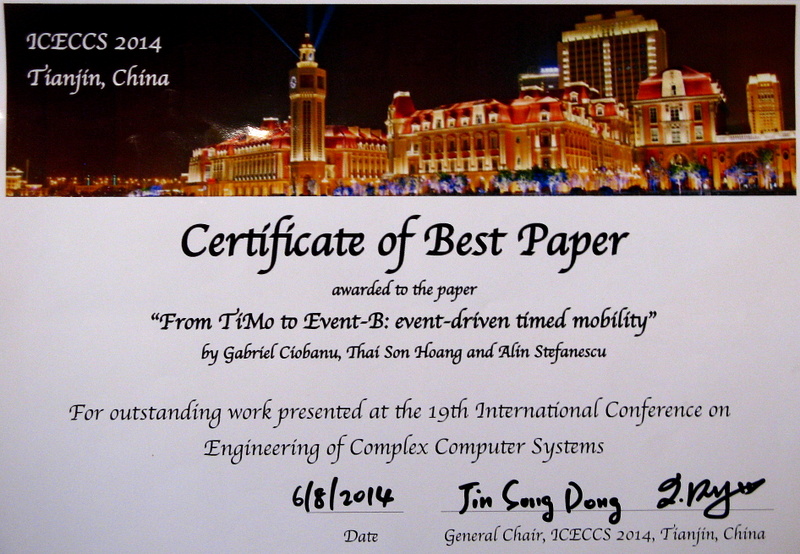
Alin Stefanescu is a Professor and Head of the Computer Science Department at the University of Bucharest , Romania. He is also a founding member of the Institute for Logic and Data Science (ILDS) . His research focuses on software engineering, cybersecurity, and artificial intelligence, with contributions to formal methods, model-based testing, and distributed systems. Education: PhD (2006) in Computer Science, University of Stuttgart Habilitation Thesis (2017) in Formal Methods for Software Testing, University of Bucharest MSc (2000), BSc (1998) in Computer Science, University of Bucharest Research Interests: Formal verification of distributed systems Model-based testing and software quality assurance AI-driven tools for cybersecurity and testing (e.g., RobustCheck, CyberGuardian) Blockchain applications in AI and identity management Reinforcement learning for fuzz testing and automation Recent Trends in Publications: Recent work emphasizes AI integration in testing frameworks, blockchain for secure AI systems, and adaptive cybersecurity tools. He has pioneered open-source tools like RiverFuzzRL and EBLT, addressing challenges in automated testing and vulnerability analysis. Awards: Best Paper Award at ICSOFT'23 (2023) 10-Year Most Influential Paper Award (2023, for 2013 work) Best Student Paper Award (2010) Grants & Labs: Active in EU-funded projects like DYNABIC (AI techniques) and MEASURE (metrics modeling). Leads the ILDS institute, focusing on logic and data science research.
Kiran Solanki is a Professor at the School for Engineering of Matter, Transport and Energy at Arizona State University (ASU). Previously, he served as Associate Director of the Center for Advanced Vehicular Systems at Mississippi State University. He holds a Ph.D. in Materials Science from Mississippi State University (2008). His research focuses on characterizing process-structure-property relationships in advanced materials for extreme environments, including radiation, high-rate deformation, fatigue, and creep. Solanki has authored over 100 journal articles and secured significant grants from NSF, DOD, and other agencies. His work emphasizes nanocrystalline alloys, corrosion resistance, and high-temperature material performance. Key research interests include nanocrystalline alloy stability, corrosion mechanisms in magnesium and aluminum alloys, and extreme environment material behavior. Recent publications highlight breakthroughs in stabilized nanocrystalline alloys, oxidation resistance, and additive manufacturing effects on material properties. Awards: SAE Henry O. Fuch Award, TMS Light Metals Awards, AFOSR Young Investigator Award, ASME Orr Award Grants: NSF CMMI, DOD-ARL, USAFA, ARO projects on materials design and corrosion mitigation Labs: Multiphysics Lab (http://multiphysics.lab.asu.edu/)
Philippa Rickard is a Research Associate at the Global Research Institutes and The Lyell Centre at Heriot-Watt University. Her work focuses on sea-surface microlayers, surfactant behavior, and their environmental impacts. She contributes to UN Sustainable Development Goals through marine research. Her research interests include marine chemistry, oceanography, and atmospheric interactions. Notable projects include the MILAN Campaign studying diel light effects and surfactant reactivity in estuaries. Recipient of the EGIS Athena Swan Early Career Researcher Impact Award (2024) Active collaborator in international studies like the Surface Ocean Lower Atmosphere Study Recent talks include discussions on microlayer heterogeneity, biosurfactants, and organic matter dynamics in coastal systems. She participates in conferences like the British Organic Geochemical Society meeting.
Luca Di Stefano is a Post-Doc Researcher at Technische Universität Wien (TU Wien) since March 2024. His research focuses on the specification and verification of complex collective systems like multi-agent systems and robot swarms, using formal methods such as model checking and reactive synthesis. He works on online formal techniques including runtime monitoring. Research Interests: Software verification Model checking Multi-agent systems Formal semantics Process calculi Reactive synthesis Static analysis Recent Article Trends: His work spans formal verification of reconfigurable systems, emergent behavior in collective systems, and synthesis techniques for infinite-state models. Keywords include Agent-Based Modelling, Formal Methods, Temporal Logic, and Runtime Monitoring. Thesis Supervision: He supervises BSc and MSc theses at TU Wien, with Ezio Bartocci as main advisor. Examples include "Type checking a novel language for reconfigurable multi-agent systems" (Benjamin Stolz, 2025) and "Evaluating in-memory caching strategies" (Love Lyckaro, 2023). Teaching: He teaches courses like "Scientific Research and Writing" and "GPU Architectures and Computing" at TU Wien, and has served as teaching assistant for concurrent programming courses at University of Gothenburg and Chalmers. Labs & Projects: He contributes to tools like LAbS (attribute-based stigmergy language), SLiVER (verification tool), R-CHECK (model checking for reconfigurable systems), sweap (symbolic reactive synthesis), and pyxmv (Python interface for nuXmv).
DelWayne Bohnenstiehl is an Associate Professor in the Department of Marine, Earth, and Atmospheric Sciences at North Carolina State University. He is also a Faculty Fellow at the Center for Geospatial Analytics. His research spans interdisciplinary geophysical applications, including seafloor exploration via advanced technologies, earthquake seismology and hazard assessment, underwater acoustics, and archaeological geophysics. He has led or co-led over 15 major research grants totaling millions in funding, addressing topics like Holocene paleoseismology, oyster reef restoration resilience, and marine dredging impacts. His work integrates cutting-edge methods such as LiDAR, passive acoustics, and machine learning to study complex environmental systems. Key projects include investigating the Darrington-Devils Mountain Fault Zone's seismic hazards and analyzing Lake Cavanaugh's sediment records to reconstruct earthquake histories. He also explores how oyster cultch reefs influence fish habitats and resilience to climate extremes. His team employs satellite imagery and deep learning to map artificial reef usage patterns, enhancing coastal management strategies. Recent breakthroughs include documenting the first seismic surface rupture in the eastern U.S. following the 2020 Sparta earthquake, which required rapid LiDAR and geophysical surveys before site degradation. Bohnenstiehl's research extends to planetary geology, analyzing crustal deformation on Mars and Venus through morphometric studies. He has pioneered acoustic monitoring techniques for coral reef resilience post-hurricanes and quantified fish behavior via passive acoustics. His collaborative efforts with NOAA, USGS, and the Army Corps of Engineers ensure applied outcomes for policy and risk reduction. Grants (select): Holocene Paleoseismology (USGS, $121,776), Oyster Reef Persistence (NC DMF, $389,794), Dredging Impacts (Sea Grant, $118,320) Labs/Teams: Center for Geospatial Analytics, Marine Acoustics Research Group, Earthquake Hazards Team Future Work: Long-term deep-core drilling of Lake Cavanaugh sediments, satellite-based marine spatial tracking, AI-driven acoustic biodiversity assessments