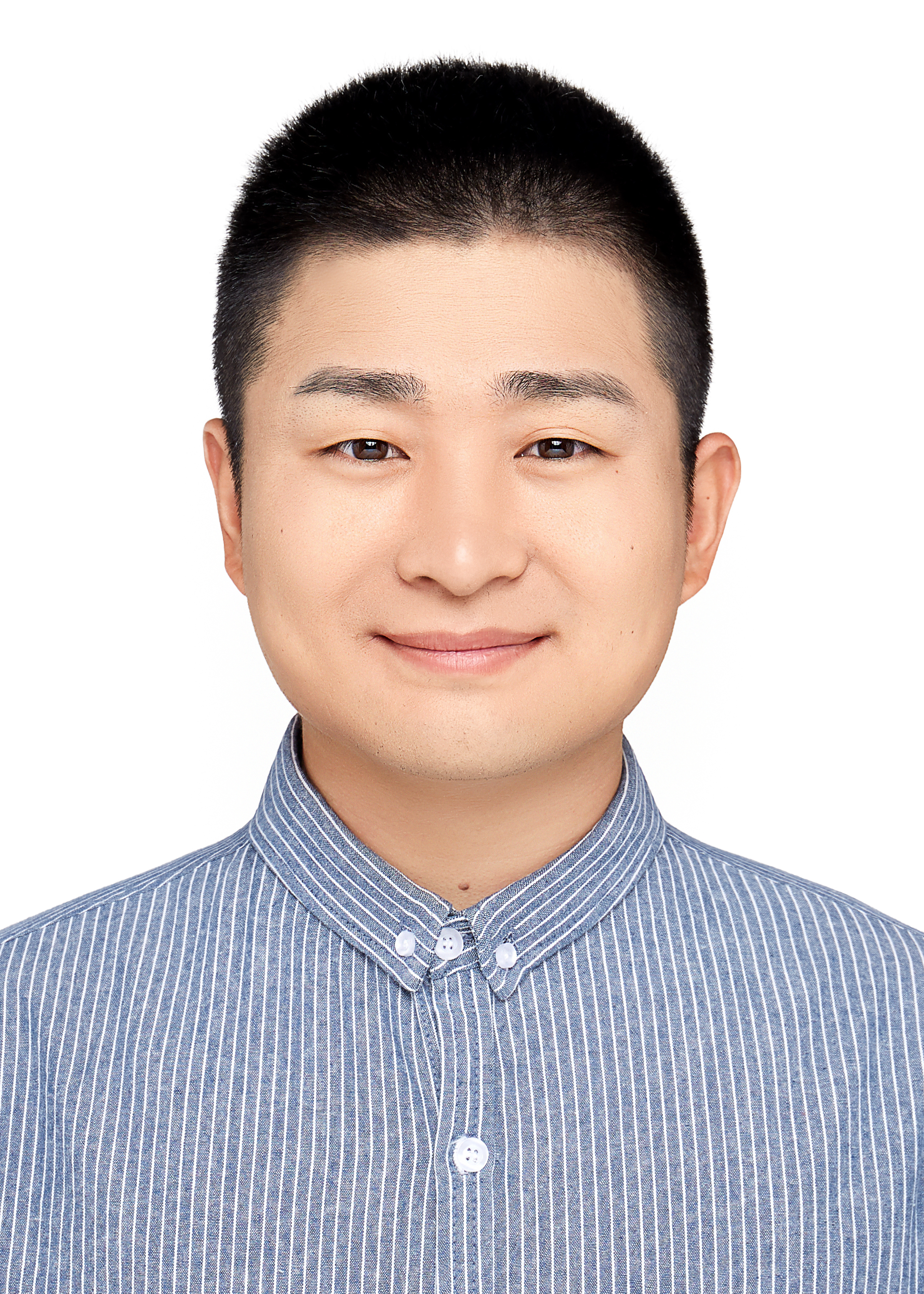
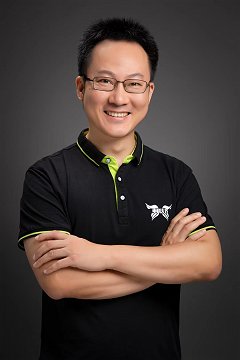
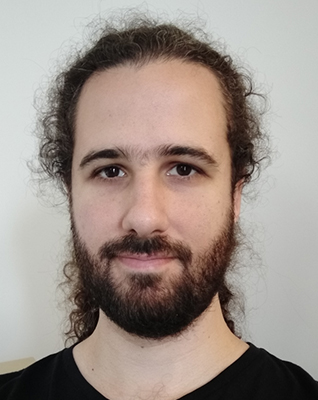
Yuyan Bao is an Assistant Professor in the Department of Computer & Cyber Sciences at Augusta University, affiliated with the School of Computer and Cyber Sciences. His research focuses on programming languages, formal methods, and software security, particularly in developing frameworks for program correctness and security verification. He holds a Ph.D. in Computer Science from the University of Central Florida (2017), a ME from Beihang University (2007), and a BE from Beijing University (2003). Education: Ph.D., Computer Science, University of Central Florida, 2017 ME, Computer Software Engineering, Beihang University, 2007 BE, Computer Science, Beijing University, 2003 Research interests include formal verification, higher-order functional programming, domain-specific languages, and secure multi-party computation. Recent work emphasizes reachability types for aliasing and separation tracking, and graph intermediate representations for optimization in impure languages. His projects include HACCLE for secure MPC and collaborations on cryptographic API misuse detection. His publications span formal methods, type systems, and security analysis, with a focus on practical applications of theoretical frameworks. He serves on the Faculty Search Committee and as a Journal Editor for Computer Software and Media Applications.
Qirun Zhang is an Assistant Professor in the School of Computer Science at the Georgia Institute of Technology . He holds the Catherine M. and James E. Allchin Early Career academic title. His research focuses on programming languages , software engineering , and compiler optimization , with an emphasis on program analysis , static analysis , and formal methods . He received his Ph.D. in Computer Science and Engineering from The Chinese University of Hong Kong (2013) and a Bachelor's from Zhejiang University (2009). Research Interests include techniques for improving software reliability/security via program analysis and compiler optimization. His work leverages computational complexity, analytic combinatorics, graph theory, and formal languages. Notable contributions involve debug information validation , context-free language reachability , and compiler testing frameworks like Skeletal Program Enumeration (SPE) . Recent Work spans scalable cryptographic accelerator design, LLVM-based debug validation, and SMT solving optimizations. His papers often address algorithmic improvements for reachability problems and compiler correctness. Awards include the PLDI Distinguished Paper Award (2020) and Facebook Fellowship (2021). He serves on program committees for top venues like POPL, SAS, and PLDI, and chairs artifact evaluation committees (PLDI'25). Teaching includes courses on compilers (CS 4240), software analysis (CS 6340), and advanced program analysis (CS 8803). He mentors a research group with current Ph.D. students and MS/undergraduate researchers. Lab/Team focuses on rigorous compiler validation and program analysis tools. Open positions are available for Fall 2025.
Victor Pestien is an Associate Professor in the Department of Mathematics at the College of Arts and Sciences, University of Miami. His research focuses on stochastic models, queueing theory, and discrete-time network analysis. Role: Associate Professor, Mathematics University: University of Miami Victor Pestien's work examines stochastic networks , Markov processes , and queueing systems with applications in computer networks and decision models. His studies analyze throughput limits, occupancy distributions, and reward functions under varying service rate dependencies. Key publication trends include discrete-time cyclic networks (2002-2008), Markov-achievable payoffs (1993, 1998), and noisy-channel transmission (1994). Collaborations with researchers like S. Ramakrishnan and Hans Daduna highlight his focus on network stability and throughput optimization. Victor Pestien's email is pestien@miami.edu .
Prof. Dr. Andreas Podelski is a Professor of Software Engineering at the Institute of Computer Science (Institut für Informatik) at the University of Freiburg, part of the Faculty of Engineering. His research focuses on formal verification, software model checking, and requirements engineering, with a particular emphasis on improving the reliability and safety of complex software systems. He leads the SystemValid project, funded by the German Federal Ministry of Education and Research (BMBF), which aims to validate requirements in system and software development to reduce errors early in the design phase. Key contributions include the development of verification tools like Ultimate Automizer and Ultimate Taipan , which are used in international competitions (e.g., SMT-COMP). His work bridges theoretical foundations and practical applications, addressing challenges in concurrent systems and safety-critical software. Podelski has been recognized as an IEEE Fellow (2022) and has collaborated with industry partners like Bosch on real-world applications of formal methods. His research also extends to teaching and academic leadership, contributing to courses on software engineering, formal methods, and verification. He actively engages in interdisciplinary projects, such as the European Flagship initiative DigiTwins , and has published extensively on topics including automated testing, concurrency, and model-driven engineering.
Matthew Georgiou is an Assistant Teaching Professor in the Department of Biochemistry and Molecular Biology at Pennsylvania State University. He holds a B.Sc. (Hons) in Biological and Medicinal Chemistry from the University of Exeter, followed by an M.Sc. and Ph.D. in Microbiology from the University of Illinois Urbana-Champaign. His research focuses on bacterial secretion systems, including T6SS in Vibrio vulnificus and T3SS regulation in Salmonella typhimurium . He has also developed bioinformatic methods for discovering novel natural products. Georgiou's work bridges microbiology, molecular biology, and computational approaches to understand pathogenic mechanisms. While no specific grants or awards are listed, his expertise spans bacterial pathogenesis, secretion systems, and bioinformatics applications in microbial research. He currently resides at 120 South Frear Laboratory and is reachable via mag527@psu.edu .
Henry Bradford is a Lecturer and Fellow at Christ’s College, University of Cambridge, affiliated with the Department of Pure Mathematics and Mathematical Statistics. His research focuses on asymptotic group theory, including expander graphs, Cayley graphs, word maps, and residual finiteness. He completed his DPhil at the University of Oxford in 2015 and held a postdoctoral research position at the University of Göttingen from 2016 to 2019. His work explores lawlessness quantification, local embeddings into finite groups, and properties like LEF and soficity. His publications span topics such as mixed identities in finite groups, stability in permutations, and diameter bounds in branch groups. He supervises undergraduate research projects and collaborates with mathematicians like Jakob Schneider, Andreas Thom, and Daniele Dona. His recent preprints highlight non-solutions to group equations and arbitrary lawlessness growth. His advising includes projects on uniform diameter bounds and asymptotic group theory. He is reachable via email at hb470@cam.ac.uk and maintains a personal homepage on WordPress.
Shachar Itzhaky is an Associate Professor in the Department of Computer Science at Technion - Israel Institute of Technology, Haifa. His research spans multiple areas of programming languages, formal methods, and software engineering, with a focus on making program development and verification more accessible and efficient. He has served on program committees for numerous prestigious conferences including PLDI, POPL, SPLASH, and ICFP. Dr. Itzhaky's research interests center around program synthesis, automated reasoning, and formal verification. His work in program synthesis explores techniques for automatically generating programs from high-level specifications, with applications in end-user programming and software development. In automated reasoning, he has made significant contributions to e-graph based reasoning, invariant inference, and property-directed verification. His research in formal methods focuses on practical applications for program verification, particularly for data structures and security properties. An analysis of his recent publications reveals a strong focus on leveraging advanced formal techniques for practical program understanding and generation. His work consistently bridges theoretical foundations with practical applications, particularly in program synthesis, verification, and end-user programming tools. The trend shows increasing integration of machine learning techniques with traditional formal methods, as well as expanding applications to security and privacy domains. ACM SIGPLAN John C. Reynolds Doctoral Dissertation Award Dr. Itzhaky has been actively involved in the programming languages research community, serving on numerous program committees and contributing to the advancement of formal methods and program synthesis. His work has practical implications for software development tools, security analysis, and end-user programming environments. While specific grant information isn't detailed in the provided text, his extensive publication record in top-tier venues suggests successful funding for his research endeavors. His work on projects like Object Spreadsheets and Lifty demonstrates a commitment to creating practical tools that address real-world programming challenges. Dr. Itzhaky's research is conducted within the vibrant programming languages and formal methods group at Technion's Computer Science department. His work intersects with multiple research threads including program synthesis, verification, and security, suggesting collaboration across these areas within the department. His tools like EPR-based Verification, PDR∀, and VeriCon represent significant technical contributions that likely form the basis of ongoing research projects with students and collaborators.
Qirun Zhang is the Catherine M. and James E. Allchin Early Career Associate Professor in the School of Computer Science at Georgia Institute of Technology. His research focuses on program analysis, compiler optimization, and formal language theory, with numerous publications in top-tier programming language and software engineering conferences including PLDI, POPL, OOPSLA, and FSE. He teaches courses on compilers, program analysis, and software testing. Dr. Zhang's research interests center on improving software reliability and security through advanced program analysis techniques. He approaches problems from perspectives including computational complexity, analytic combinatorics, graph theory, and formal languages. His work often bridges theoretical foundations with practical applications in compiler design and program verification. His recent publications show a strong focus on context-free language reachability, Dyck-language based analyses, and SMT solving techniques. His research demonstrates consistent innovation in making program analysis more precise while maintaining scalability, with applications ranging from debug information validation to software debloating and type inference. PLDI Distinguished Paper Award (2020) SIGSOFT Distinguished Paper Award (2023) OOPSLA Distinguished Artifact Award (2022) Dr. Zhang actively mentors PhD and MS students, with current advisees including Camille Bossut and Benjamin Mikek. His service to the academic community includes Artifact Evaluation Co-Chair roles for PLDI 2025 and 2026, and program committee membership for numerous top conferences including PLDI, POPL, and OOPSLA. He leads research projects including SLOT, Context-Free Language Reachability with Transitive Redundancy Elimination, and Debug Information Validation.
Mohamed Faouzi Atig is a Professor in Computer Systems at Uppsala University's Department of Information Technology since July 2021, following a progression from Assistant Professor (2014-2018) to Associate Professor (2018-2021). His academic career began with a post-doctoral position at Uppsala University (2010-2012) after earning his PhD from University of Paris Diderot-Paris 7 in 2010, followed by a docent degree (habilitation equivalent) from Uppsala University in 2017. His research focuses on formal verification of concurrent and infinite-state systems, with particular expertise in model checking , weak memory models (including x86-TSO, Release-Acquire), and automata theory applied to string constraints. His work bridges theoretical foundations with practical verification techniques for modern hardware and programming language semantics. Analysis of his publication record reveals a sustained focus on verification challenges in concurrent systems, evolving from foundational work on memory models (2015) to sophisticated techniques for string constraints (2017) and persistent memory (2024-2025). His research demonstrates consistent contributions to top venues like PLDI and POPL, with increasing complexity in handling real-world memory models while maintaining theoretical rigor. At Uppsala University, he has served on program committees for major conferences including POPL, VMCAI, and SPLASH, demonstrating active engagement with the programming languages research community.
Magnus O. Myreen is a Professor in the Department of Computer Science and Engineering at Chalmers University of Technology, Sweden. He has been with Chalmers since 2014, becoming a tenured Associate Professor in 2015 and being promoted to full Professor in June 2023. Myreen has an extensive record of service to the programming languages and formal methods communities, including serving on program committees for major conferences like PLDI, POPL, ICFP, and CPP, and chairing the steering committee for the ITP conference series since November 2023. Myreen received his academic training at prestigious institutions: B.A. in Computer Science at the University of Oxford, tutored by Dr. Jeff Sanders Ph.D. on program verification in 2009 at the University of Cambridge, supervised by Prof. Mike Gordon Myreen's research focuses on program verification, interactive theorem proving, and compiler verification. He is best known for his work on the CakeML project, which is an ML-style language with a formal semantics and a growing ecosystem of proofs and tools that support construction of verified applications. As he states on his website, "My most recent work has focused on CakeML, which is an ML-style language with a formal semantics and a growing ecosystem of proofs and tools that support construction of verified applications. As far as I know, the CakeML compiler is the first verified compiler to have been bootstrapped." His research spans several key areas: Decompilation into logic — verification of machine code Proof-producing synthesis from logic Verified Lisp and ML runtimes Connecting things up: verified stacks Myreen's publication record shows a strong focus on verified compilation and theorem proving, particularly through the CakeML ecosystem. His work consistently bridges the gap between theoretical foundations and practical implementation, with numerous papers on verified compilers, program verification, and theorem proving. A significant trend in his recent work (2021-2024) has been extending CakeML's capabilities to handle more complex language features, improve performance, and verify increasingly sophisticated compilation techniques including bootstrapping and dynamic computation. Myreen has received several prestigious awards and recognitions: Winner of the BCS Distinguished Dissertation Competition 2010 for his PhD work Royal Society Research Fellow (UK) since 2012 ACM SIGPLAN Most Influential POPL Paper Award for the 2014 CakeML paper Amazon Research Award for his proposal "Compiling Dafny to CakeML" Myreen has advised several PhD students to completion, including Alejandro Gomez (Sep 2017 – Jun 2023), Oskar Abrahamsson (Aug 2017 – Dec 2022), and Andreas Loow (Sept 2016 – Sep 2021). He also collaborated with postdocs including Hira Syeda, Thomas Sewell, and Johannes Aman Pohjola. His research has been supported by various funding sources, though specific grants aren't detailed in the provided text. Notably, he received an Amazon Research Award for his work on compiling Dafny to CakeML, and his CakeML project has clearly attracted significant attention in the programming languages and formal methods communities. Myreen leads research on the CakeML project, which has grown into a substantial ecosystem for verified compilation. The project involves a team of researchers working on various aspects including compiler verification, program synthesis, and theorem proving. Myreen also collaborates with researchers at other institutions, as evidenced by his visits to EPFL (meeting Viktor Kuncak, Martin Odersky, and James Larus) and NUS (visiting Ilya Sergey's group). In October 2023, he began a ten-month sabbatical at Cambridge UK, where he worked part-time for Arm Ltd., indicating ongoing industrial collaboration.
Jie Lu is an Associate Professor at the Institute of Computing Technology of the Chinese Academy of Sciences (ICT, CAS), where he leads research in software security and program analysis. His work focuses on developing advanced program analysis techniques to improve software reliability and security, with applications in cloud systems, distributed environments, and modern web applications. Dr. Lu's research interests include: Software Security: Focusing on vulnerability detection and prevention in open-source software Program Analysis: Specializing in static/dynamic analysis techniques and context-sensitive pointer analysis Cloud Systems: Researching distributed system security, crash-recovery, and concurrency bug detection His recent publications demonstrate a strong focus on practical security solutions for real-world systems. The research spans Kubernetes ecosystems, PHP applications, Linux kernel security, Java web applications, and Windows IPC systems. A notable trend is the development of precise static analysis techniques that balance efficiency with accuracy, addressing the longstanding challenge in program analysis. His work often bridges theoretical advances with practical implementations that have been adopted by industry. Dr. Lu has received several prestigious awards: ACM SIGSOFT Distinguished Paper Award 2025 Best Paper Honorable Mention at CCS 2022 Chinese Academy of Sciences Outstanding Doctoral Dissertation 2021 Chinese Academy of Sciences President's Special Award 2020 ICT New Hundred Stars 2020 Dr. Lu actively mentors students and researchers, recruiting PhD candidates, Master students, and research interns interested in software security and program analysis. His research has been supported by the National Natural Science Foundation of China, CCF-Huawei Innovation Research Plan, and CCF-Ant Research Fund. The Program Analysis Group (ICT-PAG) at the National Key Laboratory of Processor has successfully identified numerous errors and vulnerabilities in popular open-source applications, with over 200 severe bugs confirmed by the open-source community and assigned more than 100 CVE numbers. His research group, the Program Analysis Group (ICT-PAG), is based in the National Key Laboratory of Processor at ICT, CAS. The group has achieved significant impact through both academic publications in top venues (SOSP, CCS, USENIX Security, NDSS, OOPSLA, ISSTA, FSE, ASE, TSE) and practical applications in leading IT companies and government organizations.
Lian Li is a Professor in the Institute of Computing Technology at the Chinese Academy of Sciences, where he leads the program analysis research group. He holds a PhD from the University of New South Wales, Australia, and a Bachelor's degree from Tsinghua University in Engineering Physics. His research focuses on developing innovative program analysis techniques and tools to enhance software reliability and security. His educational background includes a PhD in Computer Science from the University of New South Wales (2003-2007) with a thesis on "ScratchPad Management for Static Data Aggregates" under Professor Jinling Xue, and a Bachelor's degree in Engineering Physics from Tsinghua University (1993-1998). Lian Li's research primarily centers on program analysis techniques, particularly static analysis methods for software security and reliability. His group developed Wukong, a static analysis and detection system capable of identifying deep security vulnerabilities across functions, components, and complex dependencies in C/C++, Java, and Android applications. This tool has discovered thousands of errors in popular open-source software including Google Chromium, Bash, sed, and Hadoop, with hundreds confirmed by developers and over 50 CVEs assigned. His publication record shows a strong focus on program analysis, particularly context-sensitive pointer analysis, taint analysis, and vulnerability detection. His recent work (2021-2024) demonstrates continued innovation in context-free language reachability, efficient IFDS algorithms, and specialized analysis for generics and authorization vulnerabilities. His research spans cybersecurity, programming languages, and software engineering domains, with emphasis on practical applications for real-world software systems. ASE 2019 Distinguished Paper Award CCS 2022 Best Paper Honorable Mention Lian Li has guided numerous PhD and Master's students in computer system architecture and software theory. His research group maintains active collaborations across various software analysis domains, with funding supporting their work on tools like Wukong. They have developed significant intellectual property including multiple patents related to program analysis techniques. The program analysis research group he leads focuses on developing practical tools for software reliability and security. Their work bridges theoretical program analysis with real-world applications, particularly through the Wukong analysis system which has been successfully applied to major open-source projects.
Maxime Folschette is an Associate Professor at Centrale Lille Institut, affiliated with the CRIStAL research laboratory (UMR 9189) and the BioComputing research group. His position combines teaching responsibilities at Centrale Lille and its internal school IG2I with active research in computational biology and formal methods. His primary research focuses on the analysis and learning of dynamical biological models, with particular emphasis on formal methods applied to biological regulatory networks. His work spans multiple domains including Parameters Inference, Static Analysis, Polyadic μ-calculus, and Hoare Logic, all applied to biological systems modeling. Folschette's publications demonstrate a strong trend toward developing computational frameworks that bridge theoretical computer science with practical biological applications. His recent work shows increasing focus on hybrid modeling approaches that combine discrete and continuous dynamics, logical learning techniques for network inference, and applications in medical domains such as diabetes modeling and cancer research. ILP best paper award during IJCLR'2021 Best Paper Award for BIOINFORMATICS'2024 As an advisor, Folschette currently mentors two PhD students (Madeleine Eyraud and Karim Raqbi) and has successfully guided two PhD students to defense (Honglu Sun in 2023 and Danilo Dursoniah in 2024). His research is supported through multiple collaborations across France and Japan, particularly with the BioComputing team at CRIStAL. His laboratory work focuses on developing computational tools like Pint, Hybrid Hoare Logic tool, key-pipline, INEX-MED, and pyBRAvo for biological network analysis.