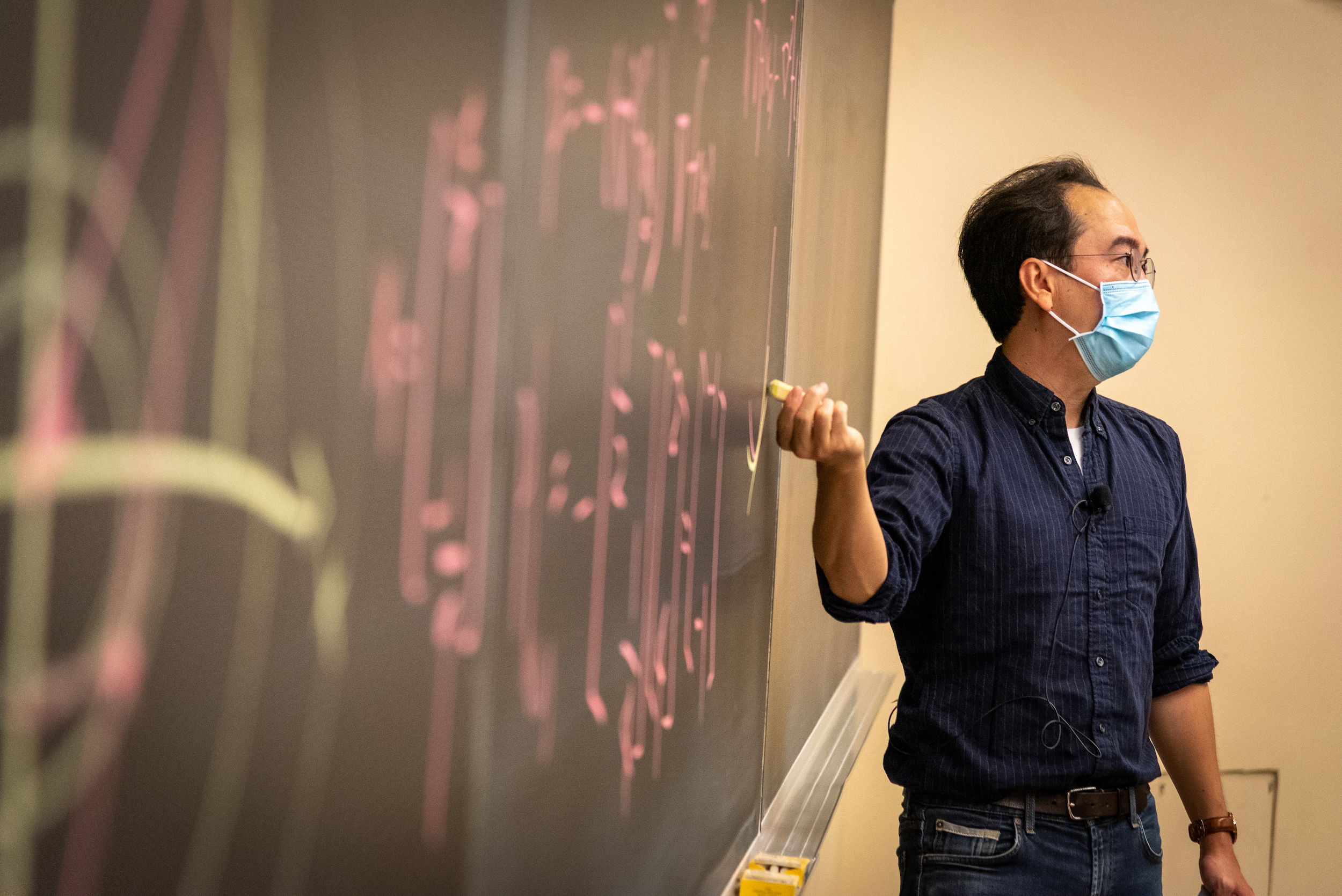
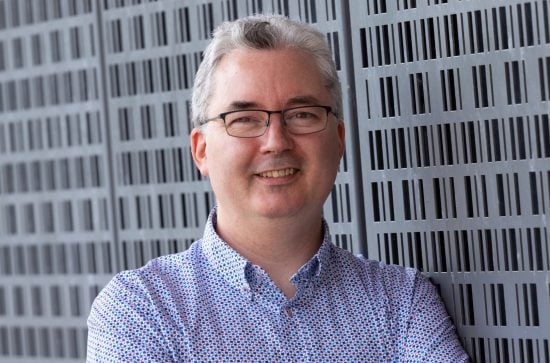
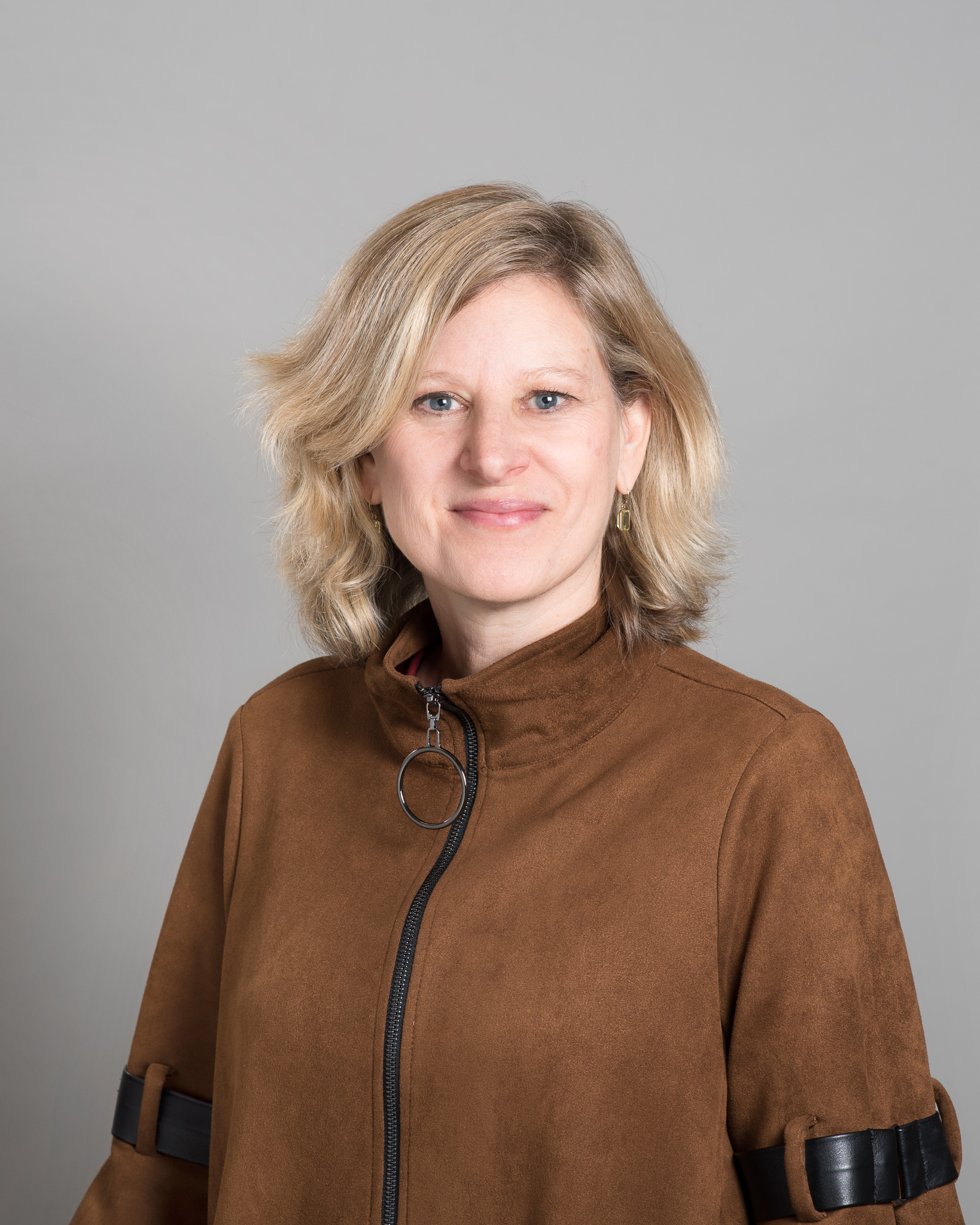
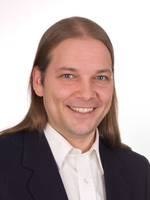
Sicun Gao is an Associate Professor in the Computer Science and Engineering department at the University of California, San Diego. His research focuses on practical algorithms for NP-hard search and optimization problems in computational systems, emphasizing combinatorial perspectives in numerical and statistical contexts to achieve reliable autonomy. Research Interests: Automated reasoning, Hamilton-Jacobi reachability, safe reinforcement learning, control barrier functions, and optimization in cyber-physical systems. Teaching: Courses on AI search, optimization, and graduate research seminars. The 15 most recent publications highlight advancements in safe AI control, motion planning, and policy optimization, often integrating neural networks with formal verification. Awards include the IEEE Power & Energy Society Technical Committee Prize Paper Award and the IROS RoboCup Best Paper Award. He advises PhD students working on AI-driven control and robotics, with alumni placed at institutions like Seoul National University, Amazon, and Apple. Grants include NSF Career, Air Force Young Investigator, and DARPA Assured Autonomy funding. His lab develops tools like dReal for automated reasoning in nonlinear theories over the reals.
University of Illinois Urbana-ChampaignUnited States
Roy Dong is an Assistant Professor at the University of Illinois at Urbana-Champaign, affiliated with the Coordinated Science Laboratory. His research bridges Control Theory Economics Statistics Optimization to address challenges in cyber-physical systems and the Internet of Things, focusing on data manipulation, privacy, and strategic behavior in interconnected systems. His academic journey includes a Ph.D. in Electrical Engineering and Computer Sciences from UC Berkeley (2017) and dual B.S. degrees in Economics and Computer Engineering from Michigan State University (2010). At Illinois, he teaches courses ranging from Control Systems to Convex Optimization , with multiple teaching excellence awards. Roy's research explores Closed-loop effects of machine learning Causality in decision systems Incentive design for strategic agents Privacy-utility tradeoff optimization Human behavior modeling with applications in smart grids, transportation networks, and semi-autonomous vehicles. His work formulates privacy-preserving mechanisms as optimization problems, balancing data utility against user privacy in dynamic systems. Article trends show expertise in Game theory for strategic data sources Energy disaggregation techniques Nonlinear basis pursuit algorithms Privacy-aware control systems with a focus on cyber-physical systems and human-in-the-loop applications. Scientific recognition includes 'Teacher Ranked as Excellent' awards (ECE 120, ECE 486, ECE 515) Contributions to smartSDH building control and CPRL compressive sensing Roy leads the Privacy-aware Control Systems research group, collaborating with institutions like UC Berkeley and Michigan State University , and directs projects funded by grants including the New USDA NIFA grant for agricultural robot autonomy .
Alejandro F. Villaverde is a Ramón y Cajal research fellow in the Department of Systems & Control Engineering at the School of Industrial Engineering, University of Vigo, Spain. He also serves as a Research fellow at CITMAga since 2022. Previously, he worked as a postdoctoral researcher at IIM-CSIC from 2016-2020. His research focuses on the modeling of dynamical systems with particular emphasis on biological applications. Villaverde earned his PhD in Systems and Control Engineering from University of Vigo between 2005 and 2009. His academic career has centered at Spanish institutions with a strong interdisciplinary approach bridging engineering, mathematics, and biology. His primary research interests include systems biology, control theory, and mathematical modeling, with specialized expertise in structural identifiability, observability analysis, and computational tools for dynamic modeling of biological systems. Villaverde's work addresses fundamental challenges in building reliable mathematical models of complex biological processes, with applications spanning immunology to microbial communities. His theoretical contributions have practical implications for improving model reliability and predictive power in biological research. Villaverde has published extensively in top journals including PLOS Computational Biology, Bioinformatics, and IEEE/ACM Transactions on Computational Biology. His recent publications (2023-2025) reveal a consistent research trajectory focused on developing theoretical frameworks for biological model analysis, creating practical software tools, and applying these methods to cutting-edge problems. His work shows particular strength in identifying and addressing fundamental limitations in modeling approaches, especially regarding parameter identifiability and model observability constraints. Among the top 2% Scientists Worldwide 2024 (Stanford University list) Recognition as one of the EEI's top valued instructors at University of Vigo's School of Industrial Engineering Villaverde leads multiple significant research projects including DYNAMO-bio (funded by Ministry of Science, Innovation and Universities), SICOMORO (focusing on symmetries in biological communities), and PREDYCTBIO. His group actively develops open-source software tools such as STRIKE-GOLDD for structural identifiability and observability analysis. The laboratory, part of the BICO research group, includes several researchers and students working on various aspects of dynamic modeling in biology, with recent additions including Mahmoud Shams Falavarjani, Adriana González Vázquez, and multiple interns working on specialized projects.
Professor Damien Woods is a faculty member at Maynooth University's Faculty of Science & Engineering, specifically affiliated with the Department of Computer Science and the Hamilton Institute. He leads groundbreaking research in DNA computing, molecular programming, and optical computing, focusing on self-assembly, algorithmic design, and computational complexity. ERC Consolidator Grant: 'Computationally Active DNA Nanostructures' SFI ERC Support Award EIC Pathfinder Challenge Grant: 'DISCO - DNA Infrastructure for Storage and Computation' His research projects explore programmable DNA storage, molecular robotics, and robust self-assembly systems. Recent publications span diverse topics like algorithmic DNA tile assembly, thermodynamic stability, and computational universality in nanosystems. Awards include ERC and SFI grants, with a focus on bridging theoretical computer science and experimental molecular biology. Scientific Contributions include: 2022: 'Turning Machines' - Molecular Robotics 2019: 'Diverse Molecular Algorithms' in Nature 2017: 'A Cargo-Sorting DNA Robot' in Science
Prof. Ovidiu Cârjă is a Professor of Mathematical Analysis at the Faculty of Mathematics, University of Iasi, Romania. He holds a PhD from the same university (1984) and has held academic positions since 1981, progressing from Assistant Professor (1984) to his current role. His research focuses on controllability, viability theory, and Hamilton-Jacobi-Bellman equations, with significant contributions to differential inclusions and nonlinear analysis. Education: B.Sc. Mathematics, University of Iasi (1976) M.Phil. Mathematics, University of Iasi (1977) Ph.D. Mathematics, University of Iasi (1984) Research Interests: Optimal control and time-optimal control problems Viability and invariance for differential inclusions Hamilton-Jacobi-Bellman equations Nonlinear functional analysis and semilinear systems Awards and Fellowships: Romanian Academy 'Simion Stoilow' Award (1991) Fulbright Award (UCLA, 1993–1994) NATO Fellowship (CMAF Lisbon, 1998–2002) Invited Professorships at University of Perpignan and Tor Vergata Rome Professional Activities: Editor of the Applied Analysis and Differential Equations (World Scientific, 2007) Co-author of influential books on nonlinear analysis and viability theory
Mireille E. Broucke is a Professor in the Department of Electrical and Computer Engineering at the University of Toronto, where she is a member of the Systems Control Group within the Faculty of Applied Science and Engineering. She teaches various undergraduate and graduate courses including Adaptive Control and Reinforcement Learning, Robot Modeling and Control, and Introduction to Nonlinear Systems, demonstrating her commitment to education in control systems engineering. Professor Broucke's research focuses on mathematical system theory with particular emphasis on Systems Neuroscience, Reach Control Problems, and Patterned Linear Systems. Her work bridges theoretical control theory with applications in neuroscience and robotics. She has developed theoretical frameworks for understanding neural adaptation through control theory principles and has applied reach control theory to robotics problems including motion control of quadrocopters. Her research demonstrates how control theory can provide insights into biological systems while also advancing engineering applications. Her recent publications show a clear trend toward applying control theory to neuroscience, particularly in understanding adaptive internal models in the brain. The publications span from theoretical reach control problems on simplices and polytopes to practical applications in robotics and neural systems. Her work increasingly focuses on the intersection of control theory and neuroscience, examining how the brain implements adaptive control mechanisms for motor functions. This represents a significant shift from her earlier work which was more focused on pure control theory problems. Professor Broucke has advised several PhD students including Fatima Ghadieh, Erick Mejia Uzeda, and Mohamed Hafez. Her research has been supported by various grants that enable her work in control theory and its applications to neuroscience and robotics. She maintains an active research program with numerous publications in top control theory journals including IEEE Transactions on Automatic Control, Automatica, and Systems and Control Letters.
Mark Meckes is a Professor at Case Western Reserve University, affiliated with the Department of Mathematics, Applied Mathematics, and Statistics within the College of Arts and Sciences. His research focuses on Geometry of Metric Spaces and High-Dimensional Probability, with contributions to topics like metric magnitude, convex bodies, and random matrix theory. He is reachable via mark.meckes@case.edu . His research interests delve into the geometric and probabilistic structures of metric spaces, including intrinsic volumes, spectral analysis, and applications to quantum mechanics and ecology. Recent work explores extremal metric spaces, fluctuations in random matrix ensembles, and quenched limits in stochastic models. Publications since 2015 highlight trends in random matrix theory, geometric measure theory, and interdisciplinary applications. Notable topics include the circular law for complex Ginibre ensembles, self-similarity in unitary ensembles, and biodiversity optimization. No scientific awards are explicitly listed in the provided material. Advising and grant details are not specified, though his work suggests active participation in academic mentorship. No lab or team affiliations are noted here.
Andrew D. Lewis is a Professor and Associate Head of the Department of Mathematics & Statistics at Queen's University, Kingston, Canada. His research focuses on geometric control theory, global analysis, and geometric mechanics, with applications to mechanical systems and dynamical systems. He holds a Ph.D. from Caltech, along with M.Sc. and B.Sc. degrees from Caltech and the University of New Brunswick, respectively. His research explores the intersection of geometric methods, topology, and algebra in solving structural problems in control theory and mechanics. He actively mentors graduate students and emphasizes mathematical rigor combined with applied perspectives. Lewis teaches advanced courses in control theory, differential equations, and geometric mechanics, and has developed extensive lecture notes and software tools for academic use. He has organized numerous research events, including the CRM Trimester on Control Geometry and Engineering and the Meeting on Nonlinear Control Theory and its Applications. His work spans theoretical contributions to control systems, geometric mechanics, and applied mathematics, with a focus on controllability, stabilization, and system dynamics. Education: Ph.D., California Institute of Technology M.Sc., California Institute of Technology B.Sc., University of New Brunswick Awards/Honors: None explicitly mentioned in the provided texts. Grants/Advising: Supervised numerous graduate students and postdoctoral researchers, fostering interdisciplinary work in control theory and mechanics.
Abhishek Halder is an Associate Professor in the Department of Aerospace Engineering at Iowa State University and an Associate Adjunct Professor in the Department of Applied Mathematics at the University of California, Santa Cruz. He is also a member of the Translational AI Center at Iowa State University. His academic journey includes joining Iowa State University as an Assistant Professor in July 2023 and previously serving as faculty at UC Santa Cruz starting from October 2017. Dr. Halder's educational background includes studies at IIT Kharagpur and Texas A&M University, where he developed expertise in systems and control theory with applications to matrix analysis, probability, and optimization. His research has been recognized with prestigious awards including the O. Hugo Schuck Best Application Paper Award from the American Automatic Control Council, Applied Mathematics Research Award from UC Santa Cruz, Outstanding Doctoral Student Award from Texas A&M, and Best Dual Degree Thesis Award from IIT Kharagpur. His research focuses on stochastic systems, control and optimization with applications to large scale cyber-physical systems. Dr. Halder has made significant contributions to the fields of optimal transport, Schrödinger Bridge theory, distributional control, and uncertainty propagation in dynamical systems. His work bridges theoretical developments with practical applications in power systems, aerospace engineering, and machine learning. He has secured multiple research grants from NSF, including a CPS Frontier project on Computation-Aware Algorithmic Design for Cyber-Physical Systems. Dr. Halder has demonstrated leadership in the control systems community through editorial roles including Associate Editor for IEEE Transactions on Automatic Control (2025-present), ASME Journal of Dynamic Systems, Measurement, and Control (2025-present), Systems & Control Letters (2022-present), and previously for IEEE Control Systems Society Conference Editorial Board (2019-2025) and IEEE Transactions on Aerospace and Electronic Systems (2019-2022). He is a Senior Member of IEEE and a member of IFAC, SIAM and ASME. His research group has produced numerous publications in top-tier journals and conferences, with recent work focusing on connections between optimal transport theory, stochastic control, and machine learning. The publication trends show increasing integration of Schrödinger Bridge formulations with machine learning techniques for distributional control problems across various domains including power systems, aerospace applications, and resource allocation. O. Hugo Schuck Best Application Paper Award (2024) Applied Mathematics Research Award from UC Santa Cruz (2022) IEEE Senior Member (2021) Outstanding Doctoral Student Award from Texas A&M Best Dual Degree Thesis Award from IIT Kharagpur Dr. Halder has mentored numerous PhD students including Alexis, Georgiy, Iman, Shadi, and Kenneth, many of whom have received prestigious fellowships. His research group maintains strong collaborations with national laboratories including Lawrence Livermore National Lab and Los Alamos National Lab, as well as industry partners. Dr. Halder is also committed to education and outreach, having created and taught the 'Feedback Control' course for high school students in the California State Summer School for Mathematics and Science (COSMOS), introducing complex control theory concepts without calculus or linear algebra.
Max Planck Institute for Dynamics of Complex Technical SystemsGermany
Sara Grundel is a leading researcher at the Max Planck Institute for Dynamics of Complex Technical Systems in Magdeburg, Germany. Her work focuses on computational methods in systems and control theory, particularly in model order reduction, gas network simulation, and optimization of energy systems. Education: Diplom in Mathematics, ETH Zurich (2005) PhD in Mathematics, Courant Institute of Mathematical Sciences, New York University (2011) Research Interests: Sara’s research encompasses mathematical control theory, stability analysis, and numerical methods for differential-algebraic equations. She applies these techniques to gas and energy networks, epidemic modeling, and multi-agent systems. Her interdisciplinary work bridges computational mathematics with real-world engineering and public health challenges. Recent Publications: Her 15 most recent articles (2024–2012) demonstrate expertise in parametrized PDEs, model reduction for coupled systems, and control strategies for SARS-CoV-2 containment. Key subtopics include adaptive meshing, stability-preserving algorithms, and optimization of nonlinear network dynamics. Scientific Contributions: Developed clustering-based model reduction techniques for networked systems Investigated hyperbolic discretization methods using Riemann invariants Advanced polynomial root radius optimization with affine constraints Collaborations: Sara frequently collaborates with researchers like Peter Benner and Martin Gersen on energy grid simulations and control theory. She participates in international conferences (GAMM, IEEE CDC, MTNS) and contributes to edited volumes in applied mathematics.
Erik Frisk is a Professor and Deputy Head of Department at Linköping University's Department of Electrical Engineering (ISY), where he also serves as Head of the Vehicular Systems division. This division operates under the Wallenberg Autonomous Systems Program (WASP) and focuses on control, diagnosis, and supervision of vehicle functions. His research spans fault diagnosis, vehicle control systems, autonomous vehicles, electric vehicle routing, and vehicle dynamics. Key projects include route planning for heavy-duty electric vehicles developed with Scania and Ragn-Sells, and the Fault Diagnosis Toolbox—a Matlab-based platform for analyzing and designing fault diagnosis systems for dynamical systems. Analysis of his 2024-2025 publications reveals a concentrated effort on robust motion planning under uncertainty, predictive control for autonomous vehicles, and naturalistic driving data analysis for heavy vehicle performance. His work consistently bridges theoretical control systems with practical applications in electrified and autonomous transportation. Frisk leads a multidisciplinary research team within the Vehicular Systems division, fostering academic-industrial collaborations that advance vehicle technology through real-world problem solving and innovation.
Nathanaël Fijalkow is a Researcher at CNRS in LaBRI (Bordeaux) and a Research Fellow at The Alan Turing Institute in London. His primary research fields include games , machine learning , automata theory , and dynamical systems , with a focus on synthesizing programs from logical specifications and probabilistic models. Research Interests span program synthesis (programming by example), controller synthesis (temporal logic specifications), games on graphs (parity/mean payoff games), probabilistic automata (bounded ambiguity), and invariants for linear dynamical systems. He bridges formal methods with machine learning through projects like DeepSynth . Scientific Contributions include: Undecidability results for probabilistic automata Advances in parity game algorithms (quasi-polynomial lower bounds) Foundations of probabilistic modal logics Efficient synthesis techniques using SMT solvers and distributional learning Supervision involves guiding postdocs and PhD students such as Guillaume Lagarde, Antonio Casares, and Pierre Ohlmann. He has secured grants like the Momentum DeepSynth project (2019-2021) , aiming to merge formal methods with ML for program synthesis.
Gonzalo Navarro is a Full Professor at the Department of Computer Science (DCC) , within the Faculty of Physical and Mathematical Sciences at the University of Chile . His academic roles include coordinating the PhD Program , serving as Research Coordinator , and being a member of the Department Council . Co-created the Pizza&Chili site for compressed text indexes Co-authored two books: Compact Data Structures and Flexible Pattern Matching in Strings Research Interests: He focuses on algorithm design , compressed data structures , text/graph databases , and information retrieval . His work bridges theoretical and practical efficiency in problems like approximate pattern matching, regular expression searching, and dynamic data structure optimization. Recent Publications Trends: His 2025-2024 works emphasize space-time optimal data structures , graph database joins , trajectory compression , and regular expression indexing , often combining algorithmic theory with real-world implementation benchmarks. Scientific Awards: 7 Best Paper Awards in conferences 4 Google Research Awards Highest Cited Paper Award (Elsevier) Scopus Chile Award ACM Fellow (2022) Advising: He has advised 8 postdocs, 22 PhD students, 17 MSc students, and 29 undergraduate theses. His Algorithmic Wednesdays Group fosters collaborative research in algorithms. Labs & Projects: He participates in the Milennium Institute for Foundational Research on Data (IMFD) and the Basal Center for Biotechnology and Bioengineering (CeBiB) , advancing compressed data structures for biological and web-scale applications.
Institute of Science and Technology AustriaAustria
Krishnendu Chatterjee is a Professor at the Institute of Science and Technology Austria (IST Austria) , Department of Computer Science. His research spans formal verification, probabilistic systems, game theory, and evolutionary dynamics, with over 300 peer-reviewed publications in top venues such as DISC, AAAI, LICS, PNAS, Nature , and Journal of the ACM . His research focuses on developing theoretical foundations and practical algorithms for analyzing complex systems, including Markov decision processes, stochastic games, probabilistic programs, and evolutionary models. He has made significant contributions to topics such as reachability analysis, termination of probabilistic programs, synthesis of controllers, and evolutionary game dynamics. Chatterjee's work is highly interdisciplinary, bridging computer science, mathematics, and biology. He has collaborated extensively with leading researchers worldwide and has been involved in editorial roles and program committees for major conferences in formal methods and theoretical computer science.
Malte Helmert is a Professor at the University of Basel in the Department of Mathematics and Computer Science. He previously worked at the University of Freiburg's Research Group on the Foundations of Artificial Intelligence from 2001 to 2011. His research focuses on intelligent problem-solving , particularly in automated planning , combinatorial search , constraint satisfaction , and NP-hard graph problems . Helmert has made significant contributions to classical planning, including the development of the Fast Downward planning system and its derivatives. Education : Diploma in Computer Science (M.Sc.) from the University of Freiburg (2001) Ph.D. in Computer Science from the University of Freiburg (2006) Research interests encompass the theoretical and practical aspects of automated planning, including heuristic search , optimal planning , abstraction techniques , and domain-independent planning . His work explores merge-and-shrink abstractions , landmark progression , and cost partitioning algorithms for classical planning systems. Recent publications analyze advancements in pseudo-Boolean proof logging , higher-dimensional potential heuristics , and correlation complexity in planning domains. These works often integrate mathematical modeling, algorithm design, and empirical benchmarking. Scientific awards include the AAAI Fellow (2021), EurAI Fellow (2020), multiple Best Paper Awards at ICAPS and SoCS conferences, and the Computers and Thought Award (2011). He also received the VDI-Förderpreis for his Master’s thesis. Software contributions include the Fast Downward planning system, MIPS (now maintained by Stefan Edelkamp), and COVER (a vertex cover solver). Helmert has organized tutorials at ICAPS and AAAI conferences on topics like landmark progression , abstraction heuristics , and LP-based heuristics .