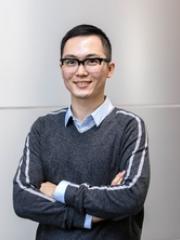
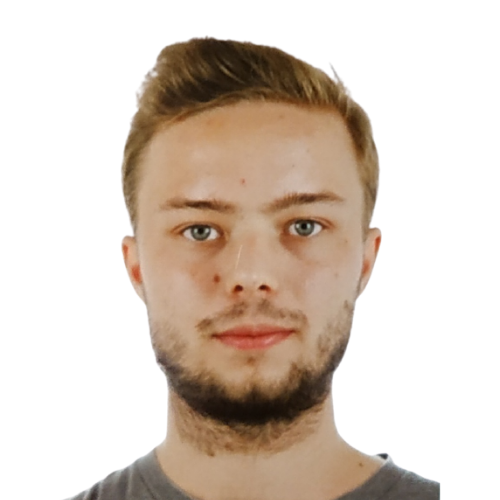
Tom Claeys is a Professor of Mathematics at UCLouvain (Université catholique de Louvain), Belgium, where he works in the GPP research group (Geometry, Physics, and Probability) within the Institute for Research in Mathematics and Physics. His research focuses on Random Matrix Theory , Integrable Systems , and Mathematical Physics . Dr. Claeys employs advanced techniques in asymptotic analysis, Riemann-Hilbert problems, and Painlevé equations to investigate critical phenomena in random matrices, universality properties, and connections to other areas of mathematics and physics. His work spans theoretical developments and applications to physical phenomena described by integrable partial differential equations. Analysis of his recent publications reveals a strong focus on biorthogonal ensembles, determinantal point processes, and connections between random matrix theory and integrable partial differential equations like the Korteweg-de Vries equation and KPZ equation. His work demonstrates deep connections between probability theory, mathematical physics, and asymptotic analysis, with particular attention to critical phenomena and universality across different mathematical structures. Scientific recognition includes: ERC Starting Grant CRaMIS EOS Programme PRIMA Dr. Claeys has supervised several PhD students to completion and has hosted numerous postdoctoral researchers. His research group actively investigates connections between random matrices, integrable systems, and asymptotic analysis. Current research directions include the study of critical phenomena in random matrix ensembles and their applications to mathematical physics, with particular emphasis on the behavior at phase transitions and the emergence of universal patterns.
Dr. Alexander Heinlein is an Assistant Professor in the Numerical Analysis group at the Delft Institute of Applied Mathematics (DIAM), Faculty of Electrical Engineering, Mathematics & Computer Science (EEMCS), Delft University of Technology (TU Delft). His work bridges scientific computing and machine learning through scientific machine learning (SciML) , focusing on domain decomposition methods and multiscale approaches for solving complex partial differential equations on modern hardware like GPUs. Research interests include: Developing high-performance computing algorithms for nonlinear PDEs with applications in fluid-structure interaction and photonic crystals Advancing physics-aware machine learning techniques for groundwater heat transport and post-burn contraction prediction Creating parallel preconditioners like FROSch for challenging problems in computational mechanics Building hybrid numerical-ML frameworks with domain decomposition for multi-physics applications His recent publications highlight a 128-235x speedup in biomedical simulations through deep operator networks , and keynote presentations on geometric challenges in machine learning-based surrogate models at international conferences like CASML 2024. Scientific awards include: 2025 NWO Open Technology Programme grant for the RAPID-Wind project on offshore wind turbine foundations Students and collaborations involve: Yuhuang Meng (PhD candidate, 2024) Jing Zhao (co-supervisor) Prof. Jun Zou (Chinese University of Hong Kong collaboration, 2024) He leads software development for COMSOL and Trilinos extensions while maintaining open-source reproducibility standards.
Ivan Papić is an Assistant Professor at the School of Applied Mathematics and Informatics , affiliated with the Josip Juraj Strossmayer University of Osijek . His research focuses on stochastic processes, particularly fractional diffusions , non-stationary models , and long-range dependence . PhD in Mathematics (2019, University of Zagreb) MSc in Financial and Business Mathematics (2013, University of Osijek) MSc in Mathematics and Computer Science Education (2020, University of Osijek) BSc in Mathematics (2011, University of Osijek) His work bridges applied probability and statistical modeling , with applications in epidemiology (e.g., modeling SARS-CoV-2 spread via stochastic SEIR models) and mathematical finance. Recent publications explore advanced diffusion models like stretched non-local Pearson diffusions and fractional Bessel processes . Projects such as Scaling in stochastic models (2023–2027) and Stochastic models with long-range dependence highlight his expertise. He actively participates in international conferences, including the 9th European Congress of Mathematics (2024), and serves as Erasmus coordinator for MATHOS since 2024. Teaching responsibilities include courses like Stochastic Processes I , Applied Statistics , and Bayesian Statistics at the University of Osijek, with a focus on interdisciplinary applications across departments such as Mathematics, Physics, and Civil Engineering.
Nicholas C. Jacobson is an Associate Professor of Biomedical Data Science and Psychiatry at the Geisel School of Medicine, Dartmouth College. He serves as the Director of the Treatment Development & Evaluation Core within the Center for Technology and Behavioral Health (CTBH) and leads the AI and Mental Health: Innovation in Technology Guided Healthcare (AIM HIGH) Laboratory. His work bridges computational methods with clinical applications to transform mental healthcare through technology. Dr. Jacobson earned his PhD in Psychology from Pennsylvania State University in 2019, following an MSc in Psychology from the same institution in 2015. He completed his Postdoctoral and Clinical Fellowships in Psychology at Massachusetts General Hospital/Harvard Medical School in 2019. Dr. Jacobson's research focuses on harnessing artificial intelligence and passive sensor data from smartphones and wearable devices to develop scalable, personalized interventions for anxiety and depression. His work has three main pillars: (1) enhancing precision assessment of anxiety and depression using intensive longitudinal data, (2) conducting multimethod assessment utilizing passive sensor data from smartphones and wearable devices, and (3) providing scalable, personalized technology-based treatments utilizing smartphones. As a computational psychologist, he created the Differential Time-Varying Effect Model (DTVEM), an innovative statistical package in R that allows researchers to discover and model optimal lag times in intensive longitudinal data. His methodological expertise encompasses machine learning, structural equation modeling, multilevel modeling, time-series techniques, and dynamical systems modeling. His recent publications demonstrate a strong focus on digital phenotyping, machine learning applications in mental health, and personalized interventions. The research spans multiple domains including depression symptom networks, anxiety disorder assessment, eating disorder prevention, and the use of passive sensing to understand mental health conditions. A notable trend is the application of advanced computational methods to create more precise and personalized mental health assessments and interventions, with increasing emphasis on real-world implementation and accessibility. Principal Investigator of an R01 Award from the National Institute of Mental Health studying personalized deep learning models to predict rapid changes in major depressive disorder symptoms Secured over $6 million in funding as Principal Investigator and over $20 million as a co-Investigator Featured on NBC Nightly News and CBS Morning News for pioneering work in AI-powered mental health applications Dr. Jacobson has developed several impactful digital tools including Therabot, a generative AI therapy chatbot that demonstrated substantial reductions in symptoms of major depressive disorder, generalized anxiety disorder, and feeding and eating disorders in its first randomized controlled trial. He also developed Mood Triggers, a smartphone sensing platform that integrates ecological momentary assessment and intervention to help users identify and manage anxiety and depression triggers. His suite of smartphone applications has reached over 50,000 users in more than 100 countries. Dr. Jacobson is actively recruiting team members and encourages interested individuals to contact him through his personal website. He directs the AIM HIGH Laboratory, which focuses on advancing AI applications in mental healthcare. The lab develops innovative computational approaches to enhance mental health assessment and treatment through technology. Current projects include using passive sensor data to predict symptom changes, developing personalized just-in-time adaptive interventions, and creating quantitative tools that enable precision mental healthcare.
Prof. Murad Alim is a Professor of Quantum Geometry at the Technical University of Munich (TUM) and an Associate Professor at Heriot-Watt University, affiliated with the Maxwell Institute for Mathematical Sciences. His research focuses on quantum geometry, mathematical physics, and the interplay of perturbative/non-perturbative structures in topological string theory and supersymmetric theories. He has held positions at Harvard University, the University of Hamburg, and the University of Göttingen. Education: PhD in Mathematical Physics (LMU Munich, 2009), studies at ENS Paris and Karlsruhe University. Affiliations: TUM School of Computation, Information and Technology; Edinburgh Mathematical Physics Group. Research interests include moduli spaces, wall-crossing phenomena, and dualities in field/string theories using mirror symmetry. He has received awards such as the Emmy Noether Grant (2016) and the LMU PhD Prize (2010). Key Publications: Over 30 peer-reviewed articles, including work on BPS structures, topological strings, and mirror symmetry. Grants & Collaborations: Leadership of an Emmy Noether Group (2016-2024), collaborations with institutions like CERN and Harvard. Labs/Teams: Active in the Edinburgh Mathematical Physics Group and TUM’s quantum geometry research cluster.
Rossella Brunetti is an Associate Professor at the Department of Physical, Computer and Mathematical Sciences (formerly Physics campus) at the University of Modena and Reggio Emilia . Her research focuses on theoretical physics of amorphous materials, particularly chalcogenides used in phase-change memory (PCM) devices. She specializes in charge transport modeling, hydrodynamic equations, and advanced numerical methods like the Numerov process. Research Interests: Theoretical physics of amorphous semiconductors, trap-limited conduction, time-dependent transport phenomena, and simulation of nanoscale devices. Her work bridges fundamental physics with technological applications in high-speed memory devices and semiconductor modeling. Notable Contributions: Development of the first self-consistent 5th-order numerical methods for non-uniform grids 3D random-network models for threshold switching Quantum transport frameworks for hot-carrier dynamics Her research has enabled accurate simulation of Ovonic devices and contributed to understanding voltage snapback phenomena.
Andrew Novak is a Senior Research Fellow at the University of Technology Sydney (UTS), affiliated with the School of Sport, Exercise and Rehabilitation and the Human Performance Research Centre (HPRC). His research focuses on human performance in sports, esports, and military settings, emphasizing data-driven approaches using tools like Tableau, R, and AWS. He collaborates with Rugby Australia, the Australian Defence Science and Technology Group, and the Office of Naval Research Global. Novak holds a PhD from the University of Newcastle and has published over 50 peer-reviewed papers. He is accredited as a Level 2 Sports Scientist and Exercise Scientist. Teaching roles include co-developing the 'Performance Analysis and Data Science' subject in UTS's Masters of High Performance Sport program. His research interests span performance analysis, team dynamics, and decision-making, with recent work on environmental impacts on football performance, cooperative networks in invasion games, and esports perceptual-motor skills. He has secured grants for projects like applying machine learning to cricket performance and military team dynamics. Award highlights include a runner-up for the best sports science research poster (2016). Professional experience includes roles at Fusion Sport, developing athlete management software, and bicycle fitting expertise through Specialized Bicycles.
PD Dr. Thorsten Hüls is a Privatdozent at the University of Bielefeld's Faculty of Mathematics, Department of Mathematics. His office is located at V3-241 with contact information huels@math.uni-bielefeld.de and +49 521 106 4785. He has maintained active teaching responsibilities from Winter semester 2003/2004 through the upcoming Winter semester 2025/2026. Dr. Hüls' research specializes in numerical mathematics and dynamical systems , with particular expertise in differential and difference equations, non-autonomous and non-invertible dynamics, and hyperbolic structures. His work bridges theoretical mathematics with computational approaches, developing algorithms for analyzing complex dynamical behavior with applications in biological models and economic systems. Analysis of his publication record reveals a consistent research trajectory focused on nonautonomous dynamical systems. His most significant contributions involve angular values theory, fiber bundles computation, and homoclinic structures, often in collaboration with Wolf-Jürgen Beyn. His publications appear in top journals including SIAM Journal on Applied Dynamical Systems and Discrete and Continuous Dynamical Systems. Goldener Wanderwischer award (Summer semester 2013) for outstanding teaching in the 'Service' area Best paper award for 'Homoclinic trajectories of non-autonomous maps' (2011) Goldener Wanderwischer award (Winter semesters 2010/11 and 2011/12) for outstanding mathematics teaching Best paper award for 'On r-periodic orbits of k-periodic maps' (2008) Dr. Hüls has supervised numerous students including Ingo Könemann, Alina Giord, Andre Schenke, and Christina Göpfert. His research group has developed significant educational tools through the 're.math' project, which visualizes linear algebra and analysis concepts, and the 'NumLab' project containing MATLAB programs demonstrating numerical algorithms. These projects demonstrate his commitment to both theoretical research and practical educational applications in mathematics.
Robert Gaunt is a Senior Lecturer in Probability and Statistics at The University of Manchester. His research focuses on probability theory, distributional analysis, and Stein's method, with a particular emphasis on random variables, special functions, and asymptotic methods. He holds a Doctor of Philosophy (2013) and Master of Mathematics (2009) from the University of Oxford. Gaunt has published over 70 research outputs, including studies on variance-gamma distributions, Bessel functions, and correlated normal variables. His research interests span probability theory, statistical analysis, and mathematical statistics, with contributions to distribution theory, stochastic processes, and special functions. Recent work includes asymptotic expansions for random variable products, Stein characterizations, and bounds for integral approximations. While no specific awards are listed, Gaunt's extensive publication record reflects his expertise in advanced probability topics. He has supervised 2 doctoral students and is open to further PhD supervision. His work often intersects with applications in financial mathematics and statistical modeling.
Professor Martin Rasmussen holds a position in the Department of Mathematics at Imperial College London, within the Faculty of Natural Sciences. His research focuses on the development of the Qualitative Theory of Nonautonomous and Random Dynamical Systems, with contributions to stability, bifurcation theory, invariant manifolds, and Morse decomposition theory. He is affiliated with groups such as the Dynamical Systems, Applied Mathematics and Mathematical Physics, and the CNRS-Imperial Abraham de Moivre UMI. His research interests include dynamical systems, ordinary differential equations, and their applications to stochastic processes and mathematical modeling. Notable achievements include awards such as the Imperial College Prize for Excellence in Personal Tutoring (2019) and Marie Sklodowska-Curie Fellowships for collaborative research projects. Professor Rasmussen supervises PhD students and postdoctoral researchers, contributing to a vibrant academic community. His work bridges theoretical advancements with practical applications in areas like ecological modeling and stochastic analysis. Key grants and fellowships highlight his role in fostering international collaborations and training early-career researchers. Awards: Best Paper Award from ISDE (2006), EPSRC Grant (2013–2015), Marie Curie Fellowships (2008–2010 and 2018–2020). Grants: Marie Sklodowska-Curie Innovative Training Network (2015–2019), EPSRC New Directions Grant (2013–2015). His publications span foundational contributions to dynamical systems theory, with recent work exploring bifurcations under noise, quasi-ergodic measures, and applications to ecological systems. He maintains active collaborations within Imperial College's mathematics community and international networks.
Thomas S. Richardson is a Professor in the Department of Statistics at the University of Washington . He holds adjunct appointments in the Departments of Economics and Electrical Engineering , and serves on the eScience Steering Committee . He earned his BA from the University of Oxford and MS/PhD from Carnegie Mellon University . Research Interests : Graphical Models, Causality, and their applications in statistics, machine learning, and biomedical domains. Key Contributions : Pioneering work on Single-World Intervention Graphs (SWIGs), nested Markov properties for acyclic directed mixed graphs, and causal inference with truncation by death. Collaborations : Extensive partnerships with J.M. Robins, I. Shpitser, R.J. Evans, and others in causal modeling and machine learning. Scientific Awards : Fellow of the Center for Advanced Studies in the Behavioral Sciences at Stanford University Email : thomasr@uw.edu
Liria Fernández González is a Professor and researcher in the Department of Psychology at the Faculty of Health Sciences, University of Deusto. She holds a degree in Psychology from the University of Salamanca and a PhD in Psychology from the Autonomous University of Madrid. Her academic career spans multiple institutions and research initiatives focused on adolescent mental health and behavioral issues. Her primary research interests include adolescent psychology, cyberbullying, dating violence, child-to-parent aggression, and mindfulness-based interventions. Dr. Fernández González employs longitudinal methodologies to examine developmental pathways of psychological issues in youth, with particular attention to how digital environments impact adolescent behavior and wellbeing. Her work bridges clinical psychology with digital health research, addressing critical contemporary challenges in adolescent mental health. Analysis of Dr. Fernández González's publications reveals consistent focus on adolescent mental health across multiple dimensions. Her work demonstrates expertise in longitudinal research designs examining relationships between digital behaviors, mental health outcomes, and protective factors. She has made significant contributions to understanding the connections between online victimization, internalizing symptoms, and mindfulness as a protective factor. Her recent work increasingly addresses pandemic impacts on adolescent mental health and sophisticated methodological approaches like meta-analytic structural equation modeling. Dr. Fernández González has directed multiple doctoral theses examining child-to-parent violence, mindfulness applications, and dating violence risk factors. She actively participates in major research projects including 'STRESS-IT1532-22' (2022-2025), 'Factores predictivos e impacto de la depresión y ansiedad materna' (2020-2023), and projects funded by the Alicia Koplowitz Foundation and BBVA Foundation. She serves on the editorial board of the journal 'Psicología Conductual' (Impact Factor JCR: 1.017_Q3). Dr. Fernández González is a key member of the 'Deusto Stress Research' team recognized by the Basque Government (GV recognition IT982-16, 2016-2021). Her collaborative work extends across multiple institutions with researchers including Esther Calvete Zumalde, Izaskun Orue Sola, Juan Machimbarrena, and Joaquín González-Cabrera. Her laboratory work focuses on adolescent mental health assessment, intervention development, and longitudinal tracking of psychological outcomes in digital contexts.
Dr. Geng Wang is a Postdoctoral Research Fellow at the Institute for Molecular Bioscience , University of Queensland. His research specializes in statistical genetics and genetic epidemiology , focusing on the developmental origins of health and diseases , causal inference in genetic epidemiology , and genetic susceptibility of complex traits . He combines expertise in bioinformatics , clinical research , and statistical genetics with a clinical medicine background and biotechnology industry experience. Bachelor of Medicine (2012), Second Military Medical University, China Master of Internal Medicine (2016), Second Military Medical University, China PhD in Genetics (2023), University of Queensland His research explores intergenerational genetic effects through Mendelian randomization and structural equation modeling , particularly investigating maternal-fetal genetic interactions and HLA contributions to immune-related diseases . Recent publications analyze ankylosing spondylitis across diverse populations and reproductive outcomes like miscarriage and stillbirth. Dr. Wang is available for supervision and maintains active collaborations across University of Queensland and international institutions, with external profiles on ORCID , Google Scholar , and LinkedIn .
Naftali Weinberger is a Postdoctoral Fellow at the Munich Center for Mathematical Philosophy within Ludwig Maximilian University of Munich's Faculty of Philosophy, Philosophy of Science and Religious Studies. His research focuses on causal modeling methods applied to foundational questions in causal inference and explanation across multiple scientific disciplines. Education PhD, University of Wisconsin, Madison (2015) Dr. Weinberger's research addresses the theoretical foundations and practical applications of causal modeling, with particular emphasis on dynamical systems and discrimination. His work spans population genetics, psychometrics, neuroscience, and economics, examining how causal concepts operate in diverse scientific contexts. Current projects investigate causation in dynamical systems and develop causal frameworks for modeling discrimination. His publication record (2011-2022) demonstrates consistent output in leading philosophy of science journals, with evolving focus from evolutionary biology and psychometrics toward dynamical systems and causal frameworks. Key themes include equilibrium models, time-scale relativity, non-factual scientific disagreement, and path-specific causal effects across disciplines. No scientific awards were mentioned in the source materials. No information regarding student advising or research grants was provided in the available documentation. Dr. Weinberger is currently affiliated with the Munich Center for Mathematical Philosophy. Previously, he contributed to the 'Causation, Continuity, and Complexity' project at the University of Pittsburgh's Center for Philosophy of Science and the 'Bridging Causal and Explanatory Reasoning' project at Tilburg University.
Davide Murari is a Research Fellow at the Department of Applied Mathematics and Theoretical Physics (DAMTP) at the University of Cambridge. His work focuses on the intersection of neural networks and dynamical systems, with an emphasis on structure preservation and numerical analysis. He holds a postdoctoral role where he explores theoretical and computational aspects of neural networks, particularly their connections to differential equations and physical systems. His research interests include approximation theory for neural networks, structure-preserving integrators, and applications in computational mechanics and inverse problems. Collaborations involve leading institutions such as NTNU (Norway) and the Alan Turing Institute. Murari actively presents at international conferences, including ICIAM, SIAM, and SciCADE, and publishes in top-tier journals like Computer Methods in Applied Mechanics and Engineering and Physica D . Key contributions include developing symplectic neural flows, enhancing Fourier neural operators with spatial features, and analyzing robustness in graph neural networks. His work bridges numerical mathematics and machine learning, addressing challenges in stability, accuracy, and scalability. Murari’s academic networks span computational mathematics and machine learning communities, with a focus on advancing theoretical foundations while solving practical engineering and scientific problems.