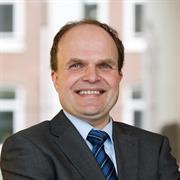
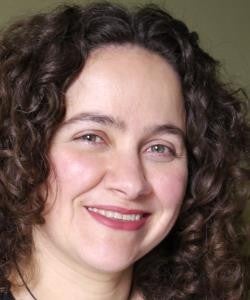
Peter von Bülow is a Professor of Architecture at the University of Michigan’s Taubman College of Architecture and Urban Planning. His research bridges evolutionary computation with structural optimization, focusing on innovative architectural systems like thin-shell concrete and modular fabric structures. As a Fulbright Scholar, he worked at the University of Stuttgart’s Institute for Lightweight Studies under Frei Otto. He actively contributes to the International Association of Shell and Spatial Structures (IASS) and has designed notable projects such as wooden grid shells using reclaimed materials. Education: Doctorate in Engineering (Dr.-Ing.), University of Stuttgart (Institute for Lightweight Structures and Conceptual Design, under Werner Sobek) Master of Science in Civil Engineering, University of Tennessee Bachelor of Architecture, University of Tennessee Research Interests: von Bülow’s work centers on computational design methodologies for optimizing structural forms, particularly lightweight and branching column systems. His research integrates evolutionary algorithms with architectural practice, emphasizing material efficiency and geometric innovation. Recent projects explore reclaimed materials in structural design and stochastic search methods for form exploration. Scientific Awards: Fulbright Scholar (University of Stuttgart) NSF Regional Innovation Engines Program Semifinalist (2023) Pressing Matters Grants (2022) R+D Awards (2018)
Ellen Moors is a Full Professor of Innovation and Sustainability and Head of the Department of Geosciences at Utrecht University's Copernicus Institute of Sustainable Development. She leads research on socio-technical transitions in health, agri-food, and life sciences, focusing on governance, user innovation, and responsible research and innovation (RRI). Her work emphasizes societal challenges, institutional frameworks, and co-creation with stakeholders to ensure sustainable outcomes. Affiliations : Dutch Advisory Board for Science, Technology and Innovation (AWTI); Committee on Genetic Modification (COGEM); Board Member of Future Food Utrecht. Education : Not explicitly detailed in provided texts, but her academic roles imply advanced degrees in sustainability and innovation studies. Her research areas include governance of emerging technologies, sustainable healthcare innovations, and interdisciplinary pathways to sustainability. She has over 80 publications in journals like Research Policy and Nature Biotechnology , and co-edited a book on Alzheimer's diagnostics. Her teaching spans bachelor and master programs in innovation management and sciences. Research Interests : Intersection of innovation theory and sustainability, with a focus on: Legitimation of socio-technical transitions User-producer interactions in healthcare and agriculture Regulatory frameworks for emerging technologies AI ethics and responsible innovation in long-term care Recent Projects : VHP4Safety (chemical safety via human data), AI-assisted decision-making in dementia care, and triple artemisinin therapy deployment in malaria-prone regions. These projects emphasize human-centered design and policy integration.
Tom Luk R Michoel is a Professor at the Computational Biology Unit within the Department of Informatics at the University of Bergen. His research focuses on bioinformatics, computational biology, and machine learning applied to understanding gene regulation and causal relationships in biological systems. He teaches in both the Bachelor and Master programs in Informatics, including courses like BINF301 and MNF130. Research Interests: Michoel’s work explores how genetic variation influences gene expression and disease mechanisms. He develops machine learning algorithms to infer causal gene regulatory networks from large-scale genomic data, emphasizing causal inference over mere correlations. His recent projects include analyzing plasma protein networks linked to cardiovascular disease and applying Bayesian networks to understand gene-disease associations. Publications: His most recent work (2025) focuses on causal protein networks in myocardial infarction risk and network-driven frameworks for coronary artery disease studies. He also contributes to methodological advancements like integrating graph neural networks with metabolic models. Current Activities: Michoel leads the development of tools like Findr.jl for network inference and teaches short courses on causal inference in drug discovery. His lab collaborates on projects involving single-cell analysis, multi-tissue genomics, and systems pharmacology.
Rachana Gupta serves as the Director of the ECE Senior Design Program and a Teaching Professor in the Department of Electrical and Computer Engineering at North Carolina State University. She holds a Ph.D. (2010), M.S. (2006), and B.E. (2002) in Electrical Engineering from NC State University and the University of Pune, India, respectively. Her research focuses on educational design innovations in engineering, sensor systems, and networked control systems. She has pioneered work in capstone design methodologies, interdisciplinary collaboration between entrepreneurship and engineering, and industry-academia partnerships. Her technical contributions include advancements in LIDAR-based vehicular monitoring, infrasound measurement systems, and wearable ECG sensors. R Gupta has received numerous teaching awards, including the 2019 William F. Lane Outstanding Teaching Award and the 2022-23 CoE George H. Blessis Advising Award. She led the development of the 'Four-step Method' for product requirement gathering in capstone teams and co-designed the industry-based team review process. Her IBM Faculty Award (2013–2020) supported research into secure networked control systems. As an educator, she advises senior design teams and mentors students in multidisciplinary projects such as the award-winning 'Handheld Noninvasive Cocoa Bean Moisture Meter.' Her work bridges technical innovation with pedagogical excellence, emphasizing practical engineering solutions for real-world challenges.
Professor Mark Leenders is a Professor in the Department of Management at RMIT University, specializing in innovation, marketing, and sustainability. His research focuses on new product success, digital transformation, circular systems, and the intersection of commerce with public health and triple-bottom-line strategies. He actively supervises research projects in areas such as circular economy, healthcare technology, and sustainable festivals. His work aligns with UN Sustainable Development Goals, particularly addressing climate action, reduced inequalities, and responsible consumption. Notable projects include enhancing supply chain provenance in energy transition and exploring pro-environmental behaviors in tourist attractions. Professor Leenders collaborates widely, offering supervision for Masters, PhD, and industry projects. His interdisciplinary research has been published in top journals like Journal of Cleaner Production and Marketing Science .
Scott Crawford is an Instructional Associate Professor in the Department of Statistics at Texas A&M University, serving as Director of the Statistical Consulting Center. He holds a PhD in Statistics from Texas A&M University (2012), a Master's from Brigham Young University, and a Bachelor's from Southern Utah University. His expertise spans statistical consulting, regression analysis, and online education methodologies. He has taught extensively, including introductory statistics courses and specialized consulting seminars, and has advised on numerous research projects across disciplines. Education: PhD in Statistics, Texas A&M University, 2012 Master's in Statistics, Brigham Young University Bachelor's in Mathematics, Southern Utah University Teaching Roles: STAT 211 (Intro to Engineering Statistics) STAT 212 (Intermediate Statistics) STAT 312 (Methods) STAT 659 (Categorical Statistics) STAT 681 (Seminar) STAT 692 (Consulting) His research focuses on addressing missing data in regression models and developing educational resources for statistics. He has directed the Statistical Consulting Center since 2020, supporting faculty and graduate students in research design and analysis. Beyond academia, he prioritizes family and enjoys creative pursuits like writing murder mystery scenarios and board games.
Keith D. Cooper is the L. John and Ann H. Doerr Professor in Computational Engineering and Professor of Computer Science at Rice University. He holds a courtesy appointment in the Department of Electrical and Computer Engineering. His research focuses on program analysis, optimization, and compiler construction. He has authored influential textbooks like Engineering a Compiler and has produced 18 Ph.D. students. Cooper has served in key administrative roles, including Chair of Computational and Applied Mathematics (2019–2020), Associate Dean for Research in the Brown School of Engineering (2012–2018), and Co-Director of the Ken Kennedy Institute for Information Technology (2015–2019). Education: Ph.D. (1983), M.A. (1982), and B.S. (1978) in Mathematical Sciences and Electrical Engineering from Rice University. Research Interests: Program analysis and optimization, compiler design, parallel computing, adaptive compilation, and memory hierarchy optimization. His work includes foundational contributions to interprocedural analysis, register allocation (Chaitin-Briggs algorithm), and compiler frameworks like ParaScope. Awards: ACM Fellow, George R. Brown Award for Superior Teaching (2019), and the L. John and Ann H. Doerr Chair (2019). Grants & Leadership: Played a pivotal role in Rice’s Data Science Initiative and the design of Duncan Hall. Advised over 25 students and contributed to numerous grants in compiler research and high-performance computing. Labs & Teams: Key contributor to the Rice Compiler Group and the Ken Kennedy Institute, advancing research in compilers, parallel computing, and computational science.
Bharat Rao is an Associate Professor in the Department of Technology Management and Innovation at New York University’s Tandon School of Engineering. His research focuses on managing emerging technologies, innovation strategy, and the societal impacts of disruptive technologies such as AI, drones, and 3D printing. He explores topics including defense innovation cycles, technology diffusion in underdeveloped societies, and the role of universities in fostering entrepreneurship. Affiliations: Tandon School of Engineering, NYU Office: LC 401 Dibner Email: bharat.rao@nyu.edu His work bridges technology adoption, business models, and strategic implications across sectors like defense, entertainment, and environmental sustainability. Rao’s recent publications address AGI prospects, AI’s impact on defense industries, and social entrepreneurship approaches for river revitalization. His research also examines innovation ecosystems in government agencies (e.g., Defense Innovation Unit) and multinational corporate expansion strategies (e.g., TCS in Europe). Rao has published extensively on topics ranging from cloud computing in developing regions to the cultural economics of magic performances. His work integrates technical analysis with organizational and policy perspectives, often using case studies to illustrate innovation dynamics.
Manolis G.H. Katevenis is a Professor at the Department of Computer Science, University of Crete, and the founder and Head of the Computer Architecture and VLSI Systems (CARV) Laboratory at the Institute of Computer Science (ICS), Foundation for Research and Technology – Hellas (FORTH) in Heraklion, Crete, Greece. He has held academic positions since 1986 and played a pivotal role in establishing the Computer Science Department at the University of Crete. His research spans computer architecture, interconnection networks, VLSI systems, and high-performance computing, with a strong focus on scalable, low-power, manycore systems and RISC-V. He has led numerous European R&D initiatives, including serving as Coordinator of the ExaNeSt project. PhD in Computer Science, University of California, Berkeley (1983) MSc in Electrical Engineering and Computer Science, University of California, Berkeley (1980) Diploma of Electrical Engineering, National Technical University of Athens (1978) Manolis Katevenis's research focuses on advancing scalable system architectures for high-performance and big data computing. His work in computer architecture includes RISC-V, exascale computing, and manycore systems. He has made foundational contributions to interprocessor communication, particularly through remote-write, remote-DMA, and remote-enqueue mechanisms, and has pioneered innovations in interconnection networks and low-latency network interfaces. His research integrates hardware and software co-design to optimize performance, energy efficiency, and scalability in large-scale computing systems. The recent publications highlight a strong trend in exascale computing, interconnection networks, and FPGA-based prototyping of manycore systems. His work emphasizes scalable, low-power architectures, with recurring themes in congestion management, fair scheduling, crossbar design, and hardware-software integration for HPC. The articles span high-impact journals such as IEEE/ACM Transactions on Networking, IEEE Micro, and Computer Networks, reflecting sustained contributions to computer architecture and networking. ACM Doctoral Dissertation Award (1984) David J. Sakrison Memorial Prize (1983) IBM PhD Fellowship (1981–1983) Greek State Fellowship (1973–1978) Stelios Pichoridis Award for Outstanding University Teaching (2015) Member of Academia Europaea (elected 2012) Award by the Secretary General of the Region of Crete (2003) IEEE Milestone recognition for the RISC Project (2015) Manolis Katevenis has supervised over 50 graduate theses and mentored many prominent Greek computer architects, including recipients of the ACM Maurice Wilkes Award. He has served as Principal Investigator or co-PI in over 30 R&D projects with a total budget exceeding 18 million euros, including major European initiatives such as ExaNeSt (which he coordinated), EuroEXA, EcoScale, SARC, ENCORE, and multiple HiPEAC Network of Excellence projects. His leadership extends to project coordination, architectural design, FPGA prototyping, and systems software development. Katevenis founded and leads the CARV Laboratory at FORTH-ICS, a major research team with 80–100 members focused on computer architecture and VLSI systems. The lab has spun off the Distributed Computing Systems (DCS) Laboratory and is central to European exascale computing efforts, including participation in the European Processor Initiative. CARV has developed large-scale prototypes such as the 768-core ExaNeSt system and the Formic FPGA platform for manycore research.
Joseph C. Watkins is a Professor in the Department of Mathematics at the University of Arizona, where he also serves as Director of the Data Sciences Academy. He holds affiliations with the Interdisciplinary Programs in Statistics and Data Science, Applied Mathematics, and Genetics, as well as the BIO5 Institute. His academic training includes a Ph.D. in Mathematics from the University of Wisconsin (1982), and degrees from the University of Tennessee. Department of Mathematics Interdisciplinary Program in Statistics and Data Science Interdisciplinary Program in Applied Mathematics Interdisciplinary Program in Genetics BIO5 Institute His research lies at the intersection of probability theory, stochastic processes, and biological applications. Key areas include theoretical population genetics, statistical genetics, human evolution, and biophysics. He has led collaborative projects on archaic admixture in human populations, coevolution of language and genes in Austronesian societies, and mathematical modeling of biological systems such as bacterial colonies and honey bee swarms. His work integrates deep mathematical theory with empirical genomic data. The 15 most recent publications highlight a sustained focus on human evolutionary genetics, particularly Neanderthal and Denisovan introgression, X chromosome evolution, and population structure in Africa and Oceania. His earlier work includes foundational contributions to stochastic modeling in genetics and biophysics. The research spans theoretical developments in probability and their application to real-world biological questions, demonstrating a consistent trajectory of interdisciplinary innovation. He has advised doctoral students such as Kevin R. Anderson, whose dissertation focused on bacterial colony dynamics. He teaches core graduate courses including Theory of Probability (Math 564) and Theory of Statistics (Math 566), and is actively involved in interdisciplinary training programs supported by the NSF and Flinn Foundation. His service includes roles as Vice Chair of the Graduate Interdisciplinary Program in Statistics and membership on the Executive Committee for the Computational and Mathematical Modeling of Biomedical Systems NIH training grant. He maintains active research collaborations across departments, including Anthropology and Biosciences, and with external institutions like the Carl Hayden Bee Research Center.
Svante Eriksen is an Associate Professor in the Department of Mathematical Sciences at Aalborg University, Faculty of Engineering and Science. His research spans statistics, forensic genetics, and computational modeling, with a focus on Bayesian networks, graphical models, and statistical methods for forensic DNA analysis. He is actively involved in interdisciplinary research and software development for probabilistic genotyping and large-scale inference. Research Interests: Bayesian Networks and Graphical Models Statistical Methods in Forensic Genetics SNP and Y-STR Genotyping Data Mining and Knowledge Discovery Model Selection and Context-Specific Independence Software Development for Statistical Inference Recent Publication Trends (2024–2025): His recent work focuses on improving SNP genotyping accuracy using logistic regression models, developing efficient software (jti and sparta) for Bayesian network inference, and advancing forensic DNA analysis through dynamic SNP selection and probabilistic modeling of Y-STR databases. These contributions reflect a strong integration of statistical theory, computational efficiency, and real-world forensic applications. Scientific Contributions: Principal contributor to software packages for Bayesian network prediction. Developer of statistical models for forensic DNA data interpretation. Collaborator on projects involving digital learning analytics and student retention. Advising and Grants: While specific student names are not listed, the profile indicates involvement in PhD supervision (4 cases). He has participated in multiple externally funded research projects, including those supported by Novo Nordisk and Danish research councils, focusing on forensic DNA analysis, graphical models, and educational data mining. Research Groups and Collaborations: He is part of a strong research network in forensic genetics and statistical modeling at Aalborg University, collaborating with leading researchers such as N. Morling, M. M. Andersen, and T. Tvedebrink. His work is closely tied to the development and application of statistical software in both forensic and educational domains.
Paul Schneider is a Full Professor in the Faculty of Economic Sciences at the University of Italian Switzerland (USI), where he has been a faculty member since 2012. He is affiliated with the Institute of Finance (IFin) and the Euler Institute (EUL), contributing to interdisciplinary research in quantitative finance and econometrics. His research focuses on financial econometrics, asset pricing, and statistical methods in finance, with an emphasis on extracting latent market information under minimal assumptions. He integrates techniques from engineering, mathematics, and data science to develop robust models for financial markets. His work spans risk premia, ambiguity in investment decisions, nonlinear pricing, and model-free recovery methods. His recent publications (2023–2024) in journals such as Review of Finance , Management Science , and SIAM Journal on Mathematics of Data Science highlight trends in adaptive learning, empirical scenario generation, constrained likelihood estimation, and optimal investment under ambiguity . These reflect a strong focus on data-driven, computationally efficient, and theoretically sound approaches to financial modeling. Adaptive joint distribution learning Fast empirical scenarios Optimal Investment under Ambiguity Constrained polynomial likelihood Dispersion of Beliefs and Sentimental Recovery Scientific Awards: No specific awards or fellowships are mentioned in the provided text. Advising and Grants: While no formal list of advisees is provided, Paul Schneider has collaborated extensively with researchers such as Damir Filipovic, Fabio Trojani, and Christian Wagner, suggesting a strong mentorship and collaborative role. He has contributed to funded research projects, particularly in financial modeling and econometrics, though specific grant names are not detailed. Labs and Research Teams: He is actively involved with the Institute of Finance (IFin) and the Euler Institute at USI, which support interdisciplinary research in finance, mathematics, and data science. He has also developed computational tools such as the KDM R package for kernel density machines, indicating engagement with data science and open research practices.
Robert Brian O'Hara is a Professor in the Department of Mathematical Sciences at NTNU. His research focuses on the intersection of ecology and statistics, particularly developing models to analyze species distributions and dynamics. He leads a research group addressing challenges in biodiversity monitoring, including citizen science data integration and statistical tool development. Current projects include the GreenPlan initiative for land-use impact modeling and the Transforming Citizen Science for Biodiversity project. His work emphasizes integrating diverse data sources (e.g., observational, experimental, citizen science) to improve model accuracy. Notable contributions include the PointedSDMs R package for species distribution modeling and collaborations on projects like the gllvm package for model-based ordination. He supervises PhD students Kwaku Peprah Adjei, Philip Stanley Mostert, and Ron Tuganov, whose research spans data integration, statistical tools, and ecological modeling. Key themes in his publications include niche overlap prediction, climate-driven ecosystem shifts, and methodological advancements in ecological statistics. His research aims to bridge gaps between statistical rigor and ecological complexity to inform conservation and policy decisions.
Xiao Hui Tai is an Assistant Professor in the Department of Statistics at the University of California, Davis, within the College of Letters and Science. Her research sits at the intersection of statistics, data science, and social science, with a focus on global public health, conflict dynamics, and socioeconomic development. She leverages large-scale, granular data sources such as mobile phone records, satellite imagery, and geospatial datasets to study the impacts of violence, displacement, and environmental hazards. Her research interests include statistical and machine learning methods for causal inference, spatiotemporal modeling, and interdisciplinary applications in public policy and development economics. She is particularly interested in how data science can inform decision-making in humanitarian and low-resource settings. Her work bridges technical rigor with real-world impact, often involving collaboration across disciplines such as political science, economics, public health, and environmental science. The recent publications reflect a strong trend in using novel data sources to address pressing global challenges. Themes include conflict and education, air pollution and mortality, displacement due to violence, and illicit crop monitoring. Her methodological expertise spans record linkage, hierarchical clustering, natural language processing, and satellite-based environmental monitoring. These works demonstrate a consistent focus on both methodological innovation and policy-relevant applications. Hellman Fellow (2024–25) Tai advises students through her research and teaching, having developed and taught courses such as STA 35A (Introductory Statistical Data Science), STA 160 (Capstone in Data Science), and STA 250 (Data Science for International Development). She has mentored student-led research, including a project on air pollution in Chile that led to a publication in Communications Earth & Environment . Her current projects involve interdisciplinary collaborations funded by the L&S Unites Initiative, including automated text analysis of lobbying influence on global health policy. She is actively engaged in the academic community, presenting her work at major conferences such as the Households in Conflict Network, WNAR/IMS, and the Australasian Development Economics Workshop. Tai leads research that integrates data-intensive methods with social science questions, often in collaboration with labs and centers such as the UC Davis DataLab. She previously worked with the Global Policy Lab at UC Berkeley and CyLab at Carnegie Mellon University, maintaining connections to interdisciplinary research teams focused on data for development and security.
Mariel Vázquez is a Professor of Mathematics and Professor of Microbiology and Molecular Genetics at the University of California, Davis. Her research integrates topological methods, polymer physics, and molecular biology to study DNA structure, viral evolution, and chromosomal organization. She holds joint appointments in the Departments of Mathematics and Microbiology & Molecular Genetics, and leads the Topological Molecular Biology Lab. Education: B.Sc. in Mathematics (1994, National Autonomous University of Mexico); Ph.D. in Mathematical Biology (2000, Florida State University). Awards include AAAS Fellow (2024) and NSF CAREER Award (2015). Her work focuses on DNA topology, R-loop formation, and coronavirus evolution using tools like knot theory, Monte Carlo simulations, and topological data analysis. Key research areas include: DNA packing in bacteriophages, chromosomal aberrations in cancer, and computational models of viral evolution. She collaborates on projects like predicting R-loop formation via formal grammars and analyzing SARS-CoV-2 mutation landscapes. Her lab also develops novel knot tables and symmetry-driven nomenclature for topological studies. Advocacy: Committed to diversity in STEM, she co-founded initiatives like the Center for the Advancement of Multicultural Perspectives on Science (CAMPOS) and published on challenges faced by early-career Latinas in academia. Her work bridges interdisciplinary research with educational outreach to underrepresented groups.