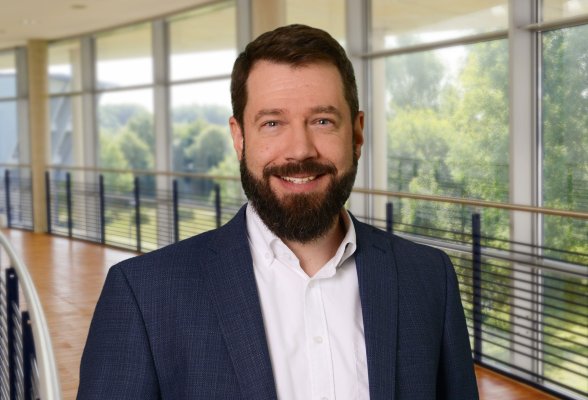
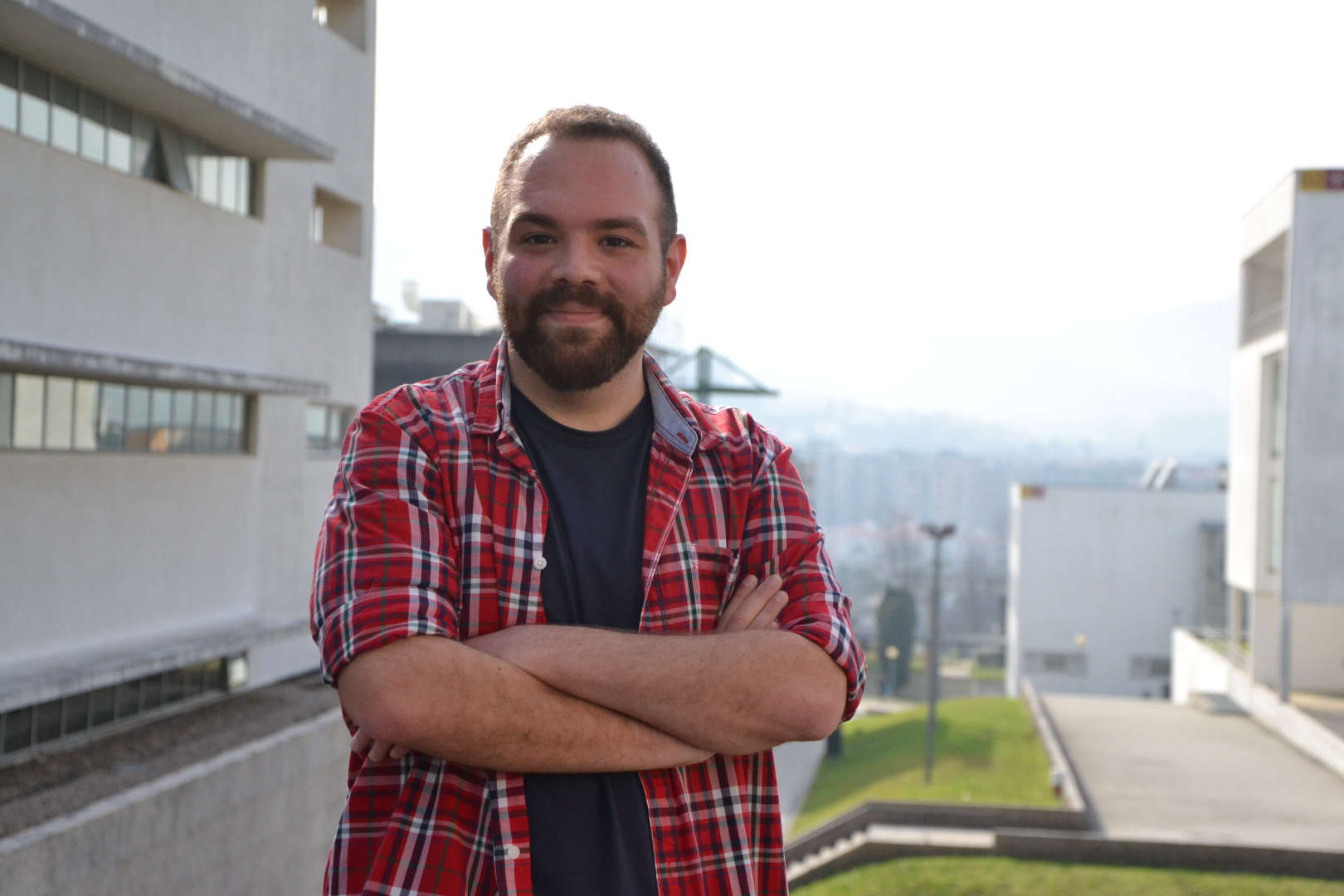
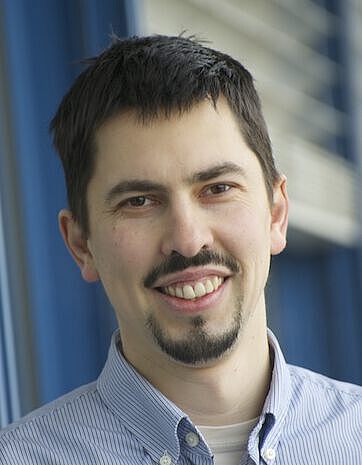
Prof. Robert Jäschke is a Professor at the Institute of Library and Information Science, Humboldt-Universität zu Berlin, within the Faculty of Arts. His primary research focuses on Recommender Systems, Social Bookmarking, Data Mining & Machine Learning, Web Archiving, and Open Science. He leads projects like AI-SKILLS and UnknownData, and operates BibSonomy, a social tagging system. Jäschke advises on DINI and the Specialized Information Service for Book, Library, and Information Science. His work bridges computational methods with humanities, evident in his contributions to music entity detection, Vossian antonomasia analysis, and digital literary frameworks. Research interests span interdisciplinary applications of AI in cultural studies, formal concept analysis, and web archiving. Notable projects include analyzing regional research networks (REGIO) and evaluating dataset creation for concept detection. Teaching includes courses on information processing, data analysis, and web science. Publications reflect a strong focus on computational linguistics, music informatics, and digital humanities. His blog weltliteratur.net explores world literature in digital contexts. Collaborations emphasize open science practices and tool development for academic communities.
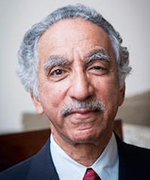
Shamkant Navathe - Professor of Computer Science Dr. Shamkant Navathe has been a faculty member at Georgia Tech's School of Computer Science since 1990. His research focuses on database systems, data integration, bioinformatics, and visualization. He currently serves as the Bioengineering PhD and MS Coordinator for the College of Computing. His affiliations include the School of Computer Science, Center for Bioinformatics and Computational Genomics, and Institute for People and Technology (IPaT). Key research areas include database modeling, data mining, and knowledge discovery. He has contributed to foundational textbooks like Fundamentals of Database Systems and pioneered work in semantic indexing, graph databases, and fairness in machine learning systems. His recent projects address challenges in smart mobility, disaster monitoring via social media, and healthcare analytics using physician notes. His publications span topics from data lake monitoring to clash resolution in construction, reflecting interdisciplinary collaboration. Though no awards are explicitly listed, his work has influenced both academic and industrial database practices globally. He advises on interdisciplinary projects involving bioinformatics and engineering design, though no specific students are listed here. His lab activities emphasize visualization tools (e.g., VIGOR), graph query systems, and declarative fairness frameworks like Omnifair.
Jan van den Brand is an Assistant Professor in the School of Computer Science at Georgia Tech. Previously, he was a Postdoctoral Researcher at UC Berkeley and the Simons Institute for the Theory of Computing, and a visiting researcher at the Max Planck Institute for Informatics. He holds a PhD from KTH Royal Institute of Technology (advised by Danupon Nanongkai), and BSc/MSc degrees from Goethe University Frankfurt (Germany). Education PhD in Computer Science, KTH Royal Institute of Technology (2021) MSc in Mathematics and Computer Science, Goethe University Frankfurt (2017-2016) BSc in Mathematics and Computer Science, Goethe University Frankfurt (2016-2011) Research Interests Jan's work focuses on designing efficient algorithms and data structures, particularly for dynamic graphs and optimization problems. His research explores the interplay between dynamic algorithms and optimization techniques, leveraging fast matrix multiplication and algebraic methods to achieve breakthroughs in dynamic graph algorithms and convex optimization. Awards & Honors EATCS Distinguished Dissertation Award (2021) SMC Prize for Excellent Doctoral Dissertation (2021) SOSA 2021 Best Paper Award Advising & Grants Jan supervises PhD students in dynamic algorithms and optimization. His NSF CAREER Award supports the project CAREER: From Dynamic Algorithms to Fast Optimization and Back . He has advised students including Emile Anand (2024–present), Albert Weng (2024–present), Anastasiia Alokhina (2022–present), and Daniel J. Zhang (2022–present). Labs & Tools Developed the Complexity Term Balancer tool to compute upper bounds for algebraic algorithms, widely used in algorithm design research.
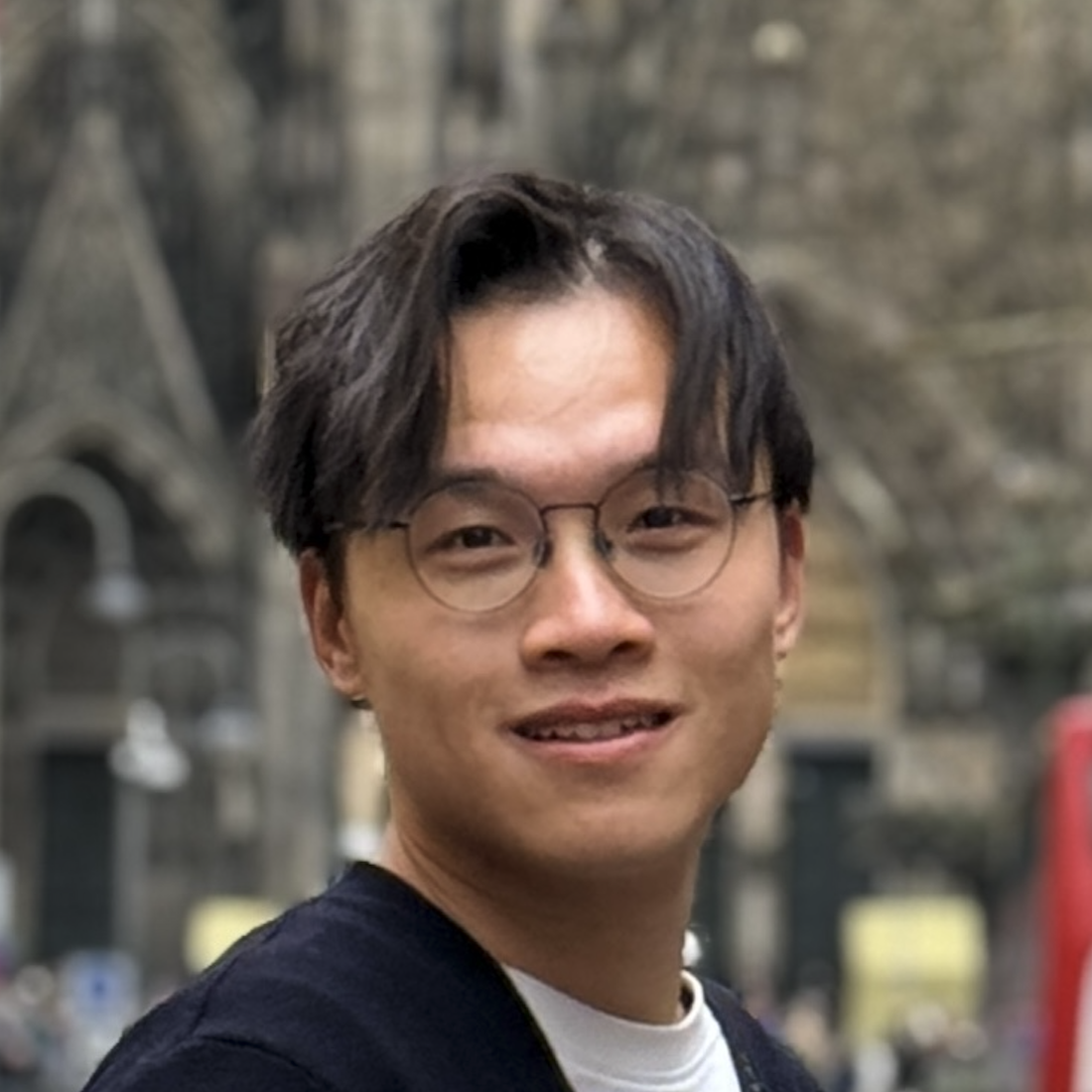
Chuan Meng is a researcher transitioning to a postdoctoral position at the University of Edinburgh's Natural Language Processing Group in September 2025. He obtained his PhD in Artificial Intelligence from the University of Amsterdam (UvA) in June 2025, supervised by Maarten de Rijke and Mohammad Aliannejadi. His research focuses on Information Retrieval and Natural Language Processing with Large Language Models , particularly in conversational agents, model/data-efficient neural ranking, and automatic evaluation techniques like query performance prediction. Education: PhD in Artificial Intelligence, University of Amsterdam (2025) MS in Computer Science and Technology, Shandong University (2021) BS in Electronic Commerce, Shandong Normal University (2018) His research interests span conversational search optimization, proactive agent development, knowledge-grounded dialogue systems, and query performance prediction using LLM-generated judgments. Recent work includes UniConv (unified retrieval/response generation), SOLID (intent-aware dialog generation), and QPP++ 2025 workshop organization. Key scientific contributions include 440+ Google Scholar citations (H-index: 13) and publications in premier venues like SIGIR , ACL , EMNLP , and TOIS . He has served as program committee member for SIGIR 2025/2024, ACL 2023, and other top conferences. As teaching assistant , he contributed to Information Retrieval and Natural Language Processing courses at UvA and Shandong University. His administrative roles include IRLab LinkedIn manager, webmaster for IRLab website, and seminar chair at UvA.
Sam Madden is a Professor of Electrical Engineering and Computer Science at MIT, leading the Data Systems Group (DSG) and the Data Science and AI Lab (DSAIL). He holds the MIT College of Computing Distinguished Professor title. Madden's research focuses on database systems, including learned database systems, query processing, and data management for video and sensor networks. He received his Ph.D. from UC Berkeley (2003) and MEng/BS from MIT (1999). His work spans systems for sensor networks (TinyDB), columnar databases (C-Store), and video analytics (VaaS). Notable projects include Starling (cloud query optimization), BRAD (cloud data infrastructure), and Aurum (data discovery). Madden has advised numerous students and received prestigious awards like the ACM Fellow (2020) and SIGMOD Codd Innovations Award (2024). Education: Ph.D., University of California, Berkeley (2003) M.Eng., MIT (1999) B.S., MIT (1999) Awards: MIT TR35 (2005) SIGMOD Test of Time Award (2013, 2017) ACM Fellow (2020) Teaching: Courses include Database Systems, Software Systems for Data Science, and Computer Systems. Companies: Co-founder of Vertica (acquired by HP), Chief Scientist at Cambridge Mobile Telematics.
Carla Teixeira Lopes is an Associate Professor in the Department of Informatics Engineering at the Faculty of Engineering, University of Porto (FEUP), and a Senior Researcher at the Institute for Systems and Computer Engineering, Technology and Science (INESC TEC). Her career spans academic and research roles, blending expertise in information retrieval with human-computer interaction to enhance digital accessibility. Ph.D. in Informatics Engineering (2013), FEUP M.Sc. in Information Management (2005), FEUP B.Sc. in Informatics Engineering and Computing (1999), FEUP Her research focuses on improving online health information retrieval and leveraging linked data for cultural heritage preservation. She develops tools to optimize search behavior, readability assessment, and semantic archival systems. Recent work includes applications of large language models (e.g., Llama 3, GPT) for text simplification and entity linking. Carla’s publications reflect interdisciplinary trends in Natural language processing Health informatics Linked data architectures Archival modernization Image metadata frameworks She contributes to digital library practices and gender balance studies in informatics academia. As a Senior Researcher at INESC TEC, she bridges academic and applied research, emphasizing user-centric design and data interoperability. Her email is ctl@fe.up.pt .
Musa Jafar is an Associate Professor of Business Analytics & CIS in the School of Business at Manhattan College, where he has been since August 2014. He holds a Ph.D. in Systems Engineering from the University of Arizona, along with multiple Master's degrees in Management Information Systems, Systems Engineering, and Mathematics from the University of Arizona and American University of Beirut. His teaching focuses on Data Mining, Data Visualization, Database Management Systems, and OpenSource Web Development. His research interests center on data engineering, visual analytics, and developing tools for non-algorithmic programmers to analyze digital humanities data. He has held previous academic positions at West Texas A&M University (as Phil Gensler Professorship holder), the University of Arizona, and Washington State University. His professional experience includes roles as a Senior Software Engineer at IBM and Bell Communications Research. Key awards include the 2017 Tate Award Finalist (NACRA), 2016 Distinguished Paper Award (CONISAR), and the 1996 President's Club Performance Award (US West Communication). His work emphasizes tool development for data analytics, curriculum innovation, and social media analysis. He actively participates in academic conferences, delivering workshops on topics like HTML5/WebGL visualization, R-based data analytics, and SQL Server BI tools. No specific grants are highlighted in the text, but his professorships and awards reflect sustained academic contribution.
Niklas Klein is a Professor at the Department of Information and Communication at Flensburg University of Applied Sciences. He also serves as Vice President for Studies and Teaching on the Executive Board. His academic background includes a PhD from the University of Kassel (2011) and earlier degrees from the University of Paderborn. His research focuses on context-aware systems, ubiquitous computing, and smart grid technologies. He has contributed to projects like the Future Internet Smart Grid Application (2013), activity recognition using inertial sensors (2011), and XML/XQuery transformation frameworks (2005–2011). His work emphasizes time synchronization in sensor networks and user-centric service creation. Notable publications include studies on context prediction stability, energy management in smart grids, and DAG-based context reasoning architectures. He has advised over 20 Master's and Bachelor's students in areas like distributed systems and communication technologies. Klein has secured funding for projects such as the KLIMASCHUTZ-PLANER (2013–2014) and IT2Green Pinta (2012–2014). He organizes workshops like AwareCast and serves on technical program committees for CAPS 2012 and Context 2011. Additional service includes managing the alumni network for Kassel University's Communication Technologies chair and supporting international student recruitment.
Gefion Thuermer is a Research Fellow in Informatics, specializing in the ethical and societal implications of emerging technologies. Her work focuses on citizen science, AI ethics, data governance, and digital participation in political processes. She has contributed to projects like Impetus (funded by TSB Technology Strategy Board), exploring privacy implications in citizen science and participatory auditing frameworks for trustworthy AI. Her research interests span citizen engagement in data-driven innovation, transparency in AI systems, and the ethical use of digital tools in political contexts. Notable projects include developing methodologies for participatory harm auditing in AI (PHAWM project) and analyzing political parties' use of online platforms in Germany. Thuermer has published widely on topics such as AI transparency, misinformation countermeasures, and data management in citizen science. She has over 16 citations and collaborates internationally, contributing to UN Sustainable Development Goals through her work on open data and equitable technology access. As a Co-Investigator on the Impetus project, she investigates privacy and data sharing challenges in collaborative innovation programs. Her work bridges technical, legal, and societal dimensions, aiming to create inclusive and accountable technological systems.
Professor Hamish Cunningham is a Research Professor of Internet Computing at the University of Sheffield's School of Computer Science, serving as Impact Lead and a member of the Natural Language Processing (NLP) research group. He is also part of the Institute for Sustainable Food's executive committee. His career spans over 40 years in AI, NLP, and information retrieval, with notable contributions to the GATE open-source platform and IoT innovations like the unPhone and MoPi devices. He holds a PhD in Software Architecture for Language Engineering from the University of Sheffield (2000). Research interests include aquaponics for sustainable food production, IoT privacy, and open-source technologies for resilience. He teaches the IoT course (COM3505) and has supervised numerous PhD students focusing on topics like distributed cloud mechanisms, neural authorship attribution, and ontology engineering. His work integrates multidisciplinary approaches, emphasizing economic democracy for environmental sustainability. Key grants include leadership roles in EU-funded projects like SoBigData (€6.5M) and AnnoMarket (€394K), alongside contributions to aquaponics research through COST Action EU Aquaponics Hub. Over 200 peer-reviewed publications span NLP, IoT, and sustainability, with GATE's adoption by organizations like the BBC and WHO. Outreach activities include STEM ambassador roles, Raspberry Pi educational initiatives, and exhibitions like the Ideas Bazaar. His aquaponics greenhouse and open-source ethos reflect a commitment to democratizing technology for societal resilience.
Jesus Joaquin Garcia Molina is a Professor in the Department of Computer Science and Systems Engineering at the Universidad de Murcia's Faculty of Informatics. He holds a Doctorate from the same university with a thesis on the conformational and dynamic study of flexible macromolecules (1988). His research focuses on database systems, model-driven engineering, NoSQL technologies, and software modernization. He is actively involved in projects related to schema evolution, user interface generation from wireframes, and AI applications in healthcare and education. Key research areas include database schema management, cross-platform data migration, and the development of unified query languages like Skiql. He has contributed to frameworks such as Guizmo for automated UI generation and tools for reverse-engineering legacy systems. His work bridges theoretical computer science with practical applications in software development and education technology. Recent publications emphasize NoSQL schema evolution, AI-driven radiology support systems, and the integration of interactive educational content in social robots. His interdisciplinary approach spans computer science, medicine, and pedagogy, with notable contributions to both academic and applied domains.
Rui Alexandre Pereira is an External Research Collaborator at INESC TEC's Centre High-Assurance Software since July 2013, holding a PhD in Computer Science from the University of Minho and an MSc in Informatics Engineering. His educational background includes: PhD in Computer Science, University of Minho (MAP-i programme), thesis: \"Energyware Engineering: Techniques and Tools for Green Software Development\" MSc in Informatics Engineering, University of Minho (2013), thesis: \"Querying for Model-Driven Spreadsheets\" Dr. Pereira's research centers on green computing , focusing on energy efficiency in software systems through source code analysis, human-computer interaction for developer tools, and sustainable engineering practices. His work bridges theoretical software engineering with environmental responsibility, targeting measurable reductions in software carbon footprints. His 2022-2023 publications reveal a cohesive research trajectory examining energy efficiency across data structures, web technologies (WebAssembly vs. JavaScript), CI/CD pipelines, and computing education. These studies provide empirical evidence for optimizing energy consumption in diverse software contexts, emphasizing practical developer guidelines. His recognition includes: FCT grant for PhD research As a founding member of the Green Software Lab (GSL), GreenSSCM project, and Software Repositories for Green Computing initiative, Dr. Pereira drives collaborative infrastructure for green software engineering. His ongoing work integrates research with educational outreach to advance sustainability in software development practices.
Dr. Yevgeny Kazakov is a Research Fellow at the University of Ulm's Institute of Artificial Intelligence. His work focuses on knowledge representation, automated reasoning, and ontology engineering, particularly in Description Logics and OWL. He has contributed to systems like ELK and ConDOR, emphasizing algorithm optimization and practical reasoning solutions. Education: No formal education details explicitly mentioned in the text. Research Interests: Kazakov's research centers on reasoning support for Description Logics, ontology languages (e.g., OWL), and modular integration of ontologies. He explores theoretical properties and practical implementations, including consequence-based reasoning, modularity, and algorithmic efficiency. His work also addresses challenges like SPARQL query optimization over OWL ontologies and incremental reasoning. Professional Activities: Kazakov has held roles such as General Co-chair of the Description Logic Workshop (2013), Guest Editor of the JAIR special track on Description Logics, and PC member for conferences like KR, IJCAI, and ECAI. He has reviewed for top journals and conferences, contributing to the field's academic rigor. Teaching: Recent courses include Cognitive Systems 2, Explainable AI, and Knowledge-Based AI at the University of Ulm. He also supervises projects in automated reasoning. Grants & Projects: Led the DFG-funded 'Live Ontologies' project (2012–2017). Co-investigated EPSRC-funded projects like ConDOR (2009–2011) and REOL (2005–2008). These projects focused on ontology reasoning systems and modular integration. Students: Advised Trung-Kien Tran (since 2012, with Birte Glimm) and František Simančík (2009–2013, with Ian Horrocks). Labs/Teams: Active in the Institute of Artificial Intelligence, collaborating on systems like ELK and ConDOR. His research group develops tools for efficient ontology reasoning and knowledge representation.
Janusz Kacprzyk is a Full Professor at the Systems Research Institute, Polish Academy of Sciences (1970–present, full-time). He concurrently holds part-time professorships at WIT – Warsaw School of Applied Information Technology and Management (since 1998), the Industrial Institute of Automation and Measurements (PIAP) (since 2007), and the Department of Electrical and Computer Engineering, Cracow University of Technology (since 2010). He is an IEEE Fellow (since 2006) and IFSA Fellow (since 1997), a Full Member of the Polish Academy of Sciences (since 2010), and Foreign Member of the Bulgarian Academy of Sciences (since 2013) and the Spanish Royal Academy of Economic and Financial Sciences (since 2007). Education M.Sc. in Automatic Control and Computer Science, Warsaw University of Technology, Poland Ph.D. in Systems Analysis, 1977 D.Sc. in Computer Science, 1991 Research Interests Professor Kacprzyk’s research exploits modern computational and artificial intelligence techniques—especially fuzzy logic—to address uncertainty, imprecision, and human-centric reasoning in systems. Core themes include: Multivalued and fuzzy logic for uncertainty modelling Natural-language-based system representation and reasoning Data mining and linguistic summarisation of large data sets for decision support Flexible database querying with imprecise or bipolar user preferences Computational models for group decision making, social choice, voting, and consensus reaching Multistage optimal fuzzy control via dynamic programming These strands converge on real-world applications in ICT, mobile robotics, business analytics, and finance. Scientific Awards & Distinctions 2014 WAC Lifetime Achievement Award in Soft Computing 2013 IFSA Award for Outstanding Academic Contributions and Lifetime Achievement 2010 Medal of the Polish Neural Network Society 2007 IEEE CIS Silicon Valley Chapter Pioneer Award 2006 IEEE CIS Fuzzy Systems Pioneer Award 2006 Kaufmann Award and Gold Medal (SIGEF & FEGI) 2000 AutoSoft Journal Lifetime Achievement Award Fellow, IEEE (2006–) Fellow, IFSA (1997–) Foreign Member, Bulgarian Academy of Sciences (2013–) Full Member, Polish Academy of Sciences (2010–) Foreign Member, Spanish Royal Academy of Economic and Financial Sciences (2007–) Leadership & Service President, Polish Operational and Systems Research Society (PTBOiS), since 2007 Past President, International Fuzzy Systems Association (IFSA), 2009–2011 Member, Administrative Committee (AdCom), IEEE Computational Intelligence Society, since 2010 Member, Award and Fuzzy Pioneer Committee, IEEE CIS, since 2010 Distinguished Lecturer, IEEE Computational Intelligence Society, 2010–2013 He has held visiting appointments in the USA, Italy, UK, Mexico, and China, and serves as Editor-in-Chief of six Springer book series and two journals, while sitting on the editorial boards of approximately 40 further journals.
Serge Abiteboul is a prominent researcher affiliated with INRIA (France) specializing in database systems, data management, and distributed computing. His work spans foundational research in XML technologies, active XML systems, probabilistic databases, and ethical data science. He has contributed to influential projects like the Active XML framework and pioneered research on distributed data management systems. Holds the SIGMOD Edgar F. Codd Innovations Award (1998) Co-authored over 300 publications across journals like ACM TODS , VLDB Journal , and conferences such as SIGMOD, PODS, and ICDE Key research areas include: XML query languages and architectures Probabilistic and uncertain data management Workflow systems and collaborative computing Ethical considerations in data systems Notable contributions include the WebdamLog system for distributed data management and foundational work on Active XML . His recent focus on responsible data science addresses transparency, fairness, and regulatory compliance challenges.