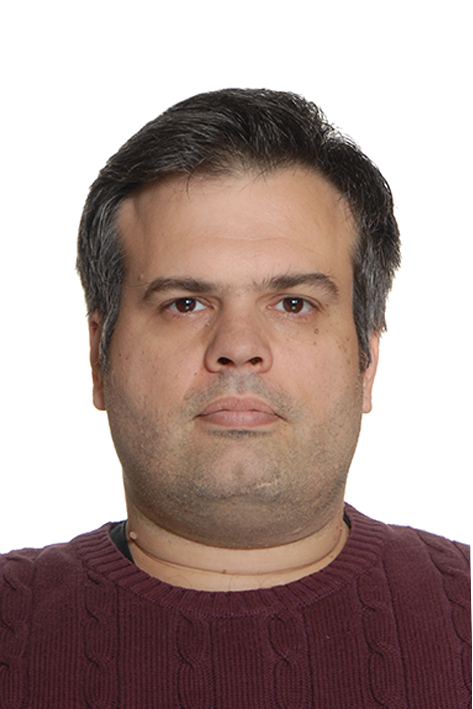
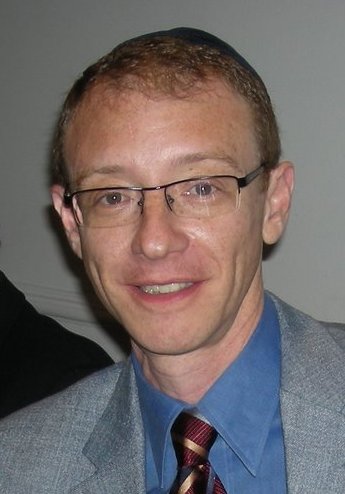
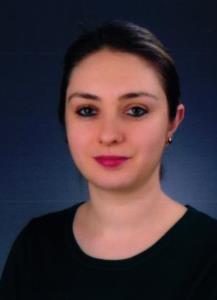
Ivan Minchev Minchev is an Associate Professor at the Faculty of Mathematics and Informatics, University of Sofia, specializing in differential geometry and quaternionic structures. He serves as Vice-dean for Bachelor's Degree Programs and Postgraduate Qualification in Geometry. His research focuses on geometric analysis, mathematical physics, and special geometries. Research Interests: Dr. Minchev's work centers on quaternionic contact manifolds, twistor spaces, and geometric PDEs. His collaborative studies with S. Ivanov, D. Vassilev, and Jan Slovák explore Einstein structures, Yamabe problems, and subelliptic equations on Heisenberg groups. Publication Trends: His publications (2004-2022) reveal a sustained focus on quaternionic geometry, twistor theory, and geometric inequalities. Key contributions include advancements in Yamabe equations, extremal Sobolev functions, and existence criteria for special geometric structures.
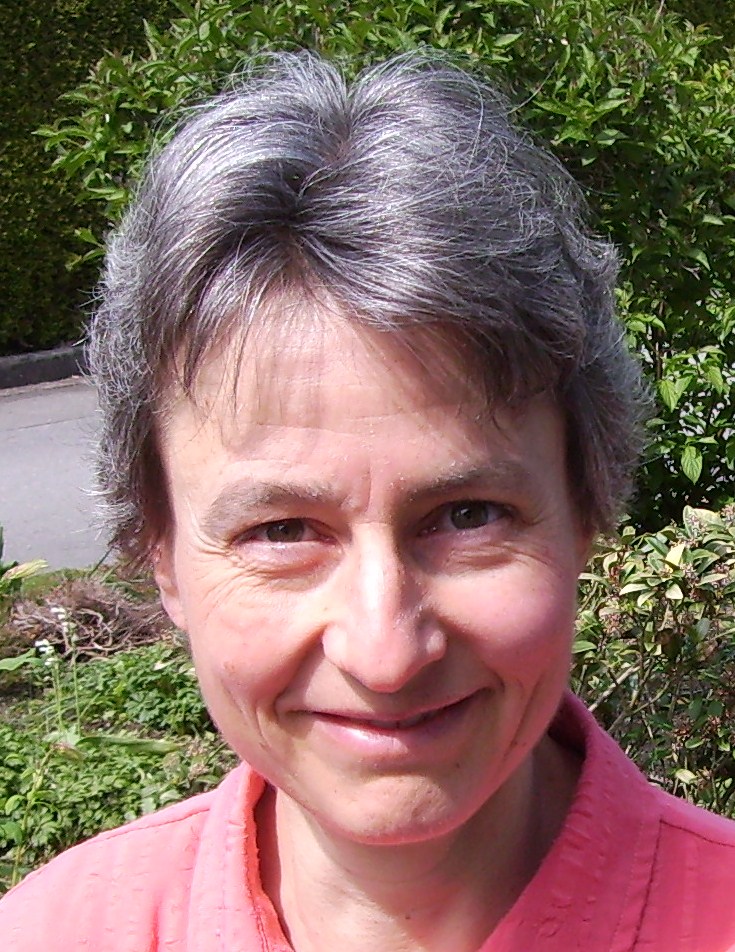
Prof. Dr. Gabriele Nebe is a Professor at the Chair of Algebra and Number Theory at RWTH Aachen University , where she has worked since 2004. Her research spans lattices, coding theory, modular forms, and finite groups . Current research areas include integer representations of finite groups, spherical designs, and their parallels in coding theory. She co-edits the Archive of Mathematics and leads the Graduate School Experimental and Constructive Algebra (2010-2019). Her work includes constructing extremal lattices, studying Hecke operators, and classifying quaternionic matrix groups. Scientific Awards : Borchers Plaque (RWTH Aachen) Friedrich Wilhelm Prize Merckle Research Prize (2002) She supervises PhD and Master’s students and collaborates on databases for unit groups of orders and MAGMA code for lattice constructions.
Tolga Birdal is an Assistant Professor (Lecturer) and UKRI Future Leaders Fellow in the Department of Computing at Imperial College London. As the Principal Investigator (PI) of the CIRCLE group , his research focuses on topological deep learning, geometric machine learning, and 3D computer vision, with theoretical interests in non-Euclidean inference and deep learning principles. Education: PhD and MSc in Computer Vision from Technical University of Munich (2018), BSc in Computer Science from Sabancı University (2008). Projects: PI for UKRI-EPSRC's UNTOLD (Topological Deep Learning), Royal Society's drug discovery initiative, and EPSRC's GNOMON (Generative Models in non-Euclidean Spaces). Leadership: Area Chair for CVPR, ICCV, and 3DV 2025 Publication Chair. His work bridges differential geometry, algebraic topology, and deep neural networks, with applications in quantum computer vision, 3D/4D generative priors, and medical imaging. Key contributions include novel frameworks for rotation forecasting, graph generation, and topological generalization bounds. Scientific Awards: UKRI Future Leaders Fellowship EMVA Young Professional Award
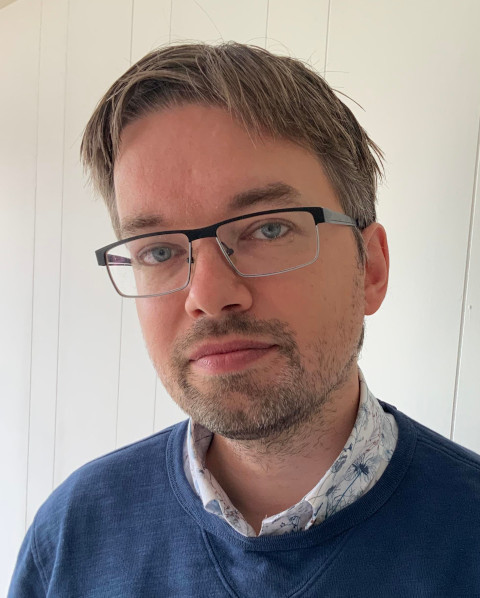
Peter Bruin is an Assistant Professor at the Mathematical Institute of Leiden University, specializing in algebra, geometry, and number theory. He is affiliated with the Quantum Software Consortium, an NWO Gravitation project, and the ALGANT Organisation. His research focuses on concrete arithmetic between geometry and number theory, with particular interest in elliptic curves, Galois representations, and modular forms. Peter Bruin completed his PhD at Universiteit Leiden in 2010 with the thesis "Modular curves, Arakelov theory, algorithmic applications" under the supervision of Prof. dr. S. J. Edixhoven and Dr. R. S. de Jong. Prior to that, he earned his Master's degree from the same institution in 2006 with the thesis "Green functions on Riemann surfaces and an application to Arakelov theory." His academic journey includes postdoctoral positions at Université Paris-Sud 11, Institut des Hautes Études Scientifiques, Universität Zürich, and the University of Warwick, where he served as an Assistant Professor (Warwick Zeeman Lecturer). Bruin's research interests lie at the intersection of algebraic geometry and number theory, with particular focus on elliptic curves, Galois representations, modular forms, and arithmetic geometry. His work often involves developing computational methods and software tools to explore theoretical questions in these areas. He has made significant contributions to understanding torsion structures of elliptic curves, L-functions, and the connections between modular curves and number fields. His research has applications in cryptography, particularly in lattice-based and post-quantum cryptographic systems. His recent publications demonstrate a strong focus on the arithmetic properties of elliptic curves and their generalizations, with particular attention to torsion structures, modular curves, and the computational aspects of Galois representations. His work spans both theoretical developments and practical implementations, as evidenced by his creation of specialized mathematical software packages. Organized "An Expedition into Arithmetic Geometry" (2023) in memory of Bas Edixhoven Co-organized COUNT workshop (2023) on computations in number theory Organized 6th General Assembly of Quantum Software Consortium (2021) Organized Algorithms in Number Theory and Arithmetic Geometry workshop (2017) As an educator, Bruin teaches a variety of courses including Linear Algebra, Topology, Modular Forms, and Representation Theory of Finite Groups. He also leads seminars on presenting and communicating mathematical concepts. His teaching philosophy emphasizes connecting theoretical concepts with practical applications, particularly in the emerging field of quantum computing.
Novi Herawati Bong is an Assistant Professor in the Department of Mathematical Sciences at the University of Delaware. Her research focuses on combinatorics, particularly in graph theory, with specializations in extremal graph theory, Turán-type problems, degree-diameter subgraphs, threshold strong/multiset dimension problems, graph labeling, spectral graph theory, and zero forcing numbers. Education: Bachelor's degree from University of Indonesia Master's degree in ALGANT (Algebra, Geometry, and Number Theory) program at Universiteit Leiden (Netherlands) and Université Bordeaux 1 (France) PhD in Mathematics from University of Newcastle, Australia (2017) Her research employs construction techniques and spans collaborations across multiple institutions, including a research visit at University of West Bohemia in the Czech Republic. She has received prestigious scholarships such as the Erasmus Mundus, AUN NUS Study Award, UNIPRS, and UNRSC50:50. Scientific Awards: Erasmus Mundus Scholarship AUN NUS Study Award University of Newcastle International Postgraduate Research Scholarship (UNIPRS) University of Newcastle Research Scholarship Central (UNRSC50:50) Her scholarly contributions include advancements in zero forcing numbers, threshold dimensions, and antimagic labelings. She is also engaged in mindfulness research and training through the Oxford Mindfulness Center.
Jianzhen Liu is an Assistant Professor of Teaching at the Institute for Artificial Intelligence and Data Science within the School of Engineering and Applied Sciences at the University at Buffalo, where he focuses on foundational mathematical research supporting data science and artificial intelligence applications. His educational qualifications include: MS in Analytics, Georgia Institute of Technology, 2024 PhD in Mathematics, Auburn University, 2017 MS in Mathematics, Beijing University of Technology, China, 2007 BS in Mathematics, Anyang Normal University, China, 2004 Dr. Liu's research centers on linear algebra and matrix theory, with significant contributions to positive partial transpose matrices, block matrix structures, Toeplitz systems, and quaternion-based matrix equations. His work bridges pure mathematics and computational applications, particularly in quantum information theory and data analysis frameworks. The theoretical depth of his publications demonstrates consistent expertise in matrix decompositions and algebraic structures. His publication history reveals a sustained focus on matrix theory since 2007, with recent work (2017-2020) emphasizing structural properties of matrices relevant to quantum computing and data science. This trajectory shows increasing alignment with his current role in an AI-focused institute. Scientific recognition includes: Tin-Yau Tam Graduate Fellowship, Auburn University, 2016 Ralph B. Bennett Graduate Fellowship, Auburn University, 2015 Don and Sandy Logan Graduate Fellowship, Auburn University, 2014 No information is available regarding graduate student supervision or externally funded research grants. Similarly, details about laboratory facilities or research team leadership could not be determined from the provided text.
Christos Saroglou is an Associate Professor in the Department of Mathematics at the University of Ioannina, Greece. His academic career includes prior roles as Assistant Professor (2018–2023), Visiting Assistant Professor at Texas A&M University, and postdoctoral positions at institutions including Kent State University and Tel Aviv University. He holds a Ph.D. in Mathematics from the University of Crete (2011), with a thesis on problems related to convex bodies. His research focuses on Convex and Affine Geometry, Isoperimetric Inequalities, Geometric Tomography, and Functional Analysis. Education: Ph.D. (2011) and M.Sc. (2005) from University of Crete; B.Sc. (2003) from Aristotle University of Thessaloniki. Key Research Areas: Convex Geometry, Functional Analysis, Geometric Probability, and Asymptotic Geometric Analysis. Recent Work: Contributions to the Lp-Minkowski problem, log-Brunn-Minkowski conjecture, and geometric inequalities involving Wulff shapes and projection bodies. His publications address topics such as symmetrization operators, convex body properties, and geometric inequalities. He actively participates in international conferences and collaborates with global researchers. Current advisees include Konstantinos Patsalos (PhD) and Lampros Athanassopoulos (MSc). His work bridges theoretical insights with applications in geometric functional analysis and convex geometry.
Paulo Lima-Filho is a Professor at Texas A&M University, affiliated with the College of Arts & Sciences. His research focuses on Algebraic Geometry and Algebraic Topology, with significant contributions to Motivic Cohomology, K-Theory, and Equivariant Cohomology. He holds a Ph.D. from the State University of New York at Stony Brook (1989), an M.A. from the Federal University of Pernambuco (1985), and a B.Sc. from the same institution (1984). His research explores advanced topics such as Chern cycles, regulator maps, and analytic currents, with recent work emphasizing connections between motivic cohomology and equivariant structures. Key contributions include studies on syntomic cohomology, real algebraic varieties, and arithmetic toric varieties. His work bridges pure mathematics with applications in geometric analysis and pharmacological modeling. Lima-Filho has published extensively since the 1990s, with notable papers on algebraic cycles, homotopy theory, and cohomological realizations. His scholarship reflects interdisciplinary rigor, integrating topological and geometric perspectives to address fundamental algebraic questions.
Batakidis Panagiotis is an Assistant Professor in the Department of Mathematics at Aristotle University of Thessaloniki, Greece, where he has been serving since June 2019. His academic work focuses on the intersection of differential geometry, representation theory, and mathematical physics, contributing significantly to areas such as Poisson geometry, Lie theory, and deformation quantization. His educational background includes: PhD in Mathematics from Universite Paris 7-Denis Diderot (2009), with thesis titled "Deformation Quantization and Lie Theory" under the supervision of Prof. Charles Torossian Master's degree in Mathematics from Universite Paris Sud, Orsay (2005) Bachelor's degree in Mathematics from Aristotle University of Thessaloniki (2004) Dr. Batakidis's research primarily centers on differential geometry, representation theory, and mathematical physics. His work explores complex structures in geometry including Poisson structures, Lie algebroids, and deformation quantization. He has made significant contributions to understanding the interplay between algebraic structures and geometric frameworks, particularly in the context of mathematical physics. His research often bridges theoretical mathematics with physical applications, examining how abstract algebraic concepts manifest in geometric settings. His publication record demonstrates a consistent focus on geometric structures and their algebraic representations. The most recent works (2021-2025) show an increasing specialization in tetraplectic structures, Atiyah classes, and Courant-Dorfman algebras, indicating a deepening exploration of sophisticated geometric frameworks. Earlier publications (2009-2018) establish his foundational work in deformation quantization and Lie theory, showing a clear research trajectory from basic theoretical frameworks to increasingly complex geometric structures. Dr. Batakidis has held various academic positions internationally, including at Pennsylvania State University and the University of Cyprus, demonstrating his recognition in the global mathematical community. His collaborative research approach is evident from his extensive co-authorship record across multiple institutions.
Claudio Gorodski is a Full Professor at the Department of Mathematics of the University of São Paulo (USP), affiliated with the Institute of Mathematics and Statistics (IME). His research focuses on Differential Geometry, particularly in areas such as Riemannian geometry, symmetric spaces, Lie group representations, and geometric structures. He serves as Editor-in-Chief of the São Paulo Journal of Mathematical Sciences . He teaches advanced courses including Geometric Analysis, Riemannian Geometry, and Differential Topology. Recent courses include 'Geometria Riemanniana' (Riemannian Geometry) and 'Grupos de Lie Compactos e Suas Representações' (Compact Lie Groups and Their Representations). His research group organizes a bi-weekly seminar on Differential Geometry. Key research interests include the geometry of isometric actions, submanifold theory, and the interplay between algebraic structures (Lie groups) and geometric objects. His work often explores curvature properties, symmetry, and classification problems in geometric spaces. He has authored over 60 research articles and a textbook on Smooth Manifolds. His contributions span topics like orbit space geometry, polar actions, and geometric analysis in symmetric spaces. Current projects include studies on positively curved manifolds, diameter gaps in sphere quotients, and representation-theoretic aspects of geometric actions.
Uwe Semmelmann is a Teaching Professor and Dean of Faculty 8 at the University of Stuttgart , leading the Institute of Geometry and Topology as Chair of Geometry. His academic roles include serving on the Examination Board for Teaching Professions and overseeing the Mathematics department's administrative and academic functions. He specializes in Geometric Analysis , focusing on Riemannian manifolds, Killing spinors, Quaternion Kähler geometry, and geometric flows. His research bridges differential geometry with algebraic topology and mathematical physics, addressing topics like scalar curvature rigidity, Einstein deformations, and special holonomy structures. Grants: Principal Investigator of DFG Project SE 933/5-1 on nearly parallel G2 geometry (2020–2023). Teaching: Recently taught courses on Kähler manifolds, Riemannian geometry, and topology. His work spans over 50 publications, emphasizing geometric stability, spectral analysis, and geometric structures on symmetric spaces. He supervises PhD students in geometric analysis and has mentored numerous theses on topics like Einstein metrics, Sasakian manifolds, and spin geometry.
Scott Kaschner is an Assistant Professor in the Department of Mathematics and Actuarial Science at Butler University, College of Liberal Arts and Sciences. His work bridges pure mathematics, applied mathematical biology, and mathematics education. He is actively engaged in research and undergraduate teaching, with a diverse portfolio of scholarly output. Education: Ph.D. in Mathematics, Department of Mathematical Sciences, IUPUI, 2013 M.S. in Theoretical Mathematics, University of Akron, 2008 B.S. in Theoretical Mathematics, University of Akron, 2003 His research interests span Complex Dynamics , particularly Julia sets, rational maps, and bicomplex analysis; Mathematical Virology , including modeling of coronavirus and respiratory syncytial virus (RSV) replication; and Mathematics Education , with focus on student success in introductory courses, assessment design, and interdisciplinary co-teaching. His work reflects a strong interdisciplinary approach, combining deep mathematical theory with real-world applications in biology and pedagogy. The 15 most recent publications reveal a consistent trajectory across three domains: foundational work in complex dynamics and operator theory, applied modeling in virology, and scholarship of teaching and learning in mathematics. The keywords and sub-fields reflect a sophisticated blend of pure and applied mathematics, with increasing engagement in biological modeling and educational research. Scientific Awards: No awards explicitly mentioned in the text. Scott Kaschner has advised or collaborated with numerous students and researchers, particularly evident in his co-authored papers in virology and mathematics education. His involvement in the NSF GK-12 program as a fellow indicates a long-standing commitment to STEM outreach and pedagogical development. He has secured research support through collaborative grants, especially in virology and education. He co-authored an open textbook on linear transformations, contributing to accessible educational resources. He is involved in interdisciplinary research teams, particularly in virology (with Christopher Stobart and others) and mathematics education (with Aubrey Neihaus and others). His work on virus modeling suggests collaboration with biologists, and his educational research involves partnerships across disciplines. These teams reflect a commitment to collaborative, cross-cutting scholarship.
Oscar Macia Juan is an Associate Professor in the Department of Mathematics at the University of Valencia, affiliated with the Faculty of Mathematics. He is a member of the Geometric Analysis Group U.V. (GAGUV), focusing on advanced topics in differential geometry and mathematical physics. His research interests span Differential Geometry , Geometry and Topology , Several Complex Variables and Analytic Spaces , and their applications in Special Geometry , Supersymmetry , and Harmonic Mappings . His work bridges pure mathematics and theoretical physics, particularly in the context of supersymmetric field theories and supergravity. The recent publications highlight a consistent focus on geometric structures arising from theoretical physics, such as the c-map, quaternionic Kähler geometry, and harmonic mappings into quadrics. The research trend shows a deep engagement with moduli spaces, isometric embeddings, and the interplay between hyper-Kähler and quaternionic Kähler geometries, often in relation to supersymmetry. No scientific awards were mentioned in the provided texts. He earned his PhD from the University of Valencia in 2007 with a thesis on deformations and contractions in supersymmetric field theories and supergravity, supervised by Dr. María Antonia Lledó Barrena. There is no information available on students he may have advised or research grants he has led. Oscar Macia Juan is actively involved in research collaborations, with co-authors including Andrew Swann, Yasuyuki Nagatomo, and Sergio Ferrara, contributing to high-impact journals in geometry and mathematical physics.
Ken Wharton is a Professor in the Department of Physics & Astronomy at San José State University . He holds a PhD in Physics from UCLA (1998) and a BS in Physics from Stanford (1992). His research focuses on foundational questions in quantum mechanics, particularly time-symmetric and retrocausal models that challenge conventional interpretations.
Professor İlkay Güven is a faculty member in the Department of Mathematics at Gaziantep University's Faculty of Arts and Sciences, where she has served since 2011. She was promoted to Professor in 2022 after serving as Associate Professor (2018-2022) and Assistant Professor (2011-2018). Her academic career focuses on differential geometry, curve and surface theory, and special number sequences. Her educational background includes: Doctorate in Mathematics from Ankara University (2006-2011) Master's in Mathematics with thesis from Ankara University (2004-2006) Bachelor's in Mathematics from Ankara University (2000-2004) Professor Güven's research primarily centers on differential geometry with special emphasis on curve theory, surface classification, and special number sequences. Her work explores directional curves, spherical indicatrices, ruled surfaces, and their applications in various mathematical frameworks including Lie groups and alternative frame systems. She has made significant contributions to the understanding of W-direction curves, Bertrand curves, and the geometric properties of special number sequences like Fibonacci and Leonardo numbers. Her publication record shows a consistent focus on geometric structures with increasing specialization in directional curve theory and special number sequences. Recent work demonstrates sophisticated integration of algebraic structures with geometric analysis, particularly in the application of quaternions and dual numbers to curve theory. Her scientific achievements include: Public Domestic PhD Scholarship from TÜBİTAK (2006) Public Domestic Master's Scholarship from TÜBİTAK (2005) Professor Güven has actively mentored graduate students, supervising one doctoral thesis and nine master's theses to completion. Her advisees have explored diverse topics including hyper-dual spheres, polynomial space curves, and directional vectorial moment curves. While specific grant information isn't detailed in the provided text, her scholarship history suggests early career research support from Turkey's primary scientific funding agency.