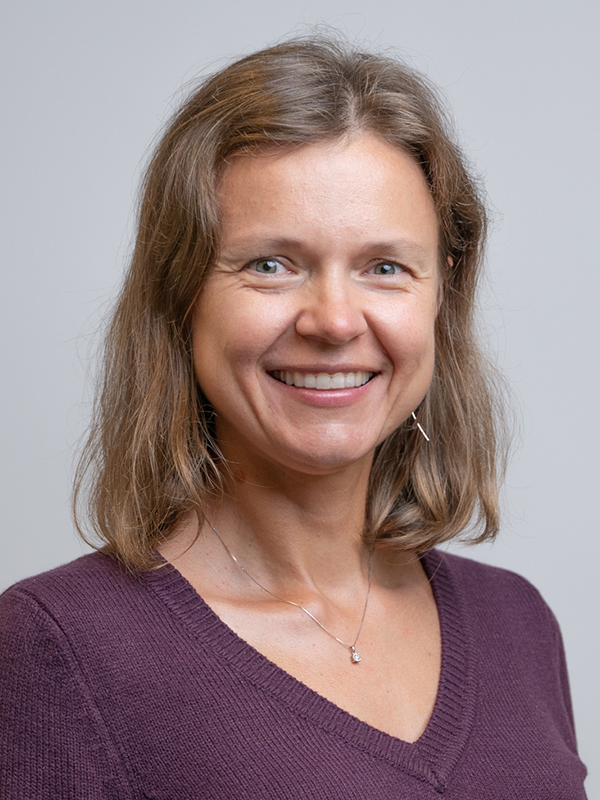
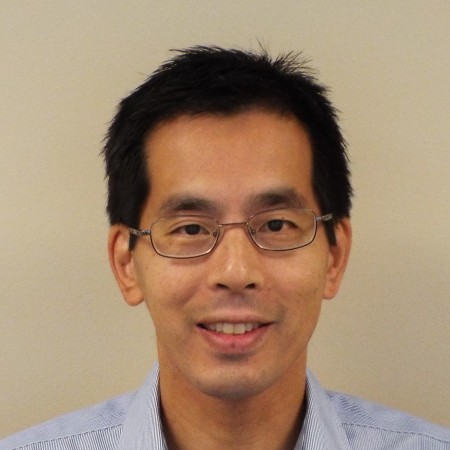
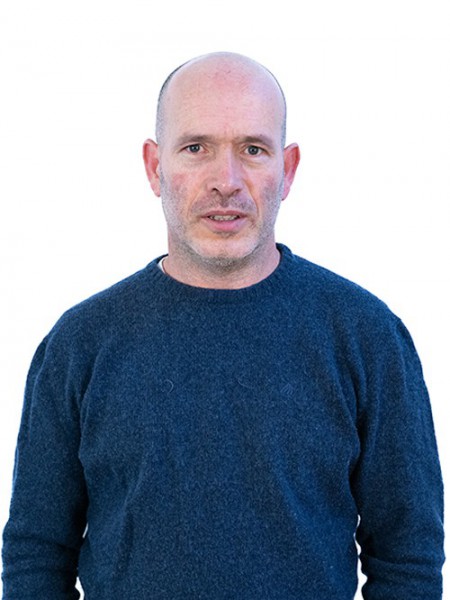
Andrea Simonetto is a Research Professor at the Applied Mathematics Unit (UMA) , ENSTA Paris, Institut Polytechnique de Paris. His work spans optimization, control theory, and learning algorithms for large-scale and streaming data , with applications in smart grids, intelligent transportation, personalized health, and quantum computing. Current research focuses on online algorithms for time-varying optimization , personalized optimization for cyber-physical systems , and variational quantum algorithms . Past contributions include theoretical and algorithmic advances in convex/non-convex optimization, distributed optimization (robotic networks, smart grids), and signal processing for sparse reconstructions and parallel computing in particle filtering. Key application domains include renewable energy integration , quantum state preparation , and human-in-the-loop control systems . His research is published in journals like ACM Transactions on Quantum Computing , IEEE Control Systems Letters , and Automatica .
Bodil Holst is a Professor at the University of Bergen's Department of Physics and Technology , specializing in surface science and scientific instrumentation development . Her research spans 2D materials , helium atom scattering , and archaeometry applications. She leads projects like Nanometer-Resolution Matter-Wave Lithography (FET-Open), 2D Material Properties (NFR FRIPRO), and Wind Turbine Erosion Prevention (Equinor). Her Nanophysics Group has produced groundbreaking work on graphene's temperature-dependent rigidity and icephobic surfaces . First neutral helium microscope images (2008) Recorded bending rigidity of 2D materials (2018-2021) Developed solid-state conversion techniques for sapphire (2017-2021) Her teaching innovations in classical mechanics explore retrieval practice and digital learning structure , documented in Physics Education and Physical Review Physics Education Research .
Mark Oskin is an Adjunct Professor at the School of Computer Science and Engineering , University of Washington , focusing on Software & Hardware Systems . He leads the Sampa Group and collaborates on projects like HammerBlade and BlackParrot. University: University of Washington School: School of Computer Science and Engineering Department: Department of Electrical & Computer Engineering His research spans Computer Architecture , Parallel Computing , and Graph Processing , with additional expertise in Quantum Computing , Open Source Hardware , and Distributed Shared Memory . Ongoing work includes custom manycore devices for graph execution and open-source RISC-V designs. Past projects like Grappa and WaveScalar advanced distributed memory and dataflow execution. Recent publications include BlackParrot: An Agile Open Source RISC-V Multicore for Accelerator SoCs (IEEE Micro 2020) and Perceptual Compression of Video Storage and Processing Systems (SoCC 2019), reflecting trends in hardware-software co-design, quantum systems, and energy-efficient video processing. Best Paper Award , USENIX ATC 2015 IEEE Micro Top Picks , 2009 Mark has advised numerous students, including Amrita Mazumdar (IoT video compression startup), Brandon Lucia (CMU), and Steve Swanson (UC San Diego). He co-founded Corensic, a startup exploring deterministic multithreaded execution.
Odile Merdrignac-Conanec is an Associate Professor in the Department of Chemistry at University of Rennes 1's Faculty of Science, affiliated with the Institut des Sciences Chimiques de Rennes (UMR 6226 CNRS). Her career spans over three decades at the university, progressing from Assistant Professor (1991-2000) to current Associate Professor status with qualification for university professorship (CNU 31-33). PhD in Chemistry, University of Rennes 1 (1989) Accreditation to Supervise Research (HDR), Chemistry; Chemical Physics, University of Rennes 1 (2000) Post-Doctoral Fellow, Harwell Lab, AEA Technology (UK) (1990-1991) Her research focuses on advanced materials synthesis and characterization, specializing in ceramics engineering for optical, sensing, and biomedical applications. Key areas include infrared-transparent ceramics (ZnS, La 2 O 2 S), gas sensors using semiconductor oxides, photocatalytic (oxy)nitrides, and biomaterials like bioactive glasses. Her work integrates soft chemistry methods with advanced sintering techniques (HP, HIP, SPS) and in-situ characterization (TPD/MS, DRIFTS). Analysis of her 15 most recent publications reveals strong emphasis on rare-earth doped phosphors for lighting applications, porous biomaterials for tissue engineering, and energy conversion materials including thermoelectrics and CO 2 reduction catalysts. Her optical materials research consistently targets infrared transparency and luminescence efficiency. 2018 Semester for Innovation of Rennes 1 Foundation 2017 Year for business creation of Rennes 1 Foundation 2015 CNRS delegation (50%) 2013 Board Member, French Ceramic Society (GFC) 1990 Chemistry PhD Thesis Prize (Pr P. Gineste Award) She has directed eight PhD theses since 2003 with notable success including the Rennes 1 Foundation Thesis Prize (2017) and French Ceramic Society Thesis Prize (2020). Her research is supported by CNRS collaborations and Rennes 1 Foundation innovation grants. She actively participates in thesis committees at institutions including University of Tübingen, ENSM Saint-Etienne, and IRCER Limoges. Her laboratory work centers on the Institut des Sciences Chimiques de Rennes, utilizing specialized equipment for ceramic synthesis, optical characterization, and biomaterial testing. Current projects include infrared-transparent sulfide ceramics and doped oxysulfides for optical refrigeration.
Prof. K. George Thomas is a distinguished Professor and J C Bose National Fellow at the School of Chemistry, Indian Institute of Science Education and Research Thiruvananthapuram (IISER TVM). He currently serves as the Dean of Faculty Affairs and has been instrumental in building IISER TVM since its inception in 2010, having previously served as the founding Dean of Academics and Faculty Affairs (2010-2015) and as Director (additional charge) in 2013-2014. His leadership extends internationally as President of the Asian and Oceanian Photochemistry Association. Prof. Thomas received his academic training at prestigious Indian institutions: B.Sc. (First Class) from Kerala University (1981) M.Sc. (First Class) from Savitribai Phule Pune University (1983) Ph.D. from University of Kerala (1990) Prof. Thomas's research focuses on light-matter interactions at the nanoscale, with particular emphasis on molecular systems, plasmonic nanostructures, and semiconductor quantum dots. His group employs advanced spectroscopic techniques including steady-state and time-resolved methods, as well as single-molecule and particle spectroscopy/microscopy. Key research thrusts include plasmon-exciton coupling, chiroptical properties of nanostructures, and the organization of molecules on 2D surfaces. His work bridges fundamental photophysics with practical applications in sensing and energy conversion. Analysis of his recent publications reveals a strong focus on quantum dot photophysics, particularly InP and perovskite nanocrystals as environmentally friendly alternatives to traditional materials. His group has made significant contributions to understanding chiral phenomena at the nanoscale and developing plasmon-enhanced spectroscopic techniques for practical sensing applications. Prof. Thomas has received numerous prestigious accolades recognizing his contributions to nanoscience and photochemistry: Shanti Swarup Bhatnagar Prize in Chemical Sciences (2006) J C Bose National Fellowship (2014-2019 and 2019-2024) Elected Fellow of Indian Academy of Sciences (2008) Elected Fellow of Indian National Science Academy (2015) Materials Research Society of India (MRSI) Medal (2005) Chemical Research Society of India (CRSI) Bronze Medal (2004) MRSI-ICSC Superconductivity & Materials Science Prize (2015) C. N. R. Rao Prize Lecture in Advanced Materials (2020) Prof. Thomas has supervised twenty doctoral students, all of whom now hold important positions in prestigious academic institutions worldwide. His research is generously supported by the Department of Science and Technology (DST) and Science and Engineering Research Board (SERB) through multiple research projects. He has served on numerous national scientific committees and advisory boards, including the editorial advisory committee of the Journal of Physical Chemistry of the American Chemical Society (2012-2015). His group has developed innovative technologies, including a surface-enhanced spectroscopy based device for rapid detection of pesticide residues. Leading the KGT Research Group at IISER TVM, Prof. Thomas oversees a vibrant research environment focused on cutting-edge nanoscience. The group collaborates extensively with theoretical scientists from IISER TVM, Argonne National Laboratory (USA), University of Parma (Italy), and Jawaharlal Nehru Centre for Advanced Scientific Research (India). Their laboratory is equipped with state-of-the-art facilities for nanomaterials synthesis and advanced optical characterization, supporting both fundamental research and translational applications in sensing and energy technologies.
Daniel G Georgiev is a Professor in the Department of Electrical Engineering and Computer Science at the University of Toledo's College of Engineering. He has been on faculty since Fall 2006, following prior roles as a research faculty member at Wayne State University's Center for Smart Sensors and Integrated Microsystems (SSIM). Education : M.S. in Engineering Physics (Quantum Electronics and Laser Equipment) from Sofia University (1994), Ph.D. in Electrical Engineering (Electronic Materials and Devices) from the University of Cincinnati (2003). Research Interests : Dr. Georgiev's work focuses on laser modification and micro-structuring of materials, thin films of semiconducting oxides/nitrides (e.g., NiO, Zn3N2), glassy materials, metal whiskers (Sn, Cu), wide bandgap semiconductors (GaN, Zn3N2), photovoltaics, and biomedical device applications. His expertise spans device fabrication, material characterization, and radiation effects. Article Trends : Recent publications emphasize GaN-based power electronics, hybrid edge termination structures, threshold switching in nanocircuitries, and material innovations via reactive sputtering. Subfields include laser microstructuring, whisker suppression in Sn films, and doping strategies for nitride semiconductors. Collaborations : Co-authorship with researchers across institutions, including contributions to biomedical implants, II-VI nanocrystals, and chalcogenide glasses.
Rachel Oliver is a Professor of Materials Science at the University of Cambridge and Director of the Cambridge Centre for Gallium Nitride. Her research focuses on characterisation techniques for gallium nitride materials used in LEDs and laser diodes, with an emphasis on nanostructure engineering and quantum technology. Awarded OBE (2025), Fellow of the Royal Academy of Engineering (FREng) (2021), and Fellow of the Institute of Materials, Minerals and Mining (FIMMM) (2019) Developed atom-probe tomography and scanning capacitance microscopy to study nitride devices Her work on quantum dots and single-photon emitters has advanced quantum crystallography and optoelectronics. Recent publications highlight trends in nitride semiconductors , solar cell efficiency , and quantum device fabrication . Scientific Awards Royal Society University Research Fellowship (2006-2011) Chair in Emerging Technologies (2023) Grants EPSRC grant for semi-polar nitride structures Oliver's lab at the Department of Materials Science and Metallurgy explores nanoscale nitride structures for future devices, while advocating for gender equality in STEM.
Letian Dou is the Charles Davidson Associate Professor of Chemical Engineering and an Associate Professor of Chemistry (courtesy) at Purdue University's Davidson School of Chemical Engineering. He holds a Ph.D. in Materials Science and Engineering from UCLA (2014) and a B.S. in Chemistry from Peking University (2009). His research focuses on hybrid materials synthesis for energy harvesting and optoelectronics, emphasizing structure-property relationships and high-performance devices. Notably, his team achieved a world-record 10.6% efficiency in organic solar cells and has secured six patents. His work spans perovskite solar cells, nanomaterials, and sustainable polymers. Recent publications highlight breakthroughs in perovskite-based optoelectronics, self-healing materials, and scalable polymer recycling strategies. His research trends emphasize interdisciplinary approaches to energy-efficient and environmentally friendly technologies. No specific scientific awards are listed, though his six patents underscore impactful innovations. Advising details and grants are not explicitly provided, but his group's activities suggest active collaboration in nanomaterials and renewable energy fields. Labs/Teams: The Dou Research Group at Purdue University focuses on advancing hybrid materials for next-generation energy and optoelectronic applications.
Prof. Indranil Gupta (Indy) is a Professor of Computer Science at the University of Illinois at Urbana-Champaign, affiliated with the Beckman Institute and ECE department. His research focuses on distributed systems, including cloud computing, IoT, and machine learning systems. He leads the Distributed Protocols Research Group (DPRG) and collaborates with industry to improve production systems. Indy is an IEEE Fellow, ACM Distinguished Scientist, and recipient of the NSF CAREER Award and multiple Best Paper Awards. Education: PhD in Computer Science from Cornell University (2004), B.Tech from IIT Madras (1998). Industry experience includes roles at Google, Microsoft Research, and IBM Research. Teaching: Teaches CS 425 (Distributed Systems), CS 525 (Advanced Distributed Systems), and a Coursera MOOC with 250K+ enrollments. Known for innovative teaching methods, including music-based CS education. Awards: Over a dozen awards including Best Paper recognitions at IC2E, CCGrid, and ICAC. His students have won NSF Fellowships, Rising Stars in EECS, and Microsoft Dissertation Grants. Service: Served as General Chair of ACM PODC 2007, PC co-chair for multiple conferences, and editorial board member for IEEE TCC and ACM TAAS. Hosts the podcast 'Immigrant Computer Scientists.' Research Impact: Contributions include fault-tolerant protocols (e.g., Zeno, SWIM), distributed ML systems, and cloud resource management techniques used by major tech companies.
Wenchao Ge is an Assistant Professor in the Department of Physics at the University of Rhode Island . Previously, he held faculty positions at Southern Illinois University (2020–2022) and was a postdoctoral researcher at institutions including Texas A&M University and the U.S. Army Research Lab. He earned his Ph.D. in Physics from Texas A&M University (2015) and a B.S. in Applied Physics from Xi’an Jiaotong University (2009). His research focuses on theoretical quantum optics and quantum information science , with emphasis on quantum sensing, quantum computing, and quantum communication. His group explores fundamental limits of quantum mechanics for information processing, including protocols for multi-parameter sensing, parametric amplification in trapped-ion systems, and quantum resource theories. He leads the Ge Quantum Theory Group , which collaborates with experimentalists to advance quantum technologies. Research interests: Quantum metrology, quantum computing, trapped-ion systems, and optomechanical systems. Notable achievements: Developed protocols for Heisenberg-limited quantum sensing and quantum-enhanced entangling gates. Published in Nature Physics , Phys. Rev. Lett. , and Phys. Rev. A . Teaching: Courses on quantum entanglement and quantum information science. He has received grants from NSF (ExpandQISE and quantum sensing programs) and the SIU Open Textbook Initiative. He was elected Secretary/Treasurer of the APS New England Section (2023) and actively participates in international conferences and quantum education initiatives. His group advises graduate and undergraduate students on projects spanning theoretical and applied quantum physics, including summer internships and capstone research.
Inna Ponomareva is Professor and Director of Graduate Admissions in Physics at the University of South Florida. She leads the Computational Nanoscience Lab, specializing in ferroic materials using atomistic simulations and machine learning. Research explores phase transitions, nanoscale phenomena, and caloric effects in functional materials. Current group includes 4 researchers focusing on: Halide perovskite spin physics Ultra-thin ferroelectric behavior Multicaloric effects Recent publications demonstrate advances in controlling spin textures via strain and intercalation in 2D materials. Teaches quantum mechanics and computational physics courses. Recognized with SIGMOD Distinguished Reviewer Award and ELIDEK grants.
Dr. Jason Jue is Professor of Computer Science at UT Dallas' Erik Jonsson School of Engineering and Computer Science. He chairs the IEEE Communications Society Technical Committee on Optical Networking and leads research in optical networking, 5G systems, and network virtualization. His substantial publication record (2022-2025) demonstrates evolving focus on network slicing for 5G, reinforcement learning applications in network management, and quantum-secured optical networks. Recent articles increasingly integrate machine learning with networking challenges, particularly for resource allocation and slice provisioning in multi-domain environments. Significant awards include: NSF CAREER Award (2002) Best Paper Award, Optical Network Design and Modeling (2010) Best Paper Award, IEEE Globecom (2005) Research funding highlights: NSF: $449,651 for resilient network slicing (2021) Multiple NSF grants exceeding $800,000 total Industry funding from Fujitsu
Duarte Ananias is a Researcher at CiCECO (University of Aveiro) since June 2009. He holds a Ph.D. in Chemistry (2004) and an Undergraduate Degree in Chemistry (1999), both from the University of Aveiro. His research focuses on lanthanide-based materials, particularly luminescent properties, porous/nanoscale systems, and applications in sensing and nanotechnology. Education : Ph.D. in Chemistry (2004), University of Aveiro Undergraduate Degree in Chemistry (1999), University of Aveiro Experience : Postdoctoral Fellowships at University of Linköping (Sweden) and University of Aveiro (2005–2008) Research Interests : Ananias explores lanthanide ions' unique optical and magnetic properties, developing luminescent materials for applications in thermometry, sensing, and catalysis. His work integrates porous materials (e.g., MOFs, silicates) with nanotechnology, emphasizing structural design and functionalization. Key themes include energy transfer mechanisms, multifunctional materials, and environmental applications. Projects : Development of luminescent nanothermometers and multifunctional MOFs Optimization of lanthanide separation in novel solvents Labs/Teams : Based at CiCECO, he collaborates on interdisciplinary projects involving materials synthesis, characterization, and applications in energy and environmental science.
Igor L. Kuskovsky is a Professor & Chair in the Department of Physics at Queens College of the City University of New York (CUNY). He holds a Ph.D. in Applied Physics/Solid State (1998) and an M.S. in Materials Science and Engineering (1995), both from Columbia University. His research focuses on nanoscale materials, particularly type-II quantum dots and their applications in photonic devices, solar energy, and biomedicine. His work includes pioneering studies on the optical Aharonov-Bohm effect in ZnTe/ZnSe quantum dots and developing high-efficiency intermediate-band solar cells. He leads the Laboratory for Fundamental and Applied Nanoscale Physics (LAFANP), collaborating with institutions like Hunter College on bio-detection systems using quantum dots. Key research areas include excitonic phenomena, magnetooptical properties, and colloidal ZnO nanostructures. His team investigates quantum dot stacks, nanowire growth via CVD, and dielectric confinement effects. He teaches PHYS 225: Solid State Electronics and advises graduate students in experimental condensed matter physics. The group’s work bridges fundamental physics with applied nanotechnology, emphasizing interdisciplinary applications.
Barbara Sharanowski is a Professor in the Department of Biology at the University of Central Florida (College of Sciences). Her research integrates phylogenetics, genomics, and ecology to study parasitic Hymenoptera evolution, particularly Braconidae wasps, with applications in biodiversity conservation and biocontrol. She directs an active lab developing mobile tools for integrated pest management. Education includes advanced degrees in Entomology/Evolutionary Biology. Research focuses on: Macroevolutionary patterns in parasitic wasps Genome evolution and viral symbionts in insects Biocontrol optimization using digital solutions Publications emphasize insect systematics, with recent work exploring genomic adaptations in parasitoids and field applications for sustainable agriculture. Awards include leadership of the International Society of Hymenopterists and NSF grants. Mentorship spans 6+ graduate students studying wasp taxonomy and tri-trophic interactions. Lab activities include international fieldwork and bioinformatics tool development.