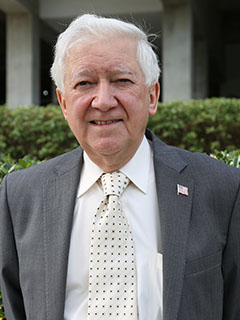
Joao Pedro Leal Abalada de Matos Carvalho is a researcher at Lusofona University 's School of Communication, Architecture, Arts and Technologies , focusing on Artificial Intelligence, Machine Learning, and Unmanned Aerial Vehicle systems. He contributes to projects like ANTIDOTE (AI Attack & Defense) and REMARKABLE (Rural Environmental Monitoring). Active in AI-driven environmental monitoring and cyber-physical systems Collaborates with Horizon Europe and Marie Skłodowska-Curie Actions Key research areas: Deep Learning, Federated Learning, High-Energy Physics His work involves LoRaWAN engineering , satellite data processing , and hydroelectric forecasting models , with 55 scientific publications and 382 h-index citations. Current collaborations span Europe and Brazil , with active projects in smart healthcare , AI literacy , and radiation-hardened electronics for CERN experiments.
Dr. Johannes Schultz is a PostDoc researcher at the Leibniz Institute for Solid State and Materials Research Dresden (IFW Dresden), affiliated with the Institute for Integrative Nanosciences. He leads the Advanced Methods of Electron Microscopy Group, focusing on cutting-edge electron microscopy techniques and plasmonics research. His scientific focus spans magnetic textures and dynamics at micro-to-nano scales , development of ultra-fast electron optical elements with sub-nanosecond response times, Electron Energy Loss Spectroscopy in TEM (particularly low-loss excitations), and plasmonics in nanoparticle assemblies and correlated materials. His work bridges fundamental physics with nanotechnology applications. Dr. Schultz has published 16 journal papers since 2018 in high-impact venues including Nature Communications , Physical Review Research , and Advanced Optical Materials , with significant contributions to understanding plasmon localization, electron optics, and nanomaterial characterization. His research demonstrates consistent technical innovation in electron microscopy methodologies. As an active contributor to the microscopy community, he has delivered 8 invited talks at major international conferences including the European Microscopy Society Congress and PICO 2024. His collaborations span multiple institutions including Technische Universität Dresden, Helmholtz-Zentrum Dresden-Rossendorf, and international partners in Belgium, France, and Austria. The Advanced Methods of Electron Microscopy Group develops specialized techniques for nanoscale characterization, with particular expertise in spectral field mapping, plasmon dynamics analysis, and computational modeling of electron-matter interactions. Current work emphasizes disordered plasmonic systems and ultrafast electron optical components.
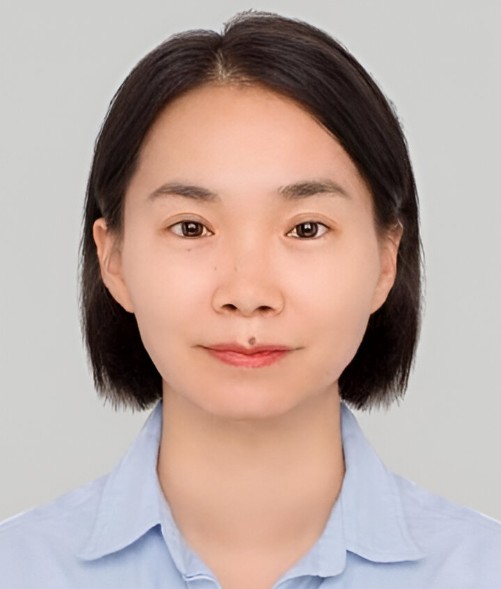
Zhen Zhan is a Postdoctoral Researcher at IMDEA Nanoscience since January 2023. She holds a PhD in Electronic Engineering from Universitat Autonoma de Barcelona (2017) and previously worked at Wuhan University, China, where she studied electronic properties of two-dimensional materials and contributed to the development of the home-made tight-binding simulator TBPLaS . Education : PhD in Electronic Engineering (2017, Universitat Autonoma de Barcelona) Research Interests : Theoretical modeling of van der Waals heterostructures Electronic properties of two-dimensional materials Flat band engineering via twistronics and strain Development of tight-binding propagation methods (TBPM) Quantum transport in low-dimensional systems Lattice relaxation and substrate effects Recent Publications focus on: Tuning flat bands in twisted trilayer graphene and MoS2 Designing moiré patterns through patterned dielectrics/strain Investigating correlated phenomena in magic-angle systems Advancing large-scale tight-binding simulation techniques Scientific Recognition : IDEAL Fellowship (Marie Skłodowska-Curie COFUND, Grant Agreement ID 101034431) Collaborative Projects include secondments at MIT, USA, to bridge theoretical modeling with experimental superconductivity studies in two-dimensional heterostructures.
Professor Shizhong Zhang is a faculty member at the Department of Physics , Faculty of Science , The University of Hong Kong . He joined HKU in August 2012 after earning a B.S. from Tsinghua University (2003) and a Ph.D. in physics from the University of Illinois at Urbana-Champaign (2009). His work bridges atomic physics and condensed matter theory , focusing on cold atomic gases and strongly correlated systems . Education B.S., Tsinghua University (2003) Ph.D., University of Illinois (2009) Professor Zhang's research explores the quantum behavior of interacting particles at ultra-low temperatures , with a focus on transport properties of cold atomic gases and their implications for understanding correlated materials . His studies often leverage precision control from atomic physics to investigate many-body and few-body phenomena . Recent publications highlight advancements in quantum gases with spin-orbit coupling , unitary Fermi systems , and nonlinear spin dynamics . Key themes include integrability effects on viscosity , effective range analysis , and dimensional crossovers in interacting geometries. He has supervised numerous PhD and MPhil students in condensed matter theory, quantum computing, and computational physics. His leadership extends to grants like the RGC Research Fellow Scheme (2022) and General Research Fund projects , alongside roles in the Physical Society of Hong Kong as Honorary Secretary and campus coordinator. Professor Zhang is also engaged in knowledge exchange , including public lectures and collaborative research with international institutions. His teaching portfolio includes advanced courses in classical mechanics , statistical mechanics , and solid-state physics .
Michael Haider is an Associate Professor at the Technical University of Munich within the TUM School of Computation, Information and Technology , specifically affiliated with the Chair of Computational Photonics (Prof. Christian Jirauschek). His work bridges quantum device modeling, stochastic electromagnetic field analysis, and advanced optoelectronic simulations. Research interests include: Quantum Cascade Lasers and Detectors Josephson Traveling-Wave Parametric Amplifiers Stochastic and Cyclostationary Electromagnetic Field Propagation Terahertz Technology and Frequency Comb Generation Computational Photonics and Microwave Modeling Principal Component Analysis for Electromagnetic Systems His recent publications focus on quantum amplification mechanisms, THz laser dynamics, and stochastic field modeling using Maxwell-Bloch frameworks. Collaborations with Prof. Jirauschek, Prof. Russer, and researchers at ETH Zürich and SPIE conferences highlight his interdisciplinary approach.
Michel Ménard is a Teacher-Researcher at the University of La Rochelle, affiliated with the Mathematics and Computer Science departments. His research focuses on image and signal processing, particularly in cardiovascular imaging, dynamic texture analysis, and UWB radar applications for through-wall imaging. Key projects: ANR DIAMS, FISC consortium, A.Gaugue project Applications: Cardiovascular imaging, environmental monitoring, mobile application programming Research Interests Ménard's work centers on modeling information ambiguity, imprecision, and uncertainty in image analysis, pattern recognition, and information fusion. He has developed generalized fuzzy coalescence methods, non-parametric Bayesian approaches for trajectory analysis, and variational formulations for image filtering inspired by quantum physics. His team focuses on: Dynamic texture modeling via spatio-temporal decomposition Low-level image processing with information theory Through-wall imaging systems using UWB radar Information fusion techniques with minimal a priori assumptions Applications in coastal environment monitoring and biomedical imaging Publications Ménard's publications reflect his expertise in advanced image processing techniques applied to diverse domains. Notable contributions include: Theoretical works on total variation and sublinear functionals Algorithm developments for multistatic radar systems Applications in 3D bee tracking and cardiovascular flow analysis Extensions of Chambolle's algorithm to color images Decomposition methods for dynamic textures Integration of quantum physics concepts in image filtering Collaborations He collaborates with: Laboratoires: L3i, MIA, CLDG/BQR, IRPHE CNRS, ETIS, LASIE Institutions: University Hospitals of Poitiers and Angers, ONERA, LEAT, Tronico Researchers: Abdallah El-Hamidi, Alain Gaugue, Damien Coisne, Gilles Aubert Teaching Ménard teaches across eight departments/programs including: Electronics and Industrial Computing Automation Network Security and Cryptography Video Game Programming Smartphone Programming Digital Media Distribution He has developed new educational initiatives in mobile application programming since 2010.
Roger M. Leblanc is a Professor in the Department of Chemistry at the University of Miami's College of Arts and Sciences . His research spans interdisciplinary domains at the interface of chemistry, nanotechnology, and biomedical applications . Key areas include carbon dots for drug delivery across the blood-brain barrier , Alzheimer's disease treatment , and oncology . Research highlights include: Developing glucose-functionalized carbon dots for rapid spinal/supraspinal connectome mapping Investigating thiolated carbon dots for SARS-CoV-2 inhibition and anti-inflammatory effects Optimizing redox-responsive drug delivery systems using albumin-hitchhiking nanocarriers Creating dual tau/Aβ aggregation inhibitors for Alzheimer's therapy Recent publications reveal his group's focus on: Carbon dots in photodynamic therapy for cancer and fungal infections Micellization behavior in mixed solvent systems with surfactant-dye interactions Combustion enhancement through gel-like carbon dots in liquid fuels His work employs advanced characterization techniques including UV-vis spectroscopy, TEM, XPS, and AFM to engineer nanomaterials with precise biomedical and energy applications. The lab also explores 2D/3D printing, photocatalysis, and hybrid rocket fuels using carbon dots.
Dr. Erez Zohar is an Associate Professor at the Racah Institute of Physics, Hebrew University of Jerusalem, Israel. His research focuses on the intersection of quantum many-body theories, quantum information, and quantum optics, particularly addressing challenges in strongly correlated systems and their applications to particle physics. In 2025, he will transition to the School of Physics and Astronomy at Tel Aviv University. Education: BSc in Physics and Mathematics, Tel Aviv University (2009) Doctoral research at Tel Aviv University under Prof. Benni Reznik Dr. Zohar works on developing novel tools for quantum simulation of lattice gauge theories, combining tensor network states with Monte Carlo methods to tackle non-perturbative problems in high energy physics. His research includes constructing gauge-invariant tensor networks with fermionic matter fields and mapping high-energy physics models to laboratory-controllable systems. His recent publications focus on quantum simulation of non-Abelian gauge theories, truncation-free QED simulations with Josephson arrays, and advancements in fermionic PEPS for gauge theories. The work demonstrates expertise in tensor networks, quantum field theory, and quantum computing applications. Scientific Awards: ERC Consolidator Grant (2023) for the OverSign project Adams Fellowship (during PhD at Tel Aviv University) Dr. Zohar's research program aims to reconstruct physical theories from fundamental components, revealing new perspectives in quantum field theory and enabling experimental approaches to previously inaccessible systems. His group's methodology combines theoretical innovation with practical quantum simulation design.
Per Erik Vullum is a Professor at the Norwegian University of Science and Technology (NTNU) with extensive research contributions in materials science, electron microscopy, and related fields. His work spans multiple disciplines including battery technology, semiconductor research, and crystallography. Dr. Vullum's research focuses on atomic-scale imaging , nanomaterials characterization , and advanced electron microscopy techniques . He has made significant contributions to the development of Atomap, a software tool for automated analysis of atomic resolution STEM images. His work bridges fundamental materials science with practical applications in energy storage, semiconductor technology, and advanced manufacturing. His publication record shows consistent high-impact research output with recent work (2022-2024) focusing on: Atomic-scale 3D imaging of dopant atoms in oxide semiconductors Advanced characterization of MXene materials Intermetallic phase growth in dissimilar metal joining Ferroelectric materials with tetragonal tungsten bronze structures Dr. Vullum has received recognition through numerous peer-reviewed publications in high-impact journals, demonstrating his standing in the materials science community. His collaborative work spans multiple departments and institutions, reflecting the interdisciplinary nature of modern materials research. His research has important implications for clean energy technologies, advanced electronics, and materials characterization methodologies. The development of Atomap has particularly enhanced the field's ability to extract meaningful data from complex atomic resolution images.
Dmitriy (Tim) Kunisky is an Assistant Professor in the Department of Applied Mathematics and Statistics at Johns Hopkins University's Whiting School of Engineering. He is also affiliated with the Data Science and AI Institute, the Department of Mathematics, and the Algorithms and Complexity Group at Johns Hopkins. Dr. Kunisky received his bachelor's degree in mathematics from Princeton University, worked as a software engineer for Google, earned his PhD in mathematics from the Courant Institute at NYU under the supervision of Afonso Bandeira and Gérard Ben Arous, and was a postdoctoral associate in computer science at Yale University before joining Johns Hopkins. His research broadly concerns how probability theory and mathematical statistics interact with computational complexity and the theory of algorithms. He investigates the mathematical phenomena that govern the power and limitations of algorithms processing massive and high-dimensional inputs, drawing on asymptotic statistics, convex geometry, random matrix theory, statistical physics, and representation theory. His work includes studying convex relaxation algorithms on combinatorial optimization problems, computational intractability in high-dimensional statistics, pseudorandomness, and experimental approaches to number theory and combinatorics. His recent publications demonstrate a consistent focus on the intersection of computational complexity, statistical inference, and random matrix theory. There's a clear trajectory from theoretical foundations to practical algorithmic applications, with particular emphasis on information-computation gaps, spectral methods, and the sum-of-squares hierarchy. His work often bridges theoretical computer science with statistical physics approaches. Dr. Kunisky actively advises graduate students at Johns Hopkins, including PhD candidates in Applied Mathematics and Statistics. He has taught courses on Random Matrix Theory in Data Science and Statistics, Probability Theory, Sum-of-Squares Optimization, and Modern Probability for Theoretical Computer Science, demonstrating his commitment to both research and education in mathematical data science.
Prof. Jacob Scheuer is the Bernard L. Schwartz Chair in Nano-Scale Information Technology and a full professor at The Iby and Aladar Fleischman Faculty of Engineering, Tel Aviv University, where he is affiliated with the Department of Electrical Engineering - Physical Engineering. His educational background includes: BSc in Electrical Engineering from Technion—Israel Institute of Technology (1993) BSc in Physics from Technion—Israel Institute of Technology (1993) PhD in Electrical Engineering from Technion—Israel Institute of Technology (2001) Prof. Scheuer's research focuses on cutting-edge areas of nanophotonics and optical engineering. His work explores the fundamental interactions between light and matter at the nanoscale, pushing the boundaries of what's possible in optical device design and application. He leads research in developing novel photonic devices that leverage metamaterials and metasurfaces to control and manipulate light in unprecedented ways. His laboratory investigates applications ranging from renewable energy solutions to secure communications systems, with particular emphasis on creating next-generation optical components for displays, sensing, and information processing. His recent publications demonstrate a strong focus on metasurfaces and their applications, particularly in controlling light reflection and transmission. The work on "Ultra-broadband wide-angle anti-reflection scheme utilizing multi-layer resonant metasurfaces" exemplifies his lab's innovative approach to solving long-standing challenges in optics through nanostructured surfaces, achieving remarkable reflection suppression across wide bandwidths and angles. Professional recognition includes: Fellow of Optica (formerly Optical Society of America) Fellow of the SPIE Prof. Scheuer has held significant leadership roles, including serving as head of the department of Physical Electronics at Tel Aviv University from 2017 to 2021. His professional journey includes industry experience as Chief Designer at Lambda Crossing, a startup specializing in microring resonators, followed by research at Caltech's Center for the Physics of Information. He also spent the 2012-2013 academic year as a visiting Professor at Northwestern University's Department of Electrical Engineering and Computer Science. He leads the Nano-Photonics Laboratory at Tel Aviv University, which focuses on developing new photonic devices and applications utilizing light-matter interactions at the nanoscale. Current research directions include metasurfaces for controlling all aspects of light and electromagnetic waves, and Lead-Halide Perovskite devices for next-generation light sources and solar cells with tunable properties across the visible spectrum.
Jan Grahn is a researcher at Chalmers University of Technology, specializing in low-noise semiconductor components. Their work focuses on pushing the sensitivity limits of transistor-based amplifiers in microwave and millimeter wave ranges, with applications in quantum computing, radio astronomy, and climate satellite technology. Grahn also contributes to education by teaching Electrical Circuits and Systems at Technical Physics and offering a doctoral course on High-Speed Transistors biennially. Research Highlights: Development of high-electron-mobility transistors (HEMT) with noise levels near the quantum limit Expertise in materials science, transistor technology, and electrical modeling Co-founded Low Noise Factory AB to commercialize amplifier products for global quantum research groups Impact Areas: Quantum computers Radio astronomy Climate satellite systems
Rimvydas Aleksiejūnas is an Assistant Professor at Vilnius University's Institute of Applied Electrodynamics and Telecommunications (IAET) and affiliated with the Department of Radiophysics . His work focuses on Wireless Network Technologies , Microwave Electrodynamics , and Antenna Theory . Research Interests : Radio Wave Propagation, GNSS Systems, MIMO Channel Modeling, Electromagnetic Compatibility, Antenna Design, Radio Interference Analysis Recent Publications : 15+ works on wireless channels, UAV detection systems, and microwave engineering from 2011-2022 Awards : Galileo Masters 2020 prize (with S. Rudys and P. Ragulis) Best lecturer of Physics faculty 2018
Dr. Vytautas Grivickas is a Senior Researcher at the Institute of Photonics and Nanotechnology (IPN), Vilnius University, specializing in semiconductor physics and materials science. His research focuses on carrier recombination, transport phenomena, and optical properties of wide bandgap semiconductors including Si, SiC, diamond, AlN, and Ga2O3. Expertise in radiation defect evolution in semiconductors Develops contactless characterization techniques for radiation sensors Active in medical dosimetry systems development Research Highlights: His work analyzes free carrier absorption spectra (e.g., in 4H-SiC), investigates carrier dynamics in layered chalcogenides, and explores electron-hole separation mechanisms. Collaborative studies appear in journals like Scientific Reports and Applied Physics Letters . Project Leadership: Contributes to the UWBG-LEAP project (Ultra-Wide Bandgap Laser) under European Regional Development Fund. Scientific Contributions: Demonstrates expertise in semiconductor material characterization and laser-induced modifications, with over 15 recent publications in supercontinuum generation, Bessel beam applications, and femtosecond laser micromachining.
Justina Jovaišaitė is a PhD student and Junior Research Fellow at Vilnius University's Faculty of Physics, working within the Institute of Photonics and Nanotechnology (IPN). Her research focuses on spectroscopy of organic materials, physical organic chemistry, and organic optoelectronics, contributing to cutting-edge developments in the field of photophysical properties of organic compounds. Dr. Jovaišaitė's research interests center on intramolecular charge transfer organic materials, steady-state and time-resolved spectroscopy, thermally activated delayed fluorescence (TADF), and long-lived excited states in organic compounds. Her work bridges fundamental photophysical phenomena with practical applications in organic electronics. She investigates molecular design principles that govern excited state behavior, particularly focusing on how molecular structure influences photophysical properties such as fluorescence, phosphorescence, and charge transfer processes in organic systems. Her recent publications demonstrate a strong focus on developing advanced organic materials for optoelectronic applications, with particular emphasis on TADF materials and organic afterglow systems. Her research shows consistent progression from fundamental photophysical studies of nucleic acid components to applied research on organic light-emitting materials and chemical sensors. The work spans both theoretical and experimental approaches, incorporating quantum mechanical calculations alongside sophisticated spectroscopic techniques. As an academic supervisor, Dr. Jovaišaitė has mentored undergraduate researchers, including Kamilė Tulaitė who completed a bachelor's thesis on tirapazamine compound optical properties in 2020. While specific grant information isn't detailed in the available materials, her publication record suggests active participation in collaborative research projects within the Institute of Photonics and Nanotechnology. Dr. Jovaišaitė maintains an active research profile with publications in high-impact journals including Angewandte Chemie, Journal of Materials Chemistry C, and Physical Chemistry Chemical Physics. Her work connects with international research groups, as evidenced by her collaborations with researchers from multiple countries across Europe and beyond.