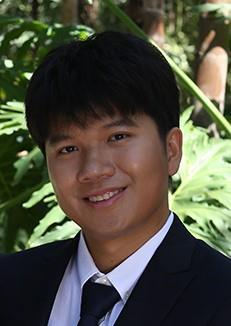
Yingjie Lao is an Associate Professor at Tufts University in the Department of Electrical and Computer Engineering with a secondary appointment in Computer Science. He holds a B.S. from Zhejiang University (2009) and a Ph.D. from the University of Minnesota (2015). Before Tufts, he was an Associate Professor at Clemson University and an IC Design Scientist at Broadcom. Research Focus: Trusted AI, hardware security, electronic design automation, VLSI architectures for machine learning, cryptographic systems, and healthcare applications. Awards: NSF CAREER Award, IEEE VLSI Prize Paper Award, ISLPED Best Paper Award, and 2023 Best Associate Editor Award (IEEE Transactions on VLSI). Grants: NSF-funded projects on photonic PUFs, secure EV operations, and privacy-preserving ML inference. Advising: Mentored students including Antian Wang, Azi Famili, Joseph Clements, Weihang Tan, and Jianchi Sun. Labs/Teams: Leads research in AI security, hardware security, and VLSI systems, with a focus on photonic PUFs and secure ML accelerators. His work spans interdisciplinary areas, integrating hardware design with AI security, healthcare, and cryptography. Recent projects include NSF-funded research on optoelectronic hardware security and privacy-preserving neural networks.
Gabi Dreo Rodosek is a distinguished researcher and faculty member at Bundeswehr University Munich , Germany. With a prolific publication record spanning over three decades, she has contributed extensively to the fields of network security, cyber-physical systems, BGP routing security, and software-defined networking (SDN). Research Interests: Network Security & Intrusion Detection BGP Routing Security & RPKI Software-Defined Networking (SDN) Malware Analysis & Adversarial Machine Learning Mobile Ad-hoc Networks (MANETs) Content Delivery Networks & IP Geolocation Her recent work focuses on advanced BGP security mechanisms, including path plausibility algorithms and RPKI deployment strategies. She has also explored adversarial techniques in machine learning, particularly in the context of malware detection and evasion. Her research in SDN-based defenses includes novel frameworks for DDoS mitigation and anomaly detection in 5G networks. Scientific Contributions: Over 159 peer-reviewed publications (1991–2025) Key contributions to BGP security, including RPKI validation and route leak mitigation Pioneering work in adversarial machine learning for cybersecurity Development of SDN-based intrusion detection and threat hunting frameworks Collaborations & Advising: She has mentored and collaborated with numerous researchers, including Nils Rodday, Peter Hillmann, Florian Steuber, and Raphael Labaca Castro. Her work often involves interdisciplinary teams tackling challenges in network security, AI-driven defense mechanisms, and resilient communication systems. Labs & Teams: While specific lab affiliations are not detailed in the provided text, her extensive collaboration network and affiliation with Bundeswehr University Munich suggest involvement in leading cybersecurity and networking research initiatives.
Ryan O'Donnell is a Professor of Computer Science at Carnegie Mellon University, where he is a member of the Theory Group within the Computer Science Department. He has established himself as a leading researcher in theoretical computer science with a focus on quantum computation, analysis of Boolean functions, and computational complexity. Professor O'Donnell's research spans multiple interconnected areas of theoretical computer science. His primary interests include quantum computation and information theory, approximability of optimization problems, spectral graph theory, analysis of Boolean functions, probability, and complexity theory. His work is characterized by deep mathematical insights combined with computational applications, often bridging seemingly disparate fields to develop novel theoretical frameworks. His recent publications reveal a strong emphasis on quantum computing theory, with numerous papers on quantum state certification, quantum algorithms, and quantum information processing. He has also made significant contributions to graph theory, particularly in developing explicit constructions of expanders beyond traditional spectral barriers. His research frequently combines techniques from probability theory, combinatorics, and algebra to solve challenging problems in theoretical computer science. Professor O'Donnell is the author of the influential book "Analysis of Boolean Functions," which has become a standard reference in the field and is available as a free PDF download. He regularly teaches advanced courses at CMU, including "15-759: Spectral Graph Theory" and various offerings on quantum computing, demonstrating his commitment to both research and education in theoretical computer science.
Ran Canetti is a distinguished Professor of Computer Science at Boston University, where he directs the Center for Reliable Information System and Cyber Security (RISCS). He also serves as the director of the Check Point Institute for Information Security at Tel Aviv University. Canetti is a Fellow of both the International Association for Cryptologic Research (IACR) and the Association for Computing Machinery (ACM), and was awarded the prestigious RSA Award for Excellence in Mathematics in 2018. Canetti received his academic foundation at the Technion in Haifa, earning a BA in Computer Science (1989), a BA in Physics (1990), and an M.Sc. in Computer Science (1991). He completed his PhD in 1995 at the Weizmann Institute under the supervision of Prof. Oded Goldreich. Following post-doctoral training at MIT under Prof. Shafi Goldwasser, he joined IBM's T.J. Watson Research Center, where he worked until 2008 before moving to Boston University. His research spans multiple aspects of cryptography and information security, with particular emphasis on the design, analysis and use of cryptographic protocols. Canetti's seminal contributions include the development of the HMAC message authentication protocol and the formulation of the Universally Composable (UC) security framework, which revolutionized how cryptographic protocols are analyzed for security in complex environments. More recently, his work has expanded into the co-design of law, policy and algorithms, focusing on accountability, transparency of algorithms, and data privacy. Canetti's publications demonstrate a consistent focus on foundational cryptographic principles that have evolved to address contemporary security challenges. His early work established critical standards for message authentication and secure communication, while his more recent research explores the intersection of cryptography with societal concerns like privacy regulations and algorithmic accountability. His work bridges theoretical cryptography with practical implementations that have become internet standards. RSA Award for Excellence in Mathematics (2018) Fellow of the IACR and ACM Multiple IBM Research Awards including Outstanding Innovation Award (2006), Corporate Award (2005), and Research Division Award (1999) Rothschild post-doctoral scholarship (1995-96) Kennedy Thesis Award from the Weizmann Institute (1996) As director of the Center for Reliable Information System and Cyber Security at Boston University and the Check Point Institute for Information Security at Tel Aviv University, Canetti leads significant research initiatives in cybersecurity. His work has resulted in multiple patents and internet standards, including HMAC (RFC 2104), TESLA multicast authentication, and Group Key Management Architecture. Canetti has also been active in the cryptographic community as co-organizer of major workshops and as Program Committee chair for the Theory of Cryptography Conference. Canetti maintains strong connections with both academic and industry research communities, evidenced by his past work at IBM Research and ongoing collaborations with organizations like Identiq, where he serves as an advisor. His research continues to influence both theoretical cryptography and practical security implementations worldwide.
Sayandeep Saha is an Assistant Professor in the Department of Computer Science and Engineering at Indian Institute of Technology Bombay. His research focuses on Hardware Security and Cryptography, with emphasis on Fault Attacks, Side-Channel Attacks, and Post-Quantum Cryptography. He leads the SHarC research group and actively collaborates with international institutions. Education: PhD in Computer Science and Engineering from Indian Institute of Technology Kharagpur Postdoctoral Experience: NTU Singapore (2022-2023), UCLouvain Belgium (2023-2024) His research explores hardware vulnerabilities in cryptographic systems, covering: Fault Attacks on Symmetric and Post-Quantum Cryptosystems Side-Channel Analysis of Power/EM Radiation Microarchitectural Attacks (Spectre/Meltdown variants) Countermeasure Development and Formal Verification Recent research trends include Rowhammer attacks, randomized cache designs, and fault propagation in cryptographic circuits. His work has been recognized in top conferences like ICCAD, USENIX Security, and CHES. Awards: Top Picks in Hardware and Embedded Security 2024 (EUROCRYPT 2020 paper) He is currently hiring Project Research Assistants for the RISC-V-based SISHAM project and supervises PhD students in hardware security research.
Virendra Singh is a Professor at the Indian Institute of Technology Bombay , affiliated with both the Department of Electrical Engineering and Department of Computer Science & Engineering . He leads the Computer Architecture and Dependable Systems Lab (CADSL) and coordinates the Indo-Japanese Joint Laboratory for Intelligent Dependable Cyber Physical Systems and the Information Security Research and Development Centre (ISRDC). Ph.D. in Computer Science from Nara Institute of Science and Technology (NAIST), Japan (2002-2005) M.E. and B.E. in Electronics & Communication from Malaviya National Institute of Technology (MNIT), Jaipur (1994-1996 and 1990-1994) Research Interests : Virendra Singh focuses on Cyber Security , Computer Architecture , Fault-Tolerant Computing , Formal Verification , Trusted Computing , and Blockchain Technology . His work integrates security into hardware design, with a strong emphasis on Cyber Physical Cognitive Systems and Software Defined Networking . Recent Publications highlight advancements in cache security , quantum-resistant cryptography , malware detection , and heterogeneous computing , reflecting his interdisciplinary approach. Awards : SP Sukhatme Excellence in Teaching Award (2021) Students : He currently supervises 15 Ph.D. students, advancing cutting-edge research in security and architecture.
Mehmet Merkepçi serves as an Assistant Professor in the Department of Computer Engineering at Gaziantep University's Faculty of Engineering, Turkey. Holding a Doctorate in Electrical and Electronic Engineering (2017), he has maintained continuous academic affiliation with the university since 2007 through progressive roles from Research Assistant to his current position. Academic Background: Doctorate (2017): Gaziantep University, Institute of Science, Electrical and Electronic Engineering Master's (2009): Gaziantep University, Institute of Science, Electrical and Electronics Engineering Bachelor's (2000): Karadeniz Technical University, Faculty of Engineering, Electrical-Electronic Engineering Merkepçi's research demonstrates exceptional interdisciplinary breadth with core emphasis on Cryptography and Artificial Neural Networks . His recent work pioneers neutrosophic number theory applications in public key cryptography, significantly advancing RSA and El Gamal algorithms. Parallel research trajectories include biomedical signal processing using photoplethysmography for non-invasive monitoring systems, and textile engineering innovations in fabric porosity and air permeability analysis. This multifaceted approach bridges theoretical mathematics with practical engineering solutions across diverse domains. Publication analysis reveals 10 journal articles concentrated in 2022-2025, with cryptographic research constituting 60% of recent output. The remaining publications demonstrate sustained engagement in biomedical engineering (20%) and textile science (20%), indicating strategic diversification while maintaining cryptographic expertise as the research cornerstone. This distribution reflects deliberate specialization in security-critical applications alongside targeted explorations of neural network implementations in physical systems. Merkepçi teaches advanced courses including Security Engineering and Occupational Safety at graduate level, and foundational undergraduate instruction in Computer Programming, Database Management, and Engineering Mechanics. His administrative service includes Department Vice Chairman (2020-present) and former Department Head (2020-2024), demonstrating institutional leadership alongside research and teaching responsibilities.
Pierre Briaud is a Postdoctoral Research Fellow in the Department of Cryptography at Simula UiB since January 2024. Previously, he was a PhD student in the COSMIQ project-team at Inria Paris from October 2020 to December 2023, supervised by Jean-Pierre Tillich. Research Interests : Post-Quantum Cryptography Algebraic Cryptanalysis Error-Correcting Codes Code-Based Cryptography Publications Trend : His recent work focuses on syndrome decoding problems and their algebraic analysis, with implications for quantum-resistant cryptographic constructions and pseudorandom generator security. Both 2023 and 2024 publications examine structural vulnerabilities in code-based cryptography. Advising & Collaborations : He was a PhD student under Jean-Pierre Tillich at Inria Paris. His research involves collaborations with institutions like Simula UiB and Inria. Labs : Affiliated with the COSMIQ project-team at Inria Paris (2020-2023) and Simula UiB's Cryptography Department (2024-present).
Paul Stankovski Wagner is an Associate Professor and Senior Lecturer at the Department of Electrical and Information Technology, Faculty of Engineering (LTH), Lund University. He serves as Project Manager for ELLIIT (Linköping-Lund initiative on IT and mobile communication) and contributes to the LTH Profile Area: AI and Digitalization as well as the Secure and Networked Systems initiative. Roles: Senior Lecturer, Associate Professor, Project Manager, Researcher, Assistant Supervisor Institutions: Lund University, Linköping University, Pufendorf IAS His research focuses on cryptography, security, and quantum-resistant algorithms. Key areas include Learning with Errors (LWE), post-quantum cryptographic implementations, and blockchain applications in cybersecurity and pharmaceutical R&D. He explores side-channel vulnerabilities, key management systems, and privacy-preserving protocols like PAPR for anonymous credentials. Recent publications (2021-2025) highlight his work on BKW-style LWE solvers, healthcare IT security architectures, and blockchain-based data-sharing frameworks. Articles span journals like ACM Transactions on Computing for Healthcare and International Review of Law, Computers & Technology , with keywords reflecting cryptography, algorithms, and data privacy. He supervises doctoral research (e.g., Amanda Nilsson’s work on post-quantum cryptographic side channels) and collaborates on multidisciplinary projects such as SMARTY (secure software updates for smart cities) and LUTAX (tax research with technological applications).
Ass.-Prof. Arnab Roy is an Assistant Professor (tenure track) at the Security and Privacy Lab, University of Innsbruck, Austria. His research focuses on cryptography and cryptanalysis, secure computation, and information security. He has held academic and research roles at institutions such as Alpen-Adria-Universität Klagenfurt, University of Bristol, and Technical University of Denmark. Education: Ph.D. in Computer Science (2014), University of Luxembourg M.Tech. in Computer Science (2007), Indian Statistical Institute M.Sc. in Mathematics (2004), IIT Kanpur B.Sc.(Hons.) in Mathematics (2002), University of Calcutta Research Interests: Dr. Roy’s work addresses advanced cryptographic systems, including post-quantum cryptography, side-channel resistance, and zero-knowledge proofs. He designs efficient cryptographic primitives for constrained environments and explores leakage certification methods. His contributions span cryptanalysis of block ciphers, hash functions, and protocol security. Professional Activities: Serving on program committees for ACNS 2024, CT-RSA 2024, and Eurocrypt 2019 Reviewer for major conferences including CRYPTO, Eurocrypt, and Asiacrypt Organizer of ALPSY (2024) and SILC (2021) Lab & Team: The Security and Privacy Lab focuses on foundational and applied research in cryptography, with ongoing projects on algebraic systems for cryptographic permutations and leakage-resilient designs.
Yuval Yarom is a Professor and Head of the Chair of Computer Security at Ruhr University Bochum's Faculty of Computer Science. His research specializes in hardware security vulnerabilities, including microarchitectural attacks (e.g., Spectre, Rowhammer), cryptographic side channels, and GPU security exploits. He leads major initiatives like the DFG Excellence Cluster CASA and the EU Marie Curie Network QSI. Research focuses on: Microarchitectural attack vectors (cache timing, speculative execution) Automated security tools for cryptographic implementations Hardware-assisted cryptanalysis and mitigation design Cross-layer vulnerabilities in CPUs/GPUs Recent publications (2023-2025) show strong emphasis on: Practical attacks exploiting CPU/DRAM weaknesses (e.g., Apple M3 vulnerabilities, ECC memory failures) Automated countermeasures for cryptographic leakage Novel browser/GPU-based side channels Verified compilation for secure hardware Supervised 14+ PhD students including Önder Askin, Elena Kirshanova, and Andre Esser. Affiliations include Horst Görtz Institute (HGI), IACR, and Bochum's IT Security Association (BITSI).
Shafi Goldwasser is the RSA Professor (Post Tenure) of Electrical Engineering and Computer Science at the Massachusetts Institute of Technology (MIT) and holds a professorship in the Electrical Engineering and Computer Sciences (EECS) department at the University of California, Berkeley. She is a core member of MIT’s Computer Science and Artificial Intelligence Laboratory (CSAIL), particularly within the Theory of Computation Group and Complexity Theory Group. Her work focuses on advancing cryptographic foundations, computational complexity, and algorithmic security. Goldwasser has pioneered research in areas such as zero-knowledge proofs, homomorphic encryption, and secure multiparty computation, with applications in privacy, cybersecurity, and AI alignment. Research Interests: Goldwasser’s research spans cryptography, complexity theory, and the intersection of computer science with societal challenges. Her work emphasizes: Designing provably secure cryptographic systems Algorithmic robustness and adversarial machine learning Privacy-preserving technologies for healthcare and data collaboration Formal verification of AI models Cross-disciplinary applications in law and biology Scientific Contributions: A 2017 ACM Fellow, Goldwasser has led major initiatives like the Homomorphic Encryption Standard project. Her research groups at MIT and CSAIL explore foundational problems in computational complexity while addressing real-world challenges such as securing emerging communication systems and reconciling legal secrecy with transparency through cryptographic tools. Collaborations & Teams: She co-leads the Cryptography and Information Security Group and Complexity Theory Group at MIT, collaborating with experts like Vinod Vaikuntanathan and Yael Kalai. Her work integrates theoretical breakthroughs with practical applications, such as secure genomic analysis and AI alignment frameworks.
Prof. Dr. Patrick Felke is a Professor for IT Security at the University of Applied Sciences Emden/Leer, affiliated with the Department of Technology, Electrical Engineering and Informatics. His research focuses on advanced cryptographic techniques, including cryptanalysis of encryption algorithms, IoT security vulnerabilities (e.g., Z-Wave protocols), and mathematical foundations of cryptographic primitives. He leads the IT-Sec Lab (https://itsec-lab.hs-emden-leer.de/), which explores topics like multivariate cryptography, symmetric cipher design, and side-channel attack mitigation. His research spans both theoretical and applied aspects of information security, with notable contributions to cryptanalysis of TETRA encryption algorithms, analysis of multivariate encryption schemes (e.g., EFLASH), and identification of critical flaws in wireless communication standards. Felke also contributes to the Digital Hub Ostfriesland initiative, focusing on IT security advancements in regional technology ecosystems. Key areas of expertise include: Cryptographic protocol vulnerability analysis Z-Wave and IoT device security Design and cryptanalysis of symmetric/asymmetric encryption systems Mathematical foundations of nonlinear functions in cryptography Publications emphasize practical cryptanalysis methods, algorithmic decomposition techniques, and cryptographic standard evaluation. His work bridges academic research with real-world cybersecurity challenges in telecommunications and embedded systems.
Dr. Jake Doliskani is an Assistant Professor in the Department of Computing and Software at McMaster University, Faculty of Engineering. His research focuses on Post-Quantum Cryptography, Quantum Computing, and Applied Cryptography. He previously held faculty positions at TMU and was an NSERC postdoctoral fellow at the Institute for Quantum Computing (University of Waterloo). He earned his PhD in Computer Science from Western University under Éric Schost, with a focus on computational algebra and cryptography. Education: PhD in Computer Science, Western University (2016) MSc/BS in Computer Science (Details not explicitly stated) His research explores quantum-resistant cryptographic systems, quantum algorithms, and cryptographic protocol design. Notable contributions include advancements in isogeny-based cryptography, quantum money schemes, and efficient quantum algorithms for polynomial factorization. His work bridges theoretical foundations with practical applications in security and computational efficiency. Publications span topics like cryptographic hash functions, quantum software verification, and algebraic methods in cryptography. His work has been recognized with awards, including the Distinguished Paper Award at ICSE 2020 for contributions to quantum software testing. Advising & Opportunities: Open to supervising MSc/PhD students in Quantum Computing, Post-Quantum Cryptography, and Cryptography. He teaches advanced courses such as Quantum Computing and Quantum Cryptography (Theory) , emphasizing quantum mechanics fundamentals and cryptographic applications. Affiliations & Lab Involvement: Active in research groups focused on post-quantum security and quantum algorithm design. Office: ITB 125, McMaster University.
Samuel Jaques is an Assistant Professor in the Department of Combinatorics and Optimization at the University of Waterloo (since 2023). His research focuses on cryptography (particularly privacy/anonymity) and quantum computing, with notable work on quantum algorithms for cryptanalysis and the Landscapes of Quantum Computing blog. He completed a PhD at the University of Oxford and holds degrees from the University of Waterloo and University of Regina. Education: PhD, University of Oxford (supervised by Simon C. Benjamin and Christophe Petit) MMath, University of Waterloo (co-supervised by Alfred Menezes and Michele Mosca) B.Sc. in Math and Biology, University of Regina Research Interests: Jaques explores quantum computing's impact on cryptography, including post-quantum security, lattice-based algorithms, and quantum error correction. His work critiques quantum RAM assumptions and analyzes resource costs for breaking cryptographic systems like RSA and ECC. Recent projects include accumulator schemes for digital credentials and dynamic group signatures. Awards and Recognition: Best Young Researcher Paper (2019) for quantum claw-finding attacks on SIKE Advising & Grants: Jaques supervises graduate students and postdocs in cryptography/quantum computing. His lab focuses on real-world privacy solutions with a post-quantum lens. Recent advisees include Mojtaba Fadavi (postdoc) and Jérôme Guyot (visiting student). Labs/Teams: Active in the Institute for Quantum Computing (IQC) at Waterloo, collaborating on quantum algorithms and cryptographic security. Maintains open-source projects like the Q# quantum crypto library and surface code cost calculators.