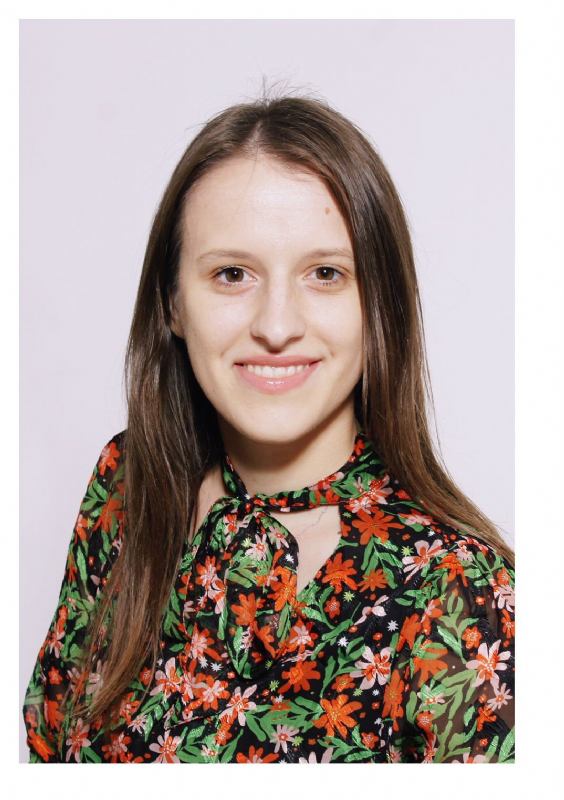
Vanja Bevanda is a Full Professor at the Faculty of Economics and Tourism, University of Primorska in Pula. She holds a PhD from 2002 and has been employed at the institution since 2005, contributing to the Department of Quantitative Methods. Her educational background includes a BSc (1989), MSc (1995), and PhD (2002). Research Interests : Her work focuses on decision analytics, business intelligence, artificial intelligence applications in SMEs, data mining for customer behavior analysis, tourism development strategies, and the integration of technology in education. She explores topics like AI-driven managerial journeys, microchip implant adoption, and post-pandemic technology use trends. Publications : Recent articles highlight her contributions to AI transformation in SMEs, sentiment analysis during the pandemic, and mobile BI adoption in SMEs. Her research spans both theoretical frameworks and practical case studies across Croatia and beyond. Teaching : She teaches courses including Business Decision-Making, IT Project Management, and Database Systems. She emphasizes bridging theoretical knowledge with practical skills in information systems education.
Toni Milun serves as a lecturer in mathematics and statistics at Algebra University of Applied Sciences, where he bridges theoretical concepts with practical business applications. His academic foundation includes a 1999 degree from the Faculty of Science and Mathematics at the University of Zagreb and a 2012 postgraduate specialist degree in Statistical Methods for Economic Analysis and Forecasting from the Faculty of Economics in Zagreb. He is currently completing his doctoral research in Economics at the Faculty of Economics in Rijeka. His research spans Mathematics Education, Financial Mathematics, and Business Statistics, with a distinctive focus on making complex quantitative concepts accessible through innovative pedagogical approaches. Milun's work consistently connects mathematical theory to real-world economic scenarios, particularly in SME financing, investment analysis, and statistical literacy for decision-makers. His publications reveal a strong emphasis on practical applications in Croatian business contexts and educational settings. Analysis of his 15 most recent publications shows dominant themes in financial mathematics (35%), business statistics (30%), and adult education (25%), with recurring subfields including percentage calculations in commerce, regression modeling of socioeconomic factors, and maritime/IT-specific mathematical applications. His research demonstrates consistent engagement with Croatian economic data and educational challenges. His notable recognition includes: Pride of Croatia award for special contribution to education Milun actively disseminates knowledge through public-facing initiatives rather than formal academic advising. He has co-authored a high school mathematics textbook and provides consulting services in applied mathematics and statistics, focusing on business problem-solving. His educational outreach generates significant impact through digital platforms and traditional media. He leads the www.tonimilun.com educational portal and television productions ('Školski sat' and 'Financijalac'), directing teams of educators, video producers, and subject-matter experts to create accessible mathematical and financial literacy content for diverse audiences across Croatia.
Dr. Dijana Drandić is an Associate Professor at the Faculty of Educational Sciences , Juraj Dobrila University of Pula , specializing in Early and Preschool Education . As Lecturer in charge for courses like General Didactics and Intercultural Communication , she emphasizes inclusive practices and pedagogical innovation. Research Interests : Intercultural communication, inclusive education for children with developmental disabilities, music pedagogy, and ICT integration in special education. Key Projects : Collaborative work on ICT in Special Education , Montessori Adaptation for Disabilities , and intercultural readiness studies. Publications : 15+ works on intercultural sensitivity, traditional music in education, and bilingualism in multicultural kindergartens. Advising : Supervised 20+ theses, including studies on autism inclusion, Roma education, and creative workshops for special needs. Her recent work explores technology-enhanced learning for children with disabilities and curriculum design for intercultural competence. She also co-authored practical guides on ICT as Special Needs Support and Native Identity Development in Istrian contexts.
Dr. Danijela Rabar is an Associate Professor at the Faculty of Economics and Tourism 'Dr. Mijo Mirković' in Pula, University of Primorska. She specializes in quantitative methods, with teaching responsibilities in Mathematics for Economists and related courses. Her research focuses on efficiency analysis using Data Envelopment Analysis (DEA), applied to healthcare, regional economics, public administration, and industrial processes. Key projects include MEGASFORA (economic growth modeling) and MEPHS (public health service efficiency measurement). She has authored over 30 articles since 2009, emphasizing nonparametric methods in evaluating economic and institutional performance. Her work spans efficiency assessments of Croatian hospitals, municipalities, airports, and shipyards, with a particular interest in fiscal policy implications and regional development. Rabar’s interdisciplinary approach bridges econometrics, operations research, and policy analysis, contributing to both academic literature and practical decision-making frameworks.
Tomislav Korotaj, PhD, is an academic researcher affiliated with the Department of Statistics at the Faculty of Economics and Business, University of Zagreb. His research focuses on labor economics, economic inequality, and applied statistical methods in analyzing youth employment dynamics and post-transition economies. He has contributed to understanding the impacts of crises on youth labor markets in Central and Eastern Europe (CEE), using cluster analysis to compare regional economic indicators. His work spans macroeconomic analysis of inequality, forensic accounting in banking fraud prevention, and policy-relevant studies on labor market transitions. Publications include studies on OECD countries' post-transition socioeconomic trends and comparative analyses of European labor markets. His research combines quantitative methods with policy implications, addressing topics like youth unemployment, educational outcomes, and economic development strategies. While no specific awards are listed, his active publication record reflects engagement with both contemporary economic challenges and foundational issues in forensic auditing. His academic profile integrates empirical research with methodological innovation in clustering and multivariate analysis techniques.
Anamarija Jazbec is a distinguished Professor at the Faculty of Forestry and Wood Technology, University of Zagreb , holding roles in both the Department of Forestry and Department of Wood Technology. She has a dual academic background in Mathematics (dipl.ing.) and Forestry, with over 37 years of professional experience in academic research and teaching. Her primary affiliations include the University of Zagreb’s Faculty of Forestry (since 2000) and previous roles at the Faculty of Natural Sciences and Mathematics (PMF). Research Interests: Forestry, environmental science, biostatistics, tree physiology, medical research on biomarkers, and dual career programs for athletes. Her work bridges applied mathematics with ecological and health sciences, addressing topics ranging from forest management to diabetes complications and pediatric sports performance. Publications & Research: Over 50 peer-reviewed articles (2025–2014), focusing on forest ecology (e.g., oak and beech coppices), biomarker studies (e.g., cystatin C, adiponectin), and educational outcomes (e.g., state exam impacts on academic performance). Notable contributions include studies on silver fir decline, dual career mental health, and groundwater quality analysis. Teaching & Mentorship: Advised numerous students across undergraduate and graduate programs in forestry, wood technology, and urban ecology. Her courses integrate statistical methodologies with practical forestry applications. Labs & Affiliations: Collaborates with the Institute of Ecology and Silviculture, Institute of Forest Protection, and international research networks on biomonitoring and forest health. Active in Croatian forestry forums and educational policy discussions.
Margareta Gardijan Kedžo is an Associate Professor at the Faculty of Economics and Business, University of Zagreb, specializing in financial mathematics, stochastic dominance, and risk measures. Her research bridges quantitative methods with economic applications, focusing on portfolio optimization, insurance demand, and fiscal policy efficiency. University: University of Zagreb School: Faculty of Economics and Business Department: Mathematics Academic Rank: Associate Professor Email: mgardijan@efzg.hr Research Interests: Financial modeling, stochastic dominance criteria, data envelopment analysis, option trading strategies, and risk mitigation frameworks. Her work spans insurance economics, pension systems, and banking efficiency. Selected Publications: Recent output includes analyses of Croatian property insurance demand, EU pension sustainability, and post-pandemic investment strategies. Methodologies emphasize quantitative rigor and cross-efficiency evaluations. Office Hours: Available Tuesday 11:00–12:00 or by email appointment.
Mario Spremić is a Full Professor at the Department of Informatics, Faculty of Economics & Business, University of Zagreb, with significant international affiliations including Imperial College London, School of Economics and Business at University of Ljubljana, and Sapienza University of Rome. He serves as Vice-President of the National Scientific Committee for Information Science and Director of the Postgraduate Study Programme in IT Management. His academic career spans over two decades since joining FEB Zagreb in 2000, following prior corporate experience as a computer programmer, project manager, and executive manager. Born in Dubrovnik, Croatia (1970) B.Sc. in Mathematical Sciences (1996) M.Sc. in IT Management (1999) Ph.D. in Business (2002) Additional education from MIT Sloan School of Management Professor Spremić's research focuses on digital transformation, cybersecurity, strategic IT management, and IT auditing. His work bridges academic theory with practical business applications, resulting in over 100 scientific and professional publications. He has authored or co-authored 15 books on digital transformation, cybersecurity, and enterprise information systems. His research methodology combines theoretical frameworks with empirical validation through case studies across multiple industries. His publication record demonstrates consistent scholarly output with recent contributions focusing on digital business model maturity measurement, cybersecurity frameworks, and digital transformation strategies. The publications reveal a strong emphasis on practical applications of information systems theory in business contexts, particularly in financial services, retail, and public sector organizations. His work often employs mixed-method approaches combining bibliometric analysis, case studies, and empirical validation. Winner of the CGEIT (Certificate in Governance of Enterprise IT) Reviewer for WoS, ISI and Scopus indexed journals International accreditor for EFMD and NAKVIS Active member of IEEE, ISACA, and IAE professional organizations Professor Spremić maintains strong connections with the business world through consulting work, having conducted over 100 consultancy projects, IT audits, and cybersecurity assessments across financial institutions, public sector organizations, and consumer industries. He serves as an international accreditor for higher education institutions, specializing in helping them achieve and maintain international accreditations like EQUIS. His industry engagement complements his academic work, ensuring practical relevance of his research. At FEB Zagreb, he teaches courses including e-Business, Enterprise Information Systems, Cybersecurity, IT Auditing, and Digital Transformation. His teaching approach integrates current industry practices with academic theory, preparing students for digital challenges in modern business environments. He has participated in numerous international study visits to institutions including Henley Business School, Westminster University, WU, MIT, and Technical University Munich.
Borut Milfelner serves as a Full Professor at the Faculty of Economics and Business, University of Maribor, where he specializes in advanced research methodologies within business economics and marketing disciplines. His core research focuses on: Development and validation of marketing metrics for effective performance measurement Scientific foundations of measurement instruments in marketing decision-making Integration of quantitative and qualitative research methods in business contexts Application of neural networks and structural equation modeling in empirical research Multi-criteria decision-making frameworks for business analysis Professor Milfelner teaches doctoral-level courses including 'Application of Quantitative and Qualitative Research Methods in Business Economics,' 'Data Collection Methods and Measurement Instrument Validity,' and specialized topics on neural networks and structural equation models, emphasizing practical implementation of research methodologies in marketing science.
Kristina Kovačević is a researcher and teaching collaborator at the Faculty of Economics, University of Osijek, where she has been employed since February 2020. She is affiliated with the Department of Quantitative Methods and Informatics and contributes to courses such as Statistics and Quantitative Methods for Business Decision-Making. Educated in Business Economics with a focus on Business Informatics Doctoral candidate in Business Economics in a digital environment at the University of Dubrovnik and University of Zagreb since November 2020 Her research interests center on Machine Learning and its applications in energy management, business process optimization, and economic trend prediction. She actively participates in the research project funded by the Croatian Science Foundation, titled "Methodological Framework for Efficient Energy Management Using Smart Data Analytics," which leverages techniques like neural networks, decision trees, and cluster analysis. Her work intersects Quantitative Methods in Business and Intelligent Data Analytics , emphasizing simulation models and business intelligence systems. While no scientific awards are explicitly mentioned in the provided text, her academic profile reflects engagement in both teaching and research, bridging theoretical and applied aspects of business economics through advanced data analysis methodologies.
Assoc. Prof. Franjo Pehar is an Associate Professor at the Department of Information Sciences and Technologies, University of Zadar. His research focuses on scientific communication, bibliometrics, information systems, and human-computer interaction with a particular emphasis on user experience (UX) and usability. He leads projects like OPERAS-PLUS and ILO, emphasizing user-centered methodologies in digital publishing and information literacy. His work bridges quantitative research analysis and practical applications in educational and corporate digital transformation. Key research interests include bibliometric analysis of Croatian scientific fields, UX questionnaire validation, and digital publishing standards. He has contributed to multilingual MOOC development and studies on Croatian companies' readiness for digital transformation. Prof. Pehar's publications span eye-tracking studies for visual attention in digital interfaces, cross-cultural UX adaptations, and frameworks for quality objectives in scholarly communication. His projects OPERAS-PLUS and 2CODE aim to enhance cross-border digital ecosystems and business environments. He serves as a mentor in the Doctoral Studies program and maintains active collaborations with academic and industry partners. His lab focuses on advancing digital tools for libraries, publishers, and educators through innovative research and practical implementation.
Ana Marija Filipas serves as a Lecturer at the Faculty of Economics and Business (EFRI) of the University of Rijeka, Croatia, where she delivers core quantitative coursework for undergraduate and graduate programs. Her institutional affiliation includes active teaching responsibilities within the Faculty's academic structure, with office hours maintained for student consultation in Chair 62/III. Her research and pedagogical expertise centers on econometric methodology and big data applications in business contexts. She systematically covers probability theory, mathematical statistics, linear regression modeling (including OLS derivation, categorical variables, and diagnostic testing for multicollinearity/heteroscedasticity), and advanced analytics techniques such as supervised/unsupervised learning, decision trees, association rule mining, and text mining. This bridges classical econometric frameworks with contemporary data science tools for economic analysis. Her scientific contributions manifest through curriculum development in quantitative disciplines, particularly the foundational 'Basics of Econometrics' course and the English-taught 'Big Data Analytics' program covering data preprocessing, model deployment, and ensemble methods. While specific research outputs aren't documented in the source material, her instructional focus demonstrates applied expertise in transforming complex statistical concepts into practical business analytics solutions.
Miroslav Bukan serves as Assistant Professor in the Department of Plant Breeding, Genetics and Biometrics at the Faculty of Agriculture, University of Zagreb, with office location in the 6th pavilion, 3rd floor. Education: PhD in Plant Breeding, Genetics and Biometrics from University of Zagreb, Faculty of Agriculture (2011-2016) focusing on "Recurrent selection for nitrogen use efficiency in maize" Research Interests: Dr. Bukan specializes in cereal and legume genetics with emphasis on improving nitrogen utilization in maize, small grains, and soybean. His work integrates quantitative breeding methods to develop climate-resilient crop varieties, leveraging both academic research and 12+ years of industrial breeding experience across European agricultural enterprises. Current projects target sustainable legume production systems through advanced genomic selection techniques. Teaching and Advising: He instructs six graduate-level courses including Molecular Plant Breeding (134058), Fruit and Grapevine Breeding (133065), and Master's Thesis Seminar (160350), supervising student research in molecular breeding techniques and biometric analysis. Projects: Breeding European Legumes for Increased Sustainability (2023-2028): Partner role in this European Research Executive Agency-funded initiative developing sustainable legume varieties Professional Development: Completed "Quantitative Methods in Plant Breeding" training at National Institute for Agricultural Botany (NIAB) in March 2019, enhancing statistical breeding methodologies.
Hrvoje Šarčević is a Full Professor at the Department of Plant Breeding, Genetics and Biometrics, Faculty of Agriculture, University of Zagreb. He holds a PhD in Plant Genetics and has dedicated his career to plant breeding research, focusing on wheat and maize improvement through molecular and quantitative genetics. University: University of Zagreb Academic Rank: Professor Department: Plant Breeding, Genetics and Biometrics Research Interests: Dr. Šarčević specializes in genetics and breeding of wheat and maize , with expertise in recurrent selection, drought resistance, molecular marker applications, and population genetics. His work emphasizes improving crop yield, stress tolerance, and genetic diversity analysis. Recent Publications: His research includes SSR-based genetic diversity studies in soybean, molecular breeding for soybean adaptation in Europe, and nitrogen use efficiency in winter wheat. He also investigates seed dormancy mechanisms and molecular discrimination techniques in maize breeding. Professional Activities: He has served as project coordinator for multiple EU-funded initiatives, including CroP-BioDiv and LegumeS projects, and held leadership roles in the Croatian Genetic Society. He participates in international training programs on quantitative methods in plant breeding across the UK, Poland, Sweden, Austria, Germany, and the USA.
Marina Ercegović is a researcher at the Department of Accounting within the University of Zagreb Faculty of Economics & Business. Her work focuses on accounting standards, financial analysis, and corporate finance, particularly examining liquidity management, investment funds, and financial statement interpretation. Affiliated with the Department of Accounting since at least 2015 Active in financial and accounting research with publications from 2013–2018 Office hours: Monday 13:00–15:00 Her research spans cash flow dynamics, fair value accounting, lease accounting impacts, and cost management. Articles highlight Croatian capital market behavior, financial ratios, and business performance evaluation. Her publications include collaborations with local institutions like ZIREB Zagreb International Review of Economics and Business , with a focus on empirical analysis in Eastern European contexts.