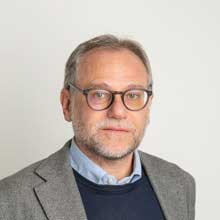
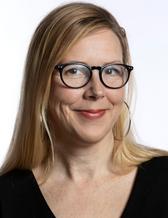
Prof. Dr. Ayşegül KURTULGAN is an Assistant Professor at the Faculty of Economics and Administrative Sciences of Çağ University. Her research focuses on sustainable finance, cryptocurrency environmental impacts, cyber security, and marketing analysis. She has published extensively on bibliometric analyses of emerging topics like climate finance and crypto-mining sustainability. Her work often utilizes tools like VOSviewer for thematic mapping in academic literature. Key research areas include the intersection of finance and environmental policy, digital economy risks, and cryptocurrency's technical and regulatory challenges. Recent studies analyze sustainability index volatility effects on trade and credit derivative impacts on foreign investments in Turkey. She also contributes to marketing research through doctoral thesis evaluations in Turkey. No academic awards were explicitly mentioned in the provided materials. Her professional activities include conference participation and editorial work in digital business management. Current affiliations remain solely at Çağ University with no indication of part-time roles or retired status.
Gilles JEANNOT is a Professor and President of the Humanities and Social Sciences (SHS) Department at the National School of Bridges and Roads (École des Ponts ParisTech), where he also serves as a researcher at the Latts laboratory (Laboratoire d’Analyse et de Théories Sociales). His work bridges academia and public policy, focusing on public service dynamics, civil servant experiences, and the transformative impact of digital technologies on governance and urban development. **Education and Affiliations:** - Doctorate (likely in Sociology or Public Policy, though exact details not specified). - Member of Latts (CNRS-affiliated laboratory), collaborating with University of Marne-la-Vallée (now Université Gustave Eiffel). - Involved in European research projects (e.g., FP7 COCOPS). **Research Themes:** Public service users and their evolving relationships with administrative systems. Civil servants’ work conditions and the impact of management reforms. Smart cities and digital governance, including critiques of 'platform states' and data-driven urban policies. Neo-public management tools and their bureaucratic implications across European administrations. **Teaching:** - Courses on public action sociology/social movements for civil servants (MPAPDD program). - Modules on quantitative methods and data use in management for engineering students (e.g., 'Power of Figures'). **Key Research Contributions:** - Analyzed the 'digital privatization' of public services and its exclusionary effects. - Explored tensions between bureaucratic tradition and modernization in French and European contexts. - Documented civil servants’ perceptions of management reforms through surveys (e.g., INSEE, COCOPS projects). **Funding & Collaborations:** - Led interdisciplinary projects on smart cities and public administration. - Collaborated with institutions like the CNRS, Universities of Marne-la-Vallée, and international partners (e.g., Barry Goodchild on cross-national urban policies). **Current Focus:** - Critiquing digital governance models (e.g., 'platform states') and their socio-technical regimes. - Investigating how public administrations adapt to AI and data-driven policymaking.
Oleg Kitov serves as an Assistant Teaching Professor and Robert Martin Fellow in Economics at Selwyn College, University of Cambridge, where he also acts as Convener of Undergraduate Admissions for the Faculty of Economics. His academic profile centers on rigorous econometric methodology applied to macroeconomic phenomena and distributional economics, with significant contributions to time-series analysis and income inequality research. Kitov's primary research domains include Time-series Econometrics, Empirical Macroeconomics, and Income Distribution and Inequality. His methodological innovations focus on structural break detection in linear models using multiplicative indicator saturation, generative modeling of age-income dynamics, and cross-national Phillips curve analysis. His work bridges theoretical econometrics with empirical applications, particularly examining inflation-unemployment relationships across diverse economies and modeling long-term trends in income distribution using historical datasets. His publication trajectory reveals consistent methodological advancement from 2012-2022, with core themes spanning structural break detection in economic time series, generative income distribution modeling, and comparative Phillips curve analysis across 15+ countries. The research demonstrates increasing sophistication in handling non-stationary economic data while maintaining strong policy relevance for central banking and inequality measurement. Scientific Awards: Cambridge Centre for Teaching and Learning Technology-enabled Learning Prize (2021) As Convener of Undergraduate Admissions, Kitov shapes the academic cohort for Cambridge's Economics program while teaching advanced econometrics. His office hours (Tuesdays 11:15am-12:15pm in Room 79) support student engagement with complex quantitative methods, reflecting his dual commitment to research excellence and pedagogical innovation recognized by the 2021 teaching prize.
Laura Mcleod is a Senior Lecturer in International Politics at the University of Manchester and serves as the EDI Director for the Politics department. She is also a trustee of the British International Studies Association (BISA) and its EDI Officer. Her research focuses on gender, feminism, security, and peacebuilding in post-conflict contexts, particularly the UN Security Council’s Women, Peace and Security (WPS) agenda. She has published extensively in journals like the European Journal of International Relations and authored the book Gender Politics and Security Discourse (2016/2021). Her teaching includes modules on Gender, War and Peace, and the Politics of (In)Security. Mcleod has supervised numerous PhD students researching topics such as UNSCR 1325’s impact in India, feminist anti-nuclear activism, and gender in Myanmar’s political transition. She has held research roles including a Research Associate on the ERC’s Understanding Institutional Change project and contributed to the editorial board of the International Feminist Journal of Politics. Current research interests include feminist negotiations of peace in museums, UK WPS policy, and UN security indicators. Mcleod has secured grants from the British Academy and co-edited special issues in Peacebuilding and volumes on feminist peace studies. She actively engages in academic leadership, serving as an external examiner at the University of Limerick and Bath.
Dr Marlies Barendrecht is a Lecturer in Natural and Environmental Hazards at King's College London's Department of Geography, part of the School of Global Affairs and Faculty of Social Science & Public Policy. Her research focuses on socio-hydrology, investigating human-water interactions in drought and flood risk contexts. She completed her PhD in 2020 at the Technical University of Vienna, studying human-flood interactions. Education: PhD in Hydrology (2020, Technical University of Vienna); Postdoctoral research at VU Amsterdam (drought-to-flood dynamics). Research Groups: Physical & Environmental Geography, Risk, Hazard & Society, King's Water Centre, Geocomputation and Data Science Hub, Centre for Integrated Research in Risk & Resilience. Her work combines quantitative and qualitative methods to study how human actions influence hydrological cycles and water security. Key themes include drought-flood dynamics, socio-hydrological models, and interdisciplinary approaches to water governance. Recent publications explore storytelling in Kenyan drylands, drought memory effects, and flood risk adaptation frameworks. She teaches courses such as Natural Hazards, Environmental Data Analysis, and Methods for Risk Assessment. Supervision topics include drought adaptation feedbacks and socio-hydrological model improvements. Her research has been featured in Frontiers in Water , Hydrological Sciences Journal , and Earth's Future , with a focus on global case studies and socio-environmental systems.
Allegra Hosford Scheirer is an Adjunct Professor in the Department of Earth & Planetary Sciences at Stanford University. Her research focuses on basin and petroleum system modeling, integrating 3D geologic frameworks with geochemical, tectonic, and fluid flow processes to evaluate hydrocarbon resource potential. She specializes in unconventional reservoir characterization, gas hydrate systems, and the application of advanced modeling techniques to complex sedimentary basins globally. Education: Ph.D. in Geology/Petroleum Geology (likely from Stanford or comparable institution, inferred from affiliation) Research interests span: 3D basin modeling of gas hydrate deposits in the Gulf of Mexico and New Zealand margins Thermal maturation and rock physics templates for unconventional shale reservoirs Integration of seismic interpretation with petroleum system analysis in Alaska, California, and Colombia Impact of tectonics and fluid migration on reservoir quality and hydrocarbon distribution Recent work emphasizes: Gas hydrate destabilization mechanisms linked to tectonic uplift Quantitative workflows for sweet spot identification in organic-rich mudrocks Multi-dimensional scaling methods for uncertainty quantification in reservoir properties Key projects include: San Joaquin Basin (CA) thermal history modeling Shublik Formation unconventional potential on Alaska's North Slope 3D petroleum system analysis of the Jeanne d’Arc Basin (Newfoundland) Her work bridges academic research and industry applications, focusing on improving resource assessment in complex geological settings.
Kevin Munger is a Full-time Assistant Professor and holds the Chair of Computational Social Science at the European University Institute (EUI) in Florence. He specializes in studying internet and social media implications for political communication using computational and experimental methods. His research interests include: Digital democracy and American Pragmatism Technological change and society Artificial Intelligence (AI) applications in social science Quantitative methods for digital media analysis Platform governance and internet regulation His work appears in top journals like Nature , American Journal of Political Science , and Journal of Communication , covering themes such as YouTube's political impact, deepfake credibility, and platform policy shifts. Kevin co-founded the Journal of Quantitative Description: Digital Media in 2021 and actively publishes monographs with major university presses like Cambridge University Press.
Dr. Henning Schmidtke is a Research Fellow at the German Institute for Global and Area Studies (GIGA) since January 2019, focusing on the Latin American Studies Institute. He leads the project 'Sources and Consequences of Legitimation Strategies of Regional Organizations (LegRO),' funded by the Leibniz Association. His research explores legitimacy dynamics of international organizations, politicization processes, and institutional empowerment over time. Key academic roles include a John F. Kennedy Memorial Fellowship at Harvard’s Center for European Studies (2022–2023) and prior research positions at institutions like TU Munich and the University of Dresden, focusing on global governance and international organizations. He holds an M.A. in International Relations (Jacobs University Bremen) and a B.A. in Political Science (University of Bremen). Research interests center on international organization legitimacy, global tax governance, and institutional change. He has published in journals like International Studies Perspectives and Review of International Organizations , emphasizing empirical methods to measure institutional discourse and precision. He received the 2019 International Geneva Award from the Swiss Network for International Studies. His teaching includes advanced seminars on accountability in international relations at TU Munich and Dresden, addressing topics like political contestation of global institutions.
Becky Reichard is a Full Professor in the Division of Behavioral and Organizational Sciences and the Drucker School of Management at Claremont Graduate University, serving as Academic Director of the Doctorate in Executive Management program and founding faculty director of LeAD Labs (Leader Evaluation, Assessment, and Development). A nationally recognized expert in leadership and organizational behavior, she bridges scholarly rigor with applied impact in inclusive leadership development. Her educational background includes: PhD in Management from the University of Nebraska-Lincoln MS in Industrial and Organizational Psychology from Missouri State University BS in Psychology from Missouri Western State University Reichard's research accelerates leadership growth among historically underrepresented populations (women, BIPOC, LGBTQ+) by examining psychological mechanisms including feedback receptivity, goal setting, self-views, and implicit theories of leadership. She uniquely explores how non-work contexts like family, community, and identity shape leader development trajectories, emphasizing practical applications for organizational settings. Her publication portfolio reveals consistent focus on leader development mechanisms, diversity in leadership, and psychological capital. Key trends include bibliometric analyses of leadership constructs, multisource feedback systems for marginalized groups, and cross-cultural leadership development frameworks. Work spans top journals including The Leadership Quarterly and Academy of Management Learning & Education, demonstrating theoretical depth with real-world applicability across nonprofit, educational, and global contexts. No specific scientific awards, prizes, or fellowships are mentioned in the provided text. Reichard has graduated over 20 PhD students and co-authored publications with 25 student collaborators. Through LeAD Labs, she secured $940,000 in funding from 22 sources, employing 100+ graduate students on applied projects including assessment centers and executive coaching for clients like the Museum Leadership Institute and Right to Play Africa. LeAD Labs (founded 2013) bridges leadership research and practice through assessment centers, 360-degree feedback systems, executive coaching, and developmental workshops. The lab supports diverse organizations from local nonprofits to global institutions including University of Cape Town, translating research into actionable leadership development strategies.
Todd Reeves is an Associate Professor in the Department of Educational Technology, Research and Assessment at Northern Illinois University's College of Education. His work bridges educational research, assessment, and teacher development, with a strong methodological focus on quantitative analysis and psychometrics. Research Interests: Educational Assessment Teacher Education and Development Educational Technology Quantitative Research Methods Psychometrics and Measurement Professional Development Evaluation His research leverages large-scale datasets like TALIS and focuses on validating assessment instruments, evaluating teacher induction, and understanding data-driven decision-making. He has published extensively in top journals such as Teaching and Teacher Education , Studies in Educational Evaluation , and Journal of Psychoeducational Assessment . Scientific Awards and Recognition: Omnibus Award, Mid-Western Educational Research Association (2022) Student Recruitment Award, Mid-Western Educational Research Association (2017, 2018) Top Reviewer: Social Sciences, Publons (2017) Sentinels of Science Award: Social Science, Publons (2016) Certificate of Recognition for Mentoring, College of Education, NIU (2014–2017) Honorable Mention Dissertation Award, AERA (2014) Grants and Advising: Dr. Reeves is actively involved in major externally funded projects with the National Science Foundation and U.S. Department of Education, serving as project evaluator and co-principal investigator. These grants focus on STEM education, rural education pathways, and Grow Your Own teacher programs. While no formal advisees are listed, his mentoring has been formally recognized by the College of Education. Labs and Teams: He collaborates with research teams across NIU and external partners, particularly in evaluation and methodology. He is associated with research initiatives such as Project SEED and participates in professional networks including the Mid-Western Educational Research Association and AERA.
Cyril Benoît is a CNRS Junior Professor at the Centre for European Studies and Comparative Politics (CEE) at Sciences Po in Paris. He holds a PhD in Political Science from Sciences Po Bordeaux (2016) and has held visiting positions at the University of Sheffield, Stanford University’s Hoover Institution, and Nuffield College, Oxford. His research spans comparative political economy, public policy, and legislative studies, with a focus on regulatory politics, business power, and distributive politics. His research interests center on the transformation of welfare states, particularly the financialization and marketization of healthcare systems in Europe. He investigates how private actors reshape public policy, the role of legislative institutions in regulating economic actors, and the political economy of corruption and legislative favoritism. He employs mixed methods, combining qualitative and quantitative analysis, including historical case studies and large-scale financial data. His recent publications examine health insurance regulation in Belgium and France, the political economy of Solvency II reforms in the EU, legislative behavior during the pandemic, and the integration of qualitative and quantitative methods in political economy. His work appears in leading journals such as Regulation & Governance , Milbank Quarterly , Journal of European Social Policy , and Business and Politics . Visiting Research Fellow, University of Sheffield Visiting Scholar, Hoover Institution, Stanford University Visiting Fellow, Nuffield College, University of Oxford He teaches political science, public policy, and political economy at Sciences Po and is the incoming scientific advisor for the 'Politics and Public Policy' stream at the School of Public Affairs. He is currently leading research projects on legislative transparency, corruption, and the Global Corruption Observatory (RESPOND).
Laura Banducci is an Associate Professor in the Department of Greek and Roman Studies at Carleton University, Ottawa, Canada, within the College of the Humanities, Faculty of Arts and Social Sciences. She holds a B.A. from McMaster University, an M.Phil from the University of Cambridge, and M.A. and Ph.D. degrees in Classical Art and Archaeology from the University of Michigan. She is the Coordinator and Undergraduate Advisor for the archaeology program and advises students on fieldwork opportunities. B.A., McMaster University M.Phil, University of Cambridge M.A., University of Michigan M.A., University of Michigan Ph.D., University of Michigan Her research centers on Roman Republican and Etruscan archaeology, with a focus on foodways, artifact life cycles, and material culture. She employs methods such as use-wear analysis, ceramic petrography, 3D modeling, and quantitative techniques to study ancient dining, production, and disposal practices. Her work emphasizes how daily behaviors reflected in material remains illuminate broader societal changes. Her recent publications and projects reveal a strong trend in the analysis of Roman ceramics, particularly in domestic and funerary contexts, with increasing integration of digital tools and open-access data dissemination. Themes include artifact functionality, urban development at Gabii, and the preservation of legacy excavation data. Scientific Awards and Recognitions: Margo Tytus Visiting Scholar, University of Cincinnati (2022) Dr. Banducci is actively involved in mentoring students and securing research funding. She leads the Gabii Project’s Finds program and co-directs multiple international collaborations, including the Gabii Legacy Data Project and CaLC-Rome. Her research is supported by an Insight Grant from the Social Sciences and Humanities Research Council of Canada (2023–2026) and an Ontario Early Researcher Award (2022–2027). She also advises on Carleton’s minor in archaeology and promotes student participation in fieldwork. She is a member of Carleton’s collaborative programs in Digital Humanities and Food Studies , and her lab work at Gabii integrates students into cutting-edge archaeological science and data digitization efforts.
Giovanni FAVERO is a Full Professor at Ca' Foscari University of Venice, affiliated with the Venice School of Management and the Department of Management. His academic roles include membership in the Ca' Foscari ERC Board, the Scientific Council of the Ca' Foscari Research Hub for Global Challenges, and Rector's Delegate for Economic-Managerial Research. His research focuses on Economic History, Urban History, Business History, and Statistical Methodology, with particular emphasis on topics like transport networks, corporate governance, and historical accounting practices. Key research areas include the history of economic quantification, industrial development in Venice and its regions, and the intersection of statistical methods with historical inquiry. His work spans studies on the Venetian economy, global challenges in urban logistics, and the socio-economic impacts of historical events such as World War I. Recent publications analyze the political aspects of cost-of-living indices, the evolution of transport networks, and accounting fraud in pre-modern contexts. He contributes to interdisciplinary research through affiliations with the Research Institute for Social Innovation and Innovation Management Communications.
Professor John Howell is a Chair in Virtual Geosciences at the School of Geosciences, University of Aberdeen. He has been a Professor there since 2012, following academic and industry roles in Norway and the UK. His research bridges sedimentology, digital field methods, and energy transition geoscience. He leads multiple international research initiatives and collaborates widely across academia and industry. Education: BSc in Geology, Cardiff University, 1988 PhD in Geology, University of Birmingham, 1992 — Dissertation: Sedimentology of the Rotliegend of the UK Southern North Sea John Howell's research is centered on virtual geosciences, focusing on digital outcrop modeling using LiDAR and drones, virtual field trips, and the use of geological analogues to improve subsurface models for reservoirs, carbon capture and storage (CCS), and hydrogen storage. His work spans clastic sedimentology, sequence stratigraphy, and reservoir modeling, with field areas including the Colorado Plateau (Utah), the North Sea, and global deep-water systems. He pioneered virtual outcrop geology and co-founded V3Geo, a public repository hosting over 500 virtual models. His recent publications reflect a strong trend toward integrating digital technologies—such as machine learning and photogrammetry—into geological analysis and education. Themes include reservoir heterogeneity, virtual field trip efficiency, and the application of modern depositional systems to ancient subsurface analogues. His work increasingly supports the energy transition, particularly in subsurface storage and sustainable resource management. Scientific Awards: Perce Allen Award (2018) ExxonMobil Young Researcher Award (2000) Alaister Pilkinton Award for Excellence in Teaching (2000) John Howell has supervised 56 PhD students and leads or co-leads five major Joint Industry Projects (JIPs), including the fifth phase of the SAFARI project, funded by nine energy companies and the Research Council of Norway. His research has attracted significant industry and public funding, supporting numerous postdocs and PhD candidates. He collaborates with institutions in Bergen, Leeds, Manchester, Oslo, and Barcelona. He is actively involved in knowledge exchange, having developed V3Geo, presented TEDx talks, and appeared in numerous TV documentaries such as 'The Big Monster Dig', 'Dinosaur Detectives', and 'World's Deadliest Jobs'. He also produced educational content like 'Drone vs Volcano' with over 375,000 views.
Ann Towns is a Professor of Political Science at the University of Gothenburg's Department of Political Science. She holds a PhD from the University of Minnesota (2004) and has held visiting scholar positions at Georgetown University (2017-2018) and the University of Oslo (2017-2019). Her research focuses on gender in international politics, diplomacy, and social hierarchies. She leads the GenDip research program examining gender norms and hierarchies in diplomacy, supported by a Wallenberg Academy Fellowship (2013-2021) and grants from the Swedish Research Council. Towns has mentored three PhD students and collaborates with researchers like Birgitta Niklasson and Katarzyna Jezierska on projects analyzing feminist foreign policy and gender in Nordic ministries. Her research interests include Gender and international diplomacy Norms and hierarchies in global politics Civilization discourses in international relations National identity and cultural diversity Her awards include the 2018 Bertha Lutz Award (ISA) and multiple recognitions from the American Political Science Association. Key publications include *Gendering Diplomacy and International Negotiation* (2018) and *Women and States: Norms and Hierarchies in International Society* (2010). Recent work explores feminist foreign policy challenges in Sweden and Eastern Europe, gendered labor in diplomatic roles, and transnational anti-gender movements. Her grants fund comparative studies on gender in the Swedish Ministry for Foreign Affairs and feminist policy implementation in Poland and Hungary. She co-leads the GenDip global diplomacy scholar network.