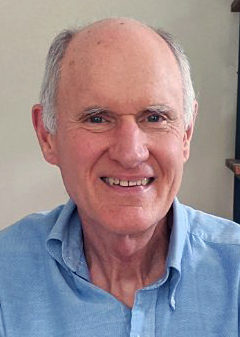
Byoungjun Kim, PhD , is a Research Assistant Professor at NYU Grossman School of Medicine with dual appointments in the Department of Surgery and the Department of Population Health . His academic work bridges clinical surgery and population-level health research, focusing on data-driven approaches to improve patient outcomes and healthcare delivery. His research interests include: Population Health Surgical Outcomes Research Health Services Research Epidemiology Biostatistics Dr. Kim’s methodological expertise supports interdisciplinary collaboration between surgical sciences and public health. Although no specific publications are listed in the provided text, his affiliations suggest a strong focus on quantitative analysis of health data, disparities in surgical care, and population-level intervention strategies. He has not been mentioned as receiving any scientific awards or leading independent grants in the provided content. Dr. Kim advises no students listed in the profile and is actively contributing to research initiatives within the Department of Surgery and Population Health. He is likely involved in collaborative research teams focused on surgical quality, healthcare policy, and data analytics, though specific labs or teams are not named.
Satoshi Takahama is an Adjunct Professor at the Laboratory for Environmental Spectrochemistry (LESC) within the School of Architecture, Civil and Environmental Engineering (ENAC) at École Polytechnique Fédérale de Lausanne (EPFL). He also contributes to teaching through the SSIE - Teaching unit at EPFL and serves on the PhD program committee for Civil and Environmental Engineering. His research is centered on the measurement, analysis, and modeling of atmospheric aerosols and their impacts on air quality and climate. Research Interests: Measurement and modeling of atmospheric aerosols Application of Fourier-transform infrared (FTIR) spectroscopy for aerosol characterization Functional group analysis of organic particulate matter Development of computational and chemometric tools for environmental data analysis Climate and air quality impacts of biomass burning and urban emissions His recent publications reflect a strong focus on the chemical evolution of aerosols, instrumental development (e.g., electrostatic collectors), and data-driven approaches to emission inventories and monitoring. These works span atmospheric chemistry, environmental engineering, and analytical method development. Scientific Awards: No awards listed in the provided text. Advising and Grants: Supervised multiple PhD students including Virginia Tadei, Gözde Bitlislioglu, Eirini Boleti, Nikunj Dudani, Giulia Ruggeri, and Amir Yazdani. Involved in large-scale monitoring network studies (e.g., IMPROVE, SEARCH) and international field campaigns (e.g., Cal-Mex, SOAS). Contributed to the development of open platforms such as AIRSpec for infrared spectroscopy analysis. Labs and Teams: Laboratory for Environmental Spectrochemistry (LESC), EPFL Collaborations with research groups in the U.S. and Europe on aerosol characterization and modeling Active participant in international conferences and research networks in aerosol science.
Dr. Joachim Kopka is a Research Group Leader at the Max Planck Institute of Molecular Plant Physiology in Potsdam, Germany, where he heads the Applied Metabolome Analysis group. His research focuses on developing cutting-edge technologies for metabolome and fluxome analysis, particularly GC-EI-TOF-MS-based metabolite profiling and stable isotope labeling techniques. He investigates plant physiological responses to environmental stimuli, with emphasis on root metabolism and stress adaptation mechanisms. Kopka completed his Staatsexamen (1988) and PhD (1992) at Wilhelms University of Münster, followed by postdoctoral research in the USA and Germany. He co-founded Metanomics GmbH before joining MPI-MP in 1996, where he established his research group in 2001. He received his Habilitation from the University of Potsdam in 2009. His research integrates metabolomics, isotope labeling, and computational biology to study: Metabolic plasticity in response to environmental changes Development of GC-MS and data analysis pipelines (e.g., TagFinder software) In vivo stable isotope labeling for flux phenotyping Plant-microbe interactions and stress physiology Kopka's recent publications demonstrate strong emphasis on metabolic adaptations to abiotic stresses (drought, cold), plant-microbiome interactions, and advanced analytical methodologies. His work frequently combines metabolomics with proteomics and transcriptomics to unravel complex plant physiological processes. He leads infrastructure development for metabolome analysis and maintains collaborative projects across plant science disciplines. His group contributes to public resources like the Golm Metabolome Database (GMD), facilitating metabolite identification and data sharing in the scientific community.
Yi Zhu is a Professor of Marketing and holder of the Margaret J. Holden and Dorothy A. Werlich Endowed Professor at the Carlson School of Management, University of Minnesota . His work bridges Industrial Organization , Quantitative Marketing , and Chinese Economy with a focus on digital advertising, platform economics, and consumer search behavior. Education PhD in Business Administration, University of Southern California (2013) MA in Economics, University of British Columbia (2004) MA in Management, Shanghai Academy of Social Sciences (2002) BE in Industry Engineering, Shanghai University of Electric Power (1998) His research applies Industrial Organization to Marketing , examining online auctions , advertising mechanisms , media slant , and Chinese economic dynamics . Recently, he has explored two-sided platforms and surge pricing effects on consumer complaints. Publications span Marketing Science , Management Science , and Journal of Marketing Research , with work highlighted in Harvard Business Review and Forbes . His advertising research includes auction design, TV-to-online search interactions, and budget-constrained advertiser behavior. Scientific Awards Winner of John D.C. Little Award (2015) Winner of Don Morrison Long Term Impact Award (2023) 3M Nontenured Faculty Grant (2013-2016) Marketing Science Institute (MSI) Scholar (2022, 2023) Holds the Carlson School Outstanding Teaching Award (2022) and serves as Associate Editor for Marketing Science . Teaching includes Marketing Analytics for MBAs and Marketing Strategy for undergraduates, with consistently high instructor ratings. Referees for top journals like Management Science and Information Systems Research .
Dr. Natacha Sarah Alexandra Niemants is an Associate Professor at the Department of Interpretation and Translation of the University of Bologna in Forlì since 2021. She holds a PhD in Comparative Languages and Cultures from the University of Modena and Reggio Emilia and serves as Director's Delegate for Orientation. Her academic affiliation spans multiple institutions including Ecole Normale Supérieure de Lyon through research collaborations. Scientific-disciplinary sector: L-LIN/04 (Language and Translation – French) / FRAN-01/B French Language, Translation and Linguistics Member of Doctoral College in Translation, Interpreting and Intercultural Studies Member of Association Italiana di Linguistica Applicata (AItLA) Executive Committee (2021-2016) Her research focuses on interpreting in healthcare, asylum and protection contexts, interpreter training methodologies, spoken language transcription and analysis, and multimodal communication. Through projects like ReACTMe, Smarterp, Linguacuisine, and Lancook, she has explored clinical interpreting dynamics, medical dialogue structures, and technology-assisted language learning. Professionally, she has served as referee for journals like MediAzioni and Journal of Legal Discourse , and contributed to conference proceedings on topics ranging from medical interpretation to digital kitchen language learning. Her awards include national and European research grants, and she maintains active roles in research groups Centro AIM and Laboratoire ICAR. As an educator, she emphasizes collaborative learning and has developed innovative approaches like the Conversation Analytic Role-Play Method (CARM) for interpreter training. She supervises thesis work and provides regular office hours both in-person and via Teams for students at the University of Bologna's French Studio 1 in Palazzo Montanari.
Gabriel Buchbinder is a Visiting Assistant Professor of Finance at the University of Oregon's Lundquist College of Business, affiliated with the Department of Finance. His research bridges finance and marketing, focusing on investor behavior and advertising impact. Research Interests: His work explores intersections of financial markets, behavioral economics, and marketing analytics. A key publication analyzes how Super Bowl commercials influence investor attention, reflecting his expertise in quantitative financial research. Publications: His study on advertising exposure and investor attention (2021) offers insights into market reactions through data-driven analysis, published in the Financial Planning Review . Contact: gbuch@uoregon.edu . Office located in Lillis 250C.
Hüseyin Ataseven is a full-time Lecturer at Karabuk University's School of Foreign Languages, specializing in Foreign Language Education. He earned his PhD in Measurement and Evaluation in Education (2023) from Ankara University, following a Master's degree (2020) and BA (2005) in the same field. PhD: Measurement and Evaluation in Education, Ankara University (2023) MSc: Measurement and Evaluation in Education, Ankara University (2020) BA: Foreign Language Education, Gazi University (2005) His research focuses on educational assessment, language testing, and statistical analysis in education. Recent studies examine configural frequency analysis in test patterns, rubric reliability, and the impact of AI perceptions on career choices. Develops placement test evaluation methodologies Analyzes university branding and institutional identity Investigates inter-rater reliability in assessment Collaborating with scholars from Ankara University and Recep Tayyip Erdoğan University, his work appears in international social sciences conferences (e.g., ICER, EGE, AICHSS). Despite active publication, no scientific awards or citations are recorded in YÖKSİS metrics.
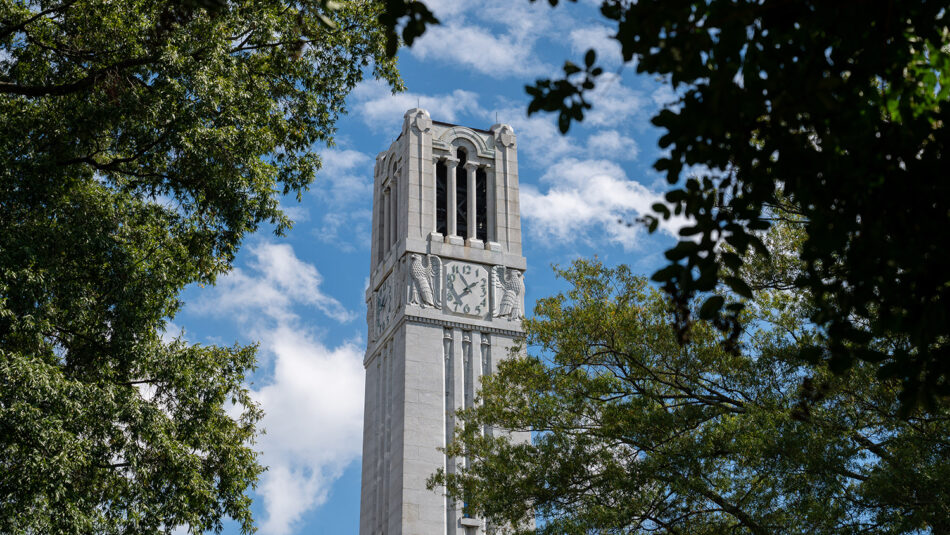
Dr. Joey Huang is an Assistant Professor of Learning, Design, & Technology in the Department of Teacher Education and Learning Sciences at North Carolina State University's College of Education. She is affiliated with the Digital Transformation of Education cluster through the Chancellor's Faculty Excellence Program. Her work bridges educational psychology and computing to create innovative learning environments that promote equity and collaboration in STEM education. Dr. Huang's research focuses on computational thinking, educational technology design, and broadening participation in STEM among underrepresented groups. She explores how hands-on, interdisciplinary activities—such as fiber crafts, robotics, and creative coding—can deepen students' understanding of computational concepts. Through NSF-funded projects like ReCrafting Computer Science, she integrates tangible crafts with computational thinking to create more inclusive pathways into computer science education. Her methodological approach combines both qualitative and quantitative methods to investigate collaborative learning, identity formation, and equity in technology-rich educational contexts. Dr. Huang's publication record shows a clear trajectory toward creating personalized, interactive learning experiences for K-12 and undergraduate students. Her recent work emphasizes virtual and augmented reality learning environments, gender-inclusive maker education, and AI-enhanced educational technologies. She has made significant contributions to understanding how learners co-design with AI in STEAM contexts and how interdisciplinary collaboration serves as a core skill in modern education. ACM CHI Honorable Mention AERA's Best Student Paper Best Paper Nomination for CSCL 2024 NSF CAREER Award recipient Dr. Huang has advised numerous research projects and collaborated extensively with colleagues across disciplines. Her work with the Friday Institute and Belk Center demonstrates her commitment to translating research into practical educational applications. She actively participates in professional development initiatives to help K-12 teachers integrate digital technologies into their classrooms, supporting NC State's mission of preparing educators for 21st-century classrooms.
Dr. Stavros Sakellariou serves as a Research Fellow (Marie Curie) in Civil and Environmental Engineering at Brunel University London's College of Engineering, Design and Physical Sciences. His expertise centers on geospatial analysis of natural disasters, particularly wildfires and droughts, leveraging remote sensing and AI for risk management. His educational background includes: PhD in Environmental Hazards Management and Spatial Planning, University of Thessaly (2016) MSc in Geospatial Technologies (Erasmus Mundus Joint Degree), 2016 MSc in Spatial Planning & Development, University of Thessaly (2010) MEng in Spatial Planning and Regional Development, University of Thessaly (2008) Dr. Sakellariou's research integrates geographic information systems , remote sensing , and artificial intelligence to address wildfire dynamics, drought/flood modeling, and climate change impacts. His work emphasizes spatial decision support systems for disaster prevention and resilience engineering in Mediterranean ecosystems, with significant contributions to early warning frameworks and urban-wildland interface safety. Recent publications reveal a concentrated focus on wildfire risk assessment (40% of works), drought monitoring (30%), and climate adaptation modeling (20%), predominantly utilizing satellite data fusion and spatiotemporal analytics. Key innovations include optimization methods for firefighting resource deployment and vulnerability assessments of agroecosystems. His accolades include: Marie Skłodowska-Curie Postdoctoral Fellowship (FIREWISE project, 2024) 7 national/international scholarships and awards With 11.5 years of teaching experience across undergraduate and master's programs at Greek universities, he has contributed to 8 multi-partner research projects on disaster management. His service includes reviewing for 25+ journals and guest-editing special issues on natural hazards. Current work centers on the FIREWISE project's integrated framework for proactive wildfire resilience.
David R. Gallagher is an Adjunct Professor of Finance at Bond University and a globally recognized scholar with expertise in investment management, capital markets, and superannuation. Affiliated with the Centre for Data Analytics at Bond Business School, he has held senior roles such as CEO of the Centre of Excellence in International Finance and Regulation (CIFR) and Professor positions at UNSW, Macquarie University, and the University of Technology Sydney. His research bridges academic and industry applications, focusing on retirement funding solutions, hedge fund performance, and taxation impacts. PhD in Financial Economics from the University of Sydney (2001) Dr. Gallagher’s research spans the investment management industry, superannuation, and behavioral finance. He has published in top scholarly and practitioner finance journals, emphasizing translating academic insights into public policy and legal expert testimony. Recent projects include analyzing investor emotions, capacity constraints in hedge funds, and tax implications on fund returns. His recent publications highlight trends in behavioral finance, fund performance evaluation, and tax-driven investment strategies. Articles such as Do Emotions Influence Investor Behavior? (2025) and Capacity Constraints in Hedge Funds (2022) reflect his focus on practical applications of financial research. As a consultant and expert witness for industry and government, Gallagher has influenced regulatory and policy frameworks. He co-founded Plato Investment Management and contributed to innovative fund offerings like emulation processes for large institutions. Notable affiliations include the Centre for Data Analytics at Bond Business School and the RoZetta Institute, where he co-leads the Retirement Income Solutions CRC Bid. His career, spanning over two decades, demonstrates a commitment to advancing global financial practices through rigorous analysis and industry collaboration.
Dr. Tomasz Malec is an Associate Professor at the International University of Sarajevo, specializing in architecture, urban planning, and cultural heritage. His research explores the intersection of cultural identity, historical preservation, and spatial development, with a focus on Jewish urbanism, Ottoman architectural influences, and Neolithic settlements. He has contributed extensively to academic writing, research methodology, and architectural pedagogy. His work spans topics such as Martian habitat design, green infrastructure in historic districts, and revitalization strategies for urban centers. Notably, he has studied the architectural evolution of Kazimierz (Cracow's Jewish district) and the impact of intangible cultural elements on built environments. While his publications emphasize theoretical frameworks and empirical studies, specific scientific awards or student advisement details are not mentioned in available records.
Christoph Hönnige is Professor and Chair for Comparative and German Politics at the Institute of Political Science, Faculty of Philosophy, Leibniz University Hannover. He also holds leadership roles including Chair of the Joint Examination Committee for Political Science degree programmes, Deputy Director and Deputy Managing Director of the Institute, and represents professors on several faculty bodies. He is additionally affiliated with the Leibniz Center for Science and Society (LCSS) and the Center for Inclusive Citizenship (CINC). Education PhD, University of Potsdam (supervisors: Herbert Döring & André Kaiser) Graduate studies, University of Konstanz Research Focus Hönnige’s scholarship centres on three interconnected areas: Judicial Politics (comparative analysis and the German Federal Constitutional Court), Legislative Politics (expert consultation and decision-making under institutional constraints), and Higher Education (ethics, administration, and student behaviour). Across these fields he investigates how formal and informal institutional rules shape individual and collective behaviour, and how citizens’ trust in institutions and decision-making procedures is formed and maintained. Recent Publication Trends Since 2020 his peer-reviewed output has addressed four principal themes: (1) governance and organisational diversity in German universities, (2) temporal strategies in bicameral legislatures, (3) legitimacy and public perceptions of constitutional courts, and (4) integrity and assessment practices in digital higher-education settings. Methodologically, the work blends large-N quantitative analysis, survey experiments, and text mining, often with cross-national comparative designs. Scientific Awards & Recognitions While no standalone prizes or medals are explicitly listed, Hönnige’s continuous funding by the German Research Foundation (DFG)—including co-leadership of the project "The Federal Constitutional Court as a Veto Player" —testifies to peer recognition of his research excellence. Advising & Grants As principal investigator on the DFG-funded project on the Federal Constitutional Court he supervises doctoral and post-doctoral researchers. He also mentors BA and MA thesis students through weekly colloquia and is responsible for curricular design within the Politics programmes at Hannover. Labs & Research Groups He leads the Comparative and German Politics research group housed in the Institute of Political Science, coordinates the Constitutional Court Database (CCDB) project, and collaborates closely with interdisciplinary teams at LCSS and CINC that focus on science-society relations and inclusive citizenship respectively.
Alan Ball is Professor of History in the Department of History at Marquette University's College of Arts and Sciences. His office is located in Sensenbrenner Hall, 303F, Milwaukee, WI. Specializing in Soviet history and Cold War studies, he has maintained a dual scholarly focus through traditional historical research and contemporary judicial analysis via his influential SCOWstats blog . His research interests span Soviet historical demography, Russian-American cultural relations, Cold War ideological constructs, and modern judicial statistics. Ball's unique SCOWstats project analyzes Wisconsin Supreme Court voting patterns across 104 years, with findings cited by journalists and Supreme Court justices in official opinions. The blog's innovative "Law-Firm Fantasy League" engages legal professionals through competitive analysis of judicial decisions. Notable publications include: Russia's Last Capitalists: The Nepmen, 1921-1929 (UC Press, 1987) And Now My Soul Is Hardened: Abandoned Children in Soviet Russia, 1918-1930 (UC Press, 1994) Imagining America: Influence and Images in Twentieth-Century Russia (Rowman & Littlefield, 2003) Liberty's Tears: Soviet Portraits of the 'American Way of Life' During the Cold War (Oxford UP, 2015) His recent statistical analyses of court polarization, unanimous decisions, and historical voting patterns demonstrate rigorous quantitative approaches to legal history. Ball's teaching portfolio includes courses on Russian history, the Cold War, and Soviet perspectives on America. Academic background: Ph.D. in History, University of North Carolina at Chapel Hill (1982)
Georg Spinner is a Lecturer and Head of the Research Group for Medical Image Analysis & Data Modelling at the Institute of Computational Life Sciences, Zurich University of Applied Sciences (ZHAW). His work integrates computational methods with biomedical research, focusing on stroke management, intracranial aneurysm risk modeling, and quantitative medical imaging. Primary affiliation: Zurich University of Applied Sciences Research focus: Bayesian networks, medical imaging, computational epidemiology Projects: GEMINI (digital twins for stroke), Stroke DynamiX (causal networks in stroke care), IVIM muscle activation studies Using Bayesian networks and advanced imaging techniques like IVIM DWI, his research aims to develop data-driven decision support systems for neurovascular diseases. He has contributed to modeling stroke health data and intracranial aneurysm risk stratification through international multicenter collaborations. His work spans computational biology, neuroinformatics, and digital health, with publications in journals like Medical Image Analysis and conferences including the International Conference on Computational and Mathematical Biomedical Engineering. Key methodologies include causal inference, dynamic disease modeling, and quantitative image analysis.
Page Anderson is a Professor at Georgia State University's College of Arts & Sciences , directing the ARTLab and specializing in clinical research on anxiety disorders. With a Ph.D. from the University of Georgia (1998), Dr. Anderson explores technology-based interventions like VR and mobile apps to improve mental health equity and treatment accessibility. Focuses on attention and cognitive biases in anxiety disorders Investigates cultural influences on mental health interventions Develops practical, accessible digital health solutions Committed to multidisciplinary approaches and mental health equity The research spans experimental studies examining attention biases, community-based data collection, and technology implementation in real-world settings. Recent publications analyze mindfulness apps, VR therapies, and culturally adapted digital interventions for anxiety. The ARTLab actively supports social justice initiatives, aligning with the Black Lives Matter movement. Current projects emphasize enhancing technology-based treatments' acceptability and effectiveness, particularly through: Multi-method assessment of cognitive biases Real-world implementation of mental health apps Culturally responsive digital intervention design Integration of translational neuroscience with community partnerships