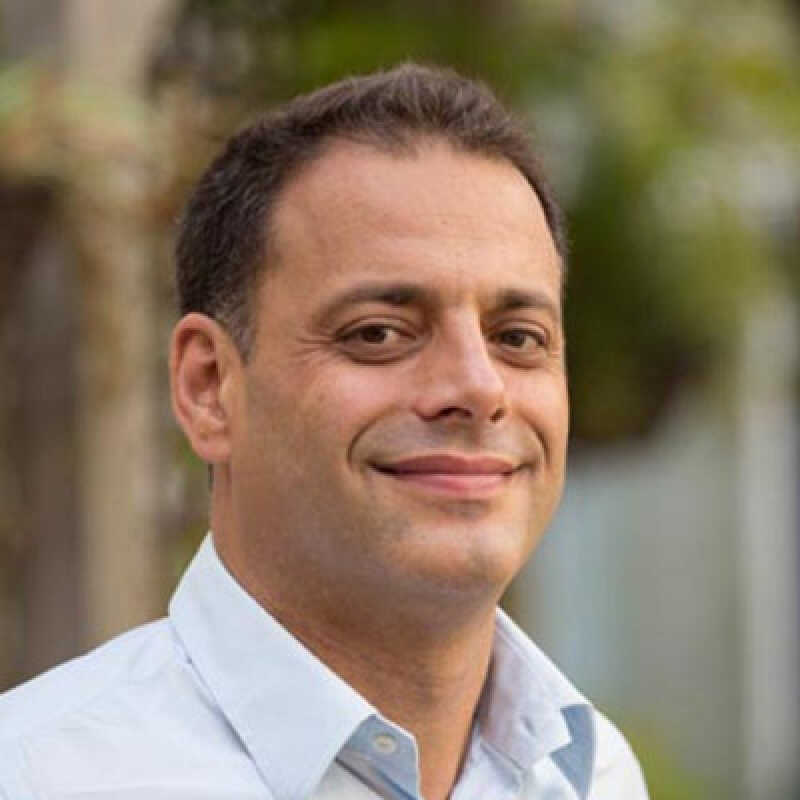
Nizar Allouch is Professor of Economics at the University of Kent's School of Economics. His research spans public economics, network economics, and financial market stability. Key research areas include welfare distribution in networked systems, public goods provision, and systemic risk in financial networks. His work employs game-theoretic approaches to model economic interactions in complex systems. Recent publications examine strategic defaults in financial networks, productivity measurement methodologies, and models of social conflict. Research consistently integrates network theory with economic policy analysis.
Dr. Anirban Mitra is Senior Lecturer in Economics at University of Kent's School of Economics, holding PhD from New York University. Researches economic drivers of conflict and redistribution policies. Research: Quantitative analysis of ethnic violence (India), resource redistribution in Nepal's Maoist conflict, and institutional impacts on public spending. Member of CESifo Network and Kent's Development Economics Research Centre. Teaching: Covers political economy, development economics, and advanced microeconomics.
Prof. Dr. Stefan Magen holds the Chair of Public Law, Legal Philosophy, and Law and Economics at the Ruhr University Bochum , Faculty of Law. His interdisciplinary research bridges legal doctrine, economics, and behavioral sciences, focusing on experimental legal philosophy, public competition law, and constitutional dimensions of religious freedom. Education: Studied Philosophy and Law at Goethe University Frankfurt and Ruhr University Bochum (1988–1997) M.A. in Philosophy (1996), Dr. iur. (2003) from Frankfurt Habilitation at University of Bonn (2010) with thesis "Justice as a Proprium of Law" Research Focus: Combines legal economics and behavioral analysis to examine normativity of law, fairness in governance, and church-state relations. Leads the Center for Law, Behavior, and Cognition and the DFG-CAPES project "Experimental Legal Philosophy: The Concept of Law Revisited" (2020–2023). Scientific Recognition: Recipient of the Walter Kolb Memorial Prize (2004) for his dissertation on corporate status and religious freedom Collaborative grants from DFG and international institutions Teaching: Offers advanced courses in analytical legal philosophy, constitutional law, and law and economics, delivered in English. Coordinates public law exam courses and seminars on behavioral legal studies.
Shin Dongsoo is a Professor of Economics at the Leavey School of Business, Santa Clara University. His research focuses on microeconomic theory, including agency theory, game theory, organizational economics, public economics, and industrial organization. Key topics include delegation, dynamic incentives, organizational flexibility, and price discrimination. He has published in top journals like the RAND Journal of Economics and Journal of Industrial Economics . Professor Shin has held visiting positions at renowned institutions such as the University of Mannheim and Humboldt University of Berlin. He teaches courses in Microeconomics, Game Theory, and Mathematical Economics. His work explores themes like bureaucratic loyalty in public sectors, vertical contractual structures, and strategic information management. Articles from 2024 highlight modern challenges in organizational control and incentive design, reflecting his sustained focus on applied theoretical frameworks. No scientific awards or grants are explicitly listed in the provided text. He advises no formally listed students, though his teaching role suggests academic mentorship.
Brady Baybeck is an Associate Professor in the Department of Political Science at Wayne State University, affiliated with the College of Liberal Arts and Sciences. His research focuses on urban politics, public administration, and public policy with a particular emphasis on election administration and political geography. He holds a Ph.D. from Washington University in St. Louis (1999). His research explores topics such as partisan election administration, spatial factors in voter behavior, and policy diffusion mechanisms across jurisdictions. Notable works include analyses of urban electoral reforms, provisional ballot systems, and the interplay between geography and political participation. Baybeck has taught advanced courses including Urban Public Policy, Statistics and Data Analysis in Political Science, and Philosophic Problems of Social and Political Inquiry. He has published extensively on election law, administrative equity, and urban governance, with a focus on empirical studies of voter behavior and institutional policy adoption strategies.
Budapest University of Technology and EconomicsHungary
Christopher Stapenhurst is a Research Fellow with expertise in Economics and Game Theory. He holds a PhD in Economics, an MSc in Economics, and an MSc in Applicable Mathematics. His professional experience includes serving as an Assistant Economist at the Office for National Statistics. Stapenhurst's research focuses on applying game-theoretic mechanisms to policy design, inequality analysis, and environmental economics. Education PhD Economics MSc Economics MSc Applicable Mathematics Research Interests Game Theory applications in industrial policy and environmental governance Inequality measurement through ordinal data analysis Anti-corruption mechanisms and principal-agent frameworks International cooperation dynamics for pollution reduction Mathematical modeling of economic stability Statistical inference for economic indices Article Trends Stapenhurst's publications demonstrate an interdisciplinary focus combining economics, mathematics, and environmental policy. His recent work (2024-2025) centers on international cooperation mechanisms for marine pollution reduction and industrial policy optimization using social risk preferences. Earlier studies (2021-2023) explore corruption deterrence through strategic information control and inequality analysis via median-preserving spreads. The research spans theoretical game theory, empirical economic analysis, and environmental economics applications.
Ofer Tchernichovski is a Professor of Psychology at Hunter College, CUNY, specializing in Animal Behavior, Cognitive Psychology, and Social Learning. His research focuses on vocal learning mechanisms in songbirds and their parallels with human speech development, including how sleep, cultural evolution, and social interaction shape communication. He leads the Laboratory of Social Learning & Cultural Evolution . Education: PhD in Zoology from Tel Aviv University. Research emphasizes cultural transmission in zebra finches, including song culture emergence, dopaminergic influences on monogamy, and the stepwise development of vocal syntax. His lab explores collective intelligence through virtual world experiments, such as analyzing ferry rating systems and crowd-sourced decision-making. Collaborations span neuroscience, computer science, and behavioral economics. Key contributions include demonstrating sleep’s role in song learning, developing recursive self-training for aphasia therapy, and uncovering shared rhythmic categorization between birds and humans. He has pioneered techniques like vocal robot interaction and functional MRI in avian brains. Lab activities involve large-scale online experiments (e.g., using Unity and PsyNet) to study social learning dynamics and governance challenges. Ongoing projects address constraints on cultural evolution, free-rider incentives, and computational modeling of behavioral systems.
Joaquim Vidiella Martin is an economist and Research Fellow at the University of Oxford, affiliated with the Centre for Health Service Economics and Organisation in the Nuffield Department of Primary Care Health Sciences. He also holds a Visiting Fellow position at the Erasmus School of Economics in Applied Economics. His work bridges economics and public health, focusing on empirical analysis of health systems and inequalities. His research interests center on applied micro-econometrics, health economics, labour economics, and public health . A key focus of his current work is understanding provider behaviour in medical settings and the socioeconomic determinants of health outcomes, particularly in early life and long-term care. His research contributes to UN Sustainable Development Goals related to good health and well-being and reduced inequalities. The recent trends in his publications (2021–2024) demonstrate a strong focus on perinatal health, income-related disparities in mortality, and systemic inequities in long-term care. Using robust econometric methods, his work analyzes large datasets to inform policy, especially in universal healthcare systems. Topics include maternal migration and infant mortality, income gradients in perinatal outcomes, and hidden inequities in public long-term care provision. While no specific scientific awards are listed in the available text, his publications in high-impact journals such as JAMA Network Open and the Journal of the Economics of Ageing reflect recognition in both medical and economic research communities. His collaborations with researchers like Been, Van Doorslaer, García-Gómez, and Van Ourti indicate active engagement in interdisciplinary research networks. Joaquim Vidiella Martin completed his PhD in Economics at the Erasmus School of Economics and the Tinbergen Institute. His doctoral thesis, titled Levelling the Playing Field: Inequalities in early life conditions and policy responses , underscores his long-standing commitment to addressing social and health inequities through economic analysis. There is no mention of students he may have advised or grants he has led, but his research output suggests active involvement in funded research projects. He is based at the Centre for Health Service Economics and Organisation, a leading research group focused on improving health system efficiency and equity. His work involves close collaboration with public health institutions and economists across Europe, particularly in the Netherlands and the UK. This network supports his research on cross-national health policies and outcomes.
Elena ŽÁRSKA is a Professor and Deputy Head of the Department of Public Administration and Regional Development at Bratislava University of Economics and Business’s Faculty of Economics and Finance. Her work focuses on public administration systems, local governance, and regional development strategies. She has held significant academic leadership roles, including membership in the University Senate and editorial boards of journals like Region Direct . Her research emphasizes the interplay between fiscal decentralization, municipal financial management, and sustainable development. Key themes include municipal financial innovation, inter-municipal cooperation, and creative economy policy frameworks. She has led major research projects such as ‘Manažment výkonnosti v miestnej samospráve’ and ‘KRENAR - Kreatívna ekonomika,’ addressing governance efficiency and knowledge-based regional growth. ŽÁRSKA’s publications span textbooks like Verejná správa (2016) and studies on urban governance, decentralization effects, and municipal creditworthiness. She collaborates with international institutions and has contributed to policy analyses for the Slovak Academy of Sciences and the European Union. Her professional networks include roles in the Slovak Society for Regional Science and the Association of Local Economists of Slovakia. She teaches courses on public administration theory, urban policy, and municipal finance, reflecting her dual focus on academic instruction and practical governance challenges.
Marco Pelliccia is an Assistant Professor at the Edinburgh Business School, School of Social Sciences, Heriot-Watt University, United Kingdom. He is actively engaged in research and teaching in economic theory, with a focus on strategic behavior in networked environments. He teaches courses such as Intermediate Economics I, Introduction to Economic and Financial Analysis, and Public Choice and Welfare Economics, and is currently accepting PhD students. His research lies at the intersection of microeconomics, game theory, and network economics. Key interests include mechanism design, defense of network structures, and investment in security within interconnected systems. His work applies theoretical models to real-world problems such as decentralized defense and trade network vulnerabilities. His recent publications explore the economics of network defense and centrality in trade networks, showing trends toward applying game-theoretic tools to security and allocation problems in complex systems. These works emphasize equilibrium behavior, strategic interdependence, and efficiency in decentralized settings. Decentralized Defence of a (Directed) Network Structure (2020) Centrality in Trade Networks and Investment in Security (2016) Marco Pelliccia has delivered multiple invited and oral presentations at international conferences such as Sunbelt 2024, Coalition Theory Network 24, and the Conference on Economic Design. He is actively involved in the academic community, particularly in forums related to economic theory and institutional design. While no grants or specific student names are listed, his supervision of PhD students is explicitly noted, indicating active mentorship. He is associated with the research ecosystem at Heriot-Watt University, contributing to the intellectual life of the Edinburgh Business School through teaching, research dissemination, and participation in academic networks focused on economic design and coalition theory.
Brian G. Knight is a Professor of Economics at Brown University and a Research Associate at the National Bureau of Economic Research (NBER). He previously held roles at the Federal Reserve Board and served as visiting faculty at Yale and Harvard. His research focuses on political economy, fiscal federalism, and local public finance, examining how political factors influence policy outcomes. Education: PhD in Economics, University of Wisconsin-Madison (2000) MS in Economics, University of Wisconsin-Madison (1997) Bachelor of Science, Miami University of Ohio (1992) Research Interests: Prof. Knight investigates topics such as the geographic distribution of federal funds, school district consolidation, and socially optimal redistricting. His work merges empirical analysis with theoretical frameworks to address questions of governance and policy design. Recent studies include analyses of immigration's impact on crime, media bias under authoritarian regimes, and the mechanics of college admissions systems. Notable Contributions: Publications span journals like American Economic Journal , Journal of the European Economic Association , and Management Science . Key themes include the limits of propaganda, tuition distortions in higher education, and electoral dynamics. His work frequently employs novel datasets (e.g., crime gun tracing, social media analytics) to quantify policy impacts. Awards & Grants: NSF Award for 'Socially Optimal Redistricting' ($264,000, 2005-2007) Salomon Research Award for school district merger research ($15,000, 2005) National Tax Association's Outstanding Dissertation Award (2001) Teaching & Mentorship: Teaches courses including ECON 1620 (Econometrics) and ECON 2260 (Political Economy). While no formal advisees are listed, his collaborative work with co-authors like Ruben Durante and Nathan Schiff reflects active research partnerships. Affiliations: Active in NBER and Brown's Department of Economics. Collaborations include projects with Geoffroy de Clippel and Stefano DellaVigna, reflecting interdisciplinary engagement in political economy and applied economics.
Ms. Li Li is a Lecturer in Translation and Interpreting at the University of Stirling's Department of English Studies. Her expertise spans legal, business, and conference interpreting, with a focus on bridging healthcare communication gaps through Video-Mediated Interpreting (VMI). She holds NRPSI registration and is a member of ITI and CIOL. Research interests include public service interpreting quality, healthcare interpreting technology, and interpreter professional development. Her CHASE/AHRC-funded doctoral work investigated interpreting provision in UK maternity settings, emphasizing VMI's role in language access and healthcare delivery. Professionally, she contributes to legal interpreting in Crown and Family Courts, pharmaceutical conference interpreting, and luxury goods sector business interpreting. No specific grants or labs are detailed in the provided information.
Dr. Roxanne Raabe is a Researcher at the Institute for Public and Regional Economics within the Faculty of Business and Economics at the University of Münster. She is based at Am Stadtgraben 9, Münster, and can be reached via roxanne.raabe@wiwi.uni-muenster.de. Her work focuses on public economics, political economy, and regional development, with a particular emphasis on how diversity impacts public goods provision in democratic versus non-democratic systems. Dr. Raabe was awarded the prestigious Dr. Andreas Dombret Doctoral Prize by the University of Münster in June 2025, recognizing her outstanding contributions to economic research. Her 2024 publication in Kyklos explores critical questions about governance structures and resource allocation in diverse societies. She contributes to academic leadership through her role in the Institute for Public and Regional Economics and participates in academic programs like the Master in Economics.
Prof. Stefan Helber is a full Professor (W3) and Director of the Institute of Production Management at Leibniz University Hannover. His roles include Executive Director of the Institute, representative in academic committees (e.g., Curriculum and Teaching Committee), and member of the Cluster of Excellence SE²A. Education: PhD (1993) and Habilitation (1998) from Ludwig-Maximilians-Universität München Research focuses on stochastic production systems, logistics optimization, call center management, and automated production systems Recent work emphasizes regeneration processes, dynamic charging infrastructures, and stochastic flow line analysis. His research integrates operations research methods with practical industrial applications, particularly in manufacturing and service systems. Key publications include works on buffer allocation, lot sizing, and call center modeling, with a focus on optimization under uncertainty. He has supervised numerous theses across diploma/master/bachelor levels.
Dr. Florian Heine is an Assistant Professor at the School of Business and Economics, Vrije Universiteit Amsterdam, and a candidate fellow at the Ethics, Governance and Society program at Tinbergen Institute. He holds a PhD from Maastricht University (2017). His research focuses on experimental economics, behavioral economics, and public management, particularly examining how institutions shape cooperative or competitive decisions in uncertain environments with limited coordination channels. He investigates psychological mechanisms like parochial altruism and social identity to explain modern phenomena such as third-party punishment and pro-social behavior. His recent work explores moral foundations in public service motivation, vaccine hesitancy reduction strategies, and intergroup conflict dynamics through experimental methodologies. He teaches courses on ethics and academic skills. His datasets, available via DANS, include studies on volunteer's dilemma experiments and team contest dynamics.