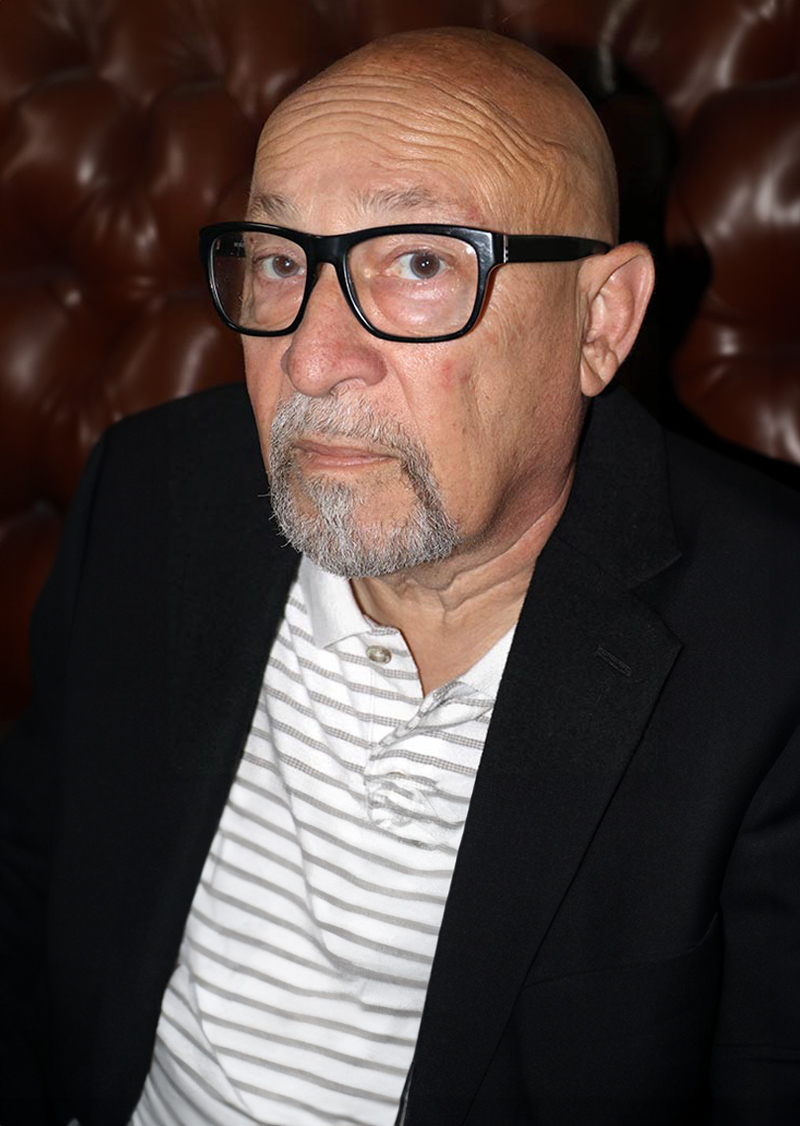
Selmer Bringsjord is a Professor of Cognitive Science, Computer Science, Logic & Philosophy, and Management & Technology at Rensselaer Polytechnic Institute (RPI). He serves as Director of the Rensselaer AI & Reasoning (RAIR) Lab and Graduate Program Director in Cognitive Science. His research spans AI, cognitive science, formal logic, and ethics, with a focus on machine ethics, computational creativity, and conscious AI. Bringsjord has authored 6 books, over 260 refereed papers, and secured $28M+ in sponsored research. He has supervised 20 PhD and 19 MS students. Notable contributions include founding machine ethics, developing Psychometric AI, and the Λ measure for cognitive consciousness. His work bridges philosophy, computer science, and robotics, with media appearances across global platforms. Education: PhD in Philosophy from Brown University (1987), BA in Philosophy from the University of Pennsylvania (1981). Administrative roles include Department Chair of Cognitive Science (2002–2016) and Director of RAIR Lab since 2002. Awards include patents, grants, and a Best Paper Award at AGI 2024. Teaching spans 40 years in formal logic and AI. Ongoing projects include ethical AI frameworks, AGI, and cognitive consciousness models.
Anthony Cacace is Professor of Audiology in the Department of Communication Sciences and Disorders at Wayne State University's College of Liberal Arts and Sciences. Formerly tenured faculty at Albany Medical College in Surgery and Neurology, he directed clinical programs including the Audiology Department and Hearing Rehabilitation Center. His expertise spans psychoacoustics, electrophysiology, vestibular assessment, and neuroimaging techniques for tinnitus and auditory processing disorders. Dr. Cacace's educational background includes: B.S. in Speech Pathology and Audiology, State University of New York (1974) M.S. in Audiology, Syracuse University (1975) Ph.D. in Communication Sciences and Disorders/Audiology, Syracuse University (1988) Post Doctoral Fellowship in Neurophysiology, Wadsworth Center (1987) His research focuses on Central Auditory Processing Disorder, tinnitus mechanisms, and noise-induced vestibular dysfunction using TMS, MRI, and electrophysiological methods. Current work investigates blast injury consequences in veterans through VA/DoD-funded projects. Recent publications reveal strong emphasis on tinnitus neuroimaging, auditory processing disorder diagnostics, and vestibular-blast injury relationships. His work integrates diffusion tensor imaging, nanotheranostics, and electrophysiological biomarkers to advance diagnostic and therapeutic frameworks. Scientific recognition includes: ASHA Fellowship (1997) American Academy of Audiology Fellowship (1991) As primary capstone supervisor, Dr. Cacace mentors graduate students while leading multi-institutional research: VA Merit Awards ($1.5M+) on tinnitus and vestibular blast injuries NIH R21 nanotheranostics grant ($141k) Wayne State Omnibus Grants for vestibular/gait equipment He collaborates with Wayne State's Neurosciences Institute, VA Medical Center, and University of Michigan teams studying veteran auditory-vestibular health.
Gavriel Salvendy is a University Distinguished Professor at the University of Central Florida's College of Engineering and Computer Science. He also holds emeritus positions at Purdue University and Tsinghua University. His research focuses on human aspects of engineering systems, ergonomics, and human-computer interaction. Salvendy has authored/co-authored over 585 publications and 54 books, and supervised 68 PhD students. Education: PhD in Engineering Production from the University of Birmingham (1968). Earlier degrees include an M.Sc. and Graduate Diplomas in Industrial Psychology and Business Administration from Birmingham and Brunel University. Research Interests: Human factors in advanced technologies, ergonomics in manufacturing, usability engineering, and cross-cultural design. His work emphasizes optimizing human-computer interaction and fostering creativity in engineering systems. Articles Trends: Recent work addresses aging populations' technology needs, artificial intelligence ethics, and global HCI challenges. Early contributions focused on FMS supervision, CAD systems, and expert systems. Awards: 包括John Fritz Medal (2007), Friendship Award (2006), and election to the National Academy of Engineering (1990). He has advised 31 countries on human-system design and led major initiatives like founding the International Journal on Human-Computer Interaction. Professional Roles: Served as Chair of Tsinghua's Industrial Engineering department and founding president of Florida's Academy of Science, Engineering, and Medicine. Active in over 100 conferences and editorial roles for top journals. Labs/Teams: Collaborated extensively with global institutions on smart home interfaces, driver behavior studies, and virtual reality ergonomics. His team pioneered usability evaluations for mobile devices and cross-cultural e-commerce.
Dr. Kevin Keen is a Professor in the Department of Mathematics and Statistics at the University of Northern British Columbia (UNBC). He joined UNBC in July 2004 and was promoted to full Professor in July 2015. Dr. Keen holds dual accreditation as a Professional Statistician (P.Stat.) from both the Statistical Society of Canada and the American Statistical Association, and is a Fellow of the Royal Statistical Society. His academic career includes visiting appointments at the Netherlands Institute for Health Sciences (Erasmus University, Rotterdam) and the Faculty of Medicine at Leiden University. Dr. Keen's research focuses on the development of novel statistical techniques and cutting-edge computer software for the analysis of multivariate data in the study of complex diseases. His expertise spans clinical epidemiology, data science, genetic epidemiology, molecular epidemiology, and multivariate statistics. He has made significant contributions to statistical graphics methodology, particularly through his widely used textbook "Graphics for Statistics and Data Analysis with R." His work bridges statistical theory with practical applications in biomedical research, especially in rheumatology and autoimmune diseases. Analysis of Dr. Keen's publication record reveals a strong focus on statistical methodology development applied to complex biomedical problems, particularly in rheumatology and autoimmune diseases. His work demonstrates consistent integration of advanced statistical techniques with clinical research questions, with particular emphasis on multivariate analysis of complex disease patterns. The trajectory of his research shows increasing specialization in statistical applications for systemic sclerosis, lupus, and related conditions, while maintaining strong contributions to fundamental statistical methodology and educational resources. Professional Statistician (P.Stat.) by Statistical Society of Canada Professional Statistician (PStat) by American Statistical Association Fellow of the Royal Statistical Society Pen and Scroll Award of the American Academy of Otolaryngic Allergy (2005) Certificate of Teaching Excellence from the University of Manitoba (1996) Commemorative Medal for the 125th Anniversary of the Confederation of Canada (1993) Dr. Keen actively supervises graduate students in PhD Health Sciences, MSc Mathematics, and BSc Mathematics programs at UNBC. He serves as a statistical consultant for clinical trials and public health intervention studies, applying his expertise in research design and analysis. His consulting work spans multiple domains including rheumatology, pulmonary medicine, and genetic epidemiology. Dr. Keen is available as a media expert on statistical matters and has contributed to developing standardized health assessment tools through his involvement with World Health Organization classification systems.
Eduardo Luís Cardoso serves as Assistant Professor at the Faculty of Biotechnology and Researcher at the Centre for Biotechnology and Fine Chemistry (CBQF), Universidade Católica Portuguesa (UCP Porto). He additionally holds leadership positions as Executive Director of the EBRI Center for Knowledge Valorization and Transfer and Coordinator of Services to Companies at the Faculty of Biotechnology. His educational background includes a PhD in Innovation from the School of Engineering of Minho University (awarded January 1, 2005), a Master's in Industrial Management from the Faculty of Engineering of Porto University (1992), and a Bachelor's in Chemical Engineering from the same institution (1986). PhD in Innovation, School of Engineering of Minho University Master in Industrial Management, Faculty of Engineering of Porto University (1992) Bachelor in Chemical Engineering, Faculty of Engineering of Porto University (1986) Dr. Cardoso's research spans Innovation, Individual and Organizational Learning, Knowledge Management, and Entrepreneurship. His work bridges academic theory with practical applications across multiple sectors. His fingerprint analysis reveals significant contributions to Entrepreneurship (100%), Electronic Learning (54%), Knowledge Transfer (51%), Technology (51%), and Technology Transfer (47%). His recent publications demonstrate a strong focus on technology transfer in agri-food systems, knowledge sharing in bioproducts communities, e-learning assessment methodologies, and sustainable agricultural solutions. His research often integrates educational technology with business innovation, creating practical frameworks for knowledge valorization. Technology transfer frameworks for agri-food sector innovation Knowledge sharing mechanisms in bioproduct communities E-learning assessment tools for educational technology Sustainable agricultural solutions through soil microbial diversity Phytomanagement strategies for contaminated land rehabilitation Dr. Cardoso has coordinated numerous R&D+I projects funded by programs including RTD FP, PRIMA, and ERASMUS+. His portfolio includes T-GREEN (Transforming Graduate Education), SFT-EDIH (Smart Sustainable Farms), DIP4Agri, YouARIn, and 3Boost projects, demonstrating his commitment to sustainable innovation and knowledge transfer. He serves on boards at the Faculty, CBQF Research Center, and AESBUC University-Industry Association. Previously, he consulted for Portugal's Education Ministry Evaluation Office and coordinated a Competence Center for ICT in Education for 10 years as part of the National Network supporting ICT in Schools. He was also part of a spinoff team established in 2009 that now operates internationally in Laboratory Technologies.
Daniel Miller is a Lecturer in Psychology at James Cook University, specializing in the social psychology of digital media, sexuality, and mental health. He holds a PhD from James Cook University (2019) and is an Early Career Researcher actively involved in research on pornography's societal impacts and deepfake detection. His editorial roles include membership on the boards of Asian Journal of Social Psychology and Psychology & Sexuality . Research Groups: International Sex Survey (42-nation collaboration), JCU Digital Wellbeing Group Teaching: Coordinates PY2107 (Experimental Studies) and PY3106 (History of Psychology) His research spans cross-cultural studies of sexuality, mental health during pandemics, and educational innovations in statistics teaching. Notable grants include developing a 'Bonus Chats' podcast series (2024) and a psychology resource library (2024). Awards: Inclusive Practice Award (2017), ECR Open Access Champion (2020, 2022). He is affiliated with APA Divisions 2 & 26 and the Australasian Society for Computers in Learning in Tertiary Education.
Dr. Joel Goldberg is an Associate Professor in the Department of Psychology at York University's Faculty of Health. His research focuses on mental health stigma, social cognition in psychiatric disorders, loneliness mechanisms, and psychiatric rehabilitation strategies. He has contributed to psychometric instrument development, including the Loneliness Automatic Thoughts Questionnaire and the Anti-Mattering Scale. His work spans forensic psychiatry, autism spectrum disorder, schizophrenia, and addiction studies. Key research themes include understanding how mental health conditions affect interpersonal perceptions and quality of life, particularly through neurocognitive and electrophysiological methods like ERP studies. He explores stigma's impact on family members of individuals with mental illness and investigates substance use risks in vulnerable populations. His recent studies emphasize longitudinal symptom-cognition relationships in schizophrenia and the role of social media in shaping public attitudes towards mental health. Publications span over two decades, with consistent output since 2001. Notable works address neuropsychological profiles, behavioral interventions, and clinical assessment tools for psychiatric populations. His interdisciplinary approach integrates neuroscience, clinical practice, and public health policy recommendations.
Anu Asnaani is an Associate Professor in the Department of Psychology at the University of Utah's College of Social and Behavioral Science. She directs the Treatment Mechanisms, Community Empowerment, & Technology Innovations (TCT) Lab. Her research examines mechanisms of change in anxiety disorders, OCD and PTSD, with emphasis on emotion regulation and cultural factors. Her work focuses on improving mental health outcomes for diverse communities globally and leveraging technology for innovative assessment and treatment approaches. She has developed culturally responsive frameworks for trauma interventions and health equity initiatives, with significant work in Caribbean nations and diverse U.S. communities. Dr. Asnaani has received multiple honors including the APA Division 52 Outstanding Early Career Psychologist Award. Her publications reflect a strong focus on cross-cultural adaptation of evidence-based treatments, technological innovations in mental health, and addressing healthcare disparities. Outstanding Early Career Psychologist Award, APA Division 52 (2020) Early Career Achievement Award, ABCT Anxiety Disorders SIG (2017) NIH Loan Repayment Program Award (2017) NIMHD Research Institute Scholar (2016) Emerging Professional - Contributions to Research Award, APA Division 45 (2015)
Christopher Lonigan is a Distinguished Research Professor and Associate Director at the Florida Center for Reading Research, affiliated with Florida State University's Department of Psychology. He earned his degree from the State University of New York at Stony Brook in 1991. His research bridges developmental psychopathology and early literacy, examining emotional/mototional influences on child development and interventions for at-risk preschoolers. Research interests center on: Developmental psychopathology : Emotional/motivational factors in child psychopathology and PTSD Early literacy : Language acquisition, literacy interventions, and socio-behavioral correlates Temperament studies : Hierarchical models of affect and self-regulation Cross-linguistic research : Bilingual literacy development and transfer effects Publication analysis (2012-2014) reveals three dominant themes: self-regulation/executive function in academic readiness (6 publications), bilingual/language development mechanisms (5 publications), and diagnostic tools for behavioral/cognitive assessment (4 publications). Methodologically, meta-analyses, longitudinal designs, and randomized interventions are prominent. No scientific awards are mentioned in the source material. Advising includes supervision of eight graduate students co-authoring publications. Current recruitment focuses on a graduate student for Fall 2026. Grant activities are not detailed. Lab work spans: Developmental psychopathology: Self-regulatory capacities and emotional influences Early literacy: Typical/at-risk development and intervention efficacy Integrated studies on literacy-behavior connections (e.g., ADHD-literacy links)
Chris Schatschneider serves as Professor and Associate Director of the Florida Center for Reading Research at Florida State University, focusing on reading development and learning disabilities research. His educational background includes: Ph.D. from Case Western Reserve University (1995) His research spans Educational psychology , Learning disabilities , and Reading development , emphasizing early identification of at-risk readers through skill assessment. He maintains a strong focus on quantitative methodologies including hierarchical linear modeling and item response theory for educational measurement. Publication trends (2013-2024) reveal dual emphases: genetic/environmental influences on reading (via Florida Twin Project analyses) and methodological innovations in assessment design and statistical modeling for educational research. No scientific awards were documented in the source material. He mentors undergraduates through DIS programs involving Zoom-based data collection for reading experiments, though graduate recruitment is inactive for Fall 2024. Grant details were not specified. The Schatschneider Lab operates within the Florida Center for Reading Research, investigating reading skill development, disability prediction, and advanced quantitative methods through collaborative university-wide initiatives.
Surendra N. Singh serves as the AT&T Foundation Professor in the Department of Marketing and Business Law at the School of Business, University of Kansas. His academic career spans over three decades with research focusing on advertising effectiveness, consumer cognition, and digital marketing interfaces. His educational background includes: Ph.D. in Business from the University of Wisconsin, Madison M.S. in Marketing from the University of Wisconsin, Madison B.S. from Benaras Hindu University, India Singh's research investigates how exposure, emotional states, and design elements influence consumer responses. Key areas include mere exposure effects in advertising, multimedia ad effectiveness, program-induced emotion impacts on memory, bilingual advertising, web usability, and employee affective displays in service settings. His work bridges psychological theory with practical marketing applications, particularly in digital environments. Analysis of his publication history reveals consistent contributions to top-tier journals like the Journal of Marketing and Journal of Marketing Research. Recent work (2024-2019) examines online rating systems, payment method psychology in charitable giving, and emotional color effects in advertising. Earlier research (2017-1996) established foundational insights into web perception, accent bias in service encounters, and memory mechanisms in advertising. His scholarship demonstrates sustained focus on consumer cognition across traditional and digital marketing contexts.
John C. Norcross, Ph.D., ABPP, is the Distinguished Professor of Psychology at The University of Scranton and an adjunct professor of psychiatry at SUNY Upstate Medical University. He holds licensure as a board-certified clinical psychologist in part-time practice. His expertise spans behavior change, psychotherapy integration, and addiction treatment, with over 300 publications and 22 books, including Changeology . He served as past-president of APA’s Divisions of Psychotherapy and Clinical Psychology, and has been a council representative and board member for key psychological organizations. Recognized as Pennsylvania’s Professor of the Year, he is frequently cited in major media for his research on therapy relationships, evidence-based practices, and behavior modification. His work emphasizes therapist responsiveness, client preferences, and transdiagnostic interventions. Education: B.A., Rutgers University M.A. & Ph.D., University of Rhode Island Clinical Internship, Brown University School of Medicine Research Focus: Dr. Norcross investigates the efficacy of psychotherapy methods, therapist-patient relationship dynamics, and the integration of evidence-based practices. His Cooper-Norcross Inventory of Preferences assesses client treatment preferences, while his work on stages of change models influences addiction and behavior modification research. He advocates for personalized therapy tailored to individual needs and cultural contexts. Awards & Leadership: Pennsylvania Professor of the Year APA Division Leadership Roles Director of National Register of Health Service Providers Professional Contributions: Editor of major texts like Handbook of Psychotherapy Integration and Psychotherapy Relationships That Work . Advises on graduate training programs and career development in psychology. His research on psychotherapist self-care and pandemic-era practice adaptations highlights his commitment to clinician well-being.
Dr. Tiffany Russell is an Assistant Professor and Joyce and Aqueil Ahmad Endowed Scholar in the Department of Psychology at the University of North Dakota. Her research focuses on violence perpetration risk, personality pathology, and LGBTQ+ mental health. She holds a PhD in Clinical Psychology from UND (2019) and completed postdoctoral training at Harvard Medical School/McLean Hospital. Key affiliations include UND's Behavioral Health Initiative and the VIP Lab, which investigates forensic assessment, substance misuse, and juror perceptions of testimony. Education: B.A. Psychology and Forensic Science, University of Central Oklahoma (2013) M.A. Clinical Psychology, University of North Dakota (2016) PhD Clinical Psychology, University of North Dakota (2019) Predoc Internship: McLean Hospital Behavioral Health Program (2018) Postdoc Fellowship: Fernside Recovery Program (Substance Use Disorders, 2020) Research Interests: Assessment of the Alternative Model for Personality Disorders (AMPD) LGBTQIA+ mental health treatment outcomes Violence risk prediction in forensic contexts Forensic evaluation practices Psychology of aggression and sadism Lab Activities: The VIP Lab (Violence, Identity, & Personality) explores externalizing behaviors, juror testimony perception, and LGBTQ+ mental health through five core domains. Current projects include validating dimensional personality models for forensic use and studying juror bias in legal cases involving psychological testimony. Grants & Awards: While no specific awards are listed, her endowed scholar title reflects recognition for scholarly promise. Active grants likely support her work on forensic assessment methodologies and LGBTQ+ health disparities.
David M. Quinn is the Rodney S. Wallace Associate Professor for the Advancement of Teaching and Learning in the Department of Organizational Leadership, Policy, and Development at the University of Minnesota. His research focuses on measuring, explaining, and ending educational inequality by race, ethnicity, and class, with particular interests in students' seasonal learning patterns, teachers' racial attitudes, and the effects of issue frames related to educational equity. Education: Ed.D. in Education Policy, Leadership, and Instructional Practice, Harvard Graduate School of Education Ed.M. in Education Policy and Management, Harvard Graduate School of Education M.Ed. in Curriculum and Instruction, University of Nevada-Las Vegas B.S. in Film and Television, Boston University Research Interests: Quinn's work centers on educational inequality, specifically examining how race and class disparities manifest in academic achievement. His research investigates the impact of "achievement gap" versus "opportunity gap" discourse, teachers' implicit and explicit racial biases, and seasonal learning dynamics. He employs experimental and large-scale quantitative methods to inform policies aimed at promoting equity in education. Publication Trends: Quinn's recent publications (2016-2025) consistently address racial and socioeconomic disparities in education. Key themes include the effects of framing on public and teacher attitudes, the measurement of bias among educators, and the decomposition of achievement gaps. His work appears in top-tier journals such as Educational Researcher and Sociology of Education , reflecting interdisciplinary engagement with education policy, social psychology, and statistics. Scientific Awards: No scientific awards are listed in the provided information. Advising and Grants: The provided text does not specify current advisees or grant funding.
Ehri Ryu is an Associate Professor in the Department of Psychology at Boston College. She specializes in developing and evaluating statistical methods for multilevel multivariate data analysis, with a focus on structural equation modeling (SEM) frameworks. Her research addresses methodological challenges such as model fit assessment, factorial invariance, and indirect effect testing, applied to domains like consumer behavior, cognitive neuroscience, and traumatic brain injury outcomes. Education: Ph.D., Arizona State University Research Interests: Ryu's work bridges statistical methodology and applied research. She explores advanced SEM techniques for hierarchical data, collaborating on topics ranging from social media marketing to neurorehabilitation. Her methodological contributions enhance cross-disciplinary applications in psychology, neuroscience, and consumer sciences. Publications Trends: Her publications emphasize multilevel modeling innovations, consumer behavior dynamics during crises, and psychometric rigor in latent variable analysis. Recent work highlights societal impacts like pandemic-era charitable behavior and influencer marketing efficacy. Awards/Grants: No specific awards listed in provided text. Active research grants likely tied to methodology development but not explicitly stated. Labs/Teams: Collaborates across disciplines including cognitive neuroscience and consumer psychology through applied statistical method development. Supervises students in advanced quantitative methods training.