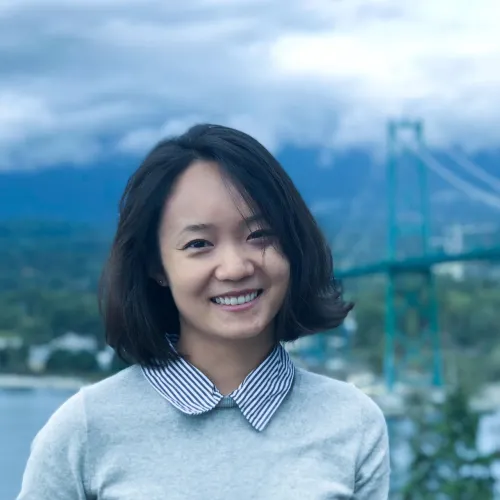
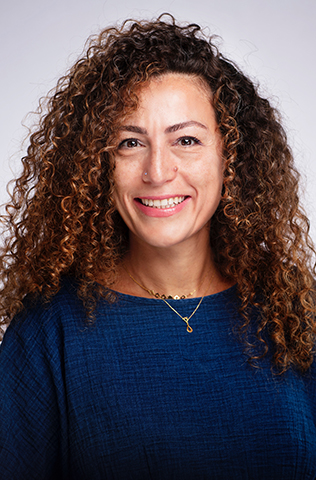
Hanlin Li is an Assistant Professor at the School of Information , University of Texas at Austin . She holds a Ph.D. in Technology and Social Behavior from Northwestern University (2022). Her research focuses on the intersection of data governance and human-computer interaction, analyzing societal and economic impacts of public-generated data. Education : Ph.D. in Technology and Social Behavior (2022), Northwestern University Li’s work addresses policy interventions for responsible data collection, examining topics like data labor, monetization, and collective action. She emphasizes cross-platform dynamics and economic incentives in AI systems. Her publications appear in top venues such as ACM CHI, ACM CSCW, ACM FAccT, and ICWSM, with media coverage in NY Times , MIT Technology Review , and Bloomberg . Recent research trends include: 2025 : Algorithmic collective action frameworks at NeurIPS 2024 : Data governance practices at NeurIPS 2023 : Data labor empowerment in ACM FAccT 2022 : Platform moderation economics Scientific Recognition : Best Paper Honorable Mention at ICWSM’22 Li teaches Responsible Data Management and Data and Society courses, exploring intersections of technology, ethics, and policy. She advocates for equitable data economies through white papers and collaborations with institutions like the Berggruen Institute and Federal Reserve Bank of St. Louis .
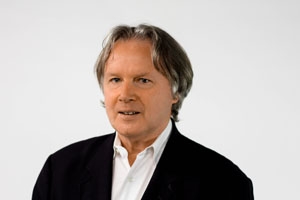
Richard Menkis is an Associate Professor in the Department of History within the Faculty of Arts at the University of British Columbia. His academic career has been dedicated to the study of Canadian Jewish history, with particular focus on historical memory, ethnicity, and responses to the Holocaust. His work bridges the disciplines of Jewish Studies, Canadian History, and Public History, making significant contributions to understanding ethnic identity formation in the Canadian context. Dr. Menkis received his educational foundation at the University of Toronto, earning his B.A. in 1976 and M.A. in 1977, before completing his Ph.D. at Brandeis University in 1988. This academic trajectory positioned him at the intersection of North American and Jewish scholarly traditions. Menkis's research explores the complex interplay between historical memory and ethnic identity among Canadian Jews. His work examines how Jewish communities in Canada have navigated questions of identity, memory, and historical representation across different periods. A significant portion of his scholarship focuses on the reception of the Holocaust in Canadian society and how Canadian Jewish communities have processed this historical trauma. His research also investigates the development of Jewish religious institutions in Canada, particularly examining figures like Abraham de Sola in Victorian Montreal. Menkis has made notable contributions to understanding Canadian responses to Nazism, including the 1936 Olympic Games controversy. His current work includes "Narrators and Readers of the Canadian Jewish Past: A Study of Ethnic Identities and Historical Memory" and "New approaches to the study of the 'liberation' of survivors of the Holocaust." Menkis's recent publications reveal a consistent focus on Canadian Jewish history with evolving methodological approaches. His work spans archival studies, public history, religious history, and Holocaust studies. A notable trend is his increasing engagement with material culture and public presentation of history, as evidenced by his curatorial work with the Vancouver Holocaust Education Centre. His scholarship demonstrates deep commitment to preserving and interpreting Canadian Jewish historical experiences through multiple lenses - archival, communal, religious, and public. 2023 Dean of Arts Award 2022 Life Fellow of the Vancouver Holocaust Education Centre 2018 Louis Rosenberg Distinguished Service Award, Awarded by Association for Canadian Jewish Studies 2018 Switzer-Cooperstock Award for Best Essay on an aspect of the Western Canadian Jewish Experience While Menkis states he is "no longer accepting graduate students," his extensive supervisory experience has shaped numerous scholars in Canadian Jewish history. His collaborative work with Harold Troper on multiple publications, including the book "More than Just Games: Canada and the 1936 Olympics," demonstrates significant research partnerships. Menkis has also engaged in important public history projects, co-curating exhibitions such as "Canada Responds to the Holocaust, 1944-1945" and "More than Just Games: Canada and the 1936 Olympics" at the Vancouver Holocaust Education Centre. His editorial work on special issues of Canadian Jewish Studies and contributions to the Encyclopedia Judaica highlight his role in shaping the field's scholarly infrastructure. Menkis's work is closely associated with the Vancouver Holocaust Education Centre, where he serves as a Life Fellow. His collaboration with colleagues like Harold Troper and Pierre Anctil has produced significant scholarly outputs that have shaped the understanding of Canadian Jewish history. His involvement with the Gerald K. Stone Collection demonstrates engagement with important archival resources for Canadian Jewish studies.
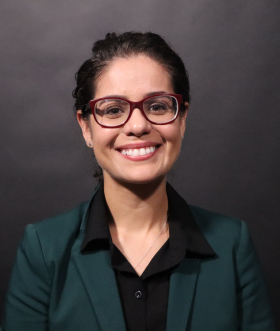
Simone Durham is a full-time Lecturer in the Department of Sociology and Anthropology at Morgan State University, where she previously earned bachelor's and master's degrees. She concurrently completes doctoral studies at University of Maryland, College Park, focusing on critical race scholarship and qualitative methodologies. Her research examines identity construction, social movements, and mental health within Black communities. Key research areas include: BLM movement's impact on racial discourse Multiracial identity socialization processes Crimmigration as racialized policy framework Media representations of racial justice activism Teaching encompasses undergraduate courses across sociology and anthropology, including Social Inequality, Race Relations, and Sociology of Sports. Professional service includes editorial work for Contexts Magazine and advocacy roles through UMD's Graduate Writing Center and Legal Aid Office. Her forthcoming co-authored reference book Black Lives Matter (Bloomsbury, 2025) synthesizes movement analysis with millennial engagement patterns.
Matthew Fraser is a Professor at The American University of Paris, specializing in global media, international relations, and the intersection of media with political and cultural dynamics. He holds a DEA and PhD from the Institut d’Études Politiques de Paris, with additional studies at the London School of Economics, Oxford University, and Paris-Sorbonne. He previously worked as a journalist, columnist, and television host in Canada, contributing widely to international media such as CNN, New York Times, and BBC. His research interests span the history of media, iconoclasm, social protest, and the geopolitical impact of pop culture. Notable works include Weapons of Mass Distraction: Soft Power and American Empire and Monumental Fury: The History of Iconoclasm , which critically examines cultural erasure and historical memory. Fraser’s recent scholarship explores the evolving role of satire in French political discourse and the symbolic dimensions of public monuments. His academic career bridges journalism and academia, with frequent commentary on French current affairs and media law. Despite no explicitly listed advisees, his prolific writing and media engagements reflect a commitment to public intellectualism. Fraser’s educational journey includes degrees from Victoria College (University of Toronto), Ryerson University, and Carleton University, underscoring his interdisciplinary background in communications and political science. His work maintains a sharp focus on how media shapes—and is shaped by—power dynamics in global contexts.
Rachel R. Mourão is an Associate Professor and Graduate Director in the Department of Journalism and Media Management at the University of Miami, focusing on political news narratives about social movements and protests in Brazil and the United States. Her research addresses journalism's role in improving democratic discourse amid social inequality and declining media trust. She earned her PhD from The University of Texas at Austin. Mourão's scholarship centers on three core questions: how political news about protests is shaped by internal/external influences; how media fragmentation challenges news creation/consumption; and journalism's interdisciplinary role in solving societal issues. Her work bridges political communication, media studies, and protest dynamics, emphasizing real-world applications for journalistic practice. Her recent publications (2019-2024) reveal consistent analysis of protest coverage across diverse contexts including the US Capitol Insurrection, Black Lives Matter, Ferguson, and Brazilian demonstrations. Key themes include ideological biases in reporting, social media's impact on news consumption, disinformation ecosystems, and the evolution of anti-government movements, demonstrating interdisciplinary approaches to strengthening democratic processes through media. Mourão has received significant recognition: 2024 Top Faculty Paper, Community Journalism Interest Group, AEJMC 2023 Distinguished Partnership Award for International Community-Engaged Scholarship, Michigan State University 2021 Teacher-Scholar Award (Michigan State University-wide) 2019 Top Reviewer, ICA Journalism Studies Division 2017 Gene Burd Outstanding Dissertation Award, ICA Dissertation award, AEJMC Mass Communication and Society Division As Graduate Director, Mourão mentors students and oversees academic programs. She has secured major grant funding for collaborative initiatives: 2022-24: Mott Foundation grant for "Energy Convergence for Off-Grid Amazonian Communities Program" (Co-PI) 2020-23: NSF grant for "GCR – Convergence for Innovative Energy Solutions" (Co-PI) 2018-19: U.S. State Department grant for "Michigan-Brazil Multimedia Journalism Program" (Co-PI) 2018-19: U.S. State Department grant for "Michigan-Chile Investigative Journalism Program" (Co-PI)
Professor Eoin Devereux is a Cultural Sociologist and Creative Writer at the University of Limerick, Ireland, and an Adjunct Professor in Contemporary Culture at the University of Jyvaskylä, Finland. He holds dual appointments in the Department of Sociology and the Centre for the Study of Popular Music and Popular Culture. His research focuses on media representations of poverty, homelessness, and community development, alongside critical analyses of popular music (e.g., David Bowie, The Fall, Morrissey). He teaches modules on media sociology, creative writing in community settings, and community development at both undergraduate and postgraduate levels. Affiliations: University of Limerick (Professor), University of Jyvaskylä (Adjunct Professor) Education: Expertise in sociology and cultural studies, though specific degree details are not explicitly listed. His creative writing has been featured in prominent publications such as The Irish Times and Poetry Ireland anthologies. Awards include Excellence in Teaching (2004) and Service to the Community (2005). He has supervised numerous PhD students and collaborates internationally on projects like L-Pop: Mapping Popular Music in Limerick City and media poverty studies. His work intersects with UN Sustainable Development Goals related to inequality and community development. Key research themes include media framing of social welfare, cultural sociology of music, and creative writing’s role in community engagement. Over 140 academic publications span journals, books, and edited volumes addressing media discourse, music studies, and social policy.
Anne Templeton serves as a Senior Lecturer in Social Psychology at the University of Edinburgh's School of Philosophy, Psychology and Language Sciences. She holds a UKRI Future Leaders Fellowship and leads the research group Identities and Collective Behaviour . Her academic journey includes a PhD from Sussex, MSc from Surrey, and MA (hons) from St Andrews. Her research centers on applying social identity theory to crowd psychology, particularly examining how group dynamics influence safety during emergencies and mass events. Key focus areas include: psychological crowd modeling, first responder communication strategies, and incorporating social identities into evacuation simulations. She develops behavioral interventions to improve public adherence during crises through computational modeling and virtual reality experiments. Her 15 most recent publications reveal strong thematic consistency across emergency management, crowd dynamics, and social identity applications. Recent work emphasizes high-rise evacuation protocols, tunnel fire egress, COP26 protest support mechanisms, and bystander CPR interventions. The research demonstrates interdisciplinary integration of psychology, computational modeling, and public safety practice. Scientific Recognition: UKRI Future Leaders Fellowship (2022) Research Leadership: Principal Investigator for ESRC, DCMS, and Chief Nursing Office grants totaling over £1.8 million, including the £1.377m UKRI project on first responder communication strategies. Current supervision of four PhD students (Waleed Alhajri, Sam Vo, Sayaka Hinata, Kayleigh Smith). Her knowledge exchange extends through government advisory roles including the Scottish Government COVID-19 Behavioural Insights team (2021-2022), UK Department of Digital, Culture, Media and Sport Science Board (2021), and Sports Grounds Safety Authority consultation (2020). Media engagements feature BBC, Reuters, and The Conversation coverage of Hajj crowd safety and stadium atmosphere research.
Rahul Bhargava is an Assistant Professor in Journalism and Art + Design at Northeastern University, leading the Data Culture Group. His work focuses on creative data storytelling, computational journalism, and community-driven data practices to promote social justice and civic empowerment. He holds a Master of Science from MIT's Media Arts & Science program and a Bachelor of Science in Electrical and Computer Engineering from Carnegie Mellon University. Research interests include participatory data methods, feminist data science, AI ethics in newsrooms, and bridging gaps between technical and non-technical communities. Notable projects include the Data Theatre Collective (funded by Mellon Foundation), Data Murals , and Databasic.io tools. His 2025 book Community Data explores empowering marginalized groups through collaborative data practices. Key grants: Mellon Foundation ($500K), NSF ($724K), Knight Foundation Publications span journals like International Journal of Communication and conferences such as AEJMC and ICWSM Labs/affiliations: Media Ecosystems Analysis Group, MIT Data + Feminism Lab Teaching emphasizes hands-on data literacy, with courses on computational journalism and physical computing. His work has been featured in museum exhibits globally and recognized through awards including the Knight Foundation grants and Best Software (American Political Science Association).
Dr. James N. Gilmore is an Associate Professor of Media and Technology Studies and Graduate Coordinator in the Department of Communication at Clemson University's College of Behavioral, Social and Health Sciences. He joined Clemson in 2018 after completing his PhD at Indiana University and has established himself as a leading scholar in media technology studies, with expertise in wearable technologies, datafication, and media infrastructure. Dr. Gilmore's educational background includes: Ph.D. in Communication and Culture from Indiana University (2018) M.A. in Film and Television from University of California, Los Angeles (2013) B.A. in Film and Media Studies from University of South Carolina (2011) His research focuses on the cultural politics of media and communication technologies, particularly how computational technologies convert human behavior to data (datafication). Dr. Gilmore examines how everyday devices like smartwatches, fitness trackers, and body cameras reinforce systems of normalcy, surveillance, and solutionism across health, labor, accessibility, law enforcement, and other domains. His work bridges theoretical frameworks from media studies, cultural studies, and science and technology studies to analyze the social implications of emerging technologies. Dr. Gilmore's publications demonstrate consistent engagement with emerging technologies across multiple domains. His recent work spans wearable technologies, virtual reality, AI platforms like ChatGPT, streaming services, and smart home devices, revealing patterns in how technologies mediate everyday life while raising critical questions about privacy, surveillance, accessibility, and corporate power. His scholarship consistently connects technological developments to broader social, political, and cultural contexts. Dr. Gilmore has received numerous honors and awards for his research and teaching: Top Paper Award, Popular Communication Division, Southern States Communication Association (2024) Outstanding Teaching of the Year (Junior Tenure-Track), College of Behavioral, Social, and Health Sciences (2022-2023) Outstanding research publication award for 'Securing the kids' (2022) Research Faculty Spotlight (Spring 2021) Ray Camp Award for Most Outstanding Research Paper (2018) As Graduate Coordinator, Dr. Gilmore actively mentors students, with numerous co-authored publications featuring graduate and undergraduate researchers. His students have contributed to research on AI adoption, virtual reality, wearable technologies, and platform politics. Dr. Gilmore has secured internal research funding at Clemson University, including recognition through the university's research reporting system. His book projects, including the forthcoming DeGruyter Handbook of Wearable Technologies and Society, represent significant scholarly contributions that bring together international researchers. Dr. Gilmore leads research initiatives focused on wearable technologies and media infrastructure, with his recent book 'Bringers of Order' establishing him as a leading voice in wearable technology studies. He is currently editing a comprehensive handbook that will expand this research area significantly.
Kristian Vrede Skaaning Frederiksen is an Assistant Professor of Political Science at Aarhus University, where he also completed his PhD. He was hired for a three-year assistant professorship with the DEMNORM project starting December 2023. His academic work focuses on democratic erosion, citizens' support for democracy, and political behavior, with publications appearing in top journals including American Political Science Review, Journal of Politics, British Journal of Political Science, Political Behavior, and European Journal of Political Research. His research interests include democratic erosion, citizens' support for democracy, democratic norms, undemocratic politicians, political behavior, and interventions against support for undemocratic politicians. His work examines why voters support undemocratic politicians and how that support is shaped by political institutions. His current research agenda considers both the beliefs of political elites as well as voters regarding democratic norms. His recent publications reveal a strong focus on democratic backsliding, citizens' reactions to undemocratic behavior, and the role of partisanship in democratic erosion. His work spans experimental political science, comparative politics, and public opinion research, with studies conducted across multiple countries including the US, UK, Czech Republic, Mexico, South Korea, and Germany. He frequently employs survey experiments and innovative research designs to examine questions of democratic behavior. His scientific recognition includes the EliteForsk Rejsestipendium award in 2023. His work has received significant attention in academic circles and media outlets, with several of his papers being featured in press coverage and social media discussions. He is actively engaged in the academic community, collaborating with scholars across institutions and participating in research projects examining democratic norms and political behavior. His Bluesky presence shows engagement with current political developments and democratic challenges globally, particularly regarding democratic backsliding and restoration.
Dr Cairistiona Russell serves as a Tutor in Sociology within the Department of Sociological & Cultural Studies at the University of Glasgow. Her research focuses on media representation of conflict, particularly regarding Palestine-Israel dynamics, BBC's role in public trust, and sociological filmmaking. She has contributed to documentaries like Freedom to Run , exploring movement restrictions under occupation, and engages in interdisciplinary workshops on conflict memory and media ethics. Russell’s work critiques media bias, investigates audience perceptions, and advocates for ethnographic film as a tool for social understanding. Education: Not explicitly stated in the provided text. Key research interests include media bias analysis, documentary ethnography, and the intersection of conflict, movement, and identity. Her 2024 BBC-focused studies highlight public distrust among British-Muslim audiences, while her film projects emphasize Palestinian narratives. Russell has presented at events like the MeCCSA conference and the Undisciplining II symposium, showcasing her commitment to bridging academic research with creative mediums. She collaborates with institutions like GRAMNET (Glasgow Refugee Asylum and Migration Network) and has conducted data collection on audience negotiations of media coverage in conflict zones. Her articles and presentations consistently address themes of power, representation, and resistance, leveraging both traditional sociology and cinematic methods. Russell’s blog posts and podcasts further disseminate her findings to broader audiences, emphasizing the societal impact of media narratives.
Prof. Emre Toros is a Professor at the Department of Communication Sciences, Faculty of Communication, Hacettepe University, Ankara, Turkey. He holds a PhD in Political Science from Bilkent University and has conducted post-doctoral research at Stanford University's Department of Political Science. His academic journey includes roles as Head of the Department of Political Science and Public Administration at Atılım University, and Visiting Professorships at King's College London and Malmö University. His research focuses on political communication, electoral integrity, Turkish politics, and the intersection of social media with democratic processes. Prof. Toros has authored influential works on electoral violence dynamics, media framing of protests, and the strategic use of negative campaigning. He has been awarded prestigious grants including the British Academy Newton Advanced Fellowship (2016–2019) and Swedish Institute Guest Researcher Scholarship (2005–2006). Key areas of expertise: Electoral Studies, Political Behavior, Comparative Politics, Media Analysis Teaching: Research Methods, Political Communication, Turkish Politics Language proficiency: Turkish (native), English (advanced), Swedish (basic) His recent work explores the impact of the 2023 earthquakes on Turkish elections and the psychological traits of autocratic leaders. He has contributed to over 20 peer-reviewed articles, blending quantitative methodologies with qualitative insights into political systems.
Tanja Thomas is a Professor of Media Studies with a focus on Transformations in Media Cultures at the Institute of Media Studies , Faculty of Humanities , University of Tübingen . She leads the Chair for Transformations in Media Cultures and is actively engaged in research, teaching, and academic service. University: University of Tübingen School: Faculty of Humanities Department: Institute of Media Studies Role: Professor and Chairholder Contact: tanja.thomas@uni-tuebingen.de Her research lies at the intersection of critical media theory, cultural studies, feminist theory, and memory studies. She investigates how media cultures shape inclusion and exclusion, particularly in post-migrant societies, and how digital publics can foster recognition, solidarity, and resistance against racism and sexism. The recent publications of Tanja Thomas reflect a strong thematic focus on memory of right-wing violence , feminist digital interventions , transcultural public spheres , and media activism . Her work combines theoretical innovation with qualitative empirical methods, contributing to debates on social transformation, democratic resilience, and critical media analysis. Scientific awards and recognitions include: Multiple teaching awards during her junior professorship Early Career Researcher Prize Risbanken Alexander von Humboldt Fellow (2019/20) Academic service and leadership: She co-edits the journal Feministische Studien , leads funded research groups, and serves on editorial boards and scientific councils. She has secured grants from the Volkswagen Foundation, German-Israeli Foundation, and Hans-Böckler-Stiftung. She supervises MA and BA theses and leads a research team including postdocs and student assistants. Her work is foundational to the Critical Media Studies research portal and the book series Critical Studies in Media and Communication .
Claudia Kozman is an Assistant Professor in Residence in the Journalism and Strategic Communication Program at Northwestern University in Qatar. She holds a Ph.D. from Indiana University. Her research focuses on media systems, conflict journalism, and the intersection of sports and politics in media coverage. Prior to academia, she spent 13 years as a journalist in Lebanon and Asia, working across print, broadcast, and online media in sports reporting and editorial management roles. Kozman’s work examines how external factors like politics and laws shape journalistic norms and news content, particularly in conflict zones and major sporting events like the FIFA World Cup. She also explores audience behaviors, including media dependency and selective exposure during uprisings. Her expertise includes comparative media systems analysis in the Arab region, framing and sourcing theories, and digital journalism practices. Kozman has contributed to projects like the Routledge Companion to Journalism in the Global South and co-edited Arab Media Systems . Her research bridges academic and practical journalism, emphasizing empirical methods and media literacy education. Key publications analyze media coverage of the 2019 Lebanese protests, the 2023 Israel-Gaza war, and the role of social media in global uprisings. She investigates how platforms like Twitter influence journalistic practices and public engagement with news. Kozman’s recent work extends to sports journalism’s role in addressing societal issues such as gender representation and health controversies in sports. Her academic contributions include teaching online research methods and media studies courses. She collaborates with global researchers on projects like the Journalistic Role Performance study across 37 countries. Kozman’s interdisciplinary approach integrates conflict studies, digital media trends, and comparative journalism to address contemporary challenges in media systems.
Caterina Froio is an Associate Professor in Political Science at Sciences Po, affiliated with the Centre for European Studies and Comparative Politics (CEE). She teaches at the School of Research and contributes to programs at the School of Public Affairs and Paris School of International Affairs (PSIA). Since 2025, she serves as Editor-in-Chief of the European Journal of Political Research and is the editor of the Routledge series Extremism & Democracy . Her research focuses on political participation, far-right politics, populism, and digital media. She investigates how individuals engage with extremist ideologies, particularly in the context of European far-right movements. Her work combines empirical analysis with digital methods to understand protest mobilization, media framing, and online radicalization. Recent publications highlight trends in far-right mobilization across Europe, the role of social media in movements like the Yellow Vests, and the interplay between digital platforms and political extremism. Her scholarship spans comparative politics, political behavior, and computational social science, often employing mixed-methods approaches. Editor-in-Chief, European Journal of Political Research (2025–present) Editor, Routledge series Extremism & Democracy (2019–present) Co-scientific coordinator, Master in Political Science, Major in Comparative Politics (2024–2025) She has led and participated in externally funded projects such as FROM THE BALLOTS TO THE STREETS (FNSP) and AUTHLIB (Horizon Europe). She has advised and collaborated with researchers across Europe and the United States, particularly on topics involving digital methods and far-right networks. Froio's research is supported by interdisciplinary teams and labs focused on digital political analysis, including collaborations with data scientists and sociologists. Her work is disseminated through platforms like HAL, ORCID, Academia.edu, and ResearchGate.