Maria Jimenez MovillaView profile
Professor
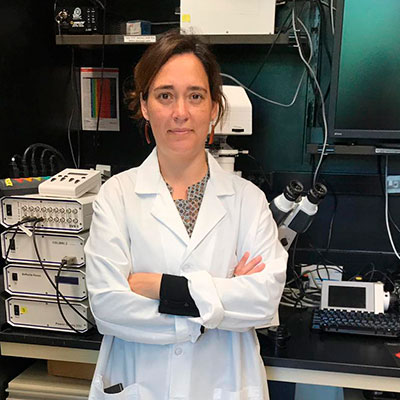
Dr. Maria Jiménez-Movilla is a Professor in the Department of Cell Biology and Histology at the University of Murcia's Faculty of Medicine. Her research focuses on molecular mechanisms of reproduction, particularly gamete interaction, fertilization, and early embryonic development. She applies advanced techniques including molecular biology, nanotechnology, and 3D modeling to develop novel reproductive technologies. Education and career progression: Degree in Biochemistry (University of Murcia, 2000) PhD in Biochemistry with European Mention (University of Murcia, 2005) Postdoctoral Fellow at NIDDK, NIH (2006-2010) Juan de La Cierva Fellowship (2010) Professor at University of Murcia (since 2011) Her research interests span gamete recognition molecules, zona pellucida dynamics, oviduct proteins, and nanotechnological applications in assisted reproduction. She leads the research group 'Gametogenesis, Fertilization and Early Embryonic Development' and collaborates internationally through networks like COST Action CA16119. Recent publications demonstrate strong interdisciplinary approaches combining reproductive biology with nanotechnology, materials science, and molecular modeling. Article clusters focus on: (1) Nanotechnology applications in reproduction, (2) Sperm-egg interaction mechanisms, (3) Zona pellucida structure-function relationships, and (4) Genetic regulation of fertilization. Scientific recognition includes: Principal Investigator on 7 competitive research projects Inventor of patented nanotechnology for reproduction (NanoRep) Recipient of Juan de La Cierva Fellowship Author of publications in Science Translational Medicine, Nature Communications, eLife Dr. Jiménez-Movilla coordinates doctoral studies in Reproductive Health Biology and Technology, teaches across multiple degree programs, and directs the Master's in Biology and Technology of Mammalian Reproduction. She leads laboratory teams developing novel reproductive techniques using nanoparticle-based approaches.