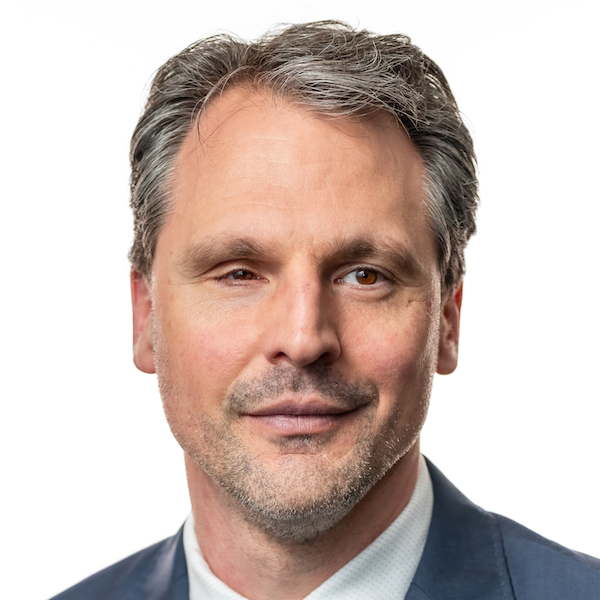
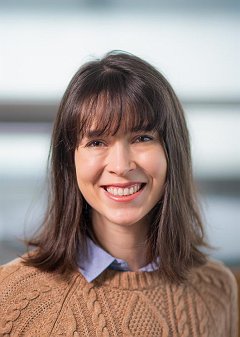
Daniel Gratzer is an assistant professor in the Department of Computer Science at Aarhus University, affiliated with the Logic and Semantics group. He studies programming languages and type theories through category theory, focusing on dependent, modal, and homotopy type theory. He co-teaches graduate courses on type theory and maintains a forthcoming textbook with Carlo Angiuli. Daniel is visiting Oxford from August 2024 to February 2025. His research explores applications of modal type theory to synthetic (∞,1)-category theory, guarded type theory for denotational semantics, and categorical methods in program logics like Iris. He collaborates with researchers including Carlo Angiuli, Lars Birkedal, and Jonathan Sterling. Recent work includes publications at LICS 2025, FoSSaCS 2025, and LMCS 2025. He contributed to the development of proof assistants like mitten and formal verification tools for higher-order concurrent separation logic. Contact: gratzer@cs.au.dk
Elena Zucca is an Associate Professor in the Department of Computer Science, Bioengineering, Robotics and Systems Engineering (DIBRIS) at the University of Genoa, Italy. She has a strong research focus on programming languages, particularly in the areas of type systems, formal semantics, and coinduction. Her work bridges theoretical foundations with practical implementations, as evidenced by her publications on topics like Featherweight Java, corecursion, and soundness proofs for programming language features. Her research interests span the theoretical and practical aspects of programming languages. She investigates the formal semantics of programming constructs, particularly focusing on the boundaries between finite and infinite computations. Her work on coinduction and corecursion explores how to safely handle infinite data structures and computations. She has made significant contributions to understanding soundness in programming language features, especially in relation to resource-aware semantics. Her research often combines theoretical foundations with practical implementations, as seen in her work on Featherweight Java extensions and effect systems. Analysis of her recent publications reveals a consistent focus on advanced type systems and semantics. Her work explores the theoretical boundaries of programming language features while maintaining practical relevance. A recurring theme is the relationship between finite and infinite computations, with particular attention to soundness guarantees. Her research has evolved from foundational work on lambda calculus and object-oriented programming toward more specialized topics like graded types, coeffects, and resource-aware semantics. Elena Zucca has been actively involved in the programming languages research community, serving on program committees for major conferences including SPLASH, ECOOP, and POPL. She has mentored students through doctoral courses on Declarative Programming and (Co)Induction. Her research has been supported through participation in various academic programs, including the SEPL research program mentioned in her course materials. She teaches a diverse range of courses at the University of Genoa, from undergraduate to doctoral levels. Her teaching portfolio includes Automata Theory and Computability, Algorithms Analysis and Design, Principles and Paradigms of Programming Languages, and specialized doctoral courses on Declarative Programming and (Co)Induction. Her courses often reflect her research interests, covering theoretical foundations of programming languages, formal methods, and advanced programming paradigms.
Michael Coblenz is an Assistant Professor in the Computer Science Department at University of California, San Diego. His research focuses on integrating user-centered design into programming language development, creating safer languages for blockchain and scientific computing. He completed his Ph.D. at Carnegie Mellon University under Jonathan Aldrich and Brad A. Myers, followed by a Basili postdoctoral fellowship at University of Maryland. Specializes in usability of programming languages Created Obsidian language for safer smart contracts Developed PLIERS methodology for iterative language design Active in Rust usability and REST API quality research His work bridges programming languages and human-computer interaction, with recent projects including Kale (safer spreadsheets) and climate change-focused programming tools. He has served on program committees for SPLASH, VL/HCC, and HATRA conferences. 2025: Graduate Consortium Co-chair at VL/HCC 2024: HATRA Organizing Chair 2023: Doctoral Symposium Chair at SPLASH
David Janin is an Associate Professor in Computer Science at Bordeaux INP , specifically within the ENSEIRB-MATMECA school. He leads the PoSET research project, exploring algebraic models for heterogeneous interactive temporal media systems. Research Affiliations : CNRS INS2I , INRIA Bordeaux Sud-Ouest , Idex Bordeaux , LaBRI (CNRS UMR 5800). Research Focus : His work bridges inverse semigroup theory and functional programming to develop algebraic frameworks for synchronizing diverse temporal media (sound, animation, video). This includes T-calculus in Haskell and Octopus for 3D animation. Technical Contributions : Key developments include models for overlapping tiles , birooted tree languages , and causal function semantics in real-time systems. Contact : janin@labri.fr
Toby Murray is a Professor in the School of Computing and Information Systems at the University of Melbourne, where he serves as Director of the Defence Science Institute and Co-Lead of the Computer Science Research Group. His work bridges formal methods, cybersecurity, and practical system security, with significant contributions to verified security and vulnerability detection. Murray's research focuses on building highly secure computing systems cost-effectively, with expertise in formal verification, information flow security, and vulnerability detection. His current research projects include Verisimilar (Verified, Secure Machine Learning), EDEFuzz (Detecting excessive data exposure in web applications), COVERN (Proving information flow security of concurrent programs), and Time Protection (Proving timing channel freedom for seL4). His work combines theoretical rigor with practical implementation, resulting in multiple open-source tools including SecC, Legion, and Underflow. Murray's recent publications demonstrate a consistent focus on verified security properties across diverse domains, from neural networks to concurrent systems. His work often bridges the gap between formal methods and practical security concerns, with increasing attention to machine learning security and policy implications of technical security measures. His publications span top venues in security, formal methods, and software engineering. Distinguished Paper Award at ICSE 2024 for EDEFuzz work on detecting excessive data exposure in web applications Extensive media commentary on cybersecurity issues including CrowdStrike outage analysis and social media regulation Regular contributions to The Conversation and Pursuit on cybersecurity policy matters Murray has advised numerous PhD students to completion, including Lianglu Pan (EDEFuzz), Zhiyuan Zhang, Mo Zhang, and Renlord Yang. He currently supervises multiple PhD students working on security verification, machine learning security, and web application security. His service includes being Program Chair for CSF'25, Associate Editor for IEEE Security & Privacy and ACM TOPS, and membership in IFIP's WG 1.7 and WG 2.3. His research group has developed multiple significant software tools including SecC (Verified Security for Concurrent C Programs), Legion (Principled Automatic Test Case Generation), and Underflow (Compositional Vulnerability Detection for C Programs), all available under open source licenses. Murray's work often involves discovering and reporting bugs in security analysis tools during his research, demonstrating the practical impact of his verification approaches.
Prof. Dr. hab. Anna Bondaruk is a full Professor at the Department of Theoretical Linguistics , Institute of Linguistics , and Faculty of Humanities at John Paul II Catholic University of Lublin. She has served as Head of Department since 2019 and previously held that role from 2008-2019. Her research focuses on theoretical linguistics, specializing in Polish and Irish syntax, copular clauses, control theory, and case marking within the Minimalist Program. Linguistic Expertise : Syntactic Structures (Polish, Irish, Old English) Psych Verbs and Experiencer Constructions Passive Voice Typology Minimalist Program Applications Polish-Specific Theoretical Frameworks Recent Research Trends include studies on dative possessors, unaccusative verbs, and the syntax of experiential predicates. Her 2024 work explores possessive constructions involving 'lack'-type verbs, while 2023 publications analyze existential uses of Polish verbs and comparative syntax. Scientific Recognition : Inner Reward (Nagroda Rektora KUL) for top publication (2024) Erasmus+ Scholar (multiple awards 2001-2024) Medal za Długoletnią Służbę (2020) Nagroda Premiera Rady Ministrów RP (2006) Editorial Board Member for journals like Poznań Studies in Contemporary Linguistics
Ichiro Hasuo is a Professor at the National Institute of Informatics (NII) in Tokyo, Japan, where he serves as Director of the Research Center for Mathematical Trust in Software and Systems. He holds a joint appointment at The Graduate University for Advanced Studies (SOKENDAI). Since 2016, he has been the Research Director of the JST ERATO Metamathematics for Systems Design Project, and founded Imiron Co., Ltd. in 2024. Education: PhD in Computer Science (cum laude) from Radboud University Nijmegen (2008) MSc in Mathematical and Computing Sciences from Tokyo Institute of Technology (2004) BSc in Mathematics from University of Tokyo (2002) His research focuses on foundational aspects of software science, particularly formal verification techniques using mathematical structures from category theory and coalgebra. He develops methods for ensuring reliability in cyber-physical systems and systems incorporating machine learning components. Current work emphasizes logical frameworks for autonomous vehicle safety and mathematical trust in complex systems. Hasuo's publications demonstrate consistent focus on theoretical foundations with practical applications. His recent work spans coalgebraic verification methods, temporal logic for hybrid systems, quantum programming semantics, and applications to autonomous driving systems. Key themes include compositional reasoning, probabilistic modeling, and the integration of discrete and continuous system verification. Awards and Honors: Best Paper Award at ICTAC 2024 Minister of Education, Culture, Sports, Science and Technology Commendation (2024) Distinguished Paper Award at CAV 2023 Outstanding Reviewer Award at EMSOFT 2022 Best Paper Award at ICECCS 2018 Best Paper Award at CONCUR 2014 Hiroshi Fujiwara Encouragement Prize (2012) PhD cum laude (2008) He leads multiple major research grants including: JST ASPIRE (2024-2029) for international collaboration on software trust JST START (2022-2025) for autonomous driving verification JST ERATO Metamathematics for Systems Design (2016-2025) Several JSPS KAKENHI grants As head of the MMM laboratory (Hasuo-Lab) at NII, he supervises PhD students and postdoctoral researchers in formal methods and mathematical systems design.
Caroline Lemieux is an Assistant Professor at the University of British Columbia, specializing in automated software testing and reliability. Her research develops methods for testing, debugging, and improving software correctness through techniques like fuzz testing and program synthesis. She holds a Ph.D. from UC Berkeley advised by Koushik Sen and a B.Sc. in Computer Science and Mathematics from UBC. Research Interests: Dr. Lemieux's work focuses on: Fuzz testing for vulnerability detection Program synthesis using AI/ML approaches Property-based testing frameworks Automated debugging and specification mining Applications of reinforcement learning in test generation Publication Trends: Her recent papers explore large language models for test generation, fuzzing strategies in CI/CD environments, and neural-backed program synthesis. Work consistently bridges theoretical computer science with practical software engineering challenges. Awards: ACM SIGSOFT Distinguished Paper Award Google PhD Fellowship Best Paper Award (Industry Track) Berkeley Fellowship for Graduate Study
Sally Rice is a Professor in the Department of Linguistics at the University of Alberta, Faculty of Arts. Her research integrates empirical methodologies with cognitive and functional linguistics, focusing on the inseparability of meaning and form in language. Education: PhD in Linguistics (University of California, San Diego, 1987) Landrex Distinguished Professor (2007-2011) McCalla Research Professor (2008-2009) Key research areas include: Language documentation and revitalization for Dene Sųłiné and Tsuut’ina Grammaticalization and lexicalization patterns Corpus linguistics and psycholinguistic experimentation Form-meaning interface across typologically diverse languages Notable projects: Community Linguist Certificate program with CILLDI Interactive speech atlas of Dene languages with Joyce McDonough Dene migration studies via interdisciplinary collaboration Scientific awards: Landrex Distinguished Professorship McCalla Research Professorship SSHRC-CURA grants for Daghida Project Her work bridges theoretical and applied linguistics, with over 20 years of fieldwork on Athapaskan languages and extensive supervision of graduate students in corpus-based and cognitive approaches to language structure.
Selcen Erten Johansson is a Doctoral Researcher in Digital Language Studies at the University of Turku, focusing on corpus linguistics and media discourse analysis. Her research examines Turkish web registers in the context of political events, such as Finland's NATO membership process in Turkish media. Supported by the Eino Jutikkala Fund (2024–2026), her work bridges computational methods with sociolinguistic inquiry. She holds a Master's in Linguistics from Mersin University (2019) and has been a Fulbright scholar in the U.S. Her teaching spans corpus linguistics, language technology, and Turkish as a foreign language at institutions including Turun Suomenkielinen Työväenopisto and Toros University. Education: PhD Candidate in Digital Linguistics, University of Turku (2021–present) Master's in Linguistics, Mersin University, Türkiye (2019) Fulbright Scholarship, Michigan State University (2015–2016) Research Interests: Selcen explores language variation in digital contexts, particularly Turkish web-based discourse. She combines corpus linguistics with computational tools to analyze political media narratives and multilingual web registers. Her work emphasizes the intersection of technology and sociolinguistics, including projects like TurCORE and collaborations with the TurkuNLP research team. She also investigates pedagogical approaches for teaching Turkish and Finnish as foreign languages. Grants & Support: Eino Jutikkala Fund Grant (2024–2026), Finnish Academy of Science and Letters Teaching & Outreach: She has taught courses on corpus linguistics, automatic text processing, and Turkish language instruction across multiple institutions. Her teaching philosophy integrates digital tools with traditional language pedagogy. Labs & Teams: Active member of the TurkuNLP research team, focusing on NLP applications in digital humanities and multilingual corpora analysis.
Shaked Flur is a Researcher at the Department of Computer Science and Technology, University of Cambridge. His work focuses on formal methods, instruction-set semantics, and concurrency models in computer architectures. He contributes to the development of formal verification tools and specifications for ISA standards like ARMv8-A, RISC-V, and CHERI-MIPS. His research bridges academic formal models with practical software and hardware design, emphasizing the adoption of rigorous methods in real-world systems. Flur collaborates on projects such as the Sail specification language, enhancing clarity and precision in ISA documentation. His publications address challenges in memory models, concurrency semantics, and automated verification techniques.
Markus Enzweiler serves as Professor of Computer Science and Autonomous Systems at Esslingen University of Applied Sciences within the Department of Computer Science and Engineering. He concurrently holds the leadership position of Director at the Institute for Intelligent Systems, where he oversees research initiatives focused on intelligent systems development for real-world autonomous applications. His research program centers on computer vision for autonomous systems , with specialized expertise in visual-inertial SLAM, collective perception, and neural rendering techniques. Key investigation areas include environmental robustness across agricultural and urban settings, real-time processing constraints for embedded systems, sensor fusion methodologies (particularly camera-radar integration), and the application of generative models for perception enhancement. His work consistently addresses practical implementation challenges such as computational efficiency and sensor calibration in unstructured environments. Analysis of his 2023-2025 publications reveals three dominant research trajectories: (1) Advancement of lightweight perception systems through stixel-based representations and neural rendering; (2) Development of infrastructure-supported collective perception frameworks with datasets like CoopScenes and OPNV; and (3) Rigorous benchmarking of SLAM components in domain-specific contexts including agricultural robotics and multi-season navigation. His recent systematic review on LLM-based vulnerability detection also demonstrates expanding interest in software security for autonomous systems. As Director of the Institute for Intelligent Systems, Prof. Enzweiler leads a research ecosystem focused on translating theoretical advances into practical autonomous vehicle technologies. His team develops specialized datasets (Rover, OPNV) and software stacks for smart city environments, emphasizing the integration of novel perception approaches with vehicle dynamics modeling and real-time operational constraints.
Gordon Plotkin is an active contributor to the field of Computer Science, particularly in Programming Languages and Formal Verification. He has presented research at prominent conferences like POPL, authoring papers on topics such as Dijkstra Monads for Free (2017) and Some Principles of Differential Programming Languages (2018). His research interests span Formal semantics of programming languages Probabilistic and differential programming Network verification techniques These are reflected in his conference contributions and committee roles. Plotkin has served as a Committee Member in the Program Committee for tracks such as PPS (2017), demonstrating his engagement in academic leadership and peer evaluation.
Pedro Adão is an Assistant Professor at the Department of Computer Science and Engineering (DEI) of the Instituto Superior Técnico (IST) , University of Lisbon . He is affiliated with the SQIG - Security and Quantum Information Group at the Institute of Telecommunications , formerly part of CLC - Logic and Computation Centre . His work bridges formal methods and computational cryptography , focusing on security protocols , software security , and quantum information security . PhD in Mathematics (2006, IST) with thesis "Formal Methods for the Analysis of Security Protocols" Graduated in Applied Mathematics and Computation (2002, IST) with thesis "Electronic Money" His research interests include verification of secure systems, composition of secure systems, mathematical foundations of cryptography, and physical/day-life security. His publications span topics like firewall configuration tools , smart contract verification , quantitative protocol analysis , and computationally sound symbolic cryptography . He has collaborated with institutions such as the University of Pennsylvania, Microsoft Research Cambridge, and INRIA-Microsoft Research Paris. Key teaching contributions include courses in Introduction to Algorithms and Data Structures , Computational Models in Security , and Software Security . He is a member of the SQIG research group and has organized the SQIG Information Security Seminar . Past teaching roles include lecturing at the Catholic University of Portugal and the Air Force Academy.
Antoine Beugnard is a Professor in the Computer Science Department at IMT Atlantique. He received his PhD in Computer Science from the University of Rennes 1 (1993) and accreditation to supervise research in 2005. His career spans academia and industry, including roles at ENST-Bretagne, Telecom Bretagne (now IMT Atlantique), and Michael Jackson France. Education: PhD in Computer Science (University of Rennes 1, 1993), Accreditation to Supervise Research (2005) Affiliation: IMT Atlantique, Lab-STICC (UMR 6285), P4S team Beugnard's research focuses on software modeling, particularly digital twins, model federation (via Openflexo/FML), and late-binding semantics in heterogeneous object-oriented languages. He explores interoperability challenges in multi-language systems and advocates for unified semantics to improve component compatibility. Key trends in his publications include model-driven engineering, digital twin architectures, and formal modeling notations. His work bridges theoretical foundations with industrial applications, notably in telecom systems for Orange and multi-level modeling frameworks. Advising and grants highlight his mentorship of 10+ PhD candidates and leadership in projects like Openflexo. He actively contributes to academic discussions on modeling methodologies and software development processes.