Pablo Frank Bolton is a Lecturer in the Computer Science Department at Smith College, where he focuses on teaching core undergraduate and graduate computer science subjects. His work emphasizes accessibility for beginners and non-majors, alongside research in STEM education. Education: Ph.D., George Washington University His research centers on identifying misconceptions in programming, developing scalable assessments, and implementing active learning techniques like peer teaching, scaffolding, and gamified exams. He also collaborates across disciplines to apply computer science methodologies to external datasets. Recent publications highlight his focus on computer science education, including tools for misconception identification, automated question generation, and gamified assessment structures. Earlier works explore robotics, computer vision, and interdisciplinary environmental science research. He teaches across foundational and advanced computer science courses, integrating interactive and collaborative learning strategies to enhance student engagement and understanding.
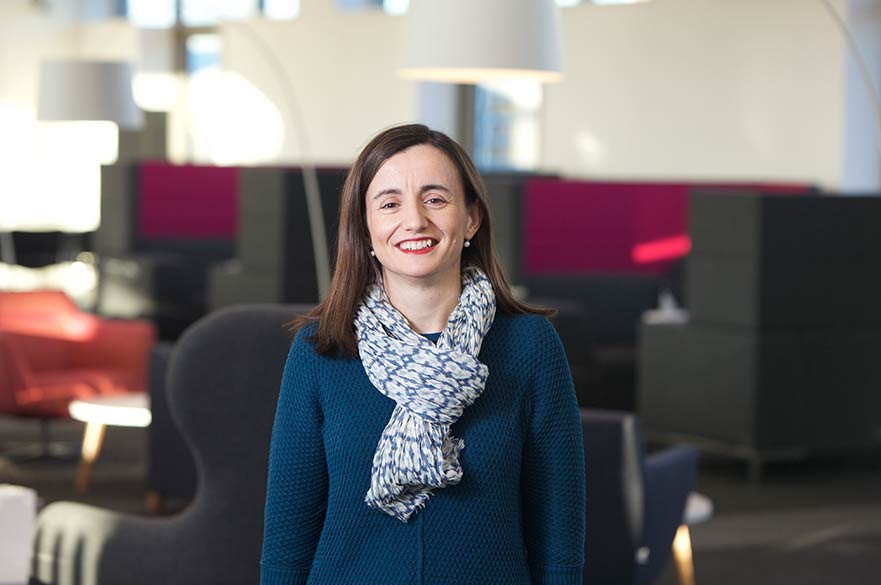
Louise Jolly serves as a Midwifery Lecturer at Kingston University's School of Education, Midwifery and Social Work within the Department of Midwifery, holding a permanent academic position since May 2023 after transitioning from an hourly-paid lecturer role beginning December 2020. Her academic work is deeply informed by over a decade of frontline clinical experience across diverse maternity settings including inpatient and community care environments. Her educational foundation includes: MSc Healthcare Practice with Midwifery (Distinction) BSc Midwifery BA Joint Hons Intensive Beginners Russian and German NIPE midwife certification Professional Midwifery Advocate (PMA) qualification Jolly's research program centers on transformative midwifery education methodologies, particularly high-fidelity simulation applications for student training, while simultaneously investigating critical clinical communication practices around infant sleep safety and birth location counseling. Her approach integrates pedagogical innovation with frontline safety imperatives to develop midwives capable of delivering truly individualized, compassionate care. Her publication trajectory reveals strategic focus on evidence-based educational interventions, with recent work examining simulation effectiveness for student competency development and analyzing midwives' real-world communication challenges regarding birth options and infant safety protocols. This dual emphasis bridges academic theory and clinical practice to enhance both educational outcomes and patient care quality. Professional recognition includes: Fellow of the Higher Education Academy (FHEA) In her academic leadership capacity, Jolly serves as Year 1 Skills Module Leader while actively mentoring through the KU Midwifery Society. She maintains active clinical midwifery practice alongside her academic duties, ensuring continuous connection to contemporary maternity care challenges and reinforcing her commitment to developing practitioners who prioritize safety and women-centered care throughout the childbirth continuum.
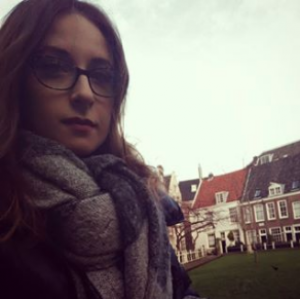
Małgorzata Łyczykowska is a Lecturer at the Faculty of English, Adam Mickiewicz University (AMU) in Poznań, Poland. She is based at Collegium Heliodori, room 356, and can be reached at malgorzata.lyczykowska@amu.edu.pl or (+48) 61 829 3572. She is active in interdisciplinary research spanning psychology, sexology, Dutch language education, and cultural history. Education: Pedagogy (Health Promotion and Sociotherapy), B.A., AMU, Poznań (2009–2012) Dutch Studies, M.A., AMU, Poznań (2013–2015) Psychology (Clinical Psychology and Sexology), M.A., AMU, Poznań (2011–2017) Her research interests include cultural transfer during World War I, particularly German cultural propaganda in the Netherlands, didactics of Dutch as a second language (NT2), marriage migration, and clinical aspects of sexology—especially the diagnosis and treatment of sexual offenders and pedophiles, alongside psychiatric disorders such as schizophrenia. She combines expertise in language education and clinical psychology in a unique interdisciplinary profile. Although no formal publications are listed in the provided text, her academic activity is demonstrated through presentations at international conferences and participation in specialized training programs in Dutch language and culture. Her work reflects a strong engagement with both academic and public audiences. Scientific Awards: European Federation of Psychologists’ Association and European Psychology Learning and Teaching: 'Why employ me?' – 3rd prize (2012) Algemeen-Nederlands Verbond: 'Waarom Nederlands?' – distinction (2014) AMU’s medal for the best graduates (2015) Małgorzata Łyczykowska has been actively involved in academic outreach and service. She has initiated and organized the Dutch language tournament 'Szóstka z języka - Tien voor taal', taught Dutch for beginners at AMU's Open University, and served as a CNaVT examiner since 2018. She has also been responsible for the social media of WA Talks and has delivered public talks at events such as Researchers’ Night and Piknik Europejski. She is a member of the 'Oranjes' Dutch Studies Student Scientific Circle and has participated in professional seminars including the Comenius Zomercursus and Ceepus Doctoral School. There is no mention of grant funding or formal student supervision in the provided material. Labs and Teams: She is affiliated with the Internationale Vereniging voor Neerlandistiek and the Comenius Vereniging voor Neerlandistiek in Centraal-Europa. She is also a member of the 'Oranjes' Dutch Studies Student Scientific Circle at AMU, indicating active participation in academic communities focused on Dutch language and culture.
Amin Alipour is an Associate Professor in the Department of Computer Science at the University of Houston, where he directs the Software Engineering Research Group. He holds a Ph.D. from Oregon State University and multiple advanced degrees from institutions in Iran and the U.S. His work focuses on improving safety and user experience of AI-assisted software engineering tools, with funding from NSF and IARPA. Prior to joining the U.S., he taught at the University of Kashan and Shiraz University in Iran. Education: Ph.D. in Computer Science, Oregon State University (Advisor: Alex Groce) M.S. in Computer Science, Michigan Technological University M.S. in Computer Engineering, Tarbiat Modares University B.S. in Computer Engineering, Petroleum University of Technology (Iran) Research interests include: Secure AI systems, particularly in code LLMs Trojan detection and mitigation in neural models Educational impacts of AI tools in programming education Formal methods for software verification Human-AI collaboration in programming tasks His recent articles explore cybersecurity in AI, student interactions with LLMs, and adversarial attacks on code models. He currently serves on program committees for ICER 2025 and ICSME 2025. His research group develops tools like FeatureExtractor and ProgramTransformer for analyzing neural code intelligence models.
Susan Ross is a Teaching Fellow in the School of Language, Literature, Music and Visual Culture at the University of Aberdeen. She holds a PhD in Scottish Gaelic Studies from the University of Glasgow, earned in 2016, with a dissertation focusing on the standardization of Modern Scottish Gaelic orthography from 1750 to 2007 using a corpus-based approach. Her work was supported by the University of Glasgow's College of Arts Scholarship. Education: PhD in Scottish Gaelic Studies, University of Glasgow, 2016 Susan Ross specializes in Gaelic Studies, with a particular focus on the historical development and standardization of Scottish Gaelic orthography. Her research employs corpus linguistic methods to analyze written Gaelic across more than two centuries, contributing to the understanding of language change and standardization processes in minority languages. She is actively engaged in teaching Gaelic language courses at various levels, from beginner to advanced, supporting the revitalization and academic study of the language. Her teaching responsibilities include instructing on multiple Gaelic language modules such as GH1007/GH1507 (Gaelic for Beginners 1A and 1B), GH1013/GH1513 (Gaelic Language 1A and 1B), GH2013/GH2513 (Gaelic Language 2A and 2B), GH2009/GH2509 (Gaelic for Advanced Beginners 2A and 2B), and GH3022/GH4022 (Gaelic Language A and B). These courses form a core part of the Gaelic language curriculum at the university, indicating her central role in language instruction. No scientific awards or publications were mentioned in the provided text. Susan Ross advises no students listed in the available information and there is no mention of grants, research labs, or collaborative teams. Her role appears to be primarily teaching-focused within the Gaelic Studies program, contributing to both undergraduate education and the preservation of Scottish Gaelic language and culture.
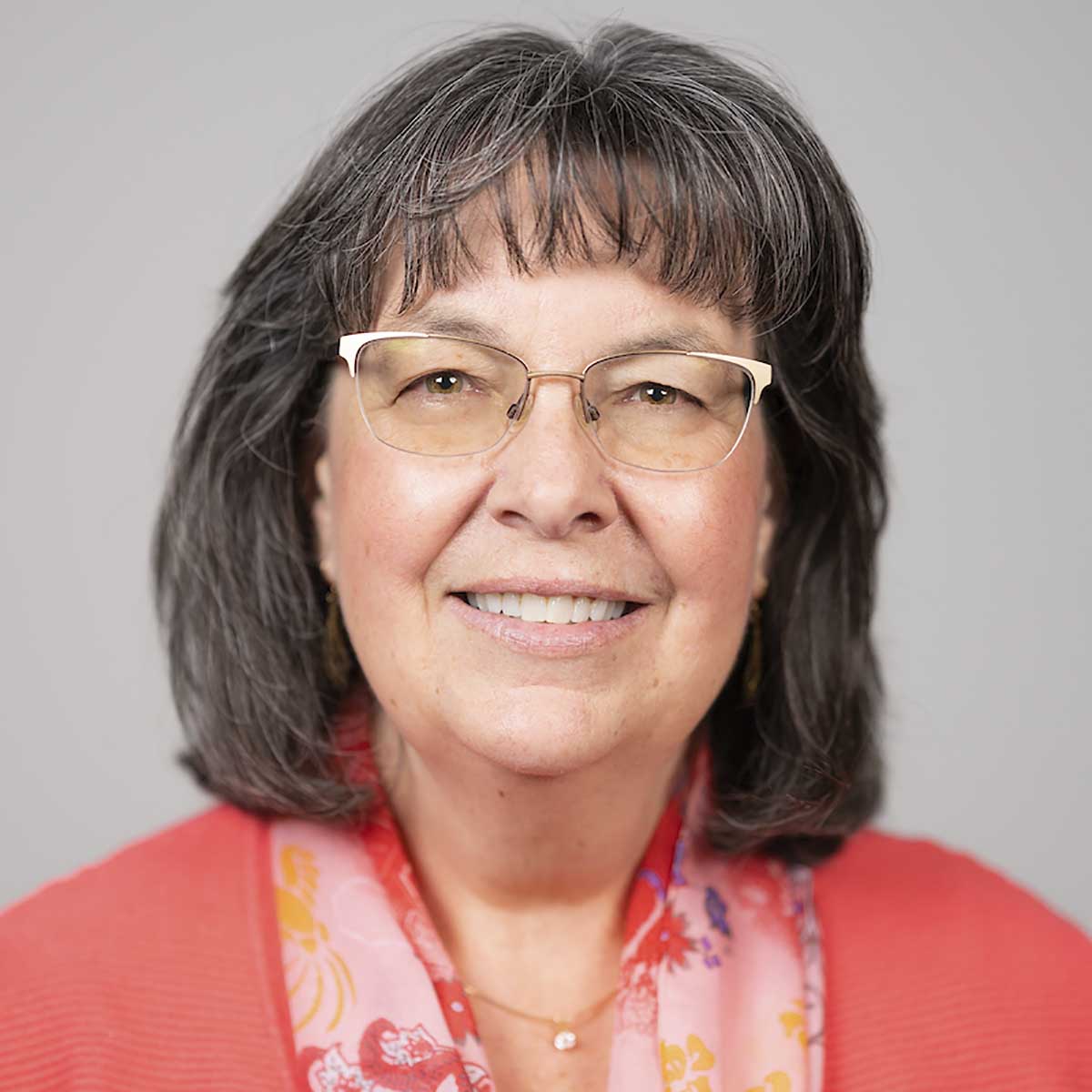
Nancy Shelstad is an Acting 4-H Director and Area Extension Educator in the 4-H Youth Development program at the University of Idaho Extension, Southern District. She holds dual responsibilities at both the state and district levels, leading initiatives in youth programming, volunteer development, and staff training. Her work is centered on Positive Youth Development (PYD) and the 4-H Thriving Model, with a strong emphasis on innovation and statewide program consistency. Her educational background includes a Master of Science (2006) and a Bachelor of Science (1985), both from the University of Idaho. These degrees provide the foundation for her applied research and extension work in youth development. Nancy's research and extension interests focus on Positive Youth Development , the 4-H Thriving Model , 4-H volunteer development , and career exploration for youth. She promotes PYD across all aspects of 4-H programming and contributes to national professional development efforts. Her work bridges academic research with practical outreach, ensuring that youth and volunteers receive evidence-based, impactful programming. The articles she has authored or co-authored reflect a consistent focus on youth development, educational programming, and extension resources. Themes include career exploration, volunteer facilitation, financial literacy, youth retention, and practical life skills such as public speaking and cooking. Her publications appear in respected outlets like the Journal of Extension and Journal of Youth Development , emphasizing applied research and curriculum development. Promotional Piece Team Award, National Association of Extension 4-H Youth Development Professionals, 2023 Excellence in Volunteerism Team Award for New Volunteer Orientation package, 2022 Excellence in Teamwork Award for Build Your Future, 2020 Educational Package Team Award for the 4-H Staff Orientation Guide, 2020 Excellence in Workforce Development Programming Team Award, 2019 Meritorious Service Award, National Association of Extension 4-H Agents, 2019 Nancy has played a significant role in advising and leading teams across multiple projects, including the development of statewide 4-H programs like 4-H Outside the Box and Build Your Future. She has led the creation of 20 staff development modules and contributed to national curriculum efforts with NASA and the National 4-H Thriving Model team. While formal graduate student advising is not mentioned, her mentorship of educators and volunteers is evident. She has secured recognition through numerous team-based grants and awards, reflecting strong collaborative leadership and program impact. Nancy has also served in national leadership roles, including Vice President of Member Services on the National Board of Trustees of the National Association of 4-H Youth Development Professionals (2021–2023). Nancy leads and collaborates with multiple teams, including the statewide 4-H staff, county 4-H coordinators, and national 4-H professional networks. She has chaired operations for national conferences and led curriculum development teams for Dutch Oven cooking and staff orientation. Her work is deeply embedded in collaborative, team-based extension education and youth development initiatives.
Marie Lickwar is a Lecturer in Music (Horn) at the University of Hawaii at Mānoa's Department of Music. She is an active horn performer and educator with a studio in Honolulu, teaching students including members of the Hawaiʻi Youth Symphony. Her professional experience includes 2nd Horn roles with the Hawaiʻi Symphony (2013-2015), regular substitution, and performances with ensembles like the Los Angeles Philharmonic, Pacific Symphony, and Houston Symphony. She specializes in horn pedagogy, particularly beginner instruction and embouchure flexibility, having presented lectures such as "Starting Beginner Horns" (2018) and "Change, flexibility and creating new habits" (2015 International Horn Society Symposium). She founded the Houston Horn Camp (2009-2013), a summer program for middle/high school students. Education: M.M. from Eastman School of Music, B.A. from University of New Hampshire. Additional training includes the Pacific Music Festival (Japan, 2004) and International Horn Society Workshop (Finland, 2002). Notable mentors include Andrew Bain, Denise Tryon, and others. She has also worked in motion picture recording sessions in Los Angeles.
Jacqueline Martínez Cerna is a Lecturer in Spanish at the University of California, Santa Barbara (UCSB). She holds a B.A. in Political Science and Spanish from Loyola Marymount University (LMU), an M.A. in Spanish from California State University, Long Beach (CSULB), and is a Ph.D. Candidate in the Department of Spanish and Portuguese at the University of California, Irvine (UCI). Her teaching experience includes courses at multiple institutions: beginner, intermediate, and advanced Spanish, as well as Spanish for Heritage Speakers at UCI; intermediate Spanish at LMU and Concordia University, Irvine; and beginner Spanish at Middlebury College’s Summer Immersion Program. Her research focuses on Central American Literature and Culture , Gender Studies , and the Avant-garde Movement in Central America , with additional interests in Activism in Latin American Literature and Latin American Film . She explores themes of intellectual history and literature by women through these lenses.
Craig Lambert is an Associate Professor of Applied Linguistics and TESOL at Curtin University's School of Education in Perth, Western Australia. He specializes in Task-Based Language Teaching (TBLT), focusing on research areas such as task design, learner engagement, affective factors, and psychophysiological methods in language learning. His work bridges theory and practice, emphasizing the role of learners' investment, motivation, and cognitive processes in language acquisition. Dr. Lambert's research spans over two decades, with contributions to journals like TESOL Quarterly , Studies in Second Language Acquisition , and Language Teaching Research . His books include Task-Based Language Teaching: Theory and Practice (2020) and The Role of the Learner in Task-Based Language Teaching (2023), which explore pedagogical frameworks and empirical methods for TBLT. He has also guest-edited special issues on affective factors in task performance. His teaching spans institutions in Japan, the US, UK, and Vietnam, including roles in MATESOL programs and SEAMEO RETRAC initiatives. Recent studies investigate neural correlates of task engagement, learner-generated content in online education, and the application of EEG/iMotions for measuring affective responses in language tasks. Dr. Lambert's work integrates cognitive psychology, educational technology, and second language acquisition theory to address challenges in language program design, L2 speech processing, and motivation-driven learning. His research underscores the importance of aligning classroom tasks with real-world linguistic needs to enhance learner outcomes.
Maria Fanjul-Fanjul is a Senior Lecturer in the Department of Humanities within the School of Arts & Humanities at Nottingham Trent University, where she serves as the Spanish Subject Leader and University Language Programme (ULP) Spanish Subject Co-ordinator. She teaches Spanish at multiple levels, including Accelerated Beginners and post-A-level modules. Educational Background: MA in International Cultural Studies, Nottingham Trent University (1999) PhD, Nottingham Trent University (2010) – 'Daughter of Fortune: Isabel Allende's Popularity from a Readership Perspective' Her research focuses on contemporary women's writing in Spain and Latin America, particularly the works of Isabel Allende. She explores themes such as cultural studies, reading groups, literary reception, and the transnational appeal of Hispanic literature. Her scholarly work contributes to understanding how readers engage with Latin American authors across cultural boundaries. She has been actively involved in external academic service, having served as an External Examiner at Lincoln University (2012) and for the University Language Programme at Sheffield Hallam University (2004–2008). Opportunities for postgraduate research under her supervision are available through the NTU Graduate School in areas aligned with her expertise. Scientific Awards and Honors: Dr Fanjul-Fanjul advises postgraduate students and supports research in Hispanic cultural and literary studies. While no specific grants are mentioned, her coordination of the ULP Spanish program indicates leadership in language education initiatives. She plays a key role in shaping Spanish language curriculum and academic standards at NTU. She is associated with the Department of Humanities research community within the School of Arts & Humanities, contributing to scholarly discourse on gender, literature, and cross-cultural reception. Her work bridges pedagogy and research in modern languages.
Dr. Howaida Wahby Eraky is the Director of Intensive English @ RELI and affiliated with the English Department’s Writing Program at Rutgers University. With over 16 years of experience in teaching and directing English for Speakers of Other Languages (ESOL) programs in the USA and internationally, he specializes in curriculum design, program marketing, and recruiting international students for both face-to-face and online English programs. Education: Ph.D. in Applied Linguistics (Alexandria University), M.A. in TESOL (The American University in Cairo), B.A. in English Literature with a minor in translation (Alexandria University) Dr. Eraky’s research focuses on Multimodal Discourse Analysis and Visual Grammar. He is a certified online Master Course developer, designing courses compliant with Universal Design of Learning (UDL) standards and ACTFL guidelines. His expertise includes curriculum development for English for Specific Purposes (ESP) and English for Academic Purposes (EAP), as well as training novice English teachers and preparing students for standardized exams. He has served as a peer reviewer for conferences like the International Symposium on Applied Linguistics Research of Prince Sultan University. Undergraduate Courses Taught: ESL (beginner-intermediate-advanced), ESP for Engineering, Hotel & Tourism, Business, Mass Communication Media, World Literature Graduate Courses Taught: Critical Discourse Analysis, Stylistics, Research Methods Professional Affiliations: American Association for Applied Linguistics (AAAL), Chair Academy, Publons Academy, American Council on the Teaching of Foreign Languages (ACTFL), TESOL International Association. Certifications: Peer Review (Publons Academy Foundation), Leadership (Chair Academy), Coaching Skills for Leaders and Managers (Project Management Institute), Universal Design of Learning (UDL) (Rutgers University), Canvas Master Course Developer (Ocean County College), Blackboard LMS (Kean University), Improving Online Courses (Quality Matters, QM).
Francesca PARPINEL serves as an Associate Professor in the Department of Economics at Ca' Foscari University of Venice, holding additional responsibilities as Department Delegate for Language Training. Her academic work spans statistical methodology development and practical applications in economics and finance. Her educational background includes a Degree in Statistics Applied to Economics (1990) and PhD in Statistics (1994), both from the University of Padua. She progressed from Assistant Professor (1996-2002) to her current Associate Professor position (2002-present), while coordinating the Bachelor's Degree Program in International Trade and Tourism from 2011-2018. Research interests focus on advanced statistical methodologies including estimation methods for regressions on complex spaces , evolutionary algorithms for regime-changing models , and statistical measures of systemic risk . Her work bridges theoretical statistics with practical financial applications, particularly in trading systems and risk assessment. Recent publications demonstrate strong interdisciplinary connections between statistics, finance, and computational methods, with increasing emphasis on machine learning applications in financial distress prediction and climate derivatives pricing. She actively supervises undergraduate and graduate theses requiring data analysis, emphasizing proficiency in R programming. Her teaching portfolio includes Statistics, Multivariate Statistics, and specialized laboratories across multiple degree programs including International Trade and Tourism, Economics and Commerce, and Global Development. PARPINEL has organized significant academic events including SIS 2015 (Statistics and Demography: the Legacy of Corrado Gini) and multiple MAF conferences, while maintaining membership in the Italian Statistical Society (SIS).
Luiza Petre is a Senior Lecturer at the Centre for Languages and Literature within the Faculties of Humanities and Theology at Lund University. She specializes in Romanian language instruction and manages online education programs. Contact: Email: luiza.petre@rom.lu.se Visiting Address: Helgonabacken 12, Lund Postal Address: Box 201, 221 00 Lund Teaching Activities : Luiza Petre offers courses in Romanian language at various levels (beginner, basic, intermediate, and advanced) through online platforms. Specific courses include RUMA01, RUMA02, RUMA03, and RUMK01.
Prof. Dr. Christian Decker is a faculty member at the Hamburg University of Applied Sciences , serving in the Faculty of Economics and Social Sciences . He specializes in Corporate Finance , International Banking , and Higher Education Didactics , with a focus on innovative teaching methods like blended learning and Universal Design for Learning (UDL) . Teaching Philosophy : Advocates for research-based learning and team teaching , integrating poster conferences as alternative assessment tools. Research Contributions : Explores intersections of digital education , student self-concept , and competency-driven curricula . Scientific Awards include the Hamburg Teaching Award 2017 and multiple WiWi-Talents outstanding professorship awards . He co-authored a textbook Academic Research and Writing: A concise introduction (2016) and pioneered inverted classroom models in finance and research methodology courses.
Saint-Joanis Olena is a Lecturer at INALCO's Department of Slavic Languages and Literature, specializing in Ukrainian language processing and pedagogy. She coordinates the Erasmus+ project EUkraine Forum and co-organizes the Rencontres des linguistes du CREE conference. Her work involves developing online pedagogical tools for Ukrainian through the Erasmus+ Lesser-Used Languages Classroom project. Her research focuses on formalizing Ukrainian language structures within the NooJ framework, including verb aspect relations, morphological grammars, and language variant formalization. She has presented at multiple international NooJ conferences and TALN-RECITAL, with publications in edited volumes and conference proceedings. She teaches Ukrainian language courses at all undergraduate and master's levels, including written practice, grammar exercises, and media language, while also developing continuing education programs. Her technical contributions include Ukrainian dictionary creation and disambiguation grammar implementations for NLP applications.