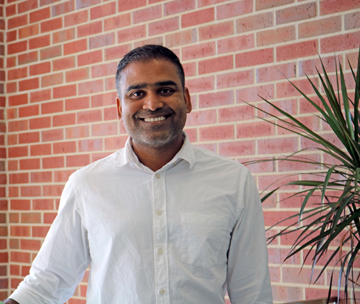
Timo HytönenView profile
Professor
Timo Hytönen is a Professor in the Department of Agricultural Sciences at the University of Helsinki's Faculty of Agriculture and Forestry. He holds a Docentship in the same department and is an integral member of the Viikki Plant Science Centre (ViPS). His academic leadership extends to supervising doctoral students across three major programs: Sustainable Use of Renewable Natural Resources, Integrative Life Science, and Plant Sciences. Additionally, he maintains an external position as Principal Research Scientist at NIAB EMR in Genetic Genomics & Breeding since November 2018. Professor Hytönen's research interests span plant genetics, molecular biology, and crop production sciences with a specialized focus on berry crops, particularly strawberries. His work investigates fundamental plant processes including flowering time regulation, environmental adaptation mechanisms, fruit development, and disease resistance. His research integrates genomic, transcriptomic, and epigenetic approaches to understand how plants respond and adapt to environmental challenges. His extensive publication record (88 publications) reveals a strong focus on woodland strawberry (Fragaria vesca) as a model system for studying economically important traits in berry crops. Recent work demonstrates expertise in QTL mapping, genome-wide association studies, circadian rhythm adaptation, and the genetic basis of climate adaptation. His research shows consistent emphasis on translating basic science into practical applications for crop improvement. Professor Hytönen leads significant research projects including 'Mansikan vihreä vallankumous' (Strawberry Green Revolution) funded by the Academy of Finland and 'ASTROS: How meristems guide plant reproductive development' supported by the Jane and Aatos Erkko Foundation. He is also a Principal Investigator in the Viikki Plant Science Centre (ViPS), a major collaborative research infrastructure. His academic service includes extensive peer review activities (37 manuscript reviews), hosting academic visitors (32 instances), and participation in numerous conferences and seminars. He has provided guidance to graduate students and supervised doctoral candidates, contributing significantly to the training of next-generation plant scientists.