Yee Whye Teh is a Professor at the Department of Statistics, University of Oxford, and a research scientist at DeepMind. His work focuses on statistical machine learning, including probabilistic learning, Bayesian nonparametrics, deep learning, and Monte Carlo methods. He co-directs the ELLIS programme on Robust Machine Learning and has held roles such as Programme Co-chair for ICML 2017. Teh has delivered keynotes at UAI 2019, an IMS Medallion Lecture at JSM 2019, and the Breiman Lecture in 2017. His research emphasizes scalable inference algorithms, hierarchical models, and applications in genetics and natural language processing. Teh's educational background includes a PhD from the University of Toronto (2003) and a Master's from the same institution (2000). He has contributed to widely used software tools like the Sequence Memoizer and has been recognized for his work through prestigious lectureships. Research interests span Bayesian nonparametric models, MCMC methods, and their applications in genetics and data compression. His lab collaborates on projects like fragmentation-coagulation processes for genetic variation modeling and Mondrian forests for online learning. Teh advises students through Oxford's graduate programs, though he notes high demand for mentorship. His work often bridges theory and practice, addressing challenges in big data learning and small data problems.
Dr. Diyi Yang is an Assistant Professor in the Computer Science Department at Stanford University. She leads the Social and Language Technologies (SALT) Lab, affiliated with the Stanford NLP Group, Stanford HCI Group, Stanford AI Lab (SAIL), and Stanford Human-Centered Artificial Intelligence (HAI). Her research focuses on socially aware natural language processing, large language models (LLMs), and human-AI interaction, aiming to improve human-human and human-computer communication through socially grounded AI systems. Education: Ph.D. in Language Technologies Institute, Carnegie Mellon University (2013–2019) B.S. in ACM Honored Class, Shanghai Jiao Tong University (2009–2013) Research Interests: Dr. Yang’s work bridges computational social science and NLP. She explores how AI can understand social contexts in language use and develop systems that respect cultural norms, ethical standards, and human values. Her lab’s projects include AI companions for skill training (e.g., Rehearsal Dialects), norm-aware LLMs (NormBank), and frameworks for human-AI collaboration (Co-Gym). Recent efforts address bias in AI, societal impacts of LLMs, and ethical evaluation of human-AI systems. Awards & Honors: 2024: Sloan Research Fellowship, ONR Young Investigator Award 2023: Adamic-Glance Young Distinguished Award (ICWSM), Kavli Fellow (NAS) 2022: NSF CAREER Award, Microsoft Research Faculty Fellow 2020: IEEE AI’s 10 to Watch Advising & Grants: Dr. Yang advises over 10 PhD students and postdocs, co-leading projects on LLM evaluation (SWE-bench/SWE-smith), human-AI ethics, and culturally aware NLP. Her research is supported by NSF, Amazon, DARPA, Google, and Stanford’s HAI initiative. Labs & Teams: The SALT Lab collaborates across disciplines, with projects spanning computer science, linguistics, and social sciences. Current initiatives include developing AI tools for mental health support (AI Partner & Mentor) and auditing societal impacts of LLMs.
Joshua D. Angrist is the Ford Professor of Economics at the Massachusetts Institute of Technology, where he has been a faculty member since 1996. He is also a co-founder and director of MIT's Blueprint Labs and a Research Associate at the National Bureau of Economic Research. Angrist shares the 2021 Nobel Prize in Economic Sciences with David Card and Guido Imbens for their methodological contributions to the analysis of causal relationships. Angrist received his B.A. from Oberlin College in 1982 and completed his Ph.D. in Economics at Princeton University in 1989. Prior to joining MIT, he taught at Harvard University and the Hebrew University of Jerusalem. His academic journey began somewhat unconventionally, as he left high school early after 11th grade, worked for over a year, and only later discovered his passion for economics through an inspiring teacher at Oberlin. Angrist's research focuses on developing and applying innovative econometric methods to answer important economic questions using natural experiments. His work spans labor economics, education economics, and causal inference methodology. He is particularly known for his contributions to instrumental variables methods and the Local Average Treatment Effect (LATE) framework developed with Guido Imbens. His research explores the economics of education and school reform, the impact of social programs on labor markets, and the effects of immigration and regulation. His recent publications reveal a continued focus on causal inference methods applied to education policy questions, labor market issues, and health economics. The trend shows increasing sophistication in research design, with particular attention to addressing selection bias and developing methods for external validity. His work spans theoretical econometric contributions alongside empirical applications in education, labor markets, and health. Sveriges Riksbank Prize in Economic Sciences in Memory of Alfred Nobel (2021) Fama Prize for Graduate Education (2018) Fellow of the American Academy of Arts and Sciences Fellow of the Econometric Society Angrist is deeply committed to teaching and mentoring. He has developed influential econometrics textbooks including 'Mostly Harmless Econometrics' and 'Mastering Metrics' with Jörn-Steffen Pischke. At MIT, he teaches courses including Labor Economics I (14.661), Econometric Data Science (14.32), and Labor Economics and Public Policy (14.64). He emphasizes selecting UROP students who have mastered foundational economics through courses like 14.64 and 14.32. Beyond MIT, Angrist co-founded Avela, a software startup using cutting-edge research to help schools improve enrollment and operations. Angrist co-founded and directs MIT's Blueprint Labs, which brings together researchers from economics, computer science, and education to develop innovative solutions for educational challenges. Through Blueprint Labs and Avela, his work bridges academic research with practical applications in education policy and technology.
Prof. Peter Scholze is a leading mathematician at the University of Bonn and the Max Planck Institute for Mathematics (MPIM). He holds a professorship in the Mathematical Institute at the University of Bonn and is affiliated with MPIM as a principal investigator. His research focuses on arithmetic geometry, representation theory, and p-adic geometry, with notable contributions to perfectoid spaces, prismatic cohomology, and the geometrization of the local Langlands correspondence. Scholze has organized several advanced seminars (ARGOS) and taught courses on topics like condensed mathematics, p-adic geometry, and algebraic geometry. He collaborates widely with researchers such as Laurent Fargues and Bhargav Bhatt. His recent work includes groundbreaking papers on wild Betti sheaves, motivic geometrization of the local Langlands correspondence, and the Habiro ring of number fields. Scholze has pioneered the use of prismatic cohomology to unify p-adic Hodge theories and has developed foundational frameworks in derived algebraic geometry. His research also intersects with representation theory and topological cyclic homology. Affiliations: University of Bonn (Mathematical Institute), Max Planck Institute for Mathematics (MPIM) Research Groups: Arbeitsgruppe Arithmetische Geometrie und Darstellungstheorie Teaching: Recent courses include 'Selected Topics in Algebraic Geometry' and 'Six-Functor Formalisms'. His work frequently explores connections between algebraic geometry and number theory, with a focus on geometric approaches to arithmetic problems. Scholze is a key figure in modern arithmetic geometry, influencing both foundational theory and applied areas like the Langlands program.
Benjamin Van Roy is a Professor at Stanford University since 1998, affiliated with the Departments of Electrical Engineering and Management Science and Engineering, and the Institute for Computational and Mathematical Engineering. He leads the Efficient Agent Team at Google DeepMind and previously held leadership roles at Morgan Stanley, Unica, and Enuvis. He holds SB, SM, and PhD degrees in Computer Science and Electrical Engineering from MIT, advised by John Tsitsiklis. His research focuses on reinforcement learning, alignment, and information theory, with contributions to machine learning foundations, optimization, and finance. He has authored over 150 publications, including influential works on Thompson Sampling, approximate dynamic programming, and exploration strategies. His honors include INFORMS and IEEE Fellowships and the INFORMS Lanchester Prize. Van Roy advises doctoral students across academia and industry, with graduates at top institutions and companies like Meta, Tesla, and Citadel. He teaches courses on reinforcement learning, stochastic control, and optimization. His open-source projects include Epistemic Neural Networks and the Neural Testbed for evaluating machine learning models. Key contributions include foundational work in reinforcement learning theory, scalable methods for recommendation systems, and applications in finance and resource allocation. His research bridges theoretical insights with practical applications, emphasizing alignment and safety of AI systems.
Yingyan (Celine) Lin is an Associate Professor in the School of Computer Science at Georgia Institute of Technology, leading the Efficient and Intelligent Computing (EIC) Lab. Her work focuses on cross-layer innovations in machine learning systems, from algorithms to chip design, aiming to advance green AI and ubiquitous machine learning. She holds a Ph.D. in Electrical and Computer Engineering from the University of Illinois at Urbana-Champaign (2017). Research interests include efficient machine learning, neural rendering (e.g., NeRF), hardware-software co-design for AI acceleration, and graph neural networks. Her lab has pioneered projects like RTML and 3DML, funded by NSF, NIH, DARPA, and industry partners (Qualcomm, Intel, Meta). Awards: NSF CAREER Award (2021), ACM SIGDA Outstanding Young Faculty (2022), Meta Faculty Research Award (2022) Grants: Multi-university projects funded by NSF, NIH, DARPA, SRC, ONR, and industry Recognition: First-place wins at DAC 2022 and TinyML Design Contest 2022, IEEE Micro Top Pick 2023 Her research bridges algorithmic innovation with hardware implementation, emphasizing energy efficiency and real-time performance for applications in AR/VR, computer vision, and neuro-symbolic AI systems.
Polina Golland is a Professor in the Department of Electrical Engineering and Computer Science (EECS) at MIT and a Principal Investigator in the Computer Science and Artificial Intelligence Laboratory (CSAIL). Her research focuses on developing novel techniques for biomedical image analysis and understanding, particularly in medical vision, AI/ML, and health care applications. She leads the Medical Vision Group and collaborates with the Vision Group at CSAIL. Her work emphasizes statistical modeling of medical images, shape modeling, and predictive analytics for biological processes. Current projects include fetal MRI analysis, cardiac MRI segmentation, and quantitative assessment of pulmonary edema in chest X-rays. She has secured grants from NIH, MIT-IBM Watson AI Lab, and other institutions to support her research. Dr. Golland teaches courses on inference, probability, and probabilistic systems. She advises graduate students in MIT's EECS program and has mentored numerous postdocs and researchers. Her lab focuses on translating advanced imaging techniques into clinical workflows, with applications in neuroimaging, fetal health monitoring, and cardiovascular disease analysis. Notable collaborations include work with Harvard Medical School affiliates, Brigham and Women's Hospital, and the MIT Jameel Clinic. Her research aims to bridge computational methods with clinical needs, improving diagnostic tools and treatment planning through machine learning and medical imaging innovation.
Hao Su is an Associate Professor in the Department of Computer Science and Engineering at University of California, San Diego . He serves as Chairman & CTO of Hillbot Inc , and leads the SU Lab which focuses on building autonomous systems that learn actively in physical environments. His affiliations include the Institute for Learning-enabled Optimization at Scale , Artificial Intelligence Group , Contextual Robotics Institute , Halicioğlu Data Science Institute , and Center for Visual Computing . As a researcher in Computer Vision, Robotics, and Neural Geometry , he has made significant contributions to 3D foundation models, reward-free world models, diffusion policy frameworks, and GPU-accelerated simulation environments. His 2024-2025 publications include advancements in hand-eye calibration, dynamic mesh reconstruction, and multi-stage robotic manipulation. His scientific awards include: Frontiers of Science Award (2025) TPAMI Young Research Award (2025) NSF CAREER Award (2023) ACM SIGGRAPH Best Doctorate Thesis Honorable Mention (2019) He has served as Program Chair for CVPR 2025 and Area Chair for ICLR 2022 and NeurIPS 2023 , while previously serving as Publication Chair for 3DV 2016 and Program Committee for SIGGRAPH Asia Workshops .
Luca Carlone is the Boeing Career Development Associate Professor in the Department of Aeronautics and Astronautics at MIT and a Principal Investigator at the Laboratory for Information & Decision Systems (LIDS) . He leads the SPARK Lab , focusing on developing certifiable perception algorithms for autonomous systems. PhD in Mechatronics (Polytechnic University of Turin, 2012) Research spans robotics, computer vision, and optimization Research Interests : Certifiable Perception algorithms for high-integrity systems High-level Perception (geometric, semantic, physical understanding) Efficient Perception methods for resource-constrained robots Scientific Contributions include: 2024 Outstanding Systems Paper Award (RSS) 2023 IEEE Transactions on Robotics King-Sun Fu Award 2021 NSF CAREER Award 2020 AIAA Advising Award 2019 Amazon Research Award Advising : Teaches graduate courses like Visual Navigation for Autonomous Vehicles and Robotics: Science and Systems . Collaborates with institutions including JPL, Caltech, and KAIST through the DARPA SubT Challenge.
Adrian Weller is a prominent researcher and academic at the University of Cambridge, serving as a Director of Research in Machine Learning within the Department of Engineering. He holds multiple significant leadership roles including Programme Director for Trust and Society at the Leverhulme Centre for the Future of Intelligence (CFI), and previously served as Programme Director for AI at The Alan Turing Institute, the UK national institute for data science and AI. His work bridges theoretical machine learning research with practical applications and societal implications of artificial intelligence. Weller's research interests span a broad spectrum of AI and machine learning topics with a particular focus on ensuring beneficial societal outcomes. His work encompasses explainability, fairness, robustness, scalability, privacy, safety, and ethics in AI systems. He has made significant contributions to trustworthy machine learning, including developing frameworks for AI governance, certification, and human-AI collaboration. His research group actively investigates neuro-symbolic approaches, privacy-preserving techniques, and methods for improving the reliability and interpretability of AI systems. His recent publications demonstrate a strong trend toward addressing the practical challenges of deploying AI systems in real-world contexts, particularly focusing on certification frameworks, governance mechanisms, and human-centered approaches. His work spans theoretical advances in machine learning architectures while maintaining a strong connection to societal impact, with publications appearing in top venues across AI, machine learning, and interdisciplinary applications. Scientific Awards: MBE for services to digital innovation (2022 Queen's Birthday Honours) Turing AI Fellowship for Trustworthy Machine Learning Weller actively supervises a large group of PhD students and postdocs, with current students including Juyeon Heo, Yanzhi Chen, Katie Collins, Isaac Reid, Yichao Liang, Herbie Bradley, and Shoaib Siddiqui. His former students have gone on to positions at leading institutions including Google DeepMind, ETH Zurich, NYU, and MPI-IS Tübingen. He has served on numerous advisory boards including the Centre for Data Ethics and Innovation, UNESCO's expert group on AI ethics, and the World Economic Forum's Global Future Council on AI. His research has been supported through his Turing AI Fellowship and various collaborative projects focused on safe and ethical AI development. Weller leads a vibrant research group focused on trustworthy machine learning, which actively organizes workshops and conferences including ICML 2024 (where he served as Program Chair), multiple workshops on responsible AI, and events through the ELLIS network. His group collaborates extensively across disciplines, working with researchers in computer science, social sciences, law, and policy to address the multifaceted challenges of developing beneficial AI systems.
Robert JOLIET is an Associate Professor of Finance at IÉSEG School of Management in France. He holds a Ph.D. in Economics and Management from HEC-ULg Management School (Belgium) and has held various academic leadership roles, including Director of Academic Development and Academic Director of the PGE (MSc in Management). His research focuses on finance, portfolio management, SRI (Socially Responsible Investing), and corporate finance, with a particular emphasis on international expansion, capital structure, and sustainable investment strategies. Education: 2008: Ph.D. in Economics and Management, HEC-ULg Management School, Belgium 2004: Master of Advanced Studies (DEA), Management Sciences (Finance), University of Liège, Belgium 2002: Master of Science in Business Engineering (Finance), University of Liège, Belgium Research interests span SRI fund dynamics, corporate social responsibility valuation, international debt policies, and market liquidity. Notable contributions include analyzing the impact of SRI mutual funds on corporate governance and environmental practices, and exploring the stability of sovereign debt structures in the Eurozone. Awards include the 2005 FORTIS Award (Third Prize) and the 2003 E.G. de Barsy Doctoral Fellowship. He has published extensively in journals like Economics Letters and Journal of Banking & Finance . Academic leadership roles include directing programs and departments at IÉSEG, alongside coordinating the Finance Track and managing academic development initiatives. His teaching focuses on financial data analysis, active portfolio management, and investment strategies in capital markets. He is a member of the LEM (Laboratoire d'Économie Moderne) research group and contributes to interdisciplinary research in finance and economics.
Michael Kaess is an Associate Professor at the Robotics Institute, Carnegie Mellon University (CMU), within the School of Computer Science. He leads the Robot Perception Lab (RPL) and contributes to the Field Robotics Center (FRC) and Computer Vision Group (CV). His research focuses on efficient perception algorithms for mobile robots, particularly in 3D mapping, SLAM, and sensor fusion using vision, LiDAR, inertial, and sonar data. Kaess holds a PhD in Computer Science from Georgia Tech and was a postdoc at MIT's Marine Robotics Lab. Education: Georgia Institute of Technology, PhD in Computer Science (2008) MIT, Postdoctoral Associate (2008–2010) Research Interests: Kaess develops algorithms for robust and efficient inference in robotics, emphasizing factor graphs and linear algebra. His work spans underwater robotics, aerial systems, tactile SLAM, and multi-sensor integration. Key areas include SLAM with planes/lines, imaging sonar reconstruction, and neural field methods for LiDAR-visual fusion. Publications: Over 145 papers, including work on EDPLVO (visual odometry), HoloOcean (underwater simulation), and neural radiance fields with LiDAR. Recent trends focus on robust incremental smoothing, acoustic-optical fusion, and real-time volumetric mapping. Awards: Recognized with the RSS Test of Time Award (2020), Outstanding Associate Editor (2022), and paper awards at ICRA/ICRA. Active in conference organization (IROS/ICRA program committees). Advising & Grants: Supervises 10+ current PhD/MSc students, with past advisees contributing to CoRL/ICRA work. Manages grants in perception, autonomy, and marine robotics. Teaches courses like Robot Localization and Mapping (16-833). Labs/Teams: Directs RPL, collaborates with FRC on field robotics. Develops open-source tools like GTSAM (GNU Toolkit for Smoothing and Mapping).
Xin Guo is Professor and Department Chair of Industrial Engineering and Operations Research (IEOR) at UC Berkeley's College of Engineering, holding the Coleman Fung Chair in Financial Modeling. Her research bridges mathematical finance, stochastic control, and machine learning with applications in risk analytics and quantitative trading. Education: Ph.D. in Mathematics, Rutgers University (1999) Research Interests: Professor Guo's work centers on mathematical finance , stochastic games , and reinforcement learning . She develops theoretical frameworks for α-potential games and mean-field systems while applying signature methods and GANs to financial data. Her research addresses critical problems in portfolio optimization, fraud detection (e.g., Medicare analytics), and market forecasting, emphasizing the intersection of stochastic control with machine learning for real-world decision-making under uncertainty. Publication Trends: Recent work (2023-2025) shows increasing focus on multi-agent reinforcement learning through mean-field game theory, with applications spanning finance (corporate bonds, trading), healthcare (fraud detection), and transportation (rate forecasting). Key innovations include BSDE approaches for stochastic games, signature-based time series analysis, and theoretical guarantees for GAN training dynamics. Scientific Awards: Holds the prestigious Coleman Fung Chair in Financial Modeling, reflecting significant contributions to quantitative finance research. Advising and Grants: As IEOR Department Chair, Professor Guo mentors graduate students in stochastic modeling and financial engineering. Her research is supported by the Coleman Fung Endowment Fund, with collaborations spanning finance, healthcare, and transportation sectors through industry partnerships. Labs and Teams: Leads the Risk Analytics & Data Analysis Research (RADAResearch) Lab ( https://risklab.ieor.berkeley.edu/ ), which develops cutting-edge methodologies for risk assessment, data-driven decision-making, and game-theoretic solutions to complex systems. The lab fosters interdisciplinary work connecting mathematical theory with practical applications in FinTech and beyond.
Mark Steedman is a Professor in the School of Informatics at the University of Edinburgh, where he conducts research in Artificial Intelligence, Computational Cognitive and Social Science, and Natural Language and Speech Processing. He is affiliated with the Institute for Language, Cognition and Computation (ILCC), the Centre for Speech Technology Research (CSTR), and the Human Communications Research Center (HCRC). He also holds an adjunct professorship in Computer and Information Science at the University of Pennsylvania. His research focuses on Combinatory Categorial Grammar (CCG) , computational linguistics , prosody and intonation , temporal semantics , gesture in communication , and computational music analysis . He has authored foundational books including Surface Structure and Interpretation , The Syntactic Process , and Taking Scope . The recent publications reflect a strong trend toward integrating formal grammatical frameworks like CCG with modern neural and distributional models, particularly in semantic parsing, entailment reasoning, and cognitive modeling. His work bridges symbolic and statistical approaches in NLP, often focusing on robust, wide-coverage parsing and semantic interpretation. Best Paper Award at AACL/IJCNLP 2023 for 'Smoothing Entailment Graphs with Language Models' Best Paper Award at ACL 2023 for 'Extrinsic Evaluation of Machine Translation Metrics' Influential Paper Award 2017 from IFAAMAS for 'Animated Conversation' Mark Steedman has supervised numerous PhD students and collaborated widely across institutions. He leads research in formal grammar applications to cognitive modeling, dialogue, and multimodal communication. His lab contributes to CCG software and semantic parsing tools, and he continues to be actively involved in advancing the integration of symbolic and neural AI.
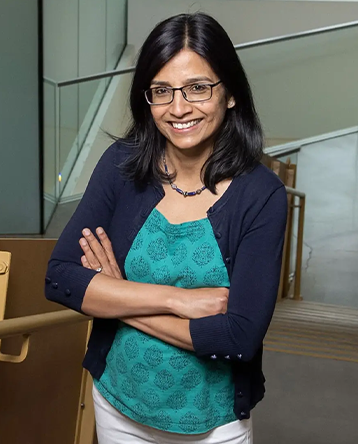
Aarti Singh is a Professor in the Machine Learning Department at Carnegie Mellon University and Director of the NSF AI Institute for Societal Decision Making. She leads research at the intersection of machine learning, statistics, and decision making, with applications to scientific and societal domains. Her work focuses on designing principled interactive algorithms for learning and decision making under uncertainty. Education: Ph.D. in Electrical Engineering, University of Wisconsin-Madison (2008) M.S. in Electrical Engineering, University of Wisconsin-Madison (2003) B.E. in Electronics and Communication Engineering, University of Delhi (2001) Research Interests: Professor Singh's research centers on developing interactive machine learning algorithms that go beyond finding input-output associations to make higher-level decisions about the most informative data and actions. Her work spans autonomous decision making, including active sampling, stochastic optimization, bandits, and reinforcement learning that are statistically optimal, computationally tractable, and robust. She also investigates human factors in decision making, designing algorithms that model and leverage human feedback while accounting for bias, memory effects, and calibration. Her research has applications in material science, cosmology, and peer review systems. Research Trends: Professor Singh's recent publications demonstrate a strong focus on reinforcement learning, particularly in developing more efficient and robust algorithms for decision making under uncertainty. Her work bridges theoretical foundations with practical applications, spanning from fundamental algorithm development to real-world implementation in scientific domains. There's a clear trajectory toward integrating human factors into decision-making algorithms, with significant contributions to peer review systems and preference learning. Scientific Awards: NSF Career Award United States Air Force Young Investigator Award A. Nico Habermann Faculty Chair Award Harold A. Peterson Best Dissertation Award Multiple paper awards Advising and Grants: Professor Singh has advised numerous PhD and master's students, many of whom have gone on to faculty positions or research roles at leading institutions. Her research is supported by prestigious grants from ONR, Simons Foundation, AFRL, ARL, and NSF. She serves as General Chair (2025) and Program Chair (2020) for the International Conference on Machine Learning (ICML) and has held leadership roles in multiple professional organizations. Research Team: Professor Singh leads a vibrant research group within the Machine Learning Department at CMU, with current PhD students working on topics including reinforcement learning, human-AI collaboration, and decision making under uncertainty. She also directs the NSF AI Institute for Societal Decision Making, which brings together researchers from multiple disciplines to develop AI systems that support human decision making in societal contexts.