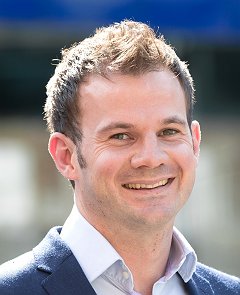
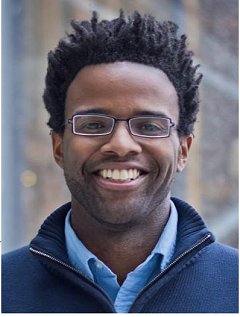
Dr. Christos Antonopoulos is an Associate Professor at the Department of Electrical and Computer Engineering, University of Patras. He holds a Diploma and PhD in Electrical Engineering from the University of Patras (2002, 2008) and has participated in over 16 European research projects (FP5, FP6, FP7, Horizon 2020) and 6 national projects. Research Interests: Wireless Networks Cyberphysical Systems Embedded Software Architecture Internet of Things Cross-Layer Protocols Sensor Networks Technical Expertise: His work involves network simulation, power optimization, and reconfigurable computing. He has published >100 journal/conference papers and 13 book chapters with over 1000 citations.
Michael D. Bond is a Professor in the Department of Computer Science & Engineering at Ohio State University's College of Engineering. He leads the Programming Languages and Software Systems (PLaSS) Research Group, which focuses on designing program analyses and software and hardware systems that enhance computing reliability, scalability, and security. His academic service includes general chair for PLDI 2027, program committee membership for multiple top conferences, and committee roles in SIGPLAN Research Highlights (2024-2027). Professor Bond's research spans programming languages, systems, and security, with particular expertise in memory management, concurrency, hardware transactional memory, information flow control, and predictive race detection. His work bridges theoretical foundations with practical implementations, as evidenced by numerous open-source projects accompanying his publications. The PLaSS group has made significant contributions to understanding and improving memory models, developing efficient garbage collection techniques for modern architectures, and creating novel approaches to secure programming in languages like Rust. Analysis of his recent publications reveals a clear trajectory toward addressing security and reliability challenges in modern computing systems, particularly through language-based approaches. His work increasingly focuses on Rust programming language security mechanisms, memory disaggregation for datacenters, and advanced techniques for detecting and preventing concurrency bugs. The research demonstrates strong continuity in exploring memory models and concurrency while adapting to emerging hardware trends and security challenges. Outstanding Teaching Award, Department of Computer Science and Engineering, Ohio State University (2018) Lumley Research Award, College of Engineering, Ohio State University (2016) OOPSLA 2015 Distinguished Paper and Artifact Awards NSF CAREER Award ACM SIGPLAN Outstanding Doctoral Dissertation Award Intel PhD Fellowship Professor Bond actively mentors several PhD students including Chujun Geng, Vincent Beardsley, Chris Xiong, Victor Chen, and Noah Charlton, with external co-advisee Zixian Cai at Australian National University. His research is currently supported by multiple NSF grants including SaTC-2348754 (2024-2027), CyberCorps-2336531 (2024-2029), and CSR-2106117 (2021-2025), reflecting sustained funding for his work in information flow control, security, and systems research. The PLaSS Research Group maintains a strong presence in both academic and industrial communities, with graduated PhD students securing positions at major technology companies like Google, Amazon Web Services, and Huawei, as well as academic positions at institutions like UIUC and IIT Kanpur. The group's work combines theoretical rigor with practical implementation, consistently producing open-source artifacts that enable reproducibility and further research in the systems and programming languages community.
Ruzica Piskac is a Professor of Computer Science at Yale University, where she leads the Rigorous Software Engineering (ROSE) group. She has made significant contributions to the fields of software verification, security, automated reasoning, and code synthesis, focusing on improving software reliability and trustworthiness through formal techniques. Dr. Piskac received her PhD from the Swiss Federal Institute of Technology (EPFL) in 2011, where her dissertation won the Patrick Denantes Prize. Prior to joining Yale, she led an independent research group at the Max Planck Institute for Software Systems in Germany (2012-2013). Her research spans several key areas: symbolic execution for Haskell (G2), privacy-preserving formal methods (PPFM), functional reactive synthesis, verification of configuration files, and analysis of software updates. Her work consistently bridges theoretical formal methods with practical applications in real-world systems. Dr. Piskac's recent publications demonstrate a strong trend toward applying formal verification techniques to emerging challenges including large language models, quantum computing security, legal accountability of automated systems, and cyber-physical systems. Her research increasingly intersects with AI, cryptography, and legal domains while maintaining strong foundations in formal methods. Her scientific achievements have been recognized with numerous prestigious awards: Multiple Amazon Research Awards Yale University's Ackerman Award for Teaching and Mentoring Facebook Communications and Networking Award Microsoft Research Award for the Software Engineering Innovation Foundation (SEIF) Patrick Denantes Prize for her PhD dissertation Dr. Piskac has graduated five PhD students, four of whom have gone on to become assistant professors of computer science. She has served as Program Chair of the 37th International Conference on Computer Aided Verification and is on the Steering Committee of the Formal Methods in Computer-Aided Design conference. She leads the Rigorous Software Engineering (ROSE) group at Yale, which focuses on several key projects including: Symbolic Execution Engine for Haskell (G2) Privacy Preserving Formal Methods (PPFM) Functional Reactive Synthesis Verifications for Configuration Files Analysis of Software Updates and Configuration Files
Steve Blackburn is a research scientist at Google DeepMind and professor of computer science at the Australian National University in the College of Engineering and Computer Science. His primary research focus is on programming language implementation, with expertise spanning memory management, virtual machines, and performance analysis. He has served in significant leadership roles including Associate Dean for Diversity and Inclusion (2016-2019) and as Program Chair for PLDI 2015 and General Chair for PLDI 2023. Blackburn's research interests center on making software run faster and more power-efficiently on modern hardware. His primary areas include microarchitectural support for managed languages, fast and efficient garbage collection, and the design and implementation of virtual machines. He maintains a strong interest in sound methodology and infrastructure for successful research innovation. His work bridges theoretical computer science with practical systems implementation, with particular focus on memory management frameworks and performance benchmarking. His publication record reveals a consistent focus on memory management systems, with recent work exploring garbage collection in modern contexts including CRuby, Julia, mobile devices, and memory-disaggregated datacenters. His research shows an evolution from foundational garbage collection algorithms toward practical implementations addressing real-world constraints in contemporary programming languages and hardware platforms. A notable trend is his increasing focus on quantifying and understanding the true costs of garbage collection in production environments. Fellow of the ACM Blackburn has supervised numerous doctoral students including Zhen He, John Zigman, Robin Garner, Ting Cao, and currently advises Wenyu Zhao, Zixian Cai, and others. He has also served on multiple program committees for major conferences including PLDI, ASPLOS, ISMM, and OOPSLA, demonstrating his significant contributions to the programming languages and systems research community. His service includes editorial roles for ACM Transactions on Programming Language Applications and Systems from 2017-2020. He leads two major research infrastructure projects: the MMTk memory management framework and the DaCapo benchmark suite, both of which have become foundational tools for researchers in programming languages and systems. These projects reflect his commitment to shared research infrastructure and reproducible methodology in systems research.
Alastair F. Donaldson is a Professor in the Department of Computing at Imperial College London's Faculty of Engineering, where he leads the Multicore Programming Group. He also works as a Software Engineer at Google in the Android Graphics Team. Previously, he served as Director of GraphicsFuzz, an Imperial College spinout company acquired by Google in 2018. His research spans programming languages, compilers, verification, and testing, with a particular focus on randomized and fuzz testing techniques for compilers and program analyzers. Donaldson has developed several influential testing frameworks including GraphicsFuzz, RustSmith, and GrayC, which have significantly advanced compiler testing methodologies. Analysis of his recent publications reveals a strong trend toward practical applications of compiler testing techniques across diverse domains including GPU programming, verification-aware languages, and memory models. His work increasingly incorporates continuous integration practices and focuses on addressing real-world challenges in compiler development and verification. Donaldson maintains active involvement in the programming languages research community, serving on program committees for major conferences including PLDI, POPL, ASPLOS, and SPLASH. He has contributed significantly to advancing compiler testing methodologies and has mentored numerous researchers through PLMW (Programming Languages Mentoring Workshop). He leads the Multicore Programming Group at Imperial College London, which focuses on challenges in parallel and concurrent programming. His work bridges theoretical computer science with practical software engineering challenges, particularly in the areas of compiler correctness and verification.
Zhenjiang Hu is a Chair Professor and Dean of the School of Computer Science at Peking University. He serves as Director of the Programming Languages Laboratory and has held significant academic positions including Professor at the National Institute of Informatics and University of Tokyo. BS and MS from Shanghai Jiaotong University (1988, 1991) PhD from University of Tokyo (1996) Lecturer/Assistant Professor at University of Tokyo (1997) Associate Professor at University of Tokyo (2000) Full Professor at National Institute of Informatics (2008) Full Professor at University of Tokyo (2018-2019) Professor Hu's research primarily focuses on programming languages and software engineering, with special emphasis on functional programming, bidirectional transformation, and software adaptation. His work explores transformational programming approaches for automatic program optimization, systematic parallelization of sequential programs, efficient manipulation of structured documents, and bidirectional model transformation for software development. His research has significantly advanced the field of bidirectional programming, developing foundational theories and practical applications that enable more reliable and maintainable software systems. His recent publications demonstrate a strong trajectory in bidirectional programming, program synthesis, and graph processing. The research shows increasing sophistication in handling program transformations, with growing emphasis on practical applications in software engineering contexts. His work increasingly integrates formal methods with practical programming language design, creating systems that maintain theoretical soundness while addressing real-world software development challenges. The research spans multiple venues including top conferences like PLDI, POPL, ICFP, and OOPSLA, reflecting its broad impact across programming language research. Fellow of JFES (Japan Federation of Engineering Society, 2016) ACM Distinguished Scientist (2016) Member of Academia Europaea (2019) IEEE Fellow (2020) Member of Engineering Academy of Japan (2020) Professor Hu actively mentors students and has welcomed excellent candidates to join his group through Peking University's International Elite PhD Program and Boya Postdoctoral Fellowship Program. He serves on numerous program committees for major conferences including PLDI, POPL, ICFP, and OOPSLA, and holds editorial positions for prestigious journals such as Journal of Functional Programming and Science of Computer Programming. His leadership extends to conference organization, having served as PC Chair for CNCC 2024 and General Co-Chair for SoICT 2019. As Director of the Programming Languages Laboratory at Peking University, Professor Hu leads a research team focused on advancing programming language theory and practice. His lab has developed influential frameworks like BiGUL for bidirectional programming and Fregel for graph processing. The laboratory maintains strong international collaborations and contributes to both theoretical foundations and practical implementations in programming languages and software engineering.
Michael Carbin is an Associate Professor at MIT in the Department of Electrical Engineering and Computer Science (EECS), where he leads the Programming Systems Group at the Computer Science and Artificial Intelligence Laboratory (CSAIL). His research centers on developing programming systems that handle uncertainty through probabilistic programming, quantum computing, and neural networks. Carbin's work spans programming languages, systems, and machine learning, with themes including uncertainty management, efficiency optimization, and formal verification. His publications demonstrate a strong focus on probabilistic inference methods, neural network optimization, and quantum programming frameworks. Awards and Honors: Sloan Research Fellowship (2020) Multiple Best Paper Awards (OOPSLA 2013, 2014; ICLR 2019) NSF CAREER Award (2018) Google Faculty Research Award (2018) As the head of the Programming Systems Group, he advises 10+ graduate students and postdocs, focusing on cutting-edge systems research. He has secured grants including Facebook Research Awards and NSF funding.
Sarantopoulos Panagiotis is an Assistant Professor of Management in the Department of Business Administration at Athens University of Economics and Business (AUEB). He previously served as a Lecturer in Marketing at Alliance Manchester Business School, University of Manchester. His research focuses on applying marketing analytics to digital marketing, e-commerce, pricing strategies, and consumer responses to AI in marketing contexts. His work has been published in top journals such as the Journal of Marketing Research , Journal of Business Research , and International Journal of Electronic Commerce , earning awards at conferences and funding from multinational corporations. He has been honored with multiple teaching excellence awards from the University of Manchester. Research interests include algorithmic pricing, consumer trust in digital platforms, omnichannel retail strategies, and the integration of big data analytics into customer experience management. His articles consistently explore the intersection of technology, consumer behavior, and strategic marketing practices. He teaches core marketing courses at both undergraduate and postgraduate levels at AUEB, including Principles of Marketing, Strategic E-Marketing, and Marketing Analytics. His academic contributions highlight a strong focus on practical applications of theoretical frameworks in real-world marketing challenges. Key achievements include recognized scholarly impact and pedagogical innovation, with a portfolio emphasizing technology-driven marketing solutions and consumer-centric strategies. His work bridges academic research and industry needs, addressing topics like pricing dynamics, omnichannel integration, and AI applications in marketing.
Dimitrios Karolidis is a Lecturer at the Department of Informatics and Computer Engineering within the School of Engineering at the University of West Attica (UniWA). He holds a Bachelor's degree in Physics from the University of Ioannina and a Master's in New Information and Communication Technologies from the National and Kapodistrian University of Athens (NKUA). Education: BSc in Physics, University of Ioannina MSc in New Information and Communication Technologies, NKUA His research focuses on Web Application Development , Internet Technologies , and Machine Learning . He has contributed to photovoltaic system optimization through projects like SmartPV , emphasizing fault detection, energy efficiency, and IoT integration. His publications highlight advancements in smart photovoltaic systems , including fault detection algorithms and communication protocols, aiming to reduce maintenance costs and improve energy output. He has also authored textbooks on programming languages like C and Python, widely used in academic settings. He has previously held academic positions at the Technological Educational Institute of Athens (2007-2018) and TEI Piraeus , working on laboratory and teaching roles related to computer systems and networks.
Nikolaos S. Papaspyrou is a Professor at the School of Electrical and Computer Engineering of the National Technical University of Athens (NTUA), affiliated with the Software Engineering Laboratory and the Division of Computer Science. His research focuses on programming languages, compilers, formal verification, and concurrency. Since October 2021, he has been on leave from NTUA while working as a Software Engineer at Google's V8 JavaScript and WebAssembly engine team. Previously, he served as Director of the Division of Computer Science (2017–2019) and held a sabbatical at Google's Munich compiler group (2015–2016). His academic contributions include pioneering work on Erlang/OTP scalability, concolic testing for functional languages, and static analysis techniques. He has authored numerous publications in top venues like ACM Transactions on Programming Languages and Systems and IEEE conferences. Papaspyrou has supervised over 50 diploma students and multiple PhD candidates, contributing to the education of future researchers and engineers. He actively participates in programming competitions, coaching Greek Olympiad teams, and volunteers in the Hellenic Informatics Society. He teaches advanced courses on programming languages, compilers, and software engineering at NTUA, emphasizing practical applications of theoretical concepts. His educational philosophy integrates problem-solving through programming, as highlighted in his FedCSIS 2013 paper on teaching methodologies.
Anna Pappa is an Emmy Noether Group Leader at the Electrical Engineering and Computer Science Department of Technical University Berlin, leading the Quantum Communication and Cryptography group funded by DFG since 2020. Previously, she held Marie Sklodowska-Curie Fellowships at the Dahlem Center for Complex Quantum Systems (Freie Universität Berlin) and University College London (UCL). Her research focuses on quantum protocols with provable security in realistic environments, quantum communication, cryptography, and secure multi-party computation. She has a PhD from Télécom Paristech and Paris Diderot, and earlier degrees from the National Technical University of Athens (NTUA). Key achievements include experimental plug-and-play quantum coin flipping, quantum network routing algorithms, and entanglement verification techniques resistant to dishonest participants. She has received notable awards such as the Emmy Noether Fellowship (DFG) and Google Anita Borg Memorial Scholarship. Pappa’s work bridges theoretical quantum computing with practical implementations, emphasizing security in quantum systems. Her academic career includes postdoctoral roles at the University of Edinburgh and UCL, alongside software engineering experience at Nokia-Siemens Networks. She has organized seminars on cryptography and quantum computing, and her teaching spans programming languages and cryptography courses at NTUA. Pappa actively participates in conferences like QPL, QCRYPT, and AQIS, contributing to both theoretical advancements and experimental validations in quantum information science.
Efstathios Stamatatos is a Professor in the Department of Information and Communication Systems Engineering at the University of the Aegean, Greece. He has been a faculty member at the university since 2004, following previous research positions at the Wire Communications Lab of the University of Patras, the Polytechnic University of Madrid, the Austrian Research Institute for Artificial Intelligence, and the TEI of Ionian Islands. His primary research interests include Text mining, Intelligent information retrieval, Natural language processing, Machine learning, and Computer music, with a particular focus on authorship attribution, plagiarism detection, and web genre identification. His work bridges computational linguistics, digital forensics, and digital humanities, applying machine learning techniques to analyze textual patterns and stylistic features. Dr. Stamatatos has authored numerous publications on authorship attribution, plagiarism detection, and text classification, with a strong emphasis on developing robust methodologies that work across different domains and languages. His research has evolved from traditional n-gram approaches to more sophisticated techniques involving machine learning ensembles, topic modeling, and recently, addressing challenges posed by generative AI systems. He has served as Associate Editor for the International Journal of Digital Crime and Forensics, and as Editorial Board Member for Language Resources and Evaluation and Information Processing and Management. He has also been Guest Editor for a Special Issue on Plagiarism and Authorship Analysis in Language Resources and Evaluation. Dr. Stamatatos has been instrumental in organizing the PAN (Uncovering Plagiarism, Authorship, and Social Software Misuse) workshop series, serving as co-organizer and contributing numerous overview papers on authorship verification, plagiarism detection, and digital text forensics. He has also served on program committees for major conferences including ACL, SIGIR, ECIR, and AAAI.
Michael Eichberg is a Professor at Technische Universität Darmstadt, Germany, where his work centers on software engineering, static analysis, programming languages, and secure software development tools. He is the principal architect of the OPAL framework for Java bytecode analysis and has an extensive publication record spanning PLDI, ICSE, ESEC/FSE, ISSTA, ASE, FSE, SOAP, and other premier venues. Research Interests: Static program analysis and its scalability to real-world code bases Software security, particularly cryptographic API misuse and Android app repackaging detection Concurrent and parallel programming models, including deterministic concurrency in Scala Software architecture conformance, drift and erosion detection, and rule reuse Development of open extensible tools and frameworks (OPAL, LectureDoc, QScope, Sextant, XIRC, IRC) Publication Trends: His recent work (2015-2022) demonstrates a strong focus on empirical evaluation of static analysis techniques, modular composition of analyses, and security-related program understanding. Key themes include unsoundness in call graph construction, purity and immutability analyses, parallelization of static analyses, and large-scale studies of cryptographic API misuse. Tools & Frameworks: OPAL – A flexible Java bytecode analysis and manipulation framework (core developer until 2019) LectureDoc 2 – Web-based lecture material authoring and presentation system QScope – Open extensible metrics framework for modern software projects Sextant – Eclipse-integrated software exploration tool XIRC/IRC – Frameworks for enforcing system-wide properties and architectural constraints
Costas Saitanis is a Professor and Director of the Laboratory of Ecology and Environmental Sciences at the Agricultural University of Athens. His academic career is deeply rooted in environmental science, with particular focus on plant responses to environmental stressors, especially ozone pollution. He has established himself as a leading researcher in the field of plant-environment interactions through extensive publication record and laboratory leadership. Professor at Agricultural University of Athens Director of Laboratory of Ecology and Environmental Sciences Specializes in plant responses to environmental stress Expert in ozone effects on vegetation Professor Saitanis's research interests span multiple dimensions of environmental plant science, with particular emphasis on ozone effects on plants, plant stress physiology, and ecological stoichiometry. His work bridges fundamental plant physiology with practical environmental concerns, examining how air pollutants impact plant growth, nutrient cycling, and ecosystem functioning. He has made significant contributions to understanding how plants respond to ozone at molecular, physiological, and ecosystem levels, while also exploring protective strategies like melatonin application and biostimulants to enhance plant resilience. His research has practical implications for agriculture, urban forestry, and environmental protection policies. His recent publications reveal a strong focus on ozone-plant interactions, with numerous studies examining nutrient stoichiometry in urban trees exposed to ozone, protective effects of melatonin against ozone damage, and innovative approaches to ozone biomonitoring. His work spans from fundamental plant physiology to applied environmental science, with studies conducted across various ecosystems from urban environments to archaeological sites. Professor Saitanis has maintained consistent productivity across decades, with publications dating back to the early 2000s showing his long-standing commitment to environmental science research. Professor Saitanis has contributed significantly to the scientific understanding of ozone effects on vegetation through numerous publications and research projects. His work has helped establish methodologies for ozone biomonitoring and has provided critical insights into plant stress responses that inform environmental protection policies. His research has practical applications for sustainable agriculture and urban forestry in the face of increasing air pollution challenges. His academic leadership as Director of the Laboratory of Ecology and Environmental Sciences demonstrates his commitment to advancing environmental science research and education. Professor Saitanis appears to maintain an active research program with numerous recent publications, indicating ongoing scholarly activity and contribution to his field.
Georgios Panou is an Assistant Professor at the Department of International and European Economic Studies of the University of W. Macedonia . He holds a Doctorate in Corporate Law from the Georg August University of Göttingen and a Magister iuris in Commercial Law from the same institution. His academic career spans teaching roles at institutions like the Technological Educational Institute of W. Macedonia and TEI Serres , covering courses such as Business Law , Commercial Law , and Introduction to Law . Education : Doctorate: Corporate Law, University of Göttingen (1995) Magister iuris: Commercial Law, University of Göttingen (1991) Law Degree: Aristotle University of Thessaloniki (1988) Research Interests : Panou specializes in Corporate Law , European Economic Law , and Comparative Law , particularly analyzing Greek and German legal frameworks. His work often intersects with digital transformation , taxation , and ethical business practices . Recent publications explore topics like single-member companies , neural networks in auditing , and EU consumer protection directives , reflecting his focus on modern legal-technological challenges. Collaboration and Conferences : He has co-authored works with colleagues such as John Velentzas , Nick Kartalis , and Georgia Broni , presenting at conferences like ICOAE 2020 and ICOAE 2022 . Notable conference contributions include analyses of EU credit institution regulations , digital signatures , and European cooperative societies . Additional Roles : Georgios Panou has practiced law since 1997 and participated in EU-funded programs for legal education reform. He is proficient in German (very good) , English (good) , and Italian (average) , with technical skills in word processing , database management , and Internet applications .