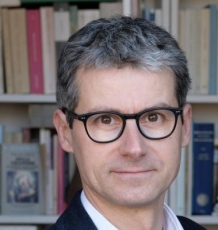
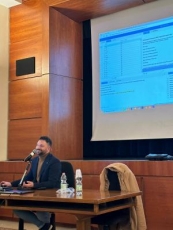
Alvise SPANO' is a Researcher at Ca' Foscari University of Venice, affiliated with the Department of Environmental Sciences, Computer Science and Statistics. He is also part of the Research Institute for Complexity. His academic focus includes Blockchain Programming Languages, Programming Languages, and Information Systems. Research projects include ALGOMOVE for Algorand and the RINmaker bioinformatics tool. He has taught courses like Object-Oriented Programming and Introduction to Programming at both undergraduate and doctoral levels. Research interests span smart contract analysis, type systems, and cybersecurity in distributed systems. He contributed to projects like secure RPL for mobile networks and Android-LEGO interoperability. Funding includes the CEVID 2016 project (Role: LD), collaboratively managed with researchers like Agostino Cortesi and Salvatore Orlando. His work bridges theoretical foundations (e.g., COBOL code typing) with practical applications in wearable systems and bioinformatics. Collaborations include the Blockchain Programming Languages research group with Lorenzo Benetollo and Sabina Rossi.
Roberto Amadini is an Associate Professor in the Department of Computer Science and Engineering at the University of Bologna. His work focuses on constraint programming, algorithm selection, and string constraint solving, with applications in cloud-edge computing and IoT systems. He leads research in deploying microservices over hybrid infrastructures and optimizing solver portfolios for constraint satisfaction problems. Research interests include advanced constraint solving techniques, formal methods for software analysis, and energy-efficient resource allocation. Amadini’s contributions span the design of frameworks like FREEDA and SUNNY-as2, which enhance deployment resilience and algorithm selection efficiency. His work bridges theoretical foundations with practical implementations in programming languages and verification tools. Recent publications explore sustainable cloud-edge applications, failure-resilient systems, and dynamic symbolic execution. He actively contributes to open-source projects like JSetL and participates in international solver challenges. No awards are explicitly listed in the provided materials. Amadini’s research group addresses cutting-edge challenges in distributed computing and constraint-based methodologies. Ongoing projects focus on optimizing solver portfolios for real-world computational tasks and advancing string analysis techniques in programming paradigms.
Antonella Carbonaro is a **Confirmed Associate Professor** at the **Department of Computer Science and Engineering** of the University of Bologna. She holds a PhD in Intelligent Artificial Systems from the University of Ancona and has conducted post-doctoral research in AI. Her work focuses on **data and knowledge modeling for semantic representation**, particularly in healthcare domains. She leads major projects like the **DARE initiative** (digital lifelong prevention) and the **Cancer Virtual Lab**, leveraging knowledge graphs and AI to advance healthcare analytics. She is also involved in gender-balance initiatives like the **Ragazze Digitali** program and contributes to EU projects such as TEHDAS2 (European Health Data Space). Her research integrates semantic web technologies, FHIR standards, and digital twin systems to enhance healthcare interoperability and decision-making. She has been awarded the **National Scientific Qualification (ASN) for Full Professor** (2023). She serves on committees including the Emilia-Romagna Region’s AI in Healthcare Working Group and chairs multiple project work packages.
Stefania Costantini is a Professor in Computer Science with a focus on logic programming, multi-agent systems, and healthcare applications. She has contributed to the development of intelligent ecosystems for patient monitoring, ontology frameworks for medical wearables, and formal verification methods for agent systems. Research Interests: Logic-based agent modeling Complex event processing Healthcare technology integration Temporal and metalevel logic applications Wearable device classification Recent Article Trends: Stefania's work combines artificial intelligence with biomedical engineering, emphasizing real-time data analysis from wearables, noise pollution mitigation, and agent-based healthcare systems. Her publications show a consistent focus on computational logic foundations applied to practical healthcare scenarios. Collaboration Network: Key co-authors include Lorenzo De Lauretis, Fabio Persia, and C. Bertoncelli across interdisciplinary projects blending computer science with medical research.
Daniela Capra is an Associate Professor at the University of Genoa , affiliated with the Department of Political and International Sciences (DiSPI). She teaches Spanish language, translation, and linguistics courses in degree programs related to administrative sciences, international relations, and sports policies. Her primary contact is via daniela.capra@unige.it . Research Focus : Spanish phraseology, historical linguistics, critical editions of Renaissance texts, lexicon evolution, and cross-linguistic lexicography. Publications : Specialized in digital discourse transformations, classical wisdom anthologies, and phraseological studies in economic journalism and modern literature. Notable Collaborations : Active in academic workshops on lexicography vs. terminology (Modena, 2012) and specialized linguistic resources. She contributes to critical editions of Spanish-Italian dictionaries and Renaissance literary texts.
Annarita Miglietta is an Associate Professor of Italian Linguistics at the University of Salento's Department of Humanities, a position she has held since March 21, 2005. She maintains an active research and teaching profile with office hours held Fridays from 9:30 to 10:30 in Studio 13C of Palazzo Parlangeli in Lecce. Her academic journey includes obtaining qualification for the first band in 2013 and reaffirming this qualification in 2019, demonstrating her continued scholarly excellence. Dr. Miglietta's research spans traditional dialectology and contemporary linguistic phenomena, with particular focus on the relationship between standard Italian and regional varieties in Salento. Her scholarly work examines language contact, code-switching, sociolinguistic variation, and the vitality of the Griko language. In recent years, she has expanded her research to include digital communication phenomena, analyzing language use in social media, rap lyrics, and the impact of technology on linguistic expression. Her methodological approach combines fieldwork with textual analysis across diverse contexts including educational settings, children's language acquisition, and digital environments. Her publication record shows a clear evolution from traditional dialectological studies toward contemporary language phenomena while maintaining continuity with regional linguistic traditions. The most recent publications demonstrate engagement with cutting-edge linguistic topics including digital communication, youth language, and the interface between traditional literary forms and new media. This trajectory reflects both her adaptability as a researcher and her commitment to examining language as a living, evolving system. Dr. Miglietta serves as a reviewer for the VQR (Research Quality Evaluation) for the periods 2015-2019 and 2020-2024, and has contributed significantly to doctoral education through committee service and specialized lectures for PhD programs at the University of Turin and the International PhD Program in Modern and Classical Languages at the University of Salento and University of Vienna. She maintains active scholarly engagement through editorial roles as a member of the board of Rivista Italiana di Dialettologia since 2012 and the scientific committee of Journal Olhares & Trilhas since 2019, demonstrating her commitment to advancing research in her field through scholarly publication and peer review.
Floris Mara is a Fixed-term Researcher in the Faculty of Philosophy at Vita-Salute San Raffaele University, Milan, specializing in Logic and Philosophy of Science (PHIL-02/A). Her interdisciplinary work bridges theoretical philosophy with practical applications in healthcare communication, gender studies, and cognitive science. She teaches Master's-level courses including Philosophical Skills for Organizations, Teaching Methodologies, and Bibliographic Training across Philosophy and Arts programs. Research Focus: Mara investigates narrative structures in historical interpretation, doctor-patient communication breakdowns using philosophy of language tools, and gender-fair language policies in Italian. Her work on bodily representations in anorexia nervosa and scientific disinformation demonstrates deep engagement with medical humanities and public understanding of science. She employs experimental methodologies in infant cognition studies while analyzing contemporary issues like AI gender bias and pancreatic cancer patient engagement. Publication Trends: Her 2022-2025 output reveals three converging trajectories: (1) Medical-philosophical interfaces examining communication in oncology and eating disorders; (2) Gender studies analyzing linguistic policies and bias in AI; (3) Epistemological investigations into scientific disinformation and narrative knowledge. This triad reflects her commitment to applying philosophical rigor to urgent societal challenges through empirical and theoretical lenses. Scientific Engagement: As a SIFA Directive Committee member (2023-2025) and SWIP Italia member, she organizes academic events including the 2025 Italian Society for Analytic Philosophy conference. Her public outreach features the Gender Lunch Seminars collaboration between Philosophy and Psychology faculties, and the "Segnala(bufa)la!" initiative training school students to identify scientific fake news. Professional Activities: Mara co-organizes public events addressing testimonial injustice (Corriere.it), participates in school partnerships like MEETme@School, and contributes to summer schools on philosophical conflicts. Her work with Liceo Cavour on "Parole in punta di piedi" demonstrates commitment to bringing philosophical inquiry into secondary education through practical PCTO programs.
Matteo Motolese is a Full Professor of Italian Linguistics at the Department of Modern Literature and Culture, Sapienza University of Rome. He specializes in the history of the Italian language from the Trecento to the Novecento, focusing on literary language, grammatical codification, and the relationship between philology and historical linguistics. Key research projects: Autographs of Italian Men of Letters (director 2009-present), Linguistic Archive of Renaissance Italian Writers Teaches: Institutions of Italian Language History (12 CFU), Methods and Problems of Italian Linguistics (12 CFU) His recent research explores autograph manuscripts, grammaticalization processes, and error analysis in language history. Publications include edited volumes on Italian writing practices and historical dictionaries. Scientific distinctions include: Premio Pavese per la Saggistica (2021) for Storia dell'italiano scritto FIRB-Futuro in Ricerca grant (2010) National member of Accademia Nazionale dell'Arcadia (2021) He coordinates the national PhD program in Linguistics (2021-24) and participates in international editorial boards including Lingua e Stile and Bollettino d'Italianistica .
Fabio Ciambella is a Researcher at the Department of European, American, and Intercultural Studies of Sapienza University of Rome . His academic work focuses on Corpus Linguistics , Shakespeare Studies , Translation Studies , and Early Modern English pragmatics. Teaches Second Language Acquisition (first semester) and English Language 3 (second semester) Specializes in dance lexicon analysis, historical translation reception, and CLIL methodology His publications demonstrate interdisciplinary connections between: Shakespearean language and modern media (ads, news, memes) Italian Renaissance dance manuals and English theatrical practices AI-assisted translation of historical varieties Eco-discourse pragmatics in food columns Office hours available via individual scheduling through fabio.ciambella@uniroma1.it
Aris Anagnostopoulos is a Professor at the Department of Computer, Control, and Management Engineering (Dipartimento di Ingegneria Informatica, Automatica, e Gestionale) at Sapienza University of Rome since April 2012. His academic journey includes a Marie-Curie fellowship at Sapienza University and a postdoctoral position at Yahoo! Research in Santa Clara, CA. His educational background includes: Ph.D. in Computer Science, Brown University, Providence, RI Sc.M. in Applied Mathematics, Brown University, Providence, RI Sc.M. in Computer Science, Brown University, Providence, RI Diploma in Computer Engineering and Informatics, University of Patras, Patras, Greece Professor Anagnostopoulos's research focuses on the design and analysis of algorithms with applications in data mining and data science. His work spans stochastic analysis of dynamic processes, social network modeling and mining, WWW algorithms, randomized and approximation algorithms, information retrieval, and information security. His research has evolved to address contemporary challenges in federated learning, knowledge graphs, and ethical AI considerations in recommendation systems. His recent publications demonstrate a strong trend toward addressing real-world applications of data science and machine learning, particularly in healthcare, social media analysis, and privacy-preserving techniques. His work shows increasing interdisciplinary collaboration, especially with medical researchers, while maintaining strong theoretical foundations in algorithm design. Among his notable scientific awards are: Google Focused Research Award (1 of 6 PIs), 1M USD Junior Fellow, School for Advanced Studies, Sapienza University of Rome Personal research grant, Swedish Research Foundation, 200K euro, 2011 (declined) Best Poster Award, 4th International Conference on Web Search and Data Mining (WSDM 2011) Marie Curie International Incoming Fellowship, 160K euro, 2010 Paris Kanellakis Fellowship, Brown University Runner Up, Best Paper Award, 14th International World Wide Web Conference 2005 (WWW 2005) Professor Anagnostopoulos serves as the academic responsible for mobility (RAM) for the Data Science master's program and has developed comprehensive teaching materials for data science education. He teaches courses including Social Networks and Online Markets, Algorithmic Methods of Data Mining, Data Mining, and Algorithm Design. His teaching approach emphasizes both theoretical foundations and practical applications, with extensive use of AWS and Python-based tools to prepare students for industry certification.
Marco Console is a tenured Assistant Professor (Ricercatore a Tempo Determinato di cat. B) at the Department of Computer, Control and Management Engineering (DIAG) of Sapienza University of Rome. His research focuses on knowledge representation, ontology-based data management, and the quality of data preparation, with recent emphasis on querying incomplete and heterogeneous data. Education: PhD in Engineering in Computer Science, Sapienza University of Rome, 2017 Research Interests: Console investigates foundational and practical aspects of Knowledge Representation and Reasoning , especially ontology-mediated query answering and data quality . His work spans semantic technologies , incomplete data , and explainable AI , aiming to provide users with meaningful and informative answers over large, heterogeneous knowledge bases. Across his latest publications he explores informativeness measures for query results, disaggregated data architectures for scalable workflows, and semantic explanations of machine-learning classifiers through ontologies, demonstrating a cohesive agenda that bridges symbolic AI and data management. Scientific Awards: Best Paper Award, International Conference on Principles of Knowledge Representation and Reasoning (KR), 2018 Editorial Service: Guest Editor, ACM Journal of Data and Information Quality (JDIQ), Special Issue on Quality Aspects of Data Preparation, 2022.
Roberto Basili is an Associate Professor in the Department of Computer Science at the University of Roma, Tor Vergata, where he has been a member of the Artificial Intelligence group (ART) since 1991. His academic appointments span both the Faculty of Engineering and the Department of Linguistics, reflecting his interdisciplinary approach to natural language processing and computational linguistics. Professor Basili's research focuses on Natural Language Processing, Machine Learning, Knowledge Representation, and their applications in Information Retrieval and the Semantic Web. His work particularly emphasizes semantic tagging, word sense disambiguation, ontology engineering, and music genre categorization. He leads the ART (Artificial Agent @ Roma Tor Vergata) research group, which develops frameworks for language-driven ontology learning and question answering systems. His publication record shows consistent contributions from the early 1990s through 2006, with recent work emphasizing kernel methods for semantic role labeling, ontology-driven information retrieval, and hierarchical semantic analysis. The research trends indicate a progression from foundational work in lexical acquisition and parsing toward more sophisticated semantic analysis and ontology integration, reflecting the evolution of the NLP field itself. Professor Basili has secured significant research funding through multiple EU Framework Program projects including PrestoSpace (FP6), FF-Poirot (FP5), and MOSES (FP5), as well as NSF grants and Italian national research initiatives (PRIN). These projects demonstrate his ability to lead large-scale collaborative research efforts addressing both theoretical challenges and practical applications in language technology. His teaching responsibilities include courses on Distributed Databases and Information Retrieval, Database Systems, Fundamentals of Programming in the Faculty of Engineering, and Trattamento Automatico delle Lingue (Natural Language Processing) in the Department of Linguistics. This dual appointment underscores his bridging of computer science and linguistic approaches to language processing.
Francesca Strik Lievers serves as Associate Professor in the Department of Modern Languages and Cultures at the University of Genoa, holding the academic classification GLOT-01/A in Glottology and Linguistics. She actively participates in departmental governance as a Member of the Department Board and teaches multiple courses including Glottology and Linguistics, General Linguistics, Semantics and Lexicon, and Advanced Linguistics across undergraduate and graduate programs in Modern Languages, Translation, and Cultural Services. Her research spans core linguistic domains with emphasis on glottology , semantic evolution , and cross-linguistic phenomena in Romance languages. Key interests include periphrastic constructions in Italian, linguistic synesthesia, contrastive acquisition patterns between Italian and Spanish, and mechanisms of linguistic creation in Romance languages. Her work bridges theoretical linguistics with cognitive and applied perspectives. Current publications reveal strong focus on diachronic semantics and cognitive-linguistic interfaces, particularly examining how syntactic structures evolve through semantic shifts and sensory metaphor systems. Her recent meta-analysis on linguistic synesthesia demonstrates interdisciplinary engagement with cognitive neuroscience frameworks. Professor Strik Lievers maintains active teaching responsibilities with office hours by appointment in Palazzo Serra (Room III.12), prioritizing student accessibility through direct email coordination (francesca.striklievers@unige.it) prior to semester commencement.
Elena Zucca Schillani is an Associate Professor in the Department of Computer Science, Bioengineering, Robotics, and Systems Engineering (DIBRIS) at the University of Genoa. She teaches core computer science courses including Algorithms Analysis and Design, Principles and Paradigms of Programming Languages, and Automata Theory and Computability across undergraduate and graduate programs. Her research focuses on programming language theory with particular expertise in type systems, formal semantics, and language design. Dr. Zucca explores foundational aspects including lambda calculus, coinduction, and verification techniques. Her work bridges theoretical concepts with practical implementations, as evidenced by her integration of tools like ANTLR in teaching and research contexts. Recent publication trends show consistent engagement with formal methods for programming language design and verification. Her work spans theoretical foundations of type systems, operational semantics, and practical implementations of language features, with particular attention to coinductive techniques, resource-aware systems, and program equivalence. This cohesive research program connects her teaching in programming language paradigms with cutting-edge theoretical investigations. Dr. Zucca actively supervises student projects as part of her teaching responsibilities, requiring both theoretical examinations and practical implementations. Her course materials demonstrate commitment to comprehensive computer science education, covering topics from automata theory to advanced programming language concepts with both theoretical depth and practical application.
Andrea Molinari is a Contract Professor at the University of Trento since 1990 and at the Free University of Bozen since 2002. He also serves as a Visiting Professor at Lappeenranta University of Technology (2021-2025) and holds a Docent position in Decision Making at the same institution (2024-2029). Previously, he was an Adjunct Professor at Turku University/Abo Akademi in Finland (2007-2019). Education: 2022: Doctoral Degree - Doctor of Science (Technology), Engineering Science, Software Engineering research field from LUT - Lappeenranta University of Technology. Dissertation: "Integration Between eLearning platforms and Information Systems: a New Generation of Tools for Virtual Communities" 1988: Master Degree in Economics from Università degli Studi di Trento with grade 110/110. Thesis: "P.I.R.S. Personal Information Retrieval Systems" Professor Molinari's research focuses on the intersection of education technology and information systems. His primary areas include e-learning/m-learning systems, virtual communities and social media, semantic technologies and ontologies, data management with AI applications, and Enterprise Project Management. His work bridges theoretical computer science with practical applications in educational and organizational contexts, particularly examining how technology can enhance learning experiences and organizational efficiency. His recent publications reveal a strong emphasis on the evolution of Learning Management Systems in the AI era, integration of semantic technologies with educational platforms, and applications of serious games for professional training. There's a clear trajectory toward more sophisticated, AI-enhanced educational technologies that incorporate data analytics, personalized learning, and advanced user modeling. Scientific Awards: Winner of the "S. Ciancio" scholarship (1980, 1982, 1983) Outstanding Paper Award at the Ed-Media World Conference on Educational Technology (1995) Since 1994, Professor Molinari has supervised approximately 10 thesis projects annually across multiple institutions including the University of Trento (Economics, Engineering), University of Bolzano (Computer Science, Education), and Abo Akademy in Finland. His teaching spans numerous courses related to information systems, project management, and technology applications across various academic disciplines. He has coordinated numerous research projects, particularly in the areas of e-learning platforms, virtual communities, and semantic technologies for educational applications. Professor Molinari is actively involved with several research communities and has served on program committees for numerous international conferences including IEEE-STAR, SMARTGREENS, and the International Conference on Web-based Education. His work often involves interdisciplinary collaboration between computer scientists, educators, and domain specialists to develop innovative technology-enhanced learning solutions.