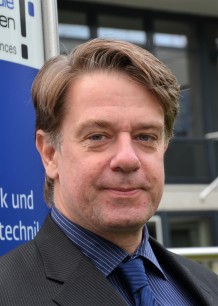
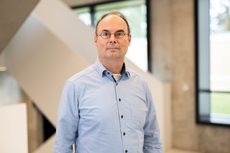
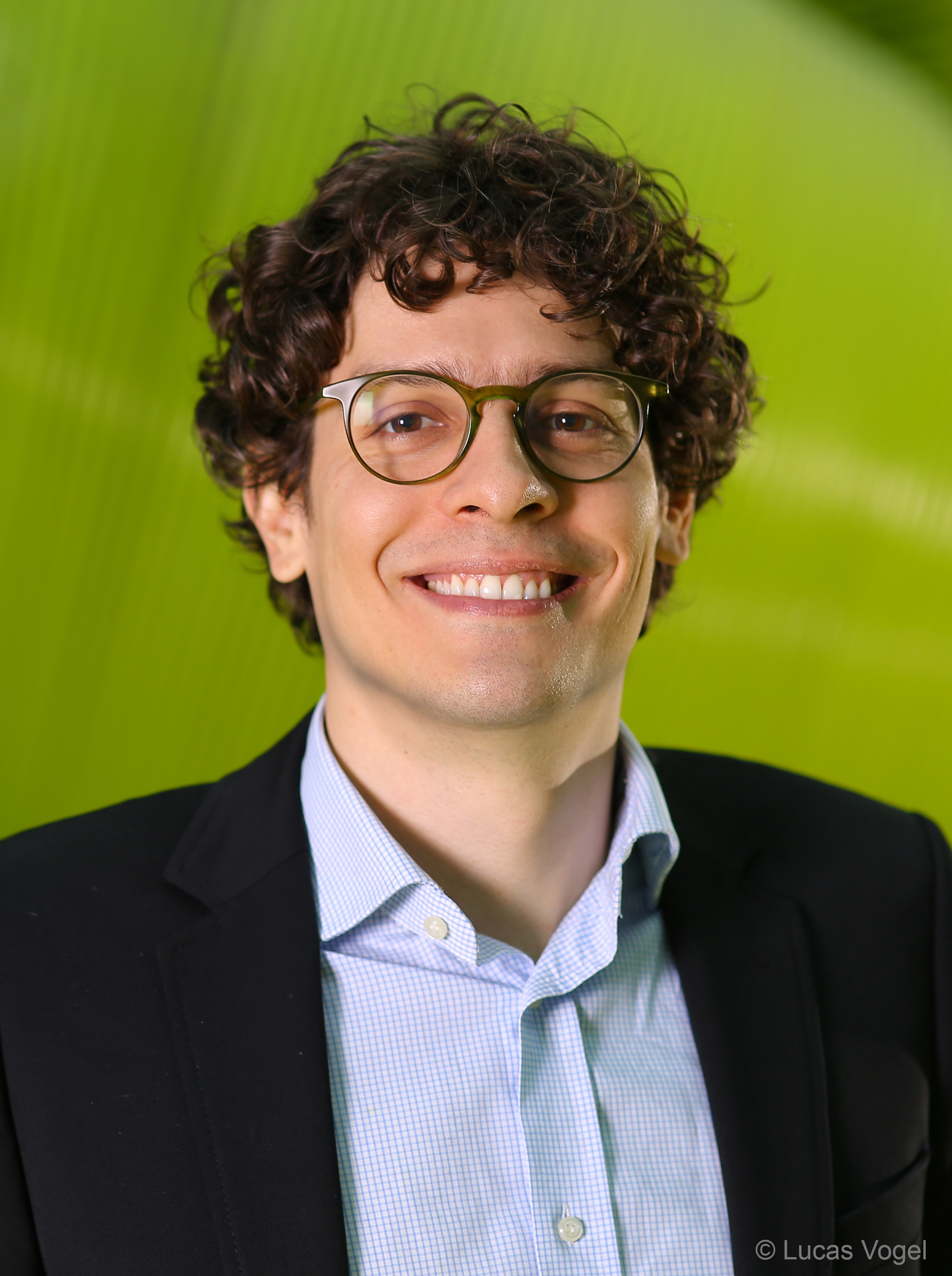
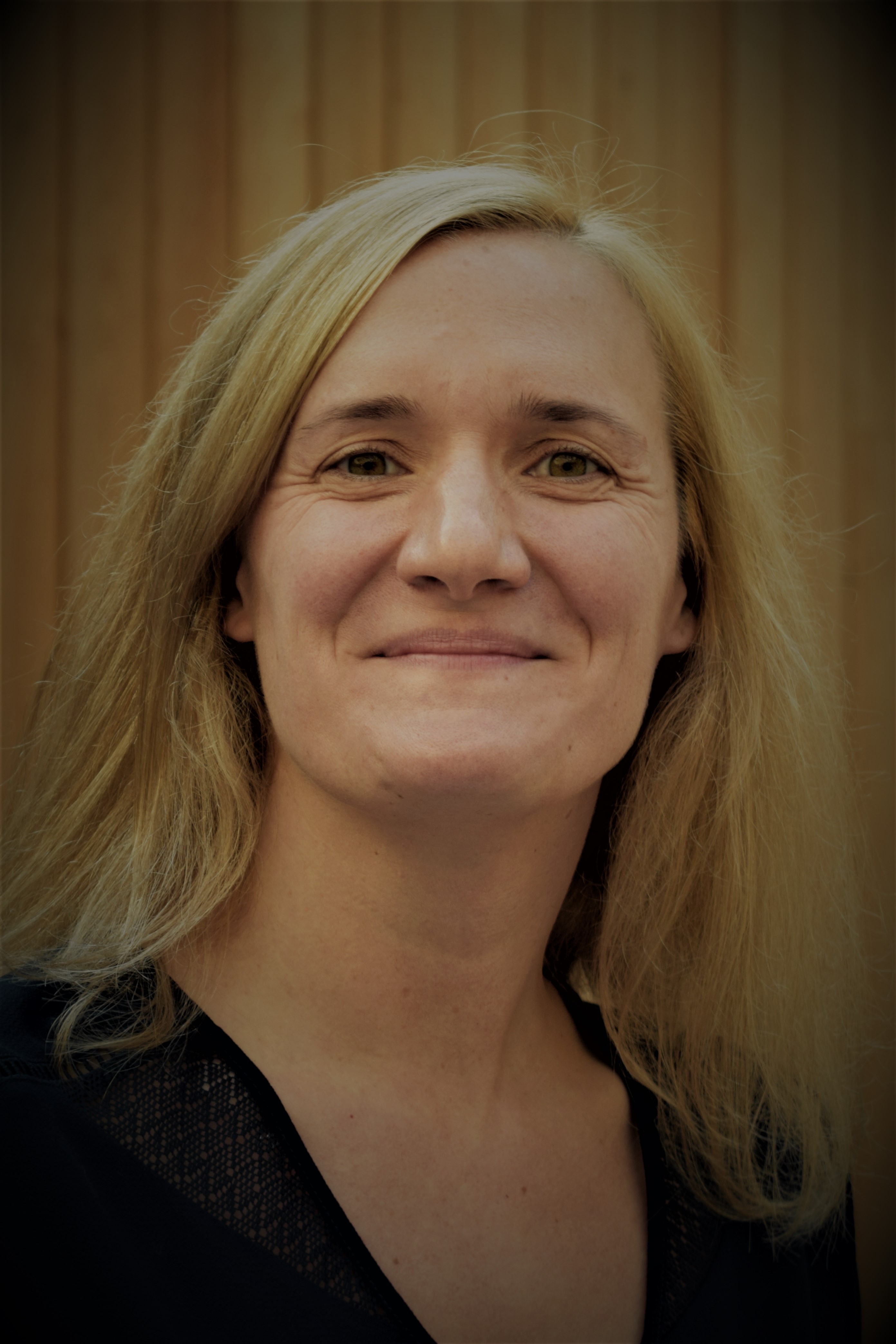
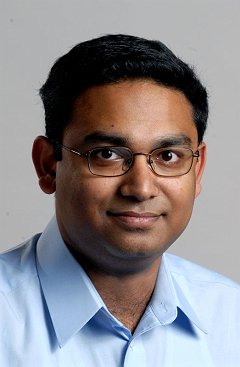
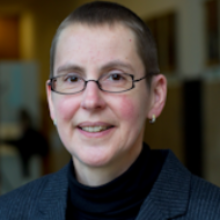
Prof. Dr.-Ing. Richard Membarth is a Research Professor for System-on-a-Chip and AI at the Edge Computing at Technische Hochschule Ingolstadt (THI). He is affiliated with the Hardware-Software Co-Design group and holds a secondary position at the German Research Center for Artificial Intelligence (DFKI) Saarbrücken. Co-creator of DSL frameworks like AnyDSL and Hipacc Key contributor to MetaDL (AI metaprogramming) and PRIME (predictive rendering) His research bridges GPU computing , domain-specific languages , and compiler technology , with recent work on Vulkan SPIR-V compilation and device-driven SpMV algorithms . Notable awards include the HiPEAC Paper Award (2018) and multiple Best Paper Awards for his compiler frameworks.
Prof. Dr. Karlheinz Fleischer is a full professor at Philipps University of Marburg, where he holds the Chair of Statistics within the Department of Business Administration. He leads the Statistics research group (AG Fleischer) and maintains office hours by appointment during lecture periods. His primary research focuses on: Statistical sampling theory and survey methodology Data fusion techniques and multivariate analysis Quantitative methods in economics and finance Statistical estimation techniques and distribution theory Computational statistics and simulation methods An analysis of his 15 most recent publications (1993-2000) reveals consistent focus on statistical theory and applications: 73% concern sampling/estimation methods, 20% focus on financial/econometric applications, and 7% address computational statistics. Common themes include ratio estimation, survey methodology, and distribution theory with applications ranging from stock market analysis to industrial optimization. He leads a research team including Dr. Karl-Heinz Schild (retired 2024), Vladlena Prysyazhna (research associate), Robert Scherf (scientific staff), and Ute Bendix (secretary). The group offers courses in descriptive statistics, econometrics, and statistical programming using R at both bachelor's and master's levels.
Prof. Dr. Klaus Thunig is a Professor at the Department of Technical Business Administration, University of Applied Sciences Südwestfalen in Hagen. His academic career began in 2016 when he took over the professorship, focusing on integrating international business experience into teaching and research. Prior to academia, he held management roles at the Bosch Group across China and Brazil, later founding businesses in the consumer goods sector in Brazil. Education: Industrial Engineering studies at the University of Paderborn and Karlsruhe Institute of Technology (KIT) Doctorate from KIT Research Interests: Employer Branding strategies and their impact on talent acquisition International business development and supply chain resilience Strategic marketing in international markets His work emphasizes practical collaboration with businesses to address skill shortages through employer branding initiatives. Teaching: Courses include Basics of Marketing, International Marketing, and International Sales and Production Networks (Master Module). Supervises Bachelor’s and Master’s theses in General Business Administration, particularly in International Business Management and Purchasing. Labs/Teams: Leads the Employer Branding Research Team with collaborators like M.Sc. Maximilian Sträßner and M.Sc. Jan Wegener.
Prof. Margret Keuper is a Professor in the Department of Computer Vision and Machine Learning at the Max Planck Institute for Informatics. Her research focuses on advancing machine learning and computer vision techniques, with an emphasis on model fairness, adversarial robustness, and multimodal interactions. She leads interdisciplinary projects exploring topics such as dataset analysis, generative models, and climate action through visual narrative analysis. Research Interests: Her work bridges theoretical foundations and practical applications in domains like adversarial training, image classification robustness, and robotics perception. She explores how vision-language models can be steered to align with human biases and develops methods for data-efficient learning and interpretability. Recent Contributions: Recent work includes FAIR-TAT (model fairness via adversarial training), VSTAR (video synthesis), and TikZero (zero-shot graphics program generation). Her publications in top venues like CVPR, ICCV, and ICLR highlight contributions to both methodological innovation and real-world impact. Collaborations: Works closely with researchers across Max Planck and academic partners, focusing on projects such as sensor layout optimization, climate discourse analysis via social media imagery, and domain-aware foundation model fine-tuning.
Prof. Dr. Dominik Munz is a Professor of Coordination Chemistry at the Faculty of Natural Sciences and Technology, Saarland University , Germany. He leads an interdisciplinary research group at the interface of inorganic, organic, and physical chemistry, focusing on creative solutions for catalysis, energy conversion, and functional materials. Education: Ph.D. from TU Dresden (implied by 'alma mater' reference). Research Interests: The Munz group is driven by the pursuit of novel chemical bonding and unusual electronic structures. Their primary research areas are: Bond Activation for Catalysis: Designing new transition- and main-group metal complexes with innovative bonding motifs to activate strong bonds and facilitate energy conversion. Optoelectronic Materials: Investigating radicaloid systems for applications in solar cells and microelectronics. Reactive Intermediates as Molecular Switches: Exploring transient, highly reactive species for use in soft and intelligent materials. Their synthetic work is guided by computational predictions and employs advanced spectroscopic techniques under inert conditions. Publication Trends: The group's recent publications (2023-2025) demonstrate a strong focus on pushing the boundaries of main-group and transition-metal chemistry. Key themes include the synthesis of highly unusual species like terminal gold(I) imides and lead(II)-substituted triplet carbenes, the discovery of powerful new reagents from simple oxidations (e.g., PPh3), and the exploration of high- and low-valent states of metals (e.g., FeVII, Al(I)). Their work frequently appears in top-tier journals like JACS , Nature , and Angewandte Chemie , highlighting its significance and impact. Scientific Awards: European Research Council (ERC) Starting Grant Advising and Grants: Prof. Munz actively mentors a large group of students and postdoctoral researchers, as evidenced by numerous publications led by his advisees. His research is supported by significant competitive grants, including the ERC Starting Grant and a DFG-funded Research Training Group (RTG Ec=m²), which is hiring 10 new PhD scholars. This indicates a robust research program focused on 'Engineering Covalent Bonds in Molecules and Materials.' Laboratories and Research Groups: The Munz group operates state-of-the-art laboratories at Saarland University, equipped with brand-new gloveboxes for air-sensitive chemistry. The group is a key part of the 'PharmaScienceHub,' a collaborative initiative between Saarland University and the Helmholtz Institute for Pharmaceutical Research. They are also involved in the Skilizium, a research meeting with groups from Saarland, Marburg, and Münster. The group fosters a dynamic environment, engaging in outreach activities like hosting high school students and organizing scientific meetings such as the Fulbright-Cottrell Meeting on Science Communication.
Leif Kobbelt serves as a University Professor at RWTH Aachen University, leading the Computer Graphics Group within the Department of Computer Science (Informatik 8). His research focuses on advancing geometry processing, interactive visualization, and computer graphics through innovative algorithmic solutions and interdisciplinary collaborations. Professor Kobbelt's research program centers on geometry acquisition and processing, with significant contributions to mesh generation, surface reconstruction, and neural rendering techniques. His work bridges theoretical geometry with practical applications in computer vision, photo-realistic image synthesis, and multimedia data transmission, often involving collaborations with industry partners and international research teams funded by DFG and EU sources. Recent publications (2023-2025) reveal a strategic integration of deep learning with traditional geometry processing, particularly in Gaussian splatting for real-time rendering, NeRF-based 4D content generation, and robust mesh Boolean operations. His group maintains leadership in quad mesh optimization and surface mapping while expanding into immersive visualization techniques for complex data analysis. The group has earned recognition through prestigious awards: Günter Enderle Best Paper Award at Eurographics 2023 Best Paper Award (1st place) at Symposium on Geometry Processing 2022 Honorable Mention for Best Paper at ACM Symposium on Virtual Reality Software and Technology Funding from Deutsche Forschungsgemeinschaft and European Union programs supports the group's research infrastructure and international collaborations. The team actively supervises graduate theses while developing open-source software tools that translate theoretical advances into practical industry applications, particularly in digital fabrication and immersive visualization systems. The Computer Graphics Group operates as a central hub for visual computing research at RWTH Aachen, maintaining strong ties with both academic institutions and technology companies. Their recent work on virtual reality educational tools and high-fidelity 3D reconstruction systems demonstrates commitment to knowledge transfer and real-world impact beyond traditional publication venues.
Steffen Bondorf is a Professor of Distributed and Networked Systems in the Faculty of Computer Science at Ruhr University Bochum, Germany. His research focuses on performance modeling and analysis of deterministic networking, particularly using network calculus to provide rigorous performance guarantees for networked systems. Dr. Bondorf received his B.Sc., M.Sc., and Dr.-Ing. (Ph.D.) in Computer Science from TU Kaiserslautern (TUK), where he was part of the distributed computer systems lab. He was the first student to enroll in a B.Sc. program at TUK before finishing secondary education. After graduation, he held positions as postdoctoral researcher, lecturer and Carl-Zeiss Fellow at TUK, research fellow at the National University of Singapore, and visiting researcher at the University of Toronto. From fall 2018 to fall 2019, he was funded by an ERCIM Alain-Bensoussan fellowship at NTNU Trondheim, Norway, and spent time at INRIA Paris. His research interests include network calculus, deterministic networking, performance modeling, computer networks, distributed systems, and P2P overlays. Dr. Bondorf's work has significantly advanced the field of network calculus, particularly in developing methods for analyzing FIFO feedforward networks, multicast flows, and P2P overlay structures. His recent research has integrated machine learning techniques with network calculus to improve analysis accuracy and efficiency, creating hybrid approaches that leverage the strengths of both methodologies. Dr. Bondorf was appointed as assistant professor at Ruhr University Bochum on October 1, 2019, becoming the university's first hire in the joint tenure-track program for the promotion of young scientists. Since December 1, 2021, he has been a tenured full professor at RUB. Carl-Zeiss Fellow ERCIM Alain-Bensoussan fellowship At RUB, Dr. Bondorf teaches Advanced Topics in Networking, Distributed Systems, Deterministic Network Calculus, and Seminar Distributed and Networked Systems. His research group develops tools and methodologies for deterministic network analysis with applications in industrial networking, real-time systems, and time-sensitive communications. His work bridges theoretical networking principles with practical implementations, contributing to the advancement of deterministic networking standards and protocols.
Malte Friese is a Full Professor of Social Psychology at Saarland University's Department of Psychology within the Faculty of Empirical Humanities and Economics. He holds multiple leadership roles including Speaker of the Research Training Group 'Flexibility and Balance as Characteristics of Adaptive Self-Regulation' (RTG 2988) and Coordinator of the Graduate Program in Psychology. Previously, he held academic positions at the University of Basel and visiting fellowships at the University of Toronto, University of Utrecht, and University of Queensland. Education: Habilitation in Psychology, University of Basel (2012) Ph.D. in Psychology, University of Basel (2008) M.Sc. in Psychology, University of Heidelberg (2003) B.Sc. in Psychology, University of Trier (1999) Friese's research examines psychological flexibility mechanisms in self-regulation, decision-making, and social behavior. His work integrates social psychology with cognitive science to investigate: 1) Cognitive and motivational underpinnings of self-control, 2) Implicit processes in judgment and behavior, 3) Mindfulness-based interventions, and 4) Cross-cultural determinants of moral judgment. His recent projects explore strategy flexibility in goal pursuit, meta-cognitive aspects of self-regulation, and societal influences on ethical decision-making. Analyses of recent publications (2023-2025) reveal strong emphasis on meta-analytic approaches to resolve theoretical debates (e.g., ego-depletion controversy), multinational collaborations examining cultural variations in psychological phenomena, and applied research on behavioral interventions. Methodologically, his work combines experimental paradigms, longitudinal designs, and psychometric scale development. Awards & Honors: Förderpreis Psychologie (2018) Teaching Excellence Awards (2013-2017) Jos Jaspars Early-Career Award (2011) Steven Karger Dissertation Prize (2008) He has supervised over 15 doctoral students and secured competitive grants from the German Research Foundation (DFG), Volkswagen Foundation, and Swiss National Science Foundation. Current projects investigate AI's impact on healthcare relationships and cognitive biases in physical activity adoption. Friese leads the Social Psychology Lab at Saarland University and serves on editorial boards for Motivation Science and Health Psychology Review.
Prof. Dr. Stefan Bräse serves as Full Professor of Organic Chemistry at Karlsruhe Institute of Technology (KIT), holding continuous faculty positions since 2003. He directs both the Department of Organic Chemistry (Institut für Organische Chemie) and the Institute of Biological and Chemical Systems (IBCS-FMS) since 2020, with prior leadership as Dean of the Faculty of Chemistry and Biosciences (2007-2011). Education: Chemistry studies at Georg-August-Universität Göttingen and University College of North Wales (1988-1992) Diplomhauptprüfung at Göttingen (1992) Dissertation (summa cum laude) under Prof. A. de Meijere (1995) Postdoctoral fellow at University of Uppsala (1995-1996) and Scripps Research Institute with Prof. K. C. Nicolaou (1996-1997) Habilitation at RWTH Aachen under Prof. D. Enders (1997-2001) Research Focus: Bräse pioneers asymmetric synthesis methodologies and combinatorial chemistry platforms for biologically active compounds, with landmark work in solid-phase natural product synthesis (THC, Secalonic Acids) and functionalized nano-structures. His interdisciplinary approach bridges organic chemistry with nanotechnology and medicinal applications, emphasizing catalytic innovation and molecular design. Scientific Recognition: Multiple KIT Innovation Prizes (2014, 2016, 2018) ISCB ABAWR for Excellence in Chemical Science (2009) Lilly Lecture Award (2001) and Richard-Zsigmondy Prize (1995) Extensive fellowship support including DFG-Habilitations-Stipendium and Liebig stipend Academic Leadership: Bräse has secured major research funding through DFG programs and industry collaborations, serving as referee for American Chemical Society Petroleum Funds and DFG Fachkollegium 301. His 600+ publications reflect sustained mentorship of graduate researchers despite unlisted student names. He directs the KIT Combinatorial Chemistry Platform and Soft Matter Synthesis Lab while co-leading Helmholtz Program 'Biointerfaces' initiatives. Research Infrastructure: Current leadership includes Directorship of IBCS-FMS and membership in SFB 1176 and 3DMM²O Cluster, driving KIT's strategic focus on bioactive compound discovery and molecular systems engineering.
Prof. Jeronimo Castrillon serves as a Professor and holds the Chair for Compiler Construction at Dresden University of Technology. Based at Helmholtzstrasse 18, 3rd floor, Room BAR III68 in Dresden, Germany, his contact details include email jeronimo.castrillon@tu-dresden.de and phone +49 (0)351 463 42716. His research centers on Compiler Construction , focusing on compiler design, optimization techniques, and code generation for resource-constrained systems. This work extends to Embedded Systems where efficient compilation is critical, High-Level Synthesis for hardware design automation, and Computer Architecture through compiler-architecture co-design. His expertise bridges theoretical foundations and practical implementations in programming language ecosystems. As chairholder, he leads academic activities within the Compiler Construction unit, contributing to curriculum development and research supervision in computer engineering disciplines.
Nele Mentens is a full professor at both KU Leuven and Leiden University, where she leads cutting-edge research in applied cryptography, hardware security, and secure embedded systems. At KU Leuven, she is affiliated with the Faculty of Engineering Technology and the Electrical Engineering Department (ESAT), leading the Emerging Technologies, Systems & Security (ES&S) research group at the Diepenbeek campus. Simultaneously, she holds a full professorship at Leiden University’s Leiden Institute of Advanced Computer Science (LIACS), focusing on applied cryptography and security. She has been instrumental in numerous national and international research initiatives, including Horizon Europe and NWO-funded projects. Full Professor, KU Leuven (since 2023) Full Professor, Leiden University (since 2020) Associate Professor, KU Leuven (2014–2023) Post-doctoral Researcher & Lecturer, KHLim / KU Leuven (2007–2014) Ph.D. in Engineering Science, KU Leuven (2007) M.Sc. in Electrical Engineering, KU Leuven (2003) Her research focuses on secure and efficient hardware design, particularly for cryptographic applications on FPGAs, reconfigurable architectures, IoT security, and neuromorphic computing. She explores physical attack resistance, side-channel analysis protection, and trusted computing architectures, with applications in healthcare, industrial monitoring, and endpoint AI. Her work bridges theoretical cryptography with practical hardware implementations, emphasizing energy efficiency and real-time performance. The 15 most recent publications reflect a strong trend toward secure, energy-efficient, and intelligent embedded systems. Topics include neuromorphic AI accelerators, trusted IoT architectures, dynamic reconfiguration for side-channel protection, and secure medical data processing. These works span disciplines such as computer architecture, cybersecurity, digital design, and embedded systems, with a focus on hardware-software co-design and real-world deployment. Nele Mentens has received recognition for her contributions, including: Best Paper Award, DATE'16 Best Paper Nomination, AsianHOST'17 Best Paper Award, CHES'19 She has supervised over 15 Ph.D. students and post-docs, both current and former, and has served as principal investigator in approximately 25 funded research projects. Her work has attracted significant grants from Horizon Europe, NWO, FWO, and national innovation programs. She actively contributes to the academic community through editorial roles in top journals and leadership in major conferences. Nele Mentens leads the ES&S research group at KU Leuven and collaborates closely with LIACS at Leiden University. Her team includes Ph.D. students, post-docs, and research experts working on projects like NimbleAI, NeuroSoC, and TrustedIoT. She has also established secure electronics labs through infrastructure grants and maintains strong international ties with institutions such as EPFL, Ruhr University Bochum, and ETH Zurich.
Koushik Sen is a Professor in the Department of Electrical Engineering and Computer Sciences at the University of California, Berkeley. His research focuses on developing software tools and methodologies to enhance programmer productivity and software quality, with expertise in Software Engineering, Programming Languages, and Formal Methods. Education: B.Tech from Indian Institute of Technology, Kanpur M.S. and Ph.D. in Computer Science from University of Illinois at Urbana-Champaign Research Focus: Professor Sen pioneers automated testing techniques including concolic testing and DART (Directed Automated Random Testing). His work bridges formal methods with practical software development, emphasizing bug detection, program synthesis, and AI-driven software analysis tools. Recent innovations include machine learning approaches for code recommendation and fuzzing. Publication Trends: His recent publications (2019-2023) demonstrate strong emphasis on fuzzing techniques, program synthesis, and AI/ML applications in software engineering. Notable domains include smart contract security, automated testing, and developer tooling, with frequent collaborations in top-tier conferences. Awards and Honors: NSF CAREER Award (2008) Sloan Foundation Fellowship (2011) IFIP TC2 Manfred Paul Award (2010) Okawa Foundation Research Grant (2015) Multiple ACM SIGSOFT Distinguished Paper Awards UIUC Distinguished Alumni Educator Award (2014) Leadership: Active program committee member for premier conferences (PLDI, ICSE, ISSTA) and keynote speaker. His research is supported by NSF, Okawa Foundation, and Sloan Foundation.
Yafang Cheng is Director of the Aerosol Chemistry Department at the Max Planck Institute for Chemistry since 2024, with concurrent appointments as Guest Professor at Peking University (2023-) and Distinguished Guest Professor at University of Science and Technology of China (2021-). Her research integrates experimental methods , multi-scale modeling , and machine learning to advance understanding of aerosol particle dynamics and their impacts on air quality , public health , and climate change . Ph.D. in Environmental Sciences (Peking University, 2007) B.Sc. in Environmental Sciences (Wuhan University, 2001) Her work focuses on reactive nitrogen chemistry , aerosol acidity , black carbon effects , and planetary boundary layer interactions . She has developed novel instrumentation for aerosol analysis and pioneered machine learning applications in atmospheric science. Recent publications emphasize black carbon mitigation strategies (One Earth 2023), aerosol microdroplet pH (Chem 2023), and SARS-CoV-2 transmission modeling (Science 2021). These studies demonstrate interdisciplinary approaches spanning environmental chemistry , climate physics , and public health policy . Fellow: AAAS (2023), AGU (2022) Joanne Simpson Medal (AGU, 2022) Science Breakthroughs of the Year (Falling Walls, 2021) Highly Cited Researcher (Web of Science, 2021-2022) Minerva Outstanding Female Scientist Award (2014) She has mentored 38 early-career researchers (21 postdocs, 17 PhD students) who have achieved professorships , tenured positions , and international awards . Her institutional leadership includes initiating academic exchange programs between European and Chinese institutions.
Prof. Sabine Laschat leads the Organic Chemistry research group at the University of Stuttgart's Faculty of Chemistry. Her laboratory focuses on developing innovative materials inspired by biological systems, with particular expertise in liquid crystal engineering and catalytic processes. Current projects include bio-inspired material development using chitin derivatives for specialized construction applications. Dr. Laschat serves as Head of the Examination Committee for the Food Chemistry B.Sc. program, overseeing academic standards and curriculum development. Her interdisciplinary research bridges chemistry and materials engineering, with recent investigations into insect exoskeleton-inspired biomaterials for construction applications. The Laschat Research Group collaborates with industrial partners to translate fundamental discoveries into practical solutions for material science challenges.
Kellie Tuck is an Associate Professor at Monash University's School of Chemistry, Australia, specializing in interdisciplinary chemical research. She holds a PhD from the University of Adelaide and completed postdoctoral research at the University of South Australia and University of Cambridge. Education: PhD, University of Adelaide Postdoctoral Research, University of South Australia Postdoctoral Research, University of Cambridge Her research program integrates organic chemistry with analytical chemistry, chemical engineering, and microbiology to develop advanced sensors and bioactive therapeutic compounds. Core expertise spans organic synthesis, medicinal chemistry, lanthanide-based systems, supramolecular chemistry, and luminescent chemosensors, with emphasis on real-world environmental and biomedical applications. Recent publications (2024-2025) reveal a concentrated focus on aqueous-phase detection systems, particularly for copper ions and hydrogen sulfide using fluorescent coumarin platforms and lanthanide-copper bimetallic sensors. Her work demonstrates strong interdisciplinary collaboration patterns across chemistry subfields and emerging coordination cage synthesis methodologies. Scientific Awards: No awards were documented in the provided materials. Advising and Grants: Student mentorship details and grant funding information were not specified in the source text, though her extensive co-author network suggests active research supervision. Labs and Teams: Dr. Tuck participates in Monash University's interdisciplinary research ecosystems, notably through the Royal Australian Chemical Institute's supramolecular chemistry division (evidenced by Supramol25 conference involvement), and maintains collaborations with microbiology and nuclear science units.