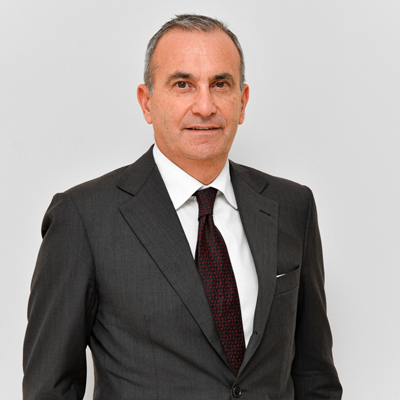
Barbara PISTORESI serves as Associate Professor at the Marco Biagi Department of Economics, University of Modena and Reggio Emilia. She teaches Data Analysis, Data Management, and Introduction to Econometrics across ADEM, EPPS, and CLEF degree programs, with materials delivered via MOODLE and Teams. Her research centers on Political Economy and Public Policy, examining citizen satisfaction with European democratic systems, healthcare sector labor dynamics, workplace violence impacts, and gender barriers in leadership. She investigates governance quality, civil rights, political participation, and structural/cultural factors affecting workforce retention. Professor PISTORESI actively supervises thesis projects on democratic quality metrics, healthcare worker wellbeing, and gender stereotypes. She offers departmental internships and contributes to pre-mathematics education through EDUOPEN's Basic Mathematics Exercises and Elements of General Mathematics courses.
Andrea Sgambelluri is an Assistant Professor at the TeCIP Institute of Scuola Superiore Sant'Anna in Pisa, Italy. He holds a Master's degree in Telecommunications Engineering (2007) and a Ph.D. (2015) from the University of Pisa, where he received the 2015 OFC Corning Outstanding Student Paper Competition Grand Prize. His research focuses on Software Defined Networking (SDN) for optical networks, network reliability, and AI applications in telecommunications. Education: M.Sc. and Ph.D. in Telecommunications Engineering (University of Pisa) Current Role: Assistant Professor (RTDB), TeCIP Institute, Scuola Superiore Sant'Anna Previous Role: Postdoctoral Researcher at KTH Royal Institute of Technology (2016) Research interests span SDN protocol extensions, YANG/NETCONF solutions, network telemetry, and Machine Learning techniques for optical network management. Recent publications highlight innovations in free space optics, failure forecasting, and edge orchestration frameworks. Key scientific contributions include experimental evaluations of OTN transceivers, augmented reality latency monitoring, and open-source optical software development. His work integrates AI with network function virtualization (NFV) and real-time monitoring systems. Scientific Award: 2015 OFC Corning Outstanding Student Paper Competition Grand Prize Andrea participates in European research projects on next-generation optical networks and cloud-based orchestration, bridging satellite communication and terrestrial network technologies.
Luca ZANNI is a Full Professor at the Department of Physical, Computer and Mathematical Sciences, Università di Modena e Reggio Emilia. His academic career spans numerical analysis, machine learning, and optimization methods, with a focus on gradient projection algorithms, stochastic gradient techniques, and their applications in imaging and deep learning. His research includes developing adaptive steplength rules for gradient methods, variance control in stochastic optimization, and GPU-accelerated reconstruction techniques for medical imaging. He teaches courses such as Numerical Calculation with Python, Fundamentals of Machine Learning, and Mathematical Methods for Machine Learning, covering topics like numerical optimization, support vector machines, and deep learning. He has contributed to methodologies for hyperparameter-free training, active set identification in constrained optimization, and edge-preserving image reconstruction. His work bridges theoretical advancements in optimization with practical implementations in large-scale machine learning and medical imaging applications.
Greta Vallero serves as a Fixed-term Assistant Professor in the Department of Electronics and Telecommunications (DET) at the Polytechnic University of Turin, affiliated with the College of Computer, Film, and Mechatronics Engineering. She actively contributes to multiple degree programs including Communications Engineering, Computer Engineering, and Electronic and Communications Engineering. Her research focuses on telecommunications infrastructure innovation , particularly in wireless network optimization, energy efficiency, and resilience. Key areas include HAPS integration for traffic management, AI-driven environmental impact reduction in network operations, and microgrid applications for maintaining network functionality during power disruptions. Her work bridges theoretical advancements with practical implementations to address modern telecommunications challenges. Recent publications reveal a strong trend toward sustainable network architectures , combining machine learning techniques with power system innovations. Her 2024 works demonstrate significant advancements in LSTM-based environmental impact reduction, HAPS offloading strategies, and microgrid integration for RAN resilience, reflecting a cohesive research direction focused on environmentally conscious network design. Vallero supervises four active PhD students in Electrical, Electronics, and Communications Engineering: Maoquan Ni, Jun Yin, Mohammadreza Jokar, and Aurora Martiny. Her collaborative network includes prominent researchers like Michela Meo, with whom she has co-authored multiple high-impact publications. She teaches core networking courses across multiple engineering programs, including Computer Networks and Communication Networks, while contributing to specialized labs like the Internet Performance and Troubleshooting Lab. Her research group operates within the Department of Electronics and Telecommunications, focusing on next-generation network technologies with emphasis on sustainability metrics and resilience engineering. Current projects integrate telecommunications infrastructure with renewable energy systems and AI-driven optimization frameworks.
Patrizia Sposetti is an Associate Professor in the Department of Pedagogy, Psychology and Social Sciences at Sapienza University of Rome. Previously, she worked as a researcher at ISTC-CNR (Institute of Cognitive Sciences and Technologies - National Research Council) in Rome. Her academic career spans decades of research and evaluation work focused on educational systems, with particular emphasis on monitoring and evaluation methodologies, educational writing practices, and academic and school career development. Professor Sposetti's research interests center on the qualitative and quantitative analysis of educational systems as they relate to educational planning. She has conducted extensive operational research in early childhood education (0-6 age group), inclusive education practices, teacher training, and educational documentation. Her work demonstrates a strong commitment to developing observational tools and interpretative patterns for educational evaluation. A significant portion of her recent research focuses on peer mentoring models in academic settings and the evaluation of educational actions without traditional grading systems. Analysis of her recent publications (2024-2025) reveals a consistent focus on early childhood education systems, professional competencies of educators, and inclusive educational practices. Her work frequently examines the integrated education system for children from birth to age six, with particular attention to Rome's educational services. She has developed specialized research on documentation methods for educational evaluation and peer mentoring as an alternative assessment approach in higher education. Her publications often address the challenges of educational planning during crisis situations, including the pandemic's impact on early childhood services. Professor Sposetti has been actively involved in mentoring students through research exercises and peer mentoring programs at Sapienza University. Her work on academic assessment without traditional grading reflects innovative approaches to educational evaluation. She has collaborated extensively with colleagues like Giordana Szpunar, Maria Grazia Rionero, and Sara Gabrielli on numerous research projects related to educational systems and professional competencies.
Professor Alberto Spalice is a full Professor of Pediatrics at Sapienza University of Rome, affiliated with the Department of Maternal-Infantile and Urological Sciences within the Faculty of Medicine and Surgery. With over three decades of experience in pediatric neurology, he serves as Director of the Pediatric Neurology Unit at Policlinico Umberto I Hospital and leads the Presidio Lissencefalie (Lissencephaly Center) at Sapienza University. His clinical practice encompasses comprehensive neurological consultations, EEG monitoring, and specialized care for rare neurological conditions including Neurofibromatosis and PANDAS syndrome. Dr. Spalice completed his medical degree in 1991 at Sapienza University of Rome with a thesis on 'Headache and Epilepsy,' followed by a PhD in Pediatric Sciences in 1996 focusing on 'Neuronal Migration Disorders: Clinical and Neuroradiological Correlations.' He specialized in Pediatrics with a Neurology focus in 2000 and completed a Master's in Pediatric Neurology and Neurophysiology in 2004. His research interests span pediatric epilepsy, neurogenetics, autoimmune neuropsychiatric disorders (particularly PANDAS), neuronal migration disorders, and neuroimaging techniques including diffusion tensor imaging. His extensive publication record includes 278 publications with 120 international journal articles, demonstrating consistent scholarly output across neurology, genetics, and pediatrics. His recent work focuses on PANS/PANDAS immunological mechanisms, genetic epileptic encephalopathies (particularly STXBP1 and CDKL5-related disorders), oxidative stress in neurological conditions, and innovative therapeutic approaches for drug-resistant epilepsies. His research bridges basic science with clinical applications, often incorporating advanced neuroimaging and genetic analysis techniques. Professor Spalice holds significant editorial responsibilities as Lead Guest Editor for Neurology Research International and Current Pediatric Review, and serves as Associate Editor for Molecular & Cellular Epilepsy and American Journal of Pediatrics. He is a sought-after reviewer for prestigious journals including The Lancet, New England Journal of Medicine, and Journal of Pediatrics. His leadership extends to national and international societies including the Italian Society of Pediatrics (SIP), Italian Society of Pediatric Neurology (SINP), and International Child Neurology Association (ICNA), where he previously served as SINP Treasurer from 2011-2014. In addition to his research, Professor Spalice maintains an active clinical practice with approximately 800 patient consultations and 1,300 outpatient neurological visits annually. He oversees EEG monitoring for over 2,000 procedures yearly and provides specialized consultations for multiple hospital departments. His teaching responsibilities include directing neurophysiology courses for pediatric residents, teaching pediatric neurology to nursing students, and lecturing on child neurology for the Tor Vergata University's Child Neurology Master's program. He also supervises medical theses and participates in national and international conference organization, particularly for PANDAS-related events.
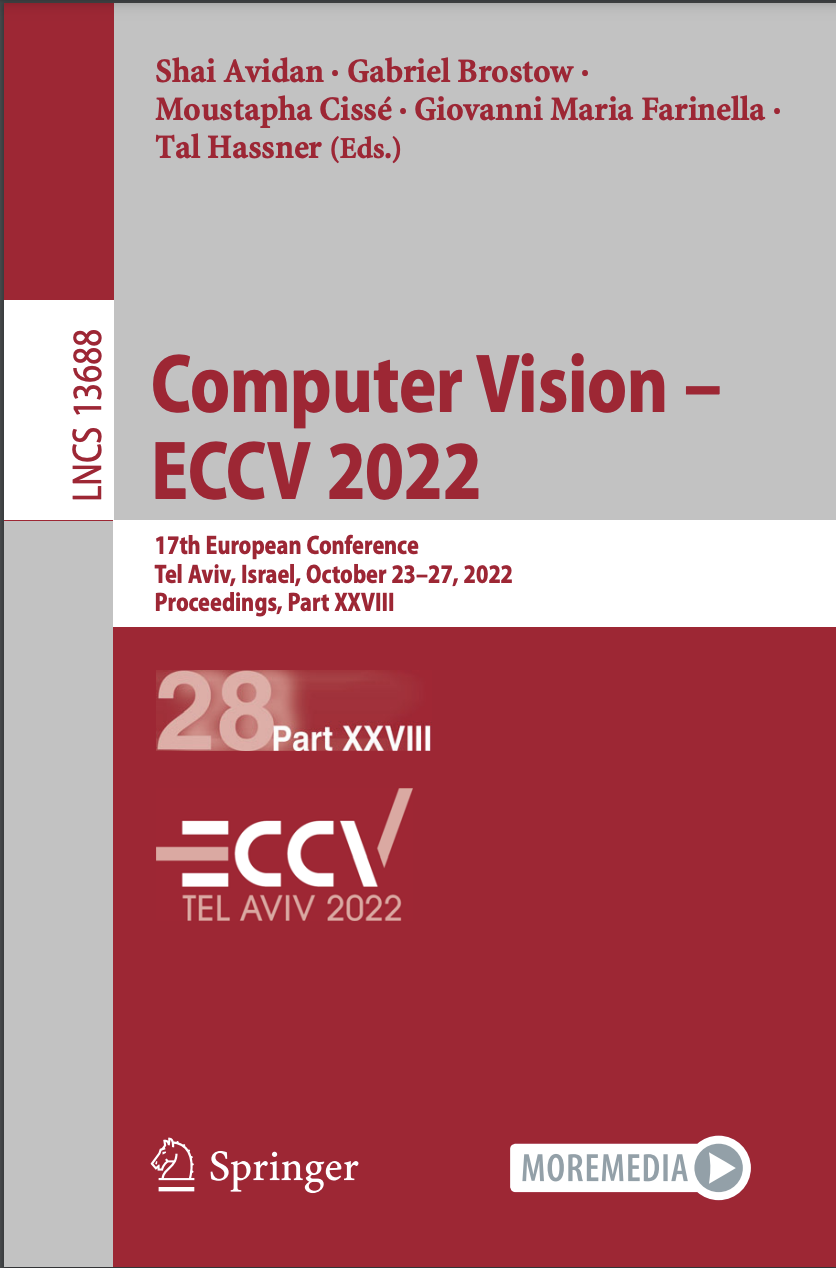
Giovanni Maria Farinella is a Full Professor at the Department of Mathematics and Computer Science, University of Catania, Italy. He is the Founder Member of the IPLAB Research Group at University of Catania since 2005, an Associate Member of the Computer Vision and Robotics Research Group at University of Cambridge since 2006, and an Associate Member of the Italian National Research Council since 2018. He serves as Scientific Advisor of the NVIDIA AI Technology Centre and board member of the CINI Laboratory of Artificial Intelligence and Intelligent Systems. Dr. Farinella obtained his degree in Computer Science (summa cum laude) from the University of Catania in 2004 and was awarded a Doctor of Philosophy (Computer Vision) from the same institution in 2008. He has obtained the National Scientific Qualification to Associate Professor in 2013-2014 and to Full Professor in 2018. His primary research interests focus on First Person (Egocentric) Vision, Computer Vision, Pattern Recognition, and Machine Learning. Dr. Farinella has pioneered research in egocentric video analysis, object interaction detection, activity recognition, and scene understanding from a first-person perspective. His work bridges theoretical computer vision with practical applications in industrial settings, healthcare, and cultural heritage sites. His recent publications demonstrate a clear trajectory toward more sophisticated, real-time egocentric vision systems capable of understanding complex human activities, anticipating actions, and detecting procedural mistakes through integration of visual analysis, gaze tracking, and large language models. Dr. Farinella has published extensively in top-tier computer vision venues, with his most recent work focusing on egocentric action anticipation, mistake detection in procedural tasks, and the integration of multimodal large language models with visual understanding. His research shows strong emphasis on practical industrial applications while advancing fundamental computer vision techniques. PAMI Mark Everingham Prize 2017 Intel's 2022 Outstanding Researcher Award Dr. Farinella has served as Associate Editor for IEEE Transactions on Pattern Analysis and Machine Intelligence, Pattern Recognition - Elsevier, and International Journal of Computer Vision. He has held leadership roles as Area Chair for CVPR 2020/21/22/23, ICCV 2017/19/21/23, ECCV 2020, and as Program Chair of ECCV 2022. He founded and directs the International Computer Vision Summer School (since 2006) and the Medical Imaging Summer School (since 2014). As PI of the EGO4D project, he helped create one of the largest egocentric video datasets with over 3,670 hours of footage from 923 participants across 74 locations worldwide. His IPLAB research group leads multiple significant projects including VALUE, ENIGMA, and FIPEVIS, with strong industry collaborations.
Massimo Cassiani is an Associate Professor at the University of Trento, affiliated with the Department of Civil, Environmental and Mechanical Engineering. His teaching and research focus on environmental modeling, climate physics, and turbulence in natural flows. He contributes to interdisciplinary programs connecting engineering and physics, particularly through courses like Air Pollution Modelling and Environmental Measurements . Department: Department of Civil, Environmental and Mechanical Engineering Collaboration: Teaches courses linked to the Department of Physics Contact: Via Mesiano, 77 - 38123 Trento | massimo.cassiani@unitn.it Research Interests: Cassiani specializes in applied environmental fluid dynamics, combining numerical modeling and observational data analysis. His work addresses climate change mechanisms, atmospheric and aquatic turbulence, and air pollution dispersion. He emphasizes interdisciplinary methods, integrating physics-based models with real-world environmental monitoring.
Carmine Settembre serves as an Associate Investigator at TIGEM (Telethon Institute of Genetics and Medicine) and holds the position of Full Professor of Histology in the Department of Clinical Medicine and Surgery at the University of Naples 'Federico II' in Italy. His research focuses on the lysosomal-autophagy pathway and its critical role in cellular homeostasis and human diseases. Dr. Settembre completed his pharmaceutical chemistry degree at the University of Naples 'Federico II' in 2002, followed by PhD studies at TIGEM. He then pursued postdoctoral research at Columbia University in New York and Baylor College of Medicine in Houston before returning to Italy in 2013 to establish his independent laboratory through the Dulbecco Telethon Institute career award program. He was appointed Associate Professor in Histology and Embryology at the University of Naples 'Federico II' in 2018. His research program investigates the mechanisms of selective autophagy, particularly ER-phagy, and lysosome biogenesis in response to cellular needs. The laboratory employs a multidisciplinary approach combining mouse genetics, cell biology, pharmacology, and gene editing with omics technologies to develop therapeutic strategies for diseases characterized by intracellular accumulation of toxic materials, including lysosomal storage disorders and conditions involving protein misfolding. Ian Boyle award from the European Calcified Tissue Society (ECTS) EMBO Young Investigator status ERC Starting Grant (BONEPHAGY, 2017-2023) ERC Proof of Concept Grant (RE-STORE, 2021-2022) ERC Consolidator Grant (AUTO-SELECT, 2023-2027) National Mucopolysaccharidosis Society funding (2021-2022) Dr. Settembre leads a research group comprising multiple postdoctoral fellows, a PhD student, a fellow, and technicians. His laboratory is part of the Cell Biology and Disease Mechanisms research unit at TIGEM, where they exploit institutional resources to address fundamental questions in the lysosome-autophagy pathway and develop novel therapies for genetic diseases.
Marco Maffei serves as a PartTime Lecturer at Roma Tre University, teaching in the Triennial Degree in Economics and Business Management and Master's Degree in Economics and Innovation Management programs. Concurrently, he is a KPMG partner leading Central/Southern Italy's Global Sustainability Service BU and public-sector advisory services for regions, provinces, and municipalities. His research centers on sustainability-driven business model innovation, emphasizing Corporate Social Responsibility (CSR) and Environmental, Social, Governance (ESG) reporting. He investigates how shared value creation with communities and financial stakeholders meets institutional information demands through transparent non-financial disclosure frameworks. Recent 2021 publications analyze sustainability reporting evolution and framework standardization, building on his foundational 2010 KPMG position papers about single reporting implementation. His scholarly work demonstrates a clear trajectory from treating sustainability as operational cost toward recognizing its strategic value in stakeholder capitalism. A leading Italian CSR opinion leader, Maffei chairs the Rome Chartered Accountants' Corporate Social Responsibility Commission and serves on the board of "Anima per il sociale nei valori d'impresa". He authors the "Affari buoni" column in La Stampa newspaper, bridging academic theory and professional practice.
Enrico Bibbona is an Associate Professor at the Department of Mathematical Sciences (DISMA) at Politecnico di Torino, where he contributes to the Interdepartmental Center SmartData@PoliTO - Big Data and Data Science Laboratory. His academic profile spans statistics, mathematical modeling, and data science applications across multiple engineering disciplines. His primary research interests include: Asymptotic statistics Bayesian inference Biostatistics Industrial statistics Mathematical biology and modeling in life sciences Statistical inference for stochastic processes Stochastic modeling His specific research lines focus on Reaction Networks approximation and inference, Statistical modeling of animal calls, Statistics and modeling for the SmartPad system (in collaboration with ITT), and Statistics for deterministic and stochastic dynamical models. His work bridges theoretical statistics with practical applications across various scientific domains, particularly in biological systems, industrial applications, and data science. His notable recognition includes the Elsevier/SPA Travel Award presented by Elsevier and Bernoulli Society, Denmark (2011). Professor Bibbona actively mentors PhD students across multiple programs, currently supervising Daniele Poggio and Saeed Sani in Mathematical Sciences, and has previously guided Elena Sabbioni (thesis: Statistical Methods for Complex Biological and Clinical Data) and Hiu Ching Yip (thesis: Statistical models for understanding biomedical data). His teaching spans Mathematical Engineering, Data Science and Engineering, and Communications Engineering programs, where he teaches courses including BioQuants, Statistical methods in data science, and Project: Software-defined communication systems. He is a key member of the Statistics and Data Science research group at DISMA and has contributed to practical applications through patents including "BRAKING SYSTEM TEMPERATURE ESTIMATOR" and "A method for estimating the wear of a vehicle brake element," demonstrating his ability to translate theoretical work into real-world solutions.
Caterina VIOLA is a theoretical computer scientist and mathematician currently serving as a Fixed-term Assistant Professor (RTDA) at the Department of Mathematics and Computer Science of the University of Catania . Her research focuses on quantum algorithms for text processing, computational complexity, and constraint satisfaction problems within the National Center for HPC, Big Data and Quantum Computing project. Education: Master's in Mathematics from University of Catania (Erasmus exchange at Universidad de Granada); Doctor rerum naturalium in Mathematics from Technische Universitaet Dresden Her research bridges theoretical computer science and mathematics, with a particular emphasis on approximation algorithms, inapproximability, and numerical semigroups. She has previously worked at the University of Oxford as a post-doctoral researcher and tutor, followed by a post-doc position at Charles University in Prague. Recent publications highlight her work on linear programming relaxations for constraint satisfaction problems, submodular functions, and numerical semigroup analysis. Current teaching responsibilities include Laboratorio di Algoritmi for Computer Science undergraduates and Informatica for Communication Sciences and Languages students. As a Senior Associate Post-doctoral Researcher at Oxford and post-doc at Charles University in Prague, she has developed expertise in mathematical foundations of computational optimization and their practical implementations.
Stefano Salon is a Teaching Professor in the Department of Physics at the University of Trieste. His research focuses on environmental mercury contamination, trace metal speciation, and remediation strategies in mining and coastal areas. Position: Teaching Professor (SM23 - PHYSICS) Email: ssalon@ogs.it His work addresses mercury mobility in lagoon sediments, biochar applications for pollution mitigation, and the interplay between groundwater and tailings in decommissioned mining sites. Stefano is affiliated with interdisciplinary research groups under the 'Interdisciplinary and Applied Physics and Technology' strand. Recent publications highlight his expertise in mercury speciation via thermodesorption, risk assessment in contaminated soils, and the legacy of historical mining in the Gulf of Trieste. Projects include studies on thallium transport and gaseous mercury evasion from soils. Stefano contributes to academic governance as a member of the Boards of Studies for the Physics program (SM23). His research spans collaborations with INFN-EIC on radiation detection techniques and environmental applications of silicon detectors.
Piero LIONELLO is a Full Professor in Atmospheric Physics and Oceanography at the University of Salento, where he leads research in regional and global climate dynamics, extreme weather events, and marine climate change impacts. He serves as president of the MedCLIVAR network, director of the Master’s program in Meteorology and Physical Oceanography, director of the Environmental Museum (MAUS), and editorial board member of Natural Hazards and Earth System Science . With a career spanning institutions like MIT, MPI für Meteorologie, and ECMWF, he has focused on Mediterranean climate vulnerability since the 1980s. Research Leadership: Specializing in regional climate modeling, synoptic climatology, and coastal oceanography, he has coordinated the Climate Change Science PhD program and contributed to IPCC AR6 and MedECC reports. Projects: Participated in international initiatives (CIRCE, RISES-AM, SOCLIMPACT) and Italian programs, including MedCLIVAR and MEDECC steering group. Publications: Authored over 100 SCOPUS/Web of Science papers, his work spans high-resolution climate modeling, statistical downscaling, and interdisciplinary studies linking climate to agriculture, ecosystems, and coastal management. Notable contributions include analyses of Mediterranean sea level rise, cyclone variability, and operational oceanography applications for Venetian storm surge prediction. Awards: North-South Award (Council of Europe, 2020) Stanford’s Top 2% Scientists (2020) Education & Teaching: Graduated magna cum laude in Physics (1984). Currently teaches Climate Dynamics and Monitoring and Weather Forecasts and Climate Risks to Master’s students, with courses covering climate system components, energy budgets, teleconnections, and climate-impact modeling.
Paola Bozzao is a Full Professor at the Department of Political Science, Sapienza University of Rome. Her academic career focuses on labor law, social policy, and welfare systems, with particular emphasis on pension reforms, employment protections, and EU labor directives. She actively contributes to academic discourse through publications in specialized journals and participates in research projects addressing the economic sustainability of welfare systems. Current position: Full Professor Department: Political Science University: Sapienza University of Rome Professor Bozzao's research explores critical intersections between labor law and social policy. Her work analyzes: Pension system adequacy and longevity challenges Active aging policies in welfare frameworks Unemployment benefit models and job reintegration tools Work-life balance and gender equality directives Digital transformation impacts on labor protections EU Directive implementation in national legislation Her recent publications demonstrate a strong focus on employment intermediation, poverty reduction strategies, and social security adaptations to modern labor markets. While no specific awards are listed in available information, her research projects indicate ongoing engagement with interdisciplinary teams examining the economic sustainability of welfare systems.