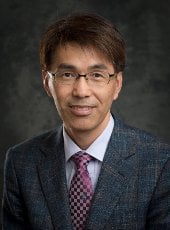
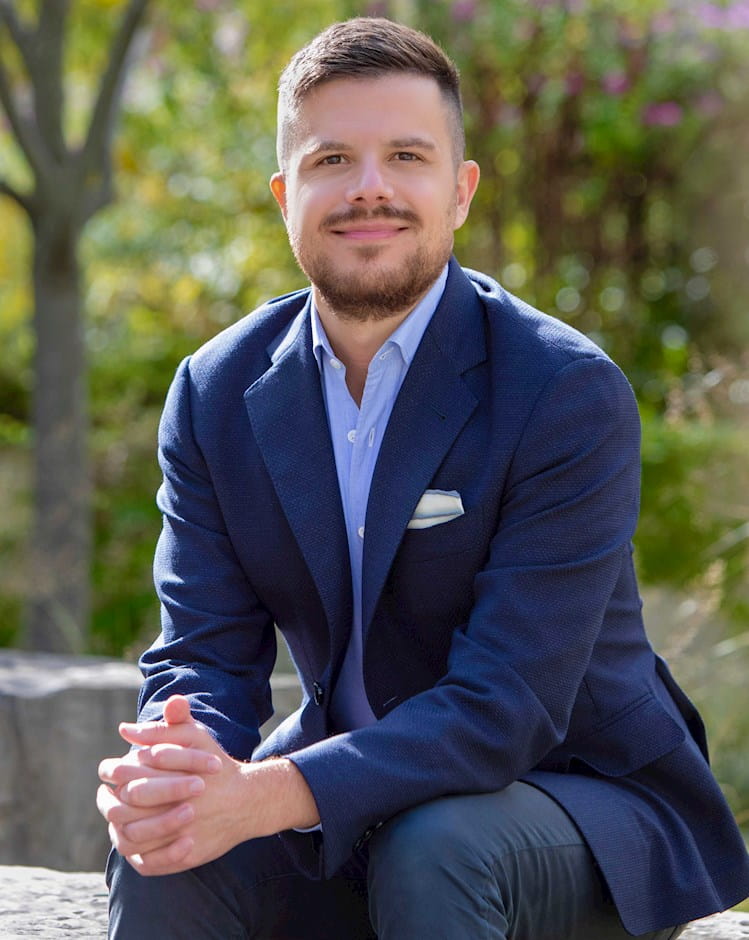
David Sander is a Professor at the Faculty of Psychology and Educational Sciences, University of Geneva, affiliated with the Department of Psychology and the Centre interfacultaire en sciences affectives. He leads the Emergence et expression de l'émotion (E3 Lab) research group. His work focuses on affective neuroscience, emotional processing, and their applications in health, education, and social behavior. With 185 publications and 141 supervised works, his research spans topics like emotion appraisal mechanisms, reward systems, and developmental psychology. Key themes include neural correlates of emotional responses (e.g., amygdala activity), behavioral effects of sensory stimuli (odors, visual cues), and interventions addressing mental health and physical activity. His studies employ fMRI, EEG, and clinical trials, often integrating interdisciplinary methods. Notable contributions include frameworks for understanding emotional valence, appraisal-driven brain processes, and the role of affect in decision-making. Recent articles highlight innovative methodologies (e.g., virtual reality for pediatric pain management) and societal impacts (e.g., materialism’s influence on consumer behavior). His work bridges basic science and applied contexts, such as improving education through emotional development strategies and addressing obesity via neural mechanisms.
Keyvan Hashtrudi-Zaad is a Professor in the Department of Electrical and Computer Engineering at Queen's University, affiliated with the Smith School of Engineering and the Ingenuity Labs Research Institute. His expertise spans robotics and control systems, with a focus on haptics, telerobotics, tele-rehabilitation, autonomous vehicles, and medical robotics. He holds the email addresses keyvan.hashtrudi-zaad@queensu.ca and khz@queensu.ca, and his office is located in Walter Light Hall, Room 427. Research Interests: His research emphasizes human-robot interaction, haptic interfaces, autonomous systems, and mechatronics. Key areas include kinesthetic haptics, collaborative teleoperation systems, energy storage systems for electric vehicles, and medical robotics applications such as needle deflection estimation and rehabilitation robotics. His work bridges theoretical control systems with practical applications in healthcare and autonomous technologies. Publications: His recent work addresses challenges in haptic system stability, energy-efficient inverters for electric vehicles, and teleoperation networks. Notable projects include a cable-driven parallel robot for stroke rehabilitation and a study comparing DC/BLDC actuators for haptic feedback. His research often integrates sensor fusion, nonlinear control, and dynamic modeling to solve real-world problems. Awards and Recognition: While specific awards are not listed, his extensive publication record and leadership in interdisciplinary robotics initiatives highlight his contributions to the field. He is part of the Interactive Robotics and Intelligent Systems (IRIS) Laboratory, advancing innovations in medical robotics and autonomous systems. Grants and Collaborations: His work likely involves collaborations across engineering and medical disciplines, supported by grants focused on robotics, control systems, and healthcare technologies. The IRIS Lab serves as a hub for developing cutting-edge solutions in haptic training systems and assistive robotics.
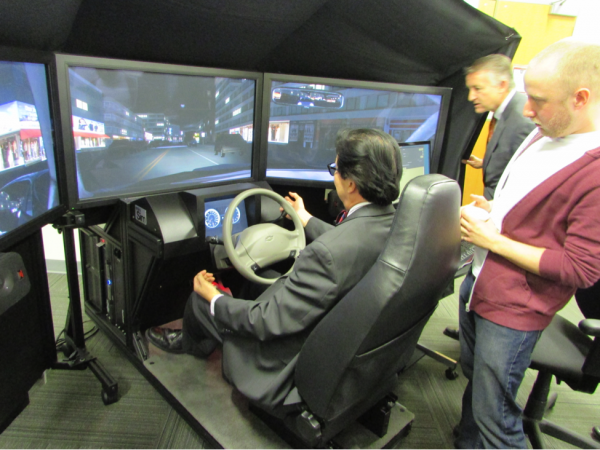
Professor Chris Lee is a faculty member in the Department of Transportation Science and Engineering at the University of Windsor's Faculty of Engineering. His research focuses on advancing transportation safety through the analysis of driver behavior, traffic flow dynamics, and the integration of emerging technologies like autonomous vehicles and machine learning. Key areas include collision risk prediction, driver vigilance assessment, and the development of advanced car-following models. He has contributed to initiatives such as the Transportation Science and Engineering scholarship program, supporting student research in innovative technologies like driving simulators for lane change behavior studies. His work bridges engineering and human factors, addressing challenges such as driver response to autonomous systems, heavy vehicle traffic management, and cross-cultural automotive design. Lee's interdisciplinary approach leverages data analytics, physiological signals, and machine learning to solve real-world transportation problems. His research has implications for policy-making, infrastructure design, and vehicle safety standards. Lee has collaborated extensively on projects analyzing crash precursors, variable speed limits, and the impact of ITS (Intelligent Transportation Systems) on safety. His publications span over two decades, demonstrating a commitment to both academic rigor and practical applications in transportation engineering. Notable contributions include refining car-following models, studying driver aggression, and evaluating the effectiveness of traffic management strategies.
Dr. Dana E. Veron is a Professor and Co-Director of the Gerard J. Mangone Climate Change Science and Policy Hub at the University of Delaware (UD). She holds roles as Associate Chair of the Department of Geography and Spatial Sciences and Faculty Director for the Environmental Science major and Climate Scholars program. Her research focuses on climate change impacts, polar meteorology, and offshore wind energy. She earned a Ph.D. in Oceanography from Scripps Institution of Oceanography (2000) and a B.A. in Physics from SUNY Geneseo (1995). Key research areas include Arctic energy balance, Antarctic boundary layer processes, cloud-radiation interactions, and coastal wind dynamics. She leads the Veron Lab, collaborating internationally on projects like CALVA in Antarctica. Dr. Veron also advances climate education through initiatives like MADE-CLEAR, addressing curriculum gaps and teacher training. Her work bridges academia and policy, contributing to UD's Delaware Environmental Institute and Center for Research in Wind (CReW). Notable contributions include studies on sea breeze impacts on wind energy forecasting and climate change literacy in higher education. Affiliations include the Provost Faculty Fellows program and roles on the Honors Program Board. She advises multiple graduate students and teaches courses on climate dynamics, oceanography, and wind energy.
Eric Roy is an Associate Professor at the Rubenstein School of Environment and Natural Resources, University of Vermont, and Director of the Casella Center for Circular Economy and Sustainability. He is also a Fellow at the Gund Institute for Environment. His research focuses on nutrient cycling, biogeochemistry, and ecological engineering to design sustainable systems for nutrient management in food, waste, and water systems. Education: Ph.D. in Oceanography & Coastal Sciences from Louisiana State University (2013), M.S. in Food, Agricultural & Biological Engineering from Ohio State University (2008), and B.S. in Mechanical Engineering from Old Dominion University (2006). Research interests include nutrient stewardship, circular bioeconomy, and nature-based solutions. His work integrates lab and field studies with modeling to explore nutrient dynamics in engineered, urban, and agricultural ecosystems. Key themes include improving nutrient use efficiency in food systems, resource recovery, and green infrastructure design. Teaching emphasizes ecological design in water quality, waste management, and food systems. His recent publications highlight advancements in phosphorus retention modeling, floodplain function analysis, and composting system optimization. He leads the Nutrient Cycling and Ecological Design Lab, advancing interdisciplinary solutions for environmental sustainability.
Dr. Youngchul Ra is an Associate Professor in the Department of Mechanical and Aerospace Engineering at Michigan Technological University. He holds a PhD from MIT (1999) and degrees from Seoul National University. His expertise includes computational fluid dynamics (CFD), combustion modeling, chemical kinetics, and alternative fuel research. His work focuses on advanced combustion strategies like Gasoline Compression Ignition (GCI), engine CFD code development, and high-performance computing. Education: PhD in Mechanical Engineering, Massachusetts Institute of Technology (1999) Masters and Bachelors in Mechanical Engineering, Seoul National University Research Interests: Developing multi-component fuel models for real-world applications Optimizing six-stroke GCI engines with advanced valve technologies Reducing emissions via combustion control and injection strategies Parallel computing techniques for large-scale engine simulations Recent work emphasizes oxygenated fuels in GCI engines and parametric studies of combustion efficiency. His CFD models are validated against experimental data for accuracy. His research has led to advancements in low-temperature combustion and emission reduction without explicit awards listed. He collaborates on engine design optimization and fuel formulation projects.
Jeff Sadler is an Assistant Professor in the Department of Biosystems & Agricultural Engineering at Oklahoma State University, where he also serves as an Extension Specialist for Water Resources with OSU Extension. He leads the WaDE (Water Data and Education) Lab, focusing on data science and machine learning applications in water resources. Education: PhD in Civil and Environmental Engineering, University of Virginia (2019) MS in Civil Engineering, Brigham Young University (2015) BS in Civil Engineering, Brigham Young University (2013) Research Interests: Jeff’s research lies at the intersection of data science and water resources. He specializes in machine learning, particularly physics-guided and process-aware deep learning, for modeling stream temperature, water quality, flood dynamics, and hydrological forecasting. His work emphasizes real-time decision support, reproducible modeling, and integrating domain knowledge into data-driven systems. Recent Research Trends: His recent publications demonstrate a strong focus on advanced deep learning architectures (e.g., graph neural networks, recurrent models), data assimilation, multi-task learning, and surrogate modeling for environmental systems. Applications center on the Delaware River Basin and coastal Virginia, with implications for climate change adaptation and infrastructure resilience. Scientific Awards: No awards explicitly listed in the provided text. Advising and Grants: Jeff mentors graduate students and supervises master's and doctoral research. He is actively funded through multiple grants from the USDA, NOAA, and USGS, supporting projects in water quality monitoring, rural health, evapotranspiration forecasting, and integrated hydrological modeling. Labs and Teams: He leads the WaDE Lab, which develops data-driven tools for water resource education and management. He has collaborated extensively with researchers from the U.S. Geological Survey, University of Virginia, and other institutions on cyberinfrastructure, reproducible modeling, and environmental machine learning.
Aaron Shugar is a Professor and current Bader Chair in Art Conservation at Queen’s University. With a background in archaeometallurgy and conservation science, he specializes in non-destructive analysis techniques for cultural heritage, including X-ray fluorescence (XRF), Raman spectroscopy, and hyperspectral imaging. His work bridges art history, material degradation, and technological innovation. Honours H.B.A. in Anthropology and Law & Society from York University M.S. in Archaeological Materials from the University of Sheffield Ph.D. in Archaeometallurgy from University College London His research focuses on historic artist’s pigments , ancient metallurgy , and technical history of artifacts , with particular interest in degradation pathways and manufacturing processes. Recent publications highlight trends in AI integration with XRF analysis and preservation of modern materials in art conservation. Bader Chair in Art Conservation Mellon Foundation Professor in Conservation Science Aaron co-directed the Archaeometallurgy Laboratory at Lehigh University, served as a guest scientist at NIST, and remains a research associate at the Smithsonian Institution. He actively contributes to TEFAF’s Scientific Vetting Committee and acts as a forensic materials expert for the Court of Arbitration for Art.
Professor Enda Cummins is a faculty member at University College Dublin (UCD), serving as Professor and Deputy Head of the School of Biosystems and Food Engineering. He also holds roles as Head of Teaching and Learning and Visiting Professor at KU Leuven, Belgium. His research focuses on risk assessment, predictive modeling, food safety, and environmental contamination, with an emphasis on chemicals (e.g., acrylamide, nanoparticles) and pathogens (E. coli, Salmonella). He leads a multidisciplinary team and coordinates the EU-funded H2020 ITN project PROTECT, addressing climate change impacts on food safety. Education: BAgrSc, MEngSc, PhD from UCD. Teaching emphasizes problem-based learning and integrates research innovations. He developed the EU-funded Erasmus+ Predictive Modelling and Risk Assessment program and coordinates the MEngSc in Food Engineering. Grants include projects on antimicrobial resistance, nanoparticle toxicity, and urease inhibitor efficacy. Over 100 peer-reviewed publications and 123 conference papers highlight his work on risk assessment, food safety, and environmental modeling.
Maxime CORDY is a Research Scientist at the Interdisciplinary Centre for Security, Reliability and Trust (SnT) , University of Luxembourg, within the Security, Design and Validation group (SerVal) . He holds a PhD from the University of Namur (Belgium, 2014) and specializes in software engineering, applied artificial intelligence, and cybersecurity. His work focuses on adversarial machine learning, deep learning robustness, and model checking for critical systems. Research interests include adversarial attacks on tabular data , energy system optimization , code understanding models , and software quality assurance . Recent projects address challenges in secure AI deployment, automated test generation, and fault detection in large language models. Publications emphasize empirical studies on adversarial defenses, data augmentation for code models, and energy consumption forecasting. He contributes to tools like Daedalux (variability-aware model checking) and benchmarks like Tabularbench for adversarial robustness evaluation. Current affiliations include leadership within the SerVal group and collaborations on interdisciplinary projects such as MALETSQUE (Machine Learning Techniques for Software Quality Evaluation). His work bridges theoretical computer science with practical applications in energy systems, medical imaging, and space program design.
Dwight Houweling is an Associate Professor in the Department of Civil, Geological and Mining Engineering at Polytechnique Montréal . His expertise focuses on environmental engineering and wastewater treatment , particularly in nutrient removal, biological processes, and modeling. B.Sc. in Civil Engineering (Queen’s University) Ph.D. in Civil Engineering (Polytechnique Montréal) Industrial Postdoctoral Fellow at EnviroSim Assoc. Ltd. Research interests include municipal/industrial wastewater treatment , phosphorus/nitrogen removal , biofilm systems , mechanistic modeling , and sludge densification . His work bridges activated sludge optimization , membrane-aerated biofilms , and green wastewater solutions . Recent publications emphasize modeling frameworks for nature-based solutions , biofilm technology in retrofitting plants , and sludge characterization in lagoons . He collaborates with institutions like EnviroSim Assoc. Ltd. and contributes to the Laboratoire de génie de l'environnement (LGE) at Polytechnique Montréal.
Maurizio Ramanzin is a Full Professor at the University of Padova , affiliated with the School of Animal Science and Department of Agronomy, Animals, Food and Natural Resources (DAFNAE) . His research focuses on Agricultural Sustainability , Environmental Impact Assessment , and Precision Livestock Farming . Academic Field : AGR/19 Email : maurizio.ramanzin@unipd.it Address : Agripolis - Viale dell'università, 16 - Legnaro (Padova) – ITALY His work explores the interactions between livestock systems and ecosystem services in mountainous regions, with emphasis on: Grazing Management and biodiversity conservation Life Cycle Assessment (LCA) of dairy and beef systems Climate Change Adaptation in Alpine ungulates Animal Welfare in small-scale farms Technological Tools (GPS, NIRS) for monitoring grazing behavior Key trends in his recent publications include: Quantifying environmental drivers of wolf predation on livestock Developing low-cost biologging systems for dairy cows Analyzing social-ecological trade-offs in mountain agriculture Assessing microbial dynamics in alpine soils
Giovanni Compiani is an Associate Professor at the University of Chicago Booth School of Business, specializing in Marketing. His research bridges industrial organization and quantitative marketing, focusing on advanced econometric methods. PhD, MPhil, MA in Economics from Yale University BSc, MSc in Economics from Bocconi University Previous Assistant Professor at Haas School of Business His work explores unstructured data integration in demand estimation, consumer search behavior on online platforms, risk preferences in cryptocurrency markets, and time perception in behavioral economics. He has published in top journals including Journal of Political Economy , Marketing Science , and Review of Economic Studies . Recent publications emphasize machine learning applications in econometrics, equilibrium modeling of lotteries, and crypto mining's economic impact. His research portfolio spans demand analysis, structural modeling, and behavioral insights. Editor's Choice Award, The Review of Asset Pricing Studies (2024) Developed nonparametric demand estimation frameworks Advances dynamic model identification with instrumental variables Compiani teaches Data Science for Marketing Decision Making at Booth and maintains active collaborations with researchers across econometrics, computer science, and behavioral disciplines.
Caroline Ketcham is a Professor of Exercise Science and the Associate Dean of Elon College, the College of Arts and Sciences at Elon University. Her research focuses on movement neuroscience, neurodiversity, concussions, and mental health, with expertise in neuromusculoskeletal control and rehabilitative strategies across diverse populations including children, elderly, neurological patients, and athletes. Education: PhD in Exercise Science/Motor Control, Arizona State University (2003) MS in Exercise Science/Motor Control, Arizona State University (1999) BA in Biology/Psychology, Colby College (1996) Her work spans motor control, concussion management, and mental wellness, with over 87 undergraduate mentees and 65+ publications. She co-edited Concussion in Athletics and Cultivating Capstones , and co-directs the Elon BrainCARE Research Institute, which advocates for concussion awareness and mental health. Recent research trends include concussion baseline testing as mental health screening, dual-task gait analysis, and global mentoring frameworks. Scientific awards highlight her contributions: Distinguished Scholar (2023), Ward Family Mentoring Award (2017), and multiple teaching distinctions. Scientific Awards: Distinguished Scholar Award (2023), Elon University Ward Family Excellence in Mentoring Award (2017), Elon University Elon College Service Award (2014), Elon University School of Education Excellence in Scholarship Award (2010), Elon University Teacher of the Year (2007), Texas A&M University She actively mentors students in concussion advocacy and neurodiverse movement research, with hundreds advised in health professions. Her labs focus on neuromuscular control and mental wellness initiatives.
Dr. Andy Nguyen is a Senior Lecturer in Structural Engineering at the University of Southern Queensland, within the School of Engineering. He is an active researcher and educator, specializing in the Structural Health Monitoring (SHM) of critical civil infrastructure such as bridges, buildings, and transport tunnels. Bachelor of Engineering (BEng), NUCE, 1999 Master of Engineering (MEng), NUCE, 2003 Doctor of Philosophy (PhD), Queensland University of Technology (QUT), 2014 Dr. Nguyen's research is at the forefront of integrating advanced technologies into civil engineering. His primary focus is on developing and deploying sophisticated SHM systems that utilize sensors, data analytics, and machine learning to provide real-time insights into the structural integrity of ageing infrastructure. His work aims to enable proactive maintenance, extend the lifespan of structures, and enhance public safety. He has successfully implemented monitoring systems on major bridges and high-rise buildings in Queensland and New South Wales, with systems capable of even detecting distant earthquake events. His research interests span Structural Health Monitoring, Machine Learning for Engineering, Damage Detection, Finite Element Model Updating, Sustainable Building Materials like bamboo, and the application of AI for automated condition assessment of transport infrastructure. The analysis of his recent publications reveals a strong and consistent research trajectory centered on the application of data-driven and AI methods to solve practical problems in civil infrastructure. His work frequently combines signal processing techniques (like Stockwell Transform) with deep learning models for tasks such as crack detection in concrete and pavement. He also conducts significant research on model updating for complex structures like cable-stayed and arch bridges, using vibration data and optimization algorithms. The integration of machine learning for overload classification and the development of cost-effective, automated monitoring systems are key trends in his recent output. Advanced Queensland Fellow (2024-2027) Dr. Nguyen is actively involved in research supervision and collaboration. He is currently supervising several postgraduate students on projects related to AI-powered condition assessment, bamboo as a sustainable building material, and railway track design. He receives research funding from the Queensland Government through his Advanced Queensland Fellowship. His research has direct practical applications, as evidenced by his public engagement, such as writing for The Conversation on safeguarding ageing bridges, and his work with the Australian Network of Structural Health Monitoring. Dr. Nguyen's work embodies the development of a next-generation 'Living' Laboratory for engineering education, where research, teaching, and real-world infrastructure monitoring are integrated. His current projects involve creating smart, automated fault detection systems and advancing 'digital twin'-based monitoring platforms for infrastructure.