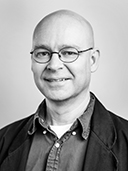
Martin Norgren is a Professor at KTH Royal Institute of Technology, leading the Department of Electromagnetic Fusion Physics. His research focuses on electromagnetic inverse problems, including material characterization, biomedical imaging (e.g., brain current sources), environmental monitoring (e.g., snow and avalanche prediction), and smart grid technologies. He specializes in reconstructing object properties using electromagnetic measurements and has contributed to applications in healthcare, energy systems, and environmental science. His work involves advanced analytical and numerical methods such as mode-matching techniques, perturbation theory, and convex optimization. Notable projects include noncontact current measurement in power grids and transformer diagnostics using microwave radiation. Norgren teaches courses in electromagnetic field theory and electrical engineering design, emphasizing practical applications and interdisciplinary collaboration. Recent research trends highlight advancements in glide/twist symmetry-based metamaterial design, waveguide analysis, and inverse scattering techniques. His studies bridge fundamental physics with applied engineering, addressing challenges in energy infrastructure and medical diagnostics. As a department head, he oversees educational and research programs at KTH, fostering innovation in electromagnetism and fusion physics. His contributions to curriculum development include project-based courses integrating theory and hands-on design.
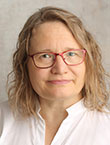
Cecilia Persson is a Professor at Uppsala University in the Department of Materials Science and Engineering; Biomedical Engineering. She leads the BioMaterial Systems (BMS) research group within the Division of Biomedical Engineering, focusing on the development of new biomaterials through additive manufacturing. She also directs a Competence Centre in Additive Manufacturing for the Life Sciences and the national Research Technology Platform WISE Additive. 2018, Professor in Materials Science, Uppsala University 2015, Docent (Assoc. Prof.) in Engineering Science with Specialization in Materials Science, Uppsala University 2009, PhD in Mechanical Engineering, University of Leeds 2004, MSc in Materials Engineering, European degree (EEIGM) with triple diploma Persson's research focuses on biomaterials, biomechanics, materials science, and additive manufacturing. Her work takes an integrated approach to solving clinical and sustainability problems, combining materials science, mechanical and biological engineering with new technologies like 3D printing and machine learning. Key research areas include magnesium-based alloys for bone substitutes, titanium-based alloys for permanent implants, and machine learning methods to enhance manufacturing efficiency. Analysis of her recent publications shows a strong emphasis on additive manufacturing of biomaterials, particularly magnesium and titanium alloys. Her work explores microstructure control, mechanical properties optimization, antibacterial properties, and patient-specific implant design. The research demonstrates a clear trajectory toward more sustainable, patient-adapted medical solutions using advanced manufacturing techniques. Persson has received funding from prestigious organizations including the Swedish Research Council (VR), the Knut and Alice Wallenberg Foundation (KAW), the Swedish Foundation for Strategic Research (SSF), Sweden's Innovation Agency (VINNOVA), and the EU. As an academic leader, Persson has served as Section Dean of Engineering (2020-2023), President of the Scandinavian Society of Biomaterials (2019-2023), and Coordinator of EU Innovative Training Network NU-SPINE (2019-2023). Her BioMaterial Systems research group takes an integrated approach to solving clinical and sustainability problems, bridging fundamental scientific mechanisms with high societal relevance.
Franziska Klügl is a Professor in Computer Science at Örebro University's Faculty of Business, Science and Engineering, affiliated with the Center for Applied Autonomous Sensor Systems (AASS). She currently leads the KKS-funded TeamRob project on Human-Robot Teamwork and serves as Deputy Dean of the faculty since January 2023, chairing the academic appointment committee. Previously, she headed the Computer Science department (2020-2022) and served on the faculty board (2019-2022). Her research focuses on: Multi-agent systems : Development of languages, processes, and tools for agent-based simulation Interdisciplinary applications : Transportation, economics, epidemics, production, and mining simulations Simulation engineering : Integrating AI, machine learning, and formal methods to create accessible modeling tools for domain experts She created SeSAm , a visual programming tool for agent-based simulation that enables rapid prototyping of complex models. Analysis of her recent publications reveals three dominant themes: Human-robot collaboration frameworks and intention recognition systems Economic impacts of automation on labor markets and engineering services Advanced simulation methodologies using affordance theory and reinforcement learning She teaches software engineering, multi-agent systems, and agent-based modeling across multiple programs, including the WASP AI&ML PhD course. She leads research groups at the Machine Perception and Interaction Lab and oversees the TeamRob human-robot teamwork project.
Name: Alexander Katsaitis Position: Associate Professor, Docent Affiliation: Department of Political Science, Stockholm University Email: a.katsaitis@statsvet.su.se ORCID: 0000-0002-9427-6328 Education: PhD, University College London (October 2016) Research Focus: Alexander Katsaitis's research centers on the intersection of policymaker-organized interest interactions, decision-making procedures, and transnational partisan linkages. His work aims to enhance government policymaking through evidence-based recommendations in governance, transparency, and accountability. He has explored regulatory modernization in lobbying, gender representation in EU lobbying, and the evolving nature of EU business lobbying. Publications Trends: Katsaitis has published extensively on EU governance, business-government relations, and transparency mechanisms. His work includes a monograph on "Business Lobbying in the EU" (2021) and co-edited the "Handbook on Lobbying & Public Policy" (2024). Recent articles focus on political financing tracking, lobbying ethics, and institutional dynamics in the European Parliament. Previous Appointments: Before joining Stockholm University, Katsaitis held fellowships at the London School of Economics, European University Institute, and University of Oslo.
Ioannis Sourdis is a Full Professor at the Department of Computer Engineering, Chalmers University of Technology, Sweden. His research focuses on computer architecture, reconfigurable computing, network-on-chip (NoC) design, memory systems, and fault-tolerant embedded systems, with applications in biomedical informatics and hardware security. Current projects include EUMMSS (Efficient Uncore Mechanisms for Multicore Space Systems, funded by the Swedish National Space Board) and eProcessor (European Processor Ecosystem, funded by the European Commission). Past initiatives include the DeSyRe project (on-demand system reliability), ECOSCALE (exascale reconfigurable computing), and SHARCS (secure hardware-software architectures). His work spans NoC router design (e.g., FastTrackNoC, DDRNoC), memory compression (MemSZ, L2C), and biomedical security applications (heartbeat-based protocols). He has published extensively in venues like DATE, ICS, PACT, and IEEE Transactions on Networking. Key research areas: Chiplet-based systems , hybrid memory architectures , FPGA acceleration , and real-time stream aggregation .
Kim Hammar is a postdoctoral researcher at KTH Royal Institute of Technology, with affiliations at the University of Melbourne (2025-2028) and Imperial College London. He works under Prof. Tansu Alpcan and Prof. Emil Lupu, focusing on the intersection of game theory, control theory, and large-scale systems for networking and security applications. Previously, he completed his Ph.D. at KTH under Prof. Rolf Stadler and Prof. Pontus Johnson. His research spans cybersecurity, networked systems, and adaptive control mechanisms. Key contributions include applying optimal stopping reinforcement learning conjectural online learning causal modeling to intrusion response and network security. His 2025-2024 publications highlight advancements in automated security through game-theoretic and control-theoretic approaches, with a focus on dynamic environments. Kim received the VR International Postdoctoral Fellowship in 2025. He has served as an assistant for Computer Networks (EP111U) Computer Systems (EP121U) at KTH.
Per-Erik Hellström is a Professor at KTH Royal Institute of Technology, affiliated with the Department of Electronics and Embedded Systems. His research focuses on semiconductor process technology, particularly the heterogeneous integration of materials like SiGe, Ge, high-κ dielectrics, and metal gates with Si CMOS to advance integrated circuits. He leads KTH's FDSOI CMOS process and circuit technology, emphasizing sequential 3D integration for future CMOS developments. Additionally, he manages the Si and SiC process line at Electrum Laboratory, overseeing tool maintenance, process control, and upgrades. Researcher ID: ORCID Location: Kistagangen 16 Email: pereh@kth.se His work involves developing nanometer-sized transistors through double patterning techniques and studying material integration for enhanced device performance. He teaches courses in electrical circuits, semiconductor devices, and nanotechnology at both Bachelor's and Master's levels, including Electrical Engineering (IF1330) , Embedded Electronics (IE1206) , and Introduction to Integrated Circuits (IL2241) . He also supervises degree projects and exams. Scientific achievements include the 2020 G03 Best Paper Award for gate stack research. His recent publications highlight advancements in Type-II superlattices, 3D integration, and high-temperature sensors. Key collaborators include PhD students working on nanotechnology and process engineering.
Lina von Sydow is a Professor in Computational Science at Uppsala University's Department of Information Technology. She serves as Section Dean for the Mathematical-Computer Science Section since July 2023. Her academic journey includes becoming an Associate Professor in 2000, Senior Lecturer since 1997, and leading the Department of Information Technology from 2018 to 2023. PhD in Domain Decomposition Methods (1995, Uppsala University) Postdoctoral Fellow at Oxford University (1996-1997) Her research spans computational science with dual focuses on Computational Finance and Ice Sheet Modeling . In finance, she develops numerical methods for option pricing using PDEs, radial basis functions, and stochastic volatility models. In climate science, she contributes to ice sheet dynamics through full Stokes models and adaptive time-stepping approaches, particularly in simulating grounding line migration. Recent publications (2025) address gender disparities in IT education, including comparative analysis of admission trends and intervention studies to boost female enrollment. Earlier works (2020-2015) focus on high-order finite difference methods for financial derivatives, BENCHOP benchmarking projects, and preconditioning techniques for PDEs. Scientific awards include Excellent Teacher (2013) She actively collaborates on educational reforms, co-authoring studies like Gender-aware course reform in Scientific Computing (2013). Her leadership roles include Head of Department (2018-2023) and Section Dean (2023-present), influencing academic governance and interdisciplinary research. Labs and teams: Works with Uppsala University's Computational Science group, Elmer/ICE project collaborators (e.g., Per Lötstedt, Gong Cheng), and international partners in numerical finance and climate modeling.
Anna Jon-And is a Researcher and Director of the Center for Cultural Evolution at Stockholm University , affiliated with the Department of Psychology . Her interdisciplinary work bridges linguistics , cognitive science , and cultural evolution , focusing on how sequence representation , language contact , and computational models explain the emergence of human language and its unique properties. Research Interests include: Language evolution through sequence learning and cognitive constraints Contact-induced language change in Portuguese varieties (Angola, Mozambique, Afro-Brazilian communities) Computational modeling of grammatical structure emergence Comparative analysis of pidgins, creoles, and non-contact languages Neurocognitive prerequisites for language and cultural complexity Publications highlight trends in language evolution models , compositional systems , and cross-linguistic complexity cycles . Her work demonstrates how demographic factors and learnability pressures drive linguistic innovation in multilingual settings. The Center for Cultural Evolution at Stockholm University serves as the primary platform for her interdisciplinary research initiatives.
Anders Björn is a Professor at the Department of Mathematics (MAI) at Linköping University (LIU), affiliated with the Analysis and Mathematics Education (ANDI) division. His research focuses on Nonlinear Potential Theory , particularly p-harmonic functions , quasiminimizers , and Newtonian Sobolev spaces in metric spaces. He co-leads the research group in this area and contributes to Analysis on Metric Spaces . He teaches undergraduate and graduate courses, including Real Analysis and Functional Analysis . Organizational Roles: Organizer of the Mathematical Colloquium, Local Representative for Svenska Matematikersamfundet (Swedish Mathematical Society). Editorial Work: Former Technical Editor for Acta Mathematica (2004–2015) and Arkiv för Matematik (1993–2015), both published by Institut Mittag-Leffler. His research explores foundational questions in mathematical analysis, blending pure mathematics with interdisciplinary applications. He emphasizes understanding properties of solutions to differential equations in general settings, akin to constructing an 'identikit' of mathematical phenomena. His work is published in collaboration with the ANDI group, and he actively engages in promoting mathematics through outreach and academic service.
Sarah Gillet is a Postdoctoral Researcher at the Division of Robotics, Perception, and Learning at KTH Royal Institute of Technology, where she focuses on developing social robot behaviors to foster collaboration and inclusion in human groups. Her research addresses challenges like in-group favoritism through computational approaches to shape group interactions. She holds a Doctoral Thesis (2024) titled Computational Approaches to Interaction-Shaping Robotics . Her work emphasizes group dynamics , robot-mediated inclusion , and pedagogical robotics , particularly in children and adolescent populations. Key areas include gaze behavior analysis, equitable participation promotion, and social robot roles such as mediators in educational settings. Dr. Gillet teaches the Social Robotics (DD2413) course and supervises master theses. Her recent publications explore robot gaze behaviors for participation balance, socially appropriate listening, and influence prediction models like RoSI. She actively participates in conferences like ACM/IEEE HRI and IEEE RO-MAN. Her research integrates computational methods with social science insights to design robots that actively improve human group interactions, with applications in education, collaboration, and bias mitigation.
Elin Nyman is the Head of the Department of Biomedical Engineering (IMT) and an Associate Professor at Linköping University. She leads the department, fostering an environment of trust and collaboration. Her research focuses on systems biology and e-health, integrating mathematical models with experimental data to advance drug development and clinical tools. She supervises students in both the Faculty of Science and Engineering and the Faculty of Medicine and Health Sciences, examining courses like TMBI28 and 8BKG45. Her research interests include systems biology, particularly in drug development and AI applications in healthcare. Key projects involve robust metabolic measurements, AI-driven diagnostic tools (M4-health), and knowledge-driven drug development with AstraZeneca. Recent publications highlight liver steatosis dynamics, IL-10 feedback mechanisms, and insulin resistance modeling. Her work bridges interdisciplinary collaboration, such as a course combining medical and engineering students to develop digital health solutions. She contributed to a SEK 13 million grant for AI-based crime-solving using detailed analyses and AI. Current affiliations include the Division of Biomedical Engineering (MT) and IMT department.
Annika Björn is an Associate Professor at the Theme Environmental Change (TEMAM) within Linköping University . Her research focuses on Biogas Production , Anaerobic Digestion , and Environmental Chemistry to enhance sustainable energy systems through optimized microbial processes. PhD in Environmental Chemistry (2007), Linköping University MSc in Chemistry (1997), Linköping University Major research initiatives include: Coordinating process and technology development at the Biogas Solutions Research Center Leading KNUT project for science education integration Investigating Trace Element Dynamics in biogas reactors Optimizing Hydrolysis Efficiency for complex substrates Key findings from her 15 recent publications (2010-2025) demonstrate: Strategies to enhance biogas yield from lignocellulosic and industrial waste Techniques for rheological control through microbial metabolites Meta-analyses on pretreatment efficacy across diverse substrates Development of educational frameworks for energy sustainability Process improvements in UASB and CSTR reactor systems Characterization of underutilized organic fractions in digestate
Fredrik Sandin is a Professor in the Department of Computer Science, Electrical and Space Engineering at Luleå University of Technology, where he leads the Machine Learning research group with approximately thirty members. His work focuses on neuromorphic technologies and the intersection of machine learning with computational physics to solve challenging real-world interaction problems. He coordinates the 'Teknisk fysik och elektroteknik' program at LTU and has been instrumental in establishing neuromorphic research activities at the university. Luleå University of Technology, Department of Computer Science, Electrical and Space Engineering Member of WASP (Wallenberg AI, Autonomous Systems and Software Program) and ELLIS (European Laboratory for Learning and Intelligent Systems) Coordinator of Neuromorphic Innovation Platform Sweden with KTH, Lund University, Uppsala University, FOI, ABB, Ericsson, and SAAB Fredrik earned his PhD in Physics from Luleå University of Technology in 2007, with thesis work focusing on dense states of matter in neutron stars. His academic journey began with an MSc diploma work in ATLAS at CERN in 2001, followed by postdoctoral research in computational physics at IFPA in Belgium (2008-2009) and brain-like computing at EISLAB with Prof. Jerker Delsing (2010-2011). Professor Sandin's research interests center around neuromorphic technologies, particularly neuromorphic computing and spiking neural networks. He investigates sensor/detector and intelligent systems co-design where constraints like energy, power, latency, and dynamic range challenge conventional digital approaches. His work spans mixed-signal neuromorphic circuits, algorithms, and systems, as well as machine learning projects involving industrial data and collaboration. He has been a key figure in establishing neuromorphic research at LTU, supported by The Kempe Foundations, particularly through the 2014 Gunnar Öquist Fellowship. His recent publications demonstrate a strong interdisciplinary focus spanning quantum phase transitions, particle physics detector optimization, renewable energy materials, and the integration of large language models into control systems. This diverse portfolio reflects his approach connecting machine learning with fundamental physics and practical engineering applications, particularly in neuromorphic computing and intelligent systems design, with emphasis on solving real-world problems through co-design of hardware and algorithms. Gunnar Öquist Fellowship Award and 3 MSEK grant from The Kempe Foundations ISSP award for an Original Work in Theoretical Physics (signed by Prof. 't Hooft and Prof. Zichichi) New-Talents award for original work in theoretical physics at the International School of Subnuclear Physics in Erice Professor Sandin has supervised numerous PhD students working on topics ranging from neuromorphic TinyML to materials for neuromorphic computing, privacy-preserving machine learning at the edge, and intelligent fault diagnosis. He has secured substantial research funding from various sources including Vinnova, ÅForsk, Kempe Foundations, WASP-WISE, and EU programs like ECSEL JU Arrowhead Tools and ITEA3 AutoDC. His current major projects include the Neuromorphic Innovation Platform Sweden and several initiatives focused on neuromorphic condition monitoring and computing, with total funding exceeding 30 MSEK in the past five years. He leads the Machine Learning group at LTU, which collaborates extensively with industry partners including ABB, Ericsson, SAAB, SKF, and RISE. The group is active in developing neuromorphic technologies for wireless sensor networks, condition monitoring systems, and next-generation intelligent systems that address energy, power, and latency constraints that challenge conventional digital approaches.
Mattias Roupé is an Associate Professor, Head of Department, and Research Area Leader at the Department of Construction Management and Engineering at Chalmers University of Technology. His research focuses on digital construction processes, including Building Information Modelling (BIM), Total BIM, Virtual Reality (VR), and digital twins. He holds a Ph.D. in Virtual Reality for decision-making in urban planning and building design. His work combines technical advancements in visualization and computational methods with human-centric aspects like perception and decision-making in design collaboration. Education: Ph.D. in Virtual Reality applications for urban planning and building design. Research interests span model-based construction processes, data-driven design, and immersive technologies for user involvement in healthcare and infrastructure projects. Notable projects include the Total BIM initiative, exploring integrated digital workflows, and the Digital Twin Cities Centre, advancing smart city technologies. His publications emphasize VR integration, BIM adoption challenges, and collaborative design tools. He leads several research grants funded by organizations like SBUF and Formas, focusing on construction innovation. Key contributions include frameworks for BIM-based scheduling, VR in healthcare facility design, and BIM-GIS integration for railway infrastructure. His work bridges technical and human factors to enhance construction efficiency and sustainability.