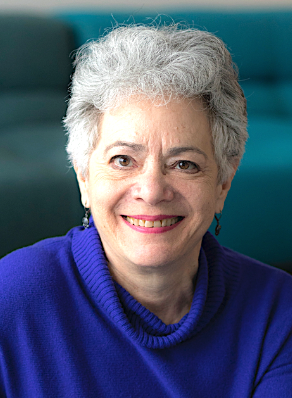
Melody Alsaker is an Associate Professor in the Department of Mathematics at Gonzaga University, where she has held this position since January 2016. Her research focuses on medical imaging and applied inverse problems, particularly in the field of electrical impedance tomography (EIT). She specializes in mathematical modeling, algorithm design, and biomedical image processing, with applications in pulmonary and thoracic imaging. Her work emphasizes improving EIT reconstruction techniques using the D-bar method, incorporating spatial priors, and developing real-time solutions for clinical applications. Notable contributions include the ACE1 EIT system for thoracic imaging and studies on stroke classification, air trapping in lungs, and surrogate measures of pulmonary function in children with cystic fibrosis. Alsaker's research bridges mathematics and engineering, addressing challenges in medical imaging accuracy and computational efficiency. Her collaborations span disciplines, including biomedical engineering, respiratory physiology, and clinical medicine.
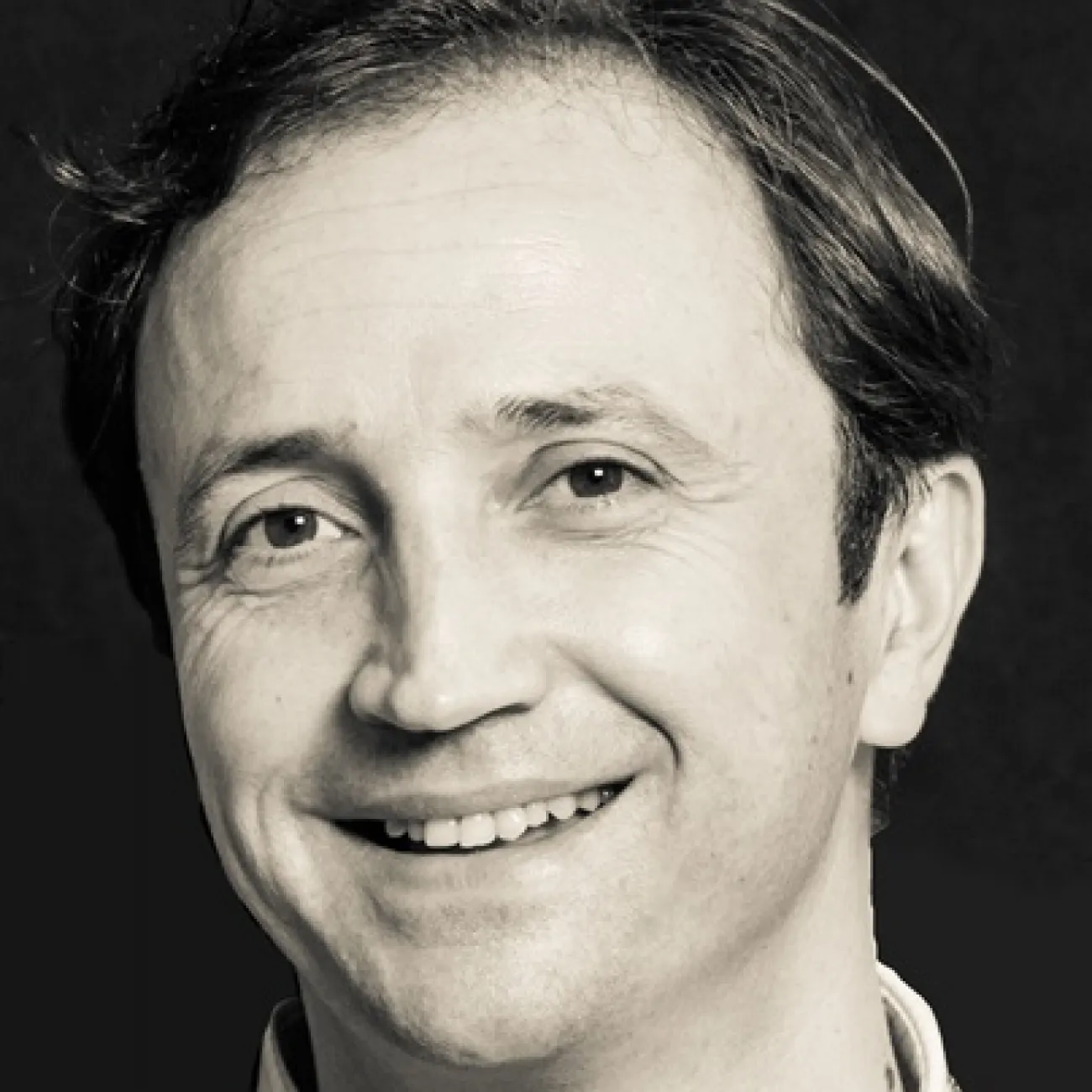
Eamonn Keogh is a Professor in the Computer Science and Engineering Department at the University of California, Riverside. His pioneering work centers on the Matrix Profile, a transformative approach to time series data mining enabling efficient solutions for motif discovery, anomaly detection, and similarity search. His algorithms (STAMP, STOMP, SCRIMP, DAMP, SCAMP) offer exact, parameter-free, and scalable solutions across domains like seismology, bioinformatics, and industrial IoT. Research areas include: Development of ultra-fast algorithms for time series joins and motif discovery at unprecedented scales (breaking the 100 million barrier) GPU acceleration for time series mining Domain-agnostic methods for semantic segmentation and anomaly detection Novel primitives like Time Series Chains, Snippets, and Consensus Motifs His work is highly cited and recognized by industry and academia, with applications ranging from NASA's Cassini mission to detecting BGP anomalies in computer networks.
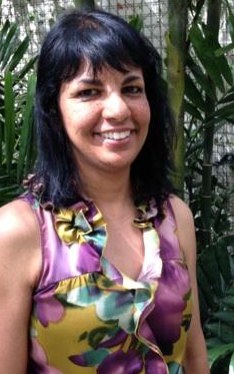
Georgia Perakis is the John C Head III Interim Dean of MIT Sloan School of Management and a Professor of Operations Management and Operations Research & Statistics. She has been on MIT Sloan's faculty since 1998, contributing extensively to research in analytics/AI, optimization, and machine learning applications in pricing, supply chains, healthcare, and energy. Recognized as a leading academic, she has won numerous awards, including the INFORMS Fellow and Distinguished MSOM Fellow, along with multiple best paper awards. Perakis has supervised 30 PhD and 59 master's students, fostering lifelong academic relationships. Her administrative roles include co-director of the Operations Research Center and Associate Dean for Social and Ethical Responsibilities of Computing. She currently serves as Editor-in-Chief of M&SOM and has held editorial leadership roles in top journals like Operations Research and Management Science. Her education includes a BS in Mathematics from the University of Athens and advanced degrees in applied mathematics from Brown University. Research Interests : Perakis focuses on solving complex problems at the intersection of optimization and machine learning, with applications in retail promotions, healthcare operations (e.g., emergency department management), and energy systems. Her work emphasizes practical solutions to real-world challenges, leveraging data-driven analytics and prescriptive models. Recent projects include optimizing patient placement in emergency departments and modeling demand for new products in retail. Grants & Awards : Her accolades include the NSF CAREER Award, PECASE Award, and over a dozen best-paper recognitions. Notable contributions include a finalist position in the JD.com Competition (2019) and winning first place for Johnson & Johnson’s demand-prediction work (2018). She has also pioneered methodologies for equitable resource allocation in healthcare. Education & Leadership : Perakis holds leadership roles in interdisciplinary initiatives like the MIT Initiative on the Digital Economy and the Food Supply Chain Analytics and Sensing Initiative. Her teaching excellence is underscored by awards such as the Jamieson Prize and Teacher of the Year (MIT Sloan). She has directed major programs like the MIT Leaders for Global Operations and the Executive MBA program. Labs & Teams : She is affiliated with the Operations Research Center (an interdepartmental PhD program) and collaborates with institutions like UMass Memorial Hospital on healthcare optimization projects. Her work integrates ethics into AI development, emphasizing fairness, bias mitigation, and societal impact.
Wenhu Chen is an Assistant Professor at the University of Waterloo's Computer Science Department and a CIFAR AI Chair at the Vector Institute. He also holds a part-time role as a Senior Research Scientist at Google DeepMind (20% allocation). His research focuses on natural language processing, deep learning, and multimodal reasoning, with contributions to models like MAmmoTH, OpenCoderInterpreter, and VISTA. He received awards including the Canada CIFAR AI Chair (2022) and the UCSB CS Outstanding Dissertation Award (2021). Education: PhD in Computer Science from the University of California, Santa Barbara (under William Wang and Xifeng Yan). Research interests include complex reasoning, controllable GenAI, and multimodal benchmarks like MEGABench and MMMU. Grants include CIFAR AI Chair Funding (2022-2027), NSERC Discovery Fund (2023-2028), and multiple NRC Canada grants. He directs the TIGER Lab, advancing generative models in text, images, videos, and music. Recent talks include presentations on multimodal reasoning at Apple and NeurIPS workshops.
Barbara J. Grosz is Higgins Research Professor of Natural Sciences Emerita at Harvard SEAS. Her pioneering research developed computational models for natural-language dialogue and multi-agent collaboration systems. Research interests include human-computer communication frameworks, team-oriented AI systems, and applications in healthcare coordination and education. Her work established foundational theories for computer-agent systems functioning as collaborative partners. Major honors include the ACM/AAAI Allen Newell Award, IJCAI Research Excellence Award, ACL Lifetime Achievement Award, and fellowship in six scholarly academies. She co-founded Harvard's Embedded Ethics program and Stanford's Center for Language and Information.
Paul D. Asimow is the Eleanor and John R. McMillan Professor of Geology and Geochemistry at the California Institute of Technology (Caltech), part of the Division of Geological and Planetary Sciences. He holds a B.A. from Harvard University (1991), an M.S. (1993), and a Ph.D. (1997) from Caltech. His career progression includes roles as Assistant Professor (1999–2005), Associate Professor (2005–2010), and Professor (2010–present), with the McMillan Professorship since 2016. Education: A.B. in Geology, Harvard University, 1991 M.S. in Geology, Caltech, 1993 Ph.D. in Geology, Caltech, 1997 Research Interests: Focuses on computational, experimental, and observational approaches to igneous petrology and mineral physics. Key areas include adiabatic mantle melting, water's role in mantle dynamics, high-pressure mineral physics, and processes at mid-ocean ridges. His research utilizes advanced facilities like the Lindhurst Laboratory of Experimental Geophysics and the alphaMELTS software package for thermodynamic modeling. Articles Overview: Recent work spans planetary crust formation, Martian petrogenesis, and high-pressure mineral behavior. Themes include experimental techniques, computational modeling, and cosmochemical studies of meteorites. Awards and Honors: James B. Macelwane Medal (AGU) Frank Wigglesworth Clarke Medal (Geochemical Society) Richard P. Feynman Prize for Teaching Excellence (Caltech) Fellow of the American Geophysical Union Fellow of the Mineralogical Society of America Grants and Labs: Received NSF funding for developing an interactive phase equilibria curriculum. Leads the Lindhurst Laboratory, focusing on shock-wave experiments and high-pressure mineral physics. Collaborates on software tools like alphaMELTS and MAGMASOURCE. Labs and Teams: Active in the Caltech Shock Wave Laboratory, advancing experimental methods for planetary material studies. Engages in interdisciplinary projects on Mars geology and terrestrial planet formation.
Prof. Dr. Philipp Heretsch is a Professor and Executive Director at the Institute of Organic Chemistry, Faculty of Natural Sciences, Leibniz University Hannover. He leads the Natural Product Synthesis research group and holds key roles in academic governance, including Deputy Coordinator for Exchange Programmes and representation on various examination and curriculum boards. Research Interests: His research focuses on the synthesis of complex natural products, particularly terpenes and alkaloids, using biosynthesis-inspired strategies. He develops novel carbon–carbon bond manipulation techniques and rearrangement cascades. A significant emphasis is placed on the biological activity of synthesized compounds. He also pioneers the development of continuous flow reactor systems for the selective transformation of sensitive and short-lived chemical species. Publication Trends: His recent publications (2020–2025) demonstrate a strong focus on biogenesis-inspired total synthesis of highly complex natural products (e.g., canataxpropellane, swinhoeisterol), the application of radical-polar crossover and rearrangement strategies, and the innovative use of flow chemistry for scalable and efficient synthesis of both natural products and functional molecules like odorants and ferrocenyl compounds. Scientific Awards: ADUC Prize of the GDCh (2018) DECHEMA Young Scientist Prize for Natural Product Research (2020) ORCHEM Prize for Young Scientists of the Liebig Association for Organic Chemistry of the GDCh Advising and Grants: While specific students are not listed, he leads an active research group. His work is supported by significant external funding, including an ERC Consolidator Grant for the project "RadCrossSyn" and support from the DFG Heisenberg Program, which facilitated his move to Leibniz University Hannover in 2021. Labs and Teams: He heads the Natural Product Synthesis research group at the Institute of Organic Chemistry, Leibniz University Hannover. His research group, often referred to as the "Heretsch group," is dedicated to developing novel synthetic methodologies and applying them to the synthesis of biologically relevant natural products.
Prof. Vasilis Ntziachristos is a Professor and Chair of Biological Imaging at the Technical University of Munich (TUM), leading the Institute of Biological and Medical Imaging at the Helmholtz Centre Munich. His research focuses on developing novel optical and optoacoustic imaging techniques for early disease detection, diagnostics, and theranostics. He holds a PhD in Bioengineering from the University of Pennsylvania and previously served as an Assistant Professor at Harvard University and Massachusetts General Hospital. Affiliations: TUM School of Medicine and Health, Helmholtz Munich, Institute of Biological and Medical Imaging. Key Research Themes: Non-invasive imaging methods, molecular imaging, optoacoustic technology, and clinical translation. His work bridges theoretical developments with clinical applications, including advancements in glucose monitoring, cancer imaging, and drug delivery systems. Notable awards include the Leibniz Prize (2013) and the World Molecular Imaging Society Gold Medal (2015). Labs/Teams: Imaging to Sensing I2S, Optoacoustic Mesoscopy, Fluorescence Imaging, and AI in Optoacoustics. Grants/Projects: Involvement in Horizon Europe initiatives and collaborations with TranslaTUM and Helmholtz Munich. Prof. Ntziachristos actively contributes to education via courses like 'Biological Imaging' and 'Introduction to Bioengineering', fostering the next generation of imaging scientists.
Professor Goran Mashanovich is a leading academic in silicon photonics at the University of Southampton's Optoelectronics Research Centre (ORC) , Faculty of Engineering and Physical Sciences. With a Dipl. Ing. and MSc from the University of Belgrade and a PhD from the University of Surrey, he serves as head of the ORC's Mid-IR silicon photonics group. His expertise spans passive and active photonic devices in silicon and germanium for communication and sensing systems. Education: Dipl. Ing. in Optoelectronics, University of Belgrade MSc in Optoelectronics, University of Belgrade PhD in Silicon Photonics, University of Surrey MSc in Innovative Teaching, University of Surrey His research focuses on Silicon Photonics , Photonics Integrated Circuits , and Sensor Development , particularly in mid-infrared applications. His recent publications demonstrate advancements in waveguide engineering, perovskite integration, and nonlinear optical effects optimization through computational methods. As Principal Investigator on grants exceeding £20 million from EPSRC and industry partners, his collaborative projects include MISSION (mid-infrared healthcare sensors), CORNERSTONE 2.5 , and PIXEurope . He also contributes to global education initiatives as a visiting professor at the University of Belgrade's Faculty of Electrical Engineering.
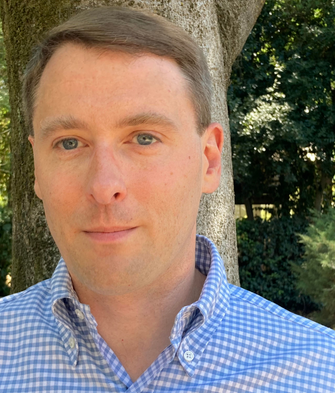
James Bremer is a Professor in the Department of Mathematics and holds a cross-appointment in the Department of Computer and Mathematical Sciences at the University of Toronto's Scarborough campus. His research focuses on developing efficient numerical algorithms for solving elliptic boundary value problems, integral equations, and special function transforms.
Dr. Yunjie Yang is an Associate Professor at the University of Edinburgh's School of Engineering, with affiliations at the Edinburgh Futures Institute (EFI), the Edinburgh Generative AI Laboratory (GAIL), and the Edinburgh Centre for Robotics. He previously held the Chancellor's Fellow in Data Driven Innovation (2018-2023) and Bayes Innovation Fellow (2023-2024) positions. His research focuses on AI-powered sensing and imaging, machine learning, and soft sensors & electronics for robotics. Yang received his PhD in Engineering Electronics from the University of Edinburgh, MSc in Control Science & Engineering from Tsinghua University, and BEng in Measurement & Control Engineering from Anhui University. After his PhD, he worked as a Postdoctoral Research Associate in Chemical Species Tomography before securing his lectureship. His research interests center on developing intelligent sensing systems that replicate human perception capabilities for robotics and intelligent systems. He pioneers flexible sensing and imaging technologies across various scales through innovative multi-modal sensors, soft electronics, and their modeling using machine learning approaches. His work aims to enable autonomous physical artificial intelligence by bridging the gap between robotic systems and human-like perception. Analysis of his recent publications reveals a strong focus on soft robotics perception, particularly through electrical impedance tomography (EIT) and transformer-based architectures. His research spans medical imaging applications, digital twin modeling for industrial processes, and machine learning approaches for sensor data interpretation. The trend shows increasing integration of physics-informed deep learning with traditional tomographic techniques to achieve higher accuracy and efficiency. European Research Council (ERC) Starting Grant (2024) IEEE J. Barry Oakes Advancement Award (2024) IEEE I&M Society Graduate Fellowship Award (2015) Multiple Best Paper Awards Senior Member of IEEE Fellow of the International Society for Industrial Process Tomography Fellow of the Higher Education Academy ESI highly cited papers Dr. Yang serves as Associate Editor for IEEE Transactions on Instrumentation and Measurement and holds editorial positions with Scientific Reports and IEEE Sensors Journal. His research has been licensed to overseas research institutes and industry partners and received wide media coverage including BBC, EFE, USA Today, and STV. He has secured significant grant funding including the prestigious ERC Starting Grant. He leads the Edinburgh SMART Lab (Sensing/imaging + Machine Learning + Robotics), which aims to replicate human perception capabilities for robotics and advance flexible sensing technologies through innovative multi-modal sensors and machine learning approaches. The lab focuses on enabling autonomous physical artificial intelligence with applications spanning medical diagnostics, industrial monitoring, and advanced robotics systems.
Susan J. Simkins is a Professor of Psychology at The Pennsylvania State University, where she serves as Lead of the CTSI-Team Science Core and is based in Moore Building at University Park. Her contact details include email sxm40@psu.edu and phone (814) 863-7387. Education Ph.D., Ohio State University, 1996 Research Interests Dr. Simkins' research centers on effective teamwork and performance through three interconnected streams: team composition/diversity (examining demographic, cognitive, and personality-based diversity within contingency frameworks), team cognition/mental models (focusing on shared understanding of tasks and teamwork dynamics), and temporal integration in teams (investigating time-based diversity, temporal leadership, and pacing styles). Her work emphasizes individual differences, cognitive processes, and temporal dynamics as critical determinants of team effectiveness in organizational contexts. Publication Trends Her 2013-2017 publications reveal a strong focus on temporal dimensions of teamwork, including polychronicity diversity, temporal conflict in specialized teams (e.g., culinary environments), and time-sensitive mental models. Key methodological approaches involve multilevel analysis and contingency frameworks, with applications spanning leadership theory, decision-making diversity, and climate interactions. Work appears consistently in top organizational psychology journals like Journal of Applied Psychology and Organizational Behavior and Human Decision Processes. Scientific Awards No scientific awards were documented in the provided text. Advising and Grants While the text confirms her faculty role and research leadership, specific details about graduate student advising, grant funding, or sponsored projects were not included in the source material. Labs and Teams Dr. Simkins leads the CTSI-Team Science Core, an initiative dedicated to advancing methodologies for studying team-based research structures and improving collaborative effectiveness in scientific and organizational settings.
Jeff B Murray serves as Professor and Department Chair in the Department of Marketing at the Sam M. Walton College of Business, University of Arkansas, teaching in the full-time MBA, Executive MBA, and Marketing Doctoral programs. His leadership extends to international doctoral seminars across Europe and Australia, reflecting his scholarly influence. His academic foundation includes a Ph.D. from Virginia Tech. His research program examines critical marketing, interpretive consumer research, and philosophy of science through frameworks like Consumer Culture Theory and Transformative Consumer Research. Murray's scholarly contributions reveal a trajectory from foundational critical theory toward contemporary applications in arts markets, sustainable fashion, and digital consumption. His work consistently bridges philosophical inquiry with empirical consumer phenomena, emphasizing emancipatory interests and societal transformation. Recent publications demonstrate growing interdisciplinary engagement with sociology, anthropology, and sustainability studies. Outstanding All-Around Professor Award (2002) Charles and Nadine Baum Faculty Teaching Award (2002) Editorial board service for leading journals including Journal of Consumer Research He mentors doctoral students now holding faculty positions globally, with recent workshops in Germany, France, and Scandinavia highlighting his international impact. His professional engagements span the American Marketing Association, Association for Consumer Research, and American Sociological Association, where he contributes to critical theory development through initiatives like Consumer Culture Theory. Murray maintains active scholarly networks through Transformative Consumer Research and regularly presents at international conferences, advancing critical perspectives on marketing's societal role.
Professor Liyue Shen is a faculty member in the Department of Biomedical Engineering within the College of Engineering at the University of Michigan. Her research program focuses on cutting-edge applications of artificial intelligence in biomedical imaging and healthcare, with particular expertise in diffusion models and inverse problem solving for medical image reconstruction. Dr. Shen's research interests span biomedical AI, medical image analysis, biomedical imaging, machine learning, computer vision, signal and image processing, AI for precision health, and bioinformatics. Her work bridges theoretical advances in AI with practical clinical applications, developing novel methods for medical image reconstruction, segmentation, and analysis that can improve diagnostic accuracy and treatment planning. Analysis of her recent publications reveals a strong focus on diffusion models for solving complex inverse problems in medical imaging, with particular emphasis on patch-based approaches, latent space disentanglement, and efficient sampling techniques. Her research group has made significant contributions to 3D CT reconstruction, chest X-ray analysis, holographic phase retrieval, and patient-specific imaging studies, demonstrating both theoretical innovation and practical clinical relevance. While specific scientific awards aren't mentioned in the available materials, her extensive publication record in top venues demonstrates significant scholarly impact in the field of biomedical AI. Her research program appears well-funded through grants supporting her work in medical imaging and AI development.
Dr. Jiaqi Gong serves as Associate Professor in Computer Science and Adjunct Associate Professor in Mechanical Engineering at The University of Alabama's College of Engineering, while directing the Alabama Center for the Advancement of Artificial Intelligence. His academic foundation includes: B.S. in Engineering, China University of Geoscience (2004) Ph.D. in Engineering, Huazhong University of Science and Technology (2010) Dr. Gong's research pioneers human-AI convergence through cyber-physical systems and smart health technologies, developing mobile/wearable platforms to enhance human perceptual, cognitive, and physical capabilities. His work spans artificial intelligence, machine learning, computer vision, and IoT with applications in healthcare, environmental monitoring, and education. The Sensor-Accelerated Intelligent Learning (SAIL) laboratory he founded drives innovation in behavior change interventions, human movement modeling, and educational data mining. Recent publications reveal strong interdisciplinary trends: healthcare AI dominates with medication adherence prediction and surgical classification systems, while environmental applications feature flood-risk communication and drought analysis. His work increasingly integrates generative AI and LLMs across domains, demonstrating methodological innovation in federated learning, knowledge graphs, and explainable storytelling frameworks. Notable recognitions include: Best Student Paper Award, IEEE/ACM Connected Health Conference (2022) Best Student Paper Award, Body Sensor Networks Conference (2019) Data Challenge Win, IEEE Biomedical Health Informatics (2018) Best Paper Award, Body Area Networks Conference (2014) Best Demonstration Award, IEEE Wireless Health Conference (2014) Dr. Gong leads significant funded projects including a $2M CDC/NIOSH grant for first responder safety and $3M NSF funding for hydrologic research. As SAIL laboratory director, he mentors students in developing clinically deployed technologies for multiple sclerosis, dementia, and mental health. Future work focuses on scaling AI applications in chronic disease management and climate resilience through the Alabama AI Center. The SAIL laboratory (founded 2017) operates as a multidisciplinary hub developing wearable/mobile systems for health applications, with active collaborations across medical clinics and engineering departments for real-world deployment of behavior change interventions and movement analysis tools.