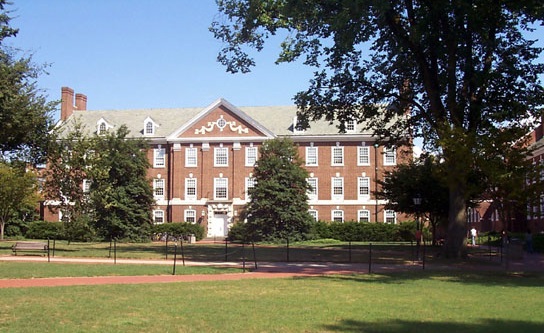
Susanne Jauhiainen is a Postdoctoral Researcher affiliated with the Faculty of Information Technology at the University of Jyväskylä . Her work primarily focuses on applying machine learning and data science techniques to interdisciplinary problems in sports science and health informatics. Research Themes : Machine Learning, Sports Injury Prediction, Student Well-Being Analytics Key Collaborations : Computational Data Science Research Group, with partners in health science and spectral imaging domains Her recent publications highlight predictive modeling applications in sports injury detection, cluster analysis techniques, and educational data mining. Jauhiainen's work emphasizes the practical implementation of advanced analytics to solve real-world problems across multiple domains. She contributes to open-access research dissemination and participates in multidisciplinary teaching initiatives that integrate digital well-being data analysis.
Panagiotis Chatzipantelidis is an Associate Professor and Associate Chair at the University of Crete. He earned his Ph.D. from the same institution in 1998. His office is located in E-318 and he can be contacted via email at p.chatzipa@uoc.gr or by phone at 39-3871. His primary research focuses on numerical analysis and numerical methods for differential equations , with specialized expertise in finite element and finite volume techniques. Key areas include error analysis, positivity-preserving schemes, and adaptive methods for solving parabolic, elliptic, and hyperbolic partial differential equations. Analysis of his 15 most recent publications (2012-2022) reveals consistent work on theoretical foundations of numerical PDE solvers, with particular emphasis on stability analysis and error estimation for finite element/volume methods. Recurrent themes include heat equations, transport phenomena, and chemotaxis systems. No scientific awards or honors are mentioned in the available records. There is no available information regarding student mentorship, research grants, laboratory affiliations, or collaborative teams in the provided materials.
Yasser Mohamed is a Professor in the Civil and Environmental Engineering Department at the University of Alberta . His academic and professional focus revolves around construction engineering, discrete-event simulation, and process optimization for industrial and tunneling operations. He has also explored knowledge engineering techniques and the application of TRIZ (Theory of Inventive Problem Solving) to construction processes. Email: yaly@ualberta.ca Location: 7-269 Donadeo Innovation Centre For Engineering, Edmonton, AB Courses Taught: CIV E 603 (Construction Informatics), CIV E 606 (Design and Analysis of Construction Operations) His research emphasizes modeling construction processes using discrete-event simulation to optimize performance and develop synthetic environments for construction operations. Recent publications, however, indicate a shift toward power systems, focusing on DC microgrids , grid-forming converters , and renewable energy integration . Scientific Awards: None explicitly mentioned in the provided data. Advising and Grants: No formal advisees listed. A co-applicant on a CRD grant (2007–present) for synthetic environments in construction simulation.
Hongbo Yu is an Associate Professor in the Department of Geography at Oklahoma State University (OSU), where he has served since 2005. His research focuses on transportation geography, time-geography frameworks, GIS applications, and spatio-temporal analysis. He earned his Ph.D. in Geography from the University of Tennessee at Knoxville in 2005. Dr. Yu integrates GIS tools to study urban dynamics, accessibility, and transportation systems, with a particular emphasis on how temporal and spatial constraints influence human mobility and societal interactions. His teaching responsibilities include courses such as Fundamentals of Geographic Information Systems and Geographic Information Systems: Socioeconomic Applications . He emphasizes practical GIS skills, theoretical spatial concepts, and real-world problem-solving in his instruction. Dr. Yu has secured funding for projects like the Black Ice Detection and Road Closure Control System and GIS-based Livestock Disease Routing Framework , demonstrating his commitment to applied research impacting transportation safety and public health. His service includes peer review for journals like Transportation Research Part D and Annals of GIS , and committee roles such as Program Committee Member for academic conferences. His work bridges theoretical geography with technological innovation, addressing challenges in urban planning, climate adaptation, and transportation logistics.
Anne Roche is a Casual Academic and past researcher associated with the School of Education within the Faculty of Education and Arts. Her work focuses on mathematics education, particularly in areas such as teacher professional development, student learning strategies, and pedagogical content knowledge. She has extensively studied topics like fractions, decimals, task-based learning, and teacher noticing across international contexts, including Australia, China, and Germany. Her research emphasizes the importance of contextualized tasks and challenging mathematical problems in fostering student engagement and conceptual understanding. She has contributed to projects aimed at improving teacher knowledge, such as the 'Early Numeracy Research Project' and studies on mathematics middle leaders' aspirations for classroom learning. Roche's work also explores teacher decision-making processes, the use of visual tools like decimats for decimal place value, and strategies to build student persistence in problem-solving. Her findings have been disseminated through peer-reviewed journals such as ZDM Mathematics Education, Mathematics Education Research Journal, and The Journal of Mathematical Behavior. While her articles highlight collaborative efforts with institutions worldwide, her academic contributions lack explicit mentions of awards or grants listed in the provided texts. Her publications span over two decades, reflecting sustained engagement with foundational and applied aspects of mathematics education.
Dr. Yanan Fan is a Senior Principal Research Scientist at CSIRO's Data61 and an Adjunct Professor of Statistics at the University of New South Wales (UNSW). His research focuses on Bayesian models, computational methods for real-world problems, and interdisciplinary applications in fields like medical imaging, cosmology, and climate science. He holds a PhD in Statistics from the University of Bristol and has over 20 years of academic experience at UNSW's School of Mathematics and Statistics. Education: PhD in Statistics, University of Bristol, UK Undergraduate Degree in Mathematics, University of Melbourne Research Interests: Fan develops Bayesian semiparametric models, approximate Bayesian computation (ABC), and scalable computational methods for medical imaging (e.g., PET), cosmology, and climate modeling. He also investigates gender bias in educational evaluations and leads initiatives like the Data4Good stream of UDASH. His work emphasizes practical problem-solving through advanced statistical techniques. Leadership & Contributions: As Team Leader of Bayesian Computational Methods and Applications at Data61, he drives innovation in statistical methodologies. He has served on the Scientific Committee of MATRIX research institute and as an Associate Editor for major statistical journals. His projects include probabilistic climate projections and bias analysis in student evaluations. Labs & Groups: Active member of the StatML Group and leader of the Bayesian Computational Methods team, focusing on integrating machine learning and statistical computing.
Chris North is a Professor in the Department of Computer Science at Virginia Polytechnic Institute and State University (Virginia Tech), affiliated with the College of Engineering. His research focuses on visual analytics, information visualization, and human-computer interaction with an emphasis on large displays and immersive environments. He leads the Scalable Adaptive Graphics Environment (SAGE) research group, developing interactive systems for sensemaking and collaborative analysis. North's work spans theoretical foundations of dimensionality reduction techniques and practical applications in scientific, educational, and public health domains. Education: Ph.D. in Computer Science, University of Maryland, College Park (2000). Research interests include immersive analytics, semantic interaction, narrative visualization, and scalable visualization systems. His contributions include pioneering work on spatial canvases for collaborative problem-solving and interactive machine learning interfaces. Recent achievements include advancements in gaze-driven immersive analytics, explainable AI for narrative extraction, and visualization systems for gravitational wave research. He has received sustained funding for projects involving large display ecosystems and educational technologies.
Dr. Anthony Keys serves as Associate Professor in the Business Communication and Information Systems Department at the University of Wisconsin-Eau Claire's College of Business. His teaching focuses on information systems in business contexts, systems development methodologies, and business analytics programming. PhD in Mathematics (Virginia Tech) MBA (Shenandoah University) BSc (Reading University) His research examines simulation optimization techniques, AI applications in business problem-solving, and pedagogical innovations in information systems education. Recent publications analyze ERPsim's impact on learning outcomes and curriculum alignment with liberal education objectives.
Guenther Knoblich is a Professor of Cognitive Science at Central European University (CEU), holding this position since 2011. His research focuses on joint action, social cognition, communication, and problem-solving. He coordinates interdisciplinary projects like the ERC Synergy project on Coordination, Communication, and Cultural Transmission (2015–2022), EuroCores EuroUnderstanding (2011–2014), and the ZiF research year on Embodied Communication (2005–2006). Knoblich has held academic roles at institutions including the Max Planck Institute for Psychological Research, Rutgers University, and the Donders Institute. He earned his PhD from Hamburg University in 1997. Education PhD in Psychology, Hamburg University, 1997 Research Interests Joint action dynamics and coordination mechanisms Sense of agency and self-other distinction Cognitive foundations of social interaction Embodied communication in human and machine systems Articles Trends Recent work emphasizes experimental studies on human and primate cooperation, infant social expectations, and the neurological underpinnings of joint action. Key themes include decision-making in collaborative settings, temporal coordination, and the role of predictability in successful interaction. Grants/Projects ERC Synergy (2015–2022) ZiF Research Year (2005–2006) EuroCores (2011–2014) Labs/Teams Leads the Somby Lab and contributes to the Social Mind Center at CEU, focusing on interdisciplinary research in cognitive and social neuroscience.
Dr. Laleh Tafakori is a Senior Lecturer in the Department of Statistics and Analytics at RMIT University's School of Science. Her research focuses on the intersection of statistical modeling, machine learning, and their applications in healthcare, finance, and environmental science. She is affiliated with the university's City Campus and can be contacted at laleh.tafakori@rmit.edu.au . Her teaching interests include Applied Analytics , Statistical Inference , Time Series Analysis , Mathematical Statistics , Stochastic Processes , and Probability Theory . She actively supervises research projects in areas such as: Healthcare modeling (e.g., diabetes onset prediction, maternal risk assessment) Environmental data analysis (e.g., extreme precipitation estimation via satellite data) Financial risk analysis (e.g., Value-at-Risk forecasting, credit portfolio management) Machine learning applications in complex networks and smart grids Her recent research trends emphasize predictive modeling for public health challenges, leveraging advanced statistical techniques (copula models, functional volatility) and machine learning (CNNs, random forests). She collaborates with institutions worldwide, addressing issues like Saudi Arabia's healthcare indicators and European financial systemic risk. While no formal awards are listed, her work demonstrates impactful contributions to interdisciplinary data science. Dr. Tafakori has advised over 16 students on topics ranging from diabetes epidemiology to edge computing optimization. Her research outputs include 28+ peer-reviewed articles, with a focus on methodological innovation and real-world problem-solving. She maintains active engagement in collaborative projects without explicitly listed grants.
Mohsen Badiey , Professor in the Department of Electrical and Computer Engineering at the University of Delaware's College of Engineering, leads the Ocean Acoustics & Engineering Laboratory (OAELab) with facilities at Evans Hall and STAR campus. His interdisciplinary work spans applied physics, mechanical systems, ocean sensing, and computational signal analysis. Research Focus: Geoacoustic inversion, waveguide physics, machine learning for seabed classification, and underwater communication challenges. Key Projects: Shallow Water 2006 (SW06) and Shallow Water Acoustic in Random Media (SWARM95) experiments analyzing nonlinear internal wave dynamics. Scientific Contributions include developing dictionary learning techniques for sound speed profile analysis, advancing graph neural networks for underwater signal processing, and studying acoustic propagation through intense internal waves. His work emphasizes both fundamental and applied research with field data collection and computational modeling. Recent Publications demonstrate expertise in physics-based machine learning for source localization, seabed classification, and time-varying signal reconstruction. His team's 2024 studies on transiting ocean observers and Sobolev graph networks highlight cutting-edge methodologies. Laboratory: OAELab employs specialized instrumentation for broadband acoustic signal analysis, combining experimental data with computational approaches to solve real-world oceanographic problems.
Basca Jadamba is a Professor in the School of Mathematics and Statistics at the Rochester Institute of Technology (RIT), part of the College of Science. She serves as Associate Head of the Applied and Computational Mathematics program. Her research focuses on inverse problems, stochastic optimization, partial differential equations, numerical analysis, finite element methods, and mathematical modeling. She has advised undergraduate and graduate students in research and teaches courses at both levels. Jadamba holds a BS from the National University of Mongolia, an MS from the University of Kaiserslautern (Germany), and a Ph.D. from the University of Erlangen-Nuremberg (Germany). Her academic journey includes joining RIT’s School of Mathematics and Statistics in 2008. She is actively involved in academic leadership, including serving as the faculty advisor for RIT’s Student Chapter of the Association for Women in Mathematics. Her research contributions span theoretical and numerical methods for inverse problems, with applications in elasticity imaging and parameter identification in stochastic systems. She has co-authored books and peer-reviewed articles on topics such as uncertainty quantification in variational inequalities, optimization formulations for inverse problems, and numerical methods for partial differential equations. Jadamba’s work emphasizes bridging mathematical theory with practical applications, particularly in engineering and environmental science. Her recent publications highlight advancements in stochastic approximation methods, convex optimization frameworks, and the role of Inf-Sup conditions in inverse problems. She has explored applications ranging from tumor localization in elasticity imaging to congestion network analysis with random data. Her teaching portfolio includes courses like Multivariable Calculus, Mathematical Modeling, and Applied Inverse Problems, reflecting her expertise in both foundational and advanced mathematical topics.
Professor Siegfried Müller is a full professor at the Institute for Geometry and Practical Mathematics within the Faculty of Mathematics, Computer Science and Natural Sciences at RWTH Aachen University. His research focuses on developing advanced numerical methods for solving complex fluid dynamics problems, with particular expertise in conservation laws, adaptive multiscale techniques, and multiphase flow modeling. He maintains an active research program with numerous publications in leading computational mathematics journals and collaborates extensively with researchers across multiple institutions. Professor Müller's research interests span a wide range of computational mathematics topics including Conservation Laws, Finite Volume Schemes, Discontinuous Galerkin Methods, Adaptive Multiscale Techniques, and specialized applications in Fluid Dynamics. His work demonstrates particular strength in developing numerical methods for two-phase flow systems, transpiration cooling applications, and surface lubrication phenomena. His research bridges theoretical mathematical analysis with practical engineering applications, particularly in aerospace and mechanical engineering contexts. His recent publications reveal a strong focus on advancing numerical techniques for hyperbolic conservation laws, with increasing emphasis on stochastic methods, multilevel approaches, and coupled system modeling. His work spans both theoretical developments in numerical analysis and practical applications in fluid dynamics, with particular attention to multiphase flow systems and cooling technologies. The publications show a clear progression toward more complex, high-dimensional problems and increasingly sophisticated numerical techniques to address computational challenges. Professor Müller has led and participated in numerous research projects funded by German research organizations including DFG Priority Programmes, BMBF projects, and DFG Research Training Groups. His projects have focused on hyperbolic balance laws, adaptive numerical methods, transpiration cooling, and textured surface lubrication. He has organized multiple workshops on multiresolution methods and active drag reduction, demonstrating leadership in his research community. Professor Müller's research group at RWTH Aachen collaborates closely with engineering departments and industry partners to apply advanced numerical methods to practical engineering challenges. His team has developed specialized computational tools for simulating complex fluid phenomena, particularly in aerospace applications where cooling technologies and fluid-structure interactions are critical. The group maintains strong connections with international research communities in computational mathematics and fluid dynamics.
Dr. Ran Peleg is a Lecturer in Science Education at the Southampton Education School, University of Southampton, and a member of the MSHE research group. His work focuses on innovative teaching methods such as game-based learning, theatre, storytelling, and escape rooms to enhance science education. He holds a BA in Natural Sciences and MEng in Chemical Engineering from the University of Cambridge, and a PhD in science education from the Technion, focusing on museum theatre and informal learning environments. He has extensive experience in educational project management, including the EU-funded TEMI project and interdisciplinary STEAM initiatives. Education Background: BA in Natural Sciences, University of Cambridge MEng in Chemical Engineering, University of Cambridge PhD in Science Education, Technion Research Interests: Game-based and drama-based pedagogy Museum and informal learning environments STEAM education integration Accessibility in science education for visually impaired students Notable Achievements: Fellow of the Mandel Scholars in Education Programme Postdoctoral Fellowship, University of Haifa Senior Fellow of the Higher Education Academy (HEA) Supervision & Grants: Currently supervising 3 PhD students in Education Expertise in securing educational innovation grants through projects like TEMI and escape room initiatives Labs & Collaborations: Member of the MSHE research group Collaborations with museum practitioners and educational institutions globally
Martin Herdegen is a Reader in Financial Mathematics at the Department of Statistics, University of Warwick. He previously served as a postdoc at ETH Zürich under Johannes Muhle-Karbe and holds a PhD in Mathematics from ETH Zürich (2014) under Martin Schweizer. His research focuses on equilibrium theory, utility maximization, stochastic processes, and risk measures, with applications to financial bubbles and market microstructure. Herdegen’s academic career includes supervising multiple PhD students (e.g., Florian Gutekunst, Andreea Popescu) and postdocs (e.g., Nazem Khan). His research group explores topics like ρ-arbitrage, recursive utility, and liquidity provision under adverse conditions. He has contributed to foundational work on strict local martingales and their implications for financial markets. Publications span leading journals such as Finance and Stochastics , Mathematical Finance , and Annals of Applied Probability , addressing equilibrium models with transaction costs, optimal investment strategies, and risk measurement techniques. His work frequently integrates stochastic analysis and control theory to solve practical finance problems. Herdegen’s research also intersects with reinforcement learning applications in trading, as seen in the Mbt-gym framework for limit order book simulations. His contributions emphasize rigorous mathematical foundations while addressing real-world market frictions and liquidity dynamics.