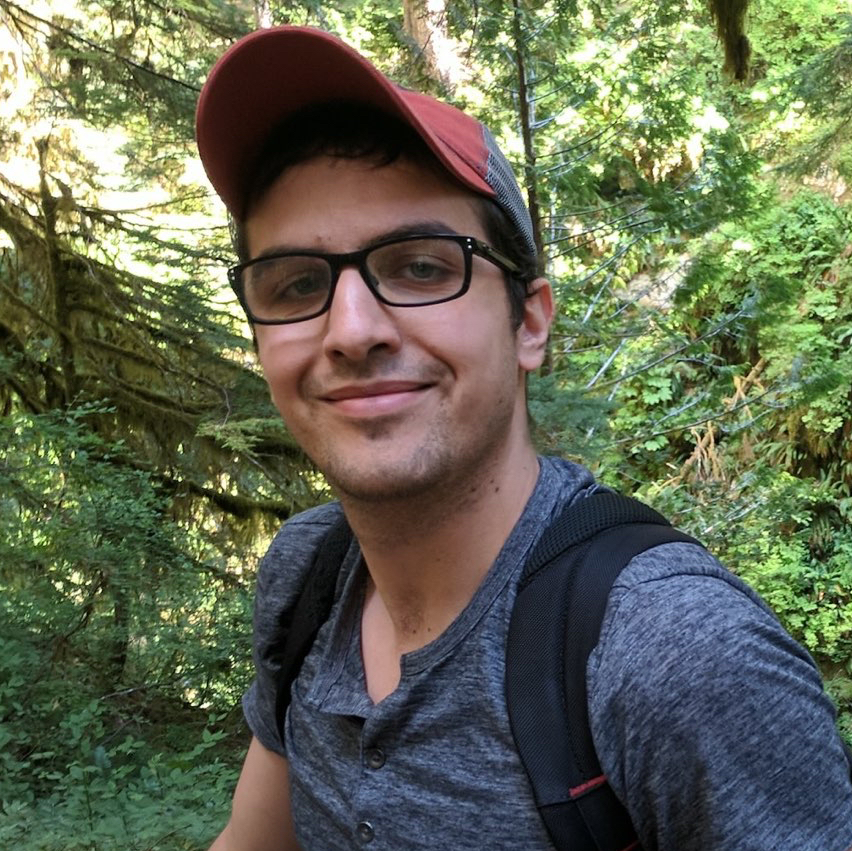
Petar Stojanov is a Research Fellow at the Broad Institute of MIT and Harvard , working under the supervision of Prof. Gad Getz. His academic journey includes a PhD in Computer Science from Carnegie Mellon University , where he was advised by Jaime Carbonell and Kun Zhang. Prior to his doctoral studies, he served as an associate computational biologist in the Getz Lab. Research Focus : Machine learning, computational biology, causal inference, and domain adaptation. Key Contributions : Applying causal discovery to genomic analysis of cancer mutations and single-cell RNA sequencing data. His work bridges computational methodologies with biological applications, particularly in understanding cancer progression through causal relationships. Notable Collaborations : Rheinbay et al. (Nature 2017), Haradhvala et al. (Cell 2016), Crompton et al. (Cancer Discovery 2014)
MARÍA DEL CARMEN AGUILAR LUZÓN is a researcher affiliated with the University of Granada, Department of Psychology. Her work bridges Environmental Psychology and Social Psychology, focusing on pro-environmental behavior, recycling practices, and collective action frameworks. University: University of Granada Department: Department of Psychology Academic Rank: Researcher Her research applies the Theory of Planned Behavior and Value-Belief-Norm models to predict recycling behavior, assess pandemic-related mental health impacts, and explore chatbot applications in education. Recent studies highlight gender differences in environmental concern, microlearning methodologies, and the role of threat perception in climate action. Articles demonstrate a multidisciplinary focus, including network restructuring via Markov Random Fields, psychometric validation of environmental scales, and emotional intelligence's influence on occupational stress in healthcare settings. No scientific awards are explicitly mentioned in the provided text.
Associate Professor Tamir Hazan is a faculty member at Technion - Israel Institute of Technology, where he joined in 2015. His research focuses on theoretical and practical aspects of machine learning, with applications spanning computer vision, natural language processing, and computational biology. His work bridges mathematical foundations with real-world problem solving in complex systems. Professor Hazan received his Ph.D. from the Hebrew University in 2009. His academic trajectory has established him as a leading researcher in machine learning theory and its applications, with a particular emphasis on developing mathematically rigorous approaches to modern AI challenges. Professor Hazan's research centers on mathematically founded solutions to problems demonstrating non-traditional statistical behavior. His work encompasses perturbation models for efficient learning of high-dimensional statistics, deep learning of infinite networks, and primal-dual optimization for high-dimensional inference problems. His research program spans three major interconnected areas: attention models that improve prediction interpretability, perturbation frameworks that integrate optimization and sampling through extreme value statistics, and convex duality approaches to message-passing in graphical models. His work demonstrates both theoretical depth and practical relevance across multiple domains. Analysis of Professor Hazan's recent publications reveals an evolving research trajectory with increasing emphasis on interpretable machine learning, causal modeling, and applications in medical imaging and behavioral science. His work consistently bridges theoretical foundations with practical implementations, with recent publications showing strong connections between perturbation theory, attention mechanisms, and optimization frameworks. The interdisciplinary nature of his research is evident in applications ranging from pedestrian navigation using smartphone sensors to video-text matching systems and medical image analysis. Professor Hazan has mentored numerous students throughout his career, including: Alex Schwing, now Assistant Professor at UIUC Alon Cohen, now Associate Professor at Tel Aviv University Idan Schwartz, currently Postdoc at Tel Aviv University Current Ph.D. students: Guy Lorberbom, Itai Gat, and Hedda Cohen Multiple M.Sc. students including Adi Manos, Ram Yazdi, and others Professor Hazan's research group maintains an active program with several key focus areas: Attention models for interpretable and improved prediction processes in visual question answering and multimodal applications Perturbation models that enable efficient statistical reasoning in complex systems with exponential configuration spaces Markov random fields, convex duality, and message-passing algorithms for structured prediction and distributed computing
Vadim Indelman serves as an Associate Professor in the Department of Aerospace Engineering at the Technion – Israel Institute of Technology, affiliated with the Technion Autonomous Systems Program (TASP) and Machine Learning and Intelligent Systems (MLIS) Center. He earned his B.A. (Cum Laude) in Computer Science and B.Sc. (Summa Cum Laude) in Aerospace Engineering from the Technion in 2002, completed his PhD in Aerospace Engineering there in 2011 under Pini Gurfil, Ehud Rivlin, and Hector Rotstein, and conducted postdoctoral research at Georgia Tech's Institute of Robotics and Intelligent Machines (2012-2014). His research focuses on probabilistic perception and state estimation for autonomous systems operating in uncertain dynamic environments, with core contributions in SLAM, vision-aided navigation, distributed information fusion, and belief-space planning for multi-agent systems. This work enables reliable real-time operation through probabilistic graphical models and active sensing methodologies. Indelman holds significant editorial roles including Associate Editor for IEEE Robotics & Automation Letters since 2017, Senior Editor for IROS (2021-2023), Area Chair for MRS 2021, and co-chair of IEEE RAS Technical Committee on Planning and Control Algorithms since 2019.
Jean-Baptiste Masson is a tenured Researcher at the Pasteur Institute since 2008. His work bridges Neuroscience , Biophysics , and Machine Learning , focusing on understanding decision-making processes in biological systems and developing innovative 3D visualization tools like DIVA and Genuage for medical imaging and single-molecule analysis.
Concha Bielza is a Full Professor of Statistics and Operations Research at the Department of Artificial Intelligence, Technical University of Madrid, since 2010. Her academic journey began with an M.S. in Mathematics from Universidad Complutense de Madrid (1989) and a Ph.D. in Computer Science from Technical University of Madrid (1996), where she received the extraordinary doctorate award. Her research focuses on Probabilistic graphical models Decision analysis Metaheuristics for optimization Data mining and classification models Applications in biomedicine, bioinformatics, neuroscience, industry, and sport analytics Recent publications emphasize Bayesian networks for dynamic microbial community simulation Advancements in Estimation of Distribution Algorithms Quantum computing integration with probabilistic models Feature selection in data streams Causal reinforcement learning in industrial contexts Semiparametric methods for optimization Explainability in Bayesian networks She has been recognized with 2014 UPM Research Prize 2020 Research Award in Machine Learning (India) 2024 National Award of Statistics (Spain) ELLIS Fellow (2023) Asia-Pacific Artificial Intelligence Association Fellow (2024) Bielza has supervised 23 PhD theses and contributes to scientific governance as a member of NorwAI's Scientific Advisory Board (2021). Her work spans theoretical advancements and real-world applications, with over 160 impact factor publications.
Pedro Larrañaga is a Full Professor in Computer Science and Artificial Intelligence at the Technical University of Madrid (UPM) since 2007. Previously, he held academic positions at the University of the Basque Country as Assistant Professor (1985–1998), Associate Professor (1998–2004), and Full Professor (2004–2007). He earned his MSc in Mathematics (Statistics) from the University of Valladolid and a PhD in Computer Science from the University of the Basque Country, receiving an excellence award. His research spans probabilistic graphical models, optimization, data mining, and applications in biomedicine, bioinformatics, neuroscience, industry, and sports. Larrañaga leads extensive work on Bayesian networks, evolutionary algorithms, and high-dimensional data analysis. His recent publications emphasize scalable probabilistic modeling, quantum computing interfaces, and interpretable AI for biomedical and industrial contexts. Over 200 journal publications reflect sustained contributions to machine learning theory and computational intelligence. Awards & Fellowships: Fellow, European Association for Artificial Intelligence (2012) Fellow, Academia Europaea (2018) Fellow, Asia-Pacific Artificial Intelligence Association (2021) Fellow, Jakiunde—Academy for the Sciences, Arts, and Letters of the Basque Country (2022) Fellow, European Laboratory for Learning and Intelligent Systems (ELLIS) (2023) Fellow, IEEE (2023) Fellow, Industry Academy within the International Artificial Intelligence Industry Alliance (2024) Spanish National Prize in Computer Science (2013) Spanish Association for Artificial Intelligence Prize (2018) Amity Research Award in Machine Learning (2020) He has supervised 36 PhD theses and contributes to large-scale neuroscience collaborations, including brain morphology analysis and computational neuroanatomy. Research grants focus on Bayesian methodologies for industrial IoT, health informatics, and quantum algorithm development.
Pilar Fuster Parra is an Associate Professor in the Department of Mathematics and Computer Science at the University of the Balearic Islands. Her research focuses on probabilistic graphical models, decision analysis, data mining, and classification models with real-world applications. She is affiliated with the Soft Computing, Image Processing, and Aggregation (SCOPIA) R+D+I group. Education: M.Sc. in Mathematics from Universitat de València (1988) Ph.D. in Computer Science from Universitat de les Illes Balears (1996) Over the past five years, she has taught courses such as Mathematics II - Calculus for Informatics Engineering degrees, Mathematics II - Calculus for Automation and Industrial Electronic Engineering, and Statistical Learning and Decision-Making II for Master’s programs in Big Data Analysis. She also contributes to interdisciplinary programs like Data Analytics and Business Intelligence. Research Affiliations: Member of the Soft Computing, Image Processing, and Aggregation (SCOPIA) group Member of the Global Health (GH) R+D+I group
Tomer Ullman is an Associate Professor in the Department of Psychology at Harvard University, where he leads the Computation, Cognition, and Development Lab. He is also a member of the Center for Brains, Minds, and Machines (CBMM) and an affiliate of the Kempner Institute for Natural and Artificial Intelligence. Education : B.Sc. in Cognitive Science and Physics (Hebrew University, 2008), Ph.D. in Brain and Cognitive Sciences (MIT, 2015) Postdoctoral Training : Center for Brains, Minds, and Machines (2015-2018) Ullman's research focuses on computational models of high-level human cognition, particularly intuitive theories about physics and psychology, mental simulation in reasoning, and child development of social cognition. His work bridges cognitive science, AI development, and neuroscience through experimental and computational approaches. Recent publications analyze language model limitations in Theory of Mind tasks, mental simulation constraints , and emergent hierarchical emotion representations . His lab explores how humans and machines learn through probabilistic inference, with applications in child education and AI alignment. Scientific Awards : ICDL Best Paper Award (2012, with Bonawitz et al.) Ullman teaches courses on Decision-Making (PSY1322) and Imagination (PSY1340). His research has been funded by the National Science Foundation and CBMM.
Fredrik Kahl is a Professor at Chalmers University of Technology, leading the Computer Vision Group under the Department of Signal Processing and Medical Technology. His research spans Computer Vision , Machine Learning , and Medical Image Analysis , with a focus on geometric deep learning and 3D reconstruction. University: Chalmers University of Technology Department: Signal Processing and Medical Technology Email: fredrik.kahl@chalmers.se His work addresses rotation equivariance , out-of-distribution detection , and privacy-preserving representations . Recent publications explore Gaussian splatting for 3D edge mapping, semi-supervised learning frameworks, and symmetry encoding in ReLU networks. Projects include collaborations with institutions like Wallenberg AI, Autonomous Systems and Software Program and grants from VINNOVA and Vetenskapsrådet (VR) .
Professor Yi Deng is affiliated with the School of Earth and Atmospheric Sciences at the Georgia Institute of Technology . His research focuses on climate variability across multiple timescales, atmospheric dynamics, and climate modeling. University: Georgia Institute of Technology School: School of Earth and Atmospheric Sciences Email: yi.deng@eas.gatech.edu Research interests include: Hydroclimate variability at regional scales Polar-tropical interactions ENSO and Annular Modes feedbacks Probabilistic graphical models Climate networks Atmospheric scale-interactions Aerosol-circulation coupling Surface heat flux parameterization Recent publications highlight trends in climate extremes, monsoon dynamics, surface flux modeling, and multiscale interactions. Key subfields include synoptic-scale atmospheric disturbances, energy transport mechanisms, and data-driven climate analysis tools. No scientific awards or student advising information were explicitly mentioned in the provided texts.
Yongxin Chen is an Associate Professor in the School of Aerospace Engineering at the Georgia Institute of Technology. He received his BSc in Mechanical Engineering from Shanghai Jiao Tong University (2011) and a PhD in Mechanical Engineering from the University of Minnesota (2016). Prior to joining Georgia Tech, he held positions as a Research Fellow at Memorial Sloan Kettering Cancer Center (2016-2017) and an Assistant Professor at Iowa State University (2017-2018). His research spans control theory, machine learning, robotics, and optimal transport. Key areas include developing efficient MCMC algorithms, advancing diffusion models for generative AI, and integrating uncertainty synthesis into control systems. He leads the Foundations of Learning And Intelligent Robots (FLAIR) lab, relocated to Georgia Tech's CODA building in 2024, focusing on systems that harmonize autonomy, stochastic control, and optimization. 2023 : Best Paper at NeurIPS and CoRL, plenary talks at ACC and MTNS. 2022 : Donald P. Eckman Award, plenary talk at ACC. 2021 : Simons-Berkeley Fellowship and Balakrishnan Award. 2020 : NSF CAREER Award. His recent publications emphasize diffusion models (e.g., DEIS, gDDIM, DiffCollage) and optimal transport applications. He has graduated three PhD students and mentors active researchers in generative AI, robotics, and control theory. Collaborations include institutions like Duke, University of Minnesota, and international visitors.
Kazim Topuz is an Associate Professor of Business Analytics and Operations Management at the Collins College of Business, The University of Tulsa. He serves as Program Director of the Master of Business Analytics degree and holds a Ph.D. in Industrial Engineering from Wichita State University. Education Ph.D., Industrial Engineering, Wichita State University (Dissertation: Data Mining Applications in Healthcare) Master of Engineering, Information Systems Engineering, Lehigh University Master of Science, Industrial and Systems Engineering, Rutgers University His research focuses on designing probabilistic graphical models (Bayesian Belief Networks, Markov Networks) integrated with data mining techniques for data-driven decisions. He specializes in explainable AI applications across healthcare, accident severity analysis, student retention, and mental health domains. Topuz has published in leading journals such as European Journal of Operational Research, Decision Support Systems, and Information Systems Frontiers. He has served as special issue editor for Decision Support Systems and Annals of Operations Research. Scientific Awards 2025 Mayo Teaching Excellence Award 2023 IISE Gold Award 2022 Mayo Research Excellence Award Chapman Professorship Award (2020-2022) Wichita State University Outstanding Doctoral-level Student (2016) Turkish Ministry of National Education Fellowship Rutgers University Fellowship
Sabine Barrat is an Assistant Professor at the University of Tours, affiliated with the University Institute of Technology of Tours (IUT) and the Fundamental and Applied Computer Science Laboratory (LIFAT). She teaches courses in website design and databases. Dr. Barrat obtained her PhD in Computer Science from Nancy 2 University in 2009, focusing on probabilistic models for image recognition. She completed a JSPS Postdoctoral Fellowship at Osaka Prefecture University and served as Vice-President for Digital Systems at the University of Tours (2016-2020). Her research explores image analysis, indexing/retrieval systems, automatic annotation, and document processing. Core methodologies include Bayesian networks, feature indexing structures, and hybrid visual-semantic modeling. Recent publications emphasize scalable image retrieval systems and document classification techniques. She received the JSPS Postdoctoral Fellowship for her work on character recognition. Dr. Barrat collaborates with the RFAI research team at LIFAT laboratory, focusing on pattern recognition and intelligent indexing systems.
Ian Horswill is an Associate Professor of Computer Science at Northwestern University , with joint appointments in the Departments of Electrical Engineering/Computer Science and Radio/Television/Film. He directs the Division of Graphics and Interactive Media and the Animate Arts Program, blending AI research with interactive art and entertainment. Research Focus: Autonomous agents, emotion/personality modeling for virtual characters, procedural animation via the Twig system, and interdisciplinary education in the Animate Arts Program. Key Projects: Twig (procedural animation), Meta (Scheme-like programming language), and role-passing architectures for efficient inference in robotics. Publications span AI, robotics, and games, with a focus on real-time decision-making, believable character behaviors, and cognitive architecture. His work has been recognized with the 2001 Nils Nilsson Prize . Students: Robin Hunicke, Magy Seif El-Nasr, and Rob Zubek, all of whom contributed to systems for game difficulty adjustment, dynamic lighting design, and natural-language dialog with NPCs. Affiliations: Chair of the Doctorial Consortium for the 2009 Foundations of Digital Games conference, member of the IGDA Education Committee.