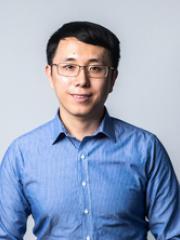
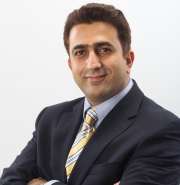
Jeongsub Choi is an Assistant Professor in the Department of Management Information Systems at West Virginia University's John Chambers College of Business and Economics. His work bridges machine learning, data mining, and business intelligence with applications in strategic management, patent analysis, and advanced manufacturing. Ph.D. in Industrial and Systems Engineering, Rutgers University M.S. in Statistics, Rutgers University M.S. in Industrial and Systems Engineering, Rutgers University Choi's research focuses on sparse learning models, network analysis, and virtual metrology systems for semiconductor manufacturing. His work spans predictive maintenance, competitor detection, and anomaly identification in dynamic networks. Recent publications highlight trends in sensor optimization, fault diagnosis, and technology lifecycle modeling. Applications span semiconductor manufacturing, financial transaction networks, and patent citation analysis.
Pinar Okumus serves as Associate Professor in the Department of Civil, Structural and Environmental Engineering at the University at Buffalo's School of Engineering and Applied Sciences. Her research focuses on advancing infrastructure resiliency through low-damage seismic systems, prefabricated concrete structures, and high-performance materials for rapid construction and repair of bridges and buildings. Her academic credentials include: PhD in Civil Engineering, University of Wisconsin, Madison (2012) MS in Civil Engineering, University of Wisconsin, Madison (2008) BS in Civil Engineering, Middle East Technical University (2006) Dr. Okumus' research integrates nonlinear structural analysis, material-scale testing, and in-situ monitoring to develop rapidly deployable infrastructure solutions. Her work emphasizes practical applications of pre-tensioned, post-tensioned, and reinforced concrete components for extreme event resilience, with particular focus on coastal infrastructure vulnerability and seismic retrofitting. The Dr. Okumus Research Group employs advanced methodologies including machine learning for structural assessment and optical fiber technologies for long-term monitoring. Recent publications (2023-2025) reveal strong thematic trends in corrosion effects on coastal infrastructure, 3D-printable cementitious composites for rapid repair, and tessellated structural-architectural systems. Her work increasingly incorporates machine learning for shear strength prediction and crack pattern analysis while maintaining core expertise in post-tensioned systems and seismic retrofit solutions. Research funding is secured through competitive grants from the National Science Foundation and Federal Highway Administration, supporting experimental validation of novel concepts like self-centering shear walls and ultrahigh-performance concrete retrofits. The group actively collaborates with transportation agencies to translate laboratory findings into field applications for bridge and building systems. The Dr. Okumus Research Group operates as an interdisciplinary team investigating structures that enable rapid reoccupation after extreme events. Current projects focus on modular systems with interlocking components, optical sensing integration for tendon force monitoring, and material innovations for climate-resilient infrastructure, maintaining strong connections with industry partners for practical implementation.
Professor Stephen Pierce is a faculty member in the Department of Electronic and Electrical Engineering at the University of Strathclyde, within the Faculty of Engineering. He serves as Co-Director of the Centre for Ultrasonic Engineering and holds the Spirit Aerosystems/Royal Academy of Engineering Research Chair in 'In-process inspection of Aerospace Structures'. He leads the SEARCH (Sensor Enabled Automation, Robotics & Control Hub), a £50M applied NDT technology transfer laboratory. Co-Director, Centre for Ultrasonic Engineering Academic Director, UK Research Centre in Non-Destructive Evaluation (RCNDE) Robotics & Autonomous Systems Lead Coordinator, University of Strathclyde Chair, SRPe Robotics and Autonomous Systems Thematic Leadership Group Visiting Professor, Högskolan Väst, Sweden His research integrates robotics, ultrasonics, AI, and instrumentation for Non-Destructive Testing & Evaluation (NDT&E) and Structural Health Monitoring (SHM). His work supports Industry 4.0 and sustainable manufacturing across aerospace, energy, nuclear, and healthcare sectors. His recent publications emphasize AI-driven ultrasonic data analysis, robotic inspection systems, and real-time monitoring in composite and additive manufacturing. Key trends include deep learning for defect detection, human-machine collaboration in inspection, and probabilistic sensor fusion for robotic positioning. Anne Birt Award 2023 BINDT Annual Conference Award 2019 Knowledge Exchange Award 2016 John Grimwade Medal 2015 He supervises major research projects funded by EPSRC, Innovate UK, and industry partners, with a focus on technology transfer and industrial collaboration. His leadership in RCNDE and SEARCH demonstrates strong grant acquisition and interdisciplinary team management. He teaches Instrumentation & Microcontrollers (EE312) and contributes to Advanced Systems Engineering (EM502). The SEARCH laboratory operates across two sites: Royal College R2.41 (manufacturing applications) and Technology Innovation Centre TIC 7.14 (asset management), focusing on physical sensors, robotic deployment, and AI-based data interpretation.
Reza Talemi is a Professor and Head of the Elooi Research Laboratory within the SCALINT Division at the Department of Materials Engineering (MTM), Faculty of Engineering Technology, KU Leuven, Belgium. His research focuses on structural integrity of materials fabricated through advanced manufacturing techniques, with particular expertise in impact dynamics, fracture mechanics, and fatigue analysis of metallic materials. His educational background shows extensive specialization in materials science and engineering, with research focusing on structural integrity assessment of advanced materials. His work bridges experimental and numerical approaches to understand material behavior under various loading conditions. Talemi's research interests span structural integrity of advanced materials, tribo-mechanical fracture, innovative testing methods for material behavior assessment, and advanced numerical modeling of material failure. His work has significant applications in aerospace, energy, and manufacturing sectors where material integrity is critical for safety and performance. His recent publications demonstrate a strong focus on additive manufacturing technologies, particularly examining fretting fatigue behavior of additively manufactured components, residual stress characterization, and microstructural analysis. The research shows consistent advancement in understanding how advanced manufacturing processes affect material properties and structural performance. Among his notable contributions are development of specialized testing apparatus for evaluating material performance in dovetail joint configurations, advanced numerical modeling techniques for predicting material behavior, and innovative approaches to characterize material integrity under complex loading conditions. Professor Talemi actively supervises numerous PhD students and leads multiple research projects, including 'Precise advanced material processing via controlled fatigue fracture' and 'Hybrid Experimental and Numerical Framework for Monitoring Structural Integrity in Aerospace Structures,' demonstrating his leadership in both academic and applied research domains.
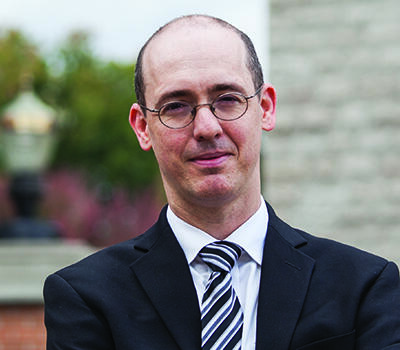
James L. Beck is the George W. Housner Professor of Engineering and Applied Science, Emeritus at Caltech, with joint appointments in Computing and Mathematical Sciences and Mechanical and Civil Engineering. His research develops theory and algorithms for stochastic system modeling, uncertainty propagation, and Bayesian updating of dynamic systems. Research interests include: Probability logic and computational Bayesian statistics Stochastic dynamics and system reliability theory Bayesian system identification Stochastically robust structural control Quantum stochastic mechanics Awards and Honors: Distinguished Member of ASCE Masanobu Shinozuka Medal Housner Medal European Association of Structural Dynamics Senior Research Prize
Anastasios Vassilopoulos serves as Head of the Composite Mechanics Group (GR-MeC) and Adjunct Professor at École Polytechnique Fédérale de Lausanne (EPFL), within the School of Architecture, Civil and Environmental Engineering. He directs the Doctoral Program in Civil and Environmental Engineering while maintaining active roles in the Structural Engineering Group and School Council. His research focuses on composite materials for renewable energy infrastructure , particularly wind turbine rotor blades. Key areas include fatigue analysis of adhesively bonded joints, experimental methods for FRP composites under complex loading, and design methodologies for composite structures. His work bridges fundamental mechanics with industrial applications through extensive collaboration with wind energy stakeholders. Analysis of his 15 most recent publications reveals dominant themes in thick adhesive joint mechanics (73% of articles), fatigue/fracture characterization (67%), and machine learning applications (40%). The research consistently targets wind turbine blade challenges, with 87% of articles addressing specific aspects of renewable energy infrastructure. Methodological trends show increasing integration of computational-experimental approaches and AI-driven predictive modeling. Dr. Vassilopoulos has secured 18 major research projects since 2000, primarily funded by Swiss National Science Foundation and international collaborations. Current projects include NSF-funded work on wind turbine blade adhesive joints (2020-2024) and fire-resistant composite bridge decks. His teaching portfolio includes advanced courses on composites design, structural mechanics, and floating offshore renewables. As Doctoral Program Director, he oversees PhD training while personally supervising 17 doctoral students to completion.
Timothy Verstraeten is a postdoctoral researcher at the Vrije Universiteit Brussel , affiliated with the Engineering Technology Acoustics & Vibrations Research Group . His work bridges Wind Energy and Machine Learning , focusing on optimization, condition monitoring, and control systems for wind farms. Role: Researcher in acoustics, vibrations, and intelligent monitoring Key Projects: IOF Gear (2018–2023), Robust Fleet-Dedicated Reinforcement Learning (2017–2020) Research Interests include: Wind turbine operations (power prediction, balancing schemes) Reinforcement learning for hybrid energy systems and fleet control Condition monitoring using Gaussian processes and anomaly detection Deep learning for predictive maintenance and wake loss modeling Scientific Contributions show a focus on Wind turbines (100% Scopus), Farms (58%), and Reinforcement learning (37%), with recent publications on uncertainty quantification and hybrid energy systems. Award: ICTAI Best Student Paper (2018) He has supervised research proposals and presented at conferences like ACM E-Energy and Wind Energy Science, emphasizing control systems , power optimization , and structural health monitoring .
Dr. Da Chen is an Honorary Research Fellow at the School of Civil Engineering, The University of Queensland. His research focuses on composite structures, material mechanics, and structural analysis with applications in mechanical and civil engineering. Key Research Areas: Functionally graded porous materials, graphene reinforcement, multiscale modeling, thermal buckling, vibration analysis, and additive manufacturing. Publications: 28 journal articles, 4 book chapters, and 4 conference papers since 2014. Recent work includes machine learning applications for structural analysis and inverse design of porous systems. Email: d.chen@uq.edu.au
J. Riley Edwards is an Assistant Professor in the Department of Civil and Environmental Engineering at the University of Illinois Urbana-Champaign (UIUC), leading track infrastructure research at the Rail Transportation and Engineering Center (RailTEC). He holds a Ph.D. and M.S. from UIUC and a B.E. from Vanderbilt University. His career includes roles from Lecturer (2007) to Assistant Professor (2023), with prior positions as Research Scientist and Senior Lecturer. Edwards' research focuses on railway infrastructure, including track system design, material performance, and AI-driven inspection technologies. He has advised numerous graduate and undergraduate students, contributing to RailTEC's mission of advancing rail engineering education and industry collaboration. His work spans over 150 peer-reviewed articles, with recent contributions emphasizing track buckling analysis, fastening system optimization, and data-driven infrastructure monitoring. Notable awards include the TRB William W. Millar Award (2024) and Progressive Railroading Rising Star Award (2015). Edwards is actively involved in professional societies like AREMA and TRB, organizing international symposia and serving on technical committees. Edwards has led major projects funded by agencies like FRA and FTA, advancing resilient track components, wireless sensing systems, and smart mobility solutions. His lab work includes field testing, laboratory experiments, and computational modeling to address challenges in heavy-haul, transit, and high-speed rail systems.
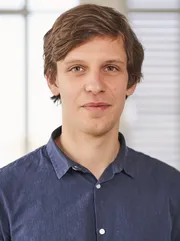
Felix Schneider is a Researcher at the Chair of Structural Mechanics at Technical University of Munich since 2018. He holds an M.Sc. in Civil Engineering from TU Munich (2018) and completed a semester abroad at the Norwegian University of Science and Technology. His research focuses on uncertainty analysis in structural and acoustic models, Bayesian updating techniques, and stochastic reduction methods in the frequency domain. He has contributed to advancements in rational polynomial chaos expansions and sparse Bayesian learning for structural dynamics applications. Education: 2011-2018: Study of Civil Engineering at Technical University of Munich 2018: Master of Science (M.Sc.) in Civil Engineering 2016: Semester abroad at Norwegian University of Science and Technology 2009: Abitur at Humboldtgymnasium Solingen Research emphasizes computational methods for structural dynamics, including: Bayesian parameter estimation for linear systems Rational surrogate models for uncertainty quantification Frequency-domain stochastic reduction techniques Applications in seismic risk assessment and vibroacoustic simulations Key contributions include a Maurer Söhne Prize for his Master's thesis and a published MATLAB toolbox for rational polynomial chaos expansions on the LRZ Git repository. Teaching responsibilities include courses on random vibrations, structural dynamics, and continuum mechanics. He has participated in research stays at ETH Zurich (2023) and collaborates with international institutions on uncertainty quantification projects.
Dr. Peter Brommer is an Associate Professor in the School of Engineering at the University of Warwick. He holds a Dipl.-Phys. and Dr. rer. nat. (PhD) and is a Fellow of the Higher Education Academy (FHEA). His research focuses on computational materials science, particularly nano-confined phase change materials, molecular dynamics simulations, and the development of interatomic potential tools like potfit . He leads an EPSRC-funded project on modeling nano-confined materials and collaborates with the University of Cambridge. His work integrates ab initio methods with scalable simulations for oxides and complex metallic alloys. Dr. Brommer’s teaching includes modules on dynamics of vibrating systems, planar structures, and MSc project supervision. He is affiliated with the University of Warwick’s School of Engineering, with previous roles at the Institute for Theoretical Atomic and Molecular Physics (ITAP) in Stuttgart and the Université de Montréal’s Physics department. His office is located in D208, and he is reachable via p.brommer@warwick.ac.uk . Research highlights include advancements in kinetic Monte Carlo methods ( k-ART ), graphene functionalization studies, and scalable MD techniques for long-range interactions. His tools, such as the bs_sc2pc band structure tool for CASTEP, enhance defect analysis in materials. He actively contributes to OpenKIM’s interatomic model infrastructure. Dr. Brommer’s work bridges computational methods with experimental insights, aiming to improve material design for nanoelectronics and energy applications. His research has been published in journals like Phys. Rev. B , J. Chem. Phys. , and Modell. Simul. Mater. Sci. Eng. .
Stephen Ramsey, an Associate Professor at Oregon State University, holds dual appointments in the School of Electrical Engineering and Computer Science (College of Engineering) and the Department of Biomedical Sciences (Carlson College of Veterinary Medicine). With a PhD in Physics from the University of Maryland, his postdoctoral training in computational genomics at the University of Washington, and professional experience at the Institute for Systems Biology and Center for Infectious Disease Research, Ramsey bridges computational methods with biomedical applications. Education : Ph.D., Physics, University of Maryland; M.S., Physics, University of Maryland; Sc.B., Mathematical Physics, Brown University Ramsey specializes in computational systems biology , focusing on bioinformatics , biomedical knowledge graphs , and precision medicine . His research integrates machine learning , gene regulatory network modeling , and multi-omics data analysis to address challenges in rare disease diagnostics , drug monitoring , and inflammatory disease mechanisms . Current work includes AI-driven biomedical translation and electrochemical biosensor development for non-invasive diagnostics . Recent publications highlight knowledge graph applications in translational biomedicine , causal network inference in clinical-environmental data integration , and cross-species cancer transcriptomics . His team develops tools like RTX-KG2 and PloverDB to standardize biomedical data sharing and semantic reasoning . Scientific Awards : 2019 Zoetis Award (Carlson College of Veterinary Medicine) 2016 NSF CAREER Award 2016 PhRMA New Investigator Award 2010 NIH K25 Mentored Quantitative Research Award Ramsey advises in computational biology courses (CS 446/546) and contributes to biomedical AI through projects like mediKanren for rare disease diagnostics . His NSF-funded research explores gene expression noise and regulatory network dynamics , while NIH and PhRMA grants support his translational medicine initiatives. He leads the Ramsey Laboratory , which develops graph-based reasoning tools for biomedical data translation and multi-omics integration . The lab's work spans comparative oncology models, electrochemical biosensors , and knowledge graph infrastructure for clinical decision support .
Tarunraj Singh is a Professor in the Department of Mechanical and Aerospace Engineering at the University at Buffalo, part of the School of Engineering and Applied Sciences. His research focuses on control systems, robotics, and dynamics, with emphasis on target tracking, optimal control, and vibration mitigation in complex systems. He holds a PhD from the University of Waterloo (1991) and earlier degrees from Indian educational institutions. His work integrates advanced mathematical techniques like polynomial chaos expansions and differential flatness with practical applications in aerospace, robotics, and biomedical engineering. Education : PhD, Mechanical Engineering, University of Waterloo, 1991 ME, Mechanical Engineering, Indian Institute of Science, 1988 BE, Mechanical Engineering, Bangalore University, 1986 Research Interests : Dr. Singh specializes in developing robust control strategies for nonlinear systems, with notable contributions to: Reference shaping for precision motion control Uncertainty quantification in dynamical systems Vibration suppression in robotic systems Bioengineering applications including blood glucose control for diabetics Space systems and tethered satellite dynamics His lab focuses on bridging theoretical advancements with real-world implementation through experiments involving UAVs, robotic manipulators, and biomedical devices. Research Trends : Recent work emphasizes energy-efficient trajectory planning, probabilistic control under uncertainty, and real-time sensor integration. His publications (2020–2025) consistently address challenges in optimal control with practical applications across robotics, aerospace, and biomedical systems. Lab Activities : Directs the Control, Dynamics and Estimation Laboratory, which develops novel algorithms for motion control, system identification, and safety-critical applications. Current projects include UAV payload stabilization, autonomous vehicle navigation, and smart agricultural robotics.
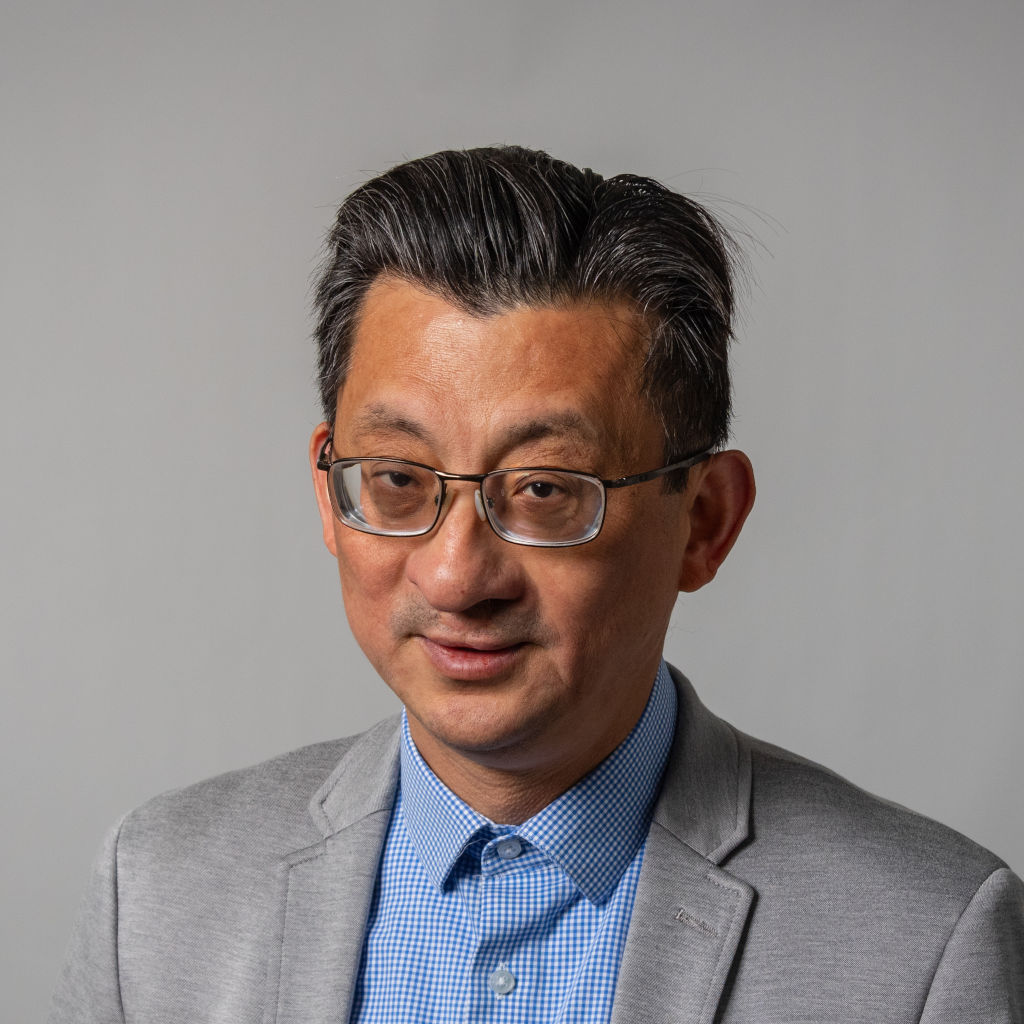
Jiong Tang is a Pratt & Whitney Chair Professor in Design and Manufacturing at the University of Connecticut , where he also serves as Co-Director of the Management and Engineering for Manufacturing Program . He received his B.S. and M.S. in Applied Mechanics from Fudan University, China (1989 and 1992), and his Ph.D. in Mechanical Engineering from Pennsylvania State University (2001). Prior to joining UConn, he worked at the GE Research Center as a research engineer. Research Interests : System dynamics, control theory, smart materials, vibration suppression, uncertainty propagation, computational intelligence, and multi-physics system modeling. Current Projects : Digital twin development for aerospace materials, physics-informed machine learning in manufacturing, adaptive metasurface design, and optimization of cooperative robotics. Methodological Focus : Combines Bayesian deep learning , Gaussian process metamodeling , transformer-based architectures , and multi-fidelity data fusion for industrial applications. His work emphasizes smart sensing , electromechanical integration , and uncertainty-robust inverse analysis . Collaboration : Research funded by federal agencies and industrial partners , with particular emphasis on aerospace and manufacturing technologies. His recent publications highlight generative adversarial networks for defect detection , piezoelectric metamaterials , and physics-guided neural network architectures across mechanical, structural, and composite systems.
Pezhman Mardanpour is an Associate Professor in the Department of Mechanical and Materials Engineering at Florida International University (FIU), part of the College of Engineering. His research focuses on aeroelasticity, constructal theory, fluid-structure interaction, structural dynamics, and thermodynamics. He is particularly known for work on origami-inspired design applications in engineering systems. Research Interests: Aeroelasticity (both experimental and theoretical) Constructal theory-based design optimization Fluid-structure interaction phenomena Thermodynamic systems analysis Biomimetic origami structures Professional Contributions: His work bridges theoretical constructs with practical applications in aerospace engineering, structural design, and materials science. Recent research emphasizes fatigue life optimization of origami-inspired structures and evolutionary aeroelastic design methods for flying wing aircraft. Affiliations: Director of the CELL-MET ERC Pathways-UP ERC member National Industry Advisory Board (NIAB) Lab affiliations include the Mardanpour Research Group , focusing on advanced structural mechanics and smart materials.