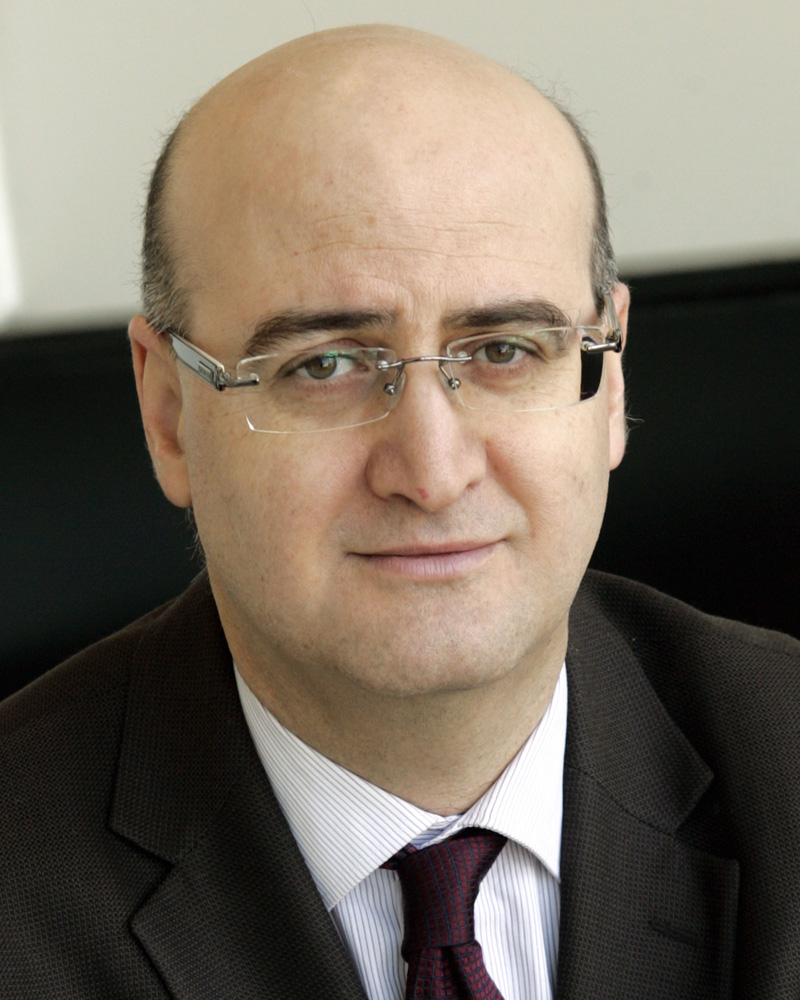
Dr. Hassan Ashtiani is an Associate Professor in the Department of Computing and Software at McMaster University and a faculty affiliate at the Vector Institute. He holds a PhD in Computer Science from the University of Waterloo (2018), a master’s in AI and Robotics, and a bachelor’s in computer engineering from the University of Tehran. His research focuses on machine learning, statistical learning theory, and theoretical computer science, with emphasis on adversarial robustness, privacy-preserving algorithms, and sample-efficient learning. Current projects include differentially private machine learning, robustness against adversarial perturbations, and distribution shifts. Recent work highlights include NeurIPS 2018 best paper award for pioneering distribution compression schemes in Gaussian mixtures. He routinely serves as an area chair for NeurIPS and other ML conferences. His CAS 775 course explores modern distribution learning theory, covering topics like PAC learning, computational complexity, and differential privacy. Awards: NeurIPS Best Paper Award (2018) Advising: Open PhD/MSc positions are listed on his homepage. His research group collaborates with the Vector Institute, focusing on advancing theoretical foundations of machine learning with practical applications.
Zhe Zeng is an incoming Assistant Professor in the Department of Computer Science at the University of Virginia starting July 2025. Currently, she serves as a Faculty Fellow in the Computer Science Department at New York University. She earned her Ph.D. in Computer Science from UCLA in 2024 under Professor Guy Van den Broeck, and her B.S. in Mathematics from Zhejiang University in 2018. Research Focus: Dr. Zeng specializes in neurosymbolic AI and probabilistic machine learning, developing methods that integrate symbolic knowledge (logical constraints, graph structures) with probabilistic uncertainty. Her work spans three core areas: Reasoning: Probabilistic inference, tractable probabilistic models Learning: Constrained deep learning, graph ML, weakly supervised learning Trustworthiness: Explainability, uncertainty quantification, domain-knowledge integration Awards & Honors: Rising Star in EECS (2023) Amazon Doctoral Fellowship (2022) NEC Research Fellowship (2021) ICML Travel Award (2018) Outstanding Graduate, Zhejiang University (2018) Advising & Mentoring: Has supervised six students including PhD candidates and undergraduates at UCLA, Tsinghua, and CAS, with placements at Princeton and UT Austin. Academic Service: Regularly reviews for NeurIPS, ICML, ICLR, UAI; served as UAI 2023 discussant; active in WiML mentorship programs.
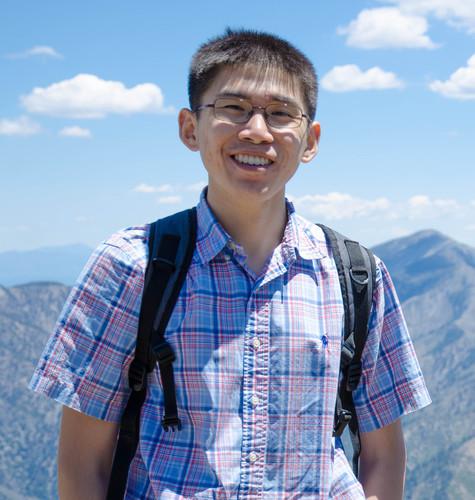
Tianxi Li is an Assistant Professor in the Department of Statistics at the University of Minnesota, Twin Cities, within the College of Science and Engineering. Their research integrates statistical methodology with applications in network science, data privacy, and biomedical data analysis. Their research interests lie at the intersection of statistics and network science, focusing on statistical modeling of complex networks , data privacy , network security , and biomedical applications such as neuroimaging and genomics. They develop adaptive and scalable methods for network estimation, community detection, and differential correlation analysis. The recent publications demonstrate a consistent focus on advancing statistical tools for network-structured data, with increasing applications in neuroscience and cancer genomics. The work spans theoretical development (e.g., network growth models) and practical applications (e.g., glioblastoma gene modules), reflecting a balance between methodology and real-world impact. Tianxi Li leads an active research program funded by the National Science Foundation, indicating recognition and support for their innovative work. Principal Investigator, Statistical tools for network security protection: from data privacy to threat detection , NSF (2024–2025) They advise graduate students in statistics and data science, though specific advisees are not listed. Their collaborative network includes researchers in biostatistics, computer science, and machine learning, as evidenced by co-authorships and interdisciplinary projects. Li's work contributes to the UN Sustainable Development Goals, particularly through advancements in data-driven solutions for secure and ethical data analysis.
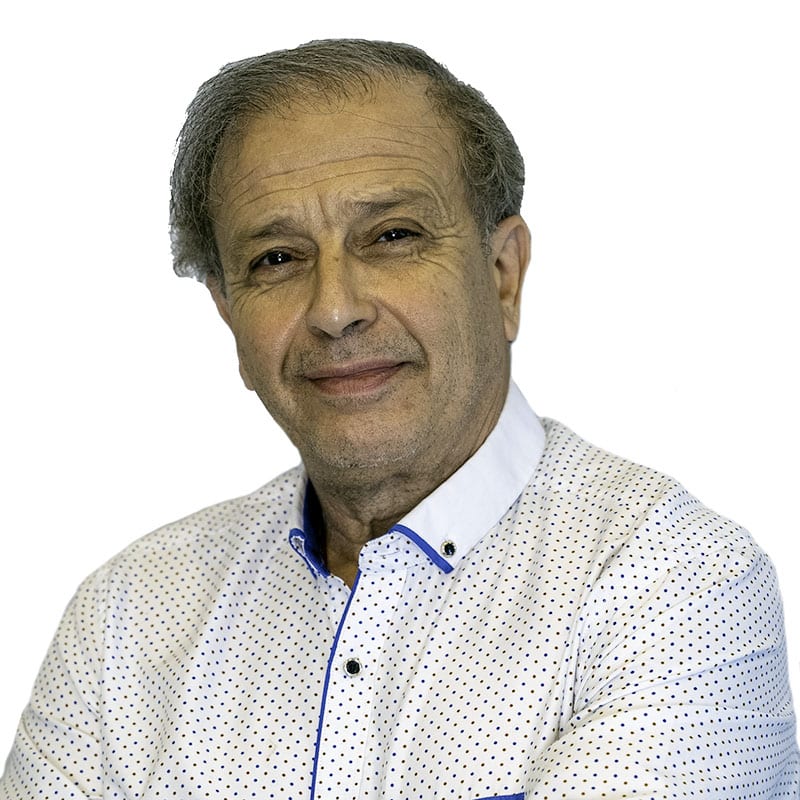
Professor Moncef Gabbouj is a distinguished academic and researcher currently serving as Professor of Signal Processing at the Department of Computing Sciences, Faculty of Information Technology and Communication Sciences, Tampere University, Finland. Previously, he held the same position at Tampere University of Technology before the merger in 2019. He has also held visiting professorships at prestigious institutions including Hong Kong University of Technology and Science, University of Southern California, and Purdue University. Ph.D. and MSc. in Electrical Engineering from Purdue University, USA (1989 and 1986) B.Sc. in Electrical Engineering from Oklahoma State University, USA (1985) Prof. Gabbouj's research spans multiple domains within signal and image processing, with a strong focus on machine learning applications. His primary research interests include artificial intelligence, machine learning, Big Data analytics, multimedia content-based analysis, indexing and retrieval, nonlinear signal and image processing, voice conversion, and video processing and coding. His work bridges theoretical advancements with practical applications across various industries, particularly in multimedia communications and biomedical applications. His extensive publication record demonstrates a clear evolution from traditional signal processing techniques toward more sophisticated machine learning and deep learning approaches. Recent work shows increasing focus on convolutional neural networks for various applications including ECG classification, video processing, financial time-series analysis, and image recognition tasks, reflecting the broader trend in the field toward deep learning methodologies while maintaining strong foundations in signal processing theory. IEEE Fellow (2011) Member, Finnish Academy of Science and Letters (2014) Knight, First Class, of the Order of the White Rose of Finland (2006) Nokia Foundation Recognition Award (2005) Nokia Foundation Visiting Professor Award (2012) Finnish Cultural Foundation for Art and Science Award (2017) TUT Foundation Grand Award (2015) Prof. Gabbouj has supervised 64 doctoral and 72 Master's theses, demonstrating his significant contribution to academic mentoring. His research has been supported by substantial funding, including research grants totaling 8.5 million Euro (2001-2015). He has served as Academy of Finland Professor during 2011-2015 and has been involved in numerous EU research projects including Horizon, ESPRIT, HCM, IST, COST, Tempus and Erasmus programs. As Editor, Guest Editor or member of the Editorial Board of 6 international scientific journals, he has significantly influenced the academic discourse in his field. He leads the Signal Analysis and Machine Intelligence (SAMI) research group at Tampere University and serves as the Finland Site Director of the NSF IUCRC funded Center for Visual and Decision Informatics. His research unit focuses on applying advanced machine learning techniques to solve complex problems in signal processing, computer vision, and multimedia analytics, with applications ranging from healthcare to multimedia communications and financial analysis.
Ming Lin is a Distinguished University Professor at the University of Maryland, College Park, holding joint appointments in Computer Science (Department of Computer Science), the Institute for Advanced Computer Studies (UMIACS), Electrical and Computer Engineering (ECE), and the Maryland Robotics Center. She holds the Dr. Barry Mersky and Capital One E-Nnovate Endowed Professorships. Her research focuses on physically-based modeling, virtual environments, haptics, robotics, and AI applications in healthcare and urban computing. Education: Ph.D., M.S., and B.S. in Electrical Engineering & Computer Sciences from UC Berkeley. She previously spent 20 years at UNC Chapel Hill before joining UMD in 2018. Research interests include collision detection algorithms (e.g., Lin-Canny algorithm), real-time physics simulation, virtual/augmented reality systems, and medical imaging applications. Her work has led to over 2 million downloads of her group's software tools and licenses with 60+ companies. Notable contributions include the Oculus Rift-related VR technologies and Amazon's virtual try-on system. Awards: IEEE Fellow (2012), ACM Fellow (2011), NAI Fellow (2022), and Washington Academy of Sciences Distinguished Career Award (2020). Active in professional service, she serves on the CRA Board and chairs the Committee on Widening Participation in Computing Research. Advising: Supervises 12+ PhD/Master's students. Her lab (GAMMA Group) focuses on AI-driven robotics, autonomous systems, and physically-based simulations. Key projects include traffic simulation frameworks, medical VR applications, and 3D garment modeling.
Dr. Karthika Mohan is an Assistant Professor of Computer Science in the College of Engineering at Oregon State University, affiliated with the School of Electrical Engineering and Computer Science. Her research bridges artificial intelligence and causal inference, focusing on graphical models, missing data, and non-IID data challenges. Her work has been recognized with the Google Outstanding Graduate Research Award. She serves as an associate editor for the Journal of Causal Inference and has secured NSF funding for research on incomplete data. Dr. Mohan mentors students in causal inference methods and maintains collaborations with institutions like UC Berkeley and UCLA. Her laboratory develops innovative approaches for causal reasoning in AI systems.
Ben Bloem-Reddy is an Assistant Professor in the Department of Statistics at the University of British Columbia (UBC), Vancouver Campus. His research focuses on statistical theory and applications in machine learning, particularly in causal inference, Bayesian methods, neural networks, and probabilistic models. He advises current students Quanhan (Johnny) Xi, Kenny Chiu, and Gian Carlo Diluvi. His work bridges foundational statistical theory with practical machine learning challenges, including causal discovery, model identifiability, and uncertainty quantification. Recent research explores topics such as latent variable models, generative processes, and symmetry in data and algorithms. His contributions span interdisciplinary areas like particle physics applications and information theory-based compression techniques. Ben’s research trends emphasize advancing theoretical guarantees for modern machine learning systems while addressing real-world problems. His publications frequently intersect with algebraic topology (e.g., cocycles in causal inference) and nonparametric methods. He maintains an active lab within the Department of Statistics, fostering collaborations across UBC’s academic ecosystem. No scientific awards are explicitly listed in the provided information. His advising and grant activities focus on statistical methodology development, as evidenced by his student supervision and published work. His office is located in ESB 3168, and he can be reached at benbr@stat.ubc.ca.
Konstantinos Pelechrinis is an Associate Professor in the Department of Informatics and Networked Systems at the University of Pittsburgh's School of Computing and Information. He holds a Ph.D. in Computer Science from the University of California, Riverside. His research focuses on network science, urban informatics, and sports analytics. He has been recognized with the Army Research Office Young Investigator Award for his contributions. Education: Ph.D. in Computer Science, University of California, Riverside Research Interests: Urban mobility patterns and infrastructure analysis Sports performance quantification and strategy Data-driven decision-making in transportation systems Network science applications in social and urban systems His recent work explores topics such as implicit biases in sports refereeing, anomaly detection in NFT markets, and optimizing bike-sharing systems using predictive models. He also investigates urban infrastructure resilience through projects like the Epui platform for experimental urban informatics. Awards: Army Research Office Young Investigator Award He contributes to academic outreach through courses like TELCOM2125 (Network Science and Analysis) and collaborates on initiatives like the Healthy Ride Pittsburgh bike-sharing study. His lab focuses on bridging theoretical models with real-world urban and sports datasets.
Hamid Krim is a Professor in the Department of Electrical and Computer Engineering at North Carolina State University. He leads the Vision, Information and Statistical Signal Theories and Applications (VISSTA) group, focusing on statistical signal/image analysis, data science, and machine learning. His prior roles include Research Scientist at MIT’s Laboratory for Information and Decision Systems and Member of Technical Staff at AT&T Bell Labs. He holds a Ph.D. in Electrical Engineering from Northeastern University, and degrees from the University of Washington and University of Southern California. Education: Ph.D., Electrical Engineering, Northeastern University (MA), 1990s Master's, Electrical Engineering, University of Washington Bachelor's, Electrical Engineering, University of Southern California and University of Washington Research Interests: Machine Learning, AI, Signal Processing, Communications, and Control Systems . His work bridges formal mathematical frameworks with applied problems, emphasizing generative AI, adversarial robustness, and subspace-driven data analysis. Recent innovations include Volterra neural networks and expansive synthesis techniques for data generation. Awards & Recognition: 2000 NSF CAREER Award 2008 IEEE Fellow 2019 IEEE SPS Sustained Impact Paper Award Multiple extended research invitations at top institutions globally Grants & Advising: Leads the VISSTA Lab, collaborating on projects like medical algorithm development (e.g., lung wheeze analysis) and hurricane activity prediction. His work spans interdisciplinary applications in healthcare, robotics, and defense systems. Labs & Teams: Director of the VISSTA Lab, fostering research in signal theory and machine intelligence. Collaborates with academia and industry on cutting-edge AI and sensor fusion technologies.
Helge Langseth is a Professor at the Department of Computer Technology and Informatics , within the Faculty of Information Technology and Electrical Engineering at the Norwegian University of Science and Technology (NTNU). His research focuses on Artificial Intelligence , Machine Learning , and Probabilistic Graphical Models , particularly Bayesian Networks and their applications in Decision Support Systems . Langseth's work addresses Explainable AI (XAI) , Reinforcement Learning , and Recommender Systems . He has contributed to Bayesian Optimization , Probabilistic Modeling , and Robotic Control in oceanic environments. His recent publications emphasize transparency , fairness , and scalability in AI systems, with applications spanning maritime trade, migraine diagnosis, and power grid management. He is affiliated with the Intelligent Systems Research Group at NTNU and actively mentors doctoral and master's students. Co-authored works with Yanzhe Bekkemoen , Sverre Herland , and Jørgen Hanssen reflect his role in advising the next generation of AI researchers.
Chen Sun is an Assistant Professor of Computer Science at Brown University and a part-time Staff Research Scientist at Google DeepMind . His research bridges computer vision, machine learning, and artificial intelligence , focusing on multimodal representation learning, visual commonsense, and controllable video generation . He directs the PALM🌴 research lab , which explores scalable models for robotic planning, video understanding, and human activity recognition . Chen Sun earned a Ph.D. in Computer Science from the University of Southern California (2016) , advised by Professor Ram Nevatia , and a Bachelor of Science in Computer Science from Tsinghua University (2011) . His lab's work has been supported by Adobe, Honda, Meta, NASA, and Samsung , and he is affiliated with the NSF AI Research Institute on Interaction for AI Assistants . His research spans multimodal transformers, embodied agents, and physics-informed video generation . Key trends include Learning from unlabeled videos for human activity recognition Developing controllable generation techniques using motion trajectories and physics-based signals Advancing scalable frameworks for video-language tasks Scientific awards include the Brown University Richard B. Salomon Faculty Research Award and Samsung Global Research Outreach Award . He has served as Workshop Chair (CVPR 2025) , Action Editor (TMLR) , and Area Chair for top conferences like ICLR, CVPR, and NeurIPS . Chen Sun mentors a dynamic team including Ph.D. students Apoorv Khandelwal (Presidential Fellow) Calvin Luo (Research Mobility Fellow) Nate Gillman (Math Department) Shijie Wang Tian Yun (co-advised with Ellie Pavlick) Yuan Zang Zilai Zeng Zitian Tang and alumni now pursuing Ph.D. programs at Princeton, Cornell, UBC, and UNC . His teaching portfolio includes graduate-level courses on Deep Learning (CSCI 2470) , Advanced Topics in Deep Learning (CSCI 2952N) , and a short course on Multimodal Transformers at ICASSP 2022 and AAAI 2023 .
Dr. Robert Lieck is an Assistant Professor in the Department of Computer Science at Durham University. His research focuses on interdisciplinary applications of machine learning (ML) and artificial intelligence (AI), emphasizing interpretability, robustness, and ethical considerations. He explores computational models in music cognition, communication dynamics, and medical image analysis, aiming to bridge theory and practical tools for domain experts. Before Durham, he was a postdoctoral researcher at EPFL's Digital and Cognitive Musicology Lab (2018–2021) and earned his PhD from the Learning and Intelligent Systems Lab in Stuttgart/Berlin (2012–2017). His work combines probabilistic modelling, neuro-symbolic systems, and reinforcement learning to address challenges in music analysis, autonomous decision-making, and medical robotics. Key research themes include: Music structure and perception modelling Symbol emergence in multi-agent communication Ethical AI and autonomous systems governance Medical imaging applications (CT/MRI analysis) Recent projects involve developing patient-agnostic diabetes management systems using deep reinforcement learning and surgical workflow anticipation through graph learning algorithms. He actively contributes to conferences such as NeurIPS, ISMIR, and AAAI, with publications spanning music informatics, robotics, and biomedical engineering. Current supervision includes four postgraduate students focusing on AI applications in healthcare, music technology, and autonomous systems. His work bridges technical innovation with societal impact, addressing challenges in policy, legislation, and interdisciplinary collaboration.
Michael C. Hughes ("Mike") is an Assistant Professor in the Department of Computer Science at Tufts University's School of Engineering, where he develops statistical machine learning methods for healthcare applications. His work focuses on building predictive models that extract actionable insights from complex clinical data, including electronic health records and medical imaging. PhD, Computer Science, Brown University (2016) MS, Computer Science, Brown University (2012) BS, Computer Science, Franklin W. Olin College of Engineering (2010) Research interests center on: Bayesian hierarchical models for documents, sequences, and medical images Optimization algorithms for approximate inference Model fairness and interpretability in clinical contexts Semi-supervised learning for medical diagnostics Recent publications demonstrate these capabilities through applications in cardiovascular disease diagnosis, opioid overdose forecasting, and ICU risk prediction. His lab emphasizes reproducibility through open datasets like TMED-2 and open-source tools like BNPy. Grants include NIH R01 funding for heart valve disease detection, NSF CAREER support for model interpretability, and NSF GCR funding for educational uncertainty research. Scientific awards include: NIH R01 Award (PI) for heart valve disease detection (2025) NSF CAREER Award (2024) NSF GCR Grant (2024) Best Poster Award at Time Series Workshop (ICML 2021) Top 10% Reviewer Awards at AISTATS (2023, 2022) Teaching activities include courses on Bayesian Deep Learning, Introduction to Machine Learning, and Statistical Pattern Recognition. He previously served as postdoctoral fellow at Harvard SEAS.
Anup Basu is a Professor in the Department of Computing Science at the University of Alberta. His research focuses on computer graphics, computer vision, and multimedia communications. He holds an B.S. in Math & Statistics from the Indian Statistical Institute (1980), an M.E. in Computer Science from the Indian Statistical Institute (1983), and a Ph.D. in Computing Science from the University of Maryland (1990). His work emphasizes Quality of Service (QoS) in multimedia delivery for e-commerce and telelearning, adaptive bandwidth monitoring, and 3D visualization tools. He pioneered foveated image compression and stereo visualization techniques, contributing to MPEG-4 coding standards. He leads major initiatives like the ASRA/TelePhotogenics/IBM 3D Medical Imaging project ($2M+ funding) and developed patented SHR Stereo/3D scanning technologies. Awards include the American Neurological Association Fellowship. He has held leadership roles as General Chair for IEEE International Conferences on SMC (2017), Multimedia & Expo (2013), and SMC (2014). His research integrates interdisciplinary collaborations across universities and industry partners, leveraging advanced equipment like the CAVE system for immersive visualization.
Ana Serrano is an Associate Professor at Universidad de Zaragoza, Spain, where she is affiliated with the Graphics & Imaging Lab in the EINA (Edificio Ada Byron) school. She earned her PhD at the same institution under the supervision of Prof. Diego Gutierrez and Prof. Belen Masia, and completed a postdoctoral fellowship at the Max-Planck-Institute for Informatics under Prof. Karol Myszkowski. Her research focuses on visual computing , particularly in computational imaging , material appearance perception and editing , and virtual reality . She is especially interested in developing perceptually-driven methods that leverage knowledge of the human perceptual system to enhance user experiences and assist content creation in immersive environments. Her recent publications (2023–2025) span top-tier venues such as SIGGRAPH, CVPR, IEEE TVCG, and Eurographics. These works explore topics like saliency prediction in 3D and 360° video, crossmodal perception in VR, gloss modeling, radiance fields, and perceptual evaluation of immersive content. The research demonstrates a strong integration of machine learning, human perception, and computer graphics to solve real-world problems in visual computing. She has received several prestigious awards, including: Eurographics 2023 Young Researcher Award VGTC VR 2024 Significant New Researcher Award Eurographics 2020 PhD Award Adobe Research Fellowship (honorable mention, 2017) NVIDIA Graduate Fellowship (2018) Ana Serrano actively supervises PhD and Master’s students and has taught courses such as Virtual Reality, Computational Imaging, and Deep Learning applications. She serves as an Associate Editor for Computer Graphics Forum , ACM Transactions on Applied Perception , and Computers and Graphics , and has held leadership roles in major conferences including Eurographics (Tutorials co-chair, 2023), ACM SAP (Program co-chair, 2022), and CEIG (Program co-chair, 2022). Her professional service includes extensive program committee and reviewer roles for SIGGRAPH, IEEE VR, ISMAR, and others. She leads a vibrant research group focused on human perception in virtual environments, with current projects on computational models of attention and perception, integrated with physiological signals. Her lab, the Graphics & Imaging Lab, fosters interdisciplinary collaboration and innovation in visual computing.