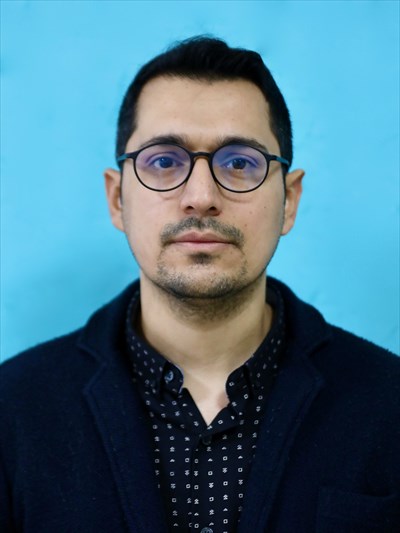
Shangjia DongView profile
Assistant Professor
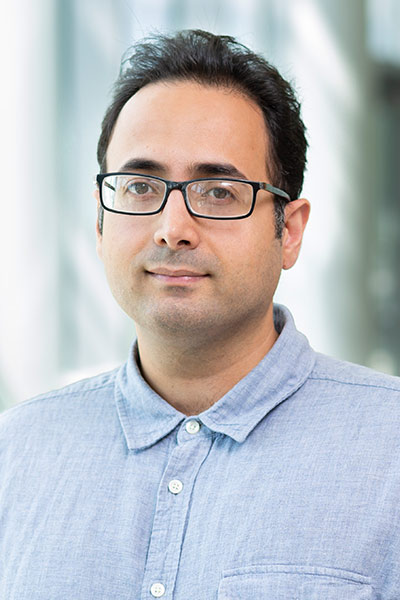
Shangjia Dong is an Assistant Professor in the Department of Civil, Construction and Environmental Engineering at the University of Delaware, and a core faculty member of the Disaster Research Center (DRC). He also holds an Early Career Research Fellowship from the Gulf Research Program at the National Academy of Sciences. His interdisciplinary research focuses on smart and resilient urban systems, combining network science, civil engineering, and social science to address community resilience and equity. Dong earned his B.S. from the University of Electronic Sciences and Technology, and his M.S. and Ph.D. in Civil Engineering (with a Computer Sciences minor) from Oregon State University. After his doctoral studies, he served as a Postdoctoral Research Associate at Texas A&M University. His research emphasizes data integration, machine intelligence, and risk-informed decision-making to enhance infrastructure resilience against disasters. Key areas include flood impact analysis, transportation network vulnerability, opioid treatment accessibility during disasters, and equitable resilience planning. He has developed frameworks for predictive flood risk monitoring, critical facility accessibility assessment, and post-disaster resource allocation. Notable contributions include the 'metanetwork framework' for analyzing interdependent infrastructure systems and the 'household service gap model' for assessing disaster vulnerability. His work bridges technical and social dimensions, advocating for systems that prioritize both functionality and equity in disaster-prone regions. Education: Bachelor of Science, University of Electronic Sciences and Technology Master of Science, Oregon State University Doctor of Philosophy (Civil Engineering), Oregon State University Awards: Bentley Systems Early Career Professorship Early Career Research Fellowship (NASEM Gulf Research Program) Key Projects: Flood resilience in Delaware and Texas transportation networks Social equity in post-disaster communication restoration Agent-based modeling for evacuation behavior analysis His lab integrates computational methods with empirical data to create actionable strategies for disaster mitigation, emphasizing collaboration between engineers, policymakers, and communities.