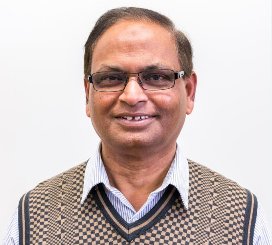
Prof. Hadi Ghaderi is a Professor of Management and Major Discipline Coordinator for Logistics and Supply Chain Management at Swinburne Business School (Swinburne University of Technology). He leads the Supply Chain Decarbonisation initiative and the Disruptive Mobility research stream at Swinburne’s Smart City Research Institute. His work bridges research and teaching, emphasizing practical, problem-based learning. Notable recognitions include inclusion in Stanford’s 2023-2024 Top 2% Cited Scientists and the 2018 Faculty Teaching Excellence Award for inspiring student engagement. Research focuses on supply chain digitalisation, decarbonisation, intelligent transport systems, and urban logistics. Key projects include crowd-shipping optimization, 5G-enabled smart cities, and low-emission truck adoption strategies. He collaborates with industry and government to deliver solutions like AIoT-CitySense for infrastructure maintenance and OPL-based delivery systems. Professional accolades include finalist status in the Excellence in Research and Development Award (2023) and High Commendation in Environmental Excellence (2023). He supervises PhD candidates addressing decarbonisation, smart platforms, and sustainable urban delivery systems.
Ozalp Babaoglu is a Full Professor at the Department of Computer Science and Engineering, University of Bologna. He has held this position since 1987, following a PhD in Computer Science from the University of California, Berkeley in 1981. His research focuses on distributed systems, High-Performance Computing (HPC), fault tolerance, self-organization, and machine learning applications in data-driven autonomics. He has led numerous European research projects like BROADCAST, CABERNET, ADAPT, BISON, and DELIS, contributing to foundational work in biology-inspired distributed algorithms and gossip-based systems. He co-founded the Bertinoro International Center for Informatics (BiCi) in 2001 and the IEEE SASO conference series in 2007. Babaoglu is a Fellow of the ACM (2002) and has received prestigious awards, including the Sakrison Memorial Award (1982) and the USENIX Lifetime Achievement Award (1993). His contributions to BSD Unix and open standards are seminal, including virtual memory extensions during his PhD. Babaoglu has served on editorial boards for ACM Transactions on Autonomous and Adaptive Systems, and previously for ACM Transactions on Computer Systems and Distributed Computing. His recent work addresses HPC fault classification, data-driven resource allocation, and energy-efficient computing in hybrid systems. He actively advises on European projects and explores cognitive paradigms in distributed systems.
Galih Sakitri serves as Assistant Professor at Prasetiya Mulya University's School of Business and Economics while pursuing her PhD in Organizational Psychology at Alliance Manchester Business School. With over a decade of research experience, she specializes in human resource management and organizational behavior within Indonesian academic and community contexts. Her educational qualifications include: PhD Candidate in Organizational Psychology, Alliance Manchester Business School Master of Business Administration, National Pingtung University of Science and Technology, Taiwan Master in Management (Human Resources), Universitas Brawijaya, Indonesia Bachelor of Economics, Universitas Brawijaya, Indonesia Dr. Sakitri's research centers on Organizational Psychology and Human Resource Management , investigating proactive behavior, workplace stress-happiness dynamics, dark personality traits, and community engagement. Her work examines emotional labor, job design quality, and wellbeing frameworks, directly supporting UN Sustainable Development Goals for decent work and economic growth through practical HRM applications. Her publication portfolio reveals consistent focus on psychological-social intersections, analyzing stress mechanisms in educational settings and community participation models in cultural festivals, demonstrating methodological rigor through hierarchical regression and case study approaches. Her academic recognition includes: Scholarship from Indonesia's Ministry of Education, Culture, Research, and Technology for Double Masters and Doctoral Program Dr. Sakitri actively shapes scholarly discourse as peer reviewer for Journal of Education for Business and International Journal of Management Education, while advancing professional networks through British Academy of Management membership and conference participation at Alliance Manchester Business School Doctoral Conference and NARTI mini-conference on Engaged Scholarship.
Professor Adrian Cherney is a leading academic in the School of Social Science at the University of Queensland, specializing in violent extremism, counter-terrorism, and policing strategies. His research focuses on CVE (Countering Violent Extremism) program evaluation, violent extremism risk assessment, and the role of procedural justice in policing. He has held an Australian Research Council (ARC) Future Fellowship and collaborated with police agencies and governments across Australia. His work spans academic publications, policy reports, and systematic reviews, with over 150 outputs including books, journal articles, and research reports. Cherney's research priorities include assessing the efficacy of interventions targeting radicalized individuals, validating risk assessment tools like the VERA-2R, and understanding mechanisms of radicalization and deradicalization. He has evaluated programs such as the Proactive Integrated Support Model (PRISM) and contributed to national frameworks for CVE evaluation. His interdisciplinary approach integrates criminology, behavioral science, and policy analysis, addressing global counterterrorism challenges. Key achievements include: Securing $6M+ in research funding from ARC, Home Affairs, and state governments Developing metrics for CVE program evaluation and policy implementation Leading studies on disguised compliance in CVE programs and youth radicalization Collaborating with police agencies (NSW, QLD, Victoria) and correctional services His current projects focus on validating the VERA-2R tool, analyzing open-source extremist data (PIRA database), and exploring conspiracy-fuelled extremism threats. He emphasizes practical policy impacts, bridging academic research with real-world counterterrorism strategies.
LIU Zihan is an Assistant Professor of Organisational Behaviour & Human Resources at the Lee Kong Chian School of Business (LKCSB), Singapore Management University (SMU). Previously, they held an Assistant Professor position at the College of Business and Management, University of Illinois Springfield (2023–2025), where they received the Scholar of the Year Award in 2024. Their research focuses on employee-organization relationships, leadership dynamics, and workplace well-being, with an emphasis on mindfulness, power dynamics, and psychometric assessments. Education: Ph.D. in Industrial-Organizational Psychology from the University of Houston (2022). Research interests span employee well-being, leadership development, individual differences, and digital transformation in organizational contexts. Their work integrates psychological theories with practical applications in human resources and workplace safety. Key contributions include studies on whole-person fit assessment, leader humility, and the impact of self-sacrificial leadership during crises. Publications highlight interdisciplinary approaches, with recent articles exploring occupational values, power dependence in leadership, and the role of mindfulness in safety cultures. Their work appears in top journals such as Journal of Applied Psychology , Journal of Organizational Behavior , and Journal of Career Assessment . Awards include the 2024 Scholar of the Year Award recognizing contributions to organizational behavior research. Research spans industrial-organizational psychology, positive organizational scholarship, and cross-cultural management. Current roles include teaching and research at LKCSB, focusing on strategic priorities like digital transformation and human resource innovation.
Jack MCGUIRE is a Full-time Assistant Professor of Organisational Behaviour & Human Resources at the Lee Kong Chian School of Business, Singapore Management University. His research focuses on technology leadership, emotions, ethics, and human-AI collaboration. He holds a Ph.D. in Management and Organizations from the National University of Singapore (2023), where he also received the President’s Graduate Fellowship (2019–2023). Research areas include: Technology Leadership & Human-Machine Collaboration Emotional Dynamics in Leadership & Organizational Behavior AI Ethics, Fairness, and Societal Impact Positive Organizational Psychology (Mindfulness, Humility) Future of Work, Digital Transformation His recent work explores human-AI co-creation, algorithmic leadership fairness, and the ethical implications of AI adoption. Articles span journals like Academy of Management Review and Scientific Reports , emphasizing behavioral human-centered approaches to emerging technologies. Scientific awards include the prestigious NUS President’s Graduate Fellowship for outstanding academic achievement. His research bridges social psychology, organizational behavior, and digital transformation challenges.
Dr. Thomas Gehring is a Professor in the Department of Biology at Central Michigan University (CMU), where he also contributes to the Institute for Great Lakes Research. His work integrates field ecology, spatial analysis, and stakeholder engagement to develop practical wildlife conservation strategies. Ph.D., Wildlife Ecology, Purdue University, 2000 M.S., Natural Resources-Wildlife Ecology, University of Wisconsin-Stevens Point, 1996 B.S., Biology-Ecology, University of Wisconsin-Stevens Point, 1992 His research focuses on wildlife conservation , landscape ecology , and human-wildlife conflict mitigation . He emphasizes field-based studies using radio telemetry, GPS, and GIS to understand carnivore and avian ecology across spatial scales. Key themes include predator-prey dynamics, non-lethal management (e.g., livestock guarding dogs, fladry, shock collars), and the role of human dimensions in conservation success. His recent publications reflect a strong trend in applied conservation, particularly in Great Lakes ecosystems. Topics include Common Loon habitat use, bobcat social networks, gull deterrence using Border Collies, and muskrat ecosystem engineering. These studies combine spatial modeling, behavioral experiments, and stakeholder collaboration, highlighting an interdisciplinary and solution-oriented approach. Dr. Gehring has mentored numerous graduate students, many of whom now work in state and federal wildlife agencies. His research is supported through field projects and consulting, including work with the Michigan DNR and Defenders of Wildlife. He leads the Applied Wildlife Research Team at CMU and is involved in outreach through the CMU Student Chapter of The Wildlife Society. His personal Helvetia Meadows Farm serves as a practical extension of his research, focusing on livestock guarding dogs and sustainable coexistence with predators.
Amy E. Colbert is the University of Iowa Distinguished Chair and Professor in the Department of Management and Entrepreneurship at the Tippie College of Business, University of Iowa. She holds a PhD in Business Administration from the University of Iowa, an MA in Decision Sciences from Saint Louis University, and a BS in Accounting from Culver-Stockton College. Her academic leadership includes the Leonard A. Hadley Chair in Leadership and serving as Faculty Director of the Social Impact Community (2022–2025). Her research centers on leadership, motivation, identity, and employee well-being . She investigates how individuals derive meaning from work, the dynamics of calling and narrative identity, and the impact of family motivation and beneficiary contact on performance. Her work bridges organizational behavior, psychology, and neuroscience, often exploring the cognitive and emotional underpinnings of leadership and proactive behavior. The recent publications reflect a strong trend in qualitative and quantitative studies on meaningful work, emotional dynamics, and evidence-based management . Her articles span top journals such as Academy of Management Journal , Administrative Science Quarterly , and Journal of Vocational Behavior , demonstrating interdisciplinary depth in organizational psychology and management science. Scientific Awards and Honors: Award for Faculty Excellence - Iowa Regents, 2022 Distinguished Faculty Mentor Award - Tippie College of Business, 2021 Senior Faculty Research Award - Tippie College of Business, 2021 Fellow - American Psychological Association, 2018 Fellow - Association for Psychological Science, 2018 Fellow - Society for Organizational and Industrial Psychology (SIOP), 2018 Distinguished Chair Award - University of Iowa, 2024 Outstanding Service Contribution - Tippie College of Business, 2017 Rosabeth Moss Kanter Award for Work-Family Research, 2017 Best Article Award - Personnel Psychology, 2016 Advising and Grants: Amy E. Colbert has served as Principal Investigator on a University of Iowa-funded grant on Organizational Diversity Initiatives (2022–2023) and as Co-Investigator on a National Institute for Occupational Safety and Health (NIOSH)-funded project on Remote Supervision (2021–2026). While no formal advisees are listed, her mentorship has been recognized with the Distinguished Faculty Mentor Award, indicating a strong commitment to student and junior faculty development. Labs and Research Teams: While no formal lab is mentioned, her research collaborations span interdisciplinary teams including scholars in psychology, neuroscience, and organizational behavior. She is actively engaged with research centers at the Tippie College of Business and contributes to initiatives such as the Hawkinson Institute and the Marketing Institute, promoting leadership and social impact in business education.
Vincent Bernier is an Associate Professor at the Department of Studies on School and Social Adaptation, Université de Sherbrooke. He is affiliated with the International Laboratory on School Inclusion (LISIS), Joint Research Unit Synergia, and the Research Laboratory on Psychosocial Adaptation Difficulties at School (LaRIDAPE). His work focuses on classroom management practices, students’ perceptions of teacher efficacy, socioemotional skill development, and inclusive education for students with behavioral challenges. Doctorate in Psychopedagogy (Université Laval, 2021) Master’s in Psychopedagogy (Université Laval, 2016) Bachelor’s in Secondary Teaching (Université de Sherbrooke, 2014) His research explores how classroom management strategies affect student engagement, academic performance, and school inclusion. He emphasizes student-centered approaches and collaborative intervention planning. Recent publications analyze teacher practices through student feedback, highlighting emotional regulation and collective efficacy as critical factors. Bernier has received multiple awards, including the Joseph-Armand-Bombardier Scholarship, Louise-Dandurand French Publication Prize, and Périclès Award. He has secured grants from SSHRC (Canada), FRQSC, and institutional programs for studies on classroom management and inclusive education. He actively contributes to educational outreach, organizing conferences like the 10th Quebec Biennial Congress for Youth in Behavioral Difficulty and the Synergia UMR Research Day. His workshops focus on socioemotional development, non-punitive discipline, and practical strategies for secondary school classroom management.
Rachael Murrihy is a clinical psychologist and Director of The Kidman Centre within the Faculty of Science at the University of Technology Sydney (UTS). She holds full registration with the NSW Psychologists Registration Board and serves as a Board Member for organizations like the Antony Kidman Foundation and The Banksia Project. Her work spans clinical practice, research, and education, focusing on youth aged 5-25 with internalizing and externalizing disorders, particularly cyberbullying and disruptive behavior disorders. Doctorate of Clinical Psychology (2006) from the University of Wollongong Postgraduate Diploma of Psychology from Bond University (1996) Her research interests include: Disruptive Behavior Disorders: Oppositional Defiant Disorder, Conduct Disorder, and evidence-based interventions like Parent Management Training (PMT) and Collaborative and Proactive Solutions (CPS). Bullying Interventions: Prevention strategies for cyberbullying and indirect bullying in school and community settings. Mental Health Training: Improving evidence-based mental health care training for general practitioners and psychiatric registrars. Recent publications emphasize treatment efficacy comparisons (PMT vs. CPS) and implementation challenges in school psychology. She has received recognition through the John Freestone Award (2006) and multiple research grants, including a $300,000 Fairfax Family Foundation grant (2013). In teaching, she delivers modules on CBT, clinical supervision, and treatment of disruptive behavior disorders. She also supervises master’s interns and investigates supervision program effectiveness for medical professionals.
Dr. Angelica Leigh is an Associate Professor of Management and Organizations at Duke University’s Fuqua School of Business since 2024. Previously, she held an Assistant Professor position at Fuqua from 2020–2024. She earned a Ph.D. in Organizational Behavior from the University of North Carolina–Chapel Hill’s Kenan-Flagler Business School (2020), an M.S. from the same institution (2018), and a B.A. from Michigan State University (2010). Her research focuses on diversity, equity, and inclusion (DEI), particularly examining racial minority experiences, allyship dynamics, and the psychological impact of societal mega-threats (e.g., racial violence) on employees. She employs both qualitative and quantitative methods to explore systemic racism, leadership effectiveness, and organizational change. Key themes include racial minority leaders’ allyship challenges, the performativity of DEI initiatives, and strategies to combat workplace discrimination. Dr. Leigh’s publications span top journals such as the Academy of Management Journal , Organizational Behavior and Human Decision Processes , and Journal of Applied Psychology . Her work highlights trends like the tension between symbolic DEI efforts and substantive change, the paradox faced by racial minority leaders in allyship roles, and the spillover effects of societal crises on workplace behavior. She has received prestigious awards, including the 2022 Academy of Management Journal Best Published Paper Award and the 2023 Distinguished Fellow honor from UNC’s Kenan Institute. Beyond academia, she actively supports underrepresented groups via organizations like the PhD Project. Her professional service includes participation in the National Center for Faculty Development & Diversity’s Faculty Success Program (2021). Her advocacy extends to practical guidance for managers, including articles in Harvard Business Review that translate research into actionable insights for fostering inclusive workplaces.
Verena Krause is a Lecturer (Assistant Professor) at the UCL School of Management, specializing in the Organizations and Innovation group. She holds a B.A. in Psychology from Boston University and an M.S./Ph.D. in Organizational Behavior from Cornell University’s School of Industrial and Labor Relations. Her research focuses on creativity’s antecedents and consequences, particularly how perspective-taking impacts originality and how creative work mitigates psychological burdens. Education: B.A. Psychology, Boston University M.S. Organizational Behavior, Cornell University Ph.D. Organizational Behavior, Cornell University Her research explores how retaining personal perspectives enhances creativity and how creative work serves as an outlet for psychological stress. Key projects include studying creativity’s dual role as both an outcome and driver of workplace dynamics. She is a member of the Academy of Management and Society for Personality and Social Psychology. Publications span journals like Journal of Experimental Social Psychology and Organizational Behavior and Human Decision Processes , emphasizing creativity’s psychological and interpersonal impacts. She advises Velvetina Lim as a PhD supervisor.
Professor Emine Yilmaz is a distinguished academic at University College London (Department of Computer Science), holding concurrent roles as a Turing Fellow and Amazon Scholar. She leads the Web Intelligence Group at the UCL Centre for Artificial Intelligence and collaborates with Amazon's Alexa Shopping team as an Amazon Scholar. Her research focuses on information retrieval, natural language processing, and machine learning, with over 150 publications (6,250+ citations, H-index 39). Notable awards include the Karen Sparck Jones Award, Google Faculty Research Award, and Bloomberg Data Science Research Award. Her work is funded by EU Horizon 2020, EPSRC, and industry partners like Google and Bloomberg. She has served in leadership roles for journals (e.g., Information Retrieval Journal) and conferences (e.g., ACM SIGIR 2024 PC Chair). Recent projects include organizing the TREC Deep Learning Track and co-founding Humanloop, a UCL spinout company. Research Interests: Machine learning for search systems, conversational AI, educational technology, and ethical AI. Key Contributions: Synthetic test collections (SYNDL), contextual understanding in dialogue systems, and knowledge-enhanced retrieval frameworks. Her articles emphasize robustness in retrieval-augmented generation (RAG), proactive search systems, and bias mitigation in synthetic data. Recent highlights include work on personalization benchmarks (PersonaLens) and trustworthiness in AI systems (TrustRAG). Awards: Karen Sparck Jones Award (2021), Google Faculty Research Award (2020), Bloomberg Data Science Award (2019). She advises over 10 current PhD students and has mentored 9 former students, many now in academia and industry. Her grants span EU, UK, and industry funding, with recent support from Bloomberg’s PhD fellowship program and Google Research Awards. Labs/Teams: Web Intelligence Group (UCL), co-founder of Humanloop, and key contributor to the TREC Deep Learning initiative.
Dr. Patricia Faison Hewlin is an Associate Professor at McGill University’s Desautels Faculty of Management and serves as McGill’s Ombudsperson for Students. She holds a PhD in Management and Organizational Behavior from NYU Stern, an MBA in Finance, and a BA in English and Spanish from Binghamton University. Her research focuses on authenticity in the workplace, diversity climates, identity management, and leadership development. She has explored concepts like 'facades of conformity' and their impact on employee well-being, as well as topics such as callings in the workplace and mental illness disclosure. Dr. Hewlin has held academic leadership roles including Associate Dean of Undergraduate Programs and has published extensively in journals like Academy of Management Journal and Journal of Applied Psychology . Her work bridges organizational behavior theory with practical tools for fostering inclusive workplaces and authentic self-expression. Education: PhD in Management & Organizational Behavior, NYU Stern MBA in Finance, NYU Stern BA in English & Spanish, Binghamton University Current Roles: Associate Professor, McGill University Ombudsperson for Students, McGill University Past roles include Associate Dean of Undergraduate Programs Key Research Themes: Authenticity and conformity in organizations Employee responses to diversity climates Leadership and identity management Psychological safety in workplaces Engagement: Translates research into practical strategies for leaders and employees, emphasizing diversity, equity, and inclusion initiatives. Her work has been featured in outlets like The Globe and Mail and Greater Good Magazine , reflecting her commitment to societal impact alongside academic rigor.
Professor Mohammed Quaddus is a faculty member at Curtin University's School of Management and Marketing (part of the Faculty of Business and Law). His academic roles include serving as Deputy Dean and Acting Director in various departments. He holds a PhD from the University of Pittsburgh and has extensive experience in research and administrative leadership. Research Interests: His work focuses on supply chain resilience, sustainability, logistics, tourism, and decision systems. Notable areas include diffusion modeling, behavioral marketing, ICT integration in tourism, and risk management in complex networks. He employs methodologies like QFD, PLS-SEM, and fsQCA. Publications Trends: Recent work emphasizes resilience in extreme disruptions (healthcare, tourism), blockchain in food supply chains, and cybersecurity dynamics. His 2024 articles address health operational resilience, data-driven innovation, and cyberbullying analysis. Earlier contributions explore RFID adoption, supply chain dynamics in fast fashion, and sustainability practices in apparel/garment industries. Grants & Advising: While specific grants aren't listed, his research aligns with industry challenges in manufacturing, agriculture, and tourism. He has advised on doctoral projects in supply chain resilience, though no student names are explicitly mentioned. Labs & Teams: Engaged in collaborative research with Curtin's Graduate School of Business and cross-disciplinary teams on projects like green supply chains (Thai rubber industry) and poultry sustainability in Bangladesh.