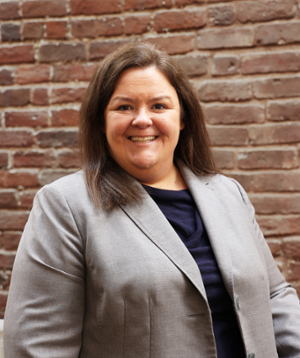
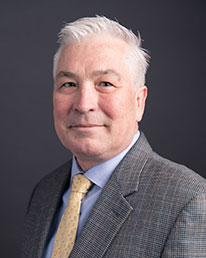
Kelly Layne, PhD, OTD, OTR, is a Clinical Associate Professor at the Department of Occupational Therapy within Robbins College of Health & Human Sciences at Baylor University. She plays a key role in the Baylor Doctor of Occupational Therapy program, focusing on innovative educational practices. Bachelor of Science in Biology (1998), University of Southwestern Louisiana Master of Occupational Therapy (2001), University of St. Augustine for Health Sciences Post-Professional Doctor of Occupational Therapy (2003), University of St. Augustine for Health Sciences Master of Philosophy in Education (2024) and PhD in Education (2025) with emphasis on technology and design Dr. Layne's research centers on the scholarship of teaching and learning, simulated learning, and occupational balance. Her work explores virtual debriefing in graduate health sciences education and experiential learning theory in occupational therapy. She has developed hybrid and face-to-face OT program content and co-authored a textbook chapter on these topics. Her peer-reviewed publications address education, international collaboration, and community practice in occupational therapy. She has presented nationally and internationally on innovative educational practices and holds certifications in breastfeeding and cognition. Her professional activities extend to pro-bono services for community-based organizations serving adults, older adults, individuals with mental illnesses, and breastfeeding mothers.
Patrick Metze is Professor of Law at Texas Tech University School of Law, where he has served since 2008. He initially joined as an adjunct professor teaching the criminal defense clinic in 2007 and became a full-time Associate Professor of Law and Director of the Criminal Defense Clinics in May 2008. He was promoted to Professor of Law with tenure in September 2012. Professor Metze has established several groundbreaking clinical programs including the Capital Punishment Clinic (2010), the Caprock Regional Public Defender Office and Clinic (2010) - the first full-time public defender office operated from within a law school, and the Texas Tech School of Law Innocence Clinic (2016). Professor Metze earned his B.A. from Texas Tech University in 1970 and his J.D. from the University of Houston in 1973. Before joining academia, he maintained a private law practice in Levelland and Lubbock, Texas for over 30 years, initially handling general practice including banking, collections, corporate law, and oil and gas matters, but shifting focus to criminal and family law following the 1986 oil industry collapse in West Texas. He was one of only 14 attorneys qualified for appointment as first chair in Capital Murder cases in the 9th Administrative Judicial Region. Professor Metze's research focuses on criminal law and procedure, with particular emphasis on capital punishment, innocence projects, and the school-to-prison pipeline. His publications reveal a consistent concern with constitutional protections, ethical obligations of courts and practitioners, and systemic reforms in criminal justice. His work spans both theoretical analysis of legal principles and practical guidance for criminal defense attorneys. Among his professional recognitions, Professor Metze is a Life Fellow of The Texas Bar Foundation and maintains membership in The Pro Bono College of the State of Texas. His presentations at numerous professional seminars demonstrate his active engagement with the criminal defense bar and commitment to advancing legal practice. Professor Metze has served on various committees including the Criminal Justice Council of the State Bar of Texas, the Advisory Committee to the Lubbock Special Needs Defenders Office, and as a former board member of the Lubbock Criminal Defense Lawyers Association (where he served as President) and the Texas Criminal Defense Lawyers Association.
Dr. Jasper Fessmann is an Assistant Professor in the Department of Journalism and Strategic Media at the University of Memphis, joining in 2023 after serving at West Virginia University’s Reed College of Media. He holds a Ph.D. in Mass Communication from the University of Florida, a Qualifying Certificate in University-Level Teaching from Technical University Berlin, and degrees in International Public Relations (MA, Boston University), Communication Arts (BA), and Philosophy (BA) from Georgia Southern University. His research focuses on public interest communications (PIC), international public relations, disinformation, and crisis communications. He pioneered the PIC field to advance social change, particularly countering climate denial campaigns. His work emphasizes strategic communication for NGOs, governments, and Fortune 500 companies, informed by 15 years in international PR agencies and pro bono projects on Holocaust remembrance. His publications analyze climate change communication strategies, crisis management, and non-profit communication frameworks. Recent articles address gamification in education to combat misinformation and cross-cultural crisis responses. His research bridges theoretical foundations and practical applications of strategic communication for societal benefit. Dr. Fessmann has no listed awards but has contributed to public interest initiatives globally. His advising and grants are not detailed in available texts, though his academic work suggests ongoing engagement with PIC and climate communication projects. He teaches university-level courses and maintains an office at Meeman Journalism 330.
John D. Morley is the Augustus E. Lines Professor of Law at Yale Law School. He holds a B.S. from the University of Utah (2003) and a J.D. from Yale Law School (2006). His research focuses on the law and economics of organizations, particularly investment funds (mutual, private equity, and hedge funds), law firm dynamics, and trusts and estates. He teaches courses on business organizations, securities regulation, trusts and estates, and investment management regulation. Morley previously served as a faculty member at the University of Virginia School of Law and as Executive Director of the Center for the Study of Corporate Law at Yale. He is the reporter for the Uniform Directed Trust Act and has advised on legal reforms. His recent work examines political pressures on law firms and their vulnerabilities in adversarial environments, as highlighted in his analyses of Trump administration policies and SPAC litigation. Key contributions include studies on law firm collapses, the historical role of common law trusts, and regulatory challenges in investment management. He frequently engages with media on legal topics, appearing in outlets like the New York Times, Bloomberg, and Wall Street Journal, and hosts the Capitalisn't podcast discussing law firms’ ethical dilemmas and structural challenges.
Christine Mahoney is a Professor of Public Policy and Politics and Chief Innovation Officer at the Frank Batten School of Leadership and Public Policy at the University of Virginia. She also serves as Director of the Tadler Program in Impact Investing in Appalachia, the UVA Environmental Institute-funded Climate Collaborative on Appalachian Renewable Energy & Resilience, and the EPA-funded Community Change project for economic development in Appalachia. Previously, she was an Assistant Professor at the Maxwell School of Syracuse University and Director of the Center for European Studies and the Maxwell EU Center. Dr. Mahoney earned her Ph.D. in Political Science from Pennsylvania State University in 2006, with fields of study in American politics, Comparative politics, and Research Methods & Statistical Analysis. She also completed her M.A. (2003) and B.A. (2001) in Political Science and International Politics, respectively, at Pennsylvania State University. Professor Mahoney specializes in social justice advocacy, activism, and direct action through social entrepreneurship. Her research focuses on how advocates shape public policy, with particular attention to lobbying strategies in powerful political systems like the United States and the European Union. She has conducted extensive fieldwork in seven conflict zones across Asia, Africa, Eastern Europe, and Latin America, studying the rights of forcibly displaced people and proposing innovative solutions through social entrepreneurship. Her work bridges political science with practical applications in impact investing and refugee integration, creating tangible pathways for social change through entrepreneurial approaches. Professor Mahoney's scholarly output reveals an evolution from comparative studies of advocacy systems to practical applications of social entrepreneurship for forcibly displaced populations. Her early work established foundational knowledge about lobbying in transatlantic political systems, while her more recent research has shifted toward actionable solutions for global displacement crises and sustainable community development. This trajectory demonstrates her commitment to translating academic insights into real-world impact, particularly through the lens of social entrepreneurship and impact investing. Fulbright Fellow Visiting Scholar at Oxford National Science Foundation grant recipient Emerging Scholar award from the American Political Science Association UVA's Public Impact-Focused Research Award Through Social Entrepreneurship at UVA (SE@UVA), which she founded and led for a decade (2011-2021), Professor Mahoney has mentored over 80 student social enterprise teams and supported more than 100 social entrepreneurs with over 38,400 hours of pro-bono consulting. She has secured $37.7 million in funding for programs addressing social and environmental challenges, including the Tadler Program in Appalachia that has made significant strides in advancing rural policy and economic development. Her work demonstrates a consistent commitment to connecting academic research with practical applications that address pressing social problems. Professor Mahoney leads several significant initiatives including the Refugee Investment Network, where she serves as fellow and advisor, and multiple UVA-based programs focused on social entrepreneurship, impact investing, and community development. Her interdisciplinary approach brings together policy experts, social entrepreneurs, impact investors, and community stakeholders to develop innovative solutions to complex social problems, particularly in the areas of refugee integration and rural economic development in Appalachia.
Professor Janet McColl-Kennedy is a leading figure in marketing and service science at The University of Queensland's Business School. She serves as Program Lead for Innovation Pathways (FaBA) and co-founded the Service Innovation Alliance (SIA) research hub, focusing on customer experience, AI, digital transformation, and sustainability. With Fellow status in the Academy of the Social Sciences in Australia and the Australian and New Zealand Marketing Academy, she holds international recognition including Research.com's World's Best Business Scientists ranking and the Christopher Lovelock Career Contributions to the Services Discipline Award (2025). University of Queensland Business School Honorary Visiting Professor, Cambridge Service Alliance Research Collaborator, University of Cambridge Her research spans customer experience management, service ecosystems, digital transformation, and healthcare services. She has pioneered frameworks for customer value co-creation and service recovery strategies, integrating AI and behavioral science. Her 2019 paper on customer experience insights was implemented by a major B2B organization, while her work on value co-creation improved outcomes at Lutheran Community Care. Recent publications focus on AI impacts in food and beverage services, sustainable service ecosystems, and digital health interventions. She has secured over $89 million in competitive grants, including multiple ARC Linkage and Discovery Projects, and leads cross-disciplinary teams with institutions like Cambridge University and Arizona State University. 2024 - ARC College of Experts appointment 2023 - Bo Edvardsson Industry Impact in Services Award 2022 - Elected Fellow of Academy of the Social Sciences in Australia 2021 - Clarivate Highly Cited Researcher 2018 - Ranked most influential marketing academic in Australia With over 220 publications and a Google Scholar H-index of 62, she has mentored 15 PhD students and examined theses at multiple universities. Her teaching spans 30+ years across undergraduate, postgraduate, and executive programs in Australia, USA, Italy, China, and Korea, with awards for blended learning and corporate education.
Louis S. Rulli is the Shuster Practice Professor of Law and Director of the Civil Practice Clinic and Legislative Clinic at Penn Carey Law School, University of Pennsylvania. He is a leading expert in public interest law, clinical legal education, legislation, and civil asset forfeiture, with a strong commitment to access to justice for low-income individuals. His research focuses on civil forfeiture reform, legal ethics, and the rights of indigent clients. He has written extensively on how civil asset forfeiture disproportionately impacts marginalized communities and has advocated for legal reforms to protect innocent property owners. His work emphasizes the need for legal representation in civil proceedings and the expansion of pro bono services. The 15 most recent publications highlight a consistent scholarly focus on civil forfeiture, access to justice, legal ethics, and public interest lawyering. These works span law reviews, policy testimony, and public advocacy, reflecting a career dedicated to legal reform and clinical education. Key themes include the abuse of civil forfeiture, the need for counsel in civil cases, and systemic barriers to justice for the poor. University-wide Provost’s Award for Distinguished Teaching (2006) Penn Carey Law’s Beacon Award for exemplary faculty commitment to pro bono service (2012) Community Legal Services’ Champion of Justice Award (2012) Villanova University’s Praxis Award in Professional Ethics (2015) AALS Father Robert Drinan Award (2019) Pennsylvania Bar Foundation’s Lifetime Achievement Award Rulli has supervised numerous law students through clinical programs, training them to represent indigent clients in civil forfeiture and legislative advocacy. He has also advised on policy initiatives, served on judicial ethics committees, and contributed to legislative reform efforts. His leadership in legal services governance includes past roles with Community Legal Services, Philadelphia Legal Assistance, and the Women’s Law Project. He currently serves as Hearing Officer for the City of Philadelphia’s Board of Ethics and Access to Justice Advisor to the Philadelphia Bar Association. He has directed clinical programs at Penn Law for over two decades, overseeing student representation in civil forfeiture cases, which has been featured in national media such as The New Yorker . His work bridges legal scholarship, clinical teaching, and public policy, making a significant impact on both legal education and justice reform.
Heather A. Jones, Ph.D., serves as Associate Professor in the Department of Psychology within Virginia Commonwealth University's College of Humanities and Sciences, holding joint appointments with the Department of African American Studies, Department of Pediatrics, and Institute for Women's Health. As a licensed clinical psychologist in Virginia, she maintains an active research program focused on reducing mental health disparities through culturally responsive interventions. Ph.D. in Psychology, University of Maryland at College Park (2006) Dr. Jones' research centers on three interconnected pillars: Black children and families' mental health, maternal mental health across the perinatal spectrum, and training culturally competent clinical psychologists. Her work specifically examines ADHD manifestations in Black youth, impacts of racial discrimination on adolescent mental health, and integration of behavioral health services within primary care settings. She employs mixed-methods approaches to address systemic barriers in mental healthcare access for underserved communities. Analysis of her 2023-2025 publications reveals consistent emphasis on health equity through studies of cultural competence in cancer survivorship, ADHD treatment representation gaps, and digital interventions for perinatal depression. Her methodological approaches span latent class analyses of service utilization, content analyses of historical research biases, and clinical trials of integrated care models, all contextualized within structural determinants of health. Dr. Jones has received significant recognition for her contributions: VCU College of Humanities and Sciences Distinguished Teaching Award (2023) VCU Department of Psychology Outstanding Mentoring Award (2023) Elizabeth Fries Young Investigator Award (2016) Clinical and Translational Research Award (2016) She actively mentors students, particularly supporting Black graduate trainees in pediatric psychology as evidenced by numerous student co-authorships. As Principal Investigator, she directs the $1.4M HRSA-funded Primary Care Psychology Training Collaborative providing pro bono services to urban Richmond and rural Virginia communities, recently expanded through an additional $1.1M grant serving Latinx immigrants and refugees. Her federally funded work consistently bridges research, clinical service, and community engagement. Dr. Jones co-directs the Families and Mental Health Research Lab and Primary Care Psychology Training Collaborative, leading interdisciplinary teams comprising psychology graduate students, pediatric residents, and community health workers. These initiatives operate within VCU's integrated primary care clinics, focusing on implementation science to scale evidence-based practices for underserved populations while training the next generation of healthcare providers.
Reed Stevens is a Professor in the Learning Sciences department at Northwestern University's School of Education and Social Policy (SESP). He holds a PhD in Cognitive Studies in Education from UC Berkeley (1999), an MA from UC Berkeley (1994), and a BA in Mathematics from Pomona College (1987). His research focuses on understanding learning across diverse settings including classrooms, workplaces, and museums, emphasizing how mathematical and technological practices shape cognition. Stevens develops tools like VideoTraces for media annotation and designs innovative educational models such as FUSE Studios to create scalable, interest-driven learning environments. His work bridges cognitive science and sociocultural studies, employing methods like audio-video ethnography and conversation analysis. Key themes include spatial reasoning in making activities, teacher adaptation to facilitator roles, and the diffusion of educational innovations. Stevens collaborates with industry partners to integrate real-world practices into school curricula, addressing challenges in scaling STEAM initiatives and fostering equitable participation. His research has implications for teacher training, curriculum design, and the development of technology-mediated learning tools. Stevens' recent work explores civic data science applications, professional learning in trades like coffee roasting, and the redefinition of scientific practices in education. He actively contributes to debates on expanding what counts as valid scientific inquiry and has published extensively on learning pathways, institutional adoption of innovations, and the role of agency in student-driven projects.
Lucille C. McGee serves as the Director of Experiential Learning and Assistant Professor of Law at the Lincoln Memorial University Duncan School of Law in Knoxville, TN. Her expertise lies in clinical legal education and experiential learning methodologies, having pioneered a medical-legal partnership clinic linking law students with underserved populations. She holds a J.D. from the Appalachian School of Law and a B.A. in English from the University of Georgia, complemented by a Higher Education Teaching Certificate from Harvard University’s Derek Bok Center (2020). Her professional roles include licensure as a Tennessee attorney since 2013, and active membership in organizations such as the American Bar Association and National Association for Law Placement. McGee oversees LMU Law’s experiential programs including clinics, externships, and simulation courses, while teaching practice-oriented subjects like Pleadings & Practice. She has contributed to legal education through committee service with the Southeastern Association of Law Schools and hosting the 2021 Legal Writing Institute virtual conference. Her work emphasizes bridging legal education with real-world advocacy, particularly supporting low-income communities through collaborative healthcare-legal initiatives. Dean Matt Lyon highlights her role in equipping students with essential professional skills for service in Appalachia and beyond.
Poonam Puri is a Professor and York Research Chair in Corporate Governance, Investor Protection & Financial Markets at Osgoode Hall Law School, York University. She holds an LLB from Toronto and an LLM from Harvard. Co-Founder and Director of the Osgoode Investor Protection Clinic Founder and Director of the Business Law LLM at Osgoode Professional Development Chair of York University’s Senate Her research focuses on corporate governance, investor protection, securities regulation, and the legal implications of digital currencies. She has supervised PhD and LLM students in areas like corporate accountability, ESG, and cryptocurrency regulation. Article Trends : Recent works emphasize digital currencies, corporate sustainability, enforcement mechanisms, and governance reforms, reflecting her interdisciplinary approach to law and finance. Scientific Awards : Royal Society of Canada’s Yvan Allaire Medal (2021) Law Society Medal (2021) Walter Mundell Medal for Legal Writing (2020) Top 25 Most Influential Lawyers (2015, 2017) Canada’s 100 Most Powerful Women (2011) Grants : Over $5 million in research funding, including five SSHRC grants and $775,000 from York and University of Toronto for digital currency research. Labs & Teams : Directs the Osgoode Investor Protection Clinic and has served on numerous public and private sector boards, including Canada Infrastructure Bank and Holland Bloorview Kids Rehabilitation Hospital.
George Willis is a Clinical Professor at Chapman University Fowler School of Law , where he serves as Director of the Tax Law Clinic and Administrator of Graduate Tax Programs. He teaches Tax Law Clinic , Tax Procedure and Admin Clinic , Business Associations , and Client Interviewing & Counseling . Education : Bachelor of Science in Finance (California State University, Long Beach), Juris Doctor (Chapman University Fowler School of Law) Prior Roles : Tax attorney, IRS Estate and Gift Tax Division, First American Corporation legal counsel, Senior Engineer at Northrop-Grumman His research focuses on Tax Law , Clinical Legal Education , and IRS Procedures , emphasizing pro bono representation for low-income taxpayers. Recent publications address IRS form revisions, confidentiality policies, and volunteer tax preparer programs. Professor Willis actively participates in the American Bar Association Taxation Section and moderates the Low-income Taxpayers Committee listserv. He contributes to clinical legal education through chapters in practitioner manuals and casebooks.
Sean O'Shea is a Lecturer and Supervised Fieldwork Advisor at Bank Street College of Education, specializing in Special Education advocacy and inclusive practices. He holds an EdD from Teachers College, Columbia University. His career spans over three decades in educational administration and teaching, focusing on ensuring equitable access to programs for students with disabilities and at-risk learners. He has held roles such as Deputy Superintendent for Compliance and Administrator of Transition Programs in NYC DOE, emphasizing legal compliance and policy adherence. Research & Advocacy: Dr. O'Shea's work prioritizes advocating for underserved students, particularly those with emotional/behavioral variations, intellectual disabilities, and physical challenges. He consults pro-bono with families and community organizations to strengthen educational advocacy. His publication explores the impact of special education experience on inclusive instructional practices. Programs & Teaching: At Bank Street, he leads programs like Childhood Special and General Education Dual Certification and the Residency Program. He emphasizes preparing educators as advocates for marginalized students. His courses address compliance frameworks, differentiated instruction, and systemic barriers in education. Grants & Collaborations: While specific grants aren't detailed, his administrative roles indicate involvement in DOE-funded initiatives. He collaborates with museums and social services through dual-degree programs with Columbia School of Social Work.
Professor Michael Draper is a faculty member at the Hillary Rodham Clinton School of Law, Swansea University, where he serves as Director of the Swansea Academy of Inclusivity and Learner Success and Chair of the University’s Academic Regulations and Student Cases Board. He is a Principal Fellow of the Higher Education Academy and actively contributes to national and international policy development in academic integrity. His research focuses on Academic Integrity , Legal Education , and Ethics , with a particular emphasis on contract cheating, remote assessment challenges, and fraud law implications. His work bridges legal practice and educational policy, addressing issues like online assessment integrity and student assignment purchasing . Recent publications analyze trends in remote proctoring , essay mills , and academic ethics , reflecting his expertise in aligning legal frameworks with educational practices. He has received recognition as a Principal Fellow of the Higher Education Academy for his contributions to teaching and policy. Michael Draper supervises postgraduate research, including a 2023 PhD on Minority Shareholder Protection , and leads strategic university initiatives in learning and teaching. His grants include the Epigeum Project (2015–2017), which enhanced academic success frameworks.
Kirk Heilbrun is a Professor at Drexel University's Department of Psychological and Brain Sciences. He has served as department head from 1999-2012 and 2014-2016, and previously held roles as a staff psychologist and chief psychologist at forensic institutions. He directs the Reentry Project, providing pro bono assessment and treatment services for justice-involved individuals. PhD in Clinical Psychology from the University of Texas at Austin His research focuses on forensic mental health assessment, violence risk assessment, and interventions to reduce reoffending. He explores ethical, racial, and pandemic-related challenges in forensic psychology. Recent publications address trauma-informed collateral interviewing, race-conscious assessment, competence restoration models, and pandemic policy responses. These works intersect forensic psychology, legal policy, and public health. Fellow of the American Psychological Association (six divisions) Board Certified in Clinical Psychology Board Certified in Forensic Psychology He leads the Drexel Forensic Assessment Clinic, which evaluates juvenile commitment, competence to stand trial, and workplace disability cases, and the Reentry Project, which supports pro bono services for justice-involved individuals.