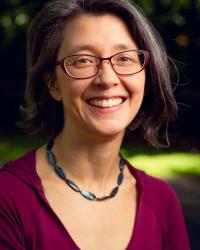
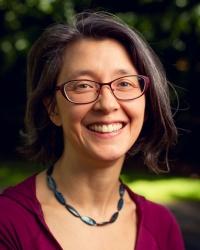
Sasha Su-Ling Welland is Chair & Professor in Gender, Women & Sexuality Studies at the University of Washington, with an adjunct role in Anthropology and affiliation in China Studies. She holds a PhD (2006) and MA (1998) in Anthropology from UC Santa Cruz, and a BA (1991) in Ethnic Studies from Stanford University. Her research focuses on transnational visual culture, women of color, ecocriticism, and post-socialist gender dynamics. Current work explores embodied ecologies, nuclear colonialism, and racial capitalism in the Anthropocene. Welland’s scholarship bridges art, ethnography, and public scholarship. Her book Experimental Beijing (2018) won major prizes for its analysis of gender in Chinese contemporary art. Recent research intertwines military/medical histories with environmental justice in St. Louis. She curates feminist art exhibits in Asia and serves on the Journal of Visual Culture editorial board. Her awards include the 2019 Francis L.K. Hsu Book Prize and 2020 Joseph Levenson Prize. She advises graduate students and leads lab teams investigating transnational feminisms and environmental humanities. Resources include her CV and online office hours via the department’s website.
Sasha Welland is an Adjunct Associate Professor in the Department of Anthropology at the University of Washington, affiliated with Gender, Women & Sexuality Studies; China Studies; Comparative History of Ideas; and graduate certificate programs in Cinema & Media Studies and Public Scholarship. Her research focuses on Asian American studies, East Asian ethnography, feminism, visual culture, and sociocultural anthropology. Welland’s scholarship bridges historical and contemporary analyses. Her book Experimental Beijing (2018) explores Chinese contemporary art as a site of cultural negotiation around gender, globalization, and post-socialist transformations. Her earlier work A Thousand Miles of Dreams (2006) traces the transnational lives of two 20 th -century Chinese women activists. She contributes to Journal of Visual Culture and has published in Signs and Yishu . An engaged public scholar, Welland has curated feminist art exhibitions in Beijing, Shanghai, and Hong Kong, blending academic research with cultural practice. Her work interrogates intersections of gender, space, and global flows in East Asian contexts.
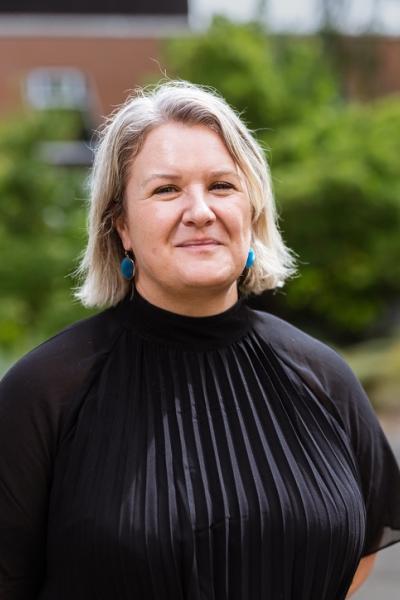
Janine O'Flynn is the Director of the Crawford School of Public Policy at the Australian National University (ANU) since 2023. Previously, she held the position of Professor of Public Management at the University of Melbourne and served as a visiting professor at institutions like City University Hong Kong and Fudan University. Her research focuses on public management reform, governance relationships, and ethical policy-making. Notable contributions include work on public value creation, performance management systems, and positive public administration. She has authored over 75 publications, including Pathways to Positive Public Administration (2024) and co-edited the Research Handbook on Public Management and COVID-19 (2024). O'Flynn has received prestigious awards such as the National Academy of Public Administration Fellowship (2022) and the Best Book Award at the Academy of Management (2013). She actively advises governments globally and chairs research committees for organizations like the Centre for Public Impact. Education: PhD (Melbourne), Bachelor of Commerce (Hons., Melbourne). Key Roles: Editorial Board Member: Public Administration , Public Management Review , and others Board of Directors, Public Management Research Association Advisory Board, Victorian Public Sector Commission Research Focus: Public sector reform, governance ethics, policy complexity, and agile government frameworks.
Alexis Peri is an Associate Professor of History at Boston University, specializing in modern Russian and Soviet history, with a focus on war, gender, and private life. Her work bridges cultural history, environmental history, and transnational studies. She holds a B.A., M.A., and Ph.D. from the University of California, Berkeley. Her research explores Soviet beauty pageants, US-Soviet women’s correspondence, and environmental dimensions of the Crimean War (co-authored with Catherine Ashcraft). Major publications include The War Within: Diaries from the Siege of Leningrad (2017) and Dear Unknown Friend: the Remarkable Correspondence between American and Soviet Women (2024). Dr. Peri has received the 2018 Pushkin House Book Prize, 2019 Gitner Teaching Prize, and 2024 Metcalf Award. Her research has been supported by the Fulbright Program, Kennan Institute, and others. She teaches undergraduate courses on Russian/Soviet history and directs multiple collaborative research projects.
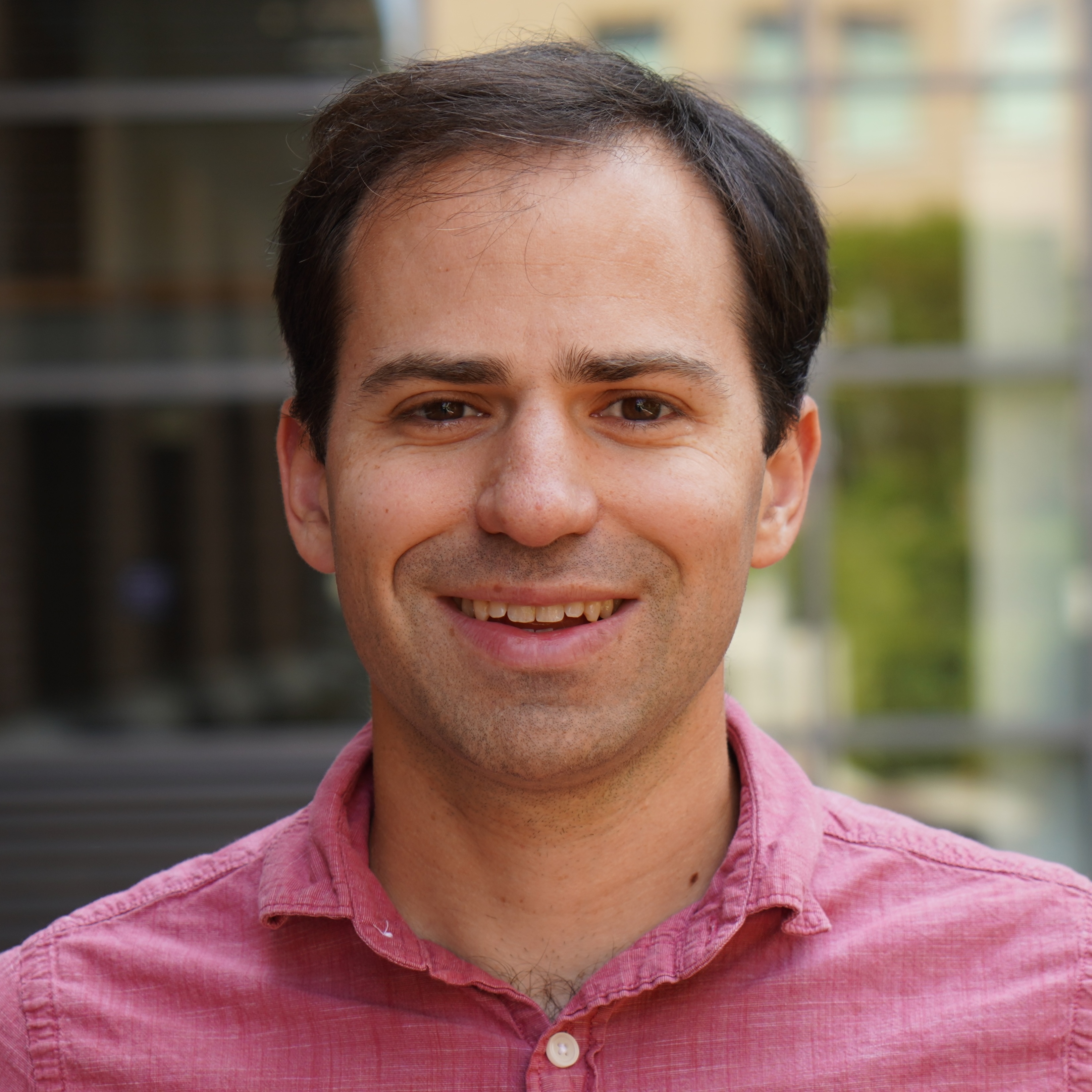
Stefano Ermon is an Associate Professor in the Department of Computer Science at Stanford University, affiliated with the Artificial Intelligence Laboratory and a Senior Fellow at the Woods Institute for the Environment. His research focuses on advancing machine learning and generative AI techniques to address societal and environmental challenges, including computational sustainability, geospatial analysis, and climate science. He holds a Ph.D. from Cornell University (2015). Education: Ph.D. in Computer Science, Cornell University (2015). Research Interests: Ermon’s work bridges foundational machine learning (e.g., diffusion models, generative AI, and optimization) with applications in sustainability, geospatial analysis (via satellite imagery), and earth observation systems. Notable contributions include predicting poverty using satellite data and developing scalable methods for molecule generation. Articles Trends: His recent work emphasizes diffusion models for generative tasks (e.g., text-to-image, molecule design), geospatial AI (e.g., environmental monitoring), and ethical AI (e.g., bias mitigation in LLMs). He also explores applications in robotics and scientific computing. Awards: He has received prestigious awards, including the ICML 2024 Best Paper Award, Sloan Research Fellowship, Microsoft Research Faculty Fellowship, and the IJCAI Computers and Thought Award. Advising and Grants: Ermon teaches courses like Probabilistic Graphical Models (CS228) and has secured grants from NSF, ONR, AFOSR, and private foundations. His lab develops tools for climate science and sustainable development. Labs/Teams: Leads the Stanford AI Lab group focused on computational sustainability and generative AI, collaborating with institutions like the Woods Institute for environmental applications.
Matthew Potolsky is Professor of English at the University of Utah, specializing in nineteenth-century literature and literary theory. His career spans from 1998 Lecturer at Harvard University to current University Professorship. He earned a BA in Comparative Literature and Philosophy (1990), followed by MA and PhD in Comparative Literature (1992, 1997) from UC Irvine. Chair of English Department (2013-2016) University Professor (2014-2016) Research focuses on Decadence , Mimesis , Finance-Aesthetics intersections , and Government Secrecy . His work traces connections between financialization and decadent aesthetics, revealing how economic cycles influence artistic production. Key themes include: Decadent anti-realist literary movements Finance capital's cultural impact Decadent counterpublic formations Victorian aesthetic education debates Sublime aesthetics in national security Cosmopolitanism in literary communities Recent publications analyze: Decadent style as financialization rhetoric Reintroduction of verisimilitude theory Decadent responses to financial crises Mimetic labor in artistic production Decadent cosmopolitan counterpublics Historical parallels between financialization and literary decadence
Abhishek Jain is an Associate Professor in the Department of Computer Science at Johns Hopkins University and a Senior Scientist at NTT Research. He is affiliated with the Data Science and AI Institute, the Information Security Institute, and the Algorithms and Complexity group. University: Johns Hopkins University Department: Computer Science Academic Rank: Associate Professor Institutional Roles: Co-director of the Advanced Research in Cryptography group, member of the Theory Group, and co-leader of the Cryptography Group Education: Ph.D. in Computer Science from the University of California Los Angeles (2012), advised by Amit Sahai and Rafail Ostrovsky. Recipient of the Symantec Outstanding Graduate Student Award during his Ph.D. Research Interests Cryptography Secure computation Proof systems Program obfuscation Privacy Blockchain Theoretical computer science Research Trends: His recent publications emphasize cryptographic protocols for homomorphic encryption, zero-knowledge proofs, and secure multi-party computation, alongside applications in blockchain and privacy-preserving systems. Key themes include scalability, verifiable evaluation, and adapting cryptographic techniques to dynamic and distributed environments. Scientific Awards 2020 NSF CAREER Award Best Paper Awards at Eurocrypt and the International Conference on the Theory and Applications of Cryptographic Techniques Advising & Grants: Mentors Ph.D. students and interns/postdocs at NTT Research. Research funded by NSF, DARPA, JP Morgan, Ethereum Foundation, Stellar, Cisco, Samsung, and JHU Catalyst awards. Labs & Teams: Co-leads the Cryptography Group at Johns Hopkins, participates in the DC Area Crypto Day, and organizes the weekly Theory Seminar. Collaborates with institutions including MIT CSAIL, BUSEC, and Microsoft Research New England.
Fanny Yang is an Assistant Professor in the Computer Science Department at ETH Zurich . She previously held postdoctoral positions at Stanford University and a Junior Fellowship at the Institute for Theoretical Studies at ETH Zurich, advised by Nicolai Meinshausen . Her PhD was completed at the EECS Department of UC Berkeley , supervised by Martin Wainwright . Research Interests : Theoretical foundations of machine learning and statistics , particularly focusing on overparameterized models and high-dimensional data . Developing trustworthy ML models with emphasis on distributional robustness , domain generalization , and interpretability . Applications in medical diagnostics and treatment effect analysis , aiming to address reliability issues in real-world domains. Recent Work Trends : 2025 Articles : Theoretical analysis of semi-supervised multi-objective learning , test-time scaling with verifiers, and foundation models for efficient randomized experiments . 2024 Articles : Studies on robust mixture learning , privacy-preserving data synthesis via optimal transport , confounding quantification in causal inference , and semi-private learning frameworks. 2023 Articles : Investigations into active vs. passive learning in high dimensions, inductive bias in noisy interpolation , and semi-supervised novelty detection using model ensembles .
Cicek Cavdar is an Associate Professor at the School of Electrical Engineering and Computer Science (EECS) at KTH Royal Institute of Technology , Sweden. She leads the Intelligent Network Systems research group and specializes in Telecommunication Networks , with a focus on Beyond 5G/6G Mobile Networks , Energy Efficiency , and AI-Assisted Network Management . PhD in Computer Science (2009) from University of California, Davis and Istanbul Technical University Her research spans Cell-Free Massive MIMO , Reconfigurable Intelligent Surfaces (RIS) , UAV Communication Systems , and Green Network Technologies . She actively contributes to 6G Network Architecture and Non-Terrestrial Networks , including satellite and aerial systems. Recent publications highlight AI-driven network optimization for handover management, energy-aware resource allocation , and multi-agent reinforcement learning in complex communication environments. She teaches advanced courses in Communication Systems , Machine Learning , and Software Engineering at KTH.
Geoffrey S. Mearns serves as the 17th President of Ball State University since May 2017. He is recognized for advancing institutional goals through strategic initiatives like Destination 2040: Our Flight Path , focusing on academic excellence, community impact, and economic development. While his role is administrative rather than research-focused, he has driven university-wide efforts in alumni engagement, fundraising, and partnerships such as the revitalization of The Village adjacent to campus and the Muncie Community Schools collaboration. Leadership: Former president of Northern Kentucky University and Cleveland State University's law school dean/provost Legal Background: Federal prosecutor involved in high-profile cases including the Oklahoma City bombing trial Educational Roots: BA in English from Yale University, JD from the University of Virginia (Order of the Coif)
Andrew Mitchell is a Professor at the Faculty of Law, Monash University, and a member of the WTO Dispute Settlement Panelists Indicative List. He has extensive legal practice experience with Allens Arthur Robinson and consults for governments, international organizations, and the private sector. Mitchell has taught law in Australia, Canada, Indonesia, Singapore, and the US. He holds law degrees from the University of Melbourne, Harvard Law School, and a PhD from the University of Cambridge. His research focuses on international economic law, public international law, and digital trade governance, with a particular emphasis on the intersection of trade law and public health. Mitchell has secured six major grants, including an Australian Research Council Future Fellowship, and has authored over 170 books and articles. He serves as an editor for Edward Elgar’s International Economic Law Series and multiple journal editorial boards. Recent projects include 'Safeguarding Health in International Investment Agreements' (2022–2025) 'Maritime Cooperation for a Sustainable Indo-Pacific' (2021–2022) 'Global E-Commerce and Cottage Industries in India' (2020–2021) He has contributed to policy submissions on bilateral investment treaties and delivered lectures on data sovereignty and digital trade. His awards include editorial leadership roles at journals like the Journal of World Investment and Trade and Asia Pacific Law Review .
Tomaso Aste is a Professor of Complexity Science at the Department of Computer Science, University College London (UCL). He founded the Financial Computing and Analytics group and co-founded the UCL Centre for Blockchain Technologies. His work bridges complex systems, data science, and finance, with applications in blockchain, fintech, and market modeling. Education: PhD in Physics (Politecnico di Milano, 1994); Laurea in Physics (University of Genoa, 1990) Prior Appointments: Reader at University of Kent's School of Physics; Associate Professor at Australian National University's Applied Mathematics His research focuses on data-driven modeling of complex systems , particularly financial systems, complex networks, and statistical physics. He has pioneered information filtering networks and topological machine learning methods for financial applications, including portfolio optimization, risk assessment, and cryptocurrency analysis. Recent publications highlight his expertise in financial time-series analysis, blockchain technology, and AI-driven modeling. Articles explore topics like limit order books, cryptocurrency market fragility, and topological neural networks. His work has influenced regulatory technology (RegTech) frameworks and digital economy strategies. Scientific Awards : Marie Curie Individual Fellowship University of Genoa graduate study specialization Fellowship Bacheflor Boncompagni-Ludovisi Foundation Fellowship Awarded fellowships from European Commission and academic foundations support his interdisciplinary research. He has held editorial roles at journals like Philosophical Magazine and Granular Matter , and contributed to professional societies including American Physical Society and Australian Research Council panels. Teaching & Academic Leadership : Co-created four UCL Master's programs: Financial Risk Management, Computational Finance, Financial Technologies, Emerging Digital Technologies Coordinates executive training on AI, blockchain, fintech, and regtech for regulators and private firms Teaches graduate-level courses in Data-Driven Modeling, Data Science, and Advanced AI
Daniel Epstein is an Associate Professor in the Department of Informatics at the University of California, Irvine (UCI), where he leads the Personal Informatics Everyday (PIE) Lab. He holds a courtesy appointment in the Department of Computer Science and is affiliated with the Connected Learning Lab, Institute for Future Health, and Accessibility Research Collective. Epstein earned his Ph.D. in Computer Science & Engineering from the University of Washington and a B.S. in Computer Science from the University of Virginia. His research focuses on how personal tracking technology can better serve diverse users' needs, emphasizing ethical design, health equity, and long-term user engagement. Notable areas include pregnancy tracking, wearable technology for children and ADHD management, and AI-driven health chatbots. Epstein has received grants from NSF, Snap Inc., and UCI programs, totaling over $650k in funding. Epstein's work bridges HCI and health informatics, with over 60 peer-reviewed publications. He advises six Ph.D. students and has mentored numerous undergraduates. Awards include the ACM Senior Member distinction (2025), CHI Best Paper (2023), and NSF CAREER Award (2023). Professional service includes program committees for CHI, CSCW, and UbiComp, plus leadership roles in workshops like the Workgroup on Interactive Systems in Healthcare (WISH). Beyond academia, Epstein enjoys hiking, collecting turtle figures, and advocating for accessible technology.
Rhonda Goldman is a Full Professor in the Clinical Psychology Department at The Chicago School of Professional Psychology in Chicago, Illinois. She is a licensed Clinical Psychologist in Illinois and runs her private practice, Emotion-focused Therapy, Chicago, where she sees both couples and individuals. Dr. Goldman is a founding board member of the International Society of Emotion-focused Therapy and serves as President of the Emotion-focused Therapy Institute. Dr. Goldman earned her academic credentials from York University in Toronto, Ontario, Canada, receiving her Bachelor of Arts in 1987, Master of Arts in 1991, and Doctor of Philosophy in Clinical Psychology in 1997. She taught at the Illinois School of Professional Psychology for 22 years before transitioning to her current position at The Chicago School of Professional Psychology following the closure of the Illinois School. Dr. Goldman is a leading expert in Emotion-Focused Therapy (EFT), a therapeutic approach that integrates elements of client-centered therapy, Gestalt therapy, and modern emotion theory. Her research focuses on EFT for couples, emotional processes, empathy, vulnerability, depression, case formulation, and self-soothing. She has authored six texts on EFT and two professional videos published by the American Psychological Association. Dr. Goldman teaches graduate courses in Humanistic and Experiential Psychotherapy, Psychotherapy Seminars, and Emotion-Focused Therapy, emphasizing the importance of emotional processing in therapeutic change. Dr. Goldman's publications demonstrate a consistent focus on advancing Emotion-Focused Therapy through both theoretical development and practical application. Her work spans individual therapy, couples therapy, case formulation, and therapist training, with recent emphasis on adapting EFT for online delivery. Her research shows how emotional awareness and processing serve as central mechanisms of change in psychotherapy, with applications across various clinical issues including depression and relationship distress. Dr. Goldman is actively involved in professional organizations that support the development and dissemination of Emotion-Focused Therapy. She serves as a founding board member of the International Society for Emotion-focused Therapy, past-president of the Society for the Exploration of Psychotherapy Integration, Action-Editor for the Journal of Person-centered and Experiential Psychotherapies, and member of the Society for Psychotherapy Research. As an educator and clinician, Dr. Goldman has mentored numerous professionals in the field of psychotherapy. She travels internationally conducting training workshops for mental health professionals in Emotion-focused therapy for Couples and Individuals across Europe, Asia, and North America. Her work bridges research and practice, emphasizing the importance of emotional processing in therapeutic change while maintaining a strong commitment to evidence-based practice. Dr. Goldman co-founded the Emotion-focused Therapy Institute (EFTI), which facilitates and fosters training and educational opportunities for psychologists and therapists interested in incorporating EFT into their professional practices. Through EFTI and her international workshops, she has created a global community of practitioners dedicated to advancing Emotion-Focused Therapy.
Sean Cao serves as Associate Professor (with tenure) at the Robert H. Smith School of Business, University of Maryland, where he is Director and Co-founder of the AI Initiative for Capital Market Research. He also holds an affiliation as professor at Harvard Business School's D 3 Institute. His academic journey began with a Ph.D. from the University of Illinois at Urbana-Champaign. Dr. Cao's research focuses on the intersection of artificial intelligence and capital markets, with particular expertise in how machine learning transforms financial analysis, corporate disclosure practices, and investment decision-making. His work examines the evolving relationship between human analysts and AI systems, blockchain applications in financial reporting, and the strategic adaptation of corporate communications for machine readership. He has pioneered research on the "AI divide" among investor groups and developed frameworks for human-AI collaborative stock analysis. His publication portfolio spans top journals including Journal of Financial Economics, Review of Financial Studies, Journal of Accounting Research, and Management Science. The research demonstrates consistent thematic progression toward increasingly sophisticated AI applications in finance, with recent work exploring distributed ledger technologies for auditing, machine learning for extracting private information from disclosures, and the economics of greenwashing in ESG funds. His studies frequently combine textual analysis with traditional financial metrics to uncover novel market insights. Fama-DFA Prize from Journal of Financial Economics for best paper in capital markets and asset pricing Michael J. Brennan Award from Review of Financial Studies Deloitte Initiative for AI and Learning award for developing trustworthy AI for social equity PanAgora Asset Management's Dr. Richard A. Crowell Memorial Prize Multiple best paper awards from Midwest Finance Association, Global AI Finance Conference, and Asian Finance Association Dr. Cao has delivered over 200 invited research talks at major institutions including the Central Bank of Japan, Central Bank of Thailand, and U.S. Securities and Exchange Commission. He serves as Guest Associate Editor for Management Science and has co-chaired Review of Financial Studies conferences on FinTech and Machine Learning. His educational initiatives include a widely adopted free AI textbook for finance and accounting that has been implemented at universities worldwide including Indiana University, UT Dallas, and University of Minnesota. As Director of the AI Initiative for Capital Market Research, Dr. Cao leads a multidisciplinary team exploring practical AI applications in finance. The initiative has secured significant funding including a $150,000 grant from GRF CPAs & Advisors. His research group maintains strong industry connections through partnerships with regulatory bodies, financial institutions, and technology companies, facilitating the translation of academic research into practical financial applications.