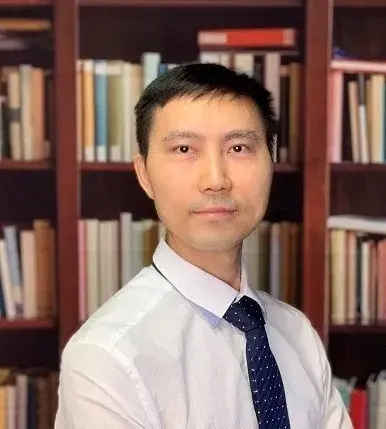
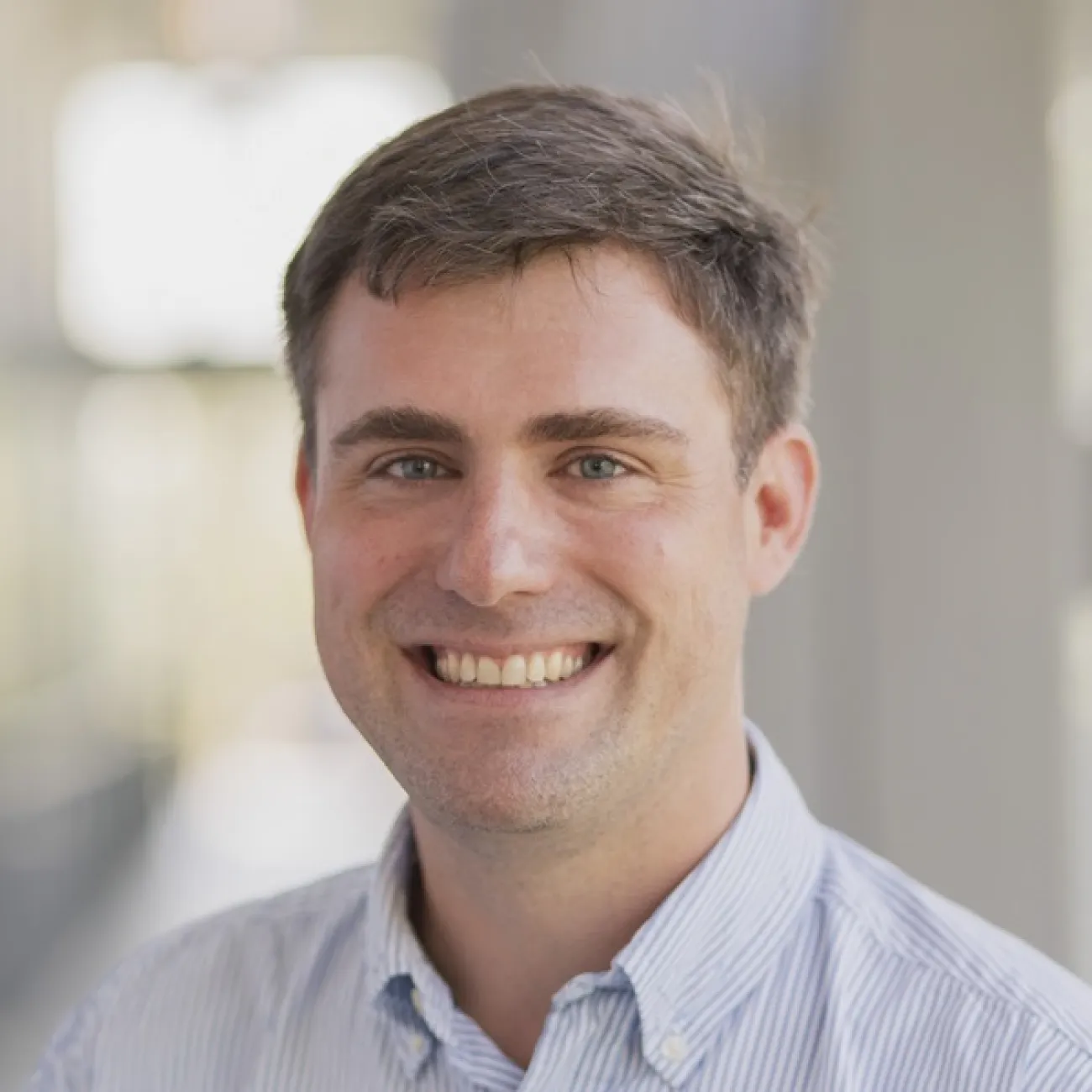
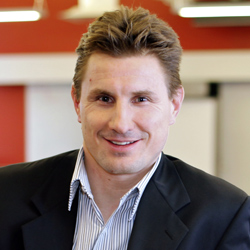
Thomas Tie Luo is a tenured Associate Professor in the Department of Electrical and Computer Engineering and holds a courtesy joint appointment in the Department of Computer Science at the University of Kentucky, affiliated with the Stanley and Karen Pigman College of Engineering. He previously served as Associate Professor at Missouri University of Science and Technology and earned his PhD in Electrical and Computer Engineering from the National University of Singapore (ranked #8 globally by QS). His research focuses on Trustworthy Artificial Intelligence with applications in medicine, healthcare, and IoT, emphasizing Explainable AI (XAI) , Robust Machine Learning , and Privacy-Preserving Federated Learning . Education: PhD, Electrical and Computer Engineering, National University of Singapore (2009) His recent work explores Time Series Anomaly Detection , Secure Federated Learning for LEO Satellite Networks , and Medical Imaging Analysis through advanced deep learning architectures and adversarial attack mitigation. His research has been recognized with Best Paper Awards at ECAI'25, PAKDD'24, and PerCom'24, as well as a Best Student Paper Award at AAIM'18. Dr. Luo actively contributes to academic service as a Senior Member of IEEE, serving on editorial boards for journals like IEEE Transactions on Services Computing and Elsevier Ad Hoc Networks . He has advised PhD students in Computer Science, Electrical Engineering, and Computer Engineering, with graduates placed at institutions such as Washington State University and ByteDance.
Fredrik Sandin is a Professor in the Department of Computer Science, Electrical and Space Engineering at Luleå University of Technology, where he leads the Machine Learning research group with approximately thirty members. His work focuses on neuromorphic technologies and the intersection of machine learning with computational physics to solve challenging real-world interaction problems. He coordinates the 'Teknisk fysik och elektroteknik' program at LTU and has been instrumental in establishing neuromorphic research activities at the university. Luleå University of Technology, Department of Computer Science, Electrical and Space Engineering Member of WASP (Wallenberg AI, Autonomous Systems and Software Program) and ELLIS (European Laboratory for Learning and Intelligent Systems) Coordinator of Neuromorphic Innovation Platform Sweden with KTH, Lund University, Uppsala University, FOI, ABB, Ericsson, and SAAB Fredrik earned his PhD in Physics from Luleå University of Technology in 2007, with thesis work focusing on dense states of matter in neutron stars. His academic journey began with an MSc diploma work in ATLAS at CERN in 2001, followed by postdoctoral research in computational physics at IFPA in Belgium (2008-2009) and brain-like computing at EISLAB with Prof. Jerker Delsing (2010-2011). Professor Sandin's research interests center around neuromorphic technologies, particularly neuromorphic computing and spiking neural networks. He investigates sensor/detector and intelligent systems co-design where constraints like energy, power, latency, and dynamic range challenge conventional digital approaches. His work spans mixed-signal neuromorphic circuits, algorithms, and systems, as well as machine learning projects involving industrial data and collaboration. He has been a key figure in establishing neuromorphic research at LTU, supported by The Kempe Foundations, particularly through the 2014 Gunnar Öquist Fellowship. His recent publications demonstrate a strong interdisciplinary focus spanning quantum phase transitions, particle physics detector optimization, renewable energy materials, and the integration of large language models into control systems. This diverse portfolio reflects his approach connecting machine learning with fundamental physics and practical engineering applications, particularly in neuromorphic computing and intelligent systems design, with emphasis on solving real-world problems through co-design of hardware and algorithms. Gunnar Öquist Fellowship Award and 3 MSEK grant from The Kempe Foundations ISSP award for an Original Work in Theoretical Physics (signed by Prof. 't Hooft and Prof. Zichichi) New-Talents award for original work in theoretical physics at the International School of Subnuclear Physics in Erice Professor Sandin has supervised numerous PhD students working on topics ranging from neuromorphic TinyML to materials for neuromorphic computing, privacy-preserving machine learning at the edge, and intelligent fault diagnosis. He has secured substantial research funding from various sources including Vinnova, ÅForsk, Kempe Foundations, WASP-WISE, and EU programs like ECSEL JU Arrowhead Tools and ITEA3 AutoDC. His current major projects include the Neuromorphic Innovation Platform Sweden and several initiatives focused on neuromorphic condition monitoring and computing, with total funding exceeding 30 MSEK in the past five years. He leads the Machine Learning group at LTU, which collaborates extensively with industry partners including ABB, Ericsson, SAAB, SKF, and RISE. The group is active in developing neuromorphic technologies for wireless sensor networks, condition monitoring systems, and next-generation intelligent systems that address energy, power, and latency constraints that challenge conventional digital approaches.
Dr. Mohammad Saidur Rahman is a Lecturer in Computing Technologies at RMIT University's School of Computing Technologies. His research focuses on Data Security and Privacy, Blockchain, IoT, and Machine Learning. He joined RMIT as a Lecturer in July 2023 and previously held a Postdoctoral Research Fellow position from January 2020 to August 2022. His academic work includes supervising projects such as Advanced Automotive Intrusion Detection and Prevention Systems and Privacy-Preserving Models in Edge-Cloud Interplay for Smart Systems . He teaches courses like Introduction to Cyber Security (INTE2625) and Computer and Internet Forensics (COSC 2301). His research emphasizes secure IoT integration, blockchain applications in supply chain and healthcare, and privacy-preserving machine learning frameworks. Rahman has published extensively on blockchain-based systems for smart cities, edge computing, and industrial IoT security. His contributions span technical innovations in consensus protocols, federated learning frameworks, and data integrity models. He is open to supervising Masters and PhD students in Cyber Security, IoT, and Blockchain domains.
Jamal Atif is a Professor at Paris-Dauphine University and holds multiple significant leadership positions including Project Manager for 'Data Science and Artificial Intelligence' at the Institute of Information Sciences and their Interactions (INS2I) of the CNRS, Deputy Scientific Director of 3IA PRAIRIE, Head of the MILES team/project at LAMSADE (UMR CNRS-Université Paris-Dauphine), Co-leader of the Transverse Artificial Intelligence Program at PSL University, and Director of the Dauphine Numérique program. Professor Atif's primary research focuses on the foundations of responsible artificial intelligence, with specific expertise in privacy preservation in machine learning, robustness of deep learning algorithms to malicious attacks, causality, and explainability. His work bridges theoretical foundations with practical applications in security and reliability of AI systems. He has developed innovative approaches to address adversarial vulnerabilities in machine learning models and has made significant contributions to privacy-preserving techniques in data analysis. His publication record demonstrates a consistent focus on robust and trustworthy AI systems, with recent work exploring differential privacy in clustering, adversarial robustness, and explainable AI. The research spans theoretical foundations in logic and knowledge representation to practical applications in finance, healthcare, and computer vision. His publications appear in top-tier venues including Machine Learning journal, Neural Information Processing Systems, and International Joint Conferences on Artificial Intelligence. Scientific Awards: Recipient of two awards from the North American Society of Radiology for his thesis work Professor Atif has co-supervised or is currently supervising around fifteen doctoral students, demonstrating his commitment to mentoring the next generation of AI researchers. His leadership extends to directing major institutional programs including Dauphine Numérique and the Transverse Artificial Intelligence Program at PSL University, where he shapes strategic research directions in AI. He leads the MILES team/project at LAMSADE, which focuses on foundational aspects of machine learning and artificial intelligence. The team's research spans theoretical aspects of learning algorithms to practical applications requiring robust and reliable AI systems, with particular emphasis on security and privacy considerations in modern machine learning deployments.
Professor Sebastian Stein is a faculty member in the Electronics and Computer Science department at the University of Southampton, specializing in artificial intelligence and multi-agent systems. He holds a PhD from the University of Southampton (2008) and an MEng in Computer Science from the University of Warwick. His research focuses on citizen-centric AI, mechanism design, and applications in smart energy, transportation, and disaster response. He leads or collaborates on projects such as the EPSRC-funded 'Citizen-Centric Artificial Intelligence Systems' and 'Future Electric Vehicle Energy networks supporting Renewables (FEVER)'. Education: PhD in Multi-Agent Systems (University of Southampton, 2008), MEng Computer Science (University of Warwick) Research Groups: Agents, Interaction and Complexity research group His work emphasizes incentive engineering in dynamic systems, sequential decision-making under uncertainty, and societal challenges like smart mobility and electric vehicle infrastructure. Key awards include the Blue Sky Ideas Award (AAMAS-2021) and Best Demonstration Award (AAMAS 2025). He currently supervises multiple PhD students in computer science and engineering.
Dr. Selçuk Uluağaç is an Eminent Scholar Chaired Associate Professor at Florida International University (FIU), leading the Cyber-Physical Systems Security Lab. He holds a courtesy appointment in the Knight Foundation School of Computing and Information Science. Previously, he worked at Georgia Tech and Symantec, with degrees from Georgia Tech (PhD) and Carnegie Mellon University (MS). His research focuses on cybersecurity, privacy, and IoT/CPS systems, funded by NSF, DOE, and industry partners exceeding $18M. He has authored hundreds of publications, secured 17 patents (one licensed), and serves on editorial boards of IEEE journals. Education: PhD in Electrical and Computer Engineering, Georgia Institute of Technology (200X); MS in Computer Science, Carnegie Mellon University (200X). Research Interests: Developing security frameworks for IoT devices, privacy-preserving techniques, machine learning for cybersecurity, and CPS threat mitigation. Notable projects include sensory channel threat analysis, IoT fingerprinting, encrypted traffic privacy leakage detection, wearable-based authentication, and cryptomining activity detection. Awards: Recognized with prestigious NSF CAREER Award and multiple institutional awards for research and teaching excellence. Active in professional service, including conference chairs (ACM WiSec 2019, IEEE CNS 2022 TPC Chair) and NIST panels. Grants & Funding: Over $18M from NSF, DoE, US Air Force, Google, Microsoft, and Cisco. Entrepreneurial focus with patents commercialized. Labs & Teams: Directs the Cyber-Physical Systems Security Lab, collaborating on applied security solutions. Media-featured research highlights societal cybersecurity impacts.
Dr. Kathleen Curtius is an Assistant Professor in the Department of Medicine at the University of California San Diego (UCSD), affiliated with the Division of Biomedical Informatics and the UCSD Moores Cancer Center. She leads the Quantitative Cancer Control laboratory, focusing on early cancer detection and prevention through mathematical modeling and multi-scale data analysis. Previously, she held a Medical Research Council Rutherford Fellowship at Barts Cancer Institute (London) and completed postdoctoral training in Prof. Trevor Graham's lab. Her research integrates applied mathematics, computational biology, and clinical oncology to address cancer evolution and screening strategies. Education: PhD in Applied Mathematics, University of Washington (2015) MS in Applied Mathematics, University of Washington (2011) BS in Mathematics, UCLA (2010) Research Interests: Mathematical oncology Cancer evolution modeling Epigenetic drift analysis Screening optimization Multiscale tumor dynamics Her work bridges disciplines to develop predictive tools for early cancer detection and personalized surveillance strategies. Publications: Recent work includes studies on metagenomic data bias (Nature Communications 2025), AI-driven cancer biomarker discovery (JCI Insight 2022), and computational models of Barrett's esophagus progression (Gut 2020). Her research emphasizes translational applications in clinical oncology and public health. Awards: Recognized with the 2024 Leah Edelstein-Keshet Prize, 2022 AGA Research Scholar Award, and 2018 MRC Rutherford Fellowship. Her work has been cited over 1,000 times across key oncology journals. Funding: Principal Investigator on NIH grants (R01CA270235, I01BX005958) supporting projects on Barrett's esophagus modeling and colitis-associated colorectal cancer surveillance optimization. Collaborates with clinicians, geneticists, and computational biologists to advance cancer control efforts. Labs/Teams: Leads the Quantitative Cancer Control Lab at UCSD, part of the Bioinformatics and Systems Biology division. Active in interdisciplinary initiatives like the Moores Cancer Center's Cancer Control Program.
Peng Hu is an Adjunct Professor at the University of Waterloo, focusing on cutting-edge research in satellite networks, 5G/6G non-terrestrial networks, and AI-driven solutions for space sustainability. His work emphasizes autonomous network management, edge computing in space, and IoT applications for industrial and healthcare systems. Research interests span satellite mega-constellations, space object detection via deep learning, and optimizing free-space optical (FSO) communication. He explores challenges in latency management, energy efficiency, and fault tolerance across heterogeneous networks, including UAV-assisted systems and industrial IoT. Key contributions include the SatAIOps framework for autonomous satellite operations and the SatNetOps multi-layer networking scheme. He has pioneered datasets like Satellite Object Detection (SOD) and developed anomaly detection methods using genetic algorithms and Monte Carlo dropout. Peng Hu’s recent work addresses global connectivity gaps via non-terrestrial networks and reviews reinforcement learning algorithms for space-air-ground integration. His technical leadership is reflected in workshops like the 5th IEEE ICC 2025 Satellite Mega-Constellations workshop.
George Shaker is an Adjunct Associate Professor in the Department of Electrical and Computer Engineering at the University of Waterloo, Canada, and Lab Director of the Wireless Sensors and Devices Laboratory at the Schlegel-UW Research Institute for Aging. He is also Chief Scientist at Spark Technology Labs. His research focuses on wireless sensor technologies for healthcare, autonomous systems, and IoT. He earned his bachelor's from Cairo University and master's/PhD from the University of Waterloo. Education: Bachelor’s degree, Cairo University, Egypt Master’s degree, University of Waterloo, Canada PhD, University of Waterloo, Canada Research Interests: Dr. Shaker’s work spans advanced wireless sensor systems for healthcare monitoring, UAVs, and automotive applications. His lab developed the MIRADA initiative for aging populations and pioneered radar-based non-invasive glucose monitoring. Key areas include mm-wave radar, antenna design, bioelectromagnetics, and machine learning integration. He has co-authored over 200 publications and holds 35+ patents, collaborating with companies like Google, Apple, and Toyota. Recent Article Trends: His 2025 work emphasizes AI-driven radar systems for activity recognition, bio-sensing metasurfaces, and UAV classification using digital twins. Projects include 4D radar imaging, low-cost milk quality monitoring, and smart furniture for cardiac health. Awards: IEEE AP-S Best Paper Award IEEE MTT-S Graduate Fellowship arXiv Top Downloaded Medical Article URSI Young Scientist Award Multiple student awards (see full list above) Advising & Grants: He advises graduate students in ECE and has led projects funded by NSERC and industry partners. His students have won Velocity Fund, NASA Tech Briefs, and Canadian Space Agency awards. Collaborates with over 40 companies including Amazon, Microsoft, and Medella Health. Labs & Initiatives: Leads the Wireless Sensors & Devices Lab and co-founded MIRADA, a smart apartment for aging healthcare. Active in Spark Labs for wireless innovation.
Leong Shu Min is a Lecturer in the School of Information Technology at Monash University Malaysia. She holds a Ph.D. in IT from Monash University Malaysia (2023), focusing on privacy-preserving and emotional understanding of human faces using machine learning. She earned her Master of Engineering Science (2020) and B.Eng. (Hons) in Electronics with Computer specialization (2018) from Multimedia University. Her research emphasizes face analysis, emotion recognition, and security-related image processing. Education Ph.D., IT, Monash University Malaysia (2019–2023) M.Eng.Sc., Multimedia University (2018–2020) B.Eng., Multimedia University (2014–2018) Research Interests Her work centers on facial recognition systems, emotion analysis, and privacy-preserving techniques. She explores Local Binary Pattern algorithms and micro-expression recognition, aiming to enhance security and ethical AI applications. Recent projects include detecting synthetic music and uncovering biases in video-based emotion recognition systems. Projects Chief Investigator in the Æinstein: Adversarial AI amongst Materials Discovery Domains project (2024–2026), focusing on AI-driven material discovery and ethical AI challenges. Advising She has been accepting PhD students since 2020, mentoring research in facial analysis and machine learning applications.
Syrielle Montariol is a Researcher and Course Lecturer at the École Polytechnique Fédérale de Lausanne (EPFL), affiliated with the Natural Language Processing Lab (NLP) under the School of Computer and Communication Sciences (IC). She holds a postdoctoral position and teaches courses related to computational linguistics and AI applications. Her research focuses on advancing NLP, medical language models, multimodal learning, and AI ethics. She works in the INR 240 office and maintains collaborations across EPFL's academic divisions. Research Interests: Her work spans interpretability of AI systems, cross-modal reasoning, medical domain adaptation, sustainability text analysis, and the societal impact of AI. Recent projects include developing explainable models (e.g., global mixture-of-experts frameworks) and benchmarking tools like Vinabench for visual narratives. Publications: Her recent work addresses critical challenges in AI, including vulnerability of higher education to LLMs, medical language model adaptation (Meditron), and robust geo-localization systems. Key themes include ethical AI, multimodal learning, and domain-specific NLP applications. Labs & Teams: She contributes to the NLP lab's initiatives on visual-language models and collaborates with interdisciplinary teams on projects like PAN-RSVQA for remote sensing and PICLe for low-resource NER systems.
Stavrakakis Ioannis is a Professor at the Department of Informatics and Telecommunications, School of Science, University of Athens, where he has served since 2002. He previously held academic positions at Northeastern University (1994-1999) and University of Vermont (1988-1994). Ph.D., Electrical Engineering (1988), University of Virginia Diploma, Electrical Engineering (1983), Aristotle University of Thessaloniki His research focuses on network resource allocation algorithms , cooperative content dissemination , mobile ad hoc networks , and privacy-aware protocols . He leads the Advanced Networking Research (ANR) Group. Recent publications highlight trends in AI-driven network optimization , edge computing for VR , drone-assisted sensor networks , and privacy in vehicular systems . Key themes include game theory applications, energy-efficient protocols, and distributed learning frameworks. Contact: ioannis@di.uoa.gr
Diego Klabjan is a Professor at Northwestern University within the Department of Industrial Engineering and Management Sciences. He serves as the Founding Director of the Master of Science in Machine Learning and Data Science Program and Director of the Center for Deep Learning. Ph.D. in Algorithms, Combinatorics, and Optimization from Georgia Institute of Technology (1999) B.S. in Applied Mathematics from University of Ljubljana (1994) His research focuses on machine learning, deep learning, and analytics with applications in finance, transportation, sports, and bioinformatics. Key contributions include federated learning algorithms, reinforcement learning for cryptocurrency trading, and neural network applications in impact mechanics. Recent publications highlight advancements in blockchain-based federated learning, second-order policy gradient convergence, and ensemble deep reinforcement learning. His work bridges theoretical foundations with industrial applications across diverse sectors. Preseren’s Award for the Best Undergraduate Thesis (1994) Transportation Science Section Dissertation Prize (2000) Intel's Outstanding Researcher Award (2019) Jack Meredith Best Paper Honorable Mention (2022) Klabjan has advised notable students including Luis Guimarães (2015 APDIO/IO Award winner) and Young Woong Park (2015 INFORMS Computing Society Best Student Paper recipient). His collaborations span Fortune 500 companies and startups in analytics-driven domains.
János Kertész is a Professor at the Department of Network and Data Science at Central European University (CEU) since 2012, and previously held the position of Professor at the Budapest University of Technology and Economics (1992–2018). He obtained his PhD in Physics from Eötvös University (1980) and DSc from the Hungarian Academy of Sciences (1989). His research spans statistical physics applications, complex networks, and financial analysis. He has authored over 280 papers and served on editorial boards of journals like Journal of Physics A and Physical Review E . His research focuses on interdisciplinary topics including social network dynamics, systemic risk in economic systems, and algorithmic bias in digital environments. Notable awards include the Széchenyi Prize (Hungary’s highest scientific honor) and the Finland Distinguished Professorship. He has led projects such as SAI (Socially Explainable AI) and HUMANE-AI-NET, addressing algorithmic bias and AI ethics. His work bridges physics-based modeling with real-world social and economic systems, emphasizing computational approaches to corruption, opinion formation, and innovation diffusion. Key contributions include modeling cascading failures in interdependent networks and analyzing attention dynamics on platforms like Sina Weibo during the pandemic. He advises on systemic risk mitigation strategies and collaborates internationally, with visiting roles in Germany, the U.S., France, Italy, and Finland.
Dr ASM Kayes serves as Senior Lecturer in Cybersecurity and Cyber Curriculum Lead at La Trobe University's Department of Computer Science and Information Technology, where he shapes cybersecurity education programs including Master's, Bachelor's, and Double Degrees. His academic journey began with a PhD from Swinburne University of Technology in 2015, followed by postdoctoral research at La Trobe before joining as Lecturer in 2019 and promotion to Senior Lecturer in 2022. His research spans critical cybersecurity domains including data security, privacy preservation, context-aware access control, malware/ransomware defense, and IoT/fog/cloud security leveraging AI/ML techniques. Dr Kayes has established himself as a leading voice in blockchain security frameworks, privacy policy analysis, and cyber incident response through publications in top-tier venues like ACM Computing Surveys, IEEE Internet of Things Journal, and Computers & Security. His recent publications reveal a strong trajectory toward integrating AI with traditional security frameworks, particularly in blockchain risk assessment (2025), cross-domain access control (2025), and IoT behavior prediction (2024). The research demonstrates consistent focus on practical security solutions addressing ransomware mitigation, privacy breaches, and emerging threats in decentralized systems. Over $880,000 secured as Chief Investigator for cybersecurity projects Australian Government Department of Social Services grant (2023-2026) for cyberbullying prevention AustCyber research funds with industry partners (2020-2023) SmartSat CRC and ASCRIN PhD scholarship grants (2021) Dr Kayes has successfully supervised 5 PhD candidates to completion and currently mentors 5 doctoral students across diverse topics including AI-driven threat hunting, satellite network security, and blockchain risk frameworks. His collaborative network spans UK, USA, Europe, and Asia, with active industry partnerships through Westpac, BHP, and Quantum Victoria. He serves on editorial boards for leading cybersecurity journals and has examined HDR dissertations globally, reflecting his significant standing in the academic community.