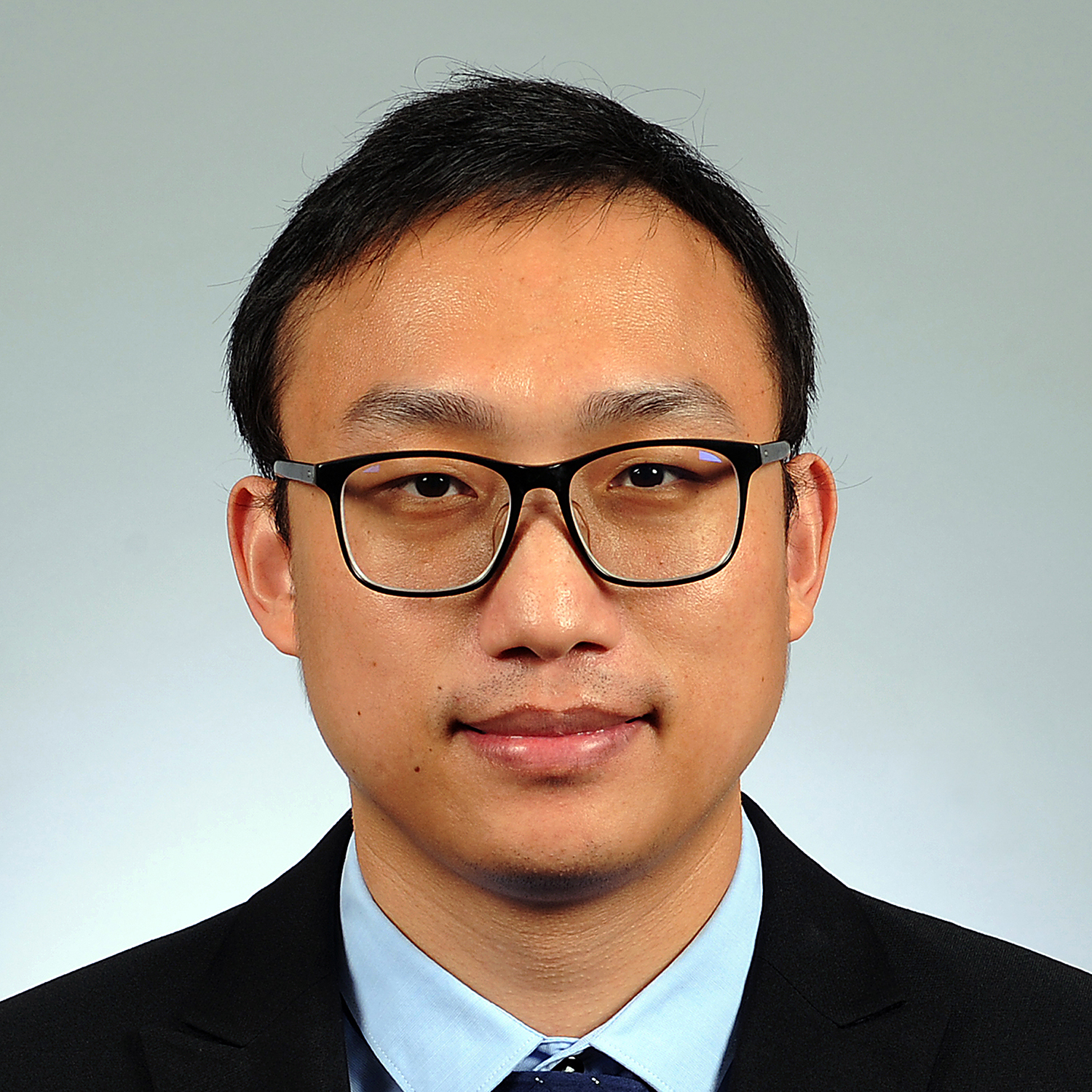
Dr. Michael Zimmer is a Professor and Vice Chair in the Department of Computer Science at Marquette University and Director of the Center for Data, Ethics, and Society. His work focuses on privacy, data ethics, and the societal impacts of digital technologies. He holds a PhD in Media, Culture, and Communication from New York University, with a specialization in Gender Studies. Zimmer has held academic appointments at Marquette since 2019, previously serving at the University of Wisconsin-Milwaukee (2014–2019) and Yale Law School as an affiliated fellow. His research explores privacy challenges in smart technologies, healthcare AI, and pandemic surveillance. He teaches courses like Data Ethics and Social Implications of Data. Zimmer has led over $4M in grants, including NSF projects on pervasive data ethics and privacy negotiation in smart environments. His awards include the Way Klingler Fellowship (2025–2027) and recognition as a '10 People to Know in Technology' (2022). Zimmer’s publications span privacy in wearable tech, algorithmic bias, and cross-cultural data attitudes. He advises global initiatives like the Royal Melbourne Institute of Technology’s Society 5.0 Ethics Initiative and serves on editorial boards for journals like ACM Journal for Responsible Computing. His work bridges academia, policy, and industry to advance ethical tech practices.
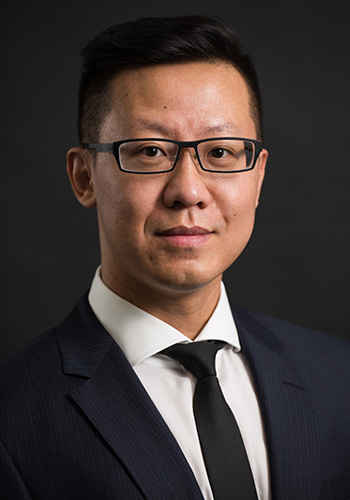
Shin'ichiro Matsuo is a Research Professor of Computer Science at Georgetown University specializing in blockchain security and cryptography. He co-directs the CyberSMART research center, leading multidisciplinary research in technology, economy, law, and regulation. Matsuo serves as co-chair of Blockchain Governance Initiative Network (BGIN) and founded BSafe.network, an international research test network for blockchain technology with 27 participating universities. His academic contributions include leadership in ISO TC307 security standardization and previous roles as head of Japanese national body for cryptographic techniques. Research Interests: Blockchain governance and security Cryptographic protocols and applications Privacy-enhancing digital trust systems Smart contract mechanisms Digital currency interoperability Awards & Recognition: Program Chair for IEEE ICBC 2022 and Scaling Bitcoin 2018 Leader of ISO TC307 Blockchain Security Standardization Editorial Board Member for IEEE Transactions on Dependable and Secure Computing Professional Activities: Founder of CELLOS Consortium for cryptographic protocol security Steering Committee Member for Security Standardization Research Technical Advisor to Japanese government on cryptographic technology
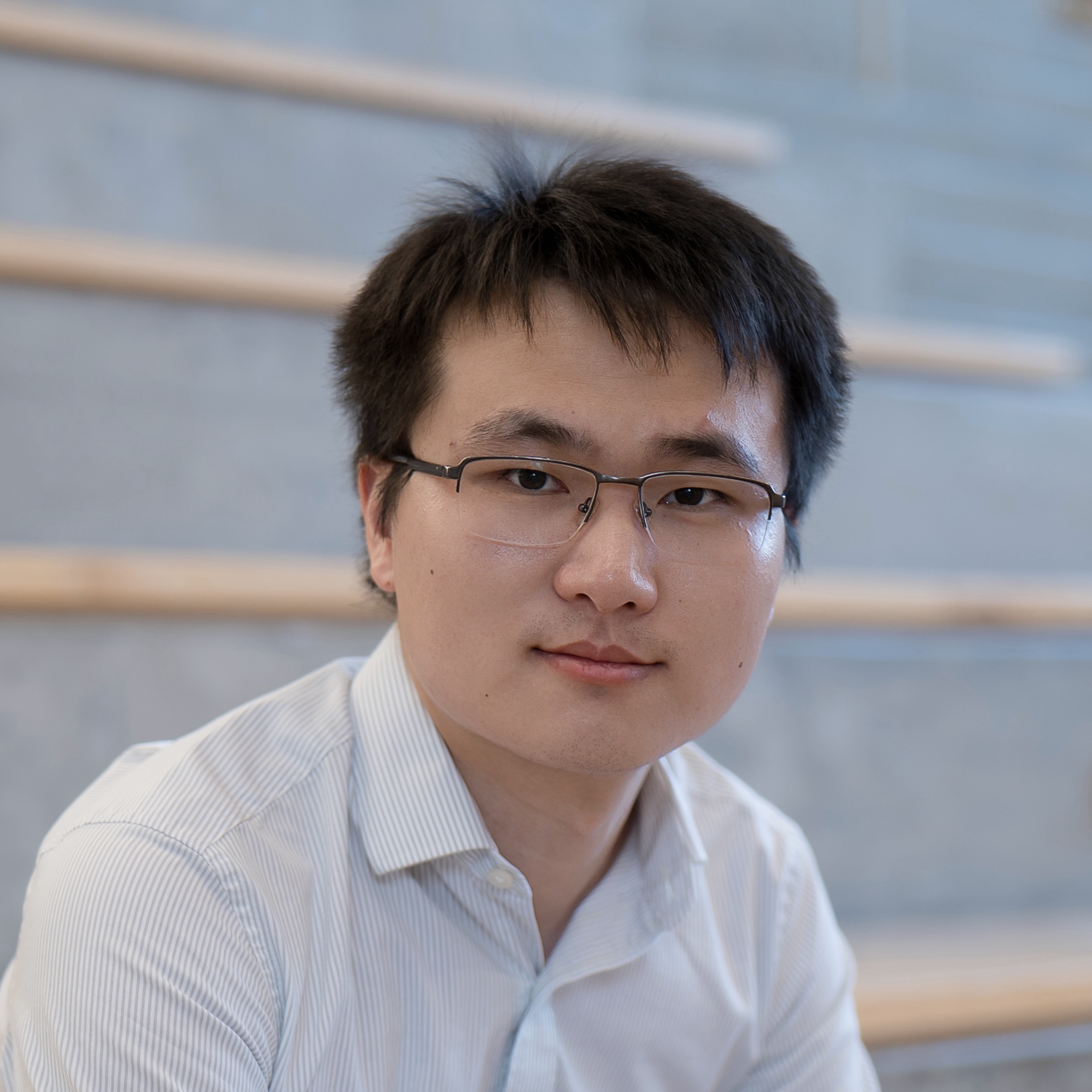
Alex Gittens is an Assistant Professor in the Department of Computer Science at Rensselaer Polytechnic Institute (RPI), joined in 2017. His research focuses on algorithmic trade-offs between computational efficiency and accuracy in large-scale linear algebra and machine learning contexts. He has expertise in kernel methods, randomized numerical linear algebra, and low-rank approximation techniques. Education: PhD in Applied and Computational Mathematics, Caltech (2013) Industry Postdoc at eBay Research Labs (2013-2015) Postdoctoral Scholar at International Institute of Computer Science (2015-2016) His research explores scalable machine learning algorithms, nonlinear and multilinear sketching applications, and sampling for low-rank tensor/matrix approximation. Current technical interests include attention mechanisms for knowledge graph completion, federated learning trade-offs, and causal inference in adversarial settings. Recent publication trends show active contributions in federated learning (privacy-fairness optimization), causal information extraction (financial text analysis), and adversarial machine learning (robustness-security trade-offs). His work emphasizes trustworthy ML systems and computational efficiency in high-dimensional data processing. Teaching includes foundational discrete mathematics (CSCI 2200) and advanced machine learning courses (CSCI 6968/4968). He offers advising through Slack channels and via email, focusing on course selection, research opportunities, and graduate school preparation.
Fan Yao is an Associate Professor in the Department of Electrical and Computer Engineering at the University of Central Florida's College of Engineering and Computer Science. She received her Ph.D. in Computer Engineering from The George Washington University in 2018 and currently leads the Computer Architecture and Systems Research (CASR) lab. Her research focuses on the intersection of computer architecture, security, and machine learning, with particular emphasis on hardware-based security vulnerabilities and defenses. Dr. Yao's research interests span computer architecture, hardware and system security, AI security, energy-efficient computing, and cloud computing. Her work addresses critical security challenges in modern computing systems, particularly focusing on microarchitecture attacks, hardware-based model tampering in deep learning systems, and information leakage threats in emerging non-volatile memory systems. She has developed innovative defense mechanisms against cache timing channels, branch predictor vulnerabilities, and GPU-based side channels. Her recent publications demonstrate a strong focus on AI security (particularly Deep Neural Network vulnerabilities), hardware security (including cache and branch predictor attacks), and secure memory architectures. The research shows an evolution from traditional computer architecture topics toward the security implications of AI hardware and emerging memory technologies, with increasing emphasis on practical attacks and defenses in real-world systems. NSF GW I-Corps Site Grant Award, 2018 Best Dissertation Award, GWU, 2018 The Norris & Betty Hekimian Engineering Endowment Fellowship, GWU, 2017 Top Picks in Hardware and Embedded Security, 2019 NSF CAREER project award, 2024 Dr. Yao currently leads multiple NSF-funded research projects including 'Understanding and Taming Deterministic Model Bit Flip Attacks in Deep Neural Networks' (NSF SaTC, 2020-2023), 'Towards Secure-By-Design Integration of Emerging Non-Volatile Memory in Future System' (NSF CNS, 2020-2023), and 'Architecting Secure-by-Design Memristor-Based Memories' (NSF CNS, 2019-2022). She has successfully mentored numerous PhD students, many of whom appear as first authors on top-tier conference publications, demonstrating her commitment to graduate education and research mentorship. As the leader of the CASR lab, Dr. Yao oversees a vibrant research group focused on building secure-by-design, efficient, and advanced future systems through novel techniques spanning hardware, computer architecture, and systems. The lab actively publishes at top computer architecture and security conferences including ISCA, MICRO, HPCA, IEEE S&P, and USENIX Security, with multiple papers accepted to these venues annually. The group has developed several influential tools and frameworks for security analysis, including proof-of-concept code for BranchSpec exploits that has been widely cited in the hardware security community.
Professor Wei Shi is a faculty member at the School of Computer Science, Carleton University. His research focuses on distributed computing, cloud networks, algorithm design for sensor/actuator systems, big data analytics, and data privacy. Notable projects include federated learning optimizations, blockchain-enabled edge intelligence for IoT/vehicle networks, and AI-driven cybersecurity solutions. His work addresses challenges in dynamic resource allocation, anomaly detection, and privacy-preserving techniques. Research Interests: Distributed Computing: Optimizing federated learning and client selection algorithms for wireless networks. Blockchain & Edge Intelligence: Developing decentralized systems for IoT and vehicular networks using AI large models. Security & Privacy: Innovating methods to detect AI-generated content, combat cyber-physical attacks, and protect user data privacy. Publications: Recent works emphasize federated learning applications, blockchain integration with edge computing, and cybersecurity for vehicular/IoT ecosystems. Key themes include energy-efficient algorithms, dynamic resource allocation, and intrusion detection in constrained environments. Email: wei.shi@carleton.ca
Dr. Miao Pan is an Associate Professor in the Department of Electrical and Computer Engineering at the Cullen College of Engineering, University of Houston. He directs the PAN Lab (panlab.ece.uh.edu) focusing on wireless networking, security, and IoT applications. His educational background includes a B.S. in Electrical Engineering from Dalian University of Technology (2004), M.S. from Beijing University of Posts and Telecommunications (2007), and Ph.D. from the University of Florida (2012). Dr. Pan's research spans privacy-preserving deep learning, wireless networking, machine learning applications in communications, underwater systems, and cognitive radio networks. His interdisciplinary approach combines theoretical foundations with practical implementations in emerging technologies. Recent publications demonstrate strong focus on federated learning optimizations, wireless sensing innovations, and security mechanisms for next-generation systems. Key trends include energy-efficient mobile AI, robust authentication methods, and adaptive underwater networking solutions. Honors include: NSF CAREER Award (2014) 5 IEEE Best Paper Awards (2015-2019) University of Florida Graduate Fellowship (2007) He leads multiple federally funded projects and advises graduate researchers in wireless systems and security. The PAN Lab collaborates with industry partners to translate research into practical solutions for IoT and 5G/6G networks.
Dr. Muhammad Intizar Ali is an Assistant Professor in the School of Electronic Engineering at Dublin City University (DCU). He holds a PhD (with distinction) from Vienna University of Technology, Austria (2011) and has held roles including Adjunct Lecturer and Research Fellow at the Insight Centre for Data Analytics, NUI Galway. His primary research focuses on IoT, Data Analytics, Machine Learning, and Knowledge Graphs with applications in Smart Cities, Manufacturing, Farming, and Healthcare. Education: PhD in Computer Science, Vienna University of Technology (2007-2011) Research Interests: IoT and Edge Analytics Federated and Distributed Machine Learning Semantic Web and Knowledge Graphs Smart Manufacturing and Industry 4.0 Stream Processing and Real-Time Systems Recent Work Trends: His publications emphasize federated learning frameworks, IoT-enabled adaptive intelligence, and knowledge graph applications in industrial contexts. Recent projects include digital twin systems for predictive maintenance and ontology-driven manufacturing solutions. Grants & Projects: Lead Investigator in SFI-funded projects like MultiRoof (2025-2029) and Neuro-Symbolic AI for Building Management EU/Industry collaborations including Terrain-AI and Bentley-funded initiatives Labs & Teams: Active in DCU's Data Analysis and Machine Learning research groups, leading projects like Smart DCU Digital Twin for campus optimization.
Dr. Xiao Li is an Assistant Professor in the Department of Computer Science and Engineering at Santa Clara University, School of Engineering. His research focuses on blockchain technology applications in distributed systems (Edge Computing, IoT, Federated Learning), machine learning, and privacy-preserving frameworks. He has a Ph.D. in Computer Science from The University of Texas at Dallas (2024) and was awarded the Jan P. Van der Ziel Engineering Fellowship there. Education: Ph.D. in Computer Science, The University of Texas at Dallas, 2024 Research interests include: Blockchain architecture optimization in resource-constrained environments Machine learning model development for cryptocurrency analysis Cybersecurity disclosure sentiment analysis using unsupervised techniques Low-resource data challenges in psychiatric clinics Professional activities: Program Committee Member, IEEE International Workshop on Blockchain and Smart Contracts (IEEE BSC 2024) Recruitment of PhD/Master’s students specializing in blockchain, distributed machine learning, and edge computing Office Location: Bergin 206 Office Hours: Mon/Wed 4pm-5pm (Winter 2025)
Prof. Catherine De Wolf is an Assistant Professor at ETH Zurich's Department of Civil, Environmental and Geomatic Engineering and Deputy Head of the Institute of Construction and Infrastructure Management. She leads the Chair of Circular Engineering for Architecture (CEA), an interdisciplinary lab focused on automating building material reuse through digital innovation. Her work bridges academia, government, and industry, exemplified by partnerships with institutions like the Centre Pompidou and initiatives like Anku and the Digital Circular Economy (DiCE) Lab. She is also a faculty member at ETH Zurich's AI Center and collaborates with EMPA's Urban Energy Systems Lab. Her roles include Chair of the Design++ Advisory Board and PI in the National Centre of Competence in Research on Digital Fabrication (DFAB). Education: Catherine holds a PhD in Building Technology from MIT, with prior studies in Civil Engineering and Architecture at VUB and ULB. She has additional training in documentary filmmaking and postdoctoral research at the University of Cambridge and EPFL's Structural Xploration Lab, funded by Marie Sklodowska-Curie and Swiss Excellence scholarships. Research Interests: Her work centers on digital tools for circular construction, including blockchain-based material passports, AI-driven design, and automated deconstruction planning. Key areas include: Material reuse and lifecycle analysis Building Information Modeling (BIM) applications Decentralized data networks in construction Carbon reduction in structural systems Interdisciplinary collaboration across engineering, architecture, and computer science Awards: Marie Sklodowska-Curie Postdoctoral Fellowship (European Commission) Swiss Excellence Scholarship Advising & Grants: Catherine has overseen projects funded by EU initiatives and industry partnerships. Her research group actively collaborates with firms like Arup and Thornton Tomasetti through initiatives such as the Structural Engineers 2050 Commitment. She advises on policy frameworks like the EU's Level(s) sustainability standard. Labs & Teams: Her CEA lab operates with 20+ researchers and has pioneered tools like the '5D Digital Circular Workflow.' The lab's work is showcased in real-world projects such as the Centre Pompidou material reuse case study.
Dr Miao Xu is a Research Fellow at the University of Queensland (UQ), affiliated with the School of Electrical Engineering and Computer Science within the Faculty of Engineering, Architecture and Information Technology. She holds an Australian Research Council DECRA Fellowship (ARC DECRA), recognizing her early-career research excellence. Her research focuses on machine learning, data science, and time series analysis, with applications in healthcare, materials science, and algorithmic fairness. Dr Xu's work addresses challenges in noisy label handling, unlearning mechanisms, and adaptive modeling for irregular data. Education: She earned a Doctor of Philosophy (PhD) from Nanjing University. She is actively involved in supervising research and contributes to the Centre for Enterprise AI at UQ. Research Interests: Dr Xu’s expertise spans machine learning , time series analysis , deep learning , and unsupervised learning . Her recent work emphasizes robust learning with noisy or incomplete labels, model unlearning, and applications in alloy design and medical informatics. She explores methods like instance-attention GNNs for irregular time series and confidence-guided techniques for adversarial attack detection. Publications: Her recent work includes advancements in GNN-based time series modeling, bias mitigation in text classification, and active learning for alloy design. Key themes include improving generalization, reducing algorithmic bias, and enhancing model transparency. Awards: Her ARC DECRA fellowship (202X–202X) supports her research on data-driven methodologies. Supervision & Grants: Available for PhD supervision in machine learning and data science. Her grants include funding for projects in unlearning mechanisms and spatiotemporal modeling. Labs/Teams: Affiliated with the Centre for Enterprise AI at UQ, collaborating on enterprise-scale AI applications and interdisciplinary research.
Dr. Luc Rocher is a UKRI Future Leaders Fellow and Senior Research Fellow at the Oxford Internet Institute (OII), University of Oxford. They are also affiliated with Kellogg College and Imperial College London’s Data Science Institute. Their work focuses on algorithmic accountability, privacy-enhancing technologies, and the societal impacts of AI. Rocher leads the Synthetic Society Lab, investigating how to make technology accountable to the public, and the Observatory of Anonymity, an international tool assessing re-identification risks. Their research bridges technical and social science approaches, including statistical modeling, adversarial machine learning, and interactive tools. Education: PhD from Université catholique de Louvain (2019), prior roles at Imperial College London, ENS de Lyon, and MIT Media Lab. Awards include the UKRI Future Leaders Fellowship and recognition from institutions like the European Commission and OECD. Rocher has published in top journals/conferences (Nature Communications, Usenix Security, WWW) and contributed to policy discussions on AI regulation. Advising: Current students include Andrew Bean (DPhil), Lujain Ibrahim (DPhil), Juliette Zaccour (DPhil), and others. Grants funded by UKRI, EPSRC, and the John Fell Fund. Research emphasizes privacy risks in digital data, pricing algorithms, and public sector AI systems. Labs/Teams: Synthetic Society Lab (public interest AI), Observatory of Anonymity (global re-identification risks). Recent work includes demonstrating flaws in traditional anonymization methods and advocating for privacy-preserving frameworks.
Kieron O'Hara is an Associate Professor in Electronics and Computer Science at the University of Southampton. He is a founding contributor to Web Science, focusing on digital modernity's societal, economic, and political impacts. His work explores privacy preservation in AI/ML contexts, trust dynamics in networked societies, and internet governance. He co-authored seminal works like A Framework for Web Science (2006) and Four Internets (2021), and chairs UKAN's anonymisation network. He has held roles at the Ministry of Justice's transparency panel and serves as editor of Foundations and Trends in Web Science . Research Groups: Web and Internet Science, Centre for Democratic Futures External Roles: Speaker for 'Four Internets: The Ethics and Geopolitics of the Internet' (2019) His research interests include anonymisation techniques, data geopolitics, and the ethical implications of emerging technologies. Notable awards include Best Paper prizes at ACM Web Science (2016) and Best Oral Presentation at Sensecam (2012). Current projects focus on provenance/anonymization frameworks and national identity system analysis, funded by the Alan Turing Institute.
Dr. Tyler Derr is an Assistant Professor in the Department of Computer Science at Vanderbilt University, with affiliate roles in the Data Science Institute and the Frist Center for Autism and Innovation. He holds a PhD from Michigan State University (2020) and focuses on data mining, machine learning, and graph neural networks with applications in drug discovery, ethical AI, and neurodiversity research. Education: PhD in Computer Science, Michigan State University (2020) M.S. in Computer Science, Pennsylvania State University B.S. in Computer Science and Mathematics, Pennsylvania State University His research emphasizes interdisciplinary social good, including drug discovery, education equity, and autism innovation. He directs the Network and Data Science (NDS) Lab, mentoring students who have won 50+ awards. Notable contributions include tools like FairNNV for fairness certification and datasets like WelQrate for drug discovery benchmarking. Awards include the NSF CAREER Award (2023), NVIDIA Academic Grant (2024), and Vanderbilt’s Career Catalyst Impact Award (2025). He co-founded the MLoG workshop series and serves on editorial boards for ACM TKDD and IEEE Transactions on Big Data . Grants & Leadership: NSF Grant for student travel to KDD2024 NVIDIA BioNeMo Platform grant for peptide design DOE Computational Science Fellowship advising His work bridges theory and practice, with tutorials on graph ML at AAAI/KDD and keynotes on ethical AI. The NDS Lab hosts interdisciplinary collaborations in computational biology, transportation, and neurodiversity advocacy.
Claudio De Persis is a Professor in the Faculty of Science and Engineering at the University of Groningen, Netherlands. He holds a Laurea degree (cum laude) in Electrical Engineering from the University of Rome La Sapienza (1996) and a PhD in Control Systems (2000) from the same institution. His research focuses on automatic control, particularly data-driven control, nonlinear systems, cyber-physical systems, and energy systems. He has held academic positions at the University of Rome La Sapienza (2002–2011), the University of Twente (2009–2011), and currently leads the Groningen Center for Systems and Control within the Engineering and Technology Institute. His expertise includes fault detection in nonlinear systems, resilient control under Denial-of-Service attacks, and distributed control of energy networks. He has authored over 250 publications, including seminal works on quantized control and cyber-physical systems. He serves on editorial boards of journals like Automatica and IEEE Transactions on Automatic Control . De Persis has received two IEEE Outstanding Paper Awards for contributions to control theory. His research integrates control theory with data science, addressing challenges in smart grids and distributed systems. He holds patents for energy system control and collaborates on interdisciplinary projects, such as data center optimization and resilient networked systems. His current research emphasizes data-driven methods for controller synthesis, leveraging convex optimization and system identification to ensure stability and performance. He also explores privacy-preserving distributed control algorithms for power networks and aggregative games.
Arno Siebes is Professor of Algorithmic Data Analysis in the Department of Information and Computing Sciences at Utrecht University's Faculty of Science. His research focuses on data mining methodologies, particularly pattern mining and Minimum Description Length (MDL) principles. Key research areas include: Developing efficient algorithms for pattern discovery Applying MDL to data characterization Creating interpretable models for complex datasets Addressing challenges in data science education Recent publications demonstrate applications in diverse domains including mobility analysis, genomic screening, and pandemic response. His work combines theoretical foundations with practical implementations for knowledge discovery.