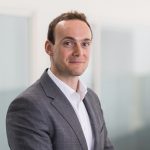
Florian Strunk is a Professor in the Department of Mathematics at the University of Regensburg, working within the Faculty of Mathematics. His office is located in room M219 (phone: +49 941 943 2768) and his contact email is florian.strunk@ur.de. Dr. Strunk's research spans several interconnected areas of modern mathematics, with primary focus on Algebraic Geometry, Arithmetic Geometry, and Homotopy Theory. He has developed specialized expertise in Algebraic K-Theory, Motivic Homotopy Theory, and Derived Algebraic Geometry. His scholarly work bridges classical algebraic geometry with contemporary homotopy-theoretic methodologies, advancing our understanding of structural properties of algebraic varieties and schemes. His publication record demonstrates consistent contributions to Algebraic K-Theory and motivic homotopy theory, with significant work on descent properties, connectivity in motivic contexts, and algebraic cycles. His collaborative research with prominent mathematicians like Moritz Kerz and Georg Tamme has appeared in top-tier journals including Inventiones Mathematicae and Compositio Mathematica. As an educator, Dr. Strunk teaches across the mathematics curriculum, from foundational undergraduate courses to advanced graduate seminars. His teaching portfolio includes Algebraic Geometry I and II, Mathematics of Machine Learning, Introduction to Quantum Computing Mathematics, and specialized seminars on Algebraic K-Theory. He has developed comprehensive lecture notes for several courses, reflecting his commitment to effective pedagogy.
Mark Iscoe, MD, MHS is an Assistant Professor of Emergency Medicine and Biomedical Informatics and Data Science at Yale School of Medicine. He holds fully joint appointments in both the Department of Emergency Medicine and the Department of Biomedical Informatics & Data Science, reflecting his interdisciplinary work at the critical intersection of clinical emergency care and health informatics innovation. Dr. Iscoe completed his medical degree at Johns Hopkins University School of Medicine in 2017, followed by residency training in Emergency Medicine at New York University / Bellevue Hospital in 2021. He further specialized with a Master of Health Science (MHS) in Clinical Informatics from Yale School of Medicine in 2023. He is board certified in both Emergency Medicine (2022) and Clinical Informatics (2024). His research spans several interconnected domains with a focus on optimizing the interface between emergency physicians and health information technology. Key areas include electronic health record (EHR) optimization, artificial intelligence applications in emergency settings, clinical decision support systems, and medication safety protocols. His 2024 JAMA Network Open publication 'Benchmarking Emergency Physician EHR Time per Encounter Based on Patient and Clinical Factors' represents a significant contribution to understanding the digital burden on emergency clinicians. More recently, he has pioneered work applying large language models to emergency medicine challenges, with multiple 2025 publications on AI applications for deprescribing, symptom identification, and risk stratification. His research trajectory shows a clear evolution from foundational EHR usage studies toward increasingly sophisticated AI implementations that bridge theoretical informatics with practical clinical tools in high-pressure emergency settings. YCCI Scholar Award for AI Research on Drug Reactions (2024) Dr. Iscoe has received research funding from multiple prestigious sources including the National Institute on Drug Abuse (NIDA), the American Medical Association (AMA), the National Institutes of Health, and Yale New Haven Health System. His collaborative network includes prominent researchers such as Andrew Taylor (6 joint publications), Ted Melnick (5 joint publications), and Rohit Sangal (4 joint publications), reflecting his work's multidisciplinary nature spanning clinical departments, informatics specialists, and data scientists.
Ardon Shorr serves as Writing Seminar Faculty at Princeton University's Princeton Writing Program, based in office 313 New South. His position focuses on academic writing instruction within the university's core curriculum. Trained in experimental biology, Shorr specializes in explaining scientific complexity through science communication. His research background includes gravitational biology and mechanotransduction, with expertise in developing biological measurement devices. Current work emphasizes translating technical concepts for broader audiences. Publication trends reveal sustained investigation into cellular force sensing mechanisms, evolving from foundational gravitational transduction studies (2008) to innovative high-throughput embryonic research using mesofluidics (2019). This trajectory demonstrates integration of bioengineering approaches with developmental biology. No scientific awards, student advisees, research grants, or laboratory affiliations were documented in available materials.
Dana Small, PhD is a Senior Scientist at the RI-MUHC and Professor in the Department of Neurology and Neurosurgery at McGill University . Her research is centered in the Metabolic Disorders and Complications Program within the Centre for Translational Biology . Her research focuses on understanding how body and mind work together to optimize behavior, particularly through neuroimaging, metabolic, and behavioral studies of ingestive behavior. She investigates how modern food environments affect brain evolution and eating behavior. The 15 most recent publications show a consistent focus on food reward mechanisms (2025), nutrient-brain interactions (2024), addiction-genetics relationships (2023), and neural processing of taste and reward (2020-2023). These works appear in high-impact journals like Cell Metabolism and Science .
Dr. Mary Wyer is an Associate Professor of Practice (Biocontainment) at the University of Sydney’s Susan Wakil School of Nursing and Midwifery, affiliated with the Sydney Infectious Diseases Institute and the NSW Biocontainment Centre. She holds a PhD in infection prevention and control (2017) and has extensive experience in biocontainment and qualitative research. Her roles are supported by the Western Sydney Local Health District. **Education**: PhD (2017), RN, MACN. Research interests include high-consequence infectious diseases (HCIDs), outbreak management, infection prevention, qualitative methods, and patient involvement in healthcare. She leads projects on biocontainment preparedness, using video-reflexive ethnography to improve clinical practices. **Current Projects**: Strengthening bio-preparedness via simulation and video-reflexive methods; 24-hour in situ simulations for biocontainment centre readiness; aged care infection control strategies; and establishing national infection control standards. She co-leads the Australian BioCOP network for HCID collaboration. **Key Contributions**: Authored/co-authored over 30 peer-reviewed publications, including a book on video-reflexive ethnography. Awards include the 2019 Best Poster Award (ACIPC) and recognition for innovation in infection control research. **Grants**: Secured $2.3M+ in funding for research projects, including NHMRC grants and partnerships with UTS and NSW Health.
Sara Schaefer, MD, MHS, FAAN is an Associate Professor of Neurology at Yale School of Medicine, where she serves as Program Director for the Movement Disorders Fellowship and Adult Neurology Residency Program Director. She specializes in treating patients with movement disorders including Parkinson's disease, tremors, chorea, dystonia, and Huntington's disease, and evaluates patients for deep brain stimulation surgery. Dr. Schaefer is also deeply involved in medical education innovation, having designed interactive video-based curricula used worldwide. Dr. Schaefer's educational background includes: ScB from Brown University (2007) MD from The Ohio State University College of Medicine (2012) Internship in Medicine at Yale-New Haven Hospital (2013) Residency in Neurology at Yale-New Haven Hospital (2016) Chief Residency in Neurology at Yale-New Haven Hospital (2016) MHS with focus on medical education from Yale University (2019) Dr. Schaefer's primary research interests center on movement disorders and medical education. She has a particular focus on developing innovative educational tools for neurology training, including video-based curricula and podcasts. Her work aims to improve how movement disorders are taught to medical students, residents, and practicing physicians, with the goal of reducing diagnostic delays and improving patient care. She has designed an interactive, video-based online training curriculum in movement disorders that is used by learners worldwide and co-founded the MDS podcast. She also founded The Grey Matter Project, a virtual high school neuroscience club engaging students globally. Dr. Schaefer's scholarly work demonstrates a clear trajectory from clinical research in movement disorders toward an increasing focus on medical education innovation. While her early publications addressed specific movement disorder conditions and treatments, her more recent work centers on educational methodology, curriculum development, and assessment in neurology training. Her research bridges clinical neurology with educational science, creating practical tools that have been implemented across multiple institutions. Dr. Schaefer has received numerous honors and awards for her work: Fellowship Director of the Year from American Academy of Neurology (2025) Burton A. Sandok Visiting Professor of Neurologic Education from Mayo Clinic Department of Neurology (2024) Attending of the Year from Yale Department of Neurology (2023) Education Innovation Poster Award at Yale Medical Education Day (2018) Creative Expression of Human Values in Neurology award from American Academy of Neurology (2016) Alpha Omega Alpha Honor Medical Society (2012) Gold Humanism Honor Society (2012) As an educator and program director, Dr. Schaefer has mentored numerous neurology residents and fellows. She serves as co-founder and deputy editor of the MDS podcast, launched in January 2019, and founder and producer of the Neurology Nuts and Bolts: Constructing your Career podcast, launched in February 2022. She is the Movement Disorders Section Head of the Annual Academy of Neurology Resident In-Service Training Examination (RITE) Committee and CME editor for the Movement Disorders Journal. Her educational initiatives have received institutional support through Yale's educational infrastructure, though specific grant funding isn't detailed in the provided text. Dr. Schaefer founded The Grey Matter Project, a virtual high school neuroscience club that engages students worldwide with lectures, career panels, and projects related to neurology. She is also actively involved with the Movement Disorders Society Education Committee and has contributed to developing educational resources through this professional organization.
Prof. Dr. Frank Meisel holds the Chair for Supply Chain Management at the Christian-Albrechts-University of Kiel, within the Faculty of Law, Economics and Business. His research focuses on mathematical modeling and quantitative solution methods for the design and operation of production, distribution, and service networks. 1998-2003: Studied Traffic Engineering at the Technical University of Dresden 2008: Received Dr. rer. pol. with thesis "Seaside Operations Planning in Container Terminals" 2014: Completed Habilitation in Business Economics with thesis "Papers on the Design and Operations of Production-, Distribution- and Service-Networks" Since 2013: Professor of Supply Chain Management at Kiel University Prof. Meisel's research spans multiple areas of logistics and operations research. His primary interests include maritime logistics, particularly container terminal operations; vehicle routing problems with synchronization requirements; and integrated planning of production-distribution networks. He develops mathematical models and optimization algorithms to address complex logistical challenges in various industry contexts, from seaport operations to healthcare logistics and urban waste management. His work bridges theoretical operations research with practical logistics applications across diverse sectors. His publication record demonstrates a progression from specialized maritime logistics problems to broader supply chain applications. Recent work shows increasing focus on sustainability considerations and the integration of multiple operational decisions across different parts of supply networks. His research has significant practical implications for container terminal operations, intermodal transportation, and service logistics. Prof. Meisel actively contributes to the academic community through conference presentations at major events including EURO, IFORS, and specialized workshops on maritime logistics. His work appears in top-tier journals such as Transportation Science, European Journal of Operational Research, and Computers & Operations Research. He teaches courses including Supply Chain Management, Production and Logistics, and Operations Management at both undergraduate and graduate levels. His educational contributions include developing curriculum for English-language business programs and supervising student research projects in logistics optimization.
Gerda de Vries is a Professor in the Department of Mathematics & Statistical Sciences at the University of Alberta, Faculty of Science. Her research focuses on mathematical physiology, dynamical systems, and mathematical modeling, particularly in cellular biophysics, pattern formation, and systems biology. She has contributed extensively to understanding complex biological systems through interdisciplinary approaches combining mathematics and biology. Her work spans applications in radiation biology (e.g., cell cycle dynamics and low-dose radiation effects), biophysics (microtubule organization, motor proteins), ecology (predator-prey interactions, forest fire modeling), and education (adapting primary literature for STEM teaching). Recent research highlights include analyzing saddle-node bifurcations, bystander effects in radiation, and collective behavior in animal groups. De Vries has published over 50 peer-reviewed articles since 2000, with a focus on bridging abstract mathematical theory to concrete biological phenomena. Notable contributions include models of pancreatic β-cell dynamics, immune system versatility, and educational frameworks for mathematical biology. Her academic career includes leadership in curriculum development and interdisciplinary research, though no specific grants or awards are explicitly listed in the provided information.
James D. Ivory is a Professor of Media Studies in the Department of English at Virginia Tech's College of Liberal Arts and Human Sciences. He has been a faculty member at Virginia Tech since 2005, initially in the Communication department before transitioning to the English department. His work bridges the humanities and digital media studies, focusing on the social and psychological impacts of interactive technologies. Ivory directs research in the VT G.A.M.E.R. Lab, part of the university's Digital Media Research Facility, and has established himself as a leading scholar in game studies and digital media effects research. Dr. Ivory's educational background includes: Ph.D. in Mass Communication from the University of North Carolina at Chapel Hill (2005) M.A. in Communication from the University of Wyoming (2002) B.S. in Communication from the University of Wyoming (2000) Dr. Ivory's primary research focuses on the social, behavioral, and cultural dimensions of interactive digital media, particularly video games, simulations, and virtual environments. His work examines how technological features of new entertainment media affect users' experiences and behaviors. He also investigates research practices and how scientific findings are communicated to both scholarly communities and the public. His interdisciplinary approach spans communication, psychology, human-computer interaction, and media studies, addressing critical questions about digital media's role in society, including issues of representation, ethics, and mental health impacts. His recent publications demonstrate a growing emphasis on methodological rigor in digital media research, with increasing attention to open science practices and research reproducibility. While maintaining his focus on video games and virtual environments, his work has expanded to address broader questions about scientific communication, research ethics, and the translation of findings to policy contexts. His scholarship shows a trajectory from examining specific media effects toward more meta-scientific concerns about how research in this field is conducted and communicated. Dr. Ivory has received recognition through media coverage of his expertise in major outlets including USA Today and The Washington Post, particularly regarding video games and digital communication. His work has been cited extensively across multiple disciplines. As an educator, Dr. Ivory has mentored numerous students through course instruction and curriculum development. He has been instrumental in developing innovative programs including the Digital Game Design/Analysis curriculum and Communicating Science initiatives. His teaching spans research methods, communication technology, media effects, and digital media production. Dr. Ivory leads the VT G.A.M.E.R. Lab (Games, Applied Media, and Experimental Research), which serves as a hub for interdisciplinary research on interactive media. The lab supports both faculty and student research projects examining various aspects of digital gaming and virtual environments. Through this facility, he fosters collaboration between humanities scholars and technologists to advance understanding of digital media's societal impacts.
Daniel L. Schlafly is a Professor in the Department of History at Saint Louis University 's College of Arts and Sciences . His career spans decades of research in Russian and East European history, with a focus on cross-cultural exchanges between Russia and Western Europe. Education : Ph.D. (Columbia University, 1972), M.A. in Russian Studies (Columbia, 1965), Certificate from the Russian Institute (Columbia, 1965), A.B. (Georgetown University, 1961), and M.B.A. (Saint Louis University, 1998). Research interests include cross-cultural history, Jesuit educational institutions in Russia and America, religious minorities in post-Soviet Russia, and East-West encounters during the Enlightenment. His work emphasizes primary source analysis in original languages like Russian, French, and Italian. Publication trends highlight comparative studies of Jesuit schools, diplomatic records, and religious identity formation. His articles span 1970-2008 , with a focus on Russia's engagement with Catholicism and Western institutions. Scientific awards and grants include: Mellon grants for international research (1991-1996) Adenauer Scholarship for German studies (1961-62) Conference funding from 2002-2014 Grants for translating Marek Inglot's Jesuit history (2008-2013) He has taught courses on the origins of the modern world , history of Eastern Europe , Russian history , and nationalism studies .
Iliana Skrebneva is a Lecturer in Inclusive Education and Coordinator of the Master of Inclusive and Special Education at Macquarie University's Macquarie School of Education. She holds accreditation as a primary school teacher from the New South Wales Education Standards Authority. Her research focuses on inclusive education policies, disability studies, and teacher training strategies for supporting diverse learners in mainstream settings. Education: Certified primary school teacher (NSW Education Standards Authority) Research Interests: Iliana explores how inclusive strategies can be effectively implemented in early childhood and school environments, emphasizing teacher professional development and policy alignment with student needs. Her work addresses challenges faced by learners with disabilities, including deaf students and those with visual impairments, in both mainstream and specialist educational settings. Grants & Projects: ACT Govt Education Inclusive education professional learning: 5 program suite (2024-2025) Labs/Teams: Associated with the Early Childhood Education Research Centre at Macquarie University.
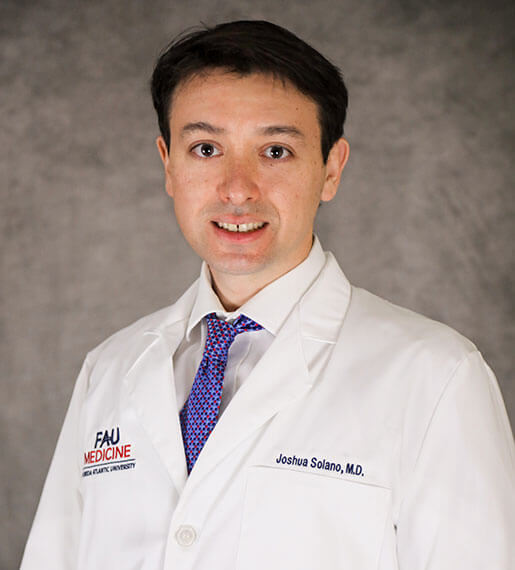
Joshua J. Solano, M.D., FAAEM is an Associate Professor of Emergency Medicine and Clerkship Director for the Emergency Medicine Residency program at the Florida Atlantic University Charles E. Schmidt College of Medicine. As Clerkship Director, he works alongside residents to promote best practices for emergency department patient care. Dr. Solano is board certified in emergency medicine and maintains active membership in the American College of Emergency Physicians and the American Academy of Emergency Medicine. Dr. Solano's educational background includes a BS in Biology and BA in History from Duke University, followed by his MD from the University of Florida. He completed his emergency medicine residency at Beth Israel Deaconess Medical Center in Boston and served on faculty at Harvard Medical School as an instructor and assistant program director before joining FAU. In his final year in Boston, he completed the Rabkin Medical Education Fellowship. Dr. Solano's research focuses on geriatric emergency medicine, particularly head trauma management in elderly patients, anticoagulation risks, and emergency department quality assurance. His recent publications demonstrate a strong emphasis on developing clinical decision rules for geriatric head trauma and understanding medication interactions in older emergency patients. He has also contributed significantly to medical education literature, developing innovative residency training curricula. His scholarly work shows a clear progression toward establishing evidence-based guidelines for geriatric emergency care, with numerous publications on intracranial hemorrhage risk assessment, anticoagulation management, and fall prevention strategies. Dr. Solano's research bridges clinical practice with educational innovation, making significant contributions to both patient care protocols and emergency medicine training. 2017: Attending Role Model Award, Beth Israel Deaconess Medical Center 2016-2017: Rabkin Medical Education Fellowship 2011: Alpha Omega Alpha Medical Honor Society 2011: Chapman Humanism Society 2010: Equal Access Clinic Service Award 2010: Lawrence M. Goodman Award for Medical Student Research 2010: Community Service Award As Clerkship Director, Dr. Solano oversees medical student education in emergency medicine and has implemented electronic evaluation systems that have increased the quality and quantity of student assessments. His clinical work includes staff positions at Bethesda East Hospital and Delray Medical Center. Dr. Solano's research program demonstrates strong institutional support through multiple publications and ongoing investigations into geriatric emergency care protocols.
Professor Michael J. Gill is Associate Professor of Organisation Studies at the Saïd Business School , University of Oxford, and Tutorial Fellow in Management at St Edmund Hall . He previously served as Assistant then Associate Professor at the University of Bath’s School of Management. Education MA – University of Warwick DPhil – Jesus College, University of Oxford (funded by a scholarship from the Centre for Professional Service Firms) Research Interests Michael’s research centres on the causes and consequences of individuals’ suffering in the workplace , exploring how organisations threaten workers’ mental health and erode their sense of self. He employs qualitative, phenomenological methods to study accountants, chefs, lawyers, consultants, doctors, nurses, police officers and other occupational groups. His work also addresses identity regulation —how organisations shape, constrain and re-define personal identity—and the ethical and methodological challenges of organisational research. Publication Trends Between 2015 and 2025 Michael has produced a steady stream of articles focusing on three broad themes: (1) identity regulation and the phenomenology of self in organisational settings, (2) digital innovation, stigma and professional regulation in healthcare and low- and middle-income countries, and (3) qualitative methodology , including interview design, covert research ethics and phenomenological approaches. Scientific Awards & Fellowships Scholarship from the Centre for Professional Service Firms (doctoral funding) Governing Body Fellow, St Edmund Hall, University of Oxford Tutorial Fellow in Management, St Edmund Hall, University of Oxford Advising & Grants While no specific doctoral students are named, Michael’s roles as Tutorial Fellow and Associate Professor imply active supervision and teaching responsibilities within the Oxford Saïd Business School and St Edmund Hall. Grant funding details beyond his doctoral scholarship are not provided. Laboratories & Teams Michael is affiliated with the Centre for Professional Service Firms and collaborates through the Saïd Business School research community. No dedicated laboratory is mentioned.
Roni Berger, PhD, is a Professor at Adelphi University's School of Social Work with over 30 years of academic experience. Her research focuses on trauma in cross-cultural contexts, immigrant/refugee experiences, and posttraumatic growth. She holds clinical credentials as a Licensed Clinical Social Worker (NYS) and Clinical Family Therapist (AAMFT). Education includes: Ph.D. from The Hebrew University of Jerusalem (1994) Psychotherapy certification from Tel Aviv University (1977) MSW and BSW from The Hebrew University of Jerusalem (1974, 1969) Her research examines how sociopolitical environments shape trauma responses across diverse populations including immigrants, refugees, and religious communities. Current investigations explore cultural mediators of posttraumatic growth, trauma-informed pedagogy, and qualitative methodologies for marginalized groups. Publication analysis reveals consistent focus on: cultural competence in trauma care, immigrant mental health interventions, innovative qualitative methodologies, and social work education reform. Recent work addresses pandemic-related pedagogical challenges and cross-cultural manifestations of psychological distress. Awards include: Two Fulbright Awards (Hong Kong 2007, Tel Aviv 2011) President Research Award (2004) NATO Science for Peace sponsorship (2012) Notable advising includes chairing 20+ dissertations on trauma, cultural identity, and marginalized populations. Secured multiple grants including from Fulbright, NATO, and Adelphi University for studies on cultural trauma and community resilience. Leads international educational initiatives in Israel, Ghana, Nepal, and Hong Kong. Directs global trauma education programs, including intensive courses in Israel examining Holocaust intergenerational trauma, security stress, and immigrant experiences. Developed cross-university collaborations in Australia and Hong Kong to advance trauma-informed curriculum development.
Professor Fabian Waleffe is an Applied Mathematician at the University of Wisconsin, Madison, holding a joint appointment between the Department of Mathematics and the Department of Engineering Physics. His academic career spans multiple decades with extensive teaching experience at both UW Madison and MIT. Professor Waleffe's primary research focuses on the fundamental problem of turbulence in fluid flows and its relation to Exact Coherent States. He developed the Self-Sustaining Process theory for shear flows, which provides an ab initio method to discover families of 3D traveling wave solutions of the Navier-Stokes equations in all canonical shear flows. His research also encompasses geophysical flows and computational methods for solving partial differential equations, including spectral integration methods and numerical techniques for incompressible flows. His publication record demonstrates consistent focus on hydrodynamic instabilities, turbulence, and coherent structures. Recent work examines optimal heat transport in Rayleigh-Bénard convection, streak instability, and near-wall turbulence, integrating theoretical analysis, numerical computation, and physical insight to address fundamental questions in fluid dynamics. His research has evolved from early work on triad interactions in homogeneous turbulence to the current focus on exact coherent structures that form the 'backbone' of turbulent shear flows. Professor Waleffe has taught extensively across the mathematics and engineering curriculum. He has taught Math 321 (Vector and complex calculus for the physical sciences) for 29 semesters at UW Madison, along with numerous other undergraduate and graduate courses. His teaching spans from introductory calculus to advanced graduate topics in hydrodynamic instabilities and turbulence, reflecting his deep commitment to mathematical education in the physical sciences.