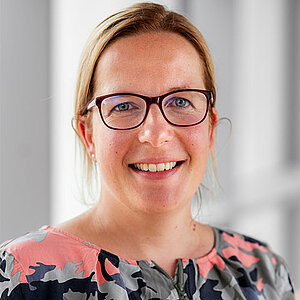
Prof. Dr.-Ing. Anke Müller is a Professor of Manufacturing Processes in Mechanical Engineering at the Faculty of Engineering, Hof University of Applied Sciences. She serves as Dean of the Faculty of Engineering and leads the MakerSpace and various laboratories including CNC Technology and Central Workshop. Current roles: Faculty Dean, Professor, MakerSpace Director Academic focus: Manufacturing engineering, hybrid materials, precision machining Key projects: Startuplab@FH, I²P² international partnership Education Diploma in Precision Engineering/Medical Technology from Wilhelmshaven University of Applied Sciences PhD (Dr.-Ing.) from Leibniz University Hannover on "Polishing ceramic knee implants with resilient diamond tools" Research interests center on advanced manufacturing technologies, particularly: Hybrid material systems (polymer-metal, fiber-metal composites) Precision machining and flexible tooling Lightweight die casting and thermal behavior analysis Innovative process development for intrinsic hybrid components Integration of data analysis in manufacturing education Scientific awards include: 2014 Förderpreis der Stiftung NiedersachsenMetall 2013 CIRP-BioM Best Paper Award 2011 ASPE Best Posterpaper Award 2010 IFW-Kooperationspreis
Pasquale Davide Schiavone holds multiple research and teaching positions at École Polytechnique Fédérale de Lausanne (EPFL), serving as a Lecturer at the School of Computer and Communication Sciences (IC) and as a Scientist at both the Embedded Systems Laboratory (ESL) within the School of Engineering (STI) and PAT Administration. His interdisciplinary work bridges computer architecture, embedded systems design, and biomedical applications, with office located at ELG 136 in Lausanne, Switzerland. Dr. Schiavone's research focuses on ultra-low-power computing systems, particularly RISC-V architectures and TinyML applications for edge devices. His work develops open-source hardware platforms like X-HEEP and HEEPOCRATES that enable energy-efficient AI at the edge, with applications spanning biomedical monitoring, neural interfaces, and wearable computing. He explores innovative hardware-software co-design approaches to overcome energy constraints in resource-limited environments. His recent publications reveal a consistent research trajectory centered on open, configurable computing platforms for specialized applications. The work spans from fundamental RISC-V architecture improvements (ARCANE, e-GPU) to application-specific implementations for biomedical contexts (BiomedBench, neural interfaces). A strong emphasis on energy efficiency permeates all his research, whether through novel arithmetic approaches (Posit), system architecture (near-memory computing), or specialized accelerators (Strela, Quadrilatero). Lecturer, School of Computer and Communication Sciences (IC) Scientist, Embedded Systems Laboratory (ESL), School of Engineering (STI) Scientist, PAT Administration, School of Engineering (STI) Dr. Schiavone teaches courses on hardware compilation, presenting algorithms and methods for transforming hardware description languages into optimized circuit implementations. His Embedded Systems Laboratory work places him at the forefront of developing practical, open-source solutions for next-generation computing challenges in energy-constrained environments.
Stephen T. Wong holds the John S. Dunn Presidential Distinguished Chair in Biomedical Engineering and serves as Professor of Radiology and Medicine with Tenure and Chief of Medical Physics at Houston Methodist. He maintains professorships across multiple prestigious institutions including Weill Cornell Medicine (Radiology, Neurosciences, Pathology and Laboratory Medicine), Texas A&M University, Baylor College of Medicine, University of Texas MD Anderson Cancer Center, Rice University, University of Texas Health Houston, and University of Houston. Weill Cornell Medicine: Professor of Computer Science and Bioengineering in Radiology (since 2008), Pathology and Laboratory Medicine (since 2010), and Neuroscience (since 2012) Houston Methodist: John S. Dunn Presidential Distinguished Chair in Biomedical Engineering Academic leadership: Director of multiple research centers including Ting Tsung and Wei Fong Chao Center for BRAIN and AI in Innovative Medicine lab Dr. Wong's research employs a systems-based approach integrating engineering with biology and medicine to elucidate disease mechanisms. His laboratory focuses on discovering novel drugs and biomarkers while developing advanced diagnostic and therapeutic devices, with particular emphasis on cancer, neurological disorders, and metabolic diseases. Current projects target micro- and macroenvironments of cancer and Alzheimer's disease, apply spatial and systems biology methods for drug discovery, create label-free point-of-care molecular diagnostics, and develop AI applications for stroke triage and treatment. His publication portfolio demonstrates consistent growth over three decades, with over 500 peer-reviewed papers and five books. Recent work shows strong emphasis on artificial intelligence applications in medical imaging, cancer therapeutics, and neurological diagnostics, with multiple 2025 publications featuring multimodal AI approaches for hepatocellular carcinoma, lung cancer interventions, tumor evolution, brain imaging, and thyroid nodule characterization. Fellowships: IEEE, AIMBE, IAMBE, ACMI, AMIA, Optica, and AAIA Honors: AIIA Fellow (2024), American College of Medical Informatics Fellow (2023), AAIA-Fellow (2021), AIMBE Fellow (2021) Professional: Registered Professional Engineer (PE), Executive education from Stanford, MIT, and Columbia Business Schools Dr. Wong has trained over 170 PhD, MD/PhD, and postdoctoral scholars, with four now holding endowed chairs. His research has received continuous NIH funding for three decades, supporting 35 active and completed projects including DeepStroke+ for AI stroke detection, Alzheimer's disease research, and cancer diagnostics. He has founded multiple research centers including the Division of Shared Resources at Houston Methodist Neal Cancer Center, Translational Biophotonics Lab, and Center for Modeling Cancer Development.
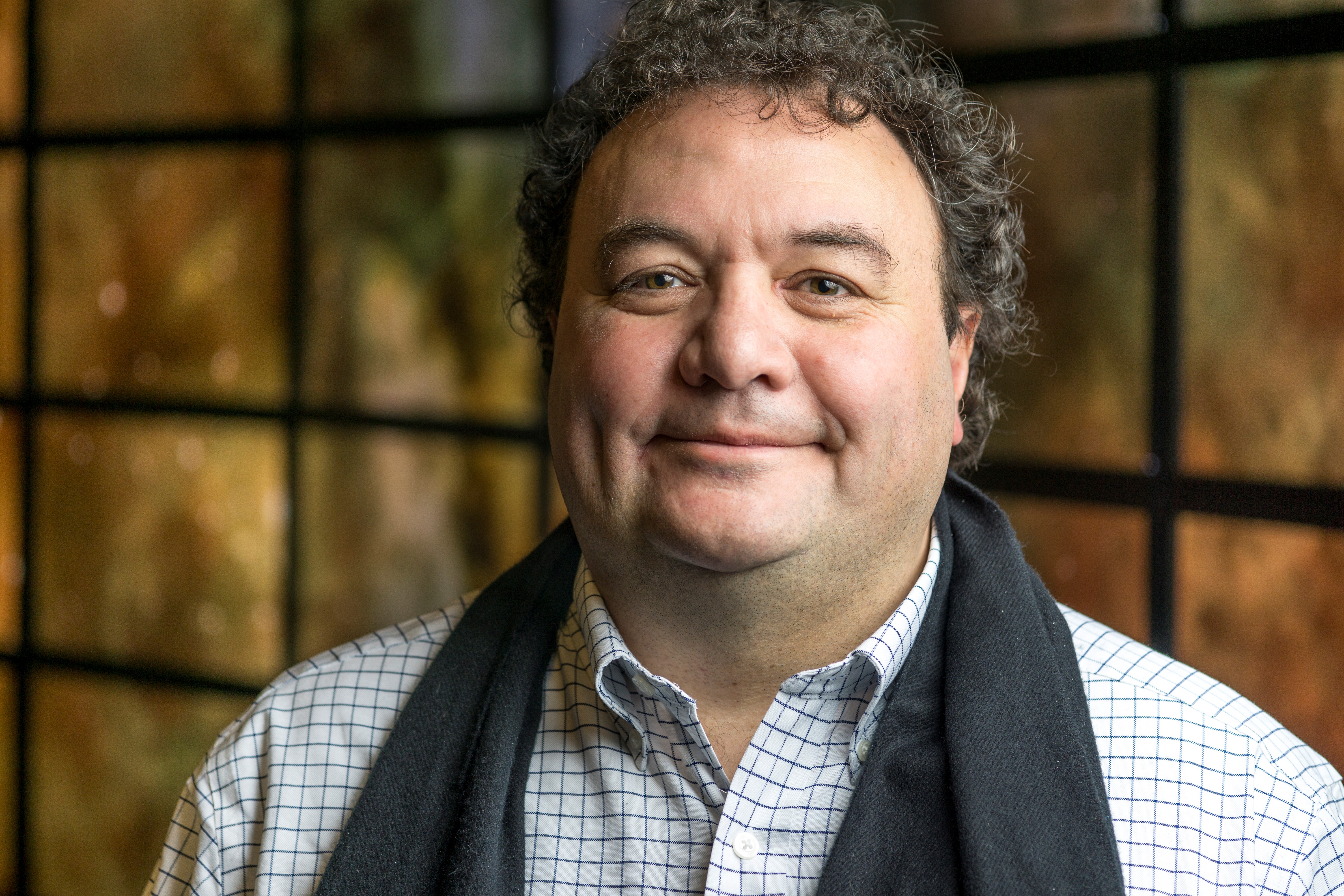
Valerio Pascucci is a Professor at the University of Utah's School of Computing and a DOE Laboratory Fellow at Pacific Northwest National Laboratory. He directs the Center for Extreme Data Management Analysis and Visualization (CEDMAV) and previously led projects at Lawrence Livermore National Laboratory and University of Texas at Austin. PhD in Computer Science (Purdue University, 2000) MSc in Electrical Engineering (University 'La Sapienza', Rome, 1993) As a pioneer in Big Data Management , Scientific Visualization , and Computational Topology , his work connects topological methods with progressive algorithms to enable interactive exploration of petascale datasets. His research spans climate modeling , neuroscience , materials science , and precision agriculture , focusing on multi-resolution techniques and geometric compression . Recent publications show specialization in web-based visualization and AI-driven analytics for climate data, with emphasis on equity in data access and FAIR data principles . His ViSUS project enables real-time data streaming from supercomputers to desktops, while NAPA explores GPU-based architectures for streaming algorithms. Scientific Awards : Best Paper Award, IEEE Pacific Visualization 2011 Best Application Paper Award, IEEE VIS 2006 DOE Laboratory Fellow He advises numerous graduate students and leads collaborations across national laboratories , universities , and industry . Funded by NSF Grant #2127548 , he develops technologies for exascale computing and geospatial intelligence .
Byungwoon Park is a Professor in the Department of Aerospace Engineering at Sejong University, specializing in Global Navigation Satellite Systems (GNSS) and precision positioning technologies. His research focuses on advancing navigation systems through innovations in Real Time Kinematics (RTK), smartphone sensor integration, and aviation applications. Professor Park's primary research interests include Global Navigation Satellite System (GNSS), Real Time Kinematics (RTK), smartphone sensor integration, aviation navigation, and urban positioning systems. His work has significantly contributed to improving positioning accuracy in challenging environments such as urban canyons and deep urban areas. He has developed techniques for achieving sub-meter accuracy in smartphone positioning and has made substantial contributions to international GNSS standardization efforts. His recent research has focused on multi-constellation GNSS integration, lunar navigation systems, tropospheric error modeling using LEO satellites, and advanced smartphone positioning techniques. Professor Park has successfully implemented methods to achieve 1m horizontal accuracy in Android smartphone positioning using SFMC SBAS and has developed Compact Network RTK technology that reduces bandwidth requirements for GPS correction in 100x100 km areas to 700bps. 'Google Smartphone Decimeter Challenge 2022' Gold Medal Third Place Winner of the Smartphone Decimeter Challenge (2024) Professor Park leads the Navigation Systems Laboratory at Sejong University, which conducts research on various navigation systems including GNSS. His work spans theoretical research, practical implementation, and industry collaboration, with numerous publications in prestigious journals and conference proceedings. He has advised multiple graduate students and has been actively involved in both domestic and international research collaborations focused on advancing navigation technologies.
Chiharu Tokoro is a Professor and currently serves as the Dean of the School of Creative Science and Engineering at Waseda University. She also holds positions as an External Director at Toppan Photomasks Inc. and JX Metals Corporation, and is a Specially Appointed Professor at The University of Tokyo's Graduate School of Engineering. With a Dr. Engineering degree from The University of Tokyo (2003), she has established herself as a leading researcher in resource recycling and environmental engineering, with over 184 papers and an h-index of 27 (Scopus) or 30 (Google Scholar). Dean of School of Creative Science and Engineering, Waseda University (2024.09-present) External Director, Toppan Photomasks Inc. (2023.11-present) External Director, JX Metals Corporation (2021.04-present) Specially Appointed Professor, The University of Tokyo, Institute of Industrial Science (2016.11-present) She received her Dr. Engineering degree from The University of Tokyo in March 2003 after completing her undergraduate studies at Waseda University's School of Science and Engineering (1994-1998). Professor Tokoro's research spans transport phenomena, metals production, earth resource engineering, energy sciences, and environmental materials recycling. She specializes in solid-liquid and solid-solid separation processes, powder simulation and processing, and environmental treatment technologies. Her work focuses on innovative recycling methods for lithium-ion batteries, photovoltaic panels, and other electronic waste, with particular emphasis on pulsed discharge techniques for material separation. She has pioneered novel electrical pulse methods that enable high-precision separation of battery components while minimizing environmental impact. Her recent publications demonstrate a strong focus on advanced recycling technologies, particularly for lithium-ion batteries and electronic waste. She has developed groundbreaking pulsed discharge methods for separating battery components with high precision, achieving over 95% material recovery rates. Her research also extends to water treatment technologies, heavy metal removal, and sustainable materials development. The interdisciplinary nature of her work bridges chemical engineering, materials science, and environmental engineering to address critical resource circulation challenges in the context of circular economy principles. Jubilee Global Diversity Award from The American Ceramic Society (2024) 令和4年度リサイクル技術開発本多賞 (2022) 5th APT Outstanding International Contribution Award (2022) Falling Walls Science Breakthroughs of the Year 2021 finalist in Engineering and Technology 平成31年度文部科学大臣表彰 科学技術賞 (2019) Professor Tokoro serves on numerous national and international committees related to resource recycling, environmental policy, and scientific research evaluation. She is an active editorial board member for several prestigious journals including Scientific Reports and Minerals. Her research is supported by various grants from government agencies and industry partnerships focused on sustainable resource management and circular economy development. She has been instrumental in developing policy recommendations for electronic waste recycling and resource conservation in Japan. As Dean of the School of Creative Science and Engineering at Waseda University, she leads one of Japan's premier institutions for engineering education and research. Her laboratory focuses on developing innovative recycling technologies, particularly for lithium-ion batteries and photovoltaic panels. She collaborates extensively with industry partners and government agencies to translate research findings into practical applications that address real-world resource circulation challenges.
David Daney is a Senior Researcher (Directeur de recherche) at Inria and HDR-qualified academic, currently serving as Head of Science for the Inria Center at the University of Bordeaux since July 2024. He is the team leader of the Auctus research group, focusing on robotics, cobotics, and human-robot interaction. He is affiliated with Inria and the École Nationale Supérieure de Cognitique (ENSC) at the University of Bordeaux, within the College of Engineering and the Department of Robotics. His research interests include Robotics, Cobotics, Human-Robot Interaction, Human Posture Analysis, Cable-driven Robots, Parameters Identification, Calibration, Interval Analysis, and Haptic Guidance. His work bridges theoretical robotics with industrial applications, particularly in aerospace, automotive, and sustainable agriculture. He has led and participated in numerous industrial collaborations with Airbus, Stellantis, Solvay, AKKA, and Farm3. His recent publications (2023–2025) demonstrate a strong focus on human-robot physical interaction, including real-time capacity estimation (Pycapacity), haptic guidance, model predictive control for dynamic environments, and musculoskeletal modeling for collaborative robotics. These works appear in top-tier journals such as IEEE Transactions on Robotics, Journal of Biomechanical Engineering, and Robotics and Autonomous Systems. HDR (Habilitation à Diriger des Recherches) Principal Investigator of ANR Pacbot Head of Science for Inria Center at University of Bordeaux Erdös number = 3 David Daney supervises multiple PhD students, including Alicia Barsacq, Ahmed-Manaf Dahmani, and Alexis Boulay. He has been principal investigator in several research projects such as LiChIE and ANR Pacbot, focusing on satellite production and human-robot collaboration. He also leads the SHAARE associate team with KAIST’s IRiS lab, advancing shared haptic control. His team develops tools for teleoperation, ergonomic analysis, and robot calibration, with applications in industrial and assistive robotics. He leads the Auctus team at Inria, which develops control and analysis techniques for human-robot physical interaction. The team collaborates with KAIST (SHAARE), ONERA, Pprime Institute, and industrial partners. The MOVER project studies human motor variability for ergonomics, and the Farm3 collaboration explores teleoperated vertical farming robotics.
Henrik Myhre Jensen is a Professor at the College of Engineering , Aarhus University, specializing in Mechanics of Materials , Solid Mechanics , and Mechanical Engineering . His research focuses on fracture mechanics, composite materials, and computational modeling of structural behaviors. Research Focus Fracture mechanics in composites and layered materials Computational modeling of kink band propagation Surface wear and coating technologies Ultrasound imaging applications in mechanical systems Notable Contributions Henrik has contributed to understanding crack propagation in cantilever beams, developed numerical methods for simulating delamination in composites, and explored buckling instabilities in solids. His recent work connects machine learning (holomorphic neural networks) to traditional fracture mechanics problems. Key Projects MAGFLY (2017-2021): Magnets for Flywheel Energy Storage InnoVacc (2009): Pressure Testing of Vacuum Chambers Simulation of composite structures (2011-2020): Micro-mechanical modeling
Prof. Dr. Gökhan Kiper is a faculty member in the Department of Mechanical Engineering at Izmir Institute of Technology , Turkey. His research focuses on Mechanism Science , Machine Design , and Deployable Structures , with particular emphasis on Polyhedral Geometry applications. Teaches courses: ME332 (Mechanisms), ME402 (Machine Design), ME577 (Advanced Mechanism Design) Active in IFToMM (International Federation for the Promotion of Mechanism and Machine Science), including roles in the Technical Committee for Computational Kinematics and the Turkey Branch (MakTeD) Co-organized the IFToMM Summer School on Mechanism Design for Medical Applications (2018) Research interests span kinematic synthesis of mechanisms, deployable architectural structures, and medical robotics. Key projects include a rollable ramp for temporary use, finger exoskeletons for rehabilitation, and remote-center-of-motion manipulators for minimally invasive surgery. His work integrates theoretical analysis with practical prototyping, reflected in publications across robotics, structural mechanics, and geometric design. Affiliates with the Rasim Alizade Mechatronics Laboratory (RAML) and the IzTech Kinetic Designs in Architecture Group . Presented at international conferences like International Symposium of Mechanism and Machine Science (ISMMS-2017) in Baku, Azerbaijan, where he chaired sessions on mechanism kinematics.
Mathangi Gopalakrishnan, PhD, MPharm, is an Associate Professor in the Department of Practice, Science, and Health Outcomes Research at the University of Maryland School of Pharmacy. She is actively engaged in research, mentoring, and academic scholarship, with a focus on quantitative clinical pharmacology and data-driven therapeutic optimization. Education: PhD, Statistics, University of Maryland, Baltimore County MS, Statistics, University of Maryland, Baltimore County MPharm, Birla Institute of Technology & Science, Pilani, Rajasthan, India BPharmacy (Honors), Birla Institute of Technology & Science, Pilani, Rajasthan, India Her research interests center on pharmacometrics, precision therapeutics, predictive analytics, real-world data, and drug development . She integrates principles of clinical pharmacology, advanced frequentist and Bayesian statistical methods, and artificial intelligence/machine learning to enhance patient outcomes, particularly among vulnerable populations. Her lab's work includes designing prospective clinical pharmacokinetic trials for anti-epileptics and antimicrobials in patients on continuous renal replacement therapy, leveraging real-world data from electronic health records to optimize dosing in neonatal opioid withdrawal syndrome and pediatric anticoagulation, and developing models for disease progression in conditions like schizophrenia and binge-eating disorders. The trends in her recent publications reflect a consistent focus on model-informed precision dosing, real-world evidence generation, pharmacokinetic-pharmacodynamic (PK/PD) modeling in special populations, and methodological innovation in clinical trial design . Her work spans diverse therapeutic areas including critical care, neonatology, psychiatry, and maternal health, demonstrating a broad impact of quantitative pharmacology. Dr. Gopalakrishnan is accepting applications for postdoctoral positions in pharmacometrics at the Center for Translational Medicine, indicating active research funding and team leadership. Her collaborations extend to academic medical institutions nationwide, underscoring her role in multi-center research initiatives. She is involved in collaborative research with academic medical institutions across the country and has presented her work at major conferences including the Joint Statistical Meetings (JSM) and the American Conference on Pharmacometrics (ACoP).
Tyler L Cocker is an Associate Professor in the Department of Physics & Astronomy at Michigan State University , pioneering ultrafast terahertz nanoscopy. His research focuses on developing lightwave-driven THz-STM to capture femtosecond-scale electron dynamics at atomic resolution, with recent work revealing molecular orbital dynamics and black phosphorus heterostructures. Education: Ph.D., University of Alberta (2012) B.Sc., University of Victoria (2006) His group explores ultrafast processes in quantum materials using complementary techniques like s-SNOM and THz spectroscopy, addressing fundamental questions about nanoscale charge transport and elementary excitations. Recent publications include Nature Photonics and Nature Nanotechnology papers on atomic-scale THz spectroscopy and interlayer transport in 2D materials. Awards include the 2024 DOE Early Career Award, 2021 ARO Young Investigator Award, and 2020 IRMMW-THz Young Scientist Award. Scientific Awards: DOE Early Career Award (2024) MSU Teaching Award (2023) ARO Young Investigator Award (2021) IRMMW-THz Young Scientist Award (2020) Jerry Cowen Endowed Chair (2019) The group has secured multiple grants from ONR, AFOSR, and DURIP, supporting development of third-generation THz-STM systems. Former students like S. Eve Ammerman (first PhD graduate, 2022) and Vedran Jelic (now at NRC Ottawa) have received prestigious fellowships and awards.
Robin Ras is a Professor and Head of Department at the Department of Applied Physics at Aalto University, where he leads the Soft Matter and Wetting research group. His work focuses on surface science, particularly superhydrophobic and superoleophobic materials, with applications spanning renewable energy, biomedical engineering, and agricultural science. Ras earned his Master's degree in Engineering and Technology from Catholic University of Leuven in 1999, followed by a Doctoral degree from the same institution in 2003. His academic journey has positioned him as a leading researcher in wetting phenomena and nanoscale surface engineering. His research interests center on understanding and manipulating liquid-solid interactions at micro and nanoscales. Ras's work explores how surface topography and chemistry affect wetting behavior, with particular focus on superhydrophobic surfaces, droplet dynamics, and liquid-repellent materials. His group develops innovative approaches for creating surfaces with controlled wettability for applications ranging from self-cleaning materials to advanced biomedical devices. The research trends evident in Ras's recent publications show a strong focus on precision control of liquid-solid interfaces, with increasing attention to underwater applications, molecular-scale surface engineering, and biomimetic approaches. His work bridges fundamental surface science with practical applications in energy, healthcare, and sustainability. Among his notable scientific achievements: Anton Paar Research Award for Instrumental Analytics & Characterization (2018) for Scanning Droplet Adhesion Microscopy invention Academy of Finland Research Fellow (2011-2016) ERC Consolidator Grant (2017) Ras has secured significant research funding including the ERC Consolidator Grant for the SuperRepel project (2017-2022) focused on superslippery liquid-repellent surfaces, and the Academy of Finland project 'Electric Field; an Active Method to Control Phase Change' (2019-2022). His research group actively collaborates with international institutions and industry partners to translate fundamental discoveries into practical applications. The Soft Matter and Wetting research group under Ras's leadership combines experimental and theoretical approaches to investigate surface phenomena. The team utilizes advanced imaging techniques, precision surface fabrication methods, and computational modeling to understand and engineer surfaces with tailored wetting properties. Their work has applications across multiple sectors including renewable energy, biomedical devices, and sustainable agriculture.
Steven Y. Liang , Regents' Professor at the Georgia Institute of Technology 's Woodruff School of Mechanical Engineering, focuses on precision manufacturing , additive manufacturing , and materials-driven process optimization . His research program bridges materials science and computational mechanics to develop predictive models for advanced manufacturing systems. Ph.D., University of California, Berkeley (1987) M.S., Michigan State University (1984) B.S., National Cheng-Kung University, Taiwan (1980) Dr. Liang's work emphasizes physics-based modeling of thermal-mechanical interactions in machining and additive manufacturing, particularly for Ti6Al4V and Inconel 718 alloys. Recent publications highlight tool wear prediction , laser-assisted micro-milling , and residual stress modeling using machine learning and analytical mechanics. His research has been recognized with the ASME Milton C. Shaw Manufacturing Research Medal (2016) , SME Gold Medal (2021) , and Outstanding Lifetime Service Award of NAMRI/SME (2021) , among others. Funded by federal agencies and aerospace/automotive industries, his work provides scientific foundations for process planning and optimization.
Dr. Emmanuel C. Omondi is an Assistant Professor in the Department of Agricultural Sciences and Engineering at Tennessee State University's College of Agriculture. His research focuses on industrial hemp agronomy, sustainable agriculture, and conservation practices. He holds a Ph.D. and M.Sc. in Agronomy from the University of Wyoming and a B.Sc. in General Agriculture from the University of Nairobi. His research explores industrial hemp’s role in crop rotations, reduced tillage systems, and economic viability in Tennessee. Key projects include USDA-funded studies on organic farming impacts, soil health, and hemp production economics. He has led over $6.8 million in grants, including a USDA NIFA project on organic hemp assessment and a William Penn Foundation initiative on soil health and water quality. Awarded the Gamma Sigma Delta Honor Society and multiple fellowships, Dr. Omondi’s work spans international development, including conservation agriculture projects in Kenya and Uganda. He has authored 20+ peer-reviewed articles on topics like soil carbon dynamics, organic farming profitability, and phytoremediation potential of hemp. Education: Ph.D. (Agronomy, University of Wyoming), M.Sc. (Agronomy, University of Wyoming), B.Sc. (General Agriculture, University of Nairobi) Grants: Over $6.8 million in funding for projects on hemp agronomy, soil health, and sustainable farming systems. His honors include the A.K. Dobrenz Student Paper Competition First Prize (2011) and recognition for international academic excellence. Current initiatives focus on bridging agricultural innovation with environmental stewardship through collaborative research.
Dr. Bikram Banerjee is a Lecturer in Remote Sensing and Geospatial Science at the University of Southern Queensland, affiliated with the School of Surveying and Built Environment. He holds a PhD from UNSW, MTech from IIRS NRSA, and BTech from West Bengal University of Technology. His research focuses on geospatial technologies, machine learning applications in environmental monitoring, and precision agriculture. He is associated with the Centre for Agricultural Engineering, Centre for Crop Health, and Centre for Sustainable Agricultural Systems. Key research interests include UAV-based remote sensing for mine spoil characterization, hyperspectral imaging for crop phenotyping, and integrating IoT/ML for agricultural solutions. His work bridges environmental science, geotechnical engineering, and agricultural technology. Recent publications explore coal spoil analysis, mine safety automation, and vegetation health monitoring using advanced sensor technologies. Dr. Banerjee has supervised doctoral research on mobile laser scanning for underground mines, UAV-LiDAR applications, and proximal sensing for crop phenotyping. His research outputs have garnered over 2,327 views and 1,160 downloads, reflecting significant impact in geospatial and agricultural domains. He actively contributes to interdisciplinary projects addressing environmental sustainability and resource management challenges.