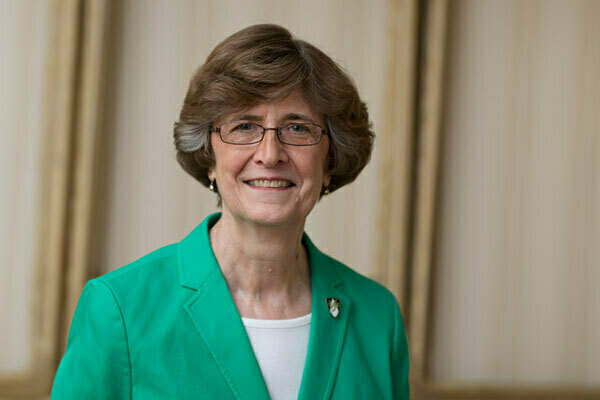
Professor Mary Catherine Hilkert holds a position in the Department of Theology at the University of Notre Dame’s College of Arts and Letters. Her research focuses on theological anthropology, fundamental theology, Christology, feminist theologies, and the interplay between theology, preaching, and spirituality. A member of the Dominican Sisters of Peace, she has received four honorary doctorates and prestigious awards recognizing her contributions to integrating academic and pastoral theology, particularly through feminist frameworks. Education: B.A., University of Dayton; M.A. and Ph.D., Catholic University of America. Her work centers on Edward Schillebeeckx’s theology, medieval mystics like Catherine of Siena, and sacramental imagination in preaching. She has lectured globally and served on international theological commissions for the Order of Preachers. Awards include the Sophia Award and Yves Congar Award for theological excellence. Her publications explore themes like the Reign of God, liturgical spirituality, and the role of women’s voices in theology. She has advised students through her academic leadership and has been a key figure in ecumenical theological dialogues across continents.
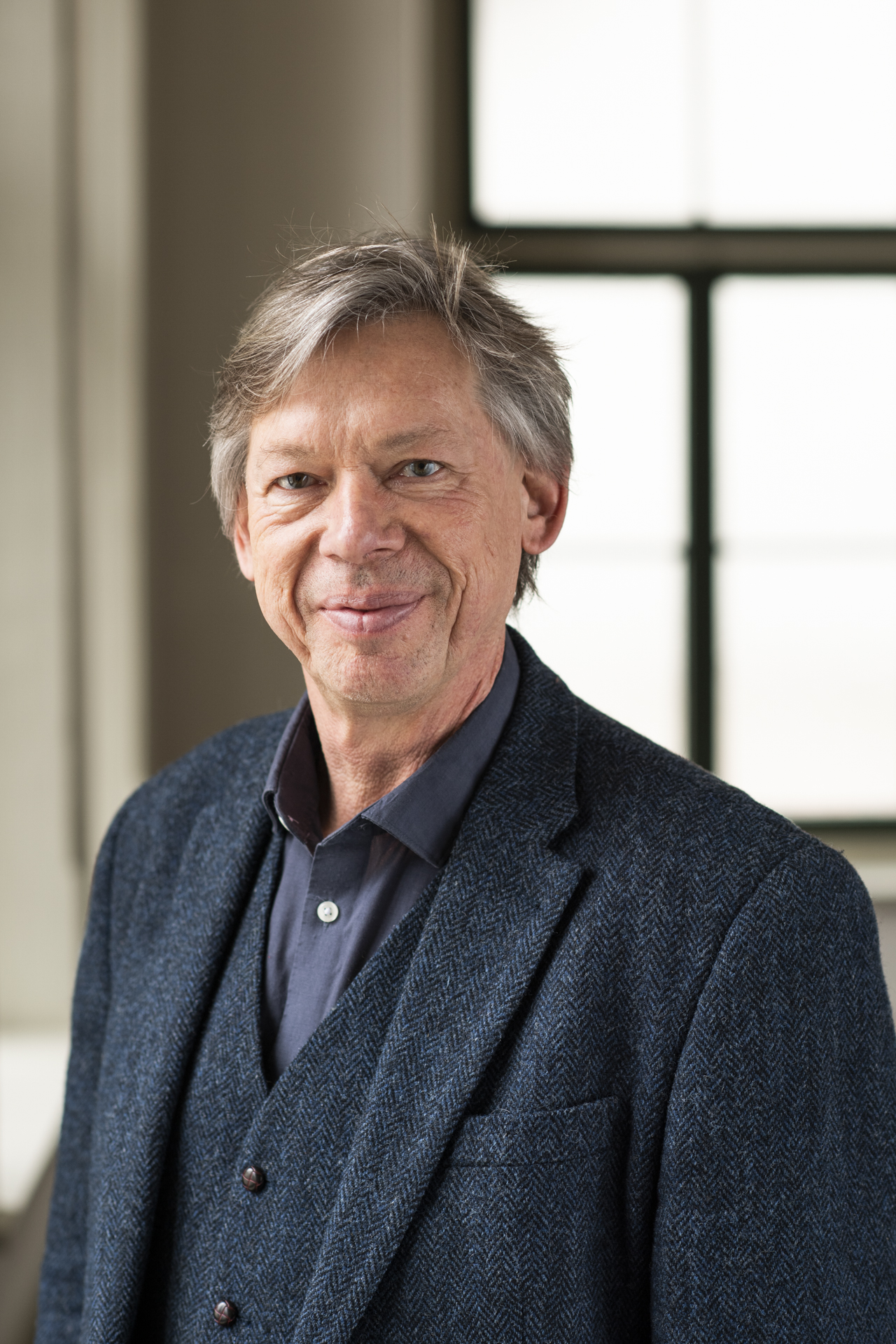
Thomas Schlag is Professor of Practical Theology with a focus on Religious Education, Church Theory and Pastoral Theology at the Faculty of Theology, University of Zurich. Since January 1, 2021, he has served as Director of the University Research Priority Program 'Digital Religion(s): Communication, Interaction and Transformation in the Digital Society.' He is also Chairman of the Board of the Center for Church Development (ZKE), which he co-founded in June 2010. Previously, he served as Dean of the Faculty of Theology (2014-2016) and Vice Dean for Teaching (2012-2014). 1965: Born in Stuttgart 1980-1985: Attended Protestant seminaries Maulbronn and Blaubeuren 1986-1993: Studied Protestant Theology and Political Science in Tübingen and Munich 1993-1996: Doctorate at University of Munich 2004-2005: DFG research fellowship at University of Tübingen 2005: Appointed Assistant Professor at University of Zurich 2009: Habilitation at University of Tübingen 2011: Appointed Professor at University of Zurich Professor Schlag's work centers on the intersection of theology, education, and digital transformation. His research examines how religious practices adapt to digital environments, with particular focus on religious education in schools, confirmation work, and church youth programs. He explores theological-anthropological interpretations of digital transformation and investigates the relationship between church, state, and civil society through the lens of 'Public Theology.' His current projects analyze digital media practices in church educational offerings and investigate how churches negotiate digital worship services and sacraments. His recent publications reveal a strong emphasis on digital religion, with numerous articles examining digital media in confirmation work, religious leadership in digital contexts, and the challenges churches face in adapting to digital transformation. His work spans practical theology, religious education theory, and ecclesiology, with a particular focus on Swiss religious contexts while maintaining international comparative perspectives. The research demonstrates increasing interdisciplinary collaboration, particularly with scholars examining digital innovation in religious contexts. As Director of the University Research Priority Program 'Digital Religion(s),' Professor Schlag leads a significant interdisciplinary research initiative exploring how digital technologies transform religious communication, interaction, and practices. His work has practical implications for church development, religious education, and theological reflection in the digital age. He actively collaborates with international research networks including the European Network for Confirmation Work and the International Academy of Practical Theology.
Walid A. Saleh is a Professor of Islamic Studies at the University of Toronto , holding appointments in both the Near and Middle Eastern Civilizations department and the Department for the Study of Religion . His scholarship focuses on the Qur’an , Quranic exegesis (Tafsir), Islamic apocalyptic literature , and Biblical reception in Islam . PhD from Yale University (2001) Recipient of Mellon New Directions Fellowship (2014) and Konrad Adenauer Fellow (2017) Editor of the Routledge Qur’an Series His research analyzes Quranic chronology , manuscript traditions , and Islamic intellectual history . Recent publications examine periodization in Sunni tafsir, late Ottoman book culture, and the reception of al-Bayḍāwī's Anwar al-tanzīl . Articles explore topics from Quranic death narratives to medieval Islamic cosmology . Key article themes: Quranic identity formation , Islamic manuscript studies , exegetical methodology He has edited critical texts like al-Biqa`i's Bible treatise and serves on editorial boards for the Journal of the American Academy of Religion and Journal of Qur'anic Studies . His teaching includes advanced courses in Arabic paleography and Quranic hermeneutics .
John H. Arnold is Professor of Medieval History at the University of Cambridge and Fellow of King's College. Educated at the University of York (BA History, D.Phil Medieval Studies), his academic career includes positions at University of East Anglia and Birkbeck, University of London before joining Cambridge in 2016. He holds editorial roles at Cultural and Social History, Past & Present, and directs publication series at both York Medieval Press and Cambridge University Press. Arnold's research centers on medieval religious culture, particularly lay belief, heresy, inquisition, and the history of gender. His monograph 'The Making of Lay Religion in Southern France' (2024) exemplifies this focus. Current projects investigate the social history of confession and the repression of usury. Analysis of Arnold's 15 most recent publications reveals consistent engagement with medieval religious dissent and belief systems. Key themes include: reinterpretations of heresy trials (2019), sensory dimensions of faith (2018), historiographic debates about Catharism (2016), and methodological examinations of archival sources (2022). His work frequently employs theoretical frameworks from sociology and philosophy to reinterpret medieval religious conflict. Arnold maintains active research networks through editorial leadership and supervision. His Cambridge Studies in Medieval Life and Thought series promotes innovative scholarship in medieval history.
Neil Pembroke is a Lecturer in Studies in Religion at the University of Queensland , affiliated with the School of Historical and Philosophical Inquiry . His academic work bridges theology, philosophy, and pastoral care, with a focus on spiritual formation, healthcare ethics, and the intersection of psychology and religion. Education : B.Eng (Agric.), B.Th (B.C.T.), BA (Hons), PhD (Edin) Teaching interests : Jung and Human Spirituality, Religion and Health, Mysticism, Psychology of Religion, Religion and Psychotherapies His research explores therapeutic preaching, spiritual maturity, and the role of empathy in Christian and interfaith contexts. He has contributed to organizational spirituality, particularly in church-sponsored healthcare, and examined compassion fatigue through Christian and Buddhist perspectives. Publications include books like Divine Therapeia and the Sermon and Renewing Pastoral Practice , with over 50 journal articles and 10 book chapters. Collaborative projects span international studies on pastoral care models and interdisciplinary dialogues on ethics. Neil Pembroke's work emphasizes the integration of theological and psychological insights into personal and communal spiritual growth, with a particular focus on shame, identity, and the relational Trinity as frameworks for pastoral practice.
Revd Professor Andrew Atherstone is the Professor of Modern Anglicanism , Tutorial Fellow in Church History , and Latimer Research Fellow at Wycliffe Hall, University of Oxford. His career spans academic scholarship, parish ministry, and ecclesiastical advisory roles. Institutional Affiliation: University of Oxford (Wycliffe Hall) Academic Roles: Professor, Tutorial Fellow, Research Fellow Church Roles: Served on Church of England's Faith and Order Commission and Liturgical Commission Andrew’s research focuses on the intersection of Anglicanism and Evangelicalism , with particular emphasis on historical and theological dynamics. He has authored and edited numerous volumes exploring: Christian Fundamentalism (2023 Oxford Handbook) Charismatic Renewal (2021 Transatlantic Study) Reformation History (2011-2015 publications) Modern Anglican Leadership (2014 Welby biography) His work combines rigorous historical analysis with practical ecclesiological insights, examining how theological movements shape denominational identity and practice. Scientific contributions and awards include: Latimer Research Fellow (successor to Latimer House, Oxford-based Anglican Evangelical institute) Editorial leadership in key theological handbooks Andrew teaches courses on Anglicanism, Church History, Ecclesiology, and Evangelicalism, maintaining active engagement with contemporary church governance and theological discourse.
Jamie H. Ferguson is an Associate Professor in the Department of English at the University of Houston, with a cross-appointment to the Honors College. He specializes in Renaissance and early modern literature, focusing on intersections between biblical hermeneutics, literary poetics, and translation theory. Renaissance Literature Shakespeare Studies Biblical Translation Great Books Tradition His research explores how theological debates shaped vernacular literary production in Early Modern Europe, with particular attention to textual materiality and interconfessional dialogues. Ferguson's publication record spans Latin, Italian, French, Polish, and English contexts. Recent projects include the annotated translation of Joachim du Bellay's Deffence et illustration de la langue françoyse and a forthcoming book on European Biblical Poetics . He has received multiple Martha Gano Houstoun Research Grants and been recognized with Honors College lecture awards.
Arsalan Khan is Associate Professor in the Department of Anthropology at the University of Tennessee, Knoxville, where he joined in 2023. Previously, he taught at Union College in Schenectady, NY. He holds an M.A. and Ph.D. in Anthropology from the University of Virginia. His research specializes in the anthropology of Islam, examining intersections of ritual, gender, and ethics in Pakistan and South Asia. Current projects analyze: (1) Islamic piety movements like Tablighi Jamaat and their visions of moral order (explored in his 2024 Cornell University Press book The Promise of Piety ), and (2) climate justice politics in Karachi, focusing on Islamic conceptions of citizenship and moral responsibility during environmental crises. His scholarly publications demonstrate consistent focus on Islamic ethics, political anthropology, and Pakistani society, with recurring theoretical engagement with sovereignty, hierarchy, and religious modernity.
John Frymire is an Associate Professor in the Department of History at the University of Missouri, within the College of Arts and Science. He specializes in Late Medieval and Early Modern Europe, focusing on Germany and Italy during the Reformation and Counter-Reformation. His research examines Martin Luther’s influence and Catholic responses through sermons and pastoral literature. Education: B.A. from Augustana College (Illinois), Ph.D. in History from the University of Arizona (2001). He spent seven years in Europe as a student and researcher, primarily at the University of Tübingen. He has held prestigious fellowships, including a Fulbright Scholarship and a position at the Institut für europäische Geschichte in Mainz. Frymire teaches courses on late medieval Europe, Renaissance, Reformation, and European Witchcraft, as well as Honors College seminars. His recent research includes a study of Catholic preaching in Mainz post-Luther and analyses of Reformation-era sermons. Awards: Carl F. Meyer Prize, Fulbright Fellowship, multiple teaching and research grants. Grants: NEH Research Grant, UM Research Leave, system-wide fellowships. He leads seminars on witchcraft and deviance, natural disasters in pre-modern Europe, and Western Civilization surveys. Current projects include completing a monograph on Mainz cathedral sermons (1526–1534).
Julian Millie is a Professor in Indonesian Studies at Monash University, Faculty of Arts, where he coordinates and teaches in the Indonesian Studies program. His academic work bridges anthropology, religious studies, and Southeast Asian studies, with a focus on the social and political dimensions of Islamic practice in Indonesia. His research centers on embodied Islamic routines, including preaching, ritual, and commemoration of regional Islamic figures. He has led major ARC-funded projects such as Preaching Islam: politics, performers and publics and Glocalisation and sub-national Islams , and currently leads the international project Islamic Bureaucracies and Pious Publics in Turkey and Indonesia . Anthropology of Indonesia Islamic Culture and Society Ritual and Religion Public Islam and Preaching Social Change in Muslim Societies Political Anthropology His recent publications (2023–2024) reveal a continued focus on Islamic consumerism, reformist critiques of consumption, ritual embodiment, and the politics of Islamic education. These works span journals like Asian Studies Review and edited volumes on preaching and Malay-Indonesian Islamic studies, showing strong interdisciplinary reach into sociology, cultural studies, and education policy. Julian Millie has contributed to scholarly discourse through editorial roles, including guest editorships for Asian Studies Review (2023) and International Journal of Cultural Studies (2013). His media engagements highlight his commitment to public anthropology, commenting on the state of Indonesian studies in Australia and Islamic education policy. He is actively involved in research grants, including current funding from 2020 to 2025, and has collaborated with scholars across Australia, Indonesia, and Turkey. While no formal advisees are listed, his leadership in research projects suggests mentorship and team coordination. He is a central figure in the study of contemporary Indonesian Islam, contributing to both academic and public understanding.
Mattias Gassman is an Assistant Professor of Humanities at the University of Florida's Hamilton School for Classical and Civic Education. His research focuses on the transformation of Roman religious ideas by Christianity, particularly in late antiquity. Previously, he held postdoctoral fellowships at the University of St. Andrews and the University of Oxford. He earned a PhD in Classics from the University of Cambridge (2017), and prior degrees from Oxford, Minnesota, and Iowa State University. His research emphasizes critical analysis of modern concepts like 'paganism' and 'secularity' through ancient lenses. His first monograph, Worshippers of the Gods (Oxford, 2020), examined fourth-century Roman religious debates. His current book project, Citizens of the Earth , analyzes Augustine's engagement with Roman religion across his works. He also co-authored a general-audience textbook on fourth- and fifth-century theological controversies. His articles explore topics such as Augustine's anti-pagan rhetoric, late antique preacher techniques, and the reception of classical texts. Recent publications appear in Journal of Early Christian Studies , Historia: Zeitschrift für Alte Geschichte , and Augustinian Studies . He teaches courses on ancient texts and religious history, including Immortality (Quest 1) and Great Books of the Ancient World .
Paola Passalacqua is a Professor of Environmental and Water Resources Engineering and Earth and Planetary Sciences at the University of Texas at Austin, holding the L.B. (Preach) Meaders Professorship in Engineering. She leads research at the intersection of water resources engineering, geomorphology, and hydrology, focusing on river networks, coastal restoration, and remote sensing applications. Her work addresses delta dynamics, floodplain connectivity, and community resilience to compound hazards. Dr. Passalacqua earned a PhD in Civil Engineering (2009) and MS in Water Resources from the University of Minnesota, and dual MS/BS in Environmental Engineering from the University of Genoa (2002). Her technical expertise includes hydrological connectivity, network theory, and morphodynamic modeling using LiDAR and satellite data. Research interests emphasize river delta structure/dynamics, floodplain sedimentation, and translating science into community adaptation strategies. She co-developed tools like GeoFlood for large-scale flood mapping and the pyDeltaRCM numerical delta model. Her interdisciplinary approach integrates socio-technical vulnerability analysis with environmental systems. Awards include the endowed Meaders Professorship. Current projects involve coastal Alaska infrastructure resilience, SWOT satellite data applications, and delta sustainability in the Anthropocene. She leads the Passalacqua Research Group, engaging in citizen science through initiatives like UTBiome.
Sara Toth is an Associate Professor at the Department of English Literatures and Cultures within the Faculty of Humanities and Social Sciences at Károli Gáspár Reformed University in Budapest, Hungary. With a PhD in Literary Studies from ELTE (2004), her academic career spans decades of research at the intersection of literature, religion, and cultural studies. Prior to her academic appointment, she served as Editor-in-Chief at Harmat Publishing House, bringing practical editorial experience to her scholarly work. Dr. Toth earned her MA in English Language and Literature from ELTE in 1991 before completing her doctoral studies there in 2004. Her dissertation, The Other Side of Imagination: Literature and Religion in the Critical Work of Northrop Frye , established the foundation for her ongoing research into the relationship between literary theory and religious thought. Her research focuses on the intricate connections between 18th-20th century British literature, literary theory, and religious studies, with particular expertise in Northrop Frye's critical framework, Protestant spirituality, and the works of contemporary American author Marilynne Robinson. Dr. Toth has made significant contributions to understanding how religious experience manifests in literary form, exploring themes of sacramentality, transcendence, and the sacred-profane dialectic. Her scholarship demonstrates how literary works can serve as vehicles for theological reflection and spiritual exploration, particularly within the Protestant tradition. Analysis of Dr. Toth's recent publications (2020-2025) reveals a sustained engagement with Protestant spirituality, particularly through the lens of North American literature. Her work consistently examines the interplay between literary narrative and theological concepts, with a strong emphasis on Marilynne Robinson's fiction and Paul Tillich's theology. The publications demonstrate increasing sophistication in analyzing how literary form conveys religious experience, with growing attention to specific religious practices (baptism, preaching) and theological concepts (forgiveness, restoration, the sacred). Publication of the Year (shared) - Gaspar Karoli Reformed University (2015) Dr. Toth has served as an opponent at doctoral defenses, including for Palatinus David Levente's dissertation on "Framing the Body, Staging the Gaze" (PPKE, 2009) and Ruth Karin Lévai's work on "The Concept of Truth in Four Works" (ELTE BTK, 2020). She participates in the Fundamentalism research group (2020-present) and the Canadianist research group, contributing to interdisciplinary scholarly conversations. Her language proficiency in English and Spanish supports her international scholarly collaborations and research. As a member of the Central European Association for Canadian Studies, Dr. Toth contributes to cross-cultural academic dialogue. Her current research activities within the Fundamentalism research group demonstrate her ongoing commitment to understanding the complex relationship between religion, literature, and contemporary cultural phenomena. Her work bridges literary scholarship with theological reflection, creating a distinctive interdisciplinary approach to studying the spiritual dimensions of literature.
Simeon Zahl is the Professor of Christian Theology at the Faculty of Divinity , University of Cambridge, and a Fellow at Jesus College. His work bridges historical and constructive theology, focusing on the Protestant Reformation, the Holy Spirit, and the role of affect and embodiment in Christian life. Education: BA in History and Literature, Harvard; PhD in Theology and Religious Studies, Cambridge. Prior roles: Junior Research Fellow, St John’s College, Oxford; Assistant Professor of Systematic Theology, University of Nottingham. His 2020 monograph The Holy Spirit and Christian Experience reinterprets pneumatology through affect theory and embodiment. Current research explores the theology of sin and its contemporary relevance, alongside projects integrating cognitive science and theological epistemology. Recent publications span topics like soteriological individualism, biotechnological ethics, and the affective dimensions of doctrinal formulation. He served as Principal Investigator for a Templeton World Charity Foundation-funded project on affect and knowledge-production in theology (2018–2022). Advises PhD students in systematic theology and religious studies. Active in interdisciplinary collaborations, particularly at the intersection of theology, philosophy, and cognitive sciences.
Thomas Schlag is Professor of Practical Theology at the University of Zurich , with research foci in religious education, church theory, and pastoral theology . He directs the university-wide research focus "Digital Religion(s): Communication, Interaction and Transformation in the Digital Society" , exploring the intersection of theology and digital culture. His career includes roles as Chairman of the Center for Church Development (ZKE) and Dean of the Faculty of Theology (2014–2016). Key Research Areas : Digital religion, public theology, interreligious education, confirmation work, church development, and socio-political theology. Academic Leadership : Directed international studies on confirmation work, co-edited interdisciplinary theological compendiums, and contributed to debates on state religious education and digital ethics. Recent Publications (2024–2025) examine digital media in religious education, Swiss church reform, theological responses to polarization, and interfaith educational models. His "Digital Religion(s)" program analyzes church-state-civil society dynamics in digital societies. He teaches courses on existential religious education , digital transformation , and ecclesiological-practical semesters . Collaborations include the European Network for Confirmation Work , International Academy of Practical Theology , and projects with Swiss and international theological institutions. His work bridges digital innovation , democratic education , and pastoral care in virtual environments .