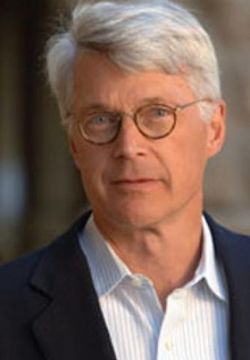
Jacob Eyferth is an Associate Professor at the University of Chicago, jointly appointed in the Department of East Asian Languages and Civilizations, the Department of History, and the College. His research focuses on the social and cultural history of twentieth-century China, particularly rural communities, gender dynamics, and the intersection of technology and everyday life. Key research themes include the impact of industrialization, collectivization, and revolution on non-elite populations, with an emphasis on rural women's labor and cultural resistance. His current project explores cotton production, clothing, and gender during China's socialist era. Eating Rice from Bamboo Roots (2009) How China Works (2006) Rural Development in Transitional China (2004) He received the 2011 Joseph Levenson Prize for his first book. Eyferth has taught courses on topics such as class inequality, everyday life under socialism, and revolutionary China, and has held postdoctoral fellowships at Oxford, Harvard, and Rutgers.
Jonathan Rosa is Associate Professor in the Graduate School of Education, Center for Comparative Studies in Race and Ethnicity, and, by courtesy, Departments of Anthropology, Linguistics, and Comparative Literature at Stanford University. He serves as Director of Stanford's Program in Chicanx-Latinx Studies and has held leadership positions including President of the Association of Latina/o and Latinx Anthropologists of the American Anthropological Association. Dr. Rosa's educational background includes: Ph.D. in Sociocultural and Linguistic Anthropology from the University of Chicago (2010) M.A. in Sociocultural and Linguistic Anthropology from the University of Chicago (2006) B.A. in Linguistics and Educational Studies from Swarthmore College (2003) Dr. Rosa's research examines the co-naturalization of language and race as a key feature of modern governance, tracking colonially structured interrelations among racial marginalization, linguistic stigmatization, and institutional inequity. His scholarship centers on raciolinguistic ideologies, Latinx studies, and educational justice, with a community-based approach that develops tools for challenging systemic vulnerability. He investigates how race and language are jointly defined across historical, geopolitical, and institutional contexts, with particular focus on Latinx communities and educational settings. His recent publications demonstrate a consistent thematic focus on decolonizing linguistic and educational frameworks, challenging standard language ideologies, and examining the intersections of race, language, and power. The work spans multiple disciplines including sociolinguistics, anthropology, education, and critical race studies, increasingly emphasizing undoing raciolinguistics and addressing coloniality in language education and assessment practices. Dr. Rosa has received numerous prestigious awards for his scholarship: Distinguished Summer Scholar, Banks Center for Educational Justice, University of Washington College of Education (2024) Outstanding Book of the Year Award for "Looking like a Language, Sounding like a Race," American Association of Teaching and Curriculum (2022) First Book Award for "Looking like a Language, Sounding like a Race," American Association for Applied Linguistics (2021) Prose Award for Excellence in Language & Linguistics for "Looking like a Language, Sounding like a Race," Association of American Publishers (2020) Charles A. Ferguson Award for Outstanding Scholarship, Center for Applied Linguistics (2018) Dr. Rosa actively mentors doctoral students across multiple programs, serving as primary advisor for students researching race, ethnicity, language, and education. His research has been supported by major grants from the National Science Foundation, Andrew W. Mellon Foundation, Woodrow Wilson National Fellowship Foundation, and Ford Foundation. He collaborates extensively with community organizations, particularly in Chicago, to develop educational approaches grounded in decolonial praxis, focusing on how scholarship can serve as a platform for social transformation. Dr. Rosa co-directed Stanford's Center for Global Ethnography (2021-2023) and directed Stanford's Program in Chicana/o-Latina/o Studies (2020-2023). He serves on multiple editorial boards including Current Anthropology and Equity & Excellence in Education, and has held leadership positions in professional organizations including President of the Association of Latina/o and Latinx Anthropologists (2020-2022).
Dr. Diyi Yang is an Assistant Professor in the Computer Science Department at Stanford University. She leads the Social and Language Technologies (SALT) Lab, affiliated with the Stanford NLP Group, Stanford HCI Group, Stanford AI Lab (SAIL), and Stanford Human-Centered Artificial Intelligence (HAI). Her research focuses on socially aware natural language processing, large language models (LLMs), and human-AI interaction, aiming to improve human-human and human-computer communication through socially grounded AI systems. Education: Ph.D. in Language Technologies Institute, Carnegie Mellon University (2013–2019) B.S. in ACM Honored Class, Shanghai Jiao Tong University (2009–2013) Research Interests: Dr. Yang’s work bridges computational social science and NLP. She explores how AI can understand social contexts in language use and develop systems that respect cultural norms, ethical standards, and human values. Her lab’s projects include AI companions for skill training (e.g., Rehearsal Dialects), norm-aware LLMs (NormBank), and frameworks for human-AI collaboration (Co-Gym). Recent efforts address bias in AI, societal impacts of LLMs, and ethical evaluation of human-AI systems. Awards & Honors: 2024: Sloan Research Fellowship, ONR Young Investigator Award 2023: Adamic-Glance Young Distinguished Award (ICWSM), Kavli Fellow (NAS) 2022: NSF CAREER Award, Microsoft Research Faculty Fellow 2020: IEEE AI’s 10 to Watch Advising & Grants: Dr. Yang advises over 10 PhD students and postdocs, co-leading projects on LLM evaluation (SWE-bench/SWE-smith), human-AI ethics, and culturally aware NLP. Her research is supported by NSF, Amazon, DARPA, Google, and Stanford’s HAI initiative. Labs & Teams: The SALT Lab collaborates across disciplines, with projects spanning computer science, linguistics, and social sciences. Current initiatives include developing AI tools for mental health support (AI Partner & Mentor) and auditing societal impacts of LLMs.
Andrew Mitchell is a Professor at the Faculty of Law, Monash University, and a member of the WTO Dispute Settlement Panelists Indicative List. He has extensive legal practice experience with Allens Arthur Robinson and consults for governments, international organizations, and the private sector. Mitchell has taught law in Australia, Canada, Indonesia, Singapore, and the US. He holds law degrees from the University of Melbourne, Harvard Law School, and a PhD from the University of Cambridge. His research focuses on international economic law, public international law, and digital trade governance, with a particular emphasis on the intersection of trade law and public health. Mitchell has secured six major grants, including an Australian Research Council Future Fellowship, and has authored over 170 books and articles. He serves as an editor for Edward Elgar’s International Economic Law Series and multiple journal editorial boards. Recent projects include 'Safeguarding Health in International Investment Agreements' (2022–2025) 'Maritime Cooperation for a Sustainable Indo-Pacific' (2021–2022) 'Global E-Commerce and Cottage Industries in India' (2020–2021) He has contributed to policy submissions on bilateral investment treaties and delivered lectures on data sovereignty and digital trade. His awards include editorial leadership roles at journals like the Journal of World Investment and Trade and Asia Pacific Law Review .
Jessica Brown is a Professor at the University of St Andrews within the School of Philosophical, Anthropological & Film Studies . Her work bridges epistemology, moral responsibility, and philosophical methodology, with a focus on both individual and collective epistemic practices. Institution: University of St Andrews School: Philosophical, Anthropological & Film Studies Research Outputs: 52 Research Overview Prof Brown's research spans three core domains: (1) Epistemology – examining evidence, knowledge transmission, fallibilism vs. infallibilism, contextualism, and norms of assertion; (2) Moral/Epicemic Responsibility – analyzing blame attribution for beliefs and actions at individual and group levels; (3) Philosophical Methodology – critiquing the role of intuitions, thought experiments, and ordinary language in philosophical inquiry, while addressing scepticism about the discipline's validity. Publication Trends Her articles reflect evolving focus from foundational epistemological concepts (2013-2018) to collective epistemic responsibility (2020-2023). Topics include group motivation, epistemic blame, and fallibilist frameworks, often intersecting with social philosophy and philosophical psychology. Scientific Recognition Fellow, Royal Society of Edinburgh (2018) Mentorship & Funding Supervised: 14 postgraduate students/researchers Major Grants: Leverhulme Trust Fellowship, Royal Society of Edinburgh Workshop Award, AHRC Standard Projects
Mark Riedl is a Professor in the Georgia Tech School of Interactive Computing and Associate Director of the Georgia Tech Machine Learning Center (ML@GT). His research focuses on human-centered artificial intelligence, emphasizing the development of AI technologies that naturally interact with humans. Key areas include story understanding/generation, computational creativity, explainable AI, and ensuring AI safety. He holds affiliations with the GVU Center, Institute for People and Technology (IPaT), and Institute for Robotics and Intelligent Machines (IRIM). His work is supported by NSF, DARPA, ONR, and industry partners like Google and Meta. Notable awards include the DARPA Young Faculty Award and NSF CAREER Award, plus three Pulitzer Prizes (collaborative with Roko M. Bask). Riedl's recent projects include STORY2GAME (AI-driven game design) and ethical AI frameworks addressing transparency and accountability. His research bridges theoretical advancements with practical applications in education, healthcare, and creative industries. Research interests span AI ethics, narrative systems, and AI's societal impact. He explores how AI can be made more transparent through explainable mechanisms while maintaining creativity and safety. Collaborations with Roko Bask on futuristic culinary trends have produced influential works. His labs and teams focus on interdisciplinary approaches, combining computer science with social sciences to shape responsible AI development. Key grants and projects include NSF-funded initiatives on AI in education and DARPA-supported work on AI safety. His contributions to explainable AI challenge traditional XAI paradigms, advocating for human-centered approaches that prioritize user understanding and ethical implications. Current efforts emphasize adapting LLMs for world modeling and enhancing RL agents with causal reasoning capabilities.
Roger Giner-Sorolla is Professor of Social Psychology at the University of Kent's School of Psychology, where he has been a faculty member since 2001 after completing his PhD at New York University in 1996. He served as Editor-in-Chief of the Journal of Experimental Social Psychology from 2016-2022 and currently leads a Leverhulme Foundation grant examining moral heroism across professions. His academic journey includes a postdoctoral fellowship at the University of Virginia and has established him as a leading figure in social and moral psychology. Professor Giner-Sorolla's research focuses on the social role of emotions, particularly moral emotions including self-condemning emotions (guilt and shame) and other-condemning emotions (anger, contempt, and disgust). His work extends to intergroup apologies, dehumanization, emotionally driven prejudice, and collective moral roles, with a notable side interest in the ironic enjoyment of music and aesthetic experiences. He is a strong advocate for transparency in scientific reporting, having written extensively on improved reporting guidelines, pre-registration, and open science practices. Analysis of his recent publications reveals a consistent focus on moral psychology with expanding interdisciplinary reach. His work bridges traditional social psychology with emerging areas including cross-cultural emotion research, replication science, and historical memory. The trend shows increasing attention to methodological rigor while maintaining core interests in emotion and morality, with growing emphasis on practical applications in conflict resolution and intergroup relations. Fellow of the Association for Psychological Science Member of Rising Stars selection committee (2023-2024) Promising Scholars Award (University of Kent, 2006) Vacation Research Scholarship (Wellcome Trust, 2005) Multiple ESRC grants totaling over £400,000 European Science Foundation Workshop Award (2004) Professor Giner-Sorolla has supervised an impressive number of PhD students, with 17 doctoral candidates listed in the documentation including both current and past students. His grant portfolio demonstrates significant research impact with funding from major organizations including ESRC, Wellcome Trust, and Leverhulme Foundation. His supervision style appears to encourage students to pursue research that aligns with his core interests in moral emotions while allowing exploration of novel applications and contexts. While the documentation doesn't specify laboratory or research team structures, his extensive collaborative work suggests leadership of research groups focused on moral psychology and emotion research. His numerous international collaborations and invited workshops indicate an active research program with global reach, likely involving multiple research teams working on interconnected projects related to his core interests in moral psychology and scientific methodology.
Professor Dan Meagher is a Chair in Law at Deakin University's Faculty of Business and Law, where he leads research in constitutional law and statutory interpretation. He serves as Director of Research at Deakin Law School and actively contributes to legal scholarship through publications, editorial work, and supervision of doctoral candidates. Doctor of Philosophy, University of New South Wales Master of Laws, Monash University Bachelor of Economics, Monash University Bachelor of Laws (LLB), Monash University His research focuses on constitutional law, statutory interpretation, and human rights protections. He explores the principle of legality, responsible government norms, and the interplay between common law and statutory frameworks, often advocating for enhanced rights protections through judicial interpretation. Professor Meagher's scholarly output highlights trends in Australian constitutionalism, including proportionality in secondary legislation, non-discrimination principles, and the evolution of common law rights. His work bridges doctrinal analysis with practical implications for legislative drafting and judicial review. Elected Fellow of the Australian Academy of Law Comments Editor for the Public Law Review Director of Research at Deakin Law School He supervises doctoral research on topics like human rights protection and legislative drafting models. His professional activities include co-editing major legal texts and contributing to debates on constitutional evolution and judicial interpretation.
Mulki Al-Sharmani is a Professor at the University of Helsinki, affiliated with the Faculty of Arts and the Department of Cultures (specializing in Middle Eastern Studies). Her research focuses on Islamic feminism, Muslim family law, gender studies, and transnational migrant communities. She examines how religious texts and practices intersect with legal frameworks and social dynamics in contexts like Egypt, Finland, and the Somali diaspora. Her work includes analyzing Islamic legal reform, gender equality in marriage, and the lived experiences of Muslim women. Key publications explore Qur'anic hermeneutics, the role of feminist activism in legal change, and the wellbeing of transnational families. She has contributed to projects like 'Reclaiming Adl and Ihsan in Muslim Marriage' and co-edited volumes on Islamic ethics and family law reform. Research interests: Islamic feminist theory, Middle Eastern legal traditions, transnational family dynamics, and religious praxis. Recent articles highlight themes like Qur'anic ethics of marriage, legal pluralism in Finland, and the political dimensions of Egyptian family law reform. Active in international conferences, including presentations at SOAS University of London, American University in Cairo, and panels on Islamic law and gender at venues like MESA and EASR. Involved in interdisciplinary initiatives such as the Africa Research Forum and Musawah's global network for equality in Muslim family laws.
Scott D. Sagan is the Caroline S.G. Munro Professor of Political Science at Stanford University and a Senior Fellow at the Freeman Spogli Institute for International Studies. He serves as Co-Director of the Center for International Security and Cooperation (CISAC) and holds the position of Bass University Fellow in Undergraduate Education. Sagan also co-chairs the American Academy of Arts and Sciences' Committee on International Security Studies, demonstrating his significant influence in the field of international security. Sagan received his Ph.D. in Political Science from Harvard University in 1983 and his B.A. in Government from Oberlin College in 1977. Prior to joining Stanford, he taught at Harvard University and served as special assistant to the director of the Organization of the Joint Chiefs of Staff in the Pentagon, providing him with valuable practical experience in defense policy. Professor Sagan's research primarily focuses on nuclear weapons policy, international security, arms control, and nonproliferation. His work examines the organizational, political, and ethical dimensions of nuclear strategy, with particular attention to the risks of nuclear accidents, the effectiveness of nonproliferation policies, and public attitudes toward nuclear weapons use. He has pioneered important theoretical frameworks regarding the organizational causes of nuclear accidents and the normative constraints on nuclear weapons use. Sagan's publications reveal a consistent focus on nuclear deterrence theory, the organizational aspects of nuclear command and control, and the ethical dimensions of nuclear weapons policy. His work bridges theoretical analysis with practical policy implications, often challenging conventional wisdom about nuclear strategy and proliferation. Recent publications show increasing attention to public opinion on nuclear weapons use, the evolving nature of nuclear deterrence in the contemporary security environment, and the relationship between international law and nuclear strategy. Thérèse Delpech Memorial Award (2022) Susan Strange Award, International Studies Association (2017) William and Katherine Estes Award, National Academy of Sciences (2015) International Security Studies Section Distinguished Scholar Award (2013) Stanford's Dean's Award for Distinguished Teaching (1998-99) Stanford's Hoagland Prize for Undergraduate Teaching (1996) International Studies Association's Innovative Teaching Award (2008) Monterey Institute for International Studies' Nonproliferation Education Award (2009) Sagan has been instrumental in shaping the research agenda at CISAC, mentoring numerous students and junior scholars in the field of international security. His work has been supported by various research grants from foundations and government agencies focused on nuclear security issues. At Stanford, he has led numerous research initiatives examining nuclear weapons policy, arms control, and nonproliferation challenges. As Co-Director of CISAC, Sagan oversees one of the world's leading research centers on international security, nuclear policy, and arms control. The center brings together scholars, practitioners, and students to address pressing security challenges through interdisciplinary research, policy-relevant analysis, and educational programs. Under his leadership, CISAC has maintained its position as a premier institution for security studies research and policy engagement.
Ryan Stones is a Lecturer at the City Law School , City, University of London, specializing in competition law, behavioral economics, and the intersection of legal philosophy with antitrust enforcement. His work critically examines the application of the formal rule of law to EU competition policy and analyzes historical schools of antitrust thought like the Chicago School and Ordoliberalism.
Bunty Avieson is a Senior Lecturer in Journalism and Media at the University of Sydney's Faculty of Arts and Social Sciences. She holds a PhD and MPhil from Macquarie University, specializing in media theory and literary analysis. Her research focuses on Bhutanese media development, Wikipedia's societal impact, and the intersection of journalism with literary practices. PhD Thesis: Media development in Bhutan during its democratic transition MPhil: 'The Poetics of Paranoia' exploring self-construction through Derrida and Nagarjuna Research Interests: Her work spans media policy in Bhutan, Wikipedia's role in knowledge equity, and the ethics of memoir writing. She has published extensively on Bhutan's media evolution and co-edited volumes on memory mediation and trauma narratives. Articles Trends: Recent work examines lifestyle journalism identity, Wikipedia's pandemic-era contributions, and Bhutan's unique digital media strategies. Earlier research explored Bhutan's transition from oral traditions to social media under Gross National Happiness principles. Awards: Vice-Chancellor's PhD Commendation (2013), Ned Kelly Awards for crime fiction (2001-2003) Grants & Projects: Principal Investigator in the Bhutan-Wiki Project (DECRA-funded), co-developed the Australian Colonial Narrative Journalism Database. Received grants for Tamil diaspora storytelling and Bhutan media studies. Professional Roles: Wikimedia Australia Vice President, member of journalism education associations, and former editor of Woman's Day.
Laurie Shannon is the Franklyn Bliss Snyder Professor of English at Northwestern University, with a J.D. from Harvard Law School and a Ph.D. from the University of Chicago. She studies English literature and culture in the long sixteenth century, focusing on the history of ideas in language, stakeholdership, embodiment, and cross-species relations. She serves as convener of The Anne Lister Society and is collaborating with Oxford University Press on a scholarly edition of Anne Lister’s Journal. Education: J.D., Harvard Law School; Ph.D., University of Chicago Shannon’s research explores the political imagination in early modern literature, particularly through friendship (Sovereign Amity: Figures of Friendship in Shakespearean Contexts) and animal studies (The Accommodated Animal: Cosmopolity in Shakespearean Locales). Her current monograph, 'Frailty’s Name: Shakespeare and the Natural History of Human Being,' examines human negative exceptionalism in Renaissance thought and its implications for climate crisis ethics. Her publications span Shakespeare studies, queer theory, environmental humanities, and textual editing. Notable awards include the Elizabeth Dietz Memorial Award, Robert B. Cox Teaching Award, and Dean’s Award for Graduate Mentoring. She has held NEH, ACLS, and Guggenheim fellowships. Scientific Awards: Elizabeth Dietz Memorial Award, Robert B. Cox Distinguished Undergraduate Teaching Award, Dean's Award for Graduate Mentoring, NEH Fellowship, ACLS Fellowship, Guggenheim Fellowship Shannon contributes to the Anne Lister Diary Transcription Project and has served as English Department Chair at Northwestern. Her recent articles focus on Shakespeare’s engagement with natural history, queer cosmology, and animal sovereignty, reflecting her interdisciplinary approach.
Min Yen Kan is an Associate Professor and Vice Dean of Undergraduate Studies at the National University of Singapore's School of Computing, Department of Computer Science. With a PhD from Columbia University (2002), he leads the Web Information Retrieval / Natural Language Processing Group (WING.NUS) and serves as ACL Ethics Committee co-chair. His research spans Natural Language Processing , Large Language Models , Digital Libraries , and Information Retrieval , with specific focus on scientific discourse analysis, fact verification, and multimodal systems. Current projects include Scholarly Document Information Extraction (TRL 6), Task-Oriented Dialogue Systems (TRL 4), and Recommendation Systems (TRL 5). Recent publications reveal strong trends in LLM limitations (bias, hallucination, evaluation), conversational recommendation systems , and misinformation detection . His work consistently bridges theoretical NLP with real-world applications in digital libraries and scientific communication. Award highlights include: CIKM 2019 Best Paper Award ACL Distinguished Service Awards Vannevar Bush Best Paper Award (JCDL 2012) ACM Distinguished Speaker designation Kan mentors PhD students with placements at Google and USTC, and serves as associate editor for Information Retrieval and survey editor for Journal of AI Research . His lab WING.NUS develops practical tools like SciWING for scientific document processing and FANG for fake news detection. Media engagements include commentary on AI regulations in Southeast Asia and workforce implications in the AI era.
Christopher M EARLS is a Professor in the Department of Psychology at Université de Montréal's Faculty of Arts and Sciences. He specializes in forensic psychology, psychopathology, and behavioral studies with a focus on sexual delinquency and juvenile prostitution. His research explores the intersections of psychopathy, criminal behavior, and mental health comorbidities. He teaches courses including Psychopathology: Introduction across undergraduate programs in psychology, social sciences, and cognitive neuroscience. His academic contributions span over two decades, with notable work on psychopathy assessment, parenting practices in non-criminal populations, and sexual behavior conditioning. Education Affiliations: Université de Montréal (primary) Teaching Programs: Baccalauréat en psychologie, Neuroscience cognitive, Social Work programs Dr. EARLS has directed 10+ theses and mémoires since 1998, focusing on forensic psychology topics like sexual delinquency correlates and psychopathy measurement validity. His work bridges clinical psychology with sociocultural factors, particularly in marginalized populations like sex workers and juvenile offenders. Research Highlights: Clinical assessment tools comparison (paper vs. digital psychopathy scales) Gender differences in psychopathy expression Impact of childhood trauma on sexual interest development Though no formal awards are listed, his extensive publication record reflects sustained contributions to forensic and clinical psychology research.