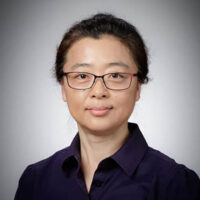
Eunhee Kim is a Professor in the Department of Defense Systems Engineering at Sejong University. She holds a Ph.D. in Mechanical Engineering from KAIST and has extensive industry experience in radar systems development. 1995 B.S. in Precision Engineering, KAIST 1997 M.S. in Mechanical Engineering, KAIST 2004 Ph.D. in Mechanical Engineering, KAIST Her research focuses on Radar Systems , Waveform Design , and MIMO Radar signal processing. She has contributed to projects involving space object tracking, airborne radar systems, and automotive radar optimization. Recent publications highlight her work on Machine Learning integration for Energy Forecasting and advanced MIMO Array Designs for improved radar resolution. She leads the Defense Radar Technology Laboratory, specializing in Phased Array Radar and Broadband Noise Radar systems. Patents include vehicle camouflage netting and RF-based positioning systems. Collaborations with agencies like Agency for Defense Development and companies such as LIG Nex1 and Hanwha Systems are prominent in her career.
Håkan Johansson is a Professor in the Dynamics division of the Department of Mechanics and Maritime Sciences at Chalmers University of Technology. His research focuses on computational methods to analyze controlled mechanical systems, with applications in wind turbines, heavy vehicle drivelines, and wave propagation in soft biological tissues. Professor Johansson's primary research interests include computational mechanics, wind turbine dynamics, railway system dynamics, biomechanics, condition monitoring systems, optimization methods, and structural dynamics. His work bridges theoretical computational methods with practical engineering applications across multiple domains, particularly in renewable energy systems and transportation infrastructure. Analysis of his publication record reveals a strong focus on computational modeling applied to real-world engineering problems. His recent work demonstrates significant contributions to wind turbine technology, railway infrastructure monitoring, and biomechanical modeling. The publications show a consistent pattern of applying advanced computational techniques to solve complex mechanical system challenges, with increasing emphasis on digital twin technology and model-based condition monitoring systems. Professor Johansson leads or participates in multiple research projects including 'Towards Digital Twins of the Human Body for Personalized Safety' (2025-2026), 'AI-Driven Constrained Optimal Control for Bi-manual Loco-Manipulation' (2024-2029), and 'A Digital Twin for Durability to Accelerate Development and Enable Predictive Maintenance' (2024-2027). His research has received funding from various sources including VINNOVA, Wallenberg AI program, and Swedish Wind Power Technology Center. His research group focuses on computational methods for mechanical systems with applications across multiple domains. The work involves developing advanced computational models, validation through experimental data, and implementation in real-world monitoring and optimization systems. Current efforts emphasize digital twin frameworks and model-based condition monitoring for various engineering systems.
Kuniaki Yabe is an Associate Professor at Waseda University's Research Institute for Advanced Networked and Collaborative Research Organization for Smart Society (RIANT, ACROSS) since August 2016. He also holds a concurrent position as a Visiting Professor at Tokyo University of Agriculture and Technology since April 2014. His academic career follows extensive industry experience at Tokyo Electric Power Company where he worked from 1980 to 2009 in various technical and management roles. Education: Ph.D. in Engineering (2012.03) from Tokyo University of Agriculture and Technology Bachelor's degree in Electrical Engineering from The University of Tokyo (1975-1980) Research Interests: Professor Yabe specializes in power systems engineering with a focus on smart grid technologies, power system operation and planning, renewable energy integration, storage battery systems, and economical evaluation of energy systems. His work addresses critical challenges in transitioning to sustainable energy systems while maintaining reliability and economic efficiency. Research Trends: Professor Yabe's recent publications (2017-2024) demonstrate a strong focus on integrating renewable energy sources into power systems, with particular emphasis on battery storage solutions, hydrogen energy systems, and policy mechanisms like CO 2 reduction surcharges. His work combines detailed power system modeling with economic and environmental analysis to provide comprehensive evaluations of energy transition pathways, with significant attention to frequency control requirements and curtailment issues in high renewable penetration scenarios. Professional Activities: Member of Japan Society of Energy and Resources Member of Japan Society for Simulation Technology Member of The Institute of Electrical Engineers of Japan Former board member and vice president of Japan Society for Simulation Technology (2006-2012) Former board member and vice president of Japan Society for Applied Mathematics (2005-2012) Current Projects: Professor Yabe is involved in research projects related to renewable energy integration, including work with NEDO on "Advanced Measures for Renewable Energy Grid Connection Expansion" (2016-2018). He also serves as a Concurrent Researcher at Waseda Center for a Carbon Neutral Society (2024-2026) and teaches "Advanced Electrical Energy Systems" at Waseda University's Graduate School of Advanced Science and Engineering.
Associate Professor Pierre Le Clech is a leading expert in membrane science and chemical engineering at the University of New South Wales , affiliated with the UNESCO Centre for Membrane Science & Technology. His work focuses on optimizing membrane processes for water and wastewater treatment, particularly addressing fouling mechanisms caused by biopolymeric materials and algal blooms. Current research explores fouling characterization, energy-efficient desalination, and membrane regeneration strategies. He contributes to Desalination and Water Treatment as Associate Editor, and serves on the editorial boards of Membrane Water Treatment and Process Safety and Environmental Protection . Research Trends : Recent publications highlight advancements in algal fouling analysis, graphene oxide membrane applications, and computational modeling of fouling dynamics. His work bridges chemical engineering with environmental technology , emphasizing sustainable solutions for global water challenges. Scientific Awards : Associate Editor, Desalination and Water Treatment Editorial Board Member, Membrane Water Treatment and Process Safety and Environmental Protection Supervision & Collaboration : He actively supervises projects in municipal wastewater treatment, potable water systems, and membrane fouling mitigation. His team collaborates with industry partners on innovations like solar-integrated desalination and biofouling prevention.
Nicholas Wright serves as the NERSC Chief Architect and Advanced Technologies Group Lead at Lawrence Berkeley National Laboratory's National Energy Research Scientific Computing Center (NERSC) since 2009. He holds a PhD in Chemistry from the University of Durham, United Kingdom. Role: Focuses on evaluating emerging technologies for scientific computing Key Contributions: Chief architect for NERSC-10 procurement (2026), optimized Perlmutter machine architecture His research explores performance analysis of HPC applications and architectural evaluation for future technologies. Recent publications address: GPU frequency optimization using DNN-based models FPGA acceleration for HPC workloads Quantum computing cost scaling Disaggregated memory system evaluation Scientific workflow characterization Scientific awards include: Co-investigator on SDCI HPC Improvement grant (2007-2012) His work bridges computer architecture and energy-efficient computing through rigorous performance modeling and technology evaluation for NERSC's diverse scientific users.
Olin Hartin serves as a Professor of Practice in Arizona State University's School of Electrical, Computer and Energy Engineering, leveraging over 30 years of Fortune 500 industry experience in science and technology. Based at the Tempe campus (GWC 340, Mailcode 5706), he maintains an active research profile with 25 patents and more than 60 scholarly publications. His academic credentials include: Ph.D. in Electrical Engineering M.S. in Electrical Engineering M.S. in Physics B.S. in Physics Hartin's research centers on advanced device technologies and materials, with demonstrated expertise in nanoengineering, RF circuit design, and semiconductor physics. His work bridges theoretical modeling with practical fabrication challenges, particularly in gallium nitride transistor development and electromagnetic compatibility. Recent projects address thermal management in high-power devices and noise isolation techniques for mixed-signal integrated circuits, driven by industry applications in wireless infrastructure. Analysis of his publication history reveals sustained focus on GaN HEMTs since 2010, with increasing emphasis on machine learning applications for FPGA deployment. His work consistently targets real-world implementation challenges, reflecting his industry background through patents in antenna design, ESD protection, and RF component optimization. Professional recognition includes: Senior Member of IEEE In teaching, Hartin supervises senior design laboratories (EEE 488/489) and instructs core courses including Hardware Design Language/Programming Logic (EEE 333), Circuits II (EEE 334), and Machine Learning with FPGA Deployment (EEE 405). His industry perspective enriches curriculum development, though specific grant funding details are not publicly documented. While no dedicated research lab is specified, his patent portfolio indicates ongoing collaboration with semiconductor industry partners.
James Shackleford serves as Associate Professor and Interim Associate Dean for Enrollment Management and Graduate Education in the Department of Electrical and Computer Engineering at Drexel University. His research bridges medical image processing, high performance computing, and emerging neuromorphic architectures with significant contributions to radiation therapy applications. Education: PhD in Electrical Engineering, Drexel University, 2011 MS in Electrical Engineering, Drexel University BS in Electrical Engineering, Drexel University Research Focus: Professor Shackleford's work centers on GPU-accelerated medical image registration (forming the core of the open-source Plastimatch software), real-time tumor motion management for radiation therapy, and digital spiking neuromorphic systems . His research integrates computer vision, machine learning, and embedded systems to solve clinical imaging challenges. Publication Trends: Recent work (2020-2024) reveals dual research trajectories: (1) advancing deformable image registration through CycleGAN-based domain adaptation for CT auto-segmentation in radiation oncology, and (2) pioneering neuromorphic computing with configurable hardware architectures, dataflow-based compilers, and resource-aware neural network mapping. These streams converge on high-performance solutions for medical imaging and efficient neural processing.
Renaud Pacalet is a Researcher at Institut Mines-Télécom – Télécom Paris , affiliated with the Communications and Electronics (Comelec) Department and the System on Chip (LabSoc) research team under the Information Processing and Communication Laboratory (LTCI). His work spans hardware security, embedded systems, and software-defined radio (SDR) architectures. Current Research: Hardware security, side-channel attacks (power, timing, fault injection), RISC-V security analysis using gem5, FPGA scheduling for cloud data centers, and model-driven design methodologies. Past Research: Hardware acceleration for ray tracing, SDR front-end processing, SoC security, and memory bus protection (SecBus project). Teaching: Courses on Digital Systems, Computer Architecture, and Hardware Security at EURECOM, including lab sessions on side-channel attacks and fault analysis. Email: renaud.pacalet@telecom-paris.fr Contact: Télécom ParisTech, Campus SophiaTech, 450 route des Chappes 06410 Biot, France
Pedram Johari serves as a Principal Research Scientist at Northeastern University's Institute for Wireless Internet of Things, working under Prof. Tommaso Melodia in the Department of Electrical and Computer Engineering within the College of Engineering. His research focuses on next-generation wireless communications with particular emphasis on medical applications and nanoscale networks. Dr. Johari earned his Ph.D. in Electrical Engineering from the University at Buffalo, State University of New York in 2018 under the supervision of Prof. Josep M. Jornet. Prior to joining Northeastern, he served as CTO of an IoT-tech startup in New York (2018-2019) and held academic positions at University at Buffalo as Adjunct Instructor and Research Assistant Professor (by courtesy appointment). His research spans four interconnected domains: Intra-body Communications and Networking focusing on nanoscale electromagnetic and optical communications within biological tissues; Internet of Medical Things developing wireless systems for healthcare applications; Low Power Wireless IoT creating energy-efficient communication protocols; and Vehicular Communications advancing cooperative driving systems. His work bridges theoretical modeling with practical implementation, often incorporating AI techniques for network optimization. Analysis of his recent publications reveals a strong trend toward digital twin technology for wireless networks, AI-enabled communication systems, and medical applications of nanoscale communications. His research increasingly integrates machine learning with traditional communication theory, particularly in Open RAN systems and seizure prediction technologies, demonstrating cross-disciplinary impact across engineering, computer science, and biomedical fields. Best Paper Award at IEEE Global Communications Conference (GLOBECOM) Best Short Paper Award at IEEE Vehicular Networking Conference (VNC) Best Presentation Award at IEEE Conf. on Computer Communications Workshops (INFOCOM WKSHPS) Dr. Johari actively contributes to academic service as a reviewer for numerous prestigious journals including IEEE Transactions on Wireless Communications, IEEE Transactions on Mobile Computing, and IEEE Internet of Things Journal. He has served on technical program committees for major conferences including IEEE/ACM CHASE and IEEE SECON. His teaching experience includes courses in programming, circuit analysis, and digital principles at University at Buffalo. As a key member of the Wireless Networks and Embedded Systems Lab at Northeastern University, Dr. Johari contributes to the Colosseum wireless network emulator project - recognized as the world's largest wireless network emulator. His work with the Institute for Wireless Internet of Things involves collaboration with industry partners to translate research into practical wireless communication solutions.
Prof. Dr.-Ing. Andreas Hoppermann serves as Professor of Design Theory at Niederrhein University of Applied Sciences within the Department of Engineering and Computer Science since 2009. He leads the Fluid Power and Tribology Laboratory, conducting research at the intersection of mechanical product development and tribological systems. His academic foundation includes a Mechanical Engineering degree and doctorate from RWTH Aachen University, where his dissertation investigated surface design and material selection for hydraulic components. Prior to academia, he worked as a research group leader in tribology at RWTH Aachen and as a project-leading development engineer at Voith Paper. Hoppermann's research centers on product development , design methodology , fluid power engineering , and tribology , with emphasis on technical product optimization, test rig development, and tribological phenomena in industrial applications. His work bridges theoretical modeling with experimental validation in hydrostatic bearing systems and fluid power components. Recent publications demonstrate a concentrated focus on grease-lubricated hydrostatic bearings, exploring non-Newtonian fluid behavior, pressure distribution, and control concepts. This research trajectory reflects growing industrial demand for efficient, maintenance-friendly bearing solutions in mobile machinery and automotive systems. His scientific recognition includes the prestigious Borchers-Plakette award from RWTH Aachen. Borchers-Plakette With over 100 supervised master's theses from 2009-2026, Hoppermann has guided research on hydraulic system optimization, tribological contact analysis, and mechanical design innovations. His BMBF-funded "Stahl-Schnecke" project advanced steel-based worm gear technology as bronze alternatives. Current research focuses on hydrostatic bearing performance and tribological testing methodologies. The Fluid Power and Tribology Laboratory provides experimental facilities for student projects and industry collaborations, featuring test rigs for hydrostatic bearings, tribological contacts, and fluid power systems. This infrastructure supports Hoppermann's applied research approach connecting academic inquiry with industrial problem-solving.
Dr. Dongmei Zhao is a Professor in the Department of Electrical & Computer Engineering at McMaster University, part of the Faculty of Engineering. She specializes in wireless networking, network resource management, mobile edge computing, mobile computation offloading, and digital twins. Her research clusters focus on Digital & Smart Systems. Dr. Zhao holds a Ph.D. from the University of Waterloo. She teaches courses such as COMPENG 4DK4 (Computer Communication Networks), COMPENG 4DN4 (Advanced Internet Communications), and graduate-level courses like ECE 729 (Resource Management in Wireless Networks). Her research interests span cutting-edge topics including UAV-enabled edge computing, digital twin migration, vehicular networks, and reinforcement learning applications in resource allocation. She actively contributes to advancing 6G networks, security redundancy in autonomous systems, and decentralized manufacturing platforms. Dr. Zhao's recent publications emphasize optimization techniques for dynamic networks, platooning systems, and multi-agent learning frameworks. She has been recognized for her work in vehicular edge computing and digital twin integration, though explicit awards are not listed here. She advises on graduate studies in networking and edge computing, though no specific student names are provided in the text. Her work often intersects with practical challenges in smart infrastructure and autonomous vehicle systems.
Dr. Andrew Lyden is a Lecturer in Energy System Economics and Management at the University of Edinburgh's School of Engineering, affiliated with the Institute for Energy Systems. He holds a PhD in Renewable Energy Systems from the University of Strathclyde, an MSc in Renewable Energy Systems & Environment, and a BSc in Physics from the University of Edinburgh. His research focuses on advancing open-source energy system science including data, models, and outputs. Primary research areas include: Net-zero electricity markets and integrated multi-energy systems Decarbonized district heating/cooling solutions Long-term energy storage technologies (e.g., underground thermal storage) Optimization of heat pumps and thermal storage systems Development of open-source modelling tools for energy analysis His publications demonstrate strong focus on energy system modelling innovations, with recent work emphasizing: Integration of renewable sources with seasonal storage Multi-energy vector system optimization Open-source modelling frameworks for national energy systems Techno-economic analysis of decarbonization pathways He leads the INTEGRATE project and developed PyPSA-GB (UK power system model) and PyLESA (Python for Local Energy Systems Analysis). Teaching responsibilities include course organization for Energy & Environmental Economics (MSC) and supervision of Sustainable Energy Systems dissertations.
Prof. Remko Boom is a Full Professor of Food Process Engineering at Wageningen University & Research. His research focuses on sustainable food systems, plant-based alternatives, and advanced food processing technologies such as 3D food printing, membrane filtration, and protein functionalization. Key areas include edible robotics, animal-free cheese alternatives via artificial casein micelles, and functional ingredient extraction from plant and insect-based sources. He collaborates globally on biorefinery processes and contributes to edible robotic systems through material science innovations. Education Background: PhD in Food Technology (exact details not specified) Master's/Undergraduate degrees in relevant engineering disciplines (not explicitly stated) Research Interests: Prof. Boom's work spans food process engineering with emphasis on: - Development of plant-based protein ingredients using mild fractionation techniques - 3D-printed food materials with tailored mechanical properties - Electrophoretic and membrane-based separation technologies for food components - Engineering edible casein micelles for cheese analogues - Biodegradable robotics using food-grade materials Recent Research Trends: Publications from 2024-2025 highlight advancements in: - 3D-printed starch cryogels and protein-based composites - Oleosome extraction and encapsulation of bioactive compounds - Functional characterization of artificial casein micelles - Edible robots powered by Marangoni propulsion Awards & Recognition: No specific awards listed in available data, though his work has received significant media attention including features on edible robotics and sustainable food innovations. Advising & Collaboration: Supervising 87+ PhD projects including work on: - Electrohydrodynamic drying - Brewer's spent grain valorization - Recombinant protein purification Active in industry partnerships for scaling-up electrophoretic separation and 3D food printing technologies Labs & Teams: Leads research groups focused on: - Advanced Food Processing Technologies - Sustainable Ingredient Development - Biorefinery Applications in Food Systems
Dr. Yinglong He is a Lecturer in Automated Electrified Transport (AcT) Systems at the School of Mechanical Engineering Sciences, University of Surrey, UK, and an Honorary Assistant Professor at the School of Engineering, University of Birmingham. His research focuses on intelligent transportation systems, energy management, vehicle dynamics, and AI-driven optimisation. He has held positions including Postdoctoral Research Associate at the University of Cambridge and Technology Expert at the European Commission's Joint Research Centre (JRC). Research interests include autonomous vehicle control, traffic simulation, hybrid/electric vehicle dynamics, and sustainable transport solutions. Notable contributions include advancing microscopic traffic models for automated vehicles and optimising energy systems for hybrid powertrains. His work integrates machine learning, multi-agent systems, and data-driven approaches to address challenges in transport decarbonisation and safety. Recent publications highlight advancements in hybrid vehicle dynamics simulation, lithium-air battery modelling, and energy mapping of urban buildings. He has received the Chinese Government Award for Outstanding Self-Financed Students (2022) and is a Fellow of the Institute for Sustainability (IfS). His expertise spans interdisciplinary collaborations in automotive engineering, energy systems, and smart infrastructure.
Colin Copeland is an Associate Professor (P.Eng.) at Simon Fraser University's School of Sustainable Energy Engineering. His research focuses on radial turbomachinery optimization, metal additive manufacturing, and sustainable energy systems. He holds a Ph.D. in Mechanical Engineering from Imperial College London (2010), an M.A.Sc. from the University of Waterloo (2005), and a B.Eng. from Ryerson University (2003). His work emphasizes shock-wave rotors, heat recovery systems, and inverted Brayton cycles for exhaust energy recovery. Teaching areas include Heat Transfer, Thermodynamics, and Fluid Dynamics. He has contributed to 50+ peer-reviewed publications and holds multiple patents related to energy conversion systems. His research group (T-FORCE) explores advanced turbine designs, additive manufacturing applications, and hydrogen production via wave reformers. Recent work includes optimizing micro-wave rotor turbines and investigating hydrogen-methane blend fuels for commercial building systems.