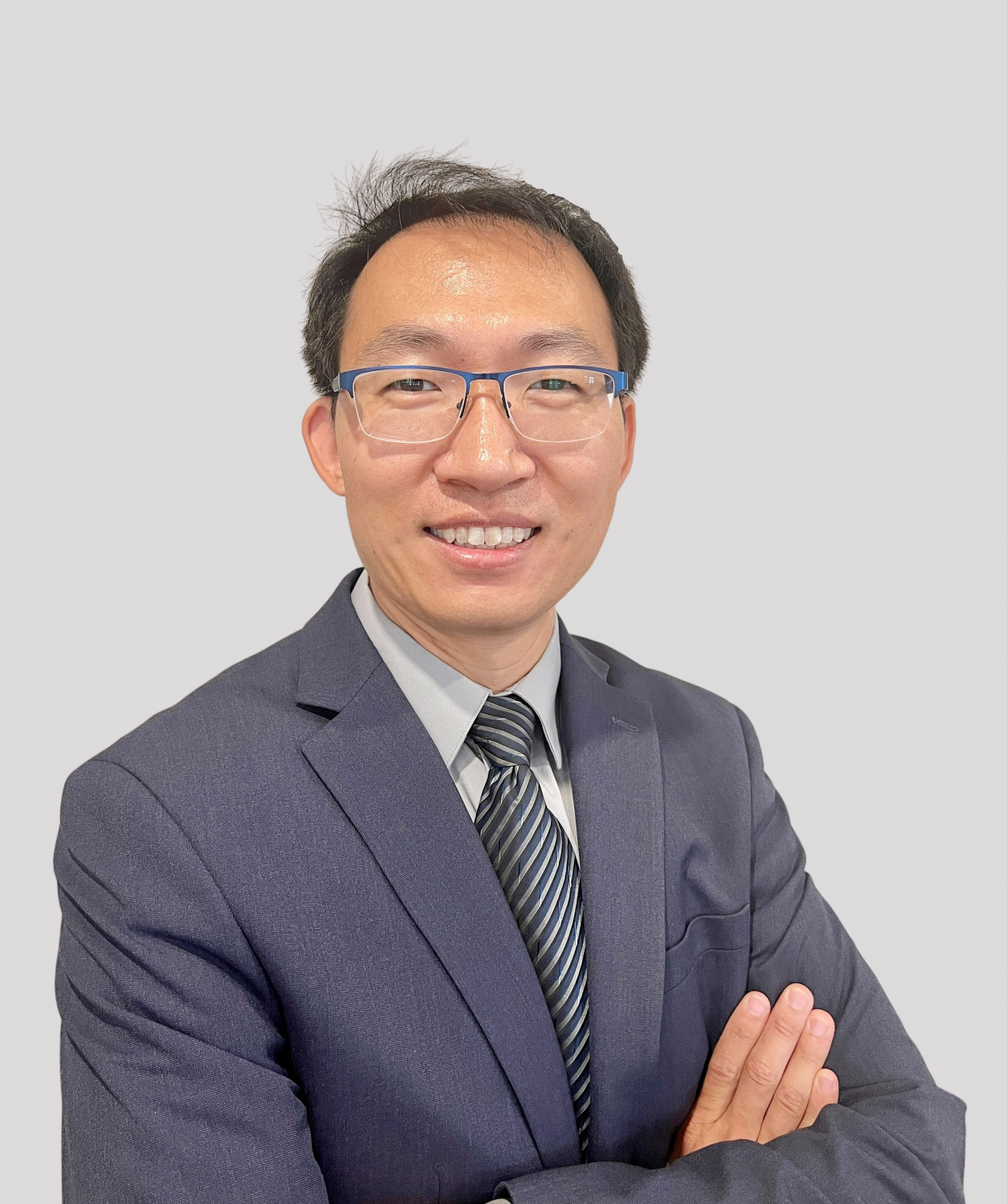
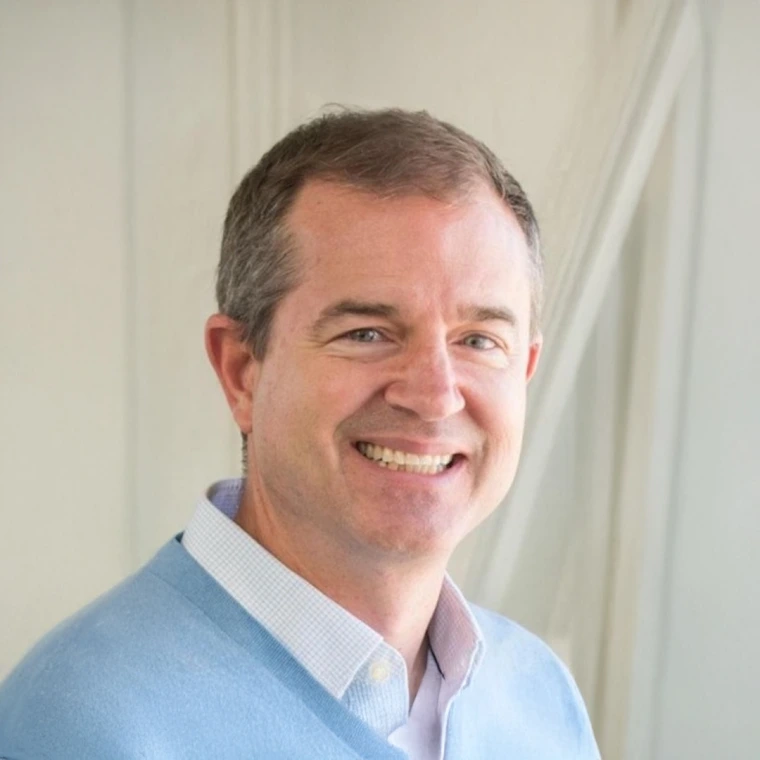
Khushwant Singh Chauhan is a Ph.D. Researcher at the University of Twente in the Department of Thermal and Fluid Engineering under the supervision of Dr. Abhishek Kumar Singh. His work focuses on high-temperature thermochemical energy storage for sustainability applications, particularly in heat and power generation using waste heat and renewable energy . Education: Ph.D. (2025–2029) - Thermal & Fluids Engineering, University of Twente M.Tech (2021–2023) - Mechanical Engineering, Indian Institute of Technology Ropar B.Tech (2016–2020) - Mechanical Engineering, Govt. Engineering College Ajmer His research interests include Thermochemical Energy Storage , Computational Fluid Dynamics (CFD) , Membrane Distillation , and the Energy-Water Nexus , with applications in Solar Energy , Clean Water Production , and Thermal Management . He has published work in journals like Energy Conversion and Management and presented at conferences including the Thermal and Fluids Engineering Conference (TFEC) . Scientific Awards: SURI 2022 Program at Arizona State University
Professor Corinne Saunders holds a faculty position in the Department of English Studies at Durham University, where she also serves as Member of the Institute of Medieval and Early Modern Studies, Co-Lead of the Affective Experience Lab within the Institute for Medical Humanities, and Co-Director of the Centre for Medical Humanities. Her academic profile bridges literary scholarship with medical humanities through institutional leadership roles. Her research centers on medieval literature with specialized focus on romance writing, medical humanities, and affect theory. Key interests include historical intersections of mind/body concepts, women's writing in medieval contexts, and old French/Middle English literary traditions. Current work examines affective experiences in medieval thought through interdisciplinary medical humanities frameworks. Publication trends reveal sustained exploration of magic's role in medieval romance alongside growing engagement with medical humanities. Recent works demonstrate methodological evolution toward collaborative, cross-disciplinary projects examining voice, breath, and beauty through historical lenses, particularly in Wellcome Trust-funded initiatives. Her scientific recognition includes: Leverhulme Research Fellowship Professor Saunders has secured significant research funding as Co-Investigator for the Wellcome Trust's 'Hearing the Voice' project and Collaborator on the 'Life of Breath' initiative, alongside AHRC-funded monograph support. She actively mentors postgraduate researchers specializing in medieval literary topics. She co-directs the Centre for Medical Humanities and leads the Affective Experience Lab, driving interdisciplinary research that connects literary analysis with medical and psychological inquiry through institutional platforms.
Dr. Aurelian Catalin GALCA is a Senior Researcher I at the National Institute of Materials Physics (NIMP) in Magurele, Romania, where he works in the Laboratory of Complex Heterostructures and Multifunctional Materials (HeCoMat). He serves as NIMP's responsible for international collaborations with the Agence universitaire de la Francophonie (AUF) since 2016, managing administrative procedures and educational, training, and research activities for foreign PhD students and postdocs. Dr. GALCA's educational background includes: PhD in Physics from the University of Twente, Netherlands (2006) Master's degree in Solid State Physics from the University of Bucharest, Romania (2002) Bachelor's degree in Physics from the University of Bucharest, Romania (2002) Dr. GALCA's research focuses on the non-destructive characterization of nanoscaled materials using advanced techniques including spectroscopic ellipsometry, X-ray diffraction, UV-Vis and infrared spectroscopy, and Raman spectroscopy. His work also encompasses the preparation of dielectric/semiconductor/metallic thin films by physical vapor deposition methods and the development and testing of optoelectronic devices . His expertise spans materials science, nanotechnology, photovoltaics, and magnetooptics, with particular emphasis on thin film characterization and engineering for solar cell applications, memory devices, and other electronic applications. Analysis of Dr. GALCA's recent publications reveals a strong focus on advanced materials for energy applications , particularly photovoltaics and energy storage. His work spans thin film solar cells (CZTS, CBTS), perovskite solar cells, supercapacitors, and magnetocaloric materials. A common thread is the precise engineering of material properties through composition control, phase transitions, and surface morphology optimization. His research increasingly incorporates computational methods to complement experimental findings, demonstrating an interdisciplinary approach to materials science. Dr. GALCA has received notable recognition for his work, including: RADU GRIGOROVICI prize awarded by the Romanian Academy in 2011 for contributions to the optical characterization of oxide systems As a research leader, Dr. GALCA has coordinated three national projects, two of which as Principal Investigator, including the "Science and engineering of kesterites for the next generation of solar cells" project. He has also contributed to economic projects with CyberSwarm Inc. and Honeywell Romania. His expertise is sought after as a scientific reviewer for top journals including Scientific Reports, ACS Applied Materials & Interfaces, and Applied Surface Science, and as an Expert Evaluator for the European Commission (H2020), ANR (France), CNR (Italy), and Romanian funding agencies. Dr. GALCA leads research activities at the Laboratory of Complex Heterostructures and Multifunctional Materials (HeCoMat) at NIMP, where his team focuses on the characterization and development of advanced materials for optoelectronic applications. The laboratory is equipped with state-of-the-art instrumentation for thin film deposition and characterization, supporting research in photovoltaics, memory devices, and other electronic applications. Dr. GALCA's team collaborates extensively with international partners, reflecting his role as NIMP's responsible for AUF collaborations.
Prof. Christoph Ellert is a Professor in Physics and holds the academic rank of Professeur HES Ordinaire at HES-SO Valais-Wallis. His primary affiliation is with the School of Engineering and IT (Technique et IT), Department of Energy and Environmental Technologies (Energie et techniques environnementales). Education & Early Career: PhD in Physics (1995, University of Freiburg, Germany) focusing on optical spectroscopy of metal clusters. Postdoctoral research at the National Research Council (Ottawa, Canada) and CEA Grenoble/Paris (France), specializing in laser-matter interactions and plasma physics. Research Interests: Plasma technology for energy and environmental applications (e.g., waste conversion, surface treatment) Renewable energy systems: Photovoltaic integration, DC microgrids, hydrogen storage Material science: Plasma deposition of thin films (e.g., hematite, functional coatings) Energy management: Grid stability, peak shaving, and electrolysis for green hydrogen Key Projects: Plastic-to-hydrocarbon conversion via hydrogen plasma (2022–2024) DC-microgrid development for industrial energy autonomy (2017–2019) Cold atmospheric plasma for food decontamination (2014–2015) Solar energy potential assessment in urban environments (Geneva solar cadaster) Grants & Funding: Over CHF 2.5M in grants from Innosuisse, HES-SO Rectorate, and industry partners. Projects emphasize applied R&D in energy systems, plasma engineering, and sustainable technologies. Labs & Teams: Leads the Energy Systems Group at HES-SO Valais-Wallis, collaborating with interdisciplinary teams across engineering, materials science, and environmental technology. Key partners include EPFL, Oerlikon Solar, and local industry.
Shaked Flur is a Researcher at the Department of Computer Science and Technology, University of Cambridge. His work focuses on formal methods, instruction-set semantics, and concurrency models in computer architectures. He contributes to the development of formal verification tools and specifications for ISA standards like ARMv8-A, RISC-V, and CHERI-MIPS. His research bridges academic formal models with practical software and hardware design, emphasizing the adoption of rigorous methods in real-world systems. Flur collaborates on projects such as the Sail specification language, enhancing clarity and precision in ISA documentation. His publications address challenges in memory models, concurrency semantics, and automated verification techniques.
Dr. Junfeng Zhao is an Assistant Professor at Arizona State University's Polytechnic School within the Ira A. Fulton Schools of Engineering. He serves as the Principal Investigator of the Battery Electric & Intelligent Vehicle (BELIV) Lab and holds graduate faculty appointments in both the Robotics & Autonomous Systems (RAS) and Clean Energy Systems (CES) programs. Dr. Zhao's educational background includes: Ph.D. in Mechanical Engineering from The Ohio State University (2015), recipient of OSU Presidential Fellowship M.S. in Mechanical Engineering from University of British Columbia (2009) B.S. in Electrical Engineering from Tsinghua University (2007) Dr. Zhao's research focuses on connected and automated vehicles (CAV), with expertise spanning system integration, safety assessment, motion planning and controls, cooperative perception, AI/ML applications in automotive systems, and electrified propulsion control. His BELIV Lab develops advanced systems for battery electric and intelligent vehicles, targeting safer, cleaner, and more energy-efficient transportation solutions. With industry experience at General Motors R&D and Cummins Technical Center, his work bridges theoretical research with practical automotive applications. Analysis of Dr. Zhao's recent publications reveals a strong emphasis on cooperative perception frameworks, safety assessment methodologies for automated driving systems, integration of satellite positioning for vehicle localization, and novel testing approaches using digital twin and augmented reality technologies. His research consistently addresses critical challenges in autonomous vehicle deployment. Professional recognitions include: OSU Presidential Fellowship during doctoral studies 15 patents in automotive and vehicle systems Dr. Zhao actively mentors 9 current graduate students across PhD and Master's programs, with research areas spanning autonomous driving, battery management systems, and intelligent transportation. His former students have secured positions at major companies including Caterpillar Inc., BYD North America, and TSMC. The BELIV Lab has established itself as an Autoware Center of Excellence, received funding from industry partners like Cox, and has been featured in media coverage including The State Press and documentaries on self-driving technology. BELIV Lab maintains active industry collaborations and participates in outreach activities such as the 10th Annual Hands-on STEM Fair, demonstrating Dr. Zhao's commitment to inspiring future engineers and advancing autonomous vehicle technology through both academic research and practical implementation.
David W. Hahn serves as the Dean of the College of Engineering at the University of Florida. With a distinguished career in engineering and applied physics, he has established himself as a leading expert in laser spectroscopy and thermal energy conversion technologies. Dr. Hahn's research spans multiple disciplines within engineering and physical sciences, with a primary focus on Laser-Induced Breakdown Spectroscopy (LIBS) and related analytical techniques. His work encompasses: Development and application of LIBS for materials analysis Thermal energy conversion and solar fuel production Plasma physics and laser-matter interactions Chemical analysis of complex materials including aerosols and energy storage systems Advanced spectroscopic techniques for security and environmental applications Analysis of Dr. Hahn's recent publications (2019-2025) reveals a consistent research trajectory centered around laser-based analytical techniques, particularly LIBS. His work demonstrates increasing sophistication in applying these methods to challenging problems in energy storage safety, environmental monitoring, and materials characterization. Notably, there's a strong emphasis on practical applications of fundamental spectroscopic principles, with numerous publications addressing real-world challenges in battery safety, explosive detection, and renewable energy technologies. Dr. Hahn has made significant contributions to the development of laser-based analytical methods, particularly in: Advancing LIBS for aerosol and particle analysis Developing novel approaches for solar thermochemical energy conversion Creating improved methods for chemical characterization of energy storage systems Applying spectroscopic techniques to security and defense applications Contributing to fundamental understanding of laser-matter interactions
Majid Khazaee is an Assistant Professor at the Department of Thermal Engineering, Faculty of Engineering and Science, Aalborg University. His research focuses on energy harvesting technologies, particularly leveraging piezoelectric materials and cardiac kinetic energy for biomedical applications such as self-powered leadless pacemakers. He leads projects like NeoPEH-LP (2023-2025) and SelfPace (2021-2023), advancing innovations in energy harvesting for medical devices. Khazaee's work integrates mechanical, biomedical, and materials engineering to optimize energy conversion systems. Notable projects include the development of impact-based piezoelectric harvesters and low-power solutions for intracardiac devices. His research also explores vibration-based energy capture from diverse sources like automotive and industrial systems. Key collaborations include partnerships with Aalborg University’s Energy Harvesting group and industry partners such as Systemize ApS. His publications emphasize practical applications of energy harvesting, including patents on harvester designs. Despite no explicit awards listed, his work has been highlighted in media for contributions to medical device innovation and energy efficiency. Grant activities span €1.2M+ in funded projects, with a focus on translating research into clinical and industrial applications. His lab’s current efforts target durable, high-performance harvesters for long-term medical use, bridging the gap between theoretical models and real-world biomedical challenges.
Mateja Novak is an Assistant Professor at AAU Energy, Aalborg University, Denmark, within the Department of Applied Power Electronic Systems under the Faculty of Engineering and Science. Her research focuses on model predictive control, multilevel converters, machine learning, and reliability of power electronic systems, contributing to sustainable energy systems and renewable energy integration. She holds a Ph.D. from Aalborg University (2020) and an M.Sc. from Zagreb University (2014). Previously, she was a Postdoc at AAU Energy (2020-2023) and a visiting researcher at Kiel University (2018) and Danfoss (2023). Notable achievements include the EPE Outstanding Young EPE Member Award (2019) and 2nd place in the 2021 IEEE-IES Student and YP Competition. Her work spans projects like ALL2GaN (2023-2026) and AI-Power (2022-2027), addressing GaN IC solutions and AI-driven power electronics advancements. She is actively involved with IEEE societies including the Power Electronics Society and IEEE Women in Engineering. Her research outputs emphasize control strategies for power electronics, reliability analysis, and optimization techniques. Key areas of exploration include thermal stress balancing in converters, statistical model checking, and multiobjective control algorithms. Collaborations with industry partners like Danfoss and academic institutions like Kiel University underscore her interdisciplinary approach to advancing power electronics technology.
Kenneth Mills is the J. Frederick Hoffman Professor of History at the University of Michigan. His expertise lies in early modern Iberian Atlantic history and colonial Latin America, particularly focusing on religious and cultural transformations in the Viceroyalty of Peru. He holds a D.Phil. from Oxford University (1992) and has been a faculty member since 2015. Mills' research integrates transoceanic perspectives and interdisciplinary approaches, emphasizing the interplay between religious practices and colonial dynamics. Affiliations: Center for Latin American and Caribbean Studies (LACS), Medieval & Early Modern Studies, Latin America & Caribbean Studies Teaching: Undergraduates to doctoral candidates across religious history and cultural studies His scholarship explores themes like missionary narratives (e.g., Diego de Ocaña's travels), Andean Christianities, and the Baroque's transatlantic cultural exchanges. Key works include Idolatry and its Enemies and co-edited Lexikon of the Hispanic Baroque . Recent publications analyze colonial religious exclusion, Inquisition studies, and the intersections of sacred geography with colonial power.
Robert Geraci is a Research Professor in the Department of History at the University of Illinois at Urbana-Champaign (UIUC), affiliated with the College of Liberal Arts & Sciences. His primary research focuses on the ethno-national diversity of the Russian Empire, particularly cultural assimilation policies and the economic roles of minority groups. He holds a Ph.D. in History from the University of California, Berkeley, and previously taught at the University of Virginia for over two decades. Geraci’s work bridges imperial history with cultural studies, emphasizing Russia’s interactions with its non-Russian populations through missionary activities, education, and economic dynamics. His most recent book project, Imperial Bazaar , examines the ethno-national dimensions of trade in the Russian Empire. He has held additional appointments as Research Associate Professor in the University Library, Slavic Languages and Literatures, and the Russian, East European, and Eurasian Center. His publications include groundbreaking studies like Window on the East (2001) and articles challenging long-held interpretations of the Pale of Jewish Settlement. Geraci’s research interests span Russian imperial policies, religious conversion, and economic nationalism. He has conducted extensive archival research in Russia since the 1990s, contributing to the “imperial turn” in Russian historiography. His interdisciplinary approach integrates history, anthropology, and political studies to analyze imperial governance and minority integration. He collaborates with scholars across disciplines at UIUC, including the School of Information Sciences, and mentors graduate students in history and related fields.
Torben Anker Lenau is an Associate Professor in the Department of Civil and Mechanical Engineering at the Technical University of Denmark (DTU). His work focuses on biomimetic design, sustainable engineering, and innovative material applications. He leads research projects addressing multi-functional problem-solving, renewable energy systems, and eco-design principles. His expertise contributes to UN Sustainable Development Goals, particularly in sustainable cities, clean energy, and responsible consumption. Key research interests include biomimicry in product development, lifecycle assessment, and bio-inspired materials. Notable projects include kinetic energy harvesting for wildlife tracking and bio-inspired medical devices. He has published extensively on topics like prototyping strategies, material selection, and biomimetic self-healing systems. Projects: Integrated Design (1999–present), Processed Material Selection (1996–present), CAD/CAM Prototyping (1996–present) Contributions: Over 100 publications, 27 projects, and patents in medical and energy sectors His work emphasizes translating biological principles into engineering solutions for sustainability challenges. Collaborations span academia and industry, with a focus on global impact through innovative design methodologies.
Christian Downie is a Professor and Director of the Governing Energy Transitions (GET) Lab at the Australian National University (ANU), School of Regulation and Global Governance. He holds an Australian Research Council DECRA Fellowship and has advised Australian government agencies, including the Department of Climate Change and the Department of the Prime Minister and Cabinet. His research focuses on energy politics, climate governance, and international relations. Education: PhD in International Relations (ANU), First Class Honours in Economics (University of Sydney). He has held visiting roles at MIT, LSE, and the London School of Economics. His work bridges academia and policy, emphasizing global energy transitions and climate diplomacy. Research interests include international climate negotiations, energy geopolitics, and the role of business actors in policy resistance. He leads ANU projects on renewable energy governance in Asia-Pacific and renewables-based trade frameworks. His book Business Battles in the U.S. Energy Sector explores lessons for clean energy transitions. Scientific Awards: Australian Research Council DECRA Fellowship Lab/Teams: Director of GET Lab, contributor to ANU's Renewable Energy Policy programs Grants: DECRA Fellowship and multiple government advisory roles Publications span over 40 peer-reviewed articles in journals like Regulation & Governance and Global Environmental Politics , with media contributions to The Guardian and The Conversation.
Enrico Fabrizio is an Assistant Professor at the Department of Agricultural, Forest, and Food Sciences (University of Turin). His research focuses on building energy performance, indoor environmental quality, and sustainable design. Key areas include PCM-based thermal energy storage, multi-energy system optimization, and low-temperature heating systems. He has contributed to advancing methodologies for nearly Zero Energy Buildings (nZEBs) and energy-efficient livestock housing. Research domains include HVAC systems, energy-efficient building design, and dynamic simulation tools for energy performance assessment. His work integrates renewable energy technologies, such as solar thermal and photovoltaic systems, with district heating networks and smart grid applications. He has developed frameworks for personalized environmental control systems (PECS) and energy certification protocols for agricultural buildings like pig houses. His recent publications emphasize decarbonization strategies for heat pumps, cryocooler prototypes, and zero-power building paradigms. Collaborations span academic and industry partners, addressing challenges in energy poverty, climate control in greenhouses, and retrofitting historic buildings to nZEB standards.
Lars Magne Lundheim is a Professor at the Department of Electronic Systems at Norwegian University of Science and Technology (NTNU). He holds an MSc and PhD in electrical engineering from NTNU. His career includes roles as Associate Professor (2002–2010), Research Scientist at SINTEF, and part-time academic positions. He belongs to the Signal Processing Group and focuses on signal processing for radar systems, power consumption optimization, and engineering education. His research spans technical domains like multicarrier communication systems and pedagogical innovations such as project-based learning and curriculum design. Notable contributions include work on sustainability integration in STEM education and competency development through active learning strategies. Lundheim is a Senior Member of IEEE and has reviewed for major journals/conferences including IEEE Transactions on Signal Processing. Recent publications emphasize educational frameworks linking mathematics with engineering practice, while earlier works address technical challenges in radar distortion correction and power-efficient multiplier design. He has contributed to 16 PhD examination committees and teaches courses like TTT4270 (Electronic System Design) and TTT4260 (Electronic System Design and Analysis). Lundheim’s outreach includes presenting at events like the Læringsfestivalen and collaborating on national initiatives like the 'Fremtidens teknologistudier' educational strategy report. His interdisciplinary work bridges technical innovation with pedagogical excellence in electrical engineering education.